Sep 4, 2026

In the world of fashion, businesses rarely run on one piece of software.
Design, product development, sourcing, wholesale, inventory, and retail often rely on different systems, which is why fashion SaaS companies can look very different from one another.
The right platform depends on the work it supports. It may help with early product creation, planning, operations, selling, or supplier coordination.
That range reflects the varied needs of fashion brands, especially as they manage more products, teams, and channels.
This guide compares 12 fashion SaaS companies based on what they offer, the part of the fashion industry they serve, and where their software fits in the fashion workflow.
TL;DR
The 12 fashion SaaS companies to know in 2026 are:
Centric Software
Vue.ai
WFX
ApparelMagic®
BlueCherry
JOOR
NuORDER
Inspectorio
Style3D
Bamboo Rose
Zedonk
Where Fashion SaaS Fits in the Fashion Tech Market
Fashion tech covers software built for different parts of the apparel industry, from creating products to sourcing, operations, and wholesale.
Established software vendors, newer technology companies, and fashion tech startups can operate in the same market even when their products serve very different workflows.
The companies in this guide fall into five main areas:
Design and product development – Supports concepts, product data, tech packs, materials, revisions, approvals, and remote collaboration. The technology helps product teams carry early ideas into structured development.
3D fashion design – Supports garment visualization, simulation, and digital samples before teams move to a physical sample.
Sourcing and supply chain – Covers supplier coordination, sourcing, quality, compliance, and production visibility within the supply chain for fashion and other consumer goods.
ERP and business operations – Handles inventory, purchasing, orders, production, and other day-to-day operations relevant to fashion businesses and the retail industry.
Wholesale and B2B commerce – Supports wholesale ordering, buyer relationships, assortment management, and digital showrooms.
12 Fashion SaaS Companies to Know in 2026
With those different software categories in mind, here are 12 fashion SaaS companies to know in 2026. The profiles below cover what each company does, its main capabilities, and the fashion businesses it is best suited for.
1. Onbrand
Category: AI Fashion Design + PLM
What the Company Does
Onbrand combines AI-assisted fashion design with product lifecycle management (PLM), providing brands with one connected place to move from early ideas into structured product development.
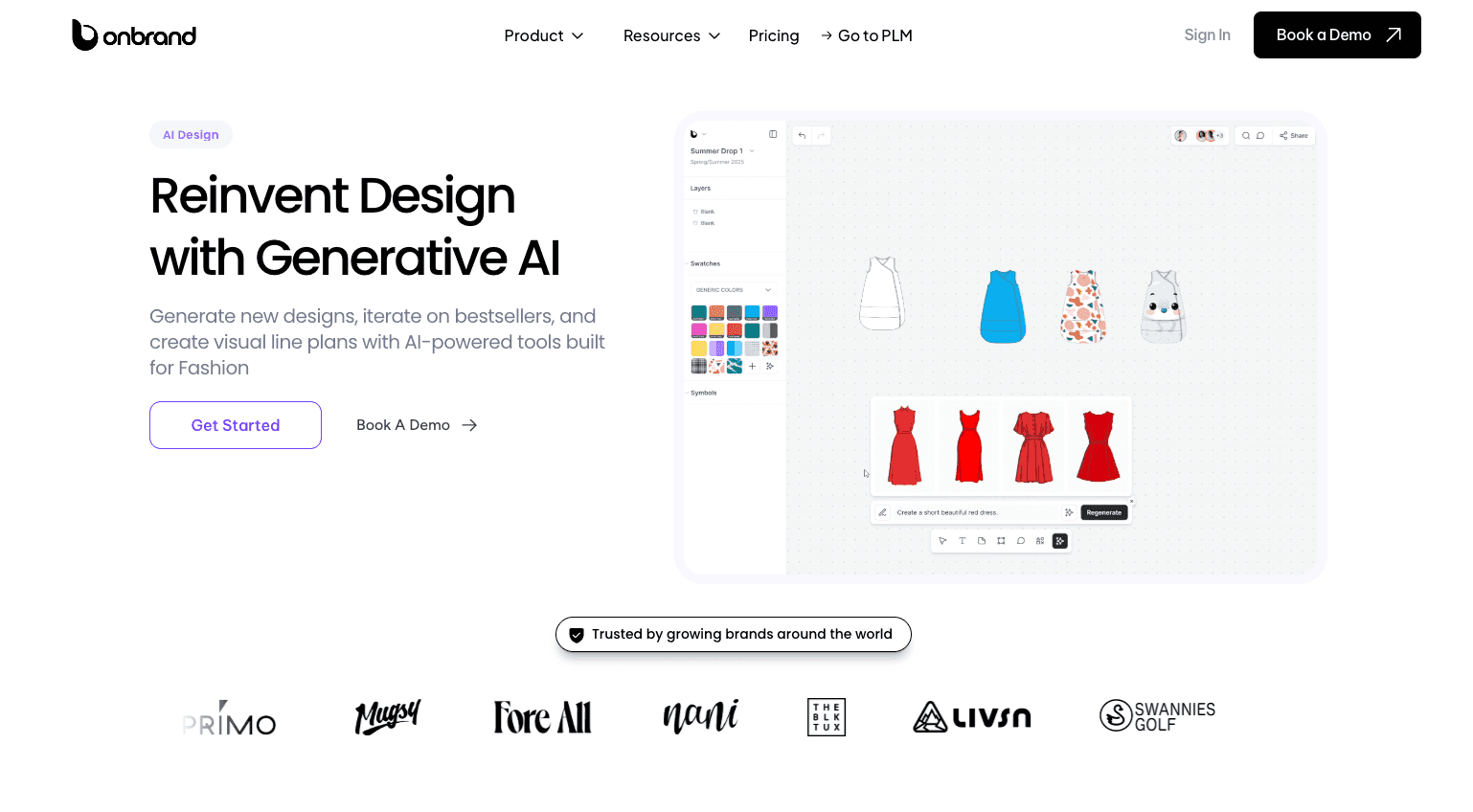
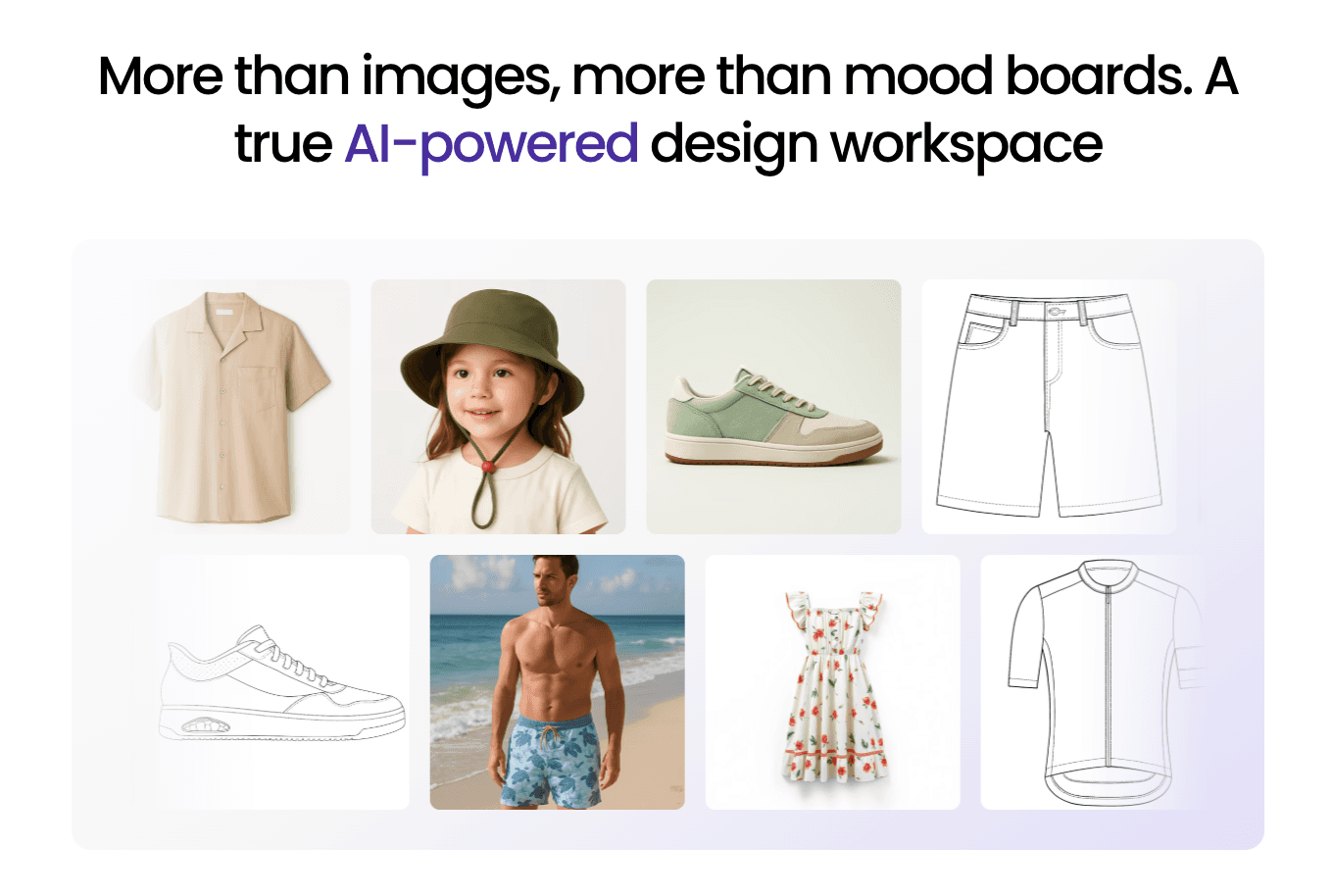
Onbrand AI Design supports concept generation, design exploration, visual collaboration, and line planning. Designers can start from text prompts, sketches, or reference images, then explore colorways, silhouettes, trims, mockups, and on-model visuals before moving a concept forward.
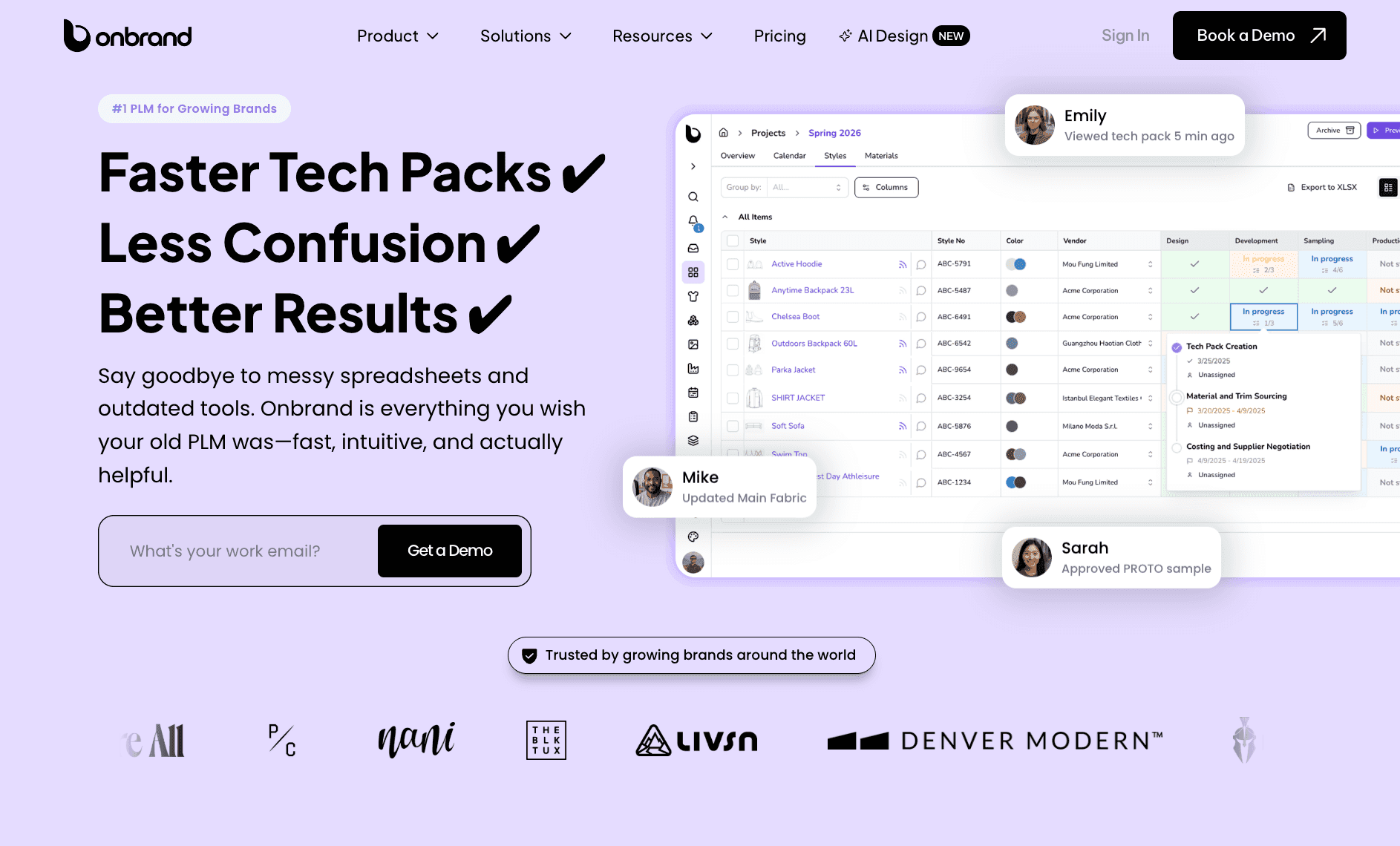
Onbrand PLM carries approved ideas into development, where teams manage styles, materials, colorways, tech packs, bill of materials (BOMs), samples, revisions, approvals, timelines, and vendor communication.
The connection between the two products is a key part of the setup. Design assets and decisions can move into PLM without the usual file handoff between creative work and product development.
Key Products or Capabilities
Onbrand AI Design covers concept generation, design variations, photorealistic renders, mood boards, shared canvases, visual line planning, comments, version history, and export to Adobe Illustrator. Teams can also send approved concepts and assets directly into Onbrand PLM.
Onbrand PLM includes live web-based tech packs, dedicated product and material libraries, sample management, project management, configurable stages and approvals, collection planning, vendor collaboration, and integrations with other business systems.
Onbrand reports implementation and data migration in as little as 10 days for some teams, while full onboarding commonly takes around two to four weeks depending on setup and product data.
Its AI Design product also gets 10x faster design turnaround, 30–50% fewer physical samples, and 10+ weeks saved each year.
Best Fit
Onbrand is best for fashion brands with dedicated design and product development teams that want to connect early creative exploration with the product information needed for sampling and production.
It is especially relevant for growing brands moving beyond spreadsheets, PDFs, email threads, and older PLM systems, or for teams that want designers, developers, and vendors working from the latest product information in one place.
See how Onbrand brings AI Design and PLM into one connected platform.
2. Centric Software
Category: PLM + Retail Technology
Source: centricsoftware.com
What the Company Does
Centric Software provides PLM and retail software for fashion, footwear, luxury, retail, and consumer goods businesses.
Its products cover work from product concept through commercialization, including product development, merchandising, planning, pricing, inventory, and product information.
Key Products or Capabilities
Centric PLM supports product development and collaboration around product data.
Centric Planning & Pricing covers merchandise financial planning, assortment development, pricing, allocation, and inventory decisions.
Market Intelligence provides competitor assortment, pricing, and consumer trend data that can help retail brands respond to changing market forces.
Centric also offers Visual Boards for design and merchandising work and PXM for product information, digital assets, content syndication, and digital shelf analytics.
Best Fit
Centric is a fit for larger brands, fashion retailers, and enterprises that need PLM alongside broader planning, merchandising, pricing, inventory, and product-content workflows.
3. Vue.ai
Category: AI Retail + E-commerce Personalization
Source: vue.ai
What the Company Does
Vue.ai is an AI-powered platform for e-commerce and retail businesses, including fashion retailers.
It uses artificial intelligence to support product discovery, personalization, merchandising, and catalog management.
Its fashion applications focus on how shoppers discover and evaluate products during online shopping.
Key Products or Capabilities
Vue.ai provides personalized product and outfit recommendations, e-commerce search, product data enrichment, automated tagging, merchandising tools, and virtual dressing rooms.
Vue.ai uses machine learning algorithms in its personalization technology, while its recommendation tools use product information, shopper preferences, and session behavior to personalize discovery as people shop online.
Its virtual dressing room creates interactive experiences where shoppers can visualize products on different models before purchasing.
For retailers operating a digital shopping platform, Vue.ai also provides AI-assisted on-model imagery, product curation, and tools that support how customers discover products when shopping online.
Best Fit
Vue.ai fits fashion retailers and e-commerce businesses looking for personalization, product recommendations, merchandising, and digital shopping tools.
4. WFX
Category: Fashion PLM + Sourcing
Source: worldfashionexchange.com
What the Company Does
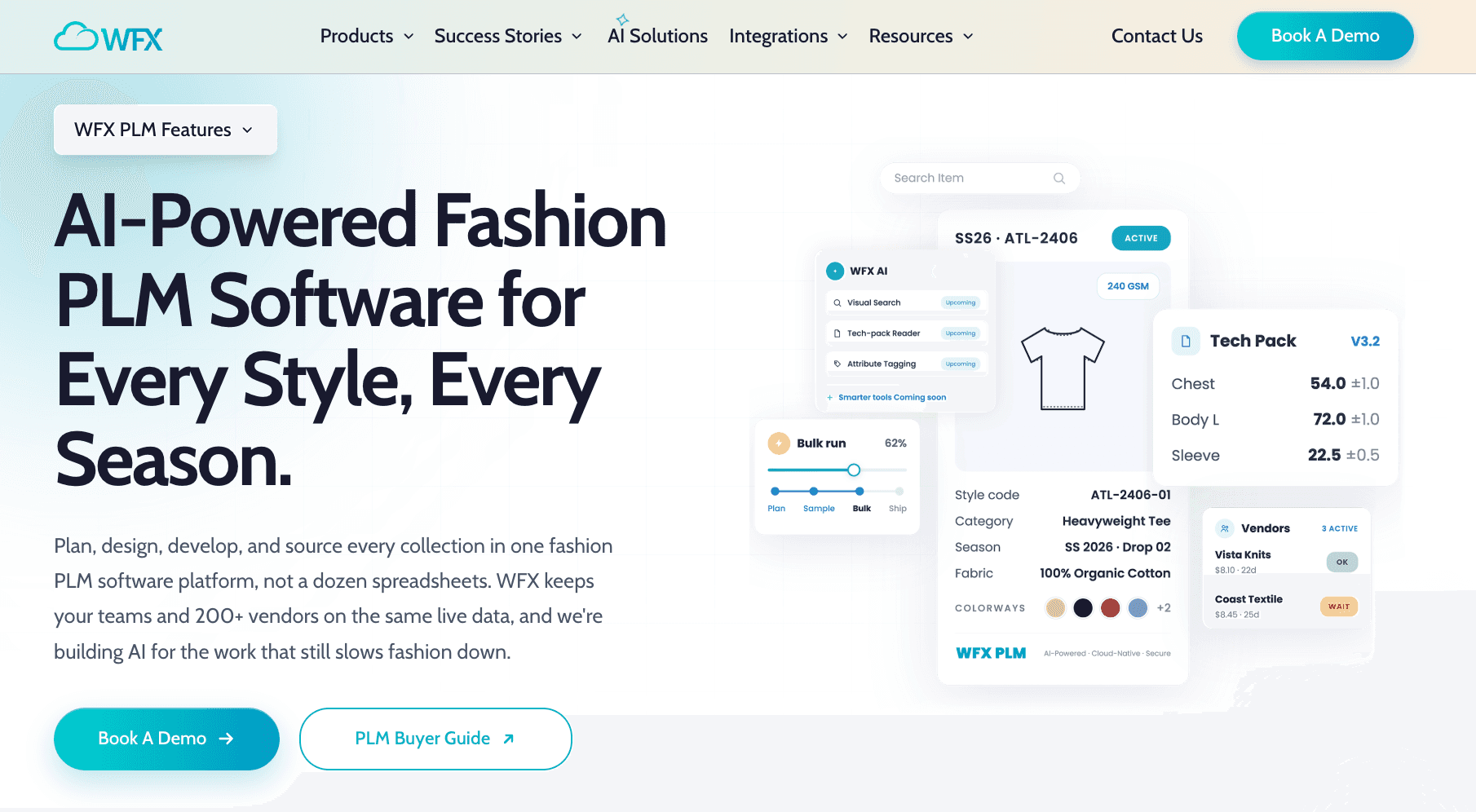
WFX is a cloud-based fashion PLM platform built for brands and manufacturers that design and develop clothes, footwear, accessories, and related fashion products.
It covers planning, design, product development, sourcing, and production in one system, with product data shared between internal teams and vendors.
The platform is designed around fashion-specific information such as colorways, tech packs, BOMs, fit details, materials, and seasonal calendars.
Key Products or Capabilities
WFX supports line planning, tech packs, POMs, BOMs, material libraries, sample tracking, costing, RFQs, vendor portals, quality checks, purchase orders, and shipment tracking.
Its sourcing tools let teams compare vendor quotes, lead times, MOQs, and costs in one place. Suppliers can also comment on tech packs and upload production updates through the platform.
WFX includes Adobe Illustrator integration and connections with ERP, e-commerce, and other systems.
Best Fit
WFX fits fashion brands, manufacturers, and sourcing teams that want product development, supplier collaboration, costing, sampling, and production visibility managed within the same PLM environment.
5. ApparelMagic®
Category: Fashion ERP
Source: apparelmagic.com
What the Company Does
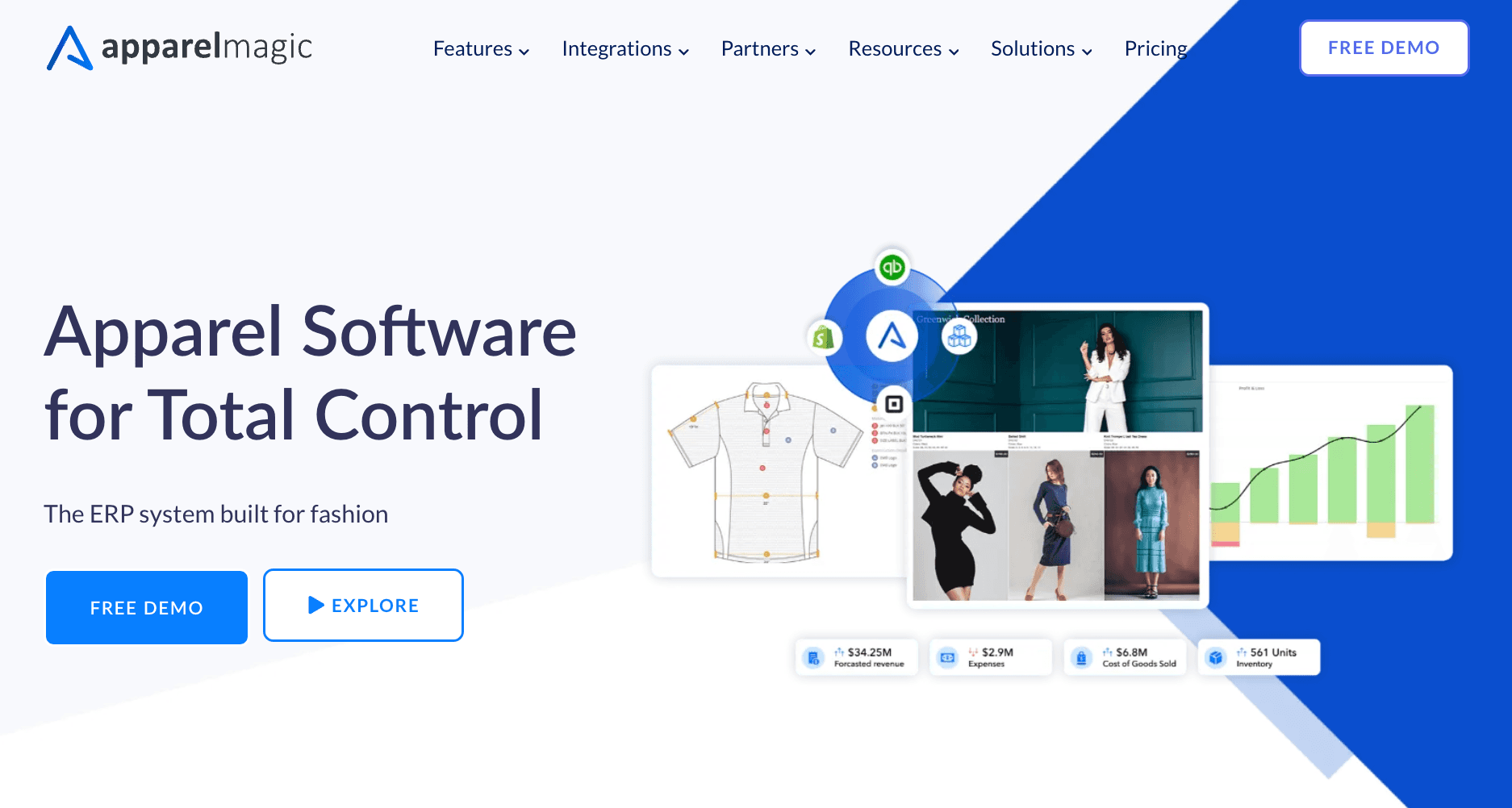
ApparelMagic is an ERP platform built for fashion and apparel companies that need to manage day-to-day business operations in one system.
It covers inventory, orders, purchasing, production, product information, fulfillment, accounting, and sales, with additional tools for B2B commerce and line sheets.
Key Products or Capabilities
The platform includes inventory management, sales and order management, PLM, manufacturing and production, vendor portals, logistics, fulfillment, accounting, and reporting.
Its B2B e-commerce tools let brands manage wholesale ordering and line sheets alongside operational data. ApparelMagic also offers AI tools for inventory, sales, finance, and product development, though these sit alongside the broader ERP rather than defining the platform itself.
Its mix of ERP and commerce features can support multiple revenue streams where a brand manages wholesale and other sales channels within the same system.
Best Fit
ApparelMagic fits fashion and apparel companies that need an industry-specific ERP for inventory, orders, purchasing, production, fulfillment, and sales.
6. BlueCherry
Category: Apparel ERP + Supply Chain
Source: bluecherry.com
What the Company Does
BlueCherry by CGS is a supply chain and business operations platform built for fashion, apparel, footwear, and consumer lifestyle companies.
Its software covers several stages, from product development and sourcing through manufacturing, inventory, logistics, and wholesale operations.
Key Products or Capabilities
BlueCherry includes ERP, PLM, manufacturing execution, warehouse management, quality management, supply chain collaboration, and B2B wholesale tools.
Its ERP supports core operations such as inventory, orders, purchasing, warehousing, and financial processes, while its manufacturing tools provide visibility into production and shop-floor activity.
BlueCherry also offers AI Planning for forecasting and planning around consumer demand, alongside business intelligence tools for operational reporting.
Its broader suite means companies can connect product, supply chain, manufacturing, and inventory workflows rather than using it only as a standalone ERP.
Best Fit
BlueCherry works with clients in apparel, retail, and manufacturing and is best matched to businesses managing more complex production, inventory, and supply chain operations.
7. JOOR
Category: Fashion Wholesale
Source: joor.com
What the Company Does
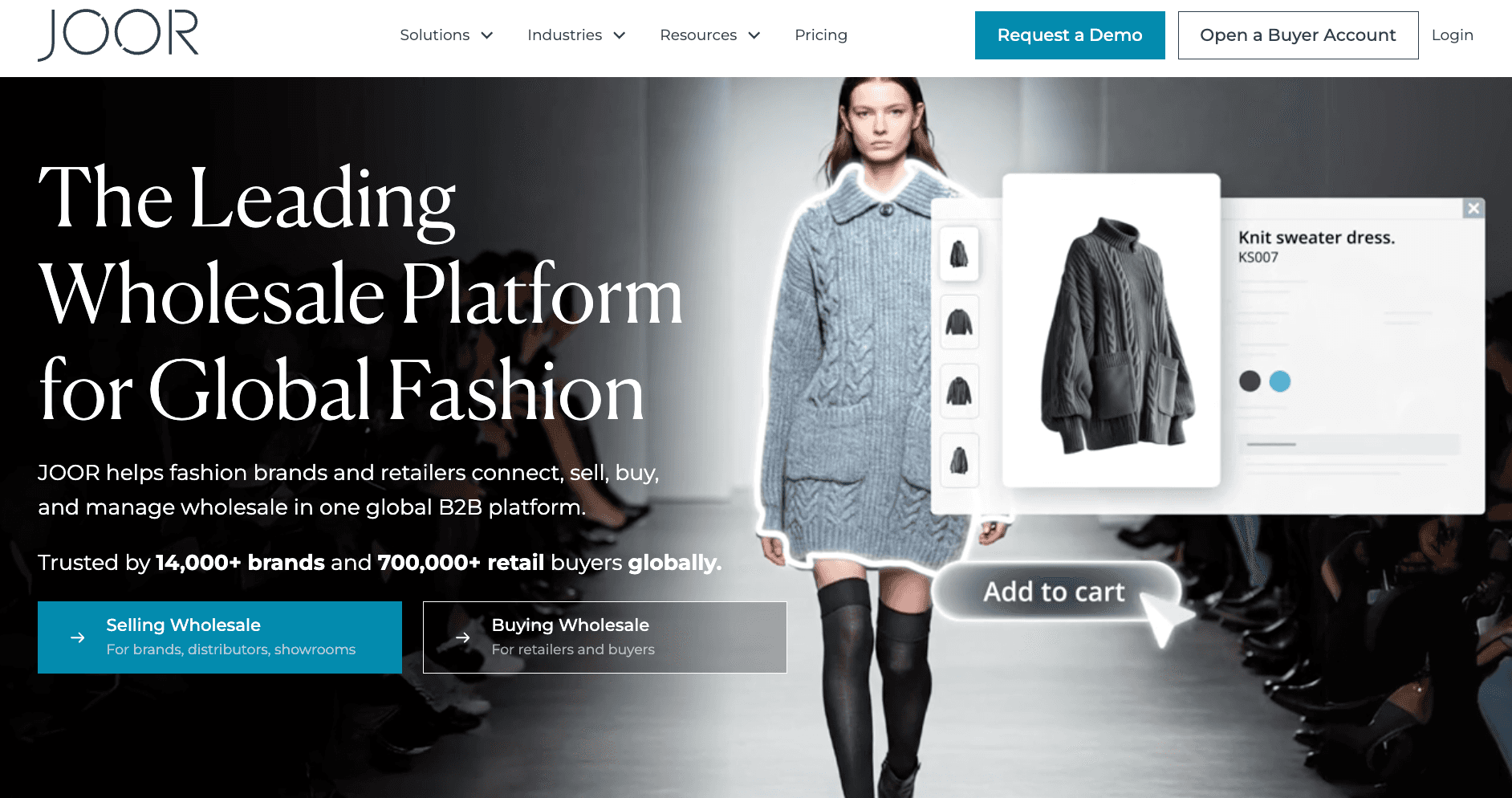
JOOR is a B2B wholesale platform built for fashion brands, distributors, showrooms, retailers, and retail buyers.
It connects brands and retail partners in one system for wholesale discovery, ordering, payments, and relationship management.
Key Products or Capabilities
JOOR supports wholesale order management, line sheets, virtual showrooms, assortment planning, payments, reporting, and retailer discovery.
Brands can use the platform to sell to retail partners, manage orders, and present collections, while buyers can source brands, build assortments, place orders, and pay suppliers.
JOOR Passport extends the platform into digital trade shows, giving buyers and sellers another way to connect around seasonal collections.
The platform also integrates with ERP, PLM, POS, and e-commerce systems, including Shopify, NetSuite, SAP, and Zedonk.
Best Fit
JOOR fits fashion brands and retailers that need a dedicated B2B wholesale platform for buyer relationships, assortment planning, ordering, payments, and wholesale selling.
8. NuORDER
Category: B2B Fashion Commerce
Source: nuorder.com
What the Company Does
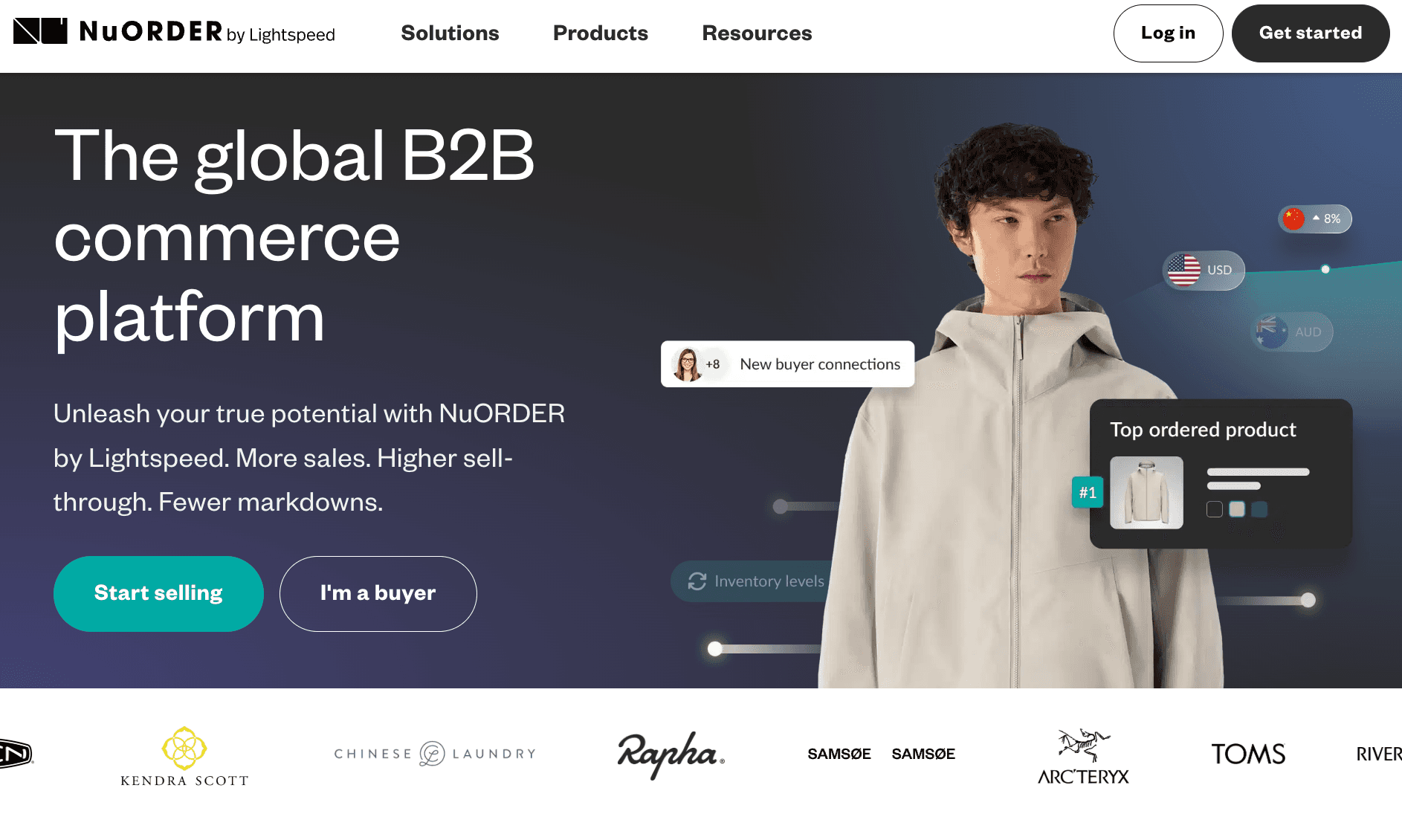
NuORDER by Lightspeed is a B2B commerce platform for wholesale buying and selling between brands and retailers.
It supports brands that sell to department stores, specialty retailers, and other wholesale accounts, while giving retail buying teams tools to discover products, build assortments, and place orders.
Key Products or Capabilities
NuORDER combines wholesale commerce, assortment planning, and a B2B marketplace.
Brands can create digital catalogs, manage account-specific pricing and product selections, accept wholesale orders, and track sales activity.
Retail teams can visually build and review assortments, identify duplicate buys, manage allocations, and collaborate on buying decisions.
Its marketplace also lets buyers discover brands, browse catalogs, place orders, and track fulfillment.
NuORDER integrates with ERP, PLM, and POS systems so product, inventory, and order data can move between the platform and existing business systems.
Best Fit
NuORDER fits fashion brands, retailers, and buying teams that need a dedicated platform for digital wholesale, assortment planning, brand discovery, and B2B ordering.
9. Inspectorio
Category: Supply Chain + Quality Management
Source: inspectorio.com
What the Company Does
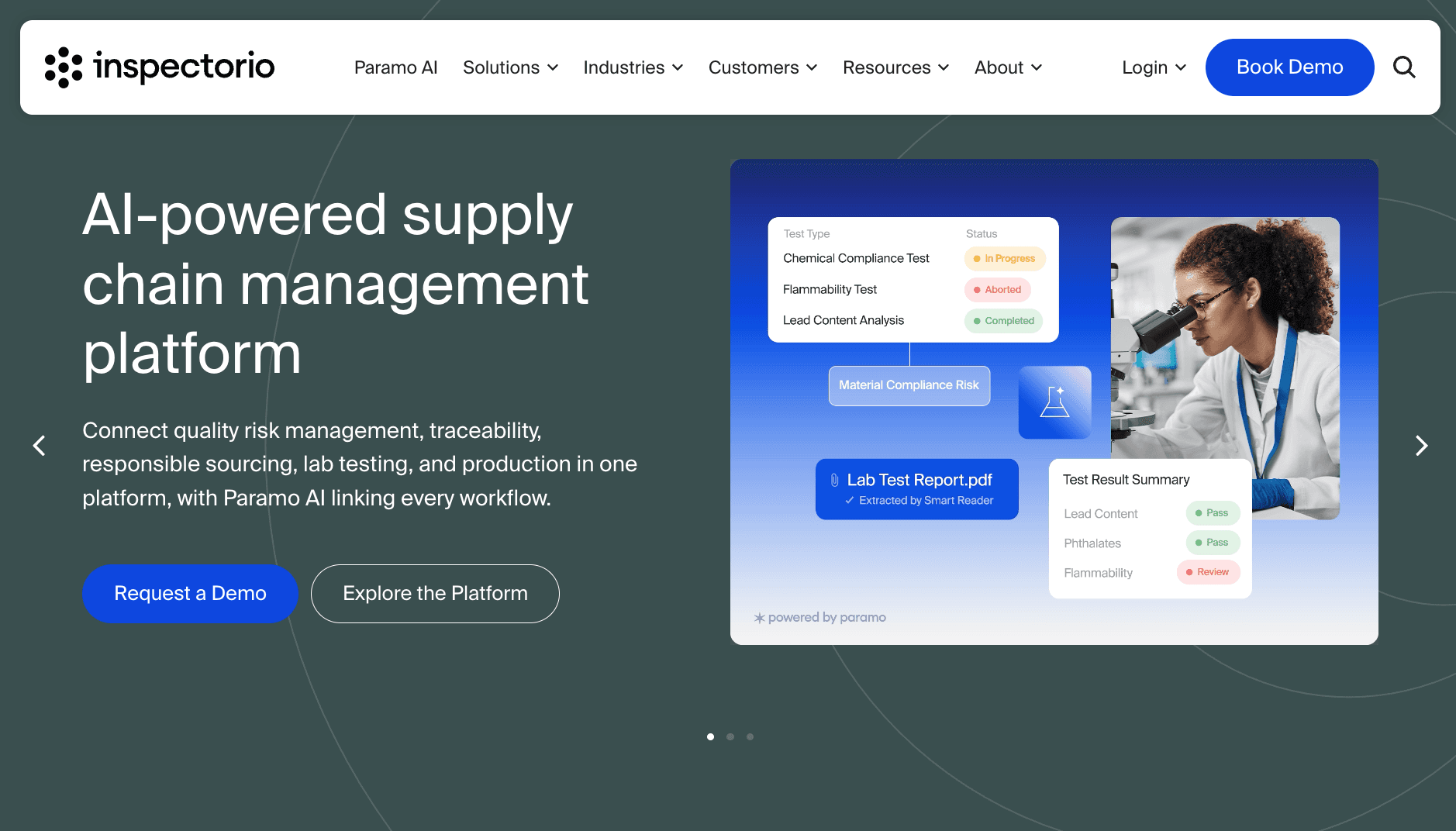
Inspectorio is a supply chain management platform for brands, retailers, suppliers, and companies managing product quality and production.
It connects quality management, compliance, responsible sourcing, traceability, testing, and production workflows.
For apparel and footwear teams, these capabilities become relevant during sourcing, manufacturing, quality control, and sustainable and responsible sourcing programs.
Key Products or Capabilities
Inspectorio supports inspections and quality risk management, lab testing, supplier and factory oversight, traceability, responsible sourcing and compliance, and production management.
Teams can connect product approvals, testing, inspections, and production milestones while maintaining documentation for material compliance and chain of custody.
Inspectorio has also documented environmental data capabilities for monitoring and analyzing a supply chain's carbon footprint, alongside supplier assessments and sustainability reporting.
Best Fit
Inspectorio fits fashion brands, retailers, suppliers, and sourcing teams that need greater visibility into product quality, supplier compliance, traceability, and production once products move deeper into the supply chain.
10. Style3D
Category: 3D Fashion Design
Source: style3d.com
What the Company Does
Style3D develops digital fashion software focused on 3D garment creation, fabric simulation, design visualization, and collaboration.
Its tools support fashion workflows from early design through development, helping teams review garment concepts and digital samples before committing to a physical garment or additional physical sampling rounds.
Key Products or Capabilities
Style3D Studio supports 3D garment design and simulation, while Style3D Fabric focuses on digital fabric development and simulation.
Style3D Cloud gives teams a shared environment for managing 3D assets, building asset libraries, tracking styles, and collaborating remotely.
The company also offers Style3D AI, which uses generative AI for design inspiration and AI-assisted rendering. These capabilities extend its core 3D workflow into concept development and product visualization.
Style3D also supports AI-powered virtual try-on, which can place a completed 3D garment onto a model from a reference image.
Best Fit
Style3D fits fashion designers, product development teams, brands, and manufacturers that want to use 3D garments, fabric simulation, and digital sampling during design and development.
11. Bamboo Rose
Category: Product Development + Sourcing
Source: bamboorose.com
What the Company Does
Bamboo Rose provides retail product lifecycle and supply chain software for brands and retailers, including fashion and apparel businesses.
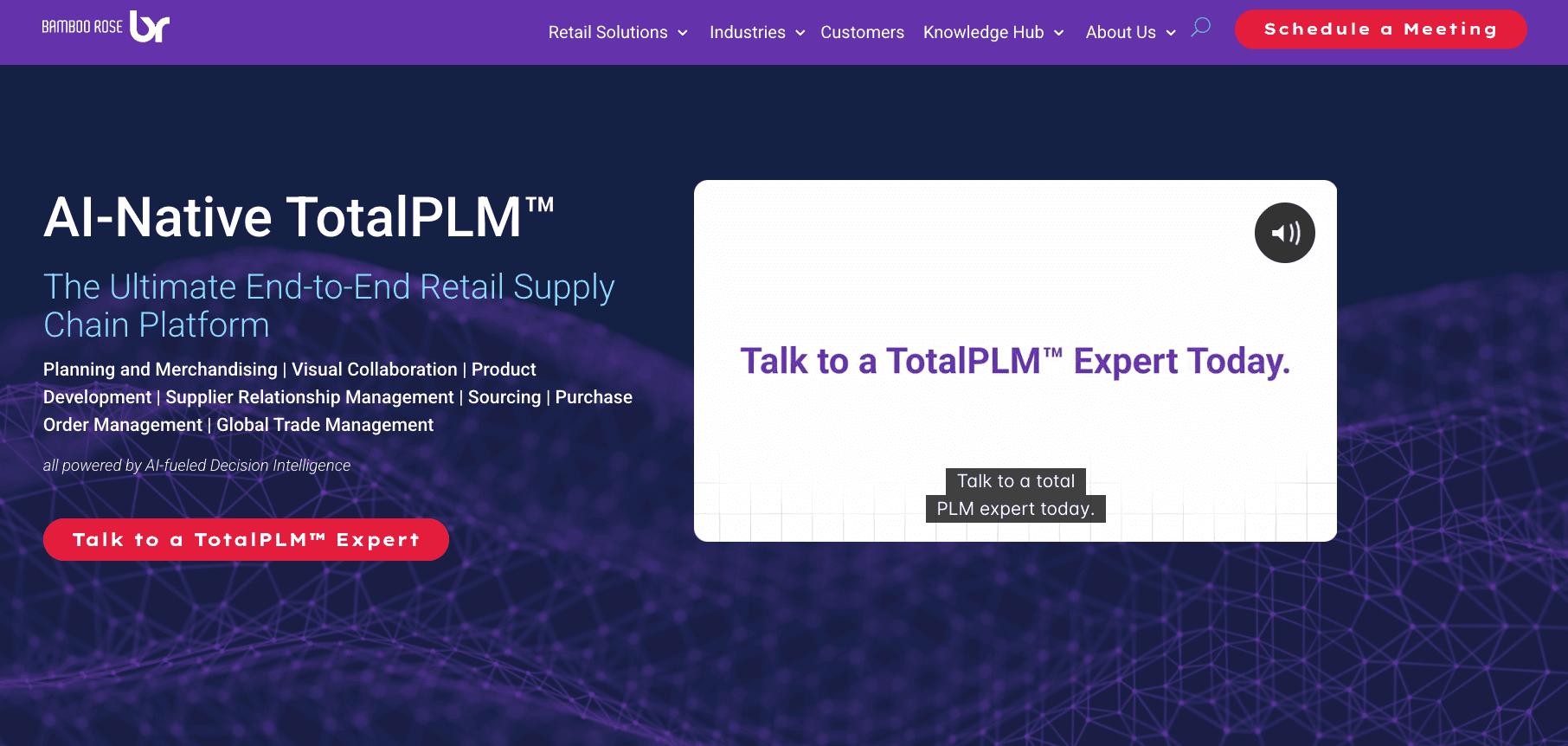
Its TotalPLM platform connects planning, product development, sourcing, supplier management, ordering, and global trade workflows all in one platform.
Bamboo Rose also supports multiple retail categories, including fashion and apparel, food and consumables, and general merchandise.
Key Products or Capabilities
TotalPLM covers planning and merchandising, visual collaboration, product development, supplier relationship management, sourcing, purchase order management, and global trade management.
Product and sourcing teams can use the platform to coordinate internal teams and external suppliers as products move from planning and development toward ordering and delivery.
Bamboo Rose also owns Backbone PLM, which remains supported for existing customers, while TotalPLM is positioned as its flagship PLM platform.
Best Fit
Bamboo Rose fits larger fashion brands and retail businesses managing complex product development, sourcing, supplier, and supply chain operations, particularly when these workflows involve multiple teams, product categories, and external partners.
12. Zedonk
Category: Fashion ERP + Business Management
Source: zedonk.co.uk
What the Company Does
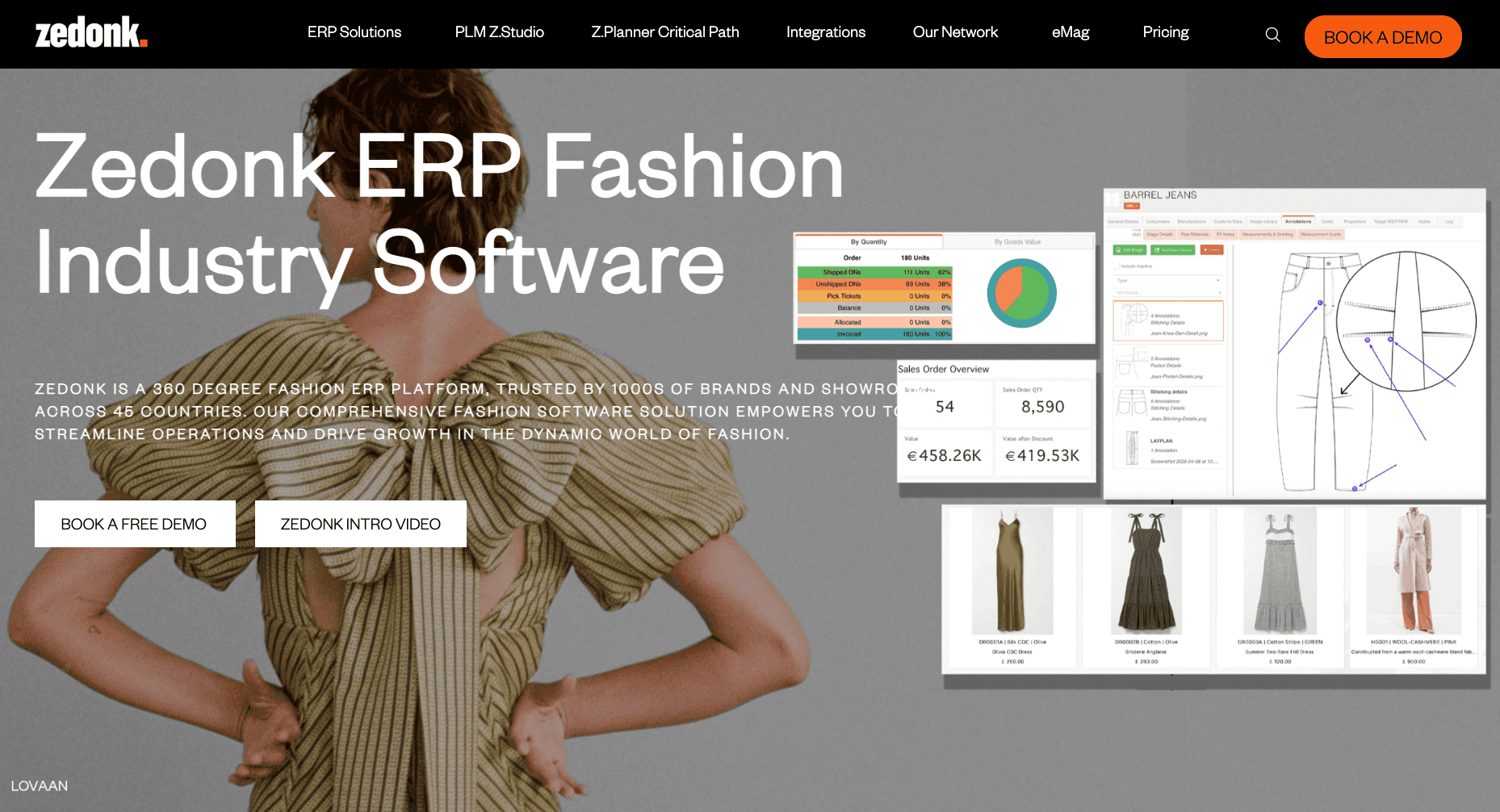
Zedonk is fashion ERP software designed for small and medium-sized fashion brands and showrooms.
It supports day-to-day business operations from product development and production through inventory, wholesale sales, logistics, and reporting.
Its fashion-specific structure includes workflows for raw materials, finished goods, and clothing inventory.
Key Products or Capabilities
Zedonk covers product development, production planning, inventory and stock control, order management, logistics, reporting, and B2B wholesale.
Teams can manage fabrics and trims, calculate product costs, plan material requirements for sales orders, and track finished goods and raw materials.
The platform also includes a B2B digital showroom and sales app for wholesale workflows, plus integrations for connecting Zedonk with other business systems.
Its modular structure allows brands to add capabilities as their operational requirements change.
Best Fit
Zedonk fits independent, small, and growing fashion brands that need fashion-specific ERP software for managing product information, production, inventory, wholesale orders, and related business operations.
What Fashion Brands Should Consider Before Choosing a SaaS Platform
A platform can stand out for its feature list and still be a poor fit for the way your brand works. Start with the work that needs support, the people doing that work, and the product information they handle every day. From there, you can compare platforms based on fit rather than feature count.
Identify the Workflow That Needs Software Support
Begin with the pain points you are trying to solve.
Design, product development, sourcing, production, wholesale, inventory, and retail involve different processes. The tools built for these areas also do different jobs. A PLM platform may organize tech packs and product revisions, for example, but that does not make it a replacement for an ERP used to manage inventory and orders.
It makes sense to identify the software category you need before comparing individual vendors. Otherwise, you may end up comparing platforms that were built for completely different jobs.
Identify the Main Users
Think about who will actually use the software during a normal workday.
A product developer may need quick access to specifications and sample comments. A sourcing team may spend more time working with suppliers and purchase information. Merchandising, production, and operations teams will have their own requirements.
Look at the problems people already run into during their day-to-day work. Repeated questions, manual updates, missed handoffs, or customer feedback that requires changes to products can help reveal where the current process falls short.
Check for Apparel Industry-Specific Requirements
Fashion businesses work with information that general business software may not be designed to handle.
Styles can have multiple SKUs and colorways. Materials feed into BOMs and tech packs. Samples go through revisions and approvals before a product is ready for production. Collections also bring suppliers, deadlines, and product information together.
Check how the software handles the information your brand already works with. A long feature list means little if basic product data has to be squeezed into a system that was not built around fashion workflows.
Consider How It Fits With Your Existing Systems
New software rarely operates on its own. Your brand may already use ERP, e-commerce, accounting, inventory, or design software.
Look at where information needs to move between those systems and the new platform. Product details may need to reach an ERP after development, for example, or order information may need to connect with inventory.
You do not need to turn the evaluation into a technical integration project. Start with a practical question: which information needs to move between systems, and how much manual work would be required if it does not?
Match the Platform to Your Business Complexity
A small collection with a few suppliers creates very different software requirements from hundreds of styles, multiple markets, and several product teams.
Consider your product volume, number of collections, suppliers, users, markets, and the amount of product data your brand manages. Then look beyond what you need right now.
Plans to drive growth can add more approvals, product variations, users, and supplier relationships. Your future requirements should therefore be part of the decision, but more features do not automatically mean a better fit.
The better choice is a software service that fits your current requirements and can support the level of complexity your business is likely to take on over time.
Compare the Full Cost of the Platform
Price can vary considerably between fashion SaaS companies. A simple monthly fee may work for some platforms, while others use annual contracts, custom pricing, implementation fees, or charges for additional users and services.
Look beyond the subscription price when deciding how much money to budget for the software. Implementation, data migration, integrations, training, support, and future configuration can all affect the total cost.
A lower starting price does not always mean a lower long-term cost, especially if your team needs additional services to get the platform set up or adapt it as the business grows.
Build a More Connected Fashion Workflow With Onbrand
The best fashion SaaS company for your business depends on the work you need the software to support. Design teams, product developers, sourcing teams, operations teams, and wholesale teams each have different requirements, which is why the platforms in this guide serve different parts of the fashion workflow.
For brands focused on fashion design and product development, Onbrand brings those stages closer together. Onbrand AI Design supports early concept exploration, while Onbrand PLM helps teams carry approved ideas into tech packs, materials, revisions, and approvals.
Choosing software comes down to finding a platform that fits how your team develops products today and where that process needs to improve.
Book a demo to see how the platform supports your design and product development workflow.
FAQs About Fashion SaaS Companies
How is fashion SaaS different from general business software?
Fashion SaaS is designed around industry-specific processes such as styles, colorways, tech packs, sampling, sourcing, production, and wholesale. Its software development reflects the workflows and product data used by fashion businesses.
How do fashion SaaS companies use AI?
Fashion SaaS companies use AI for tasks such as design generation, product recommendations, forecasting, visual search, and merchandising. Some platforms apply data science and machine learning to product, customer, or operational data to support these capabilities.
Can fashion brands use more than one SaaS platform?
Yes. A fashion brand may use PLM for product development, ERP for inventory and orders, and separate software for wholesale, sourcing, or e-commerce. These systems can support different teams and exchange product or business data through integrations.
Can fashion SaaS support brands that sell products globally?
Yes. Some fashion SaaS platforms support product development, sourcing, wholesale, and retail operations in multiple markets. Fashion brands do not need software built to manage the world's products. They need a platform that supports their own products, suppliers, markets, and business processes.
Are fashion SaaS companies only for large brands?
No. Fashion SaaS companies serve businesses of different sizes, from growing brands with dedicated design and product teams to large apparel retailers and global enterprises. The right platform depends on the products, users, suppliers, sales channels, and processes the business needs to manage.
ApparelMagic® is a registered trademark. ApparelMagic is not affiliated with or endorsing Onbrand.