Jul 30, 2026

Fashion runs on much more than great design. A growing fashion business also needs to manage product information, suppliers, inventory, production, and team collaboration.
Once collections become larger and workflows involve more people, spreadsheets and disconnected tools often become difficult to manage.
Fashion business software gives brands a more organized way to manage these everyday workflows. Built for the fashion industry, these platforms make it easier to keep projects moving and product information organized.
This guide compares seven leading fashion business software platforms based on their capabilities, strengths, limitations, and ideal use cases, so you can find the right fit for your business.
TL;DR
Here are the seven best fashion business software platforms:
Backbone PLM
Centric PLM
WFX PLM
ApparelMagic
BlueCherry
Zedonk
What Is Fashion Business Software?
Fashion business software refers to digital tools built to support the day-to-day fashion operations of clothing and accessory brands.
Unlike general business software, it is designed around the workflows and unique challenges found in the apparel industry, from managing product information and collections to coordinating suppliers, production, and internal teams.
Many fashion companies rely on specialized fashion software because developing and bringing products to market follows a different process than in most other industries.
Teams often work with seasonal collections, multiple suppliers, changing product details, and tight development timelines.
Not every platform serves the same purpose. Some focus on product development and collaboration, while others help manage inventory, production, or business operations.
The common goal is to support the way fashion brands organize their daily work without relying on disconnected systems or manual processes.
7 Best Fashion Business Software for Fashion and Apparel Brands
No two fashion brands work the same way, so no single platform fits every business. The best software is the one that supports your daily workflows and helps your team stay organized.
If you're comparing options, the list below highlights seven platforms to help you find the right software for your needs.
1. Onbrand PLM
Onbrand PLM is a modern product lifecycle management platform built for growing fashion brands.

It brings product information, collections, tech packs, samples, approvals, tasks, and vendor collaboration into one shared workspace.
Live tech packs function like web documents, so teams and factories always work from the latest information rather than emailing updated PDFs or spreadsheets.
Onbrand reports 55% faster tech pack creation, development timelines shortened by four weeks, and data migration completed in 10 days.
When paired with Onbrand AI Design, designers can explore concepts, test colorways, and compare fabric variations before approved visuals and product details move into product lifecycle management (PLM) for development.
Key Features
Centralized libraries for product information, materials, colors, artwork, specifications, and collections
Live tech packs with sample tracking, approvals, comments, and current product information
Collection planning, configurable stages, tasks, and time-and-action calendars
Direct vendor collaboration with comments linked to the relevant product information
Fast data migration, built-in integrations, dedicated support, and a direct connection to Onbrand AI Design
Best For
Onbrand is best for growing fashion, footwear, outdoor, and home brands with dedicated design and product development teams. It also suits brands replacing spreadsheets or legacy PLM systems with a modern platform that is faster to implement and easier to adopt.
2. Backbone PLM
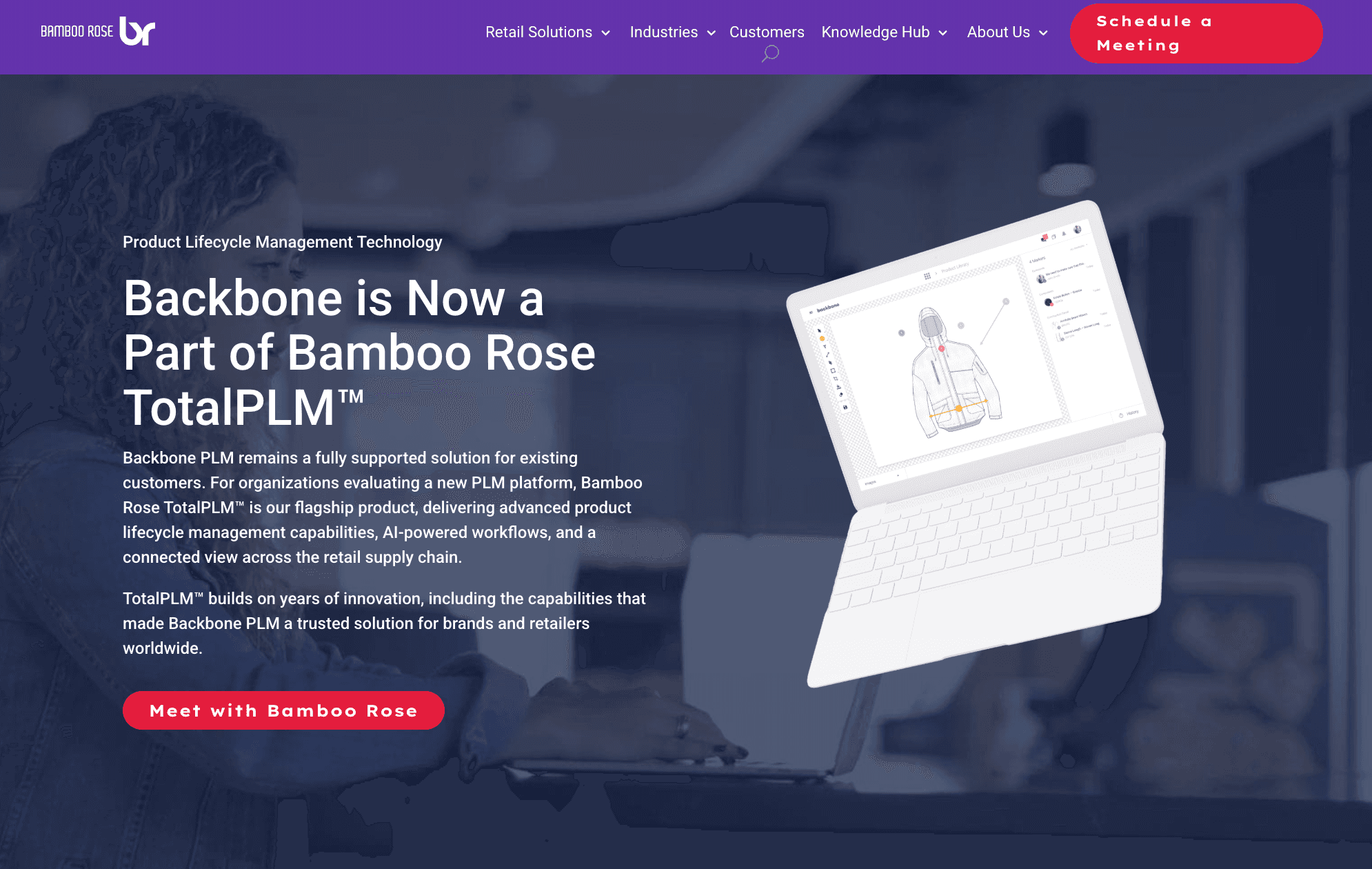
Backbone PLM is a cloud-based PLM platform that supports product development by keeping product information, tech packs, materials, and approvals in one place.
Source: bamboorose.com
The platform also supports Adobe Illustrator through a plugin, allowing design files to connect with product information during development.
Existing Backbone customers continue to receive support, while new customers are generally directed toward Bamboo Rose TotalPLM.
Key Features
Centralized product libraries for materials, specifications, and styles
Customizable tech packs with live sharing for internal teams and suppliers
Adobe Illustrator plugin for syncing design files
Templates for bills of materials (BOMs), measurements, and size specifications
Version history and standardized workflows for managing new styles
Best For
Backbone PLM is suited to existing customers and fashion brands that need design-focused product development capabilities. New buyers should also evaluate Bamboo Rose TotalPLM, which is now the company's flagship product.
3. Centric PLM
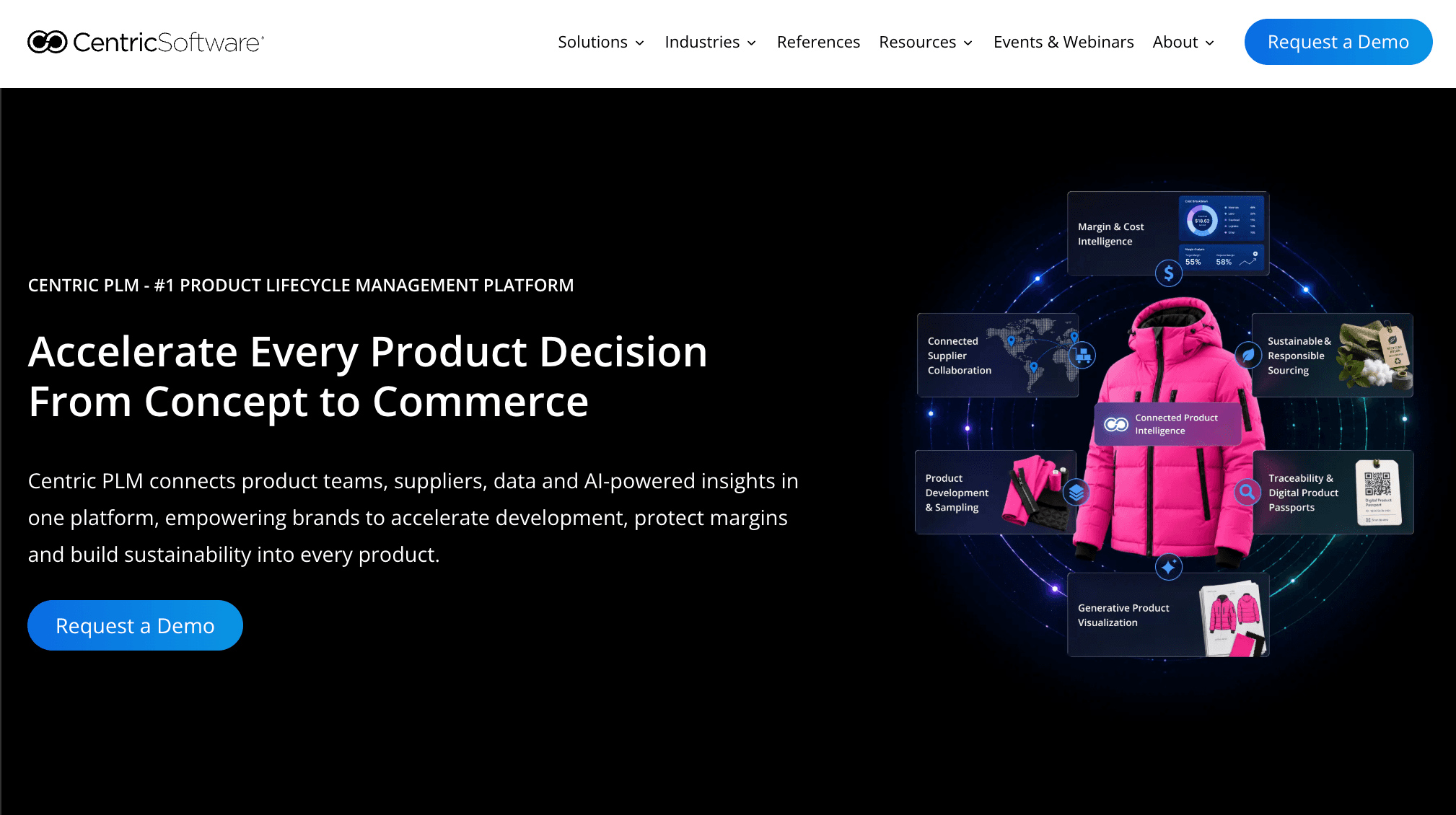
Centric PLM is an enterprise PLM solution used by many global brands to manage product information from concept through commercialization.
Source: centricsoftware.com
It supports large organizations with complex supply chains by bringing design, sourcing, costing, and product data into one environment.
Centric PLM also connects with existing tools, including design applications and business systems, making it suitable for brands with established technology ecosystems.
Key Features
Product development, sourcing, costing, and collection management in same system
Connections with Centric Planning for assortment planning and demand forecasting
Integration with fashion design software and other existing tools
Product data management with collaboration and approval tracking
Cost analysis tools that support cost control during development
Best For
Centric PLM is commonly used by larger fashion brands and retailers managing high product volumes, multiple teams, and complex supply chains. It generally aligns with organizations that have established product development processes and dedicated implementation resources.
4. WFX PLM
WFX PLM is a cloud-based apparel industry software solution built for fashion brands that want to manage product development, sourcing, and production from one system.

Source: worldfashionexchange.com
It brings product information, vendor communication, sampling, approvals, and collection planning together, with support for design tools such as Adobe Illustrator, CLO, and Browzwear.
The software also includes supplier collaboration and sustainability features, making it suitable for brands working with multiple manufacturing partners.
Key Features
Collection planning with seasonal, style, and color management
Digital tech packs, sampling, and approval tracking
Vendor portal for supplier communication and sourcing
Integrations with Adobe Illustrator, CLO 3D, Browzwear, Shopify, SAP, and other business systems
Production visibility, quality inspections, and sustainability tracking
Best For
WFX PLM is often used by fashion and apparel brands that want to manage collection planning, product development, supplier collaboration, and production within one system. It may also fit companies looking for broader operational coverage alongside PLM.
5. ApparelMagic

Source: apparelmagic.com
ApparelMagic® is an enterprise resource planning (ERP) solution built specifically for fashion businesses. Along with its integrated PLM module, it helps brands manage purchasing, production, sales, and finance from one system.
The software places a strong focus on inventory control, order management, and reporting, making it suitable for brands that want to connect product development with day-to-day business operations.
It also includes AI-powered assistants for tasks related to inventory, sales, finance, and product development.
Key Features
Inventory management with live inventory data and stock tracking
Sales, purchasing, and order management tools
Built-in PLM, manufacturing, and vendor portal
Reporting to support inventory planning and business decisions
B2B ecommerce, accounting, and customer management
Best For
ApparelMagic is suitable for fashion brands that want ERP, inventory, sales, accounting, and product development functions within a single system.
6. BlueCherry
BlueCherry is a supply chain and ERP solution developed for apparel, footwear, and consumer goods companies.
Source: bluecherry.com
It combines PLM, manufacturing, logistics, and business management into one platform.
BlueCherry places a strong emphasis on production planning, sourcing, and end-to-end fashion operations, making it suitable for brands managing large supplier networks and complex manufacturing processes.
Key Features
PLM integrated with ERP and sourcing
Warehouse management and inventory tracking
EDI tools that support EDI compliance and document exchange with suppliers and retailers
Manufacturing execution, shop floor control, and quality management
Business intelligence and supply chain reporting
Best For
BlueCherry is commonly used by established apparel and consumer goods companies with extensive sourcing, manufacturing, warehousing, and distribution requirements. It generally aligns with organizations operating larger manufacturing networks and more complex supply chains.
7. Zedonk
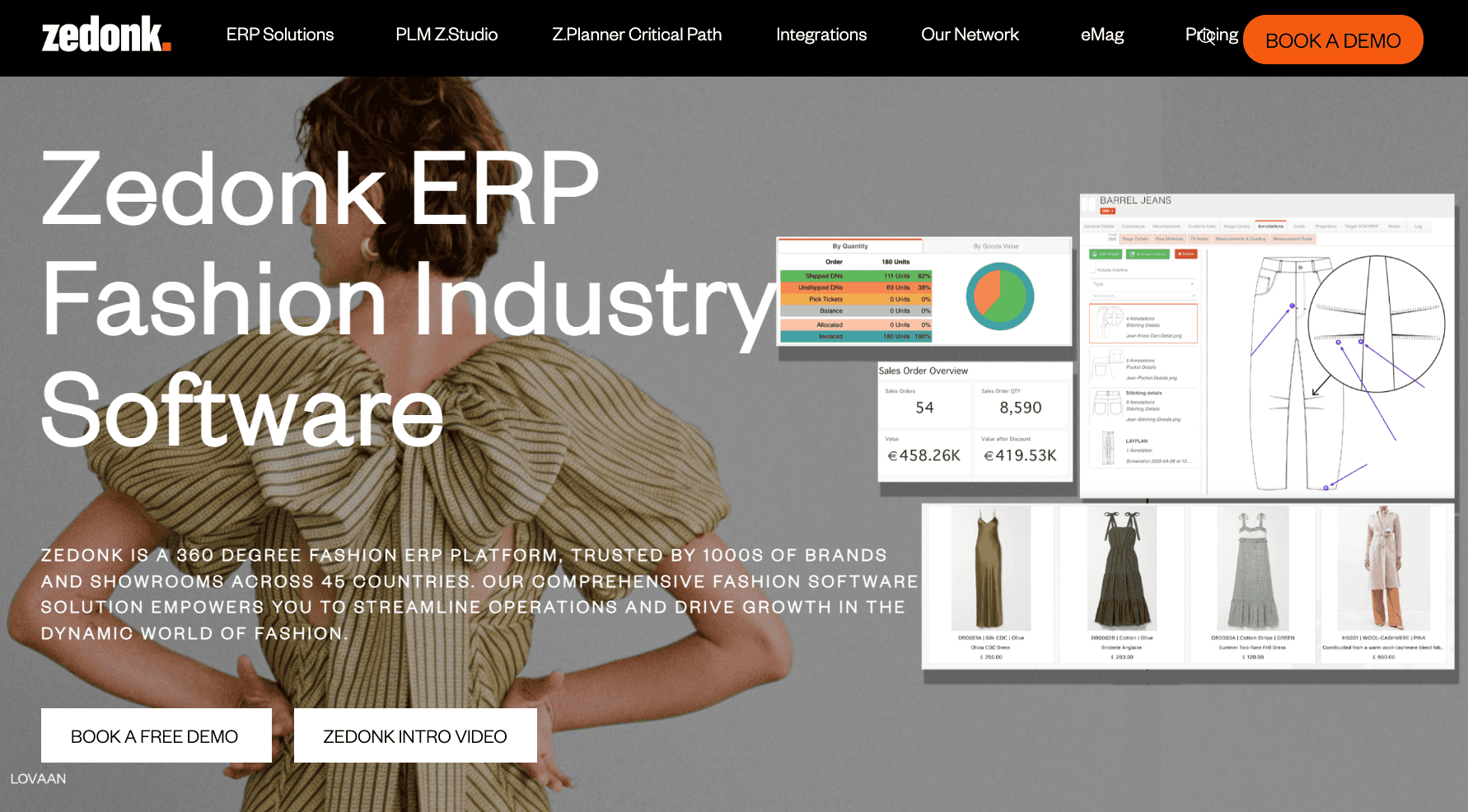
Zedonk is cloud-based management software built for small and mid-sized apparel brands.
Source: zedonk.co.uk
It combines ERP, inventory, production, sales, and product development tools in one system, helping brands manage collections from development through order fulfillment.
The software also includes a digital showroom, reporting, and production planning features that support day-to-day business operations. Its modular structure allows companies to add functions as their needs change.
Key Features
Inventory, purchasing, and production management
Sales, logistics, and order fulfillment tools
B2B digital showroom and sales applications
Product costing, reporting, and business analytics
PLM, production planning, and critical path management
Best For
Zedonk is designed for small and mid-sized apparel brands that want to manage product development, inventory, production, and sales from a single application.
Why Fashion Brands Invest in Fashion Business Software
Most brands invest in fashion business software to bring more structure to everyday work.
Product information becomes easier to find, teams spend less time updating spreadsheets, and decisions are based on more reliable data.
That often leads to faster product development, smoother supplier communication, and improved collaboration between departments.
Keeping information in one system also makes it easier to work with suppliers and apparel manufacturers, since everyone works from the same product details.
Teams spend less time searching for information and more time moving products forward, resulting in fewer errors, better quality control, and improved inventory accuracy.
Better reporting provides real-time insights into schedules, inventory, and production performance.
Those reports also help brands gain insights that support planning, control costs, and build a more accurate understanding of the total cost of bringing products to market.
How to Choose Fashion Business Software
Choosing the right apparel software starts with looking at how your brand works today.
The best platform should fit the way your team develops products, works with suppliers, and manages information every day.
If the software forces your team to change every process, adoption becomes much harder.
Consider Your Business Stage
Start by thinking about where your brand is today.
A small brand may only need one place to organize product information and supplier communication. Larger brands often need software that supports multiple collections, more users, and several production partners.
Look for a platform that fits your current business model but still has room to support future growth.
Look for Support for Your Existing Workflow
Map out your current fashion workflow before comparing platforms.
Product information usually moves from the design process into product development, then continues through sourcing, production, inventory, and wholesale.
The software should support that flow without forcing your team to enter the same information multiple times.
If your designers already use fashion design software, check how easily those files move into product development, including design reviews and pattern design.
Think About Team Collaboration
Check who needs access to the platform every day. Often, the same product information is needed by:
Fashion designers
Product developers
Sourcing teams
Merchandising teams
Vendors
Sales teams
Production managers
Everyone should be able to review the latest details without waiting for updated spreadsheets, emails, or shared folders.
Check Integration Options
Most brands already have other business systems in place.
If you already use an ERP system, an e-commerce platform, or accounting platforms, ask how the software connects with your existing ERP solutions.
The goal is to reduce duplicate data entry and keep information consistent between systems.
Consider Implementation and Scalability
Ask practical questions before making a decision.
How long does onboarding usually take?
How do suppliers receive access?
What happens when your collections or supplier network grows?
A product described as a complete solution should still be tested against the work your brand actually handles.
Vendors that provide expert guidance during implementation can also help your team get up to speed more quickly.
What Type of Fashion Business Software Do You Need?
Not every fashion business needs the same type of software. The right choice depends on the part of your business you want to improve.
Use the table below as a starting point to match your biggest operational need with the type of software that typically supports it.
If You Need To... | Look For... |
Manage product development | PLM |
Track inventory | Inventory software |
Plan production | Apparel ERP or fashion ERP software |
Manage wholesale orders | Order management software |
Operate retail stores | POS software |
Plan collections | Merchandise planning software |
Many growing brands use more than one platform. For example, a brand might use PLM for product development, an ERP system built for manufacturing and operations, and separate software for e-commerce or retail. Each platform supports a different part of the business.
Bring Your Fashion Business Together With Onbrand
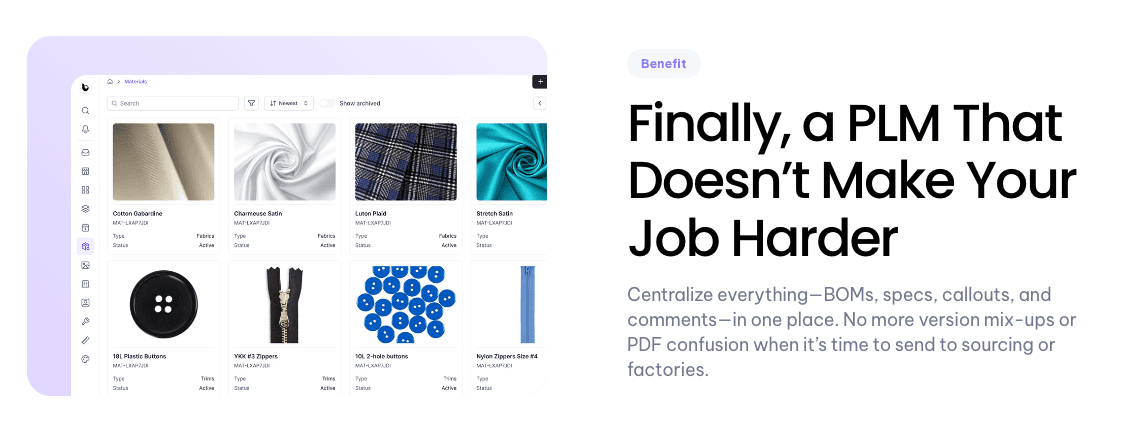
Every fashion brand works differently. Some teams need better product development workflows, while others are looking for better inventory management, production planning, or supplier collaboration.
The right software is the one that fits the way your business operates today and can continue supporting your team as your collections grow.
Onbrand helps fashion brands manage product development and keep product information connected from concept through production.
Designers, product developers, sourcing teams, and vendors can work from the same information, helping reduce manual updates and keeping projects organized throughout development.
FAQs About Fashion Business Software
What is the difference between fashion business software and general business software?
Fashion business software is built for the workflows used by clothing and accessory brands. It supports product development, supplier collaboration, production planning, and collection management, while general business software is designed for broader business activities that are not specific to the fashion industry.
Do fashion business software platforms work with existing business systems?
Many platforms integrate with ERP systems, e-commerce platforms, accounting software, and other business applications. Integration options vary, so it's worth checking which systems are supported before choosing a platform.
Is cloud-based fashion business software better than desktop software?
For most fashion brands, cloud-based software offers easier access for designers, suppliers, and remote teams because information can be updated and shared online. Desktop software may still suit businesses that prefer managing everything on local computers.
How often should fashion brands review their business software?
Review your software whenever your workflows change significantly, such as expanding into new product categories, adding suppliers, opening new sales channels, or growing your team. Regular reviews help confirm that the platform still supports your day-to-day operations.
Can I try the fashion business software before buying?
Many software providers offer a free demo, guided walkthrough, or trial so you can evaluate the platform before making a decision. A demo gives your team an opportunity to review the interface, understand the workflow, and decide if the platform fits your day-to-day operations.
*ApparelMagic® is a registered trademark. ApparelMagic is not affiliated with or endorsing Onbrand.