What Is a Bill of Materials (BOM)? A 2026 Guide

What Is a Bill of Materials (BOM)? A 2026 Guide

Feb 19, 2026

bill of materials
bill of materials
bill of materials

Once a design moves past the concept stage, details add up quickly. Fabrics, trims, labels, quantities, and sourcing notes all need a clear place to live.

When that information is spread between emails, spreadsheets, and shared drives, small gaps turn into mistakes.

A bill of materials (BOM) brings those details together. It records every physical input needed to make a product in a single reference, so design, development, and production work from the same information.

This guide explains what a BOM is, when it’s used, what it includes, and how fashion teams rely on it as products move into sampling and production.

TL;DR

  • A bill of materials is the central list of everything needed to make a product, including materials, trims, components, quantities, and units.

  • BOMs show up once a design is approved and are updated through sampling and into production as materials and quantities get confirmed or revised.

  • A BOM can be single-level for simple products or multi-level when you need parent–child relationships through subsections.

  • Most BOMs include component names and descriptions, quantities and units of measure, materials and components, and sourcing notes such as suppliers and lead times.

What Is a Bill of Materials?

A bill of materials is a comprehensive list that records all the components and materials required to make a finished product.

It shows what goes into a product, how much of each item is needed, and how components relate within the overall BOM structure.

A BOM captures raw materials, trims, labels, and sub-components, along with basic details like quantity, unit measure, and supporting BOM notes. It reflects the product's physical makeup rather than tasks, decisions, or timelines.

BOM is not just a list. It serves as a single point of reference that defines how a product is physically built and how its components relate in the production process.

The BOM defines what goes into a product, while specification management covers measurements, construction details, and approvals.

What Is the Purpose of a BOM?

The purpose of a BOM is to clearly define the components required to make a product before production begins.

It creates a single reference that documents what must be built, in what quantities, and how components relate throughout the fashion product development and manufacturing process.

A BOM keeps product data consistent for production planning, inventory management, and materials management as work moves toward the final product.

The shared record reduces uncertainty when details change during product lifecycle management.

According to the U.S. National Institute of Standards and Technology (NIST), inadequate design and product data lead to billions of dollars in avoidable manufacturing costs each year.

Much of this comes from redundant documentation, clarification work, and poor information flow between teams.

Clear, well-maintained bills of materials help address these gaps by keeping product inputs defined and aligned before production begins.

An accurate BOM also sets control around changes. When updates happen, they are reflected in the same record, which helps maintain product structures and limit production errors without turning the BOM into a task list or a system.

Who Prepares a Bill of Materials?

A BOM is prepared throughout the product development process, from design and development through production. Responsibility often shifts as a style moves closer to the final product, but the record itself remains shared.

Typical contributors include:

  • Design and development - Designers and developers define early inputs using technical drawings and computer-aided design (CAD) drawings. These details form the first version of the BOM.

  • Development and production leads - As styles move forward, manufacturing teams add structure, confirm subsubsections, and review the BOM hierarchy, so the BOM reflects how the product will be built.

  • External partners - In some cases, contract manufacturers provide updates on materials, quantities, or production scheduling, especially after sampling begins.

Clear ownership helps keep multiple departments on the same page and avoids gaps that surface later in project management.

When Is a Bill of Materials Used in Product Development?

BOM is first used once a design is approved and ready to move beyond the concept stage. At this point, material choices, trims, and quantities need to be recorded so details do not shift as work continues.

As sampling begins, the BOM is reviewed and updated to reflect approved changes resulting from fittings and sample reviews.

Items tied to child components and intermediate assemblies are clarified as the product moves through the production process, which keeps sample management aligned with the latest materials and quantities.

This stage often determines whether the BOM remains a single-level BOM or expands into a multi-level BOM with a clearer hierarchical format.

Before production starts, the BOM supports planning tied to the supply chain and cost estimation, including early checks on unit costs.

Keeping the record current at each milestone helps limit production delays and protect product quality.

The Two BOM Structures

Bills of materials are usually organized in one of two ways. The structure affects how clearly components relate to one another as a product moves toward production.

1. Single-Level Bill of Materials

A single-level BOM lists every item needed to make a product on one flat level. All materials appear once, without showing how components connect. This format is often used early in development or for simple products with few dependencies.

For example, a basic tote bag may list fabric, webbing, thread, and labels in one view. This approach works when there are no intermediate assemblies and only a limited number of child components.

Single-level BOMs support quick cost estimation and unit cost checks, but they offer less detail as products become more complex.

2. Multi-Level Bill of Materials

A multi-level BOM shows how components relate within a hierarchical format. Materials are grouped into subsections that reflect how the product is organized during development and production. This structure is sometimes called an indented BOM.

Complex styles rely on this setup because it clarifies how fabrics, trims, and other components fit together.  Breaking products into sections helps reduce production delays and supports consistent product quality, especially when a modular BOM structure is needed.

What Information Does a Bill of Materials Include?

A BOM defines the components required to create a product and specifies the materials assigned to each one. Each entry should be clear and direct so details don’t get misread or lost as styles move through development.

  • Component names and descriptions - Each BOM begins with clearly defined components such as Main Fabric, Lining Fabric, or Center Buttons. Components describe what is needed, separate from the exact material used.

  • Assigned materials - Each component is linked to a specific material from a material library. For example, a Main Fabric component may be assigned a 100% polyester fabric with a defined construction, finish, and color. This keeps requirements consistent while allowing material changes when needed.

  • Quantities and units of measure - The BOM records how much of each component or material is used per product. Quantities stay consistent across sizes and versions to support accurate planning.

  • Trims, labels, and hardware - Additional components cover trims, labels, buttons, zippers, and other details. For styles with variations, the BOM can show which materials apply to each colorway or version.

  • Sourcing notes - Supplier references, lead times, and material status provide context for ordering and approvals, helping reduce delays and last-minute changes.

Types of Bills of Materials

In fashion and apparel, teams typically work from a single bill of materials that carries a product from development through production. That BOM is updated and refined as details are approved, rather than split into separate records by stage.

In other industries, BOMs are often categorized by how and where the information is used. You may still see these terms referenced, especially when working across systems or reading general manufacturing documentation.

Engineering Bill of Materials (EBOM)

An engineering BOM reflects early design intent. In many industries, it captures initial component decisions, sketches, and specifications before production details are finalized. In fashion, this information is usually documented within the same BOM rather than maintained as a separate record.

It may also reference non-physical items, such as software components, when products include electronics or smart features.

Manufacturing Bill of Materials (MBOM)

A manufacturing BOM is typically used to organize materials based on how a product is built on the factory floor. While some industries manage this as a distinct BOM, fashion teams usually incorporate production-ready details directly into the main BOM as styles move toward production.

Sales Bill of Materials

A sales BOM represents how a product is sold rather than how it is built. It reflects the configuration a company offers to customers, which may bundle multiple components into a single sellable item.

Configurable and Modular Bills of Materials

A configurable bill supports products with options, variations, or interchangeable components. In fashion, this often appears as colorways or material variations managed within one BOM rather than duplicated records.

Bill of Materials Formats

BOM can appear in different formats depending on how product information is recorded and shared.

Early in development, teams often start with spreadsheet-based layouts. These usually list items line by line and are common for early manufacturing bill records tied to tech packs and samples.

Some teams use document-based formats. These are often attached to design files or shared as reference documents.

Document-based formats are common when BOM details need to travel alongside approvals and be shared externally, which directly affects vendor relationship management as products move toward production.

As products move into modern manufacturing, BOMs may live in system-managed formats.

These records organize information in a structured way and may visually show relationships, such as in an explosion display, where components are expanded to show how they connect.

How Bills of Materials Are Created and Updated

BOM is created once a design is approved and ready to move forward.

The first version defines clear boundaries by listing only confirmed fabrics, trims, labels, and quantities tied to the style. Items that are still undecided are left out until they are approved.

As samples are reviewed, the BOM is updated to reflect changes. Materials may be swapped, quantities adjusted, or components added or removed.

Each update replaces the previous version, so there is no confusion about which details are current.

As a product moves closer to production, the BOM stays aligned with approved designs and sample feedback.

Keeping one current record helps avoid missed updates when information passes between design, development, and production, which is especially important for PLM collaboration.

Common Bill of Materials Terminology

This section defines common terms you may encounter when reviewing or discussing a BOM. Each term refers to how product information is labeled or organized, not how work is performed.

  • UOM - Unit of measure. This defines how quantities are counted, such as each, meters, or yards.

  • Parent/child - These terms describe relationships between components. A parent item consists of one or more child items, which are the individual components within it.

  • Yield - Yield refers to usable output, often used to account for material loss when quantities are calculated.

  • Revision - A tracked update to a BOM record after a change is approved.

  • Line item - A single material or component listed within the BOM.

  • Quantity per - The amount of a material used per finished product.

  • Approved status - Indicates whether a BOM is final or still under review.

  • Variant - A version of a product that uses different materials or components.

  • Subsection - A grouped set of components within a larger product.

  • Alternate material - An approved substitute for a listed item.

Bringing Bill of Materials Into Modern Fashion Workflows
Onbrand PLM

As product lines expand and more styles move through development at once, keeping product details organized becomes harder when files are scattered.

A clear BOM gives fashion teams a reliable way to track what goes into each product, keep decisions visible, and support day-to-day fashion management from design through production without rework.

BOMs work best when they stay connected to the rest of the product record. Design intent, material choices, and updates need to move together as styles progress through sampling and production. This helps reduce confusion, limit late changes, and keep teams aligned as timelines get tighter.

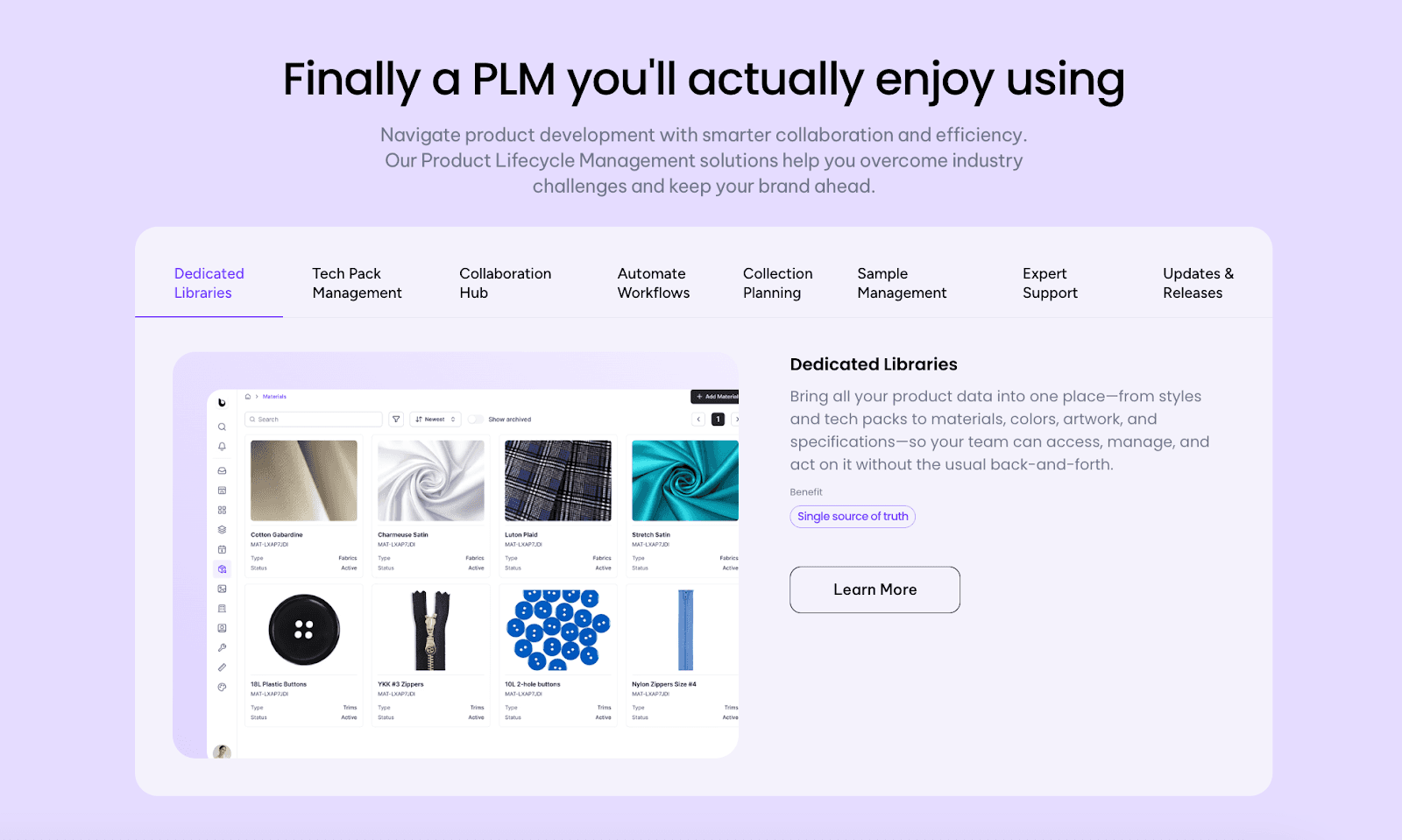
Many teams use tools like Onbrand PLM to keep BOMs connected to tech packs, samples, timelines, and vendor communication in one shared workspace. Paired with Onbrand AI Design, early design decisions stay attached as products move toward production, so details don’t have to be rebuilt later.

If you want to explore how connected BOMs fit into a real fashion workflow, Onbrand provides tools that support this approach. Book a demo now.


FAQs About Bill of Materials

What is an example of a BOM?

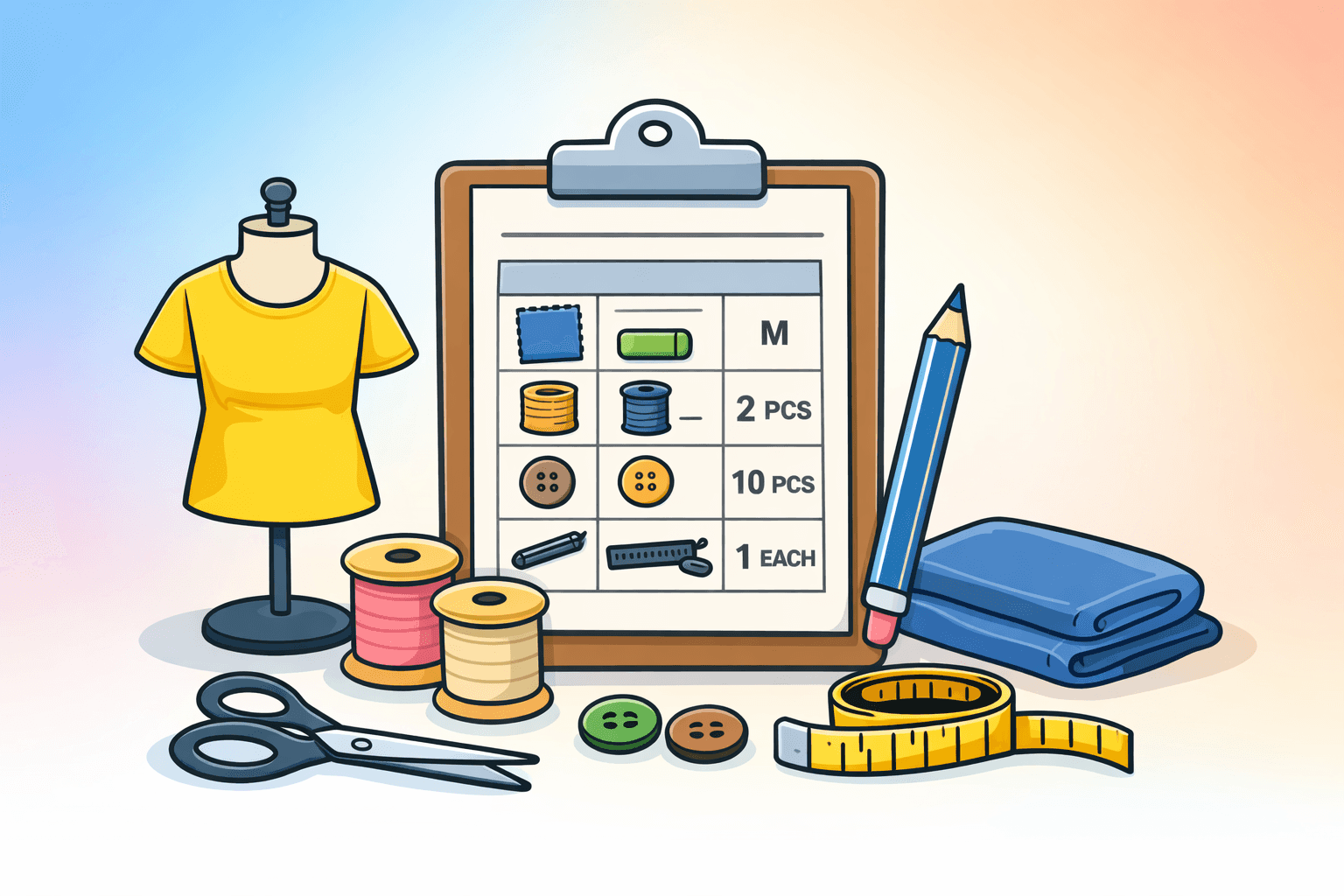
An example of a BOM for a basic garment might include the main fabric, lining, thread, labels, buttons, and zipper, along with the quantity of each item needed per unit. All of this information is listed as BOM data, so everyone involved works from the same reference. In some cases, a service BOM may also exist to document non-physical items tied to servicing or support.

What are the five required elements in a bill of materials table?

Most bills of materials include five core elements:

  1. Component or material name

  2. Description

  3. Quantity

  4. Unit of measure

  5. Notes

In fashion, BOMs also record color or colorway details for each material. This includes dye or color references such as Pantone or Coloro codes, so each color version of a style uses the correct fabric, trim, or finish.

What is the difference between BOM and BOQ?

A BOM lists the materials and components required to make a product, along with how they fit together. A BOQ, or bill of quantities, focuses on measuring and pricing work, most commonly in construction projects. In short, a BOM defines what is built, while a BOQ focuses on the amount of work involved.


Once a design moves past the concept stage, details add up quickly. Fabrics, trims, labels, quantities, and sourcing notes all need a clear place to live.

When that information is spread between emails, spreadsheets, and shared drives, small gaps turn into mistakes.

A bill of materials (BOM) brings those details together. It records every physical input needed to make a product in a single reference, so design, development, and production work from the same information.

This guide explains what a BOM is, when it’s used, what it includes, and how fashion teams rely on it as products move into sampling and production.

TL;DR

  • A bill of materials is the central list of everything needed to make a product, including materials, trims, components, quantities, and units.

  • BOMs show up once a design is approved and are updated through sampling and into production as materials and quantities get confirmed or revised.

  • A BOM can be single-level for simple products or multi-level when you need parent–child relationships through subsections.

  • Most BOMs include component names and descriptions, quantities and units of measure, materials and components, and sourcing notes such as suppliers and lead times.

What Is a Bill of Materials?

A bill of materials is a comprehensive list that records all the components and materials required to make a finished product.

It shows what goes into a product, how much of each item is needed, and how components relate within the overall BOM structure.

A BOM captures raw materials, trims, labels, and sub-components, along with basic details like quantity, unit measure, and supporting BOM notes. It reflects the product's physical makeup rather than tasks, decisions, or timelines.

BOM is not just a list. It serves as a single point of reference that defines how a product is physically built and how its components relate in the production process.

The BOM defines what goes into a product, while specification management covers measurements, construction details, and approvals.

What Is the Purpose of a BOM?

The purpose of a BOM is to clearly define the components required to make a product before production begins.

It creates a single reference that documents what must be built, in what quantities, and how components relate throughout the fashion product development and manufacturing process.

A BOM keeps product data consistent for production planning, inventory management, and materials management as work moves toward the final product.

The shared record reduces uncertainty when details change during product lifecycle management.

According to the U.S. National Institute of Standards and Technology (NIST), inadequate design and product data lead to billions of dollars in avoidable manufacturing costs each year.

Much of this comes from redundant documentation, clarification work, and poor information flow between teams.

Clear, well-maintained bills of materials help address these gaps by keeping product inputs defined and aligned before production begins.

An accurate BOM also sets control around changes. When updates happen, they are reflected in the same record, which helps maintain product structures and limit production errors without turning the BOM into a task list or a system.

Who Prepares a Bill of Materials?

A BOM is prepared throughout the product development process, from design and development through production. Responsibility often shifts as a style moves closer to the final product, but the record itself remains shared.

Typical contributors include:

  • Design and development - Designers and developers define early inputs using technical drawings and computer-aided design (CAD) drawings. These details form the first version of the BOM.

  • Development and production leads - As styles move forward, manufacturing teams add structure, confirm subsubsections, and review the BOM hierarchy, so the BOM reflects how the product will be built.

  • External partners - In some cases, contract manufacturers provide updates on materials, quantities, or production scheduling, especially after sampling begins.

Clear ownership helps keep multiple departments on the same page and avoids gaps that surface later in project management.

When Is a Bill of Materials Used in Product Development?

BOM is first used once a design is approved and ready to move beyond the concept stage. At this point, material choices, trims, and quantities need to be recorded so details do not shift as work continues.

As sampling begins, the BOM is reviewed and updated to reflect approved changes resulting from fittings and sample reviews.

Items tied to child components and intermediate assemblies are clarified as the product moves through the production process, which keeps sample management aligned with the latest materials and quantities.

This stage often determines whether the BOM remains a single-level BOM or expands into a multi-level BOM with a clearer hierarchical format.

Before production starts, the BOM supports planning tied to the supply chain and cost estimation, including early checks on unit costs.

Keeping the record current at each milestone helps limit production delays and protect product quality.

The Two BOM Structures

Bills of materials are usually organized in one of two ways. The structure affects how clearly components relate to one another as a product moves toward production.

1. Single-Level Bill of Materials

A single-level BOM lists every item needed to make a product on one flat level. All materials appear once, without showing how components connect. This format is often used early in development or for simple products with few dependencies.

For example, a basic tote bag may list fabric, webbing, thread, and labels in one view. This approach works when there are no intermediate assemblies and only a limited number of child components.

Single-level BOMs support quick cost estimation and unit cost checks, but they offer less detail as products become more complex.

2. Multi-Level Bill of Materials

A multi-level BOM shows how components relate within a hierarchical format. Materials are grouped into subsections that reflect how the product is organized during development and production. This structure is sometimes called an indented BOM.

Complex styles rely on this setup because it clarifies how fabrics, trims, and other components fit together.  Breaking products into sections helps reduce production delays and supports consistent product quality, especially when a modular BOM structure is needed.

What Information Does a Bill of Materials Include?

A BOM defines the components required to create a product and specifies the materials assigned to each one. Each entry should be clear and direct so details don’t get misread or lost as styles move through development.

  • Component names and descriptions - Each BOM begins with clearly defined components such as Main Fabric, Lining Fabric, or Center Buttons. Components describe what is needed, separate from the exact material used.

  • Assigned materials - Each component is linked to a specific material from a material library. For example, a Main Fabric component may be assigned a 100% polyester fabric with a defined construction, finish, and color. This keeps requirements consistent while allowing material changes when needed.

  • Quantities and units of measure - The BOM records how much of each component or material is used per product. Quantities stay consistent across sizes and versions to support accurate planning.

  • Trims, labels, and hardware - Additional components cover trims, labels, buttons, zippers, and other details. For styles with variations, the BOM can show which materials apply to each colorway or version.

  • Sourcing notes - Supplier references, lead times, and material status provide context for ordering and approvals, helping reduce delays and last-minute changes.

Types of Bills of Materials

In fashion and apparel, teams typically work from a single bill of materials that carries a product from development through production. That BOM is updated and refined as details are approved, rather than split into separate records by stage.

In other industries, BOMs are often categorized by how and where the information is used. You may still see these terms referenced, especially when working across systems or reading general manufacturing documentation.

Engineering Bill of Materials (EBOM)

An engineering BOM reflects early design intent. In many industries, it captures initial component decisions, sketches, and specifications before production details are finalized. In fashion, this information is usually documented within the same BOM rather than maintained as a separate record.

It may also reference non-physical items, such as software components, when products include electronics or smart features.

Manufacturing Bill of Materials (MBOM)

A manufacturing BOM is typically used to organize materials based on how a product is built on the factory floor. While some industries manage this as a distinct BOM, fashion teams usually incorporate production-ready details directly into the main BOM as styles move toward production.

Sales Bill of Materials

A sales BOM represents how a product is sold rather than how it is built. It reflects the configuration a company offers to customers, which may bundle multiple components into a single sellable item.

Configurable and Modular Bills of Materials

A configurable bill supports products with options, variations, or interchangeable components. In fashion, this often appears as colorways or material variations managed within one BOM rather than duplicated records.

Bill of Materials Formats

BOM can appear in different formats depending on how product information is recorded and shared.

Early in development, teams often start with spreadsheet-based layouts. These usually list items line by line and are common for early manufacturing bill records tied to tech packs and samples.

Some teams use document-based formats. These are often attached to design files or shared as reference documents.

Document-based formats are common when BOM details need to travel alongside approvals and be shared externally, which directly affects vendor relationship management as products move toward production.

As products move into modern manufacturing, BOMs may live in system-managed formats.

These records organize information in a structured way and may visually show relationships, such as in an explosion display, where components are expanded to show how they connect.

How Bills of Materials Are Created and Updated

BOM is created once a design is approved and ready to move forward.

The first version defines clear boundaries by listing only confirmed fabrics, trims, labels, and quantities tied to the style. Items that are still undecided are left out until they are approved.

As samples are reviewed, the BOM is updated to reflect changes. Materials may be swapped, quantities adjusted, or components added or removed.

Each update replaces the previous version, so there is no confusion about which details are current.

As a product moves closer to production, the BOM stays aligned with approved designs and sample feedback.

Keeping one current record helps avoid missed updates when information passes between design, development, and production, which is especially important for PLM collaboration.

Common Bill of Materials Terminology

This section defines common terms you may encounter when reviewing or discussing a BOM. Each term refers to how product information is labeled or organized, not how work is performed.

  • UOM - Unit of measure. This defines how quantities are counted, such as each, meters, or yards.

  • Parent/child - These terms describe relationships between components. A parent item consists of one or more child items, which are the individual components within it.

  • Yield - Yield refers to usable output, often used to account for material loss when quantities are calculated.

  • Revision - A tracked update to a BOM record after a change is approved.

  • Line item - A single material or component listed within the BOM.

  • Quantity per - The amount of a material used per finished product.

  • Approved status - Indicates whether a BOM is final or still under review.

  • Variant - A version of a product that uses different materials or components.

  • Subsection - A grouped set of components within a larger product.

  • Alternate material - An approved substitute for a listed item.

Bringing Bill of Materials Into Modern Fashion Workflows

Onbrand PLM

As product lines expand and more styles move through development at once, keeping product details organized becomes harder when files are scattered.

A clear BOM gives fashion teams a reliable way to track what goes into each product, keep decisions visible, and support day-to-day fashion management from design through production without rework.

BOMs work best when they stay connected to the rest of the product record. Design intent, material choices, and updates need to move together as styles progress through sampling and production. This helps reduce confusion, limit late changes, and keep teams aligned as timelines get tighter.

Many teams use tools like Onbrand PLM to keep BOMs connected to tech packs, samples, timelines, and vendor communication in one shared workspace. Paired with Onbrand AI Design, early design decisions stay attached as products move toward production, so details don’t have to be rebuilt later.

If you want to explore how connected BOMs fit into a real fashion workflow, Onbrand provides tools that support this approach. Book a demo now.


FAQs About Bill of Materials

What is an example of a BOM?

An example of a BOM for a basic garment might include the main fabric, lining, thread, labels, buttons, and zipper, along with the quantity of each item needed per unit. All of this information is listed as BOM data, so everyone involved works from the same reference. In some cases, a service BOM may also exist to document non-physical items tied to servicing or support.

What are the five required elements in a bill of materials table?

Most bills of materials include five core elements:

  1. Component or material name

  2. Description

  3. Quantity

  4. Unit of measure

  5. Notes

In fashion, BOMs also record color or colorway details for each material. This includes dye or color references such as Pantone or Coloro codes, so each color version of a style uses the correct fabric, trim, or finish.

What is the difference between BOM and BOQ?

A BOM lists the materials and components required to make a product, along with how they fit together. A BOQ, or bill of quantities, focuses on measuring and pricing work, most commonly in construction projects. In short, a BOM defines what is built, while a BOQ focuses on the amount of work involved.

Discover how Onbrand PLM can streamline your product development!

© 2024 onbrandplm.com. All rights reserved.