Jun 24, 2026

Product information rarely stays in one place for long. A style may start in a spreadsheet, move into a tech pack, pick up revisions through email, and end up scattered between shared drives and supplier portals.
The challenge becomes harder to manage as collections expand, suppliers increase, and more people become involved in the product development process. Small gaps in information can lead to delays, confusion, and extra work throughout development.
That is one reason fashion brands are exploring SaaS fashion product lifecycle management (PLM). These platforms help organize product information and bring development activities into a single environment.
This guide explains what SaaS fashion PLM is, how it differs from traditional PLM systems, and why more fashion brands are adopting it.
TL;DR
SaaS fashion PLM is a cloud-based PLM system built for apparel, footwear, and fashion product development, giving teams a centralized place to manage product information throughout development.
Fashion brands adopt SaaS PLM to reduce disconnected information, improve collaboration, support global product development, and reduce reliance on internal IT resources.
Core capabilities typically include product data management, digital tech packs, material libraries, workflow tracking, supplier collaboration, costing, sourcing, and development visibility.
When evaluating a SaaS fashion PLM, focus on fashion-specific product structures, supplier participation, compatibility with existing processes, ease of adoption, and long-term scalability.
Onbrand combines fashion-focused PLM and AI-powered design tools, helping teams move from concept generation to production-ready product information in one connected environment.
What Is a SaaS Fashion PLM?
A SaaS fashion PLM is a cloud-based product lifecycle management system built for apparel, footwear, and fashion product development.
Unlike software installed on company servers, a SaaS platform runs through a web browser and is maintained by the software provider. Users access the system online, which removes the need for local installation and ongoing software maintenance.
A fashion PLM system stores product information in one place throughout development. Product details, specifications, materials, and related records stay organized as products move through the product development process.
You may also see these platforms described as fashion PLM software, apparel PLM software, or simply PLM for fashion. The terminology differs, but each refers to a form of PLM technology built to support fashion product development.
SaaS Fashion PLM vs Traditional Fashion PLM
The main difference between SaaS fashion PLM and traditional PLM comes down to how the software is delivered and maintained.
A SaaS platform runs in the cloud and is managed by the software provider. Traditional PLM software is often installed on the company's infrastructure and may require additional IT resources for maintenance, upgrades, and support.
Area | SaaS Fashion PLM | Traditional Fashion PLM |
Deployment | Cloud-based | On-premise |
Updates | Automatic | Manual |
Accessibility | Anywhere | Limited |
Cost Model | Subscription | Large upfront investment |
IT Involvement | Lower | Higher |
Scalability | Easier | More complex |
Traditional PLM systems were developed when software was primarily deployed on company servers. Those environments required more configuration and could become highly customized over time.
SaaS platforms take a different approach. Updates are handled by the provider, users access the system through a browser, and the platform is typically designed for more straightforward implementation and seamless integration with other business applications.
Why Fashion Brands Are Moving to SaaS PLM
Fashion brands are not adopting SaaS PLM simply because it is cloud-based. Brands are looking for a better way to manage increasing amounts of information, coordinate work between different groups, and reduce operational friction throughout product development.
Eliminate Disconnected Product Information
Product information often ends up scattered between spreadsheets, emails, shared drives, and other systems. Finding the latest version of a document can become difficult when multiple people contribute to the same product.
Many brands move to SaaS PLM to create a more consistent source of product data. Information stays organized within a centralized platform, which helps reduce duplication and supports more accurate data throughout development.
Improve Cross-Functional Collaboration
Fashion product development involves many people. Designers, developers, sourcing specialists, and other key stakeholders all contribute information throughout the process.
Clear communication becomes easier when internal teams, external partners, and the creative team work from the same source of information. Better visibility helps reduce misunderstandings and can enhance collaboration throughout development.
Reduce Dependency on Internal IT Teams
Traditional systems often require ongoing technical support, maintenance, and upgrades.
Many brands adopt SaaS platforms to simplify day-to-day system management. This approach can help streamline processes, reduce pressure on IT resources, and support broader digital transformation efforts.
Less system administration also helps organizations boost efficiency in other areas of the business.
Support Global Product Development
Modern product development rarely happens in one location. Teams, suppliers, and manufacturing partners often work in different countries and time zones.
Cloud-based access supports communication throughout the supply chain and broader supply chain management activities.
It also helps teams maintain visibility throughout the fashion value chain as products move from development toward production.
Adapt to Changing Product Development Needs
Business requirements rarely stay the same. Product assortments grow, supplier networks expand, and development timelines shift.
Fashion brands usually look for systems that can adapt as their needs change. Flexibility becomes especially important in a fast-paced fashion industry where consumer demand changes quickly.
That pressure is even more noticeable for brands operating in fast fashion, where development teams work to stay ahead of shifting market expectations.
Core Features of a SaaS Fashion PLM
Fashion PLM platforms support several activities that take place during product development. The exact capabilities vary by platform, but most systems include tools for managing product information, development workflows, sourcing activities, and supplier communication.
Style and Product Data Management
A SaaS fashion PLM stores information related to styles and product lines in a structured format. Teams can store styles, SKUs, colorways, measurements, specifications, and related information in one location.
This information originates from multiple sources, including fashion design files created in tools such as Adobe Illustrator.
A PLM platform helps keep PLM data organized and connected to the correct product records, including sizing details and other specifications used throughout development and related business processes.
Digital Tech Packs
SaaS fashion PLM platforms include tools for creating and managing digital tech packs.
Technical specifications, construction details, measurements, comments, and supporting documents can be maintained within a single record. Version history helps teams track updates, compare revisions, and document necessary adjustments as products move through development.
Material and Trim Libraries
Material libraries help teams manage fabrics, trims, labels, packaging components, and bills of materials.
Information related to sourcing, composition, testing, and material selection can be stored in a structured format that is available throughout development.
Workflow and Approval Management
Workflow tools help organize reviews, approvals, and development milestones.
Teams can follow a defined PLM process, track progress, gather feedback, and document decisions throughout the creative process. Approval records also support quality control activities by providing visibility into product changes and review history.
Supplier Collaboration
Most SaaS fashion PLM platforms support supplier collaboration through shared product information and communication tools.
Teams can exchange comments, files, and updates with suppliers, factories, and third-party vendors. The platform maintains communication records that support vendor collaboration and real-time communication throughout development.
Costing and Sourcing Management
Costing tools help teams manage supplier quotes, sourcing information, and product cost records.
Development teams can review supplier pricing, compare product costs, evaluate different price points, and track records related to production costs throughout development.
Reporting and Product Development Visibility
Reporting tools provide visibility into development progress and product status.
Teams can review real-time data related to product status, development activity, and schedules. Reporting tools can also surface product development cycles, production cycles, trend analysis, and market research activities.
Who Should Use a SaaS Fashion PLM?
Not every company needs a PLM platform. The strongest fit usually comes from organizations managing large amounts of product information, multiple stakeholders, and growing development operations.
Growing Apparel Brands
Fashion brands reach a point where spreadsheets, email threads, and shared folders become difficult to manage.
A SaaS fashion PLM is a natural fit for businesses in the fashion and apparel industry that are adding more products, suppliers, and team members. The need for structure tends to increase as a fashion business grows.
Brands Managing Multiple Product Categories
Managing a single product category is very different from managing several at the same time.
Fashion companies develop products in apparel, footwear, accessories, and additional categories. Product information becomes more complex when multiple categories require different materials, specifications, and development requirements.
Teams Working With Multiple Suppliers
Supplier management becomes more challenging as vendor networks expand.
Brands that work with several factories, material vendors, and development partners need stronger coordination between product developers and sourcing teams. The complexity increases when products move through multiple suppliers before production.
Organizations Replacing Spreadsheet-Based Processes
Many brands start product development using spreadsheets because they are familiar and easy to access.
The challenge appears when information is spread between multiple files and systems. Organizations looking to bring product information together in one platform are often strong candidates for SaaS fashion PLM.
How to Evaluate a SaaS Fashion PLM
Once a brand decides to invest in a SaaS fashion PLM, the next step is comparing available options. The strongest evaluation process focuses on how well a platform fits the way your brand develops products, works with suppliers, and manages information.
The following areas can help you compare each PLM solution more effectively.
Fashion-Specific Product Data Structure
Many PLM platforms serve multiple industries. That does not automatically mean they are a good fit for fashion.
A strong SaaS PLM should support the product information commonly used by apparel and footwear brands without extensive customization.
This is particularly important for organizations operating in the retail industry and other retail businesses that manage large product assortments and frequent product updates.
Support for Your Existing Supplier Network
Supplier participation plays an important role in product development.
Evaluate how suppliers interact with the platform and how information is shared between organizations. The system should fit naturally into communication processes already used by suppliers, factories, and the production team.
Compatibility With Your Development Process
Every organization has established ways of developing products.
A SaaS PLM should support existing approval structures, review procedures, and development practices without forcing major operational changes.
Consider how the platform aligns with current production processes and supports efforts to maintain product quality throughout development.
Ease of Adoption
A platform only creates value when people use it consistently.
Evaluate how easily product developers, designers, sourcing specialists, and production staff can learn and use the system. Simplicity contributes to faster adoption and a smoother transition from existing processes.
Scalability
Requirements change as organizations expand.
Consider whether the platform can support additional products, users, suppliers, and development activity over time. Scalability becomes increasingly important for brands preparing for larger production volumes, mass production initiatives, and shorter time to market expectations.
When comparing vendors, look beyond marketing claims and feature counts. The right PLM solution should fit naturally within existing business systems, support connections to enterprise resource planning platforms when needed, and align with the way fashion teams already work.
The best fashion software is the one that people adopt successfully and continue using over the long term.
Why Fashion Brands Choose Onbrand
Fashion brands look for software that fits the way product teams actually work. That is one reason they turn to Onbrand.
Onbrand combines two connected products. Onbrand PLM helps teams manage product development from concept through production. Onbrand AI Design helps designers generate concepts, explore variations, and move ideas into development faster.
Onbrand PLM
Onbrand PLM was built specifically for fashion product development.
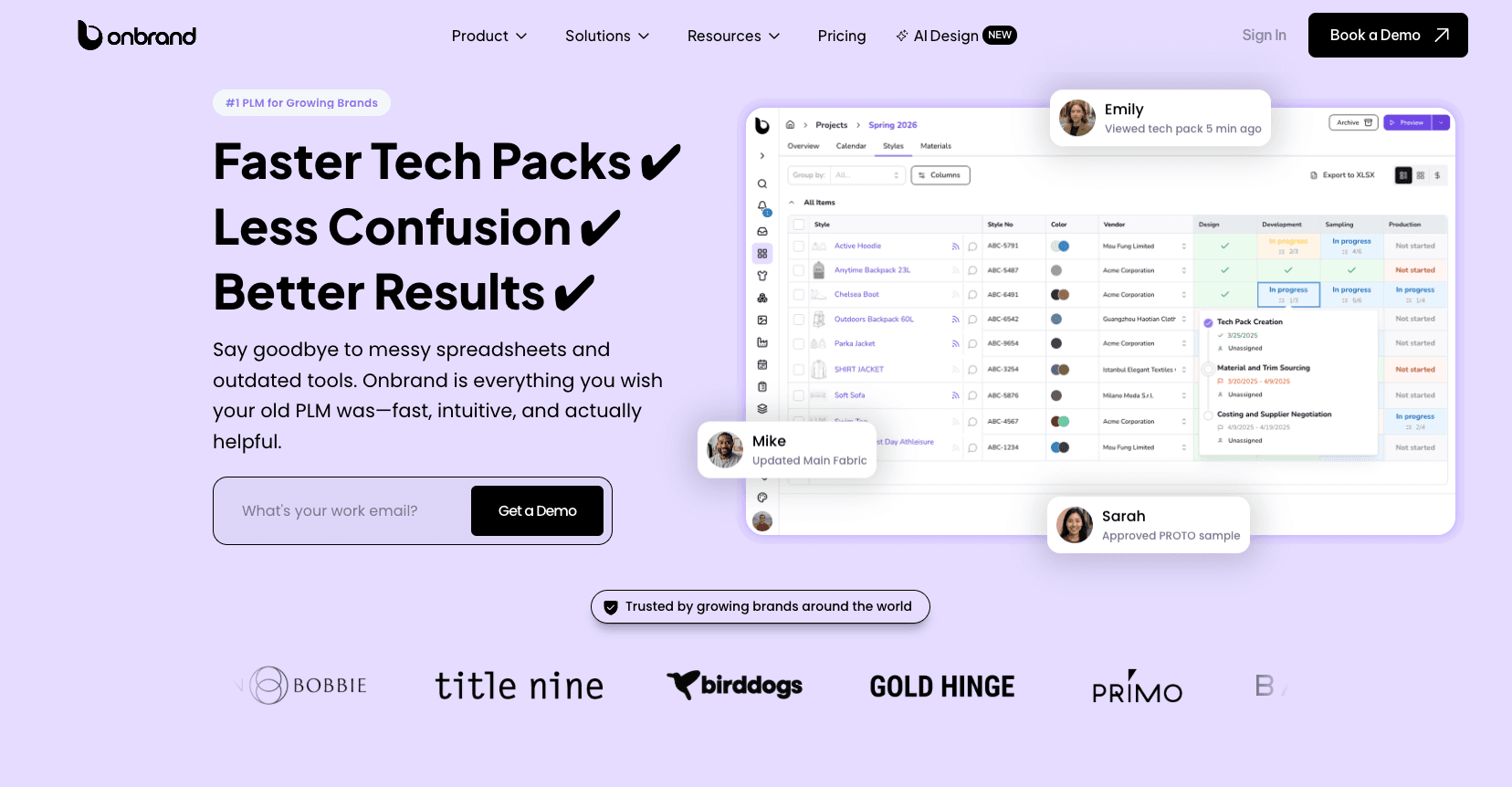
Product information, materials, approvals, samples, sourcing activities, and development records live in one system. Teams work from live tech packs rather than static spreadsheets, PDFs, or disconnected documents.
Implementation is also much faster than many legacy PLM platforms. While traditional systems can take months to configure, Onbrand customers are often up and running in as little as 10 days. Brands also report up to 55% faster tech pack creation and development timelines that are up to four weeks shorter.
The platform includes configurable product development workflows, project management tools, supplier communication, dedicated libraries, and support from a dedicated account team.
Onbrand AI Design
Onbrand AI Design focuses on the earliest stages of product creation.
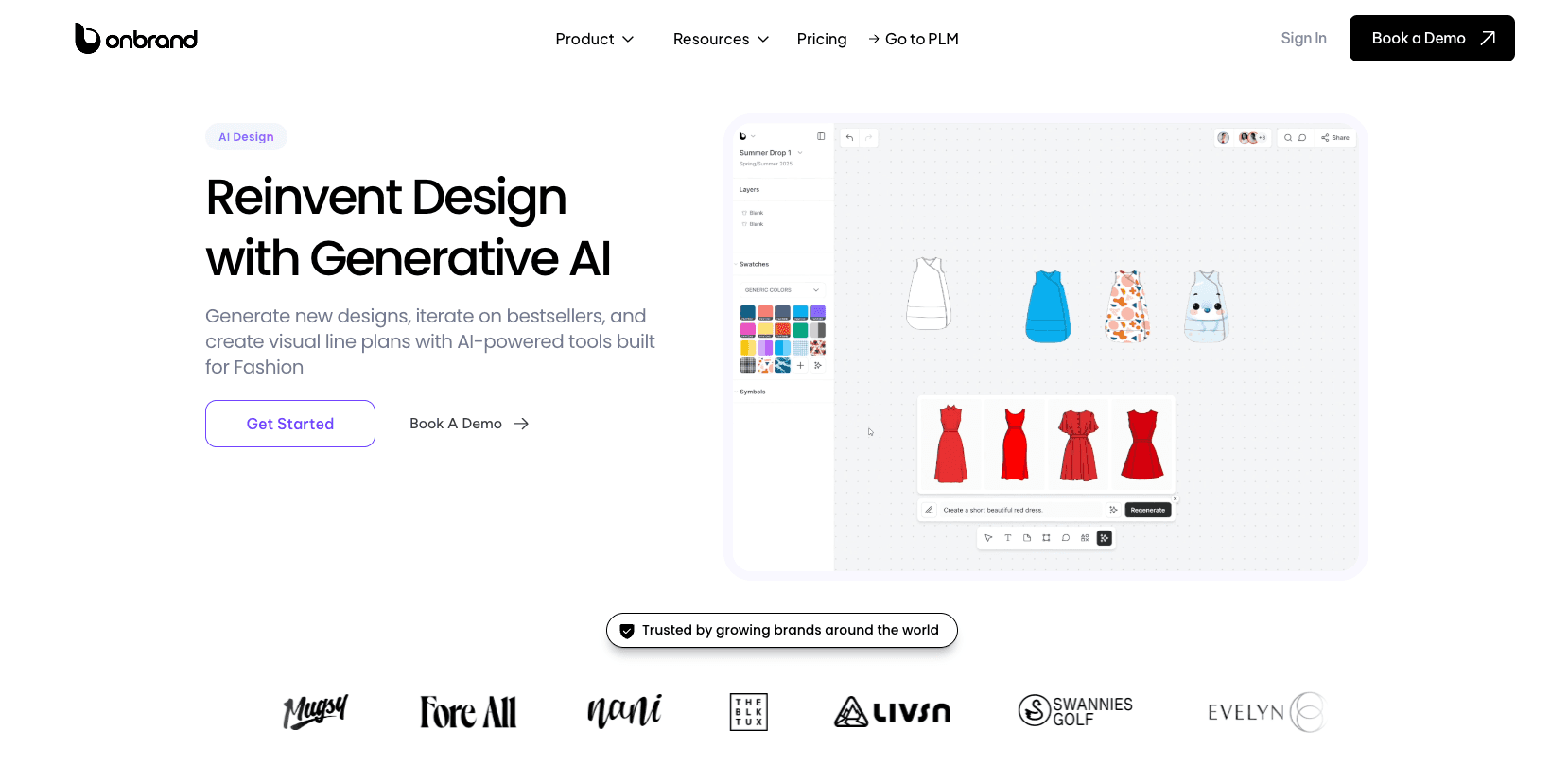
Designers can generate concepts from text prompts, sketches, or reference images. The platform supports design exploration through AI-generated variations, colorway development, photorealistic renders, visual line planning, and collaborative mood boards.
Teams can review ideas, leave feedback, compare versions, and organize collections within a shared visual workspace. Designs can then move directly into Onbrand PLM without exporting files between disconnected systems.
Brands using Onbrand AI Design report design turnaround times up to 10x faster, savings of 30–50% fewer physical samples, and 10+ weeks saved per year through faster concept development and iteration.
Together, Onbrand PLM and Onbrand AI Design connect design and development in one environment. Product teams can move from concept generation to production-ready product information without relying on disconnected tools, file handoffs, or manual data transfer.
Choose Onbrand for a Better SaaS Fashion PLM Experience
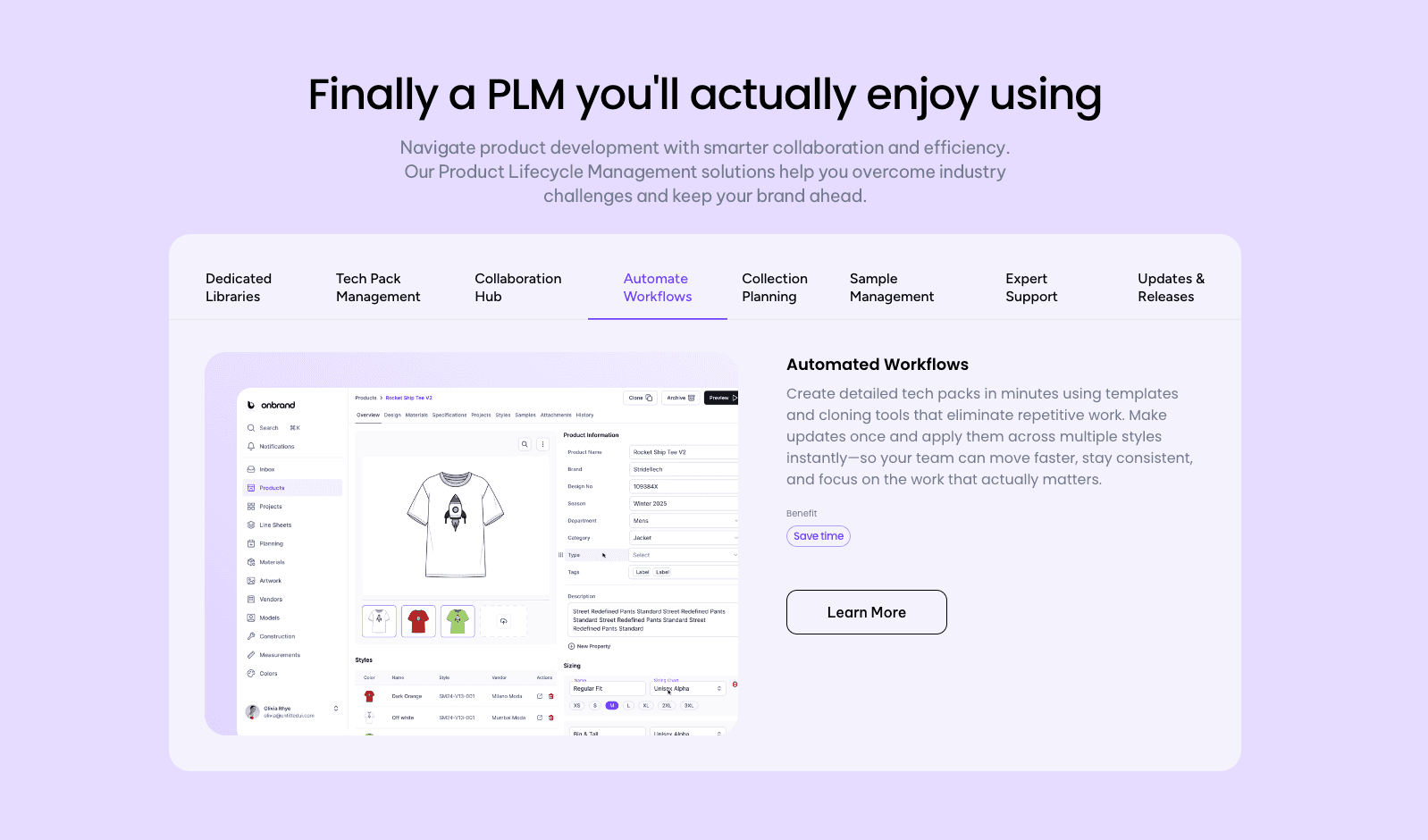
SaaS fashion PLM gives fashion brands a simpler way to manage product development without the complexity often associated with legacy systems. Product information, development activities, and vendor communication remain connected in one environment.
Onbrand takes that approach further with a platform built specifically for fashion brands.
From AI-powered design exploration to live tech packs and product development management, teams can move from concept to production without relying on disconnected tools and spreadsheets.
FAQs About SaaS Fashion PLM
What are the 5 phases of PLM?
The five phases of PLM typically include concept, design and development, sourcing and sampling, production, and post-production review. In fashion, these phases help teams manage product information and decisions from the first design idea through manufacturing and eventual product retirement.
How long does SaaS fashion PLM implementation typically take?
Implementation timelines vary by platform, company size, and data complexity. Modern SaaS fashion PLM platforms can be implemented within a few weeks, while legacy PLM systems may take several months or longer due to configuration requirements, data migration, and training.
Can SaaS fashion PLM integrate with ERP systems?
Yes. SaaS fashion PLM platforms support integration with ERP systems, allowing product information, costing data, materials, and other records to move between systems. Integration helps reduce duplicate data entry and keeps information aligned throughout product development and business operations.
What happens to existing product data when moving to SaaS fashion PLM?
Existing product data is typically migrated from spreadsheets, legacy PLM systems, shared drives, or other databases into the new platform. The process includes data cleanup, validation, and mapping to ensure styles, materials, specifications, and historical records are organized correctly before teams begin using the new system.
Do fashion brands need an internal IT team to manage SaaS fashion PLM?
No. SaaS fashion PLM platforms are managed by the software provider, so fashion brands do not need an internal IT team for day-to-day management. The provider handles hosting, maintenance, updates, and system performance, allowing teams to access the platform through a web browser. Some IT support may be needed for integrations or data migration, but ongoing technical management is usually minimal.