Aug 20, 2026
What works for a five-style drop rarely works for a fifty-style collection. Growing brands often find fashion product development harder to manage without clear systems in place.
Design and development teams need the same information at the same time, especially once vendors and production schedules come into play.
Product lifecycle management (PLM) solutions give fashion teams more structure when collections become larger.
They connect design details, tech packs, timelines, and vendor communication in one shared workspace, which reduces guesswork as products move toward production.
In this article, we break down why fashion brands rely on PLM today and highlight the best PLM solutions to consider in 2026.
TL;DR
These are the best PLM solutions fashion teams use in 2026:
Centric PLM
Backbone PLM
WFX PLM
PTC FlexPLM
Aptean Apparel PLM
DeSL PLM
Why Fashion Brands Rely on PLM Solutions Today
PLM solutions streamline product development by keeping product information connected from design through production.
In the fashion industry, they provide a centralized platform where tech packs, materials, timelines, and approvals stay connected throughout the entire product lifecycle.
Rather than relying on fragmented systems, scattered files, or manual updates, a PLM system supports day-to-day product work in one place. Here’s why fashion brands rely on PLM today:
Product Data Management for Cross-Functional Teams
Modern PLM tools keep product data management consistent throughout design, development, and production.
A structured data model organizes specs, materials, measurements, and related updates in one place. This reduces manual data entry and limits errors caused by disconnected files.
Teams work with up-to-date information at every stage, while access controls help protect data integrity and data security as more people get involved.
Clear Version Control as Styles Move Forward
Once product data is centralized, version control becomes easier to manage.
A PLM platform tracks changes to tech packs, measurements, and approvals so everyone knows what is current. Clear PLM processes also support more consistent product management during team handoffs.
During the development phase, even small updates can affect samples, costing, and production planning, which makes clear tracking essential.
Stronger Vendor Collaboration and Communication
PLM supports clearer supplier collaboration by giving vendors access to the same specs and updates as the internal team.
Shared access strengthens supply chain collaboration and reduces back-and-forth during sampling and production. It also helps sourcing, product development, and production teams coordinate changes.
Faster access to current information can improve supply chain agility throughout the production process.
Faster Approvals Without Manual Follow-Ups
Approvals move faster when feedback, comments, and decisions stay tied to the product record.
PLM can replace scattered messages with structured workflows and workflow automation for routine alerts and approval steps. These capabilities support project management, especially when teams are coordinating multiple projects at the same time.
Teams can review input, respond to internal customer feedback, and move work forward without repeated manual follow-ups.
More Consistent Quality and Production Readiness
Clear specs and tracked changes support better product quality before production begins.
PLM keeps measurements, materials, and approvals aligned, helping teams improve quality and maintain consistent quality control before bulk production begins.
Centralized documentation also supports product compliance by helping teams ensure compliance with applicable requirements and keep supporting records organized. Fewer production issues can ultimately support stronger customer satisfaction.
Better Visibility as Collections and Brands Scale
Larger collections make it harder for cross-functional teams to maintain a clear view of product work.
A cloud-based PLM reduces data silos and supports a more collaborative environment for design, development, and sourcing.
For growing brands, PLM can become part of a broader digital transformation and support the company’s business strategy.
Better visibility also helps leaders plan resource allocation and support enterprise-wide collaboration as complexity increases.
7 Best PLM Solutions Fashion Brands Use in 2026
Choosing a PLM system depends on how your team works today, how much complexity you need to manage, and the customer needs you support in different product categories.
The list below highlights the best product lifecycle management solutions fashion teams use in 2026, with a look at where each tool fits within the product development process.
1. Onbrand PLM
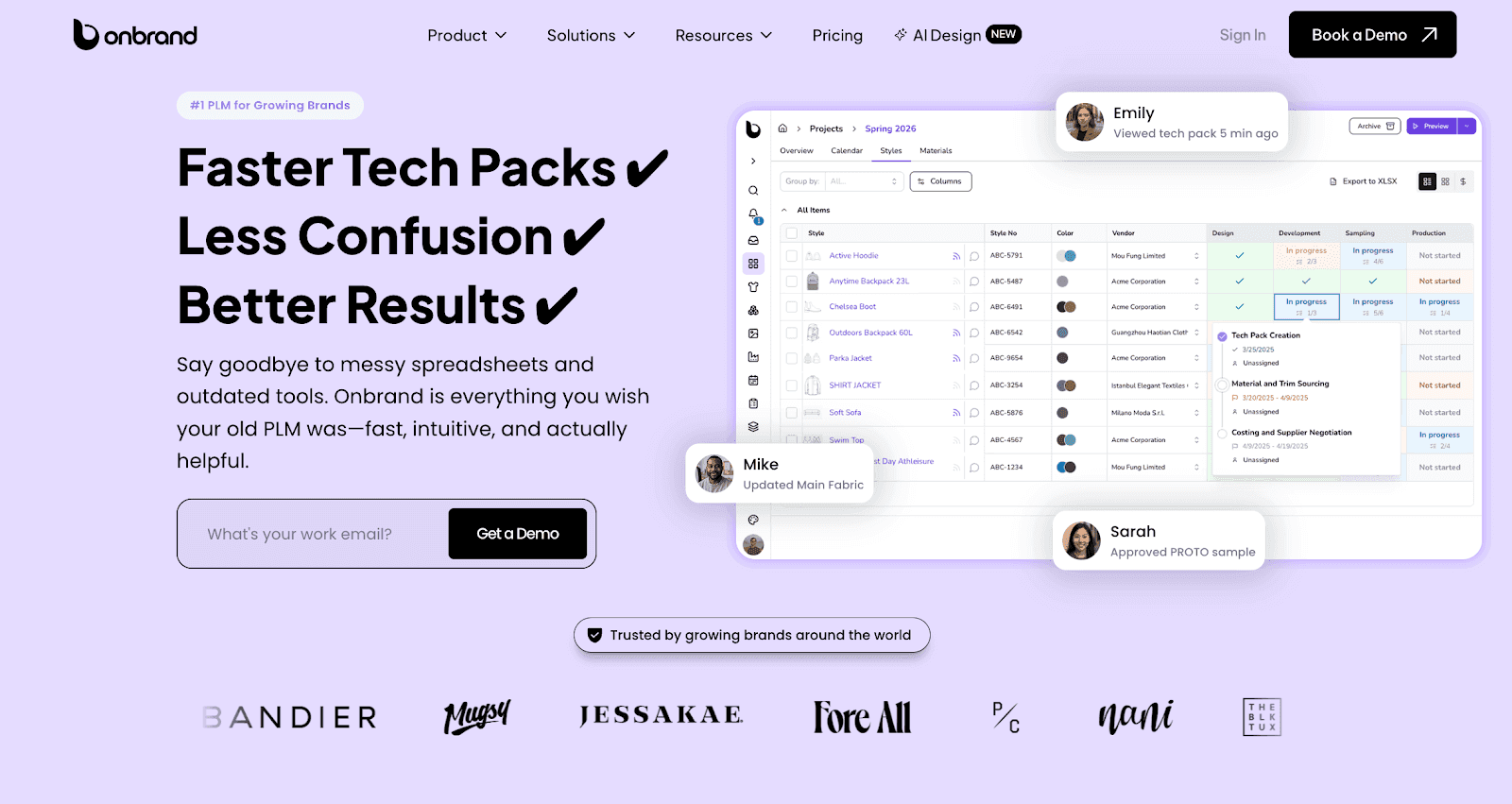
Onbrand PLM is built for fashion brands that need clarity as collections scale. It replaces spreadsheets, static files, and disconnected tools with one shared workspace for managing tech packs, samples, timelines, and vendor communication.
Unlike legacy PLM systems, Onbrand focuses on usability and speed, which helps creative and production teams stay aligned as styles move from design to production.
Brands using Onbrand PLM often report measurable improvements early on.
Teams have shared outcomes, such as 55% faster tech pack creation, a four-week reduction in development timelines, and onboarding completed in as little as ten days, depending on data and workflow complexity.
Key Features
Live tech packs - Specs, comments, and approvals stay connected to each style, so teams and vendors always work from the current record.
Built-in project and timeline tracking - Tasks, stages, and timelines live alongside each style, giving you clear visibility without separate tools.
Vendor collaboration - Vendors can access specs, leave comments, and respond to updates directly in the platform, reducing back-and-forth on email or messaging apps.
Centralized material libraries - Materials, colors, trims, and components are stored in shared libraries for reuse in different styles and seasons.
Fast onboarding - Brands can get started without long setup cycles or paid implementation programs.
Supported data migration - Existing product data can be moved into Onbrand, so you don’t have to rebuild records from scratch.
Flexible setup - Fields, stages, and approval flows can be configured to match how your product development process already works.
Onbrand PLM works alongside Onbrand AI Design to connect the initial concept with production-ready execution. Design decisions stay attached to each style as work moves into tech packs, samples, and timelines, so nothing gets lost or recreated along the way.
2. Centric PLM
Source: centricsoftware.com
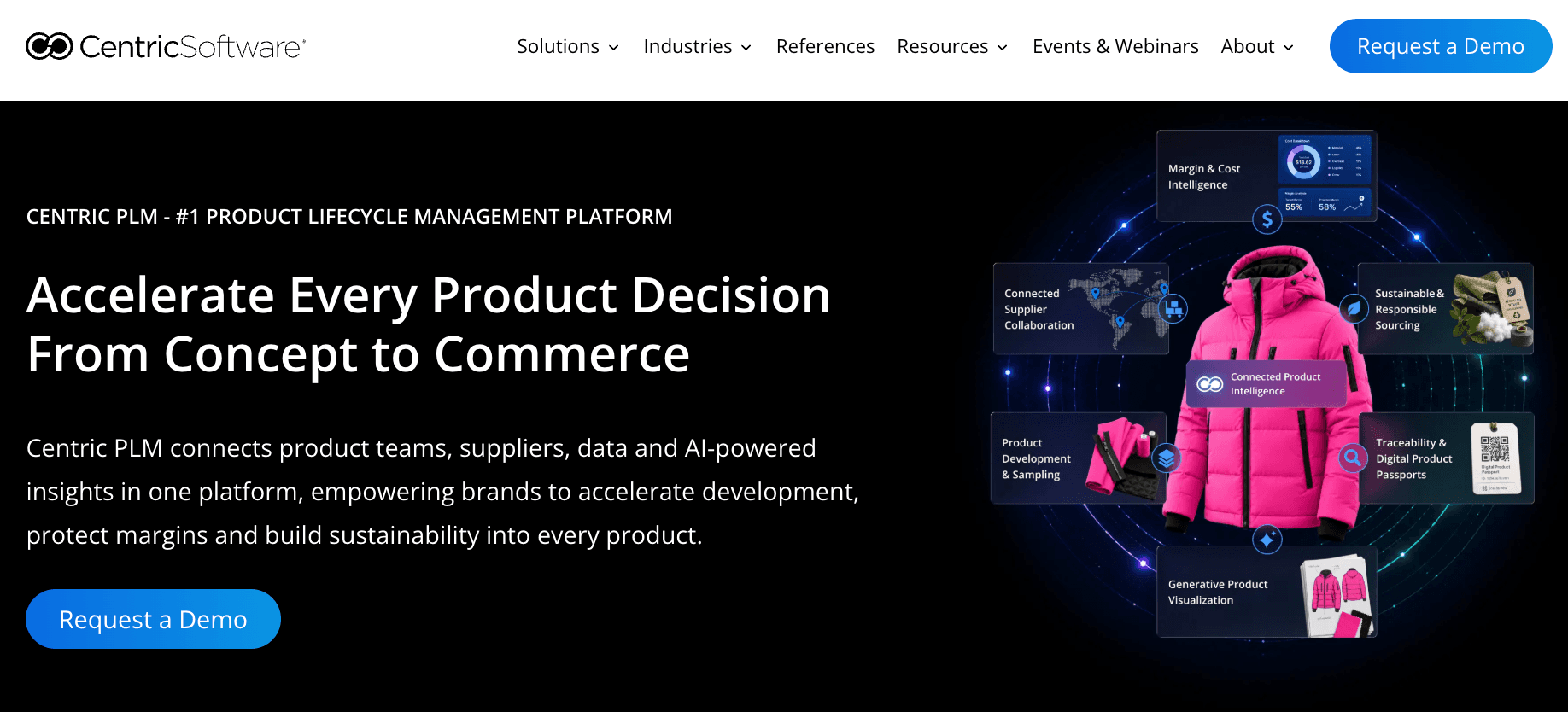
Centric PLM is a cloud-based PLM software solution used by large fashion and apparel brands managing complex assortments, materials, and vendor workflows in multiple regions.
It supports core fashion product development processes such as managing specs, materials, bills of materials (BOMs), and approvals as styles move from design through sourcing and production.
The system focuses on structured PLM data and performance data, which helps brands maintain consistency throughout collections and coordinate work with suppliers.
Centric PLM is often adopted by organizations transitioning away from legacy systems. PLM integration with existing enterprise resource planning (ERP) systems is often part of a broader implementation.
Setup usually involves upfront planning and internal change management to align teams and workflows.
Key Features
Product data management - Centralized records for styles, materials, and updates
BOM management - Tracks components and raw materials throughout development
Document management - Stores specs, approvals, and related files
Supply chain management - Supports vendor and sourcing workflows
Configuration management - Manages product structures by category
3. Backbone PLM
Source: bamboorose.com
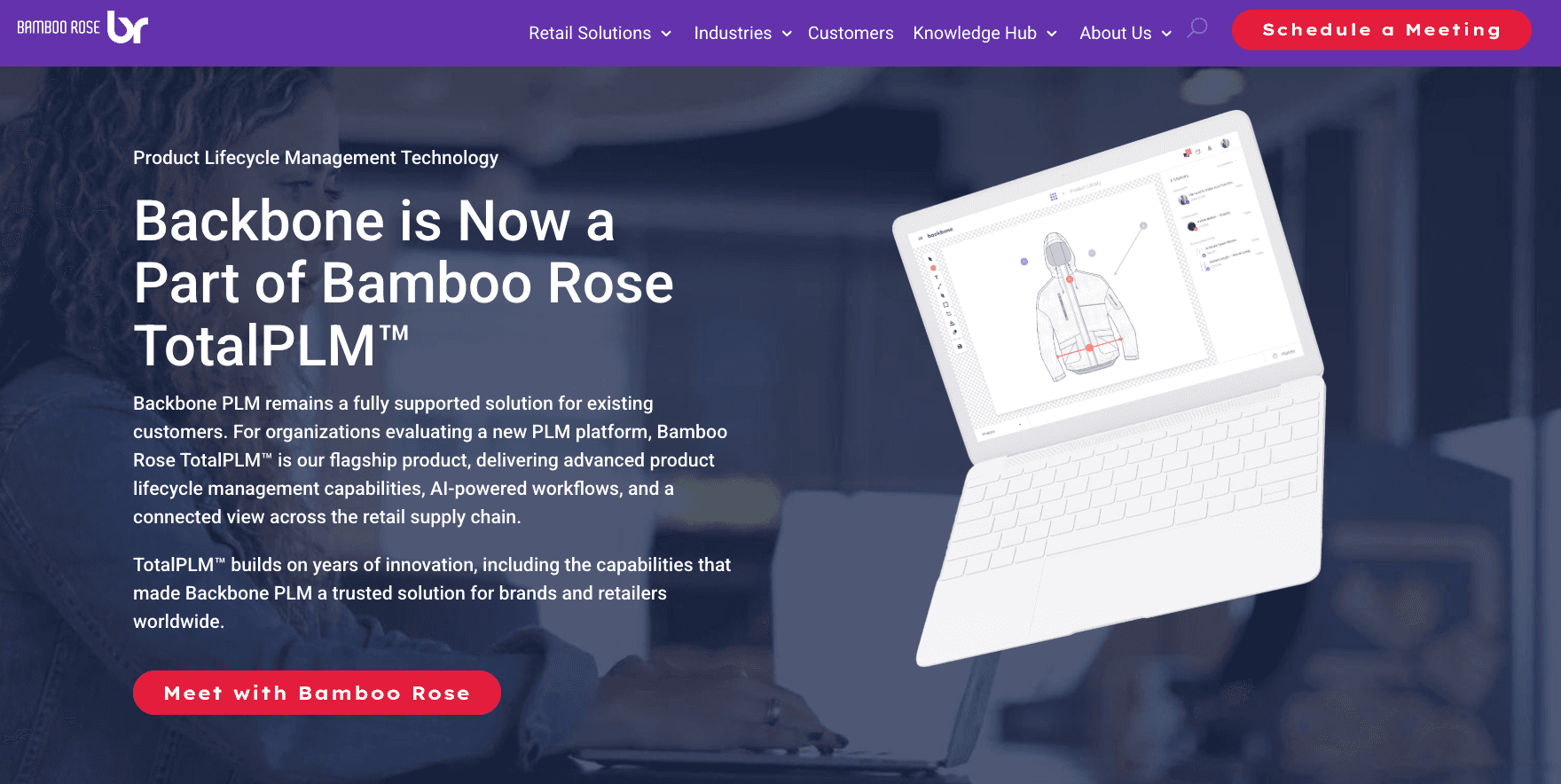
Backbone PLM, now part of Bamboo Rose, is a visual cloud PLM platform used by fashion brands for tech packs, materials, costing, and collection management.
Bamboo Rose continues to support existing Backbone customers, while directing new organizations toward its broader TotalPLM platform.
It supports core business processes such as style setup, material tracking, and approvals in a single system, giving teams access to up-to-date data as collections develop.
Backbone PLM is often used by project managers who need clear visibility into styles, costs, and timelines without relying on spreadsheets.
It focuses on ease of use and provides a user-friendly interface suited for brands managing changing market demands over multiple seasons.
Key Features
Web-based tech packs - Centralized specs with basic document control
Style and line sheet management - Organizes products within collections
Team collaboration tools - Supports internal review and updates
Material and cost tracking - Monitors inputs during development
Integrations with design tools - Connects design files to product records
4. WFX PLM
Source: worldfashionexchange.com
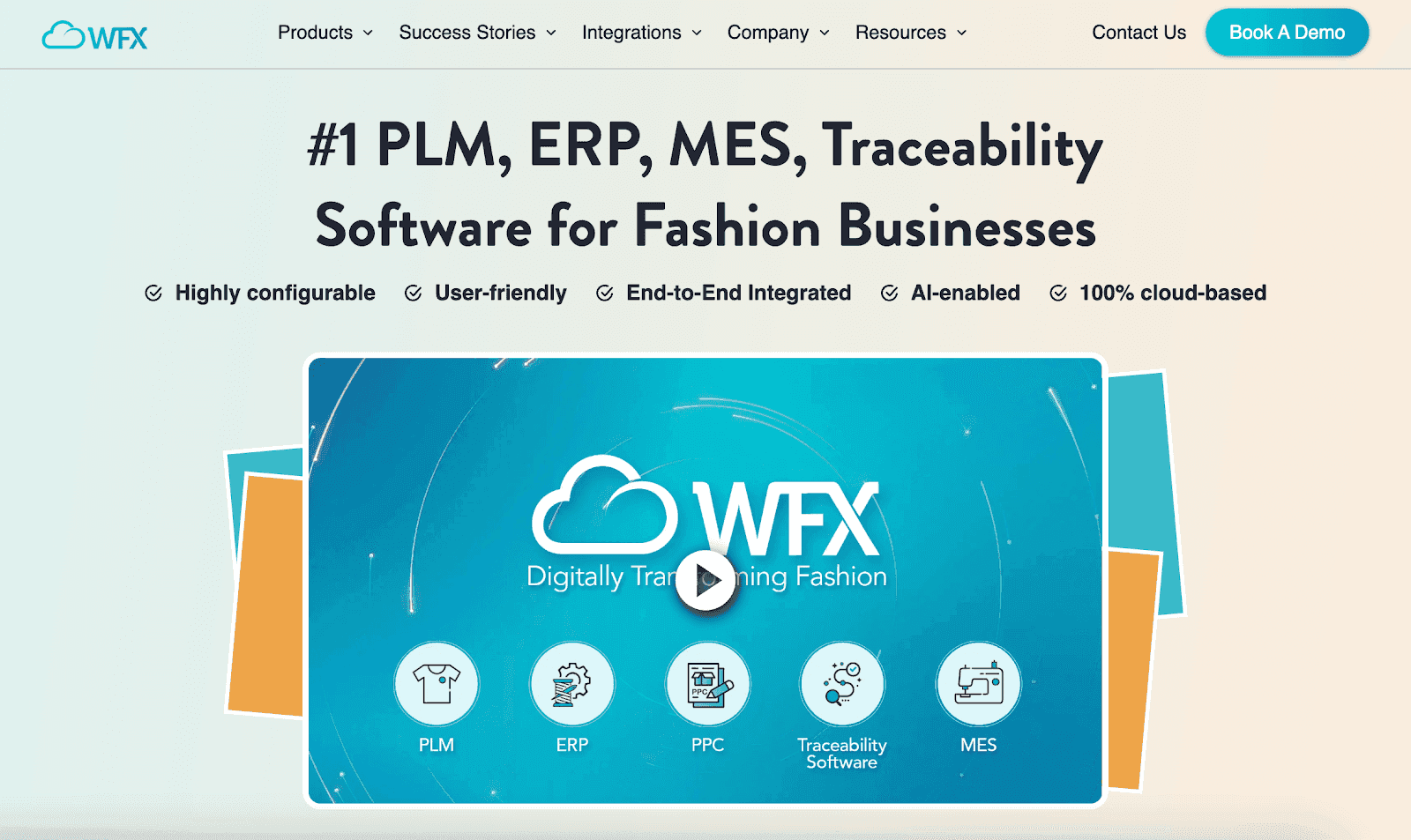
WFX PLM supports apparel brands that manage sourcing, sampling, and production with manufacturing partners. The platform is often used by discrete manufacturers and brands working with global manufacturers, where vendor coordination is especially important.
It focuses on tracking styles from early development through production, helping teams manage costs, materials, approvals, and related manufacturing processes with real-time data.
It also supports regulatory compliance by keeping quality checks, production details, and documentation tied to each product record, helping teams deliver high-quality products.
WFX PLM is suited to brands that want design, product development, sourcing, vendor communication, and production-related information connected in one system.
Key Features
End-to-end product lifecycle tracking - Follows styles from development to production
Sourcing and vendor management - Supports supplier coordination
Costing and production planning - Tracks pricing and production details
Quality management and compliance tracking - Manages checks tied to production
Reporting tools - Provide visibility into development and production status
5. PTC FlexPLM
Source: ptc.com
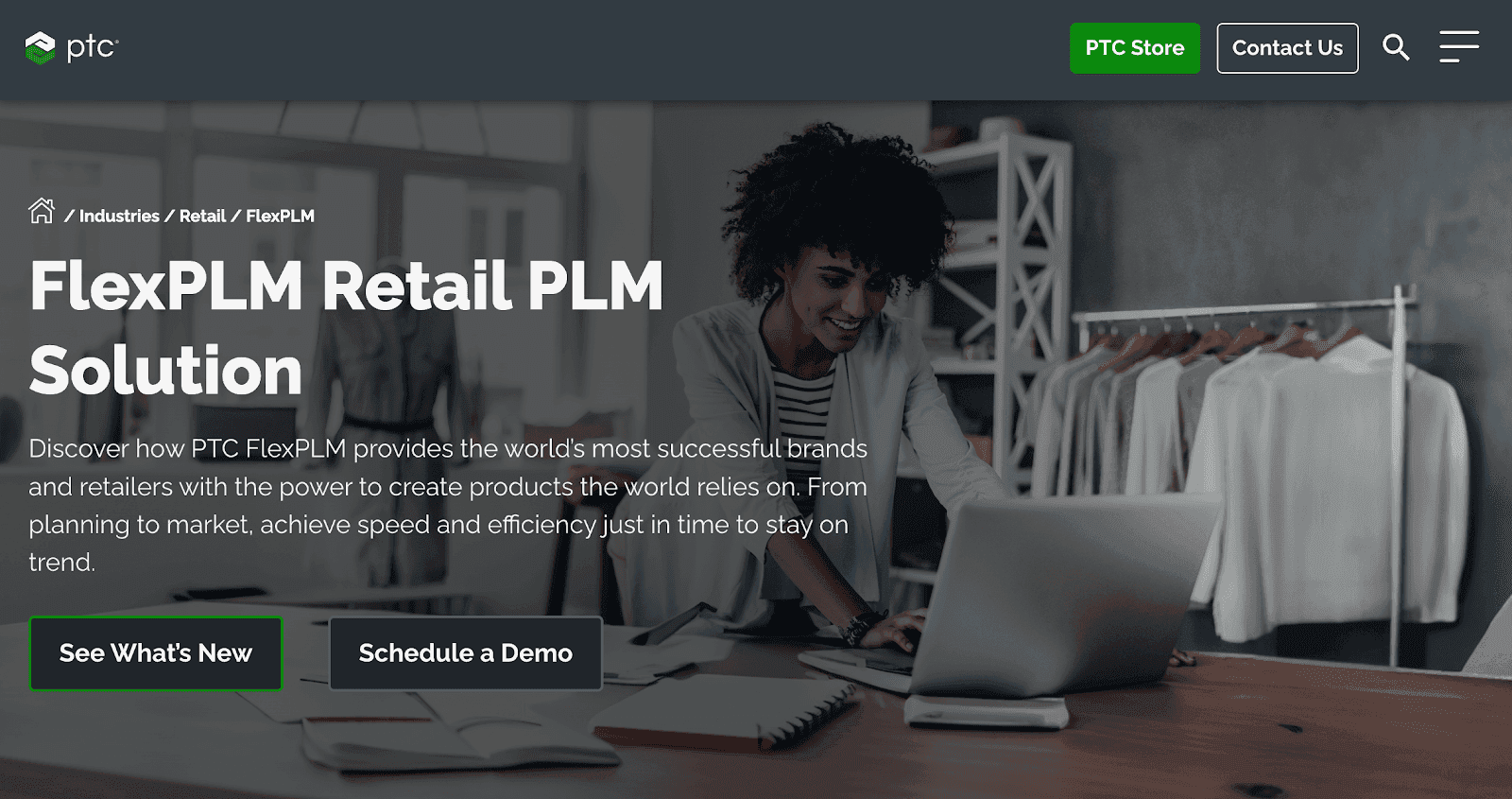
PTC FlexPLM is an enterprise PLM technology used by large fashion and retail brands managing complex product lines in multiple regions.
It supports product and assortment planning, development, and sourcing within one system. This can help large organizations coordinate information, support innovative products, and accelerate innovation throughout established product portfolios.
FlexPLM is often adopted by organizations with established business processes and multiple integrations with existing systems, including ERP systems.
Successful PLM implementation often involves formal planning, internal alignment, and process configuration to match the platform's workflows.
Key Features
Enterprise-grade PLM architecture - Supports large, complex organizations
Product and assortment management - Organizes styles by category
ERP system integration - Connects PLM with broader business systems
Advanced reporting - Tracks product and development data
Global collaboration support - Coordinates work among regions and partners
6. Aptean Apparel PLM
Source: aptean.com
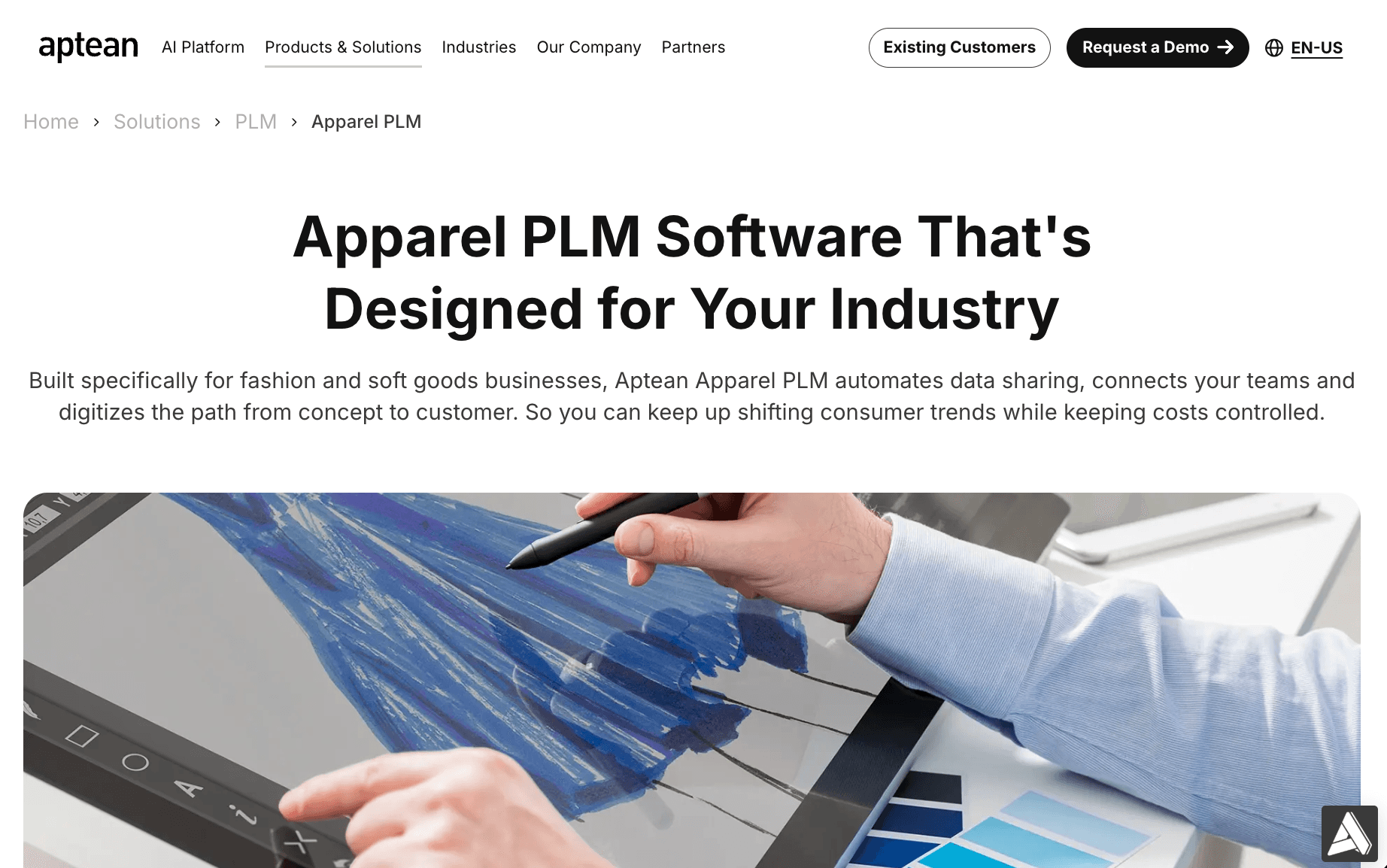
Aptean Apparel PLM is used by apparel brands seeking greater structure during planning, development, and sourcing, often as part of a broader ERP-based setup.
The platform supports core apparel workflows, including materials, seasonal collections, calendars, sourcing activities, and approvals, alongside other business systems.
Aptean Apparel PLM is designed for apparel companies that want product development data and workflows connected with sourcing, production, warehousing, finance, and other operational tools.
This connected approach helps brands maintain consistent product records from early concept through production and later end-of-life decisions.
Key Features
Apparel-focused PLM modules - Supports planning and development workflows
Material and sourcing tools - Tracks fabrics, trims, and suppliers
Calendar management - Manages development timelines and key dates
Business system integration - Connects PLM with ERP and related tools
Compliance support - Stores documentation tied to sourcing and production
7. DeSL PLM
Source: desl.net
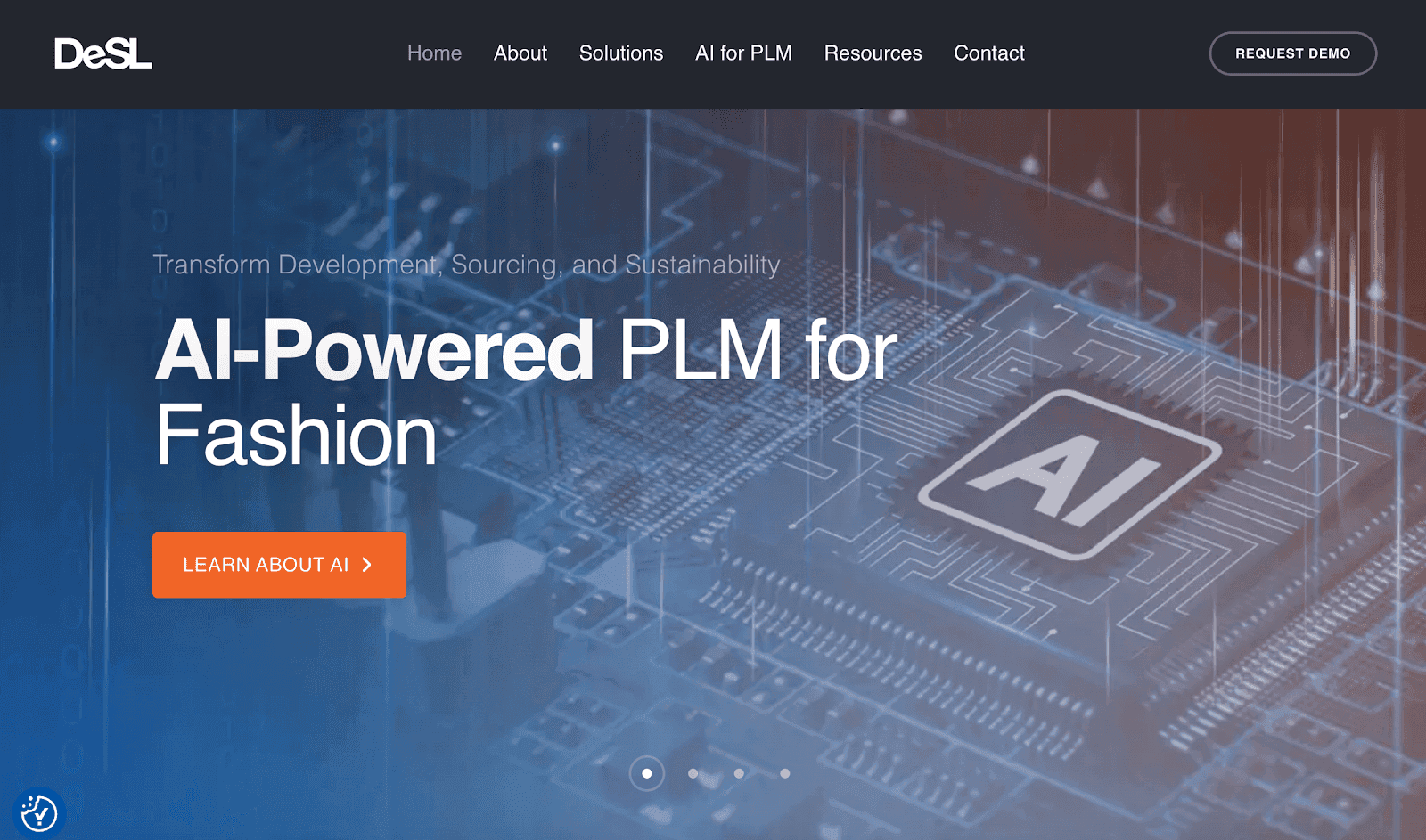
DeSL PLM is used by apparel and footwear brands that need structured control over product data and development workflows.
The platform supports activities such as managing tech packs, materials, calendars, and sourcing details throughout design and production. Depending on the modules used, brands can manage product information from early planning through development, sourcing, quality control, and delivery.
DeSL PLM is often used by brands with established processes that require consistency throughout seasons and product categories.
It can be deployed alongside other business systems and is typically adopted by organizations that prefer a configurable PLM tool to manage product records as styles move toward production.
Key Features
Tech pack and specification management - Maintains product details and updates
Material and vendor tracking - Manages sourcing information
Calendar and milestone planning - Supports development timelines
Compliance documentation - Stores records tied to production
System integrations - Connects PLM with other business tools
Choosing the Right PLM Solution for Your Team
The right digital PLM solution should match how you already work while giving you room to grow. Instead of forcing your team into rigid processes, the system should support your product workflow from early development through production.
Here are a few factors to consider as you compare options.
Match the System to Your Collection Size
Managing 10 styles at a time looks very different from managing 50. Pay attention to how often specs change, how many sample rounds you run, and how many timelines overlap.
The system should handle frequent updates without creating confusion and give managers enough visibility to make better resource allocation decisions.
Consider How Your Workflow Is Structured
Some brands spend more time reviewing designs and market research, while others move quickly into samples and sourcing. A strong fashion PLM should reflect how your workflow is today, not forcing you to rebuild processes around the tool.
Look Closely at Vendor Communication
When vendors are part of daily updates, shared access becomes important. Clear PLM collaboration keeps specs, sample feedback, and approvals tied to the same style record. It also supports cross-functional collaboration between internal teams and external partners.
Think About Adoption Speed
Long setup timelines and complex training often slow adoption. A modern PLM should make it easier to centralize work without sending teams back to spreadsheets and side tools.
What Makes Onbrand the Best PLM Solution for Growing Fashion Teams
Most PLM systems start with development. Design decisions happen elsewhere, then get rebuilt once production work begins. Onbrand takes a different approach by integrating early design work and production planning within a single shared ecosystem.
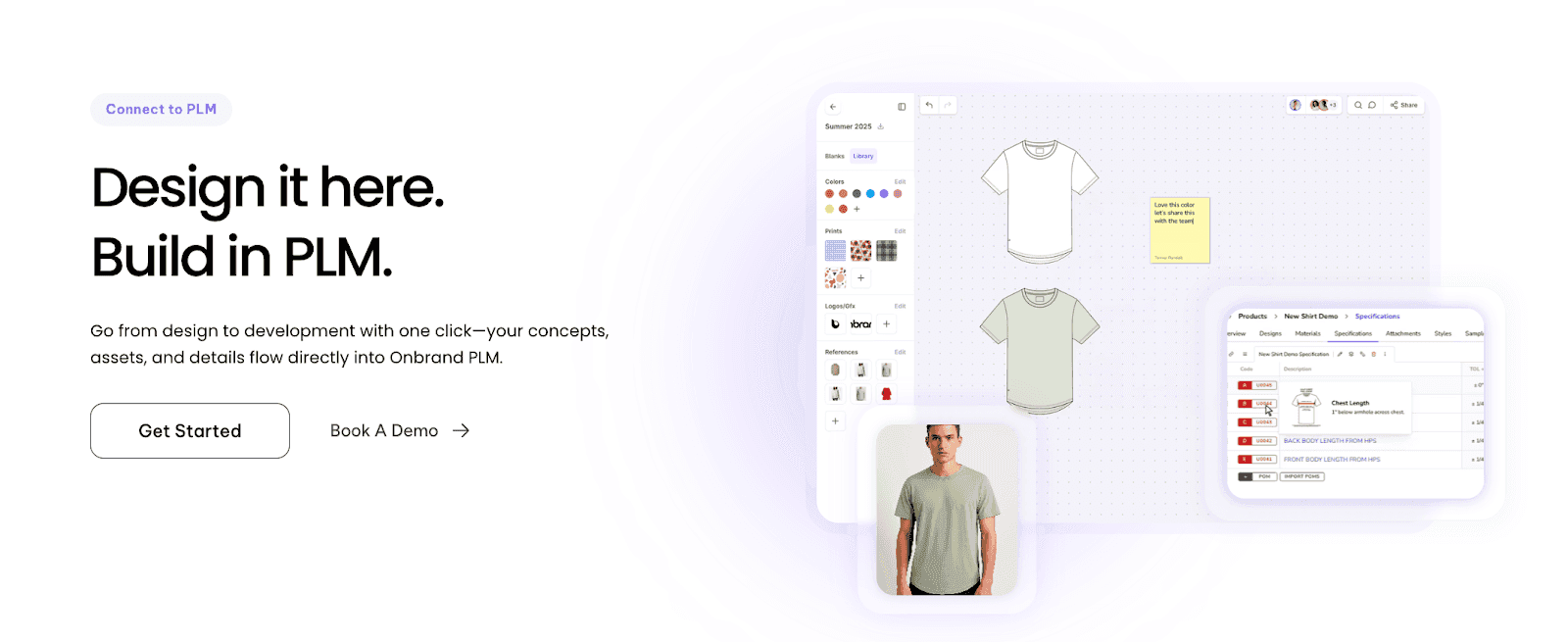
With Onbrand AI Design and Onbrand PLM working together, you keep decisions intact as styles move forward. This reduces rework, limits confusion, and gives you clearer control over how products take shape.
Align on Design Direction Before Development Begins
Before specs, samples, or timelines are locked in, Onbrand AI Design helps you review concepts and explore variations visually.
Early alignment makes it easier to move into development with fewer changes later and bring approved products to market faster.
Carry Design Decisions Forward Without Rebuilding Work
Once a concept is approved, Onbrand PLM carries those decisions into tech packs, samples, and timelines.
Design intent remains visible, rather than being recreated or interpreted in a different system.
Keep Context Through Reviews and Approvals
Design feedback, development updates, and approvals remain connected to the same style record. You can see what changed, why it changed, and when it was approved, without searching through different tools or files.
Grow Without Breaking Your Workflow
Larger collections often lead brands to add more tools to cover gaps. Onbrand avoids that by supporting early design through production in one connected setup.
The workflow scales without fragmenting how work gets done, helping protect your competitive advantage as product lines become more complex.
Upgrade Your PLM Workflow With Onbrand

Managing product development becomes harder to sustain as fashion collections become larger.
PLM solutions give teams a shared source of truth for tech packs, timelines, approvals, and vendor communication, which helps reduce confusion as more people and partners get involved.
While many PLM platforms focus only on development and production, Onbrand stands out by connecting design decisions and execution in one continuous workflow.
With Onbrand AI Design supporting early alignment and Onbrand PLM carrying that context into development and production, teams spend less time recreating work and more time moving styles forward with clarity.
FAQs About PLM Solutions
What is a PLM solution?
A PLM solution is software that helps fashion brands manage product data, workflows, and approvals throughout the entire lifecycle, from early design to production. It centralizes tech packs, materials, timelines, and vendor updates in one place.
What does PLM stand for?
PLM stands for product lifecycle management. It refers to the systems brands use to control product information, changes, and collaboration as styles move through development and production.
Does SAP have a PLM solution?
Yes. SAP offers product lifecycle management capabilities through SAP Integrated Product Development, previously known as SAP Enterprise Product Development. It supports product information, collaboration, approvals, security, and connected development workflows. SAP PLM is commonly used by manufacturers and organizations already working within the SAP ecosystem.
Can PLM software support innovative and sustainable products?
Yes. A PLM system can help teams develop innovative and sustainable products by keeping product data, materials, specifications, and compliance records organized in one place. It can also support cost savings by reducing duplicate work, improving visibility, and helping teams make more informed product decisions.
Can PLM software support machine learning, competitor analysis, or process manufacturing?
Some enterprise PLM platforms integrate with technologies such as machine learning or support industries that use process manufacturing, depending on the software provider and industry. Competitor analysis is usually performed using separate market research or business intelligence tools, although insights from those activities may inform product planning. These capabilities are generally more common outside the fashion industry.