5 Best Centric PLM Alternatives Fashion Teams Are Switching To
Feb 4, 2026


Fashion brands often start exploring Centric PLM alternatives when their existing setup no longer matches how work actually flows.
What once supported a small collection can become harder to manage as styles, vendors, and timelines multiply across different teams.
Many legacy product lifecycle management (PLM) platforms were built for large enterprises across various industries, not for the pace and complexity of the fashion industry.
As a result, everyday work like updating tech packs, sharing feedback, or coordinating changes can feel slower than it should.
Modern PLM software alternatives take a different approach.
They focus on usability, clearer workflows, and real PLM collaboration, helping you manage projects, share product data, and stay aligned without adding unnecessary friction.
In this article, we walk through five Centric PLM alternatives fashion brands are switching to today and explain where each one fits in modern fashion workflows.
TL;DR
These are the top Centric PLM alternatives fashion teams are switching to:
BlueCherry PLM
Backbone PLM
WFX PLM
Aptean Apparel PLM
What Centric PLM Is Commonly Used For
Centric PLM is widely used to centralize product data and support structured PLM processes across fashion organizations. Teams rely on it to manage tech packs, materials, and specifications within a single platform.
It also supports coordination across sampling, approvals, and production timelines, helping users track changes and keep records aligned across ongoing projects.
Many brands use it as a shared collaboration tool to connect internal teams with vendors and external partners.
At scale, Centric PLM supports standardized workflows across multiple departments, allowing you to work within the same system.
This approach suits organizations that prioritize consistency and control, rather than individuals who need faster, more flexible ways to manage product work.
Why Fashion Brands Look for Centric PLM Alternatives
As collections expand, gaps often show up in how existing PLM solutions handle increasing style volume, approvals, and vendor coordination. Managing more styles, calendars, and approvals can slow progress, especially when you need decisions to move quickly across collections.
Heavy configuration, long onboarding, and limited flexibility often make it harder to manage projects or adjust workflows as needs change. For growing fashion teams, this can disrupt collaboration between people, timelines, and product decisions.
Many brands now look for Centric PLM alternatives that improve visibility across design, development, and production while supporting faster decision-making earlier in the product lifecycle.
Lighter systems help you stay aligned, reduce friction, and better reflect how modern fashion work actually happens.
5 Best Centric PLM Alternatives in 2026
Below are five Centric PLM alternatives fashion brands commonly consider when their current system no longer fits how work moves. Each option supports product development in a different way, depending on your team size, workflow needs, and level of complexity.
1. Onbrand PLM
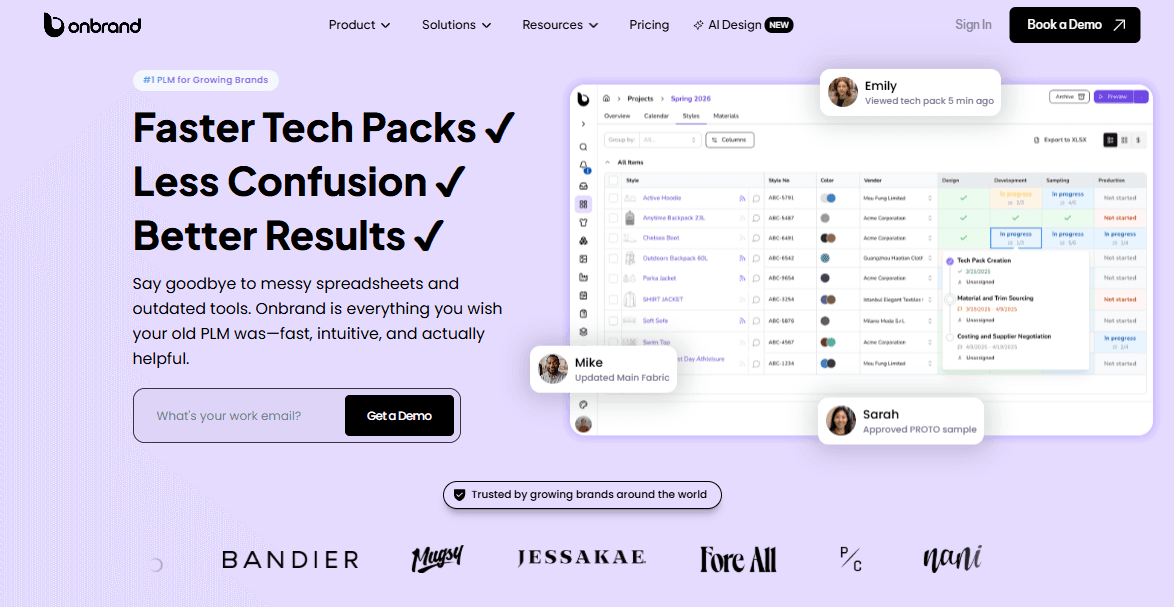
Onbrand PLM is built for growing fashion brands that want a clearer, day-to-day workflow than legacy PLM tools offer.
If you are comparing Centric PLM alternatives, Onbrand PLM stands out because it keeps product work in one shared system, so you are not chasing files, versions, or updates across email threads.
Brands using Onbrand PLM have seen tech packs created 55% faster, development timelines shortened by four weeks, and onboarding completed in around 10 days.
Those outcomes matter when your calendar is tight, and you need decisions to move from design to development without delays.
Key Features
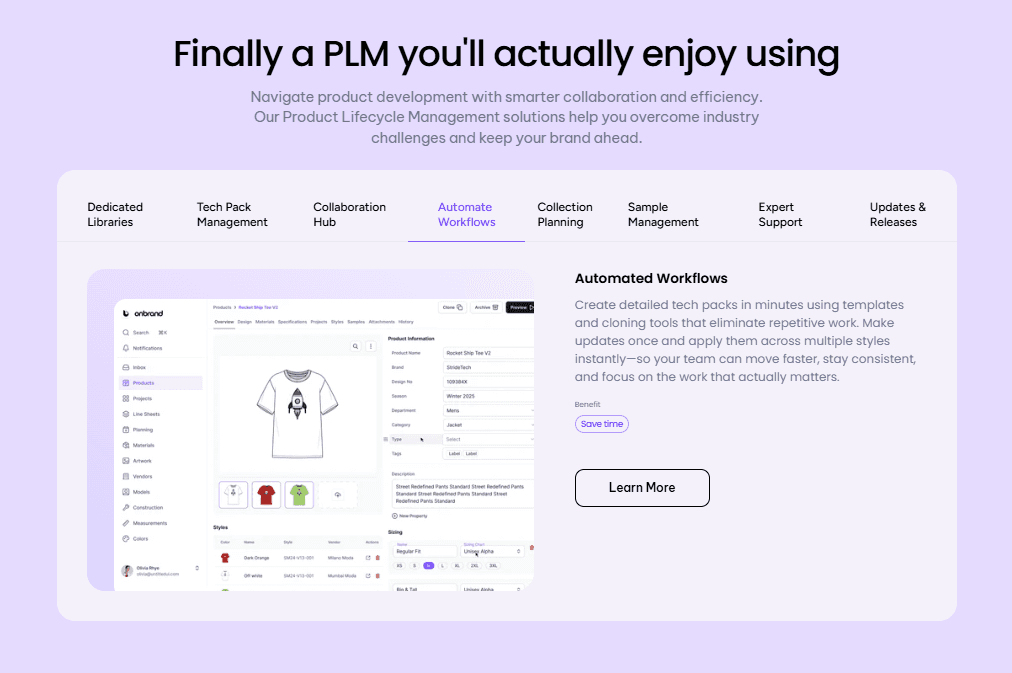
Live tech packs - Everyone works from the same web-based record, so vendors always see the current specs. This helps reduce version confusion during sampling.
Sample management - Track sample stages and feedback in one place, so you do not lose comments between fittings, approvals, and revisions.
Built-in project management - Set stages, tasks, and approvals around your timeline, so you can manage key milestones without extra tools.
Vendor collaboration - Give factories access to the right styles and tech packs, then keep feedback tied to the product instead of scattered across chat apps.
Dedicated libraries - Store materials, colors, artwork, and specifications as reusable data, so you are not rebuilding the same inputs each season.
Ongoing updates and support - You get a dedicated account contact and product updates without paid support packages.
If your team also needs stronger alignment before tech packs start, Onbrand AI Design helps you explore concepts, test variations, and organize visuals early.
Once a direction is approved, key assets can flow into PLM so your handoff to development stays connected from concept through production.
2. BlueCherry PLM (CGS)
Source: bluecherry.com
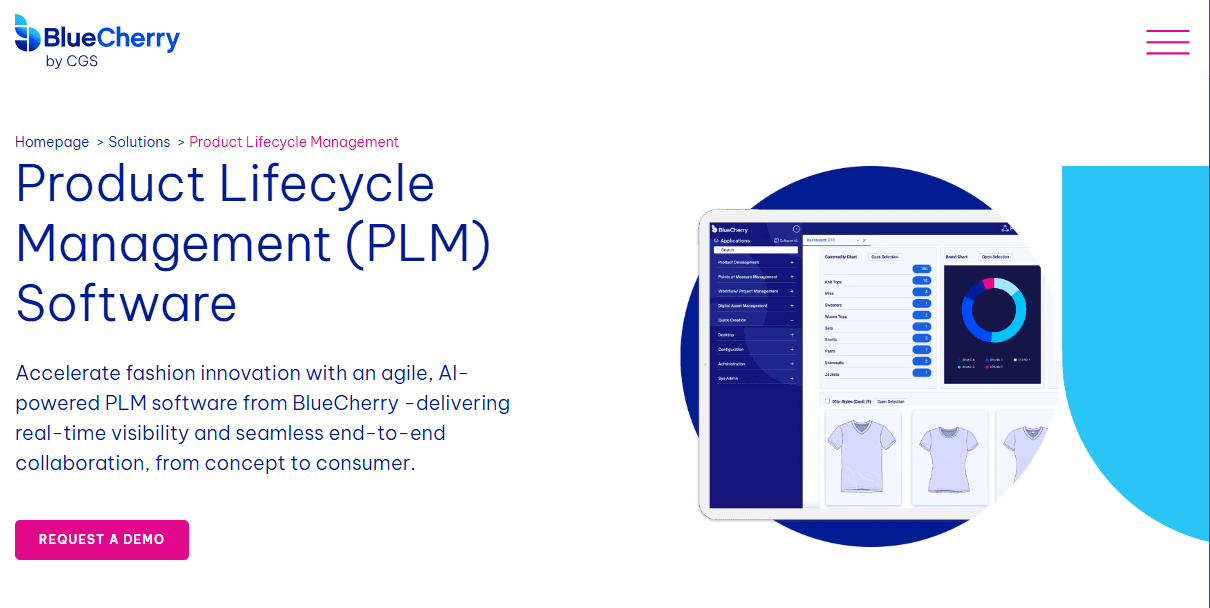
BlueCherry PLM is a fashion-focused system designed to support apparel, footwear, and consumer goods brands managing fashion product development alongside production and supply chain work.
As one of Centric PLM's competitors, it is often used by brands that want a single suite covering product data, sourcing, and operational planning.
BlueCherry fits organizations that prioritize consistency across departments and need a structured place to manage product records, calendars, and vendor inputs as collections scale.
Key Features
Product data management - Centralizes styles, materials, and specifications so people across design and production can work from the same records.
Production planning tools - Help coordinate timelines and milestones to improve overall efficiency during development.
Seasonal calendar support - Uses structured timelines, including Gantt charts, to plan and track collection progress.
ERP and eCommerce integration - Connects PLM data with downstream systems used for sales and operations.
Scalable setup - Designed to support brands of different sizes with complex sourcing needs.
3. Backbone PLM
Source: bamboorose.com/backbone
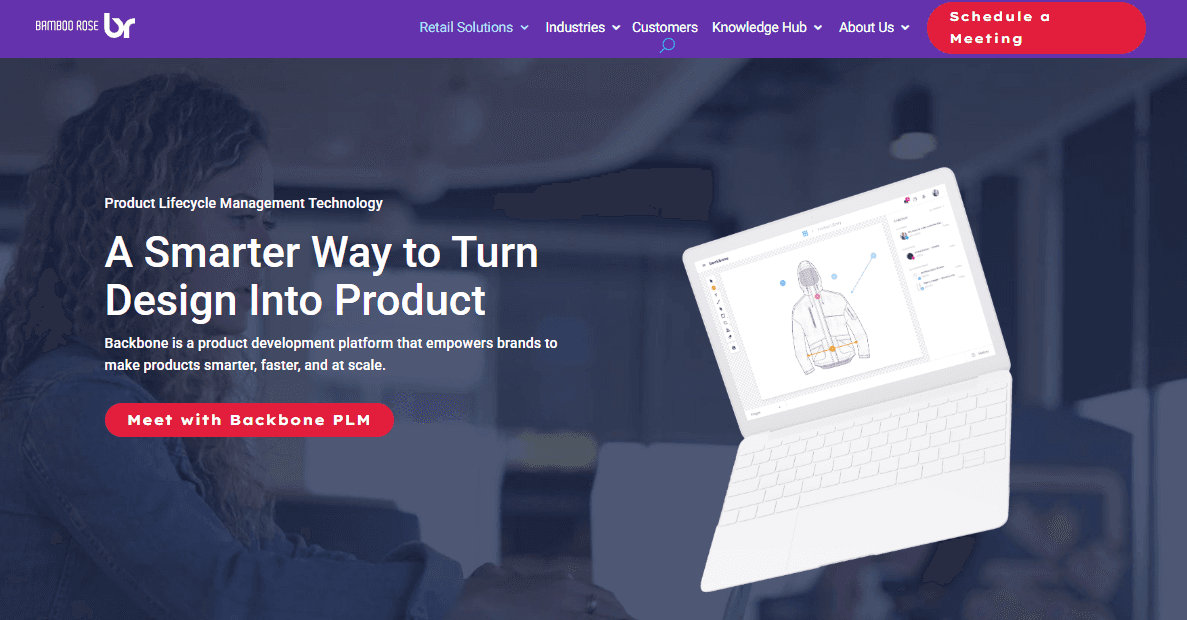
Backbone PLM is a cloud-based PLM tool used by fashion brands that want to move away from spreadsheets and email-driven workflows.
Smaller brands frequently consider Backbone among Centric PLM alternatives when they want a simpler way to manage tech packs, materials, and timelines in one place.
Backbone is suitable if you want a lighter setup that helps professionals keep product information organized without a long onboarding process or deep system configuration.
Key Features
Tech pack management - Stores specs, measurements, and materials so you can find current details without searching through files.
Basic workflow tracking - Supports milestone tracking and approvals with a clear view of product progress.
Material and style libraries - Helps reuse product data across seasons and reduce manual updates.
Vendor communication - Keeps comments tied to styles, making it easier to agree on changes during sampling.
Simple setup - Offers a limited range of tools focused on core product work rather than complex customization.
4. WFX PLM
Source: worldfashionexchange.com
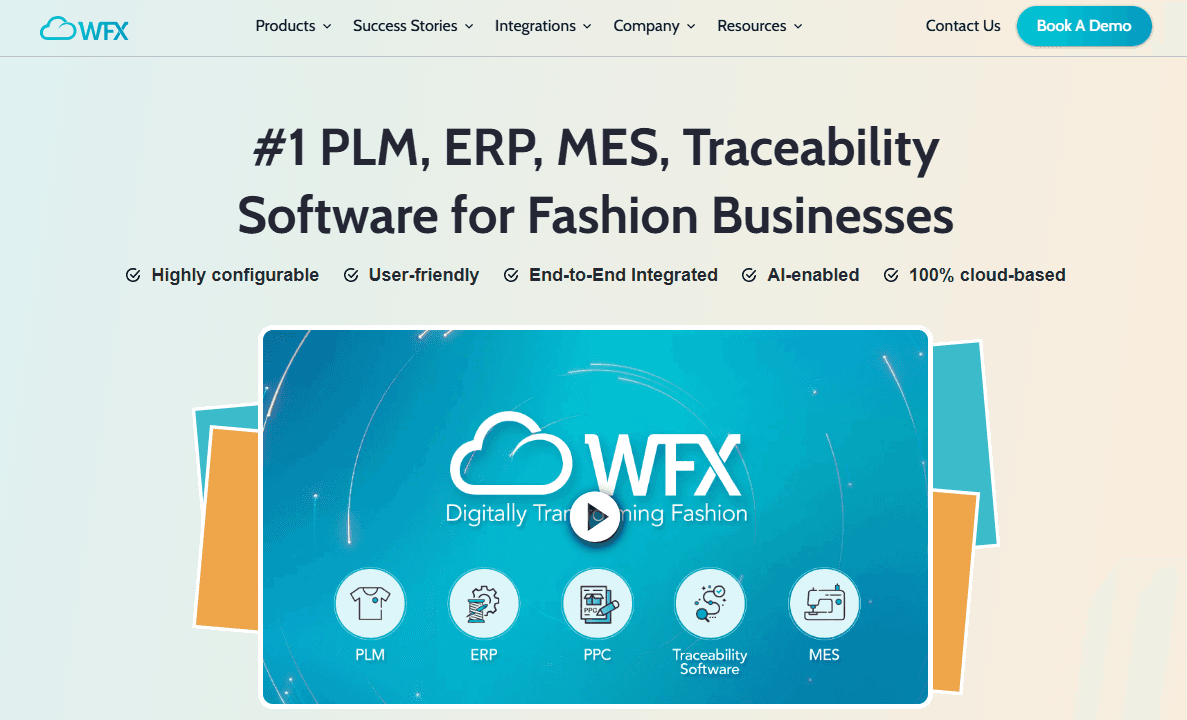
WFX PLM is a PLM system used by apparel and textile brands that manage sourcing, development, and production across multiple regions.
It is often reviewed among Centric PLM alternatives by brands that need more in-depth visibility into product data, vendor activity, and timelines.
WFX supports structured workflows that follow defined stages, which can be helpful if your process relies on agile methodologies and clear checkpoints across development and production.
Key Features
Product lifecycle tracking - Follows styles from development through production with defined stages and approvals.
Sourcing and vendor modules - Helps you engage suppliers and track updates tied to each style.
Time and action calendars - Supports planning through timeline views that reference time tracking and key dates.
Sample and approval management - Keeps feedback connected to products, which can improve the review experience.
Operational visibility - Provides a structured view of activity that supports production attendance and delivery oversight.
5. Aptean Apparel PLM
Source: aptean.com
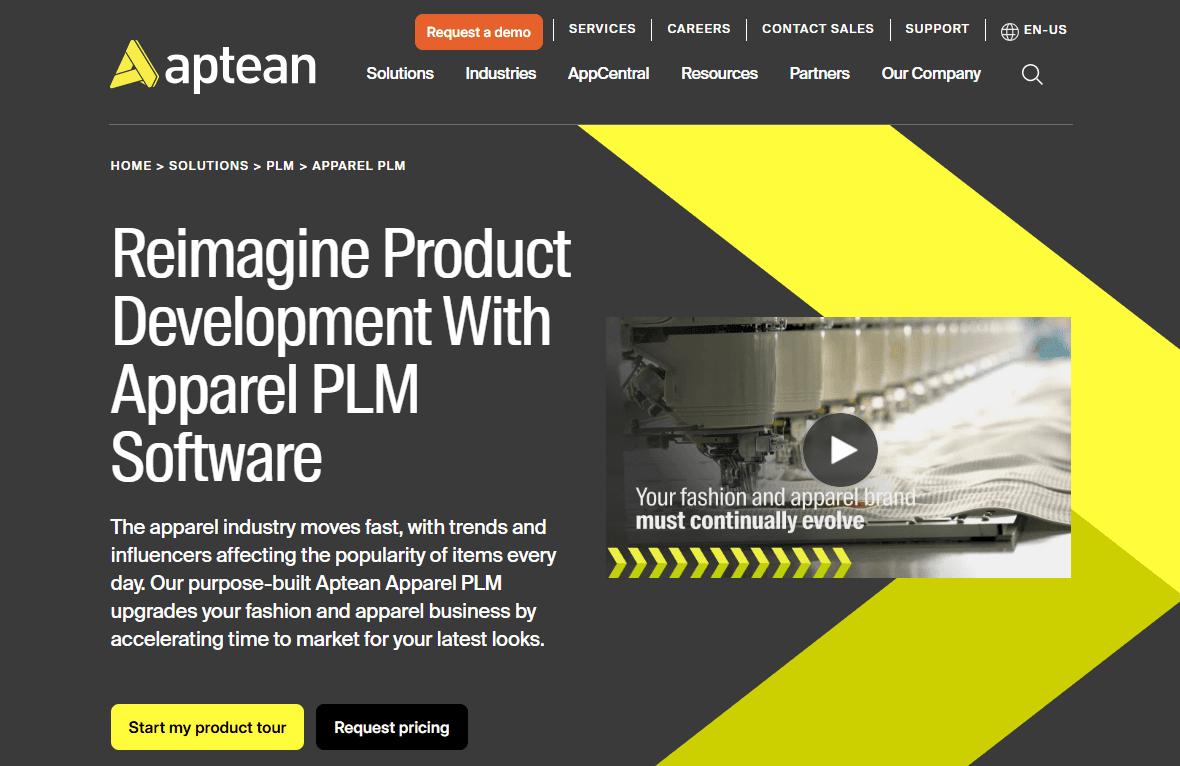
Aptean Apparel PLM is part of Aptean’s broader enterprise software portfolio and is used by apparel brands that want PLM tightly connected to ERP systems that support inventory management.
Organizations that prioritize structured product records, compliance, and calendar-driven development often consider Aptean among Centric PLM alternatives.
Aptean fits brands that value documentation and control across development and production, especially when processes are shared across multiple regions or business units.
Key Features
Product data management - Maintains detailed records for styles, materials, and specifications across collections.
Calendar and milestone tracking - Uses structured timelines to track progress and approvals, similar to a timesheet view of product work.
ERP integration - Connects PLM data with downstream systems for planning and operations.
Compliance and documentation tools - Supports audit and regulatory requirements tied to apparel production.
Structured workflows - Provide a consistent framework that can offer a benefit for brands managing complex product lines.
Onbrand PLM: Built For Fashion Teams Moving Beyond Centric
Many fashion brands reach a point where their Centric PLM setup no longer supports how fashion PLM actually moves.
As collections scale, you often need more flexibility, clearer visibility, and faster ways to manage tech packs, approvals, and vendor feedback. That shift is why so many brands begin exploring Centric PLM alternatives.
Onbrand PLM stands out by supporting the full workflow, from early design decisions through production. Alongside Onbrand PLM, Onbrand AI Design helps you explore concepts, test variations, and align on direction before tech packs even begin.
When styles move forward, designs and assets flow directly into PLM, keeping development connected from the start.
FAQs About Centric PLM Alternatives
What should fashion brands prioritize when comparing Centric PLM alternatives?
Fashion brands should focus on how well a PLM supports product development tasks like tech packs, sample management, and vendor relationship management. Clear product data, reliable collaboration, and timelines that reflect real fashion workflows matter more than broad feature lists. The best PLM fits how your design and production teams already work.
Can Centric PLM alternatives support both design and development workflows?
Some Centric PLM alternatives support development only, while others connect earlier design work with production-ready execution. Tools that link visual design, approvals, and tech packs help reduce handoff issues and improve quality control before production begins. This is especially important as collections grow and timelines tighten.
Is Siemens PLM a suitable alternative to Centric PLM for fashion brands?
Siemens PLM is designed primarily for engineering and manufacturing industries, not fashion-specific product development. While it offers strong data control, many fashion brands find it less suitable for managing tech packs, samples, and vendor workflows. Teams focused on fashion PLM often prefer tools built around apparel timelines, seasonal calendars, and design collaboration.
How does Aptean PLM Lascom Edition compare to Centric PLM?
Aptean PLM Lascom Edition is commonly used by enterprise organizations that need structured documentation and compliance support. It works well for regulated environments, but can feel rigid for fashion teams that need faster iteration. Brands exploring Centric PLM alternatives often look for systems with simpler setups and more flexible workflows.
Fashion brands often start exploring Centric PLM alternatives when their existing setup no longer matches how work actually flows.
What once supported a small collection can become harder to manage as styles, vendors, and timelines multiply across different teams.
Many legacy product lifecycle management (PLM) platforms were built for large enterprises across various industries, not for the pace and complexity of the fashion industry.
As a result, everyday work like updating tech packs, sharing feedback, or coordinating changes can feel slower than it should.
Modern PLM software alternatives take a different approach.
They focus on usability, clearer workflows, and real PLM collaboration, helping you manage projects, share product data, and stay aligned without adding unnecessary friction.
In this article, we walk through five Centric PLM alternatives fashion brands are switching to today and explain where each one fits in modern fashion workflows.
TL;DR
These are the top Centric PLM alternatives fashion teams are switching to:
BlueCherry PLM
Backbone PLM
WFX PLM
Aptean Apparel PLM
What Centric PLM Is Commonly Used For
Centric PLM is widely used to centralize product data and support structured PLM processes across fashion organizations. Teams rely on it to manage tech packs, materials, and specifications within a single platform.
It also supports coordination across sampling, approvals, and production timelines, helping users track changes and keep records aligned across ongoing projects.
Many brands use it as a shared collaboration tool to connect internal teams with vendors and external partners.
At scale, Centric PLM supports standardized workflows across multiple departments, allowing you to work within the same system.
This approach suits organizations that prioritize consistency and control, rather than individuals who need faster, more flexible ways to manage product work.
Why Fashion Brands Look for Centric PLM Alternatives
As collections expand, gaps often show up in how existing PLM solutions handle increasing style volume, approvals, and vendor coordination. Managing more styles, calendars, and approvals can slow progress, especially when you need decisions to move quickly across collections.
Heavy configuration, long onboarding, and limited flexibility often make it harder to manage projects or adjust workflows as needs change. For growing fashion teams, this can disrupt collaboration between people, timelines, and product decisions.
Many brands now look for Centric PLM alternatives that improve visibility across design, development, and production while supporting faster decision-making earlier in the product lifecycle.
Lighter systems help you stay aligned, reduce friction, and better reflect how modern fashion work actually happens.
5 Best Centric PLM Alternatives in 2026
Below are five Centric PLM alternatives fashion brands commonly consider when their current system no longer fits how work moves. Each option supports product development in a different way, depending on your team size, workflow needs, and level of complexity.
1. Onbrand PLM

Onbrand PLM is built for growing fashion brands that want a clearer, day-to-day workflow than legacy PLM tools offer.
If you are comparing Centric PLM alternatives, Onbrand PLM stands out because it keeps product work in one shared system, so you are not chasing files, versions, or updates across email threads.
Brands using Onbrand PLM have seen tech packs created 55% faster, development timelines shortened by four weeks, and onboarding completed in around 10 days.
Those outcomes matter when your calendar is tight, and you need decisions to move from design to development without delays.
Key Features
Live tech packs - Everyone works from the same web-based record, so vendors always see the current specs. This helps reduce version confusion during sampling.
Sample management - Track sample stages and feedback in one place, so you do not lose comments between fittings, approvals, and revisions.
Built-in project management - Set stages, tasks, and approvals around your timeline, so you can manage key milestones without extra tools.
Vendor collaboration - Give factories access to the right styles and tech packs, then keep feedback tied to the product instead of scattered across chat apps.
Dedicated libraries - Store materials, colors, artwork, and specifications as reusable data, so you are not rebuilding the same inputs each season.
Ongoing updates and support - You get a dedicated account contact and product updates without paid support packages.
If your team also needs stronger alignment before tech packs start, Onbrand AI Design helps you explore concepts, test variations, and organize visuals early.
Once a direction is approved, key assets can flow into PLM so your handoff to development stays connected from concept through production.
2. BlueCherry PLM (CGS)

Source: bluecherry.com
BlueCherry PLM is a fashion-focused system designed to support apparel, footwear, and consumer goods brands managing fashion product development alongside production and supply chain work.
As one of Centric PLM's competitors, it is often used by brands that want a single suite covering product data, sourcing, and operational planning.
BlueCherry fits organizations that prioritize consistency across departments and need a structured place to manage product records, calendars, and vendor inputs as collections scale.
Key Features
Product data management - Centralizes styles, materials, and specifications so people across design and production can work from the same records.
Production planning tools - Help coordinate timelines and milestones to improve overall efficiency during development.
Seasonal calendar support - Uses structured timelines, including Gantt charts, to plan and track collection progress.
ERP and eCommerce integration - Connects PLM data with downstream systems used for sales and operations.
Scalable setup - Designed to support brands of different sizes with complex sourcing needs.
3. Backbone PLM

Source: bamboorose.com/backbone
Backbone PLM is a cloud-based PLM tool used by fashion brands that want to move away from spreadsheets and email-driven workflows.
Smaller brands frequently consider Backbone among Centric PLM alternatives when they want a simpler way to manage tech packs, materials, and timelines in one place.
Backbone is suitable if you want a lighter setup that helps professionals keep product information organized without a long onboarding process or deep system configuration.
Key Features
Tech pack management - Stores specs, measurements, and materials so you can find current details without searching through files.
Basic workflow tracking - Supports milestone tracking and approvals with a clear view of product progress.
Material and style libraries - Helps reuse product data across seasons and reduce manual updates.
Vendor communication - Keeps comments tied to styles, making it easier to agree on changes during sampling.
Simple setup - Offers a limited range of tools focused on core product work rather than complex customization.
4. WFX PLM

Source: worldfashionexchange.com
WFX PLM is a PLM system used by apparel and textile brands that manage sourcing, development, and production across multiple regions.
It is often reviewed among Centric PLM alternatives by brands that need more in-depth visibility into product data, vendor activity, and timelines.
WFX supports structured workflows that follow defined stages, which can be helpful if your process relies on agile methodologies and clear checkpoints across development and production.
Key Features
Product lifecycle tracking - Follows styles from development through production with defined stages and approvals.
Sourcing and vendor modules - Helps you engage suppliers and track updates tied to each style.
Time and action calendars - Supports planning through timeline views that reference time tracking and key dates.
Sample and approval management - Keeps feedback connected to products, which can improve the review experience.
Operational visibility - Provides a structured view of activity that supports production attendance and delivery oversight.
5. Aptean Apparel PLM

Source: aptean.com
Aptean Apparel PLM is part of Aptean’s broader enterprise software portfolio and is used by apparel brands that want PLM tightly connected to ERP systems that support inventory management.
Organizations that prioritize structured product records, compliance, and calendar-driven development often consider Aptean among Centric PLM alternatives.
Aptean fits brands that value documentation and control across development and production, especially when processes are shared across multiple regions or business units.
Key Features
Product data management - Maintains detailed records for styles, materials, and specifications across collections.
Calendar and milestone tracking - Uses structured timelines to track progress and approvals, similar to a timesheet view of product work.
ERP integration - Connects PLM data with downstream systems for planning and operations.
Compliance and documentation tools - Supports audit and regulatory requirements tied to apparel production.
Structured workflows - Provide a consistent framework that can offer a benefit for brands managing complex product lines.
Onbrand PLM: Built For Fashion Teams Moving Beyond Centric

Many fashion brands reach a point where their Centric PLM setup no longer supports how fashion PLM actually moves.
As collections scale, you often need more flexibility, clearer visibility, and faster ways to manage tech packs, approvals, and vendor feedback. That shift is why so many brands begin exploring Centric PLM alternatives.
Onbrand PLM stands out by supporting the full workflow, from early design decisions through production. Alongside Onbrand PLM, Onbrand AI Design helps you explore concepts, test variations, and align on direction before tech packs even begin.
When styles move forward, designs and assets flow directly into PLM, keeping development connected from the start.
FAQs About Centric PLM Alternatives
What should fashion brands prioritize when comparing Centric PLM alternatives?
Fashion brands should focus on how well a PLM supports product development tasks like tech packs, sample management, and vendor relationship management. Clear product data, reliable collaboration, and timelines that reflect real fashion workflows matter more than broad feature lists. The best PLM fits how your design and production teams already work.
Can Centric PLM alternatives support both design and development workflows?
Some Centric PLM alternatives support development only, while others connect earlier design work with production-ready execution. Tools that link visual design, approvals, and tech packs help reduce handoff issues and improve quality control before production begins. This is especially important as collections grow and timelines tighten.
Is Siemens PLM a suitable alternative to Centric PLM for fashion brands?
Siemens PLM is designed primarily for engineering and manufacturing industries, not fashion-specific product development. While it offers strong data control, many fashion brands find it less suitable for managing tech packs, samples, and vendor workflows. Teams focused on fashion PLM often prefer tools built around apparel timelines, seasonal calendars, and design collaboration.
How does Aptean PLM Lascom Edition compare to Centric PLM?
Aptean PLM Lascom Edition is commonly used by enterprise organizations that need structured documentation and compliance support. It works well for regulated environments, but can feel rigid for fashion teams that need faster iteration. Brands exploring Centric PLM alternatives often look for systems with simpler setups and more flexible workflows.

Discover how Onbrand PLM can streamline your product development!
© 2024 onbrandplm.com. All rights reserved.
© 2024 Onbrand. All rights reserved.

