Jun 22, 2026

Fashion design traditionally relies on trend research, sketching, material selection, revisions, and product development.
Collections often move through multiple rounds of concepts, colorways, and updates before products are ready for the next stage of creation.
That is one reason fashion brands are adopting artificial intelligence (AI).
Tools powered by machine learning can help generate ideas, create variations, and support repetitive tasks while keeping creative decisions in the hands of fashion designers.
This guide explains how fashion brands use AI in fashion design workflow activities and where it fits within modern product development.
TL;DR
AI in fashion design workflow supports multiple stages of product creation, from garment concept generation and sketch rendering to fabric development, AI fashion models, and product documentation.
The six practical use cases covered in this guide include garment and product design, sketch-to-render, fabric design, fabric iterations, AI fashion models, and tech pack documentation support.
Human expertise remains essential for collection planning, fit reviews, sourcing decisions, intellectual property review, and production approvals.
Onbrand connects AI-powered design exploration with fashion PLM, helping brands manage concepts, tech packs, revisions, approvals, and supplier communication from design through development.
How to Use AI in Fashion Design: 6 Practical Use Cases
AI fits into several stages of product creation, not just the early design phase. The examples below show how fashion brands use AI in day-to-day design and development work, along with the practical value each use case provides.
1. Garment and Product Design
One of the most common uses of AI in clothing design is generating garment concepts from text prompts.
Designers enter details such as garment type, fabric, color palette, silhouette, or styling direction, and the system generates visual concepts for review.
The creative process often starts with exploring options. AI helps fashion brands evaluate silhouettes, construction details, styling elements, and product variations before development begins.
A design team can generate ideas, build digital mood boards, and explore concepts that align with collection goals, customer preferences, and brand aesthetics.
AI can also help teams review current fashion trends, identify emerging trends, and evaluate opportunities linked to consumer demands.
For example, a team developing a women's outerwear collection might compare cropped and oversized jackets, test utility details, or explore new color combinations before selecting a direction.
Throughout the entire process, AI enables designers to refine a creative vision and evaluate more options without starting from scratch each time.
2. Sketch to Render
A rough sketch no longer needs to stay on paper for long. AI can convert sketches, flat lays, and line drawings into realistic product imagery within minutes, giving designers a faster way to evaluate concepts.
Fashion brands often use this step during the design process when products are still being refined.
A technical sketch of a quilted jacket, for example, can be converted into multiple rendered versions showing different fabrics, colors, or styling treatments. This helps teams visualize garments before samples are created.
Rendered images are also useful for early stakeholder reviews. Product developers, merchandisers, and design leads can evaluate concepts sooner and provide feedback before additional work begins.
This approach supports digital fashion design by turning sketches into easier-to-review visuals, while allowing designers to compare different directions before selecting one for development.
3. Fabric Design
AI is becoming a useful tool during fabric and print development.
Designers can describe a pattern, texture, motif, or seasonal theme and generate multiple textile concepts for review. Several AI fashion design tools can create prints, graphics, and surface artwork within minutes.
A brand developing a spring collection might explore floral layouts, geometric prints, watercolor effects, or abstract artwork before selecting a direction.
Reviewing several concepts early helps designers evaluate unique patterns and supports fabric selection before sampling begins.
Product developers and designers can compare artwork options before committing designs to a fabric program or requesting strike-offs from suppliers.
Tools powered by fashion diffusion models can generate multiple textile concepts from a single prompt, giving designers more ideas to evaluate before moving forward with patternmaking and development.
4. Fabric Iterations
Fabric development often involves reviewing several material options before a final direction is selected. Designers may compare fabrics, test colorways, and evaluate different approaches before moving a product into development.
AI helps speed up that process by generating variations from a single concept. A designer working on a performance jacket, for example, can compare recycled nylon, ripstop fabric, and softshell materials without creating physical samples for each option.
Many fashion teams combine AI-generated visualizations with fabric simulation workflows to review materials, colors, and design variations before committing to samples.
AI can also generate virtual prototypes for concept review, allowing teams to compare color combinations, fabric treatments, and design variations before sourcing and sampling begin.
Fewer exploratory samples can help reduce unnecessary development work, supporting efforts focused on reducing waste and broader sustainable practices.
5. AI Fashion Models
AI-generated models are becoming a useful tool once garment concepts have been approved and brands need visuals for review, marketing, or sales preparation.
Instead of organizing traditional photoshoots for every concept, designers can place garments on digital AI models and generate imagery much earlier in development.
A brand preparing a new outerwear launch, for example, can create product photos featuring different model types, styling directions, and backgrounds before samples are available.
This gives product developers, merchandisers, and marketing teams more content to review while collections are still being finalized.
Fashion brands also use AI fashion photography to create preliminary marketing assets for presentations, lookbook creation, line reviews, and early campaign planning.
Generated visuals can support e-commerce preparation and help showcase an entire collection before production is complete.
Some brands also experiment with AI-generated fashion videos created from approved imagery. Many of these capabilities are available through modern AI fashion tools, although final campaign assets often still go through creative review before publication.
6. Tech Pack and Product Documentation Support
Product development does not stop once a design is approved.
Technical designers still need to document specifications, organize product details, and prepare information for vendors and factories. Much of that work can be repetitive and time-consuming.
AI can help generate first drafts of garment descriptions, measurement notes, material summaries, and development documentation. A product developer creating a jacket tech pack can use AI to organize construction details and prepare information for review before final edits are made.
Several brands are integrating AI into technical workflows to help manage product information, support specification management, and maintain a more structured bill of materials (BOM).
Well-structured documentation helps teams communicate more effectively with factories and supply chains. It can also support discussions around production-ready patterns, optimizing patterns, and decisions that may influence physical sampling costs later in development.
Technical review, fit evaluation, and final approvals still require human oversight before information is shared with vendors or moved into production.
Where AI Still Needs Human Designers
AI can generate concepts, variations, and visual assets, but several parts of fashion development still rely on human judgment.
The early stages of product creation involve collection planning, assortment decisions, and product strategy that require business context beyond what AI can evaluate.
Most designers use AI fashion tools to explore ideas, but human creativity still guides collection direction. A generated concept may look promising, but designers decide whether it fits the brand, supports the season, and reflects real consumer preferences.
Fit reviews also require human evaluation. AI can visualize garments on different body shapes, but brands still rely on traditional methods such as fit sessions and sample reviews before approving products.
Production decisions depend on factors AI cannot fully account for, including legacy systems, sourcing requirements, fabric availability, and factory capabilities.
Brands also need to review AI-generated designs for originality and potential intellectual property risks. AI can support trend forecasting, but experienced design and development teams still make final decisions about what moves forward into production.
Bring AI Design and Product Development Into One Fashion Design Workflow
AI can help fashion brands generate concepts, explore variations, and create visuals faster. The challenge begins when those concepts need to move into technical development, approvals, supplier communication, and production planning.
Onbrand brings generative AI design tools and fashion PLM together so fashion brands can move from concept creation to product development without switching between disconnected systems.
Onbrand AI Design
With Onbrand AI Design, designers can generate garment concepts, explore colorways, create photorealistic renders, build mood boards, and organize a visual line plan.
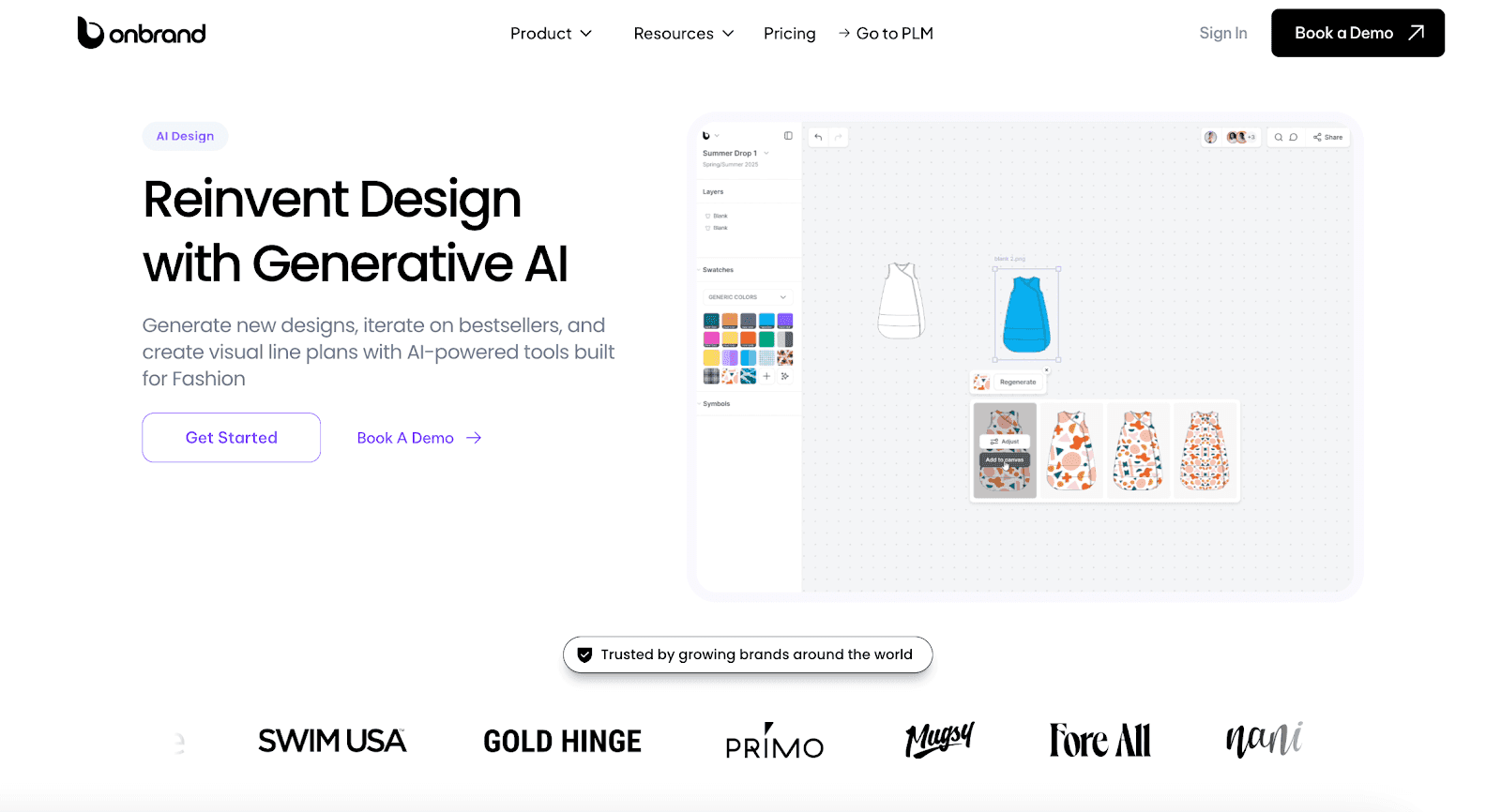
Teams can also use shared boards, comments, version history, and co-editing to review ideas before they become technical work.
Onbrand reports up to ten times faster design turnaround, 30–50% fewer physical samples, and 10+ weeks of time savings each year through AI-supported design workflows.
Key capabilities include:
Generate garment concepts from text prompts, sketches, or reference images.
Create alternative colorways, trims, silhouettes, and design variations for review.
Convert sketches into photorealistic renders and on-model visuals.
Build mood boards and visual line plans to organize collection ideas.
Collaborate through shared workspaces, comments, and version tracking.
Export approved concepts directly into product development without recreating assets.
Onbrand PLM
Once a concept is ready, Onbrand PLM helps manage product data, live tech packs, revisions, approvals, and supplier communication.
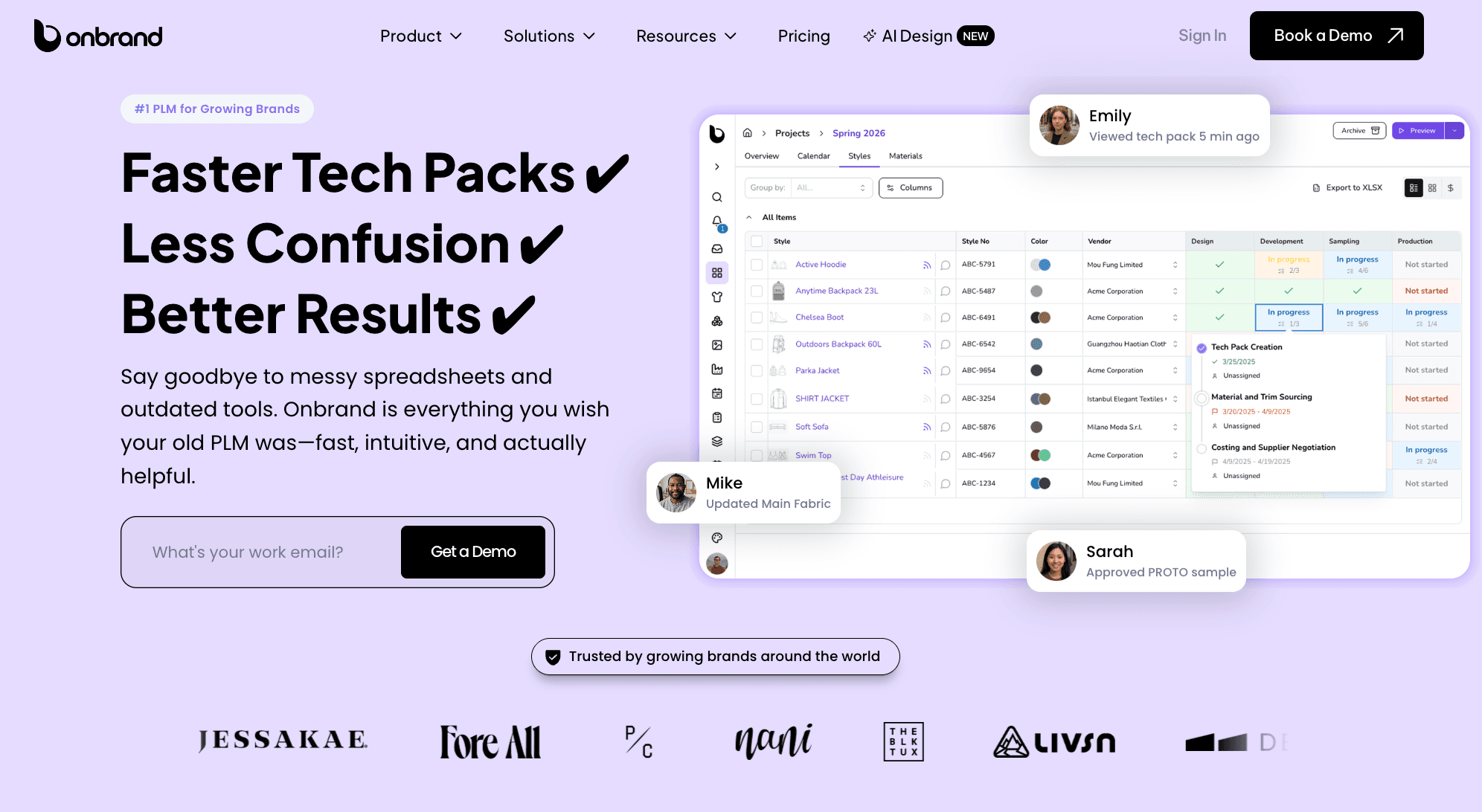
That gives product developers and technical designers a better way to handle development tracking, vendor updates, and project management without digging through files or email threads.
Onbrand customers have reported 55% faster tech pack creation, development timelines shortened by up to four weeks, and implementation completed in as little as 10 days.
Key capabilities include:
Manage product data, materials, colors, artwork, and specifications in one place.
Create live tech packs that stay updated throughout development.
Track revisions, approvals, and product changes with full visibility.
Communicate directly with suppliers on the product record.
Manage development calendars, tasks, and project milestones.
Connect design assets to development documentation for a continuous workflow.
Together, Onbrand AI Design and Onbrand PLM help bridge the gap between creative work and product execution, reducing the friction that often occurs when designs move into development.
Create, Review, and Develop Products With Onbrand
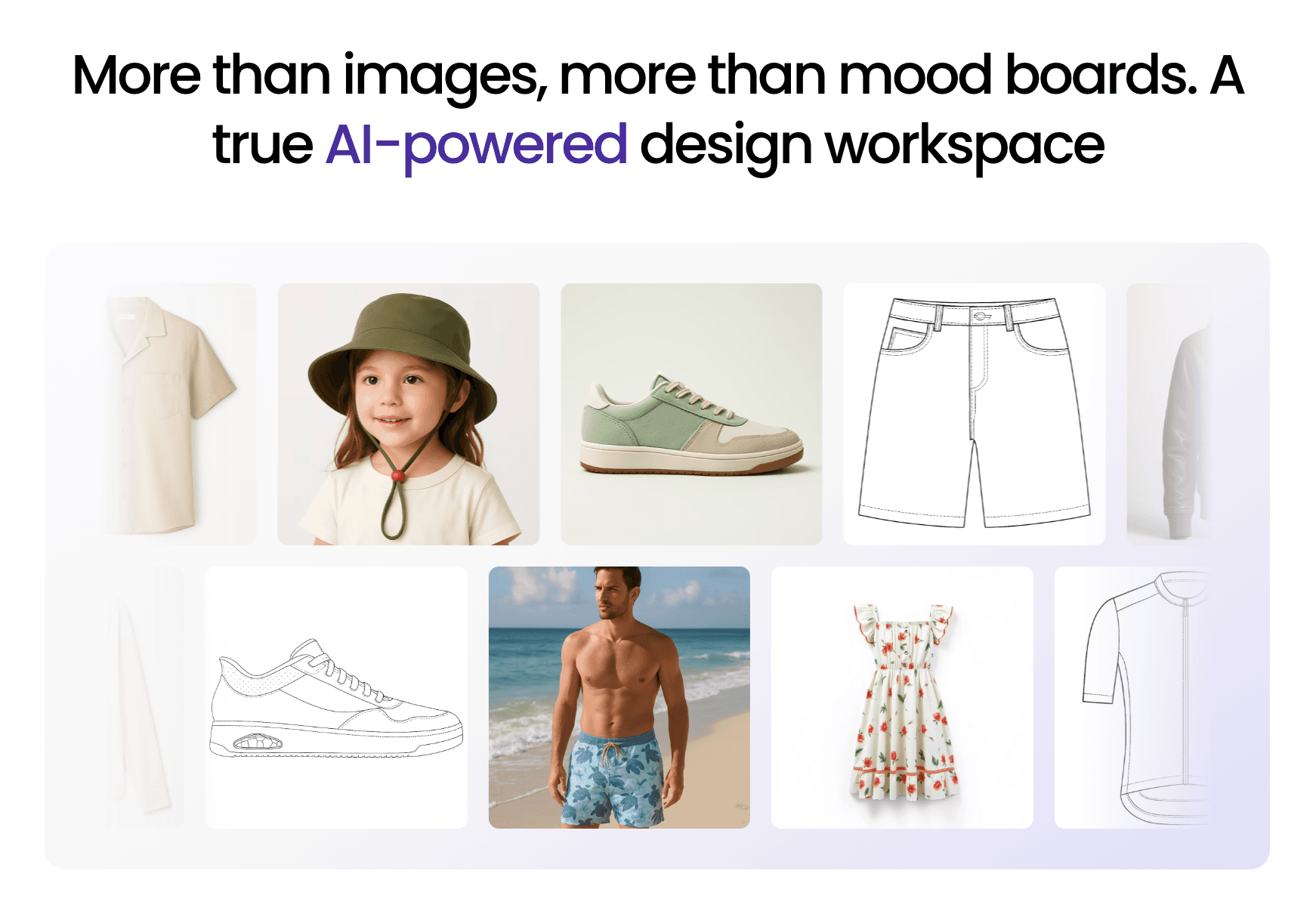
AI can help fashion brands explore more ideas, evaluate options earlier, and reduce repetitive work during design and development. The value comes from supporting decisions throughout the product creation process, not from generating images.
Creative direction, fit reviews, product strategy, and production decisions still rely on people. The best results come from combining AI-assisted design with structured fashion product development that keeps information organized as products move forward.
Onbrand connects those two sides of product creation.
Designers can explore concepts and visual directions with AI, while product teams manage product information, approvals, and development activities needed to bring those ideas to life.
FAQs About AI in Fashion Design Workflow
Can AI create production-ready fashion designs?
No. AI can generate concepts, visuals, and design variations, but products still require technical development, fit reviews, material selection, sourcing decisions, and production approval before manufacturing begins.
Will AI replace fashion designers?
No. AI supports idea generation and design exploration, but fashion designers still guide creative direction, collection planning, product decisions, and brand identity throughout the development process. The fashion industry still relies on human judgment to select products, evaluate fit, and make final approval decisions.
Does AI reduce the need for physical samples?
AI can reduce the number of early sample rounds through visualization, rendering, and virtual reviews. Most brands still use physical samples to evaluate fit, construction, materials, and overall product quality before production.
Is AI suitable for small fashion brands?
Yes. AI can help smaller brands explore concepts, create visuals, and organize design work without large creative teams. It can be useful for apparel startups, growing brands, independent designers, and even a solo designer managing multiple responsibilities.
Are AI fashion design tools easy to use?
Yes. Many AI fashion design tools are built for non-technical users. Designers can generate concepts, create renders, and explore visual directions without advanced technical skills. Examples include Onbrand AI Design, The New Black AI, Newarc, Refabric, and Fashable.