Sample Management for Fashion Product Development Teams
Dec 25, 2025


Once a style moves past early sketches, sample management becomes part of daily product work. Teams begin handling physical samples, fit notes, vendor questions, and approval timelines at the same time.
When this information sits across emails, folders, and spreadsheets, details slip through. Teams lose track of what changed, which sample is current, and who needs to review next.
Sample management is a key part of keeping teams aligned as styles move from design into development and production. It brings structure to how samples, tech packs, and feedback connect across teams and vendors.
This guide explains where sample management fits into real product workflows and why it matters for growing fashion brands.
TL;DR
Sample management helps fashion teams track samples, feedback, and approvals as styles move from design into production.
Clear processes reduce version confusion and keep designers, developers, and vendors aligned.
Different sample types support decisions at each stage, from early concepts to production reference.
Centralized sample management prevents delays caused by scattered files and manual follow-ups.
Onbrand PLM connects samples, tech packs, and approvals in one workspace, with AI Design supporting early alignment before sampling begins.
What Is Sample Management in Fashion?
Sample management is the process of managing fashion samples as styles move through design, development, and production in the fashion industry.
It covers how teams request samples, review them, collect feedback, and confirm approvals while staying aligned on the same version.
In practice, sample management links physical samples to tech packs, fit notes, and shared comments.
This sample data gives designers, developers, and sourcing teams clear visibility into what changed, what needs review, and what is approved.
Clear tracking also supports quality control by tying feedback and decisions back to each sample.
A sample management system reflects how modern fashion technology helps teams follow sample status across the entire lifecycle, reduce human error, and keep work consistent across teams.
Shared information helps decisions move faster and keeps updates clear.
Sample Types Fashion Teams Manage
Fashion teams work with several sample types as a style moves closer to production. Each one serves a clear purpose and supports better decisions along the way.
Proto samples - Used to review overall design direction, silhouette, and construction before details are locked.
Fit samples - Focused on sizing, fit, and pattern adjustments. These samples often go through multiple rounds and require careful handling of samples and clear feedback.
Salesman samples - Created for internal reviews, line presentations, and early sales conversations. Accuracy matters here since these samples represent the final intent.
Pre-production samples - Used to confirm materials, trims, and construction before bulk production begins. These samples play a key role in product quality and approval sign-off.
Production samples - Kept as reference points during manufacturing. Teams rely on clear labeling, defined storage locations, and consistent sample tracking to avoid confusion later.
Knowing when and why each sample is used helps teams manage inventory, follow clear sample procedures, and save valuable time as timelines tighten.
Why Sample Management Processes Matter for Growing Fashion Brands
As brands grow, sample work increases fast. More styles, more vendors, and tighter timelines leave little room for confusion.
Clear sample management keeps sample status visible across design, development, and production, so teams know what is approved and what still needs review.
When teams manage samples with shared inventory management and clear ownership, they protect sample integrity and reduce risk.
Fit notes, approvals, and changes stay tied to the right version, which supports quality assurance and consistent product quality.
Strong processes also protect data management and data integrity. Teams rely on accurate data sources such as tech packs and feedback to make decisions on a regular basis.
Tracking sample movement and handling history helps teams avoid delays and unnecessary follow-ups.
Sample Management Lifecycle Across Product Development
Sample management follows a clear sequence as styles move through product development. Later stages rely on accurate records and clear feedback from earlier work.
Concept and Early Design Samples
Teams use early samples to review construction ideas, materials, and overall direction. Designers check alignment during tech pack creation before details are locked.
Early evaluation and basic analysis help teams catch issues before work moves forward. Clear identification here prevents confusion later.
Fit and Development Samples
These samples focus on sizing, fit, and construction updates. Developers review fit notes and confirm changes with vendors.
Targeted testing supports decisions, and feedback stays tied to the correct version. Changes can vary by style and factory, which makes this step critical.
Pre-Production and Approval Samples
At this stage, teams confirm materials, trims, and workmanship before bulk orders begin. Approvals support compliance with internal standards and vendor agreements.
Regular audits reduce risk across production operations.
Production Reference Samples
Production reference samples act as the final standard. Teams store them under appropriate conditions and reference them during manufacturing to protect product quality for customers.
Defined processes help teams stay organized, keep timelines on track, and move work forward without rechecking past decisions.
Where Sample Management Breaks Down Without a Central System
Without a central system, sample work spreads across emails, shared folders, and spreadsheets. Teams lose context fast, especially when multiple versions move between designers, developers, and vendors.
Common breakdowns show up in day-to-day tasks:
Feedback gets separated from tech packs and sample photos
Teams lose track of which version needs review or approval
Manual follow-ups slow decisions and delay timelines
Cross-functional teams lack access to the same information
Handling samples without structure also increases risk. Teams spend time searching for updates instead of reviewing work.
Important context around sample collection, changes, and approvals gets lost. For high-cost or precious samples, even small mistakes can affect efficiency and reliable results.
Without shared access and consistent processes, teams struggle to meet industry standards. Sample work should support progress, not create extra work or slow teams down.
Onbrand PLM: Effective Sample Management in One Workspace
Once sampling begins, teams need a clear way to manage updates without slowing work down. Onbrand PLM’s sample management keeps samples connected to styles, tech packs, and timelines in one shared workspace.
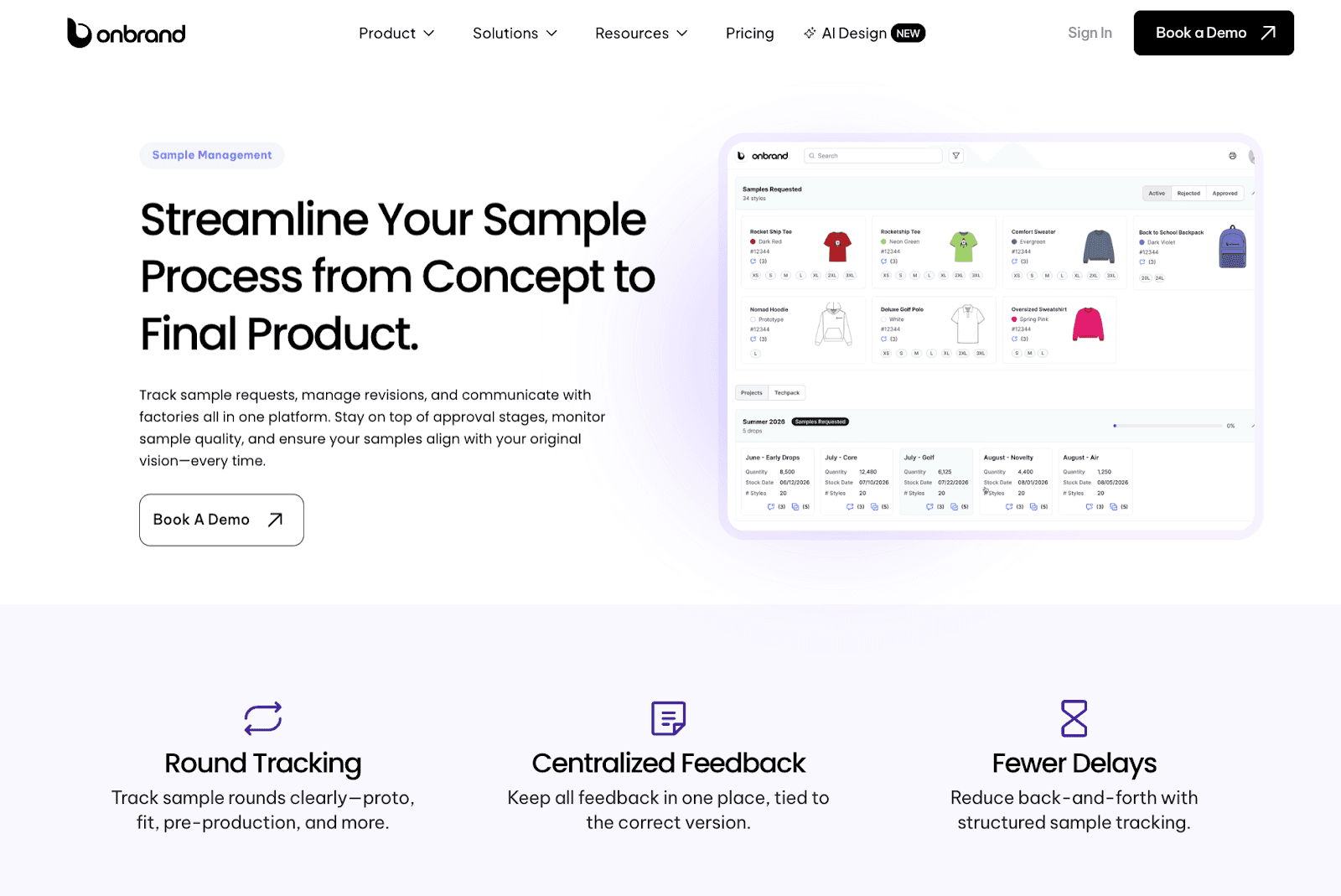
Instead of managing samples as side tasks, Onbrand PLM links samples directly to styles, tech packs, and timelines.
Designers review specs alongside samples. Developers log fit notes against the correct version. Teams capture feedback and approvals in one place, without chasing updates across inboxes.
Vendors see clear instructions and the current approval status, which reduces back-and-forth and missed details. This shared setup supports smoother project management with fewer handoffs and clearer ownership.
Earlier in the process, Onbrand AI Design supports early alignment before physical samples are created, which helps reduce revisions once sampling begins.
Key features that support sample management:
Linked samples and tech packs - Samples stay aligned with live product data
Round-based sample tracking - Clear status for proto, fit, and pre-production rounds
Centralized feedback - Comments and approvals tied to the right sample
Vendor access - Shared visibility for internal teams and factories
Clear approval flow - Teams know what needs review next
FAQs About Sample Management
What is the meaning of sample management?
Sample management is the way fashion teams organize, review, and approve samples as styles move from design into development and production. It covers sample requests, feedback, approvals, and sample processing, all tied back to tech packs and timelines.
How does sample management support quality control in fashion?
Sample management supports quality control by keeping feedback, approvals, and changes connected to the correct sample version. Teams can trace decisions back to fit notes and specs, which reduces errors before production.
How is fashion sample management different from handling biological samples?
Fashion sample management focuses on garments, materials, and construction, while biological samples follow strict laboratory rules for testing and storage. In fashion, the goal is quality control, accurate feedback, and alignment with tech packs and vendor timelines. Both require structure, but fashion sample management centers on product decisions, not lab analysis.
Once a style moves past early sketches, sample management becomes part of daily product work. Teams begin handling physical samples, fit notes, vendor questions, and approval timelines at the same time.
When this information sits across emails, folders, and spreadsheets, details slip through. Teams lose track of what changed, which sample is current, and who needs to review next.
Sample management is a key part of keeping teams aligned as styles move from design into development and production. It brings structure to how samples, tech packs, and feedback connect across teams and vendors.
This guide explains where sample management fits into real product workflows and why it matters for growing fashion brands.
TL;DR
Sample management helps fashion teams track samples, feedback, and approvals as styles move from design into production.
Clear processes reduce version confusion and keep designers, developers, and vendors aligned.
Different sample types support decisions at each stage, from early concepts to production reference.
Centralized sample management prevents delays caused by scattered files and manual follow-ups.
Onbrand PLM connects samples, tech packs, and approvals in one workspace, with AI Design supporting early alignment before sampling begins.
What Is Sample Management in Fashion?
Sample management is the process of managing fashion samples as styles move through design, development, and production in the fashion industry.
It covers how teams request samples, review them, collect feedback, and confirm approvals while staying aligned on the same version.
In practice, sample management links physical samples to tech packs, fit notes, and shared comments.
This sample data gives designers, developers, and sourcing teams clear visibility into what changed, what needs review, and what is approved.
Clear tracking also supports quality control by tying feedback and decisions back to each sample.
A sample management system reflects how modern fashion technology helps teams follow sample status across the entire lifecycle, reduce human error, and keep work consistent across teams.
Shared information helps decisions move faster and keeps updates clear.
Sample Types Fashion Teams Manage
Fashion teams work with several sample types as a style moves closer to production. Each one serves a clear purpose and supports better decisions along the way.
Proto samples - Used to review overall design direction, silhouette, and construction before details are locked.
Fit samples - Focused on sizing, fit, and pattern adjustments. These samples often go through multiple rounds and require careful handling of samples and clear feedback.
Salesman samples - Created for internal reviews, line presentations, and early sales conversations. Accuracy matters here since these samples represent the final intent.
Pre-production samples - Used to confirm materials, trims, and construction before bulk production begins. These samples play a key role in product quality and approval sign-off.
Production samples - Kept as reference points during manufacturing. Teams rely on clear labeling, defined storage locations, and consistent sample tracking to avoid confusion later.
Knowing when and why each sample is used helps teams manage inventory, follow clear sample procedures, and save valuable time as timelines tighten.
Why Sample Management Processes Matter for Growing Fashion Brands
As brands grow, sample work increases fast. More styles, more vendors, and tighter timelines leave little room for confusion.
Clear sample management keeps sample status visible across design, development, and production, so teams know what is approved and what still needs review.
When teams manage samples with shared inventory management and clear ownership, they protect sample integrity and reduce risk.
Fit notes, approvals, and changes stay tied to the right version, which supports quality assurance and consistent product quality.
Strong processes also protect data management and data integrity. Teams rely on accurate data sources such as tech packs and feedback to make decisions on a regular basis.
Tracking sample movement and handling history helps teams avoid delays and unnecessary follow-ups.
Sample Management Lifecycle Across Product Development
Sample management follows a clear sequence as styles move through product development. Later stages rely on accurate records and clear feedback from earlier work.
Concept and Early Design Samples
Teams use early samples to review construction ideas, materials, and overall direction. Designers check alignment during tech pack creation before details are locked.
Early evaluation and basic analysis help teams catch issues before work moves forward. Clear identification here prevents confusion later.
Fit and Development Samples
These samples focus on sizing, fit, and construction updates. Developers review fit notes and confirm changes with vendors.
Targeted testing supports decisions, and feedback stays tied to the correct version. Changes can vary by style and factory, which makes this step critical.
Pre-Production and Approval Samples
At this stage, teams confirm materials, trims, and workmanship before bulk orders begin. Approvals support compliance with internal standards and vendor agreements.
Regular audits reduce risk across production operations.
Production Reference Samples
Production reference samples act as the final standard. Teams store them under appropriate conditions and reference them during manufacturing to protect product quality for customers.
Defined processes help teams stay organized, keep timelines on track, and move work forward without rechecking past decisions.
Where Sample Management Breaks Down Without a Central System
Without a central system, sample work spreads across emails, shared folders, and spreadsheets. Teams lose context fast, especially when multiple versions move between designers, developers, and vendors.
Common breakdowns show up in day-to-day tasks:
Feedback gets separated from tech packs and sample photos
Teams lose track of which version needs review or approval
Manual follow-ups slow decisions and delay timelines
Cross-functional teams lack access to the same information
Handling samples without structure also increases risk. Teams spend time searching for updates instead of reviewing work.
Important context around sample collection, changes, and approvals gets lost. For high-cost or precious samples, even small mistakes can affect efficiency and reliable results.
Without shared access and consistent processes, teams struggle to meet industry standards. Sample work should support progress, not create extra work or slow teams down.
Onbrand PLM: Effective Sample Management in One Workspace
Once sampling begins, teams need a clear way to manage updates without slowing work down. Onbrand PLM’s sample management keeps samples connected to styles, tech packs, and timelines in one shared workspace.

Instead of managing samples as side tasks, Onbrand PLM links samples directly to styles, tech packs, and timelines.
Designers review specs alongside samples. Developers log fit notes against the correct version. Teams capture feedback and approvals in one place, without chasing updates across inboxes.
Vendors see clear instructions and the current approval status, which reduces back-and-forth and missed details. This shared setup supports smoother project management with fewer handoffs and clearer ownership.
Earlier in the process, Onbrand AI Design supports early alignment before physical samples are created, which helps reduce revisions once sampling begins.
Key features that support sample management:
Linked samples and tech packs - Samples stay aligned with live product data
Round-based sample tracking - Clear status for proto, fit, and pre-production rounds
Centralized feedback - Comments and approvals tied to the right sample
Vendor access - Shared visibility for internal teams and factories
Clear approval flow - Teams know what needs review next
FAQs About Sample Management
What is the meaning of sample management?
Sample management is the way fashion teams organize, review, and approve samples as styles move from design into development and production. It covers sample requests, feedback, approvals, and sample processing, all tied back to tech packs and timelines.
How does sample management support quality control in fashion?
Sample management supports quality control by keeping feedback, approvals, and changes connected to the correct sample version. Teams can trace decisions back to fit notes and specs, which reduces errors before production.
How is fashion sample management different from handling biological samples?
Fashion sample management focuses on garments, materials, and construction, while biological samples follow strict laboratory rules for testing and storage. In fashion, the goal is quality control, accurate feedback, and alignment with tech packs and vendor timelines. Both require structure, but fashion sample management centers on product decisions, not lab analysis.

Discover how Onbrand PLM can streamline your product development!
© 2024 onbrandplm.com. All rights reserved.
© 2024 Onbrand. All rights reserved.

