Jun 17, 2026
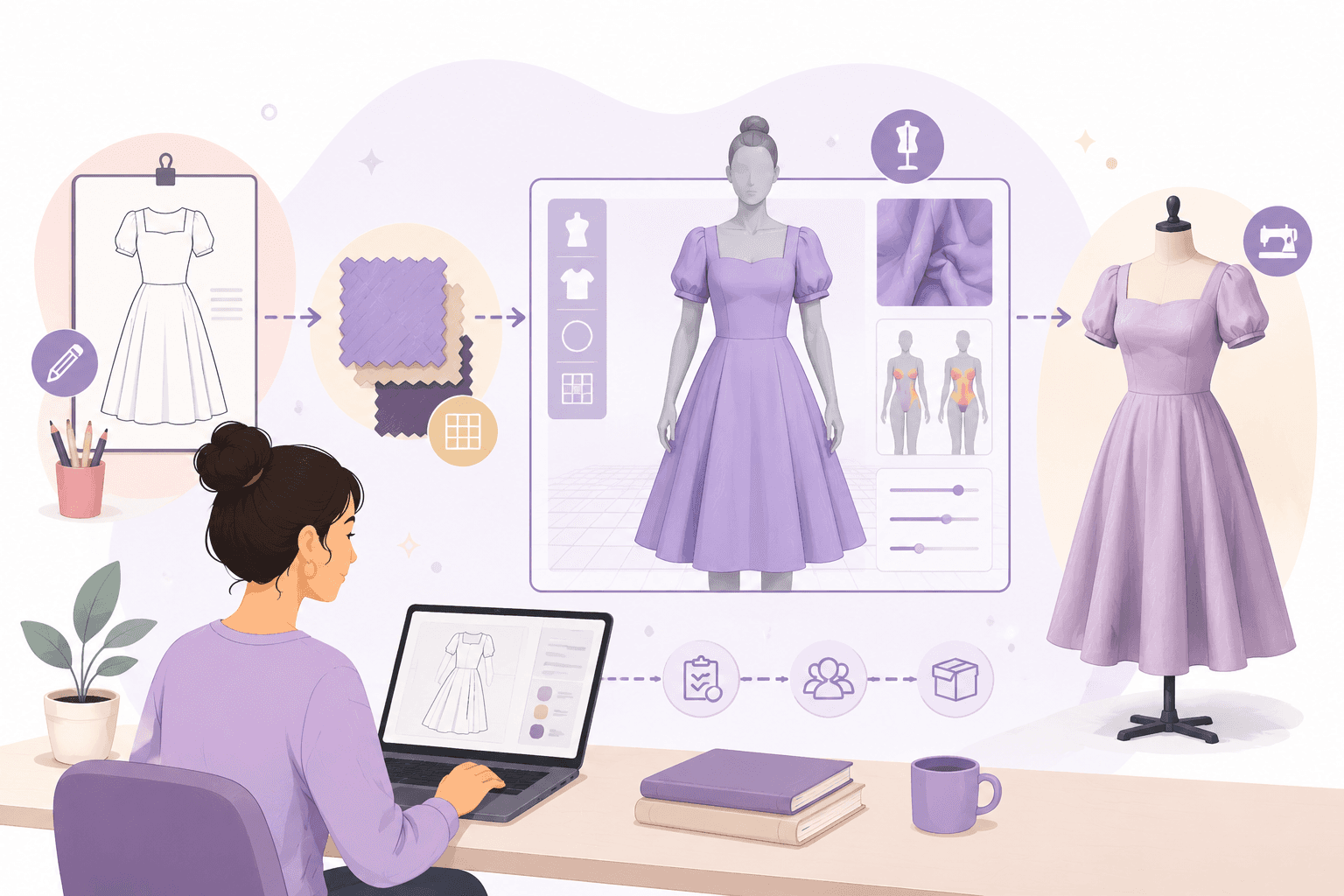
Product design simulation in fashion is the process of creating and testing garments digitally before physical production begins.
Fashion teams use simulation software to visualize fit, fabric behavior, movement, and construction during the product development process.
A design may look approved during an internal review, but the physical sample arrives weeks later with unexpected fit issues or fabric drape problems. Teams restart revisions, update tech packs, and delay approvals while development costs continue growing.
These situations have become more common as brands work with faster timelines, global vendors, and shorter production cycles.
More fashion companies now use product design simulation to review garments digitally, reduce unnecessary sampling, and make earlier product decisions before manufacturing begins.
This guide explains what product design simulation is, how it works in apparel development, the benefits and challenges fashion teams face, and where platforms like Onbrand fit into modern fashion product workflows.
TL;DR
Product design simulation in fashion lets brands test fit, fabric behavior, drape, and construction digitally before physical samples are produced.
The process typically involves creating a digital garment, applying fabric properties, simulating fit and movement, reviewing revisions, and moving approved styles into product development.
Fashion brands use simulation to reduce unnecessary sample rounds, speed up design iteration, improve vendor communication, lower development costs, and support sustainability efforts.
Simulation helps teams make earlier decisions, but it cannot fully replace physical wear testing, fabric hand-feel evaluation, factory quality checks, or production validation.
Onbrand connects simulation outputs with AI design exploration, live tech packs, approvals, product data, and vendor collaboration to support development after simulation reviews are complete.
What Is Product Design Simulation in Fashion?
Product design simulation gives fashion brands a way to evaluate garments before physical sampling begins.
Modern simulation technology allows product teams to review fit, fabric behavior, construction details, and silhouette changes digitally, helping them make better design decisions before sampling starts.
A sketch may look ready for sampling, but questions often appear once development begins. Will the fabric drape the way the designer intended? Does the jacket fit properly around the shoulders? Will the revised silhouette fit correctly after pattern changes?
Product design simulation helps answer those questions before a factory creates a sample.
Your team can review garments in a virtual environment and evaluate fit, movement, stretch, drape, and construction details before physical sampling begins.
Virtual prototyping gives product designers another way to review styles and validate design decisions earlier in development.
Fashion brands often use simulation to evaluate:
Fabric drape and stretch behavior
Fit and tension on digital avatars
Silhouette and proportion changes
Construction updates before factory approval
Simulation-driven design is more than a visualization approach. It supports development decisions by helping your team identify issues earlier, improve product quality, and reduce avoidable revisions before production begins.
How Product Design Simulation Works in Apparel Development
Product design simulation follows the same path as a typical apparel development workflow.
Integrating simulation earlier in development gives your team a way to review garments, test decisions, and catch potential issues before physical samples reach the factory.
1. Create the Garment Digitally
The process usually starts during the early stages of the design phase, when fashion designers turn sketches and concepts into digital garments.
Some teams begin even earlier with platforms like Onbrand AI Design to explore concepts, generate visual directions, and refine ideas before moving styles into technical development.
Computer-aided design (CAD) software is then used to create digital patterns, garment specifications, and 3D representations that can be reviewed before sampling begins.
Digital garments are built from CAD design files, detailed technical drawings, and pattern data. Techniques such as parametric modeling help design engineers adjust garment details without rebuilding styles from scratch.
Some brands also use tools like Autodesk Fusion for footwear, accessory, and product development projects that require more advanced 3D modeling capabilities.
2. Apply Fabrics and Material Properties
Once the garment is built, fabric properties are added to the simulation. Your team can see how stretch, weight, stiffness, drape, and texture affect the way a style looks and fits under different real-world conditions.
Fabric selection often changes the outcome of a design. Product developers can compare different design variables before investing time and money in physical samples.
3. Simulate Fit, Movement, and Drape
The garment is then tested on digital avatars. Teams review fit, movement, and silhouette behavior before production begins.
A simulation result can highlight pulling at the shoulder, extra fabric gathering at the waist, or other design flaws before a sample is ever produced.
Real-time feedback makes it easier to review changes, refine details, and move through an iterative process without waiting for another round of physical samples.
Fit evaluation becomes especially valuable when garments include complex geometries or organic shapes. Simulation allows product developers to review how those details interact with the body and make adjustments before the first sample is requested.
4. Review and Revise Designs
Design reviews happen before styles move forward. Comments, approvals, and revisions are tracked so everyone works from the latest version.
Strong data management practices help design teams make more informed decisions during reviews. Access to historical data also helps product developers compare previous versions and avoid repeating mistakes.
Quality systems connect approvals, revisions, and product information in one place. The less time designers spend searching for files, the more time they have to review products and move development forward.
5. Move Approved Designs Into Development
Once approvals are complete, the garment moves into the next stage of product development.
Simulation files become part of the broader product design process, alongside tech packs, materials, costing information, and vendor communication. Factories still rely on structured documentation to support manufacturing processes and build the final product correctly.
Simulation helps validate ideas early. Structured development workflows help carry approved designs through production with fewer discrepancies.
Why Fashion Brands Use Product Design Simulation
Fashion brands use product design simulation to reduce avoidable delays, sample revisions, and development costs before production begins.
It also gives your team a practical competitive advantage when product timelines are tight and you need to bring collections to market faster.
Reducing Physical Samples
Physical samples are expensive and often slow down development. Simulation helps your team review fit, drape, and construction details earlier, which can reduce the number of sample rounds needed before approval.
That creates real cost savings without removing the need for final physical checks.
Speeding Up Design Iteration
Waiting for every sample change can be time-consuming, especially when small fit updates need several rounds of review. Simulation gives product developers a faster way to test updates, compare options, and refine styles before sending changes to the factory.
Used well, it can be a more cost-effective way to move through early design decisions.
Improving Communication With Vendors
Factories need accurate product information to quote, sample, and produce garments correctly. Simulation gives vendors a better visual reference for fit, construction, proportions, and design intent.
With the right specialized software, your team can send more complete information and reduce back-and-forth during development.
Supporting Remote Product Reviews
Global product work often requires input from design, development, sourcing, and production at different times. Simulation gives everyone a shared visual reference without waiting for a sample to move from one location to another.
It also keeps visuals, comments, and review notes closer to the product decision, so reviews feel less scattered.
Reducing Development Costs
Every extra sample round adds cost through materials, labor, shipping, and time. Simulation helps your team catch problems earlier and reduce costs before issues move deeper into production.
Helping Sustainability Efforts
Fewer unnecessary samples can mean less fabric waste, fewer shipments, and fewer discarded prototypes. Simulation does not replace responsible sourcing or final testing, but it can support a cleaner development process when used carefully.
What Product Design Simulation Can and Cannot Do
Product design simulation can help your team make better decisions before production begins, but it does not replace every part of garment development. Understanding where simulation works well and where physical validation is still needed helps set realistic expectations.
What Simulation Can Do
Simulation is useful for reviewing and evaluating garments before physical samples are created. It can help your team:
Visualize garments before sampling
Review drape, silhouette, and proportion changes
Directionally evaluate fit using avatars and tension mapping
Support faster design reviews and approvals
Reduce unnecessary sample rounds
Improve collaboration between internal stakeholders and vendors
Simulation is especially valuable during early-stage problem solving, when product developers need to evaluate options before investing in a physical product.
What Simulation Cannot Fully Replace
Simulation provides useful guidance, but some decisions still require physical evaluation.
Your team still needs:
Final wear testing on real people
Fabric hand-feel reviews
Production quality inspections
Factory construction checks
Comfort and movement testing under real-use conditions
Digital reviews can reduce the need for excessive physical prototyping, but they cannot fully replace the experience of handling a finished garment or evaluating a production sample in person.
Simulation works best as a decision-support tool. Even with all the tools, final validation still happens through physical samples, wear testing, and production reviews.
Common Technologies Used in Fashion Product Simulation
Several technologies work together to create digital garment simulations. Fashion brands use them to review fit, evaluate fabrics, and make product decisions before physical samples are produced.
3D garment simulation recreates how garments fit, stretch, and drape on a digital body.
Digital avatars provide a virtual model for reviewing proportions, sizing, and fit.
Material libraries store fabric properties such as weight, stretch, texture, and drape behavior.
Pattern-based modeling converts garment patterns into digital styles that can be tested before sampling.
Real-time rendering helps product developers review garments with more realistic visual detail during design reviews.
Simulation software brings these components together into one workflow, giving fashion brands practical simulation tools and analysis tools to evaluate styles and optimize designs before production.
These technologies support product development decisions, although they do not replace physical testing. They help product developers and technical designers identify potential issues before samples reach the factory.
Challenges Fashion Design Teams Still Face With Simulation
Product design simulation can improve reviews and reduce sample rounds, but it does not remove every development challenge. Fit approvals, vendor communication, and production preparation still depend on people, processes, and accurate information.
Material Data Accuracy
Simulation can estimate how a fabric behaves, but digital results are only as good as the material data entered into the system. Small differences in stretch, weight, or drape can affect how a garment performs once a physical sample is produced.
Learning Curves for Fashion Teams
Simulation platforms often come with a steep learning curve, especially for teams moving from traditional development methods. Product developers, technical designers, and merchandisers may need time to become comfortable with new workflows and review processes.
Disconnected Design and Production Workflows
A garment may look approved in a simulation file, but production still relies on tech packs, specifications, costing data, and vendor communication. Problems can appear when product information lives in different systems, and updates do not reach the right people.
Keeping Revisions Organized
Design changes rarely stop after the first review. Comments, approvals, measurements, and product updates often move between different files and platforms.
That can make problem-solving more difficult when teams are trying to track the latest version of a style.
Vendor and Factory Adoption
Factories do not always use the same systems as brands. Some vendors still rely heavily on physical samples and traditional workflows. That can slow adoption when brands and vendors follow different development processes.
Simulation continues to improve, but fashion development still depends on coordination between people, data, and production workflows.
Unlike computer-aided engineering systems used in some areas of industrial design, fashion teams must balance digital reviews with the practical realities required to deliver products successfully.
Onbrand: Manage Fashion Product Development After Simulation
Product design simulation helps fashion teams review garments before production begins. Approved designs still need tech packs, revisions, approvals, sourcing details, and vendor communication before a style is ready for manufacturing.
That is where Onbrand fits.
Onbrand PLM
Simulation files are only one piece of the product development process. Product teams still need a way to manage specifications, materials, approvals, samples, and production updates.
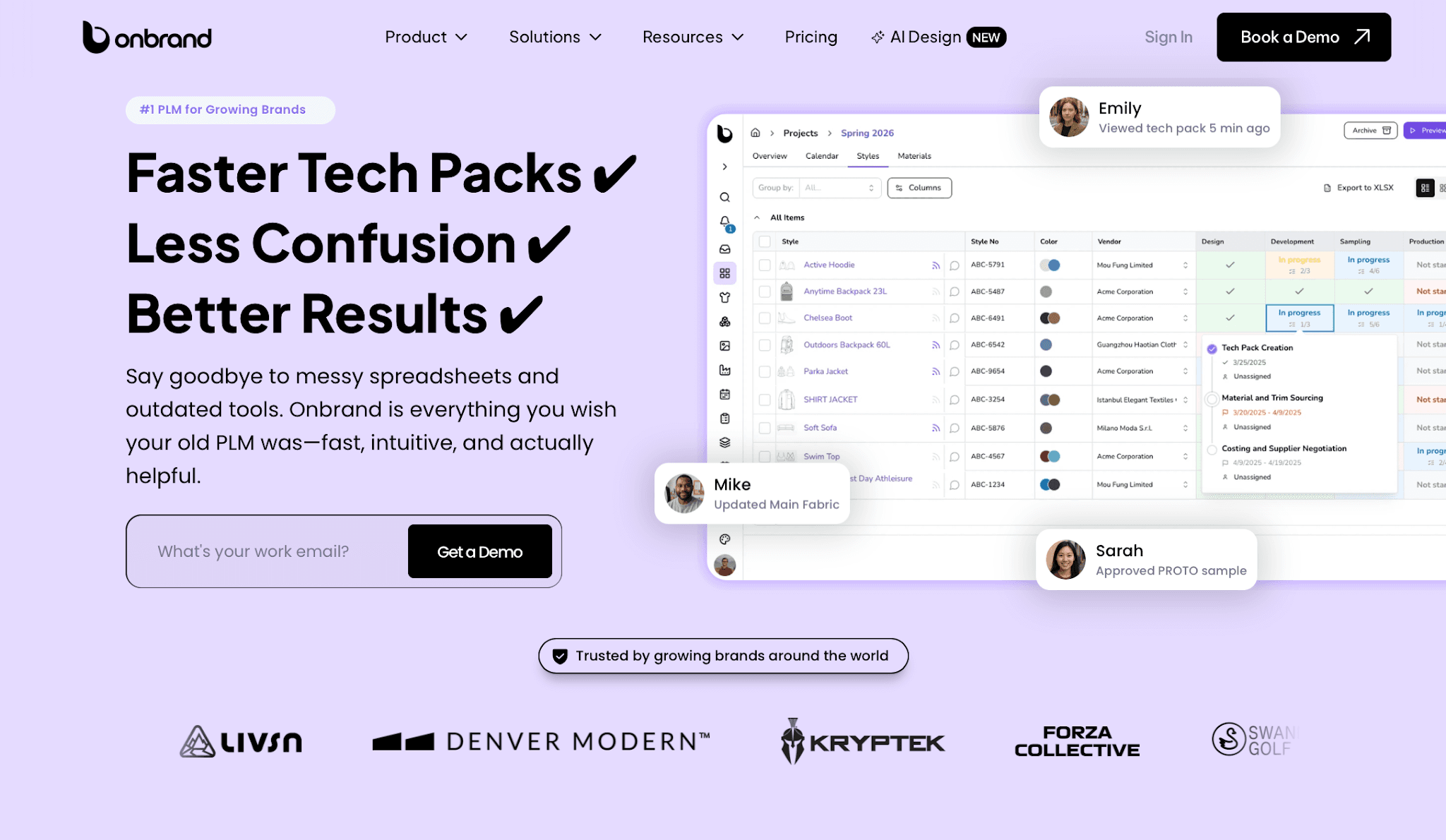
Onbrand PLM centralizes product data in one place so design, development, sourcing, and vendors can work from the same information. Live tech packs keep everyone connected to the latest product details without relying on outdated PDFs or spreadsheets.
Fashion brands use Onbrand PLM to manage:
Live web-based tech packs that update in real time instead of creating multiple PDF versions.
Revision tracking and approvals so product changes remain documented throughout development.
Vendor communication directly within the product record instead of scattered email threads.
Materials, colors, artwork, and specifications are stored in one centralized library.
Sample management to track development progress from prototype through final approval.
Project timelines and tasks that help teams stay aligned on key milestones and deadlines.
Product libraries and development records that keep historical product information easy to access.
Brands using Onbrand have reported 55% faster tech pack creation and development timelines that are up to four weeks shorter.
Onbrand AI Design
Product development starts long before a tech pack is created. Designers often need to explore concepts, test visual directions, and review alternatives before a style moves into development.
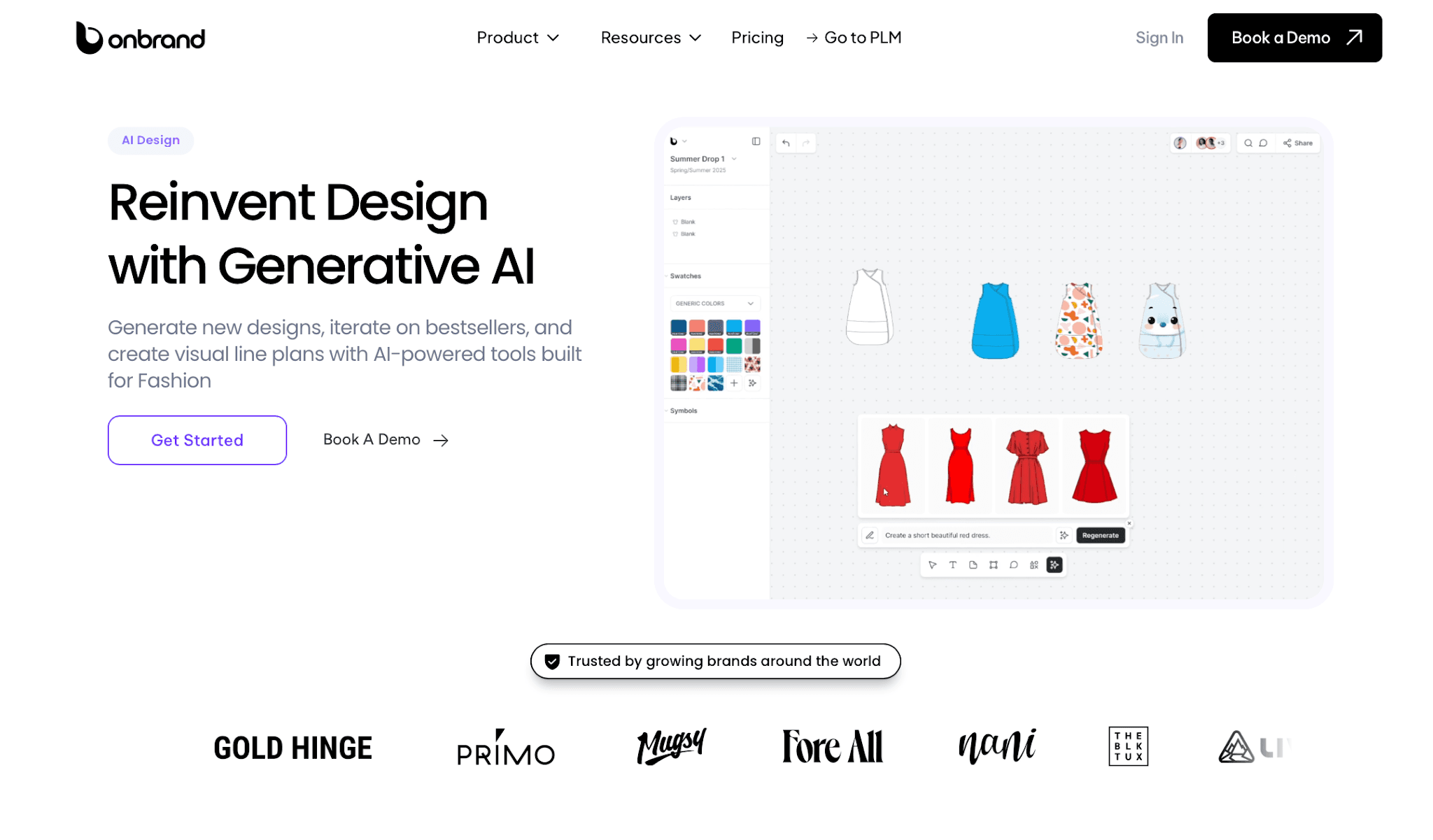
Onbrand AI Design combines visual collaboration with generative design capabilities built specifically for fashion teams. Designers can generate concepts from text prompts, sketches, reference images, or existing products, then quickly explore colorways, trims, silhouettes, and design variations.
The platform also supports:
Photorealistic renders that help teams review concepts before investing in physical samples.
AI-generated mockups created from prompts, sketches, or reference images.
Mood boards and inspiration planning to organize concepts and collection direction in one place.
Collection development tools for comparing styles and planning assortments visually.
Visual line planning that helps teams review products within the context of a full collection.
Version history and design comparisons make it easier to evaluate changes over time.
Collaborative feedback and approvals that keep design discussions connected to the visual concept.
As a powerful tool for concept exploration, Onbrand AI Design helps fashion teams move from early ideas to development-ready concepts without managing disconnected files and design assets.
Simulation helps evaluate how a garment looks and behaves before sampling. Onbrand helps manage everything that happens after those reviews are complete.
Design concepts, product data, approvals, tech packs, and vendor communication stay connected throughout development, making it easier to move approved styles from concept to production.
Connect Simulation to Product Development With Onbrand
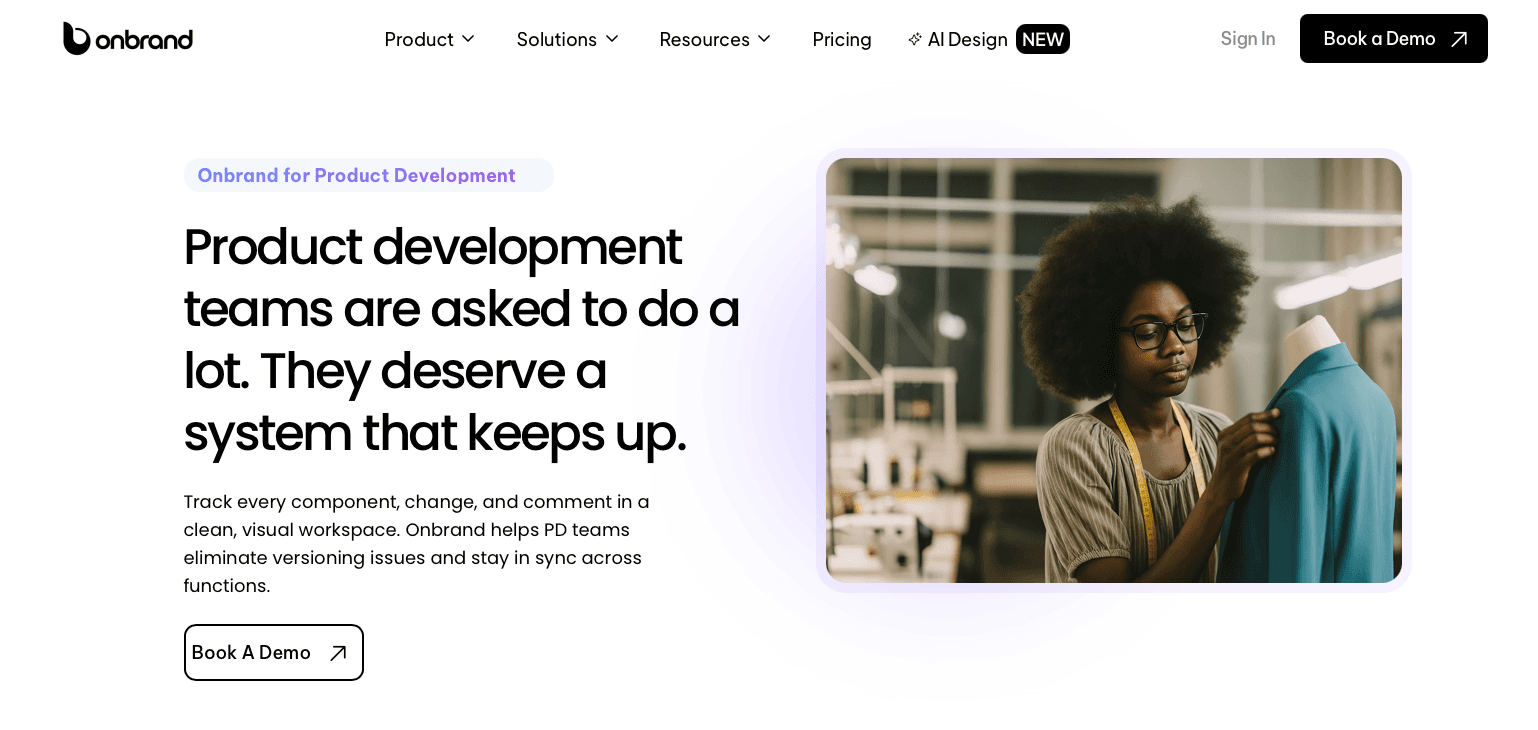
Product design simulation helps fashion brands evaluate fit, fabric behavior, construction details, and design changes before physical samples are produced.
Simulation alone is only part of the development process. Approved designs still need tech packs, revisions, vendor communication, sourcing coordination, and production approvals before manufacturing begins.
Onbrand connects those workflows in one place. Teams can manage product data, live tech packs, approvals, revisions, and vendor collaboration while keeping development moving forward.
If your team wants greater visibility throughout product development, explore how Onbrand helps fashion brands move styles from simulation to production with fewer delays.
Book a demo to see how Onbrand supports modern fashion product development workflows.
FAQs About Product Design Simulation
What is simulation in product design?
Simulation in product design is the process of testing and evaluating a product digitally before physical prototypes or samples are created. In fashion, it allows teams to review garment fit, fabric behavior, drape, and construction details using virtual 3D garments before sampling begins.
Is there an AI for product design?
Many fashion brands now use AI tools to support early concept development and design exploration. Tools like Onbrand AI Design allow fashion brands to generate photorealistic clothing concepts from sketches or text prompts, create automated technical flats, generate colorways, and sync the visual data directly into a PLM system for manufacturing preparation.
How is product design simulation used in fashion?
Fashion brands use simulation software to evaluate garments digitally during the product development process. Technical designers and patternmakers use it to check how different textile weights stretch and drape over digital bodies, allowing teams to catch fit issues, verify silhouettes, and adjust construction details before sending files to a factory.
Can simulation replace physical samples?
Digital simulation can reduce unnecessary sample rounds, but it cannot fully replace final physical validation. Brands still require physical production checks for fabric hand-feel, factory construction quality, and actual wear testing on real people to evaluate true comfort and movement under daily use conditions. Simulation functions best as an early decision-support tool.
What design software is used for product design simulation?
Fashion brands use different design solutions for product design simulation, including 3D garment simulation platforms, digital patternmaking tools, and virtual prototyping systems. These tools help teams evaluate fit, fabric behavior, drape, and construction details before physical samples are produced.