Oct 7, 2026
Your fashion team may already have Bamboo Rose in place, but the way you develop products has changed.
Maybe you need a simpler product development workflow, closer connections with ERP and production, or a system that fits how your team works today.
That can make comparing Bamboo Rose alternatives less about finding an identical replacement and more about finding the right fit.
Bamboo Rose covers much more than product development within the retail product lifecycle, so the platform you choose depends on what your brand actually needs.
This guide compares the top six options for 2026 based on their scope, fashion workflows, and key differences from Bamboo Rose.
TL;DR
These are the top six Bamboo Rose alternatives for fashion teams to compare in 2026:
Centric PLM
WFX
PTC FlexPLM
Lectra Kubix Link
CGS BlueCherry
What Bamboo Rose Covers
Bamboo Rose TotalPLM covers a broad range of retail processes, with product development forming one part of its wider scope.
Fashion teams can manage product details such as materials, bills of materials (BOMs), and costing, with visual collaboration supporting the development process.

Source: bamboorose.com
Product development also sits alongside broader retail operations in Bamboo Rose. Teams can work with shared product and supplier data as products move through planning, sourcing, purchase orders, and global trade, with greater visibility into the process.
Because of that broader scope, Bamboo Rose extends beyond a fashion PLM focused mainly on developing products and managing their technical information.
Why Teams Compare Alternatives?
Fashion brands can have different software requirements depending on how they develop products, organize their business, and connect product work with other systems. As those requirements change, the software that fits one organization may not suit another.
Teams may compare Bamboo Rose alternatives because they want:
A stronger focus on fashion product development
A different workflow or implementation approach
Closer connections between PLM, ERP, and manufacturing
Compatibility with an existing design or software ecosystem
A system suited to their organizational structure and operating model
Comparing alternatives can also become relevant when brands are adapting existing workflows or changing how product development fits within their wider software setup.
Top 6 Bamboo Rose Alternatives for Fashion Teams
The Bamboo Rose competitor you choose should fit the parts of your product process you actually need to manage. The options differ in their focus, with platforms built around fashion PLM, enterprise product development, or broader business operations.
Here are the six Bamboo Rose alternatives we’ll compare:
1. Onbrand PLM
Onbrand PLM focuses on the design and product development side of fashion. It brings styles, materials, tech packs, samples, approvals, supplier communication, and collection planning into one system.
The platform also connects with Onbrand AI Design, its AI-powered workspace for developing and reviewing early design concepts.

Why Consider It as a Bamboo Rose Alternative?
Compared with Bamboo Rose’s broader retail lifecycle scope, Onbrand stays concentrated on fashion product development.
Teams can manage live tech packs, product data, samples, approvals, and vendor communication without adopting a platform built to cover purchasing and global trade management.
Onbrand is also designed to implement faster than traditional PLM systems. Onbrand lists an average of 10 days for implementation, data migration, and training. Brands using Onbrand have also seen 55% faster tech pack creation and a four-week reduction in development time.
That product development process can start earlier with Onbrand AI Design. Teams can generate and explore concepts, collaborate visually, and move approved designs directly into Onbrand PLM for further development.
Key Capabilities
Creates live, web-based tech packs that stay current as products change
Manages materials, colors, artwork, specifications, samples, and collections
Keeps comments, approvals, tasks, and supplier communication with product information
Connects product development with existing design, ERP, and e-commerce systems
Links Onbrand AI Design directly with PLM for design-to-development handoffs
Best For
Growing fashion brands that want a focused PLM for design and product development, with fast onboarding and AI design tools connected to the same product process.
2. Centric PLM
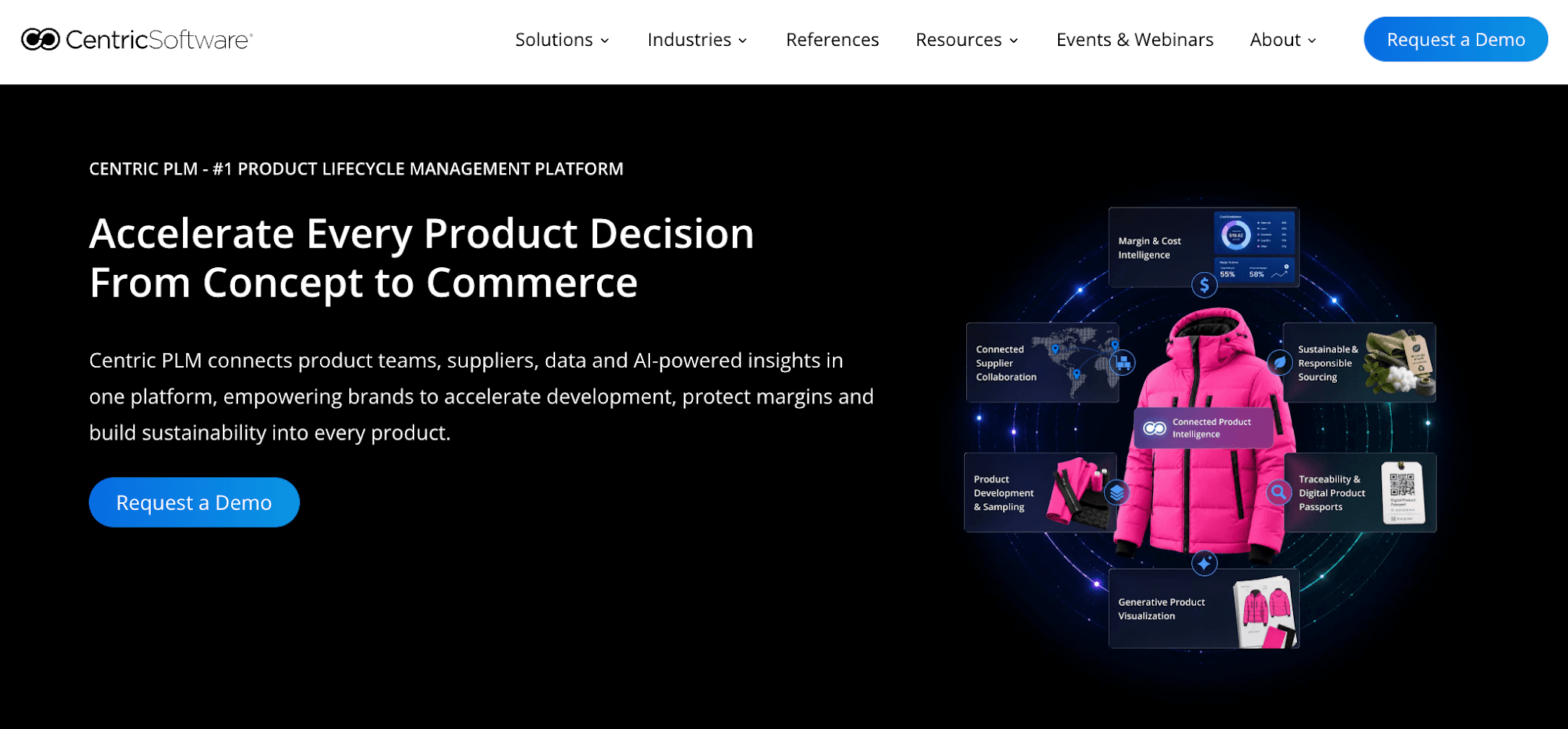
Centric PLM supports fashion product development from early design through commercialization. It brings product data and supplier work into the development process, with connections to 2D and 3D design tools.
Source: centricsoftware.com
Why Consider It as a Bamboo Rose Alternative?
Centric PLM overlaps with Bamboo Rose in areas such as product development, sourcing, supplier work, and costing. Both support fashion companies working with internal teams and external suppliers throughout product development.
The difference is partly in scope. Bamboo Rose TotalPLM extends into purchase order and global trade management. Centric PLM centers on product lifecycle management, with additional Centric solutions available for planning, pricing, market intelligence, and product experience.
That setup may suit companies whose expectations center on PLM with the option to add capabilities from a wider software ecosystem.
Key Capabilities
Manages product data, BOMs, materials, specifications, and costing
Supports sourcing workflows and collaboration with suppliers
Connects with 2D and 3D design tools used during development
Provides visual tools for developing and reviewing collections
Supports product testing, compliance, and commercialization workflows
Best For
Fashion brands and retailers transforming product development with an enterprise PLM and a broader set of connected Centric solutions.
3. WFX
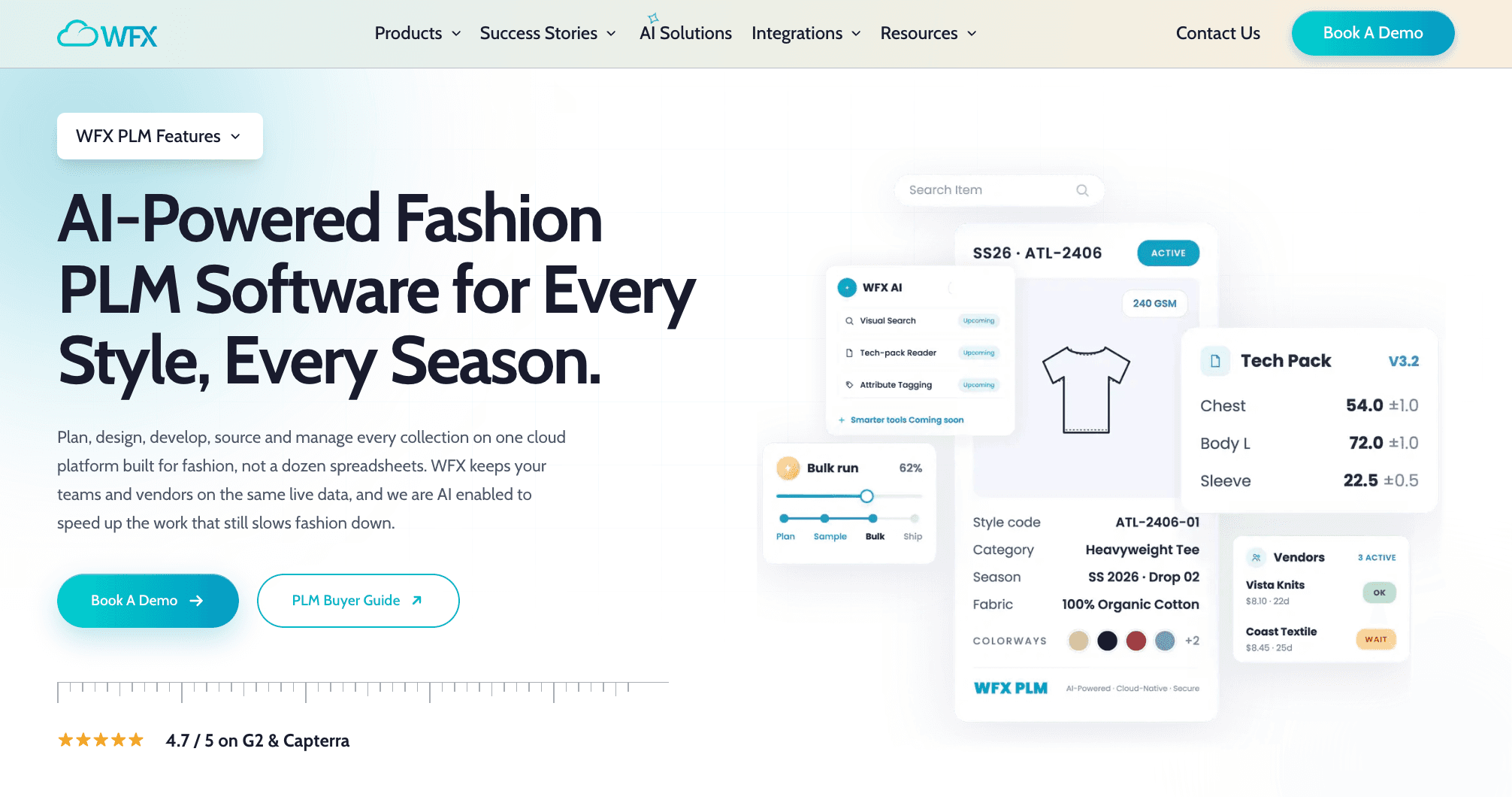
WFX Fashion PLM is designed for the development of apparel, footwear, accessories, and other fashion products. It keeps collection planning, tech packs, costing, sampling, and supplier work connected as styles move toward production.
Source: worldfashionexchange.com
Why Consider It as a Bamboo Rose Alternative?
WFX keeps much of its workflow close to apparel development. Teams can manage BOMs and POMs, fit comments, sample approvals, RFQs, costing, and critical-path schedule tracking as products progress.
Its operational reach continues into purchase orders, quality checks, production, and shipments. WFX also offers separate Apparel ERP and manufacturing execution products.
That gives WFX a different scope from Bamboo Rose TotalPLM, which extends further into retail operations such as global trade management. WFX PLM can also connect with systems such as NetSuite, SAP, Microsoft Dynamics, AIMS360, and Adobe Illustrator.
Key Capabilities
Creates version-controlled tech packs with BOMs, POMs, and construction details
Gives suppliers a portal for RFQs, quotes, comments, and product information
Tracks samples and fit feedback through approval and production readiness
Tracks purchase orders, production milestones, quality checks, and shipments
Connects product development with ERP, e-commerce, and design systems
Best For
Fashion businesses that want PLM to stay close to apparel development while carrying product information further into sourcing and production.
4. PTC FlexPLM
PTC FlexPLM is a retail PLM system built for brands and retailers managing complex product portfolios. It covers product development, specifications, sourcing, costing, supplier data, and sustainability, with support for fashion, footwear, and other consumer product categories.

Source: ptc.com
Why Consider It as a Bamboo Rose Alternative?
FlexPLM becomes particularly relevant when product complexity is a major part of the decision.
PTC designed it to manage large numbers of styles and SKUs within multi-brand and multi-category organizations, giving enterprise teams a structured level of control over product information and development processes.
Bamboo Rose extends beyond PLM into purchasing and global trade management. FlexPLM takes a different route, centering on enterprise product lifecycle management.
PTC also offers related retail services and solutions around FlexPLM, including integrations, visual collaboration, digital product creation, compliance, and sustainability.
Key Capabilities
Manages product specifications, sourcing, costing, and supplier data
Handles large multi-brand and multi-category product portfolios
Connects product data with other systems through Flex Connect
Supports bidirectional connections with 2D and 3D design tools
Manages product compliance and sustainability information
Best For
Large fashion brands and retailers managing complex product portfolios that need enterprise-scale PLM and extensive integration options.
5. Lectra Kubix Link
Lectra Kubix Link is a cloud-based fashion PLM for managing collection development and product data. Teams can plan development calendars, create tech packs, monitor costs, review collections, and work with suppliers in the same environment.

Source: lectra.com
Why Consider It as a Bamboo Rose Alternative?
Compared with Bamboo Rose, Kubix Link focuses more closely on fashion design and collection development. Product information stays available to internal teams and suppliers, with digital fittings and collection reviews supporting feedback as products develop.
Its scope also differs from Bamboo Rose’s broader retail lifecycle approach. Kubix Link combines PLM with optional PIM, fashion moodboard, and form capabilities. Integrations connect it with ERP, WMS, CMS, Adobe Illustrator, and other systems.
Its place within the wider Lectra fashion ecosystem may also appeal to companies that already use Lectra technology or want their PLM connected with that environment.
Key Capabilities
Plans collection calendars with milestones, roles, and progress tracking
Creates and shares digital tech packs with product data and change tracking
Supports digital fittings, collection reviews, and supplier feedback
Connects with fashion CAD and other business systems
Collects product and supplier data for sustainability and compliance
Best For
Fashion brands looking for collection-focused PLM that connects with Lectra’s wider fashion technology ecosystem.
6. CGS BlueCherry
CGS BlueCherry is a fashion and consumer goods supply chain suite with PLM as one part of a broader operational system. Its products cover product development, ERP, manufacturing, quality, warehouse management, planning, and wholesale operations.

Source: bluecherry.com
Why Consider It as a Bamboo Rose Alternative?
BlueCherry takes product information beyond development into the operational side of the business. Fashion companies can connect PLM with ERP and manufacturing systems, keeping product development closer to production and inventory processes.
Both BlueCherry and Bamboo Rose extend beyond product development, but their operational scope differs. BlueCherry puts more emphasis on ERP, manufacturing execution, warehouse management, and distribution workflows.
Bamboo Rose combines PLM with planning, sourcing, purchasing, and global trade management. This gives fashion companies two different approaches to connecting product development with broader operations.
Key Capabilities
Centralizes product data and development workflows in PLM
Connects PLM with BlueCherry ERP and supply chain operations
Supports manufacturing execution and shop floor control
Manages inventory, warehouse, and logistics workflows
Extends into quality management and wholesale operations
Best For
Fashion and consumer goods companies that want PLM connected with ERP, manufacturing, inventory, and other operational systems.
What to Compare When Choosing a Bamboo Rose Alternative
Once you know what you want to replace, look at how each option fits your product process and the systems your team already uses. The right comparison goes beyond checking which platform has the longest feature list.
Product Development Depth
Start with the product development work your team handles every day. Look at how the platform manages styles, materials, BOMs, colorways, sizing, and tech packs as a product develops.
Then consider what happens once sampling begins. Your team should be able to follow costing, sample management, approvals, and product updates without losing track of the latest information.
The level of depth you need will depend on how much of this work you want the new PLM to manage.
PLM, ERP, and Supply Chain Scope
Decide how far the replacement needs to extend beyond product development. A fashion PLM may cover the development process, but your requirements could also include sourcing, purchasing, production, planning, supply chain, or trade.
Think about how those operations fit together in your business. You may prefer one platform that handles several functions or keep separate systems connected around PLM.
Both approaches can affect your software budget, internal resources, and the amount of work involved in maintaining connected systems.
Supplier Collaboration and Product Quality
Look at how your team communicates with suppliers and other external partners during development, particularly when teams and suppliers operate beyond national borders. Specifications, quotes, sample feedback, revisions, and approvals need a reliable way to move between the people involved.
Good communication also makes it easier to catch missed details before a product moves forward.
Keeping approved specifications and supplier feedback connected can help the finished product stay closer to what your team approved, which can ultimately support customer satisfaction.
Connections to Existing Systems
A new PLM rarely operates on its own. Consider which systems your brand plans to keep, such as ERP, fashion PIM, planning, sourcing, or 2D and 3D design software.
Then look at how the alternative connects with that existing setup. Product information should be able to move where your teams need it without creating unnecessary manual work.
Reliable connections can also give teams more complete information when they need to make smarter decisions about products and operations.
Implementation and Day-to-Day Workflow
Implementation deserves its own research before you commit. Look at the time required for configuration and migration, along with how roles and permissions will be set up.
Review the available training and support, along with how the vendor approaches the long-term partnership after implementation.
Think about daily use too. Designers, developers, merchandisers, suppliers, and each department head may interact with the system differently. A director may need a broader view of progress than someone updating individual product details.
Don't assume a platform will be easy to adopt based on its feature set alone. Training, internal resources, and team adoption can all influence implementation success. Define these requirements early, ensuring your comparison reflects how people will actually use the system.
Find the Right Bamboo Rose Alternative for Your Team

Choosing a Bamboo Rose alternative comes down to what your team needs the new platform to do. You may need broad operational coverage, or your priority may sit closer to the day-to-day work of developing fashion products.
If your priority is keeping fashion design and product development connected without replacing Bamboo Rose's wider retail operations, Onbrand PLM is one option to explore. Your team can manage design and development without adopting broader retail functionality that it does not need.
The right fit should ultimately reflect how your brand develops products today and where you want that process to improve.
See how Onbrand can fit your product development workflow. Book a demo today.
FAQs About Bamboo Rose Alternatives
Who are Bamboo Rose's main competitors?
Bamboo Rose competitors include Onbrand PLM, Centric PLM, WFX, PTC FlexPLM, Lectra Kubix Link, and CGS BlueCherry. These platforms differ in scope, with options focused on fashion product development, enterprise PLM, or broader business operations.
What are some good alternatives to Bamboo Rose?
Alternatives to Bamboo Rose include Onbrand PLM, Centric PLM, WFX, PTC FlexPLM, Lectra Kubix Link, and CGS BlueCherry. Onbrand PLM focuses more closely on fashion design and product development, making it relevant for teams that do not need Bamboo Rose's broader retail scope. The right option depends on which functions you need, such as product development, sourcing, production, ERP connections, or wider retail operations.
What is Bamboo Rose used for?
Bamboo Rose is used to manage retail processes including planning and merchandising, product development, supplier management, sourcing, purchase orders, and global trade. Its TotalPLM platform connects these functions within one retail product lifecycle system.
How does Bamboo Rose support merchants and suppliers?
Bamboo Rose connects merchants and suppliers through shared sourcing and purchase order workflows. Suppliers can review orders and request changes, while merchant teams can keep product, sourcing, and order information connected.
What does Bamboo Rose say about customer satisfaction?
Bamboo Rose stated in 2026 that its customer retention rate exceeded 96%. CEO Matt Stevens has also discussed using TotalPLM data and automation to help retail customers make faster decisions, but individual customer satisfaction will depend on each company's requirements and experience with the platform.