Jun 22, 2026

A garment may look ready after the design is approved, but a lot still needs to happen before it reaches a customer.
Materials need approval, samples need review, and factories need accurate specifications. A missing measurement, late sign-off, or material change can create expensive fixes later.
That is why the clothing manufacturing process involves much more than fabric and production. Product blueprints, material clearances, sample feedback, and supplier communication all need to stay aligned from development through delivery.
Fashion brands that understand how the process works can spot issues earlier, make faster decisions, and keep production moving without unnecessary setbacks.
This guide walks through each stage of the garment manufacturing process, from concept development and sourcing to production, quality control, and distribution.
TL;DR
The clothing manufacturing process moves garments from concept development to sourcing, sample approvals, production, quality control, and distribution.
The main stages include concept planning, technical development, material sourcing, pre-production approvals, bulk production, and final inspection before delivery.
Product data, such as tech packs, BOMs, material approvals, and sample feedback, guides decisions throughout the manufacturing process.
Delays often result from approval bottlenecks, outdated specifications, supplier communication gaps, and production issues identified too late.
Onbrand helps fashion teams manage design concepts, live tech packs, approvals, revisions, product data, and supplier communication from concept through production.
What Is the Clothing Manufacturing Process?
The clothing manufacturing process covers everything that happens between an approved design and a finished garment ready for sale.
Most people think of clothing manufacturing as fabric cutting and sewing. Those steps are important, but production starts much earlier.
Product developers need to finalize tech packs, sourcing teams need to approve fabrics and trims, and fit samples often go through several rounds of review before factories receive production instructions.
The broader apparel manufacturing process connects clothing product development, sourcing, sampling, production, quality control, and distribution. A change in measurement, fabric substitution, or delayed approval can affect timelines long before garments reach the factory floor.
The same pattern appears throughout garment manufacturing. Issues that surface during sample reviews or material approvals often carry into production if they are not resolved early.
Apparel Production Phases
The garment manufacturing process includes several connected stages. Each part of the journey affects what happens next. A delayed fabric approval, incomplete tech pack, or unresolved fit issue can affect schedules later in clothing production.
Most fashion brands treat these phases as one connected journey because information, decisions, and product changes move from one step to the next.
Understanding each phase makes it easier to catch issues before they create extra work later.
Phase 1: Early Concept Exploration and Visual Alignment
Before a tech pack exists or materials are sourced, product teams need to decide what they are actually going to make. This part focuses on evaluating ideas, defining product direction, and choosing which concepts should move forward.
Concept Development and Collection Planning
Most products begin with a business objective, customer need, seasonal opportunity, or product gap.
Choosing what belongs in a collection involves more than creative direction. Teams usually review the following:
Demand trends
Sales results
Customer feedback
Budgets
Target pricing
Delivery windows
The number of styles needed for the season
Planning helps brands decide which types of garments deserve more time, budget, and review. Many companies in the fashion industry use this stage to balance creative direction with commercial goals.
Decisions made here influence materials, sourcing requirements, and production plans later in the process.
Collection planning helps brands decide what is worth making clothes for before samples, vendors, and development resources enter the picture.
Exploring Ideas With AI Design Tools
Once product direction is established, teams often explore different ways to develop those concepts.
Colorways, prints, graphics, trims, and styling details may go through several iterations before a direction is approved. Reviewing multiple options early can help teams compare ideas without creating additional samples.
Why Early Decisions Influence Production Timelines
Problems usually start when product direction changes after development is already underway.
A revised design can trigger updates to tech packs, material requirements, costing, sourcing plans, and sample requests.
Fabric changes often require new materials, updated measurements, and additional sample reviews. A shift from a woven fabric to a knit fabric is one example. These adjustments can add review cycles and extend development timelines.
Many organizations in the apparel industry spend significant time validating concepts early because it reduces rework later. It also helps product teams build more focused clothing lines with fewer last-minute changes.
Phase 2: Technical Development and Pre-Production
After product direction is set, the next step is turning that idea into instructions factories can use. Technical development creates the documentation, measurements, garment construction details, and material specifications used throughout development and production.
Many production issues can be traced back to missing information or incomplete approvals during this stage. That is why technical development plays such an important role in product readiness.
Tech Pack and BOM Creation
The tech pack becomes the primary reference document for suppliers, sample makers, and production partners.
A complete tech pack includes technical flats, garment measurements, construction details, stitch requirements, labeling instructions, and material specifications.
Most brands also include a bill of materials (BOM), which lists every fabric, trim, label, packaging component, and accessory required for production.
Accurate tech pack development gives suppliers the information they need to create samples and prepare for later pre-production processes. Missing details at this stage often create questions, revisions, and approval delays later.
Pattern Engineering and Grading
Once garment specifications have been documented, technical teams begin developing production patterns.
Patternmaking converts a design into a set of templates that define how fabric pieces will be cut and assembled. During pattern creation, technical teams determine garment shape, construction requirements, fit expectations, and sizing structure.
Many brands use computer-aided design (CAD) tools to create patterns and manage revisions with greater accuracy. Experienced patternmakers review fit, balance, proportions, and construction details before patterns move into sampling.
The next step involves sizing. Technical teams use pattern grading to create additional garment sizes while maintaining the intended fit.
Discussions about sizing adjustments may include terms such as vertical grading, which typically refers to length-related measurement changes within the broader grading process.
Marker Making and Fabric Utilization
Marker making determines how pattern pieces are arranged on fabric before cutting begins.
The goal is to maximize fabric usage and reduce unnecessary waste. Small adjustments in marker layouts can improve cost efficiency, especially when production volumes increase.
Poor marker layouts can increase fabric waste, which raises material costs before production even begins. That is one reason many brands review marker layouts during development rather than waiting until production starts.
Technical Development Issues That Slow Production
Problems usually start when information becomes incomplete, outdated, or difficult to verify.
An outdated tech pack may contain measurements that no longer match approved samples. Missing construction details can create confusion during sample development. Approval delays often leave suppliers waiting for decisions before they can move forward.
For example, a team may decide to widen a sleeve or adjust a neckline after reviewing a fit sample. If those changes are not reflected in the approved tech pack, factories may continue working from specifications that are no longer current.
That often leads to additional revisions, new sample requests, and lost time during development.
Phase 3: Material Sourcing and Pre-Production Approvals
Technical specifications may be complete at this point, though production cannot move forward until materials and samples have been approved.
This stage focuses on selecting suppliers, reviewing materials, validating sample quality, and preparing factories for mass production.
Fabric and Trim Sourcing
Material decisions affect product quality, production costs, and delivery timelines.
Sourcing teams evaluate suppliers, compare pricing, review lead times, and confirm availability before placing orders. Every component needs official sign-off before mass assembly can begin, including:
Fabrics
Labels
Buttons
Zippers
Packaging materials
Trims
Successful sourcing of raw materials requires more than finding available suppliers. Product developers also need to confirm appropriate fabrics for the garment's intended use, performance requirements, and target price point.
The materials selected for production influence the garment's fit, feel, durability, appearance, and overall performance.
Many brands review multiple material options during fabric sourcing before making final selections.
Lab Dips, Strike-Offs, and Material Approval
Material approvals help verify that production materials match expectations before larger commitments are made.
Lab dips are small color samples used to approve fabric dye colors. Strike-offs are sample print runs used to review artwork, graphics, or print placement before production.
These reviews support fabric testing and help identify issues before materials move into production. Color variations, print inconsistencies, and fabric performance concerns are easier to address during approval stages than after production begins.
Pre-Production Samples (PPS) and Fit Reviews
Approved materials move into sample evaluation.
Factories create garment samples using approved specifications and materials, so product teams can review fit, construction, workmanship, and overall execution.
Sample development often includes fit reviews, measurement checks, construction assessments, and shrinkage evaluations. Any required revisions should be documented and approved before production begins.
A fit adjustment, seam modification, or trim change identified during this stage is usually much easier to correct than the same issue discovered during production.
Production Planning and Factory Preparation
Production planning begins once materials and samples have received final approval.
Factories use approved specifications, materials, and sample feedback to prepare schedules, allocate capacity, and organize production resources. Product teams also confirm the minimum order quantities (MOQs) established by suppliers and manufacturing partners.
The production planning stage helps align factory schedules, material availability, and delivery expectations before production starts.
A complete production package typically includes approved tech packs, material specifications, BOMs, measurement details, and final sample approvals.
Common Sourcing Challenges
Material sourcing often involves coordination between suppliers, vendors, and internal stakeholders.
Approval requests may sit unanswered, supplier lead times may change, or materials selected during development may no longer be available when orders are placed. A late trim decision or fabric replacement can quickly affect sample timing and factory schedules.
These challenges appear throughout the manufacturing sector, where production schedules depend on timely approvals, supplier communication, and material availability.
Phase 4: Bulk Production Execution
Approved materials, specifications, and samples now move into production. This stage focuses on converting raw materials into finished garments while maintaining quality, production targets, and delivery schedules.
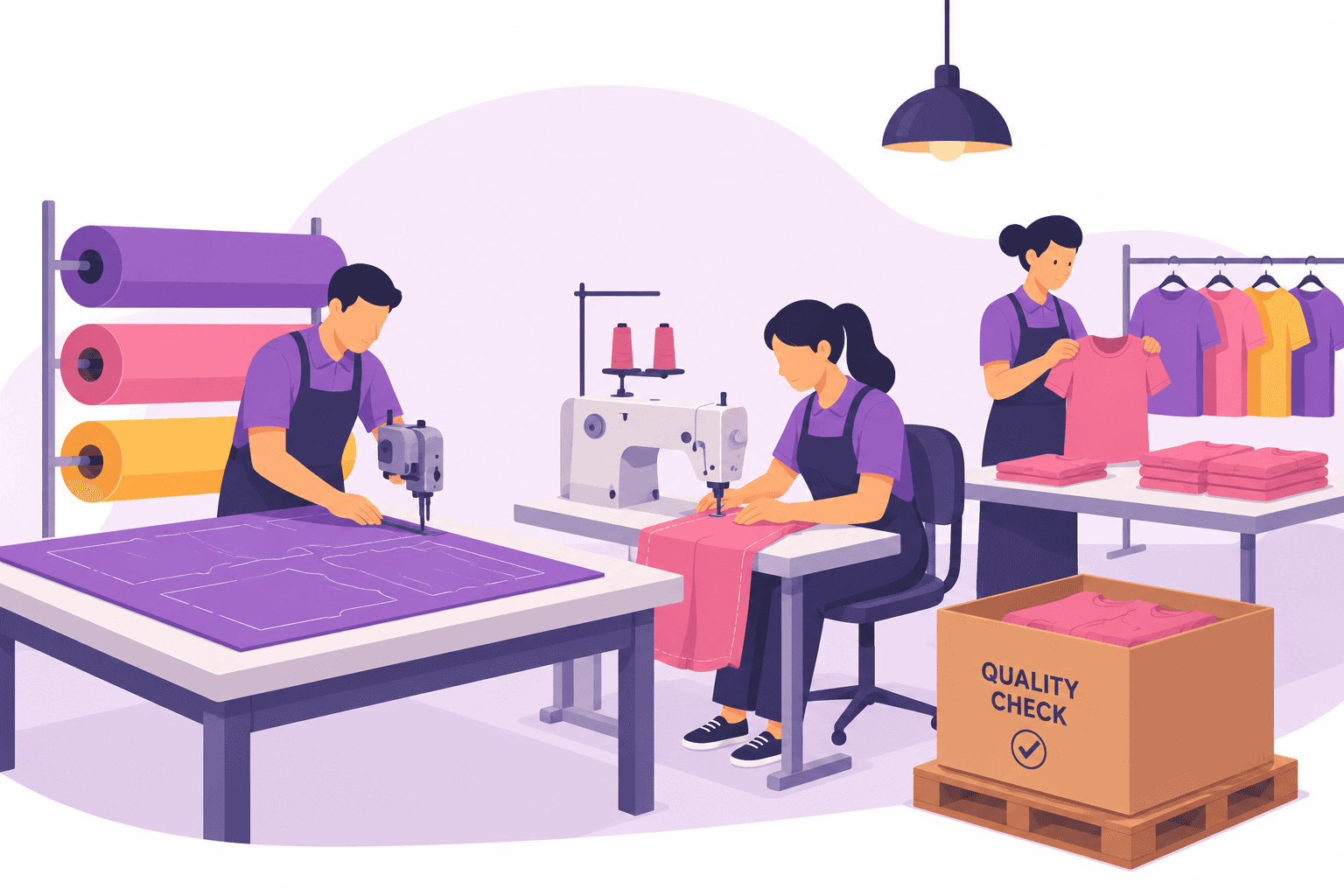
Fabric Relaxation and Cutting
Production begins with fabric preparation.
Many fabrics need time to relax before cutting. This allows the material to settle naturally after shipping and storage, reducing the risk of measurement changes later.
Fabric is then spread into layers and prepared for the cutting process. Factories use markers created during development to position pattern pieces and maximize material utilization.
Some facilities rely on automated cutting equipment to improve consistency and support higher production volumes. Fabric pieces are then sorted, grouped, and bundled before moving to sewing operations.
Garment Sewing and Assembly
Cut garment components move through a series of sewing operations before becoming finished products.
Factories use different production methods depending on product type, order volume, and production requirements. A progressive bundle system moves garment bundles between operators who complete specific tasks.
A modular production system organizes operators into smaller groups responsible for larger portions of the garment. Some facilities also use a one-piece flow system or section production system to support different factory layouts.
The sewing process may involve dozens of operations. Operators use industrial sewing machines and specialized equipment to assemble garment components. Machine sewing, stitch construction, and material handling all influence product quality.
Production managers monitor each sewing line and production line to track output, identify production issues, review quality performance, and address issues before they affect production schedules.
In many factories, garments move in a straight line sequence through assembly stages. Construction quality also depends on stitch consistency and proper selection of sewing threads.
Inline Quality Control
Quality checks happen throughout production rather than waiting until garments are finished.
Inline quality control includes measurement verification, construction inspections, workmanship reviews, and defect monitoring. Production staff inspects garments at multiple stages to identify issues before large quantities are completed.
A stitching issue discovered after 50 garments have been sewn is much easier to address than the same issue discovered after 5,000 garments have been completed.
Quality assurance focuses on preventing issues during production, while quality control checks garments against approved standards.
These inspections support overall garment quality and help maintain consistent quality assurance standards throughout production.
Monitoring Production Progress
Production managers need regular updates once manufacturing begins.
Brands monitor factory progress, production milestones, output rates, defect levels, and shipment readiness throughout manufacturing. Regular updates help sourcing teams, production managers, and vendors identify issues before delivery schedules are affected.
A machine breakdown, labor shortage, or material shortage can quickly affect production targets. A delayed zipper shipment or an unexpected quality issue on the sewing floor can have the same effect.
Early visibility plays an important role in avoiding production delays and keeping production schedules on track.
Phase 5: Garment Finishing, Inspection, and Logistics
Production may be complete, though garments still need to pass final reviews before leaving the factory. This stage focuses on finishing, inspection, packaging, and preparing products for shipment to warehouses, retailers, or customers.
Finishing Processes
Garments often go through additional finishing steps before they are packed and shipped.
Depending on the product, factories may press garments, wash fabrics, apply specialty treatments, remove loose threads, and prepare products for presentation. These steps help improve appearance and bring garments in line with approved specifications.
A final inspection often follows finishing activities to identify visible defects, construction issues, or presentation concerns before garments move to packaging.
Labeling, Packaging, and Compliance
Finished garments need the correct labels and packaging before shipment.
Factories apply care labels, size labels, hangtags, barcodes, and SKU information according to brand requirements. Packaging instructions may also specify folding methods, polybags, carton labeling, and retailer compliance requirements.
Products are then packed into shipping cartons and cardboard boxes according to order specifications and delivery requirements.
Final Quality Audits
Finished garments usually go through one final review before they are cleared for shipment.
Inspection teams review garment measurements, construction quality, labeling accuracy, and packaging requirements. Many brands use AQL inspections to evaluate a sample of finished units before approving shipments.
Shipment approval is typically based on audit results, measurement reviews, and defect rates. Problems identified during this stage may require corrective action before products can be released.
Distribution and Delivery
Approved products move into storage, transportation, and fulfillment operations.
Warehouses receive finished inventory and prepare products for retail stores, distributors, or ecommerce orders. Effective inventory management helps brands maintain stock levels and support future sales.
Products then move through the broader supply chain until the final product reaches its destination.
What Connects Every Stage of the Clothing Manufacturing Process
Every stage of clothing manufacturing depends on information moving from one group to the next.
Design concepts become technical flats, tech packs, BOMs, material approvals, sample feedback, and production specifications as products move through the entire process.
Problems often begin when information becomes difficult to track. An approved measurement may exist in one file while a supplier works from an older version.
A material change may be approved internally but never shared with vendors. Small gaps like these create delays, rework, and confusion for the entire team.
Fashion brands also manage a diverse range of product details throughout development. Measurements, materials, approvals, samples, costs, and production updates all need to stay connected as products move toward production.
Many organizations solve this by maintaining one source of truth for product information. Centralized records, revision tracking, approval management, and supplier collaboration help keep everyone working from the same information.
For any growing apparel business, consistent product data often becomes just as important as sourcing, sampling, and production itself.
How Technology Improves the Clothing Manufacturing Process
Many challenges in the manufacturing industry come from disconnected information, outdated files, and slow approvals. Teams often manage specifications, approvals, supplier communication, and revisions using multiple files, emails, and spreadsheets.
Modern fashion brands use digital tools to keep product information organized throughout development and production.
Digital tech packs help suppliers work from current specifications.
PLM systems centralize product data, approvals, and revision history.
3D design tools support earlier design reviews and sample reduction.
Real-time collaboration gives internal teams and suppliers access to current information.
Why Fashion Brands Use PLM Software
PLM software helps connect product development, sourcing, sampling, and production in one system.
Product developers can manage tech packs, BOMs, approvals, supplier communication, and revision history from a single location. That makes it easier to track product information as styles move through apparel manufacturing.
Better visibility also improves collaboration between brands, garment manufacturers, and every clothing manufacturer involved in production.
How Onbrand Helps Fashion Teams Manage the Clothing Manufacturing Process
Onbrand connects the early design stage with the product development work that follows. It gives fashion teams a place to manage concepts, tech packs, approvals, revisions, and supplier communication as products move from idea to production.
Onbrand AI Design: The Starting Point for Faster Concept Development
Onbrand AI Design supports the earliest stage of the clothing manufacturing process, before tech packs, sourcing, and samples begin.
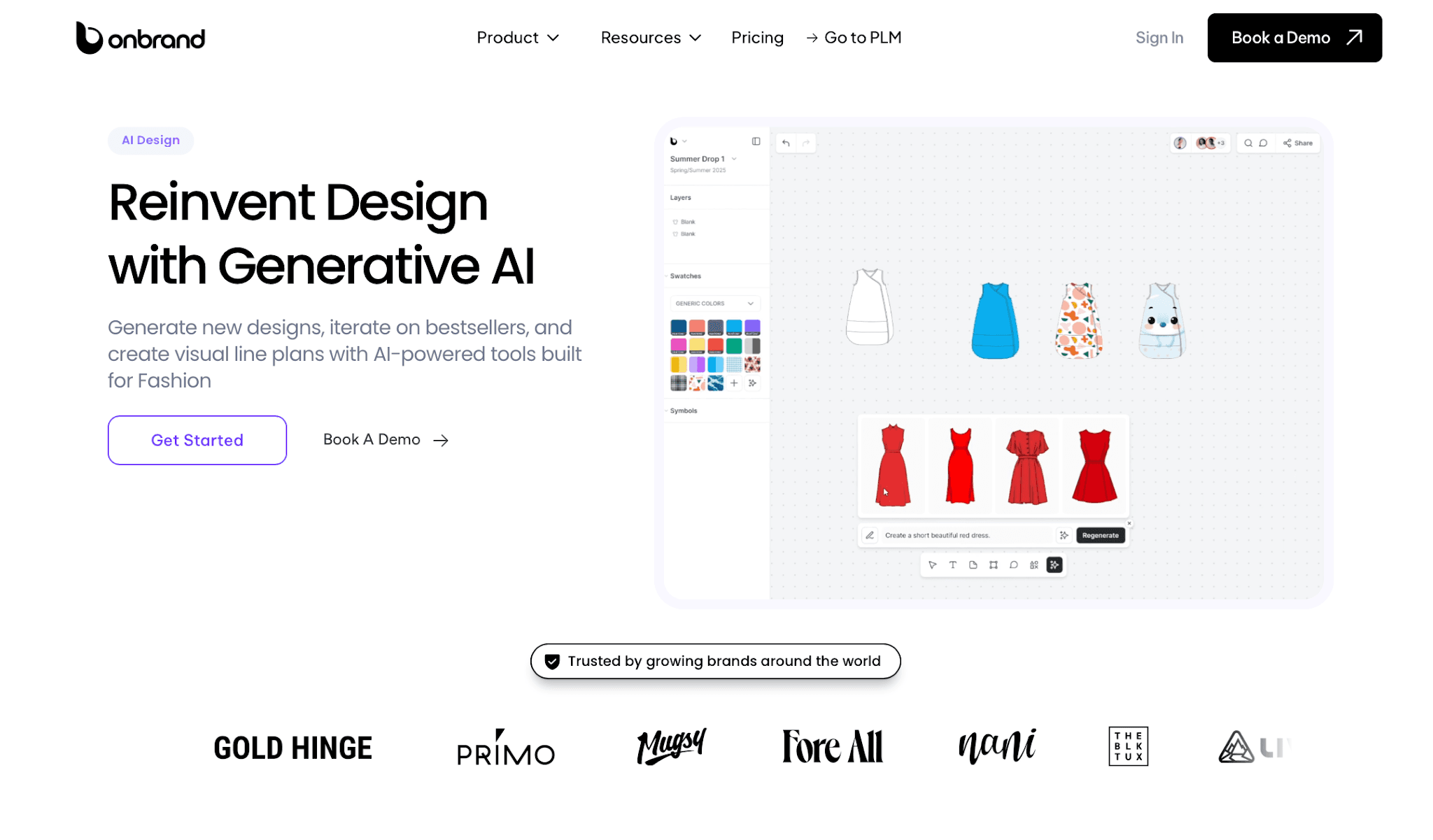
Designers can generate visual concepts, explore colorways, test prints, create variations, and organize ideas into visual line plans. Product teams gain more options to evaluate before committing development resources.
It is especially useful when teams need to move from an initial direction to review-ready visuals more quickly. Onbrand reports 10x faster design turnaround, 30–50% fewer physical samples, and more than 10 weeks saved each year through AI-powered design workflows.
Onbrand PLM: Managing Product Development Through Production
Once a concept is ready for development, Onbrand PLM helps teams manage the details that factories rely on.
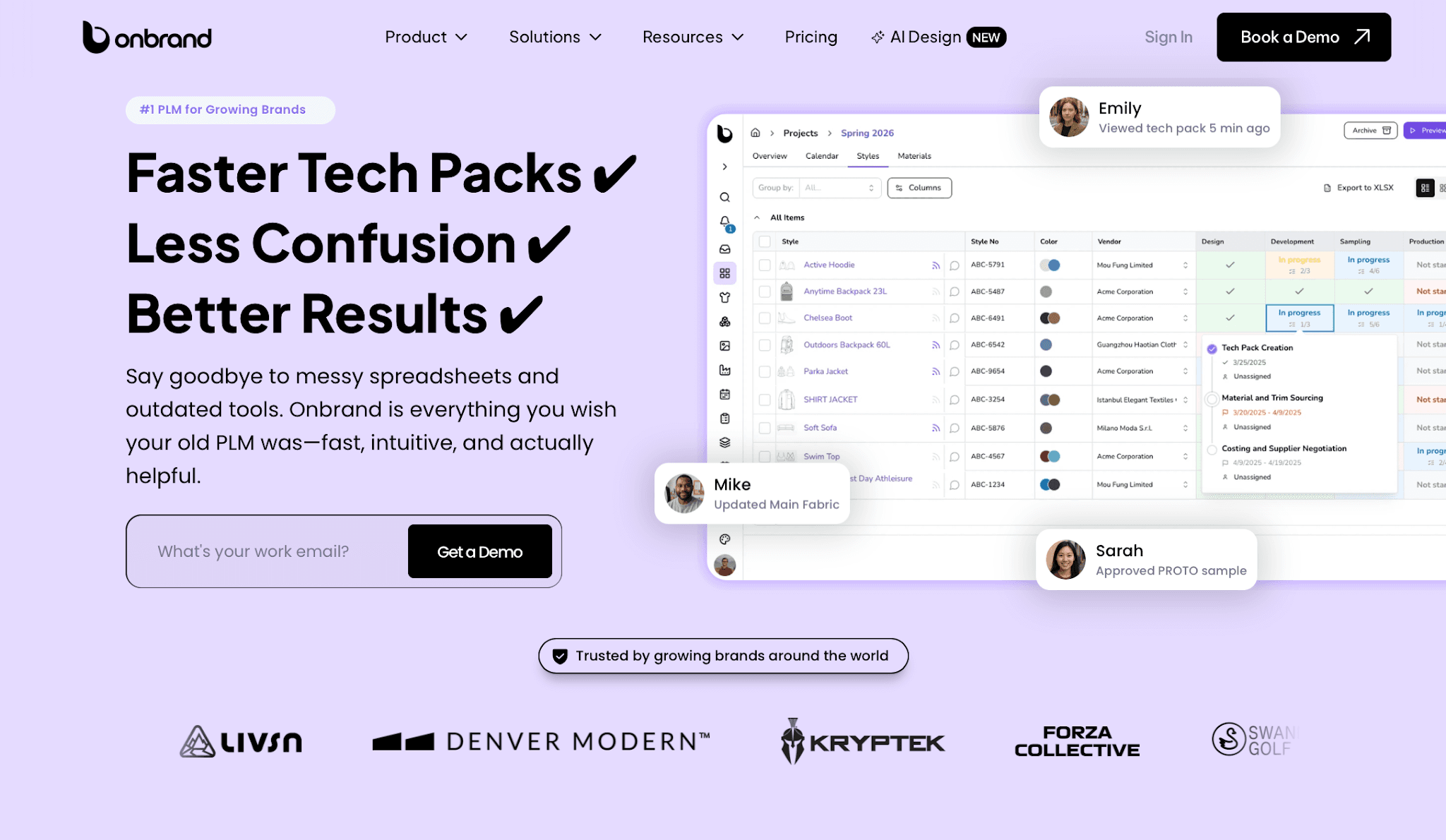
Teams can build live tech packs, manage BOMs, track approvals, organize sample feedback, store product data, and communicate with vendors in one place.
Because tech packs stay web-based, suppliers can work from the latest approved information instead of old PDFs, spreadsheets, or email attachments.
A single revision can create a chain reaction during development. A fit adjustment, fabric update, or construction change may require updates to multiple records before production starts. Connected product data helps teams keep track of those changes without losing visibility.
Onbrand reports 55% faster tech pack creation, a four-week reduction in development timelines, and implementation in as little as 10 days.
Customer case studies also report a 50% reduction in product creation time for Evelyn & Bobbie and a 55% reduction in tech pack creation time for BANDIER.
Fashion product development becomes easier when everyone works from the same information.
Connect Every Stage of the Clothing Manufacturing Process With Onbrand
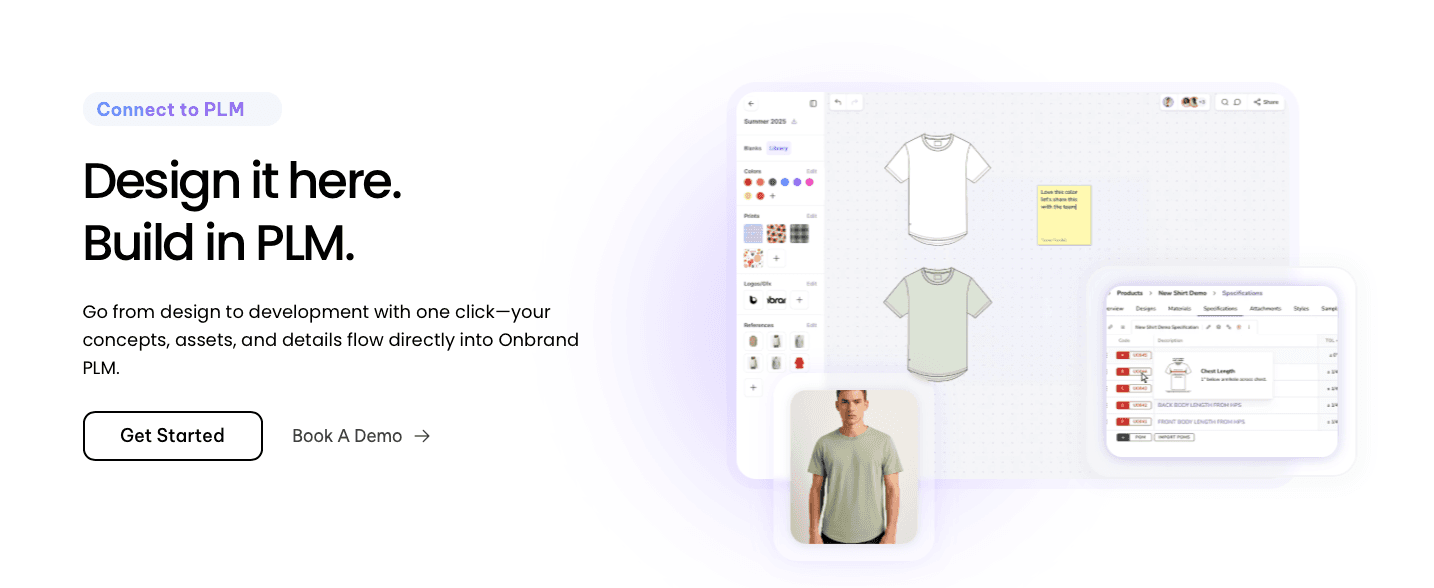
Clothing manufacturing works best when product information stays accurate from the first concept through final delivery. Tech packs, materials, samples, approvals, vendor updates, and revisions all shape what happens once production begins.
When those details live in scattered files and message threads, delays become harder to avoid. Teams lose time checking versions, confirming approvals, and correcting information that should have been updated earlier.
Onbrand helps fashion teams manage that handoff with connected tools for AI design exploration, live tech packs, product data, approvals, revisions, and supplier communication.
FAQs About the Clothing Manufacturing Process
What is the process of manufacturing clothes?
The clothing manufacturing process typically includes:
Concept development
Tech pack creation
Pattern grading
Material sourcing
Sample approvals
Fabric cutting
Garment assembly
Quality control
Distribution
Which fabric is best for clothing manufacturing?
There is no universal "best" fabric for clothing manufacturing. The right material depends on what the garment needs to do, who will wear it, and the price the brand wants to achieve. Product developers typically review several fabric options before making a final choice.
What is the seven-point system in the garment industry?
The seven-point system is a way for manufacturers to inspect fabric before cutting and sewing begins. Inspectors score defects by size, which helps determine whether a fabric roll is acceptable for production. While it is still referenced in some factories, many apparel manufacturers have shifted to the four-point system for routine fabric inspections.
What is the difference between mass production and mass customization in clothing manufacturing?
Mass production creates the same product at scale. Mass customization allows brands to offer variations while using the same core product and production setup. An apparel manufacturing business may use a mix of both approaches. The right balance depends on product goals, order volume, customer demand, and the operational needs of the clothing manufacturing business.