What happens when one fashion style turns into 30, 50, or even more sellable SKUs?
Every size and colorway needs the right information behind it, from materials and care details to pricing, measurements, imagery, and product identifiers.
Add a full collection and several sales channels, and keeping those records accurate becomes a bigger job.
That is where fashion PIM software comes in.
A product information management (PIM) tool helps fashion brands organize and prepare product information for ecommerce, marketplaces, wholesale partners, and retailers.
This guide compares the top six fashion PIM platforms, what each one does, and where each fits best.
TL;DR
These are the six best fashion PIM software platforms in 2026:
Akeneo
Centric PIM
Pimberly
Salsify
Inriver
Quable
For fashion teams managing the design and product development work that happens before PIM, Onbrand connects AI-assisted design with product lifecycle management (PLM) in one system.
What PIM Means for Fashion Product Data
Product information management is the process of organizing the structured information attached to products and their sellable variants.
In fashion, that structure often looks like:
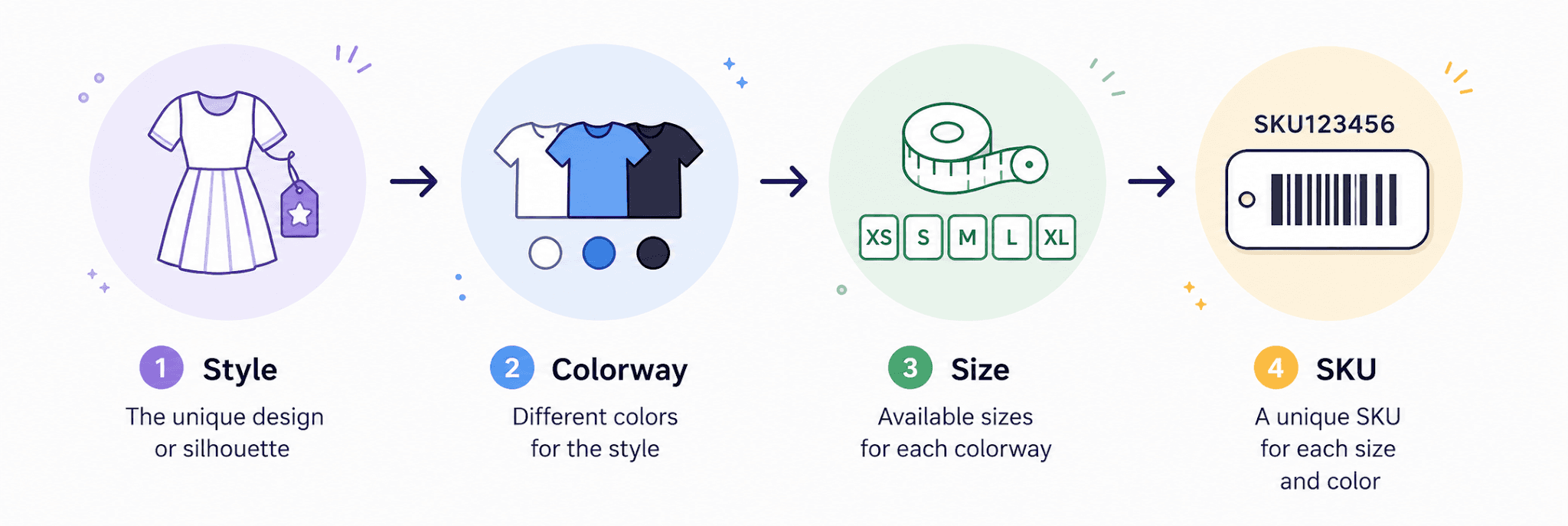
One style can have several colorways and sizes, each with separate SKUs and its own product attributes. Those records may include:
Materials and composition
Measurements
Size charts
Care instructions
Pricing
Categories
Identifiers
A product information management system brings that information into a central place where it can be standardized, enriched, reviewed, and prepared for different commercial channels.
For fashion products with complex product structures, that organization helps maintain product data accuracy as the catalog grows.
Modern PIM offers ways to connect structured records with product descriptions, imagery, and other product content. Those functions can overlap with product content management (PCM) or digital asset management (DAM), depending on the software setup.
In practice, PIM gives brands one place to organize, standardize, enrich, govern, and distribute structured product information.
6 Best Fashion PIM Software Platforms in 2026
Choosing the best PIM software for the fashion industry depends on the product data, channels, and catalog complexity a brand needs to manage. Here are six platforms worth considering in 2026.
1. Akeneo
Akeneo is a PIM software platform for centralizing, enriching, governing, and distributing product information.
Its data model supports variants, hierarchies, localization, and complex catalogs, while integrations connect product records with marketplaces, DAM, enterprise resource planning (ERP), and leading e-commerce platforms.

Source: akeneo.com
Why It Fits Fashion
Fashion brands can use Akeneo to manage product families, variants, attributes, imagery, and channel-specific information in one system.
Its localization capabilities can also help brands prepare accurate product data for different global markets, while enrichment tools support content tailored to individual marketing channels.
Akeneo also offers APIs and extensibility for brands that need custom development around their existing commerce or data systems.
Key Capabilities
Variant and product-family management
Product enrichment and completeness checks
Localization and regional data requirements
DAM, marketplace, ERP systems, and commerce integrations
AI-assisted text, image, and attribute enrichment
Best For
Fashion brands managing large or international catalogs that need structured product information for multiple markets and commerce channels.
2. Centric PIM
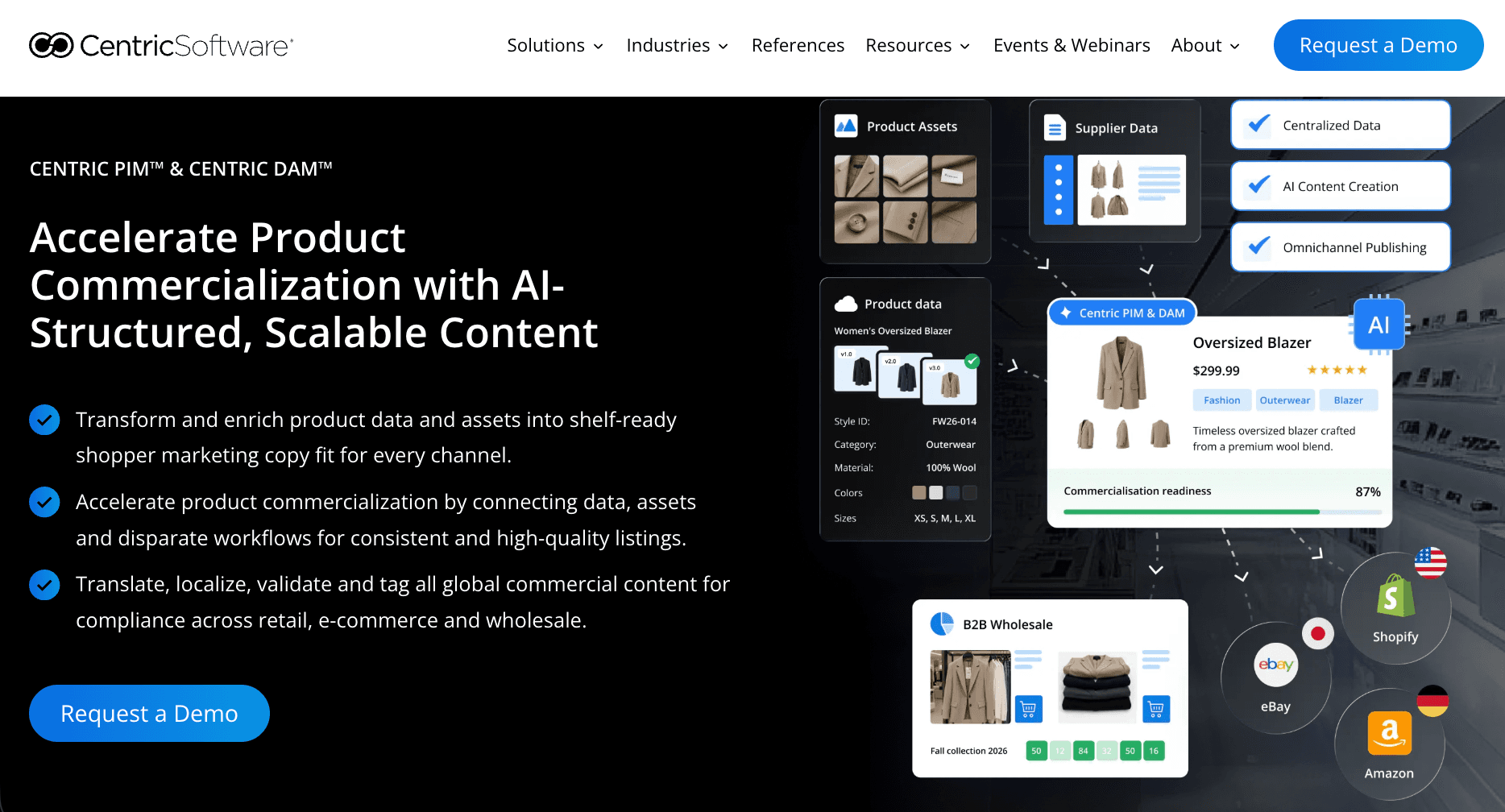
Centric PIM is a product information management platform for centralizing, structuring, enriching, and preparing product data for commercial use.
It forms part of the broader Centric PXM platform, which also includes DAM, syndication, and Digital Shelf Analytics.
Source: centricsoftware.com
Why It Fits Fashion
Fashion brands can use Centric PIM to organize product hierarchies, attributes, variants, and relationships. Teams can then validate and enrich that information before it reaches ecommerce, retail, or wholesale channels.
It also supports translation and localization for brands managing product content in different regions.
Centric DAM adds a central place for images, videos, documents, and other marketing assets. Together, the tools give marketing teams one platform for preparing product information and assets for retail partners and other commercial destinations.
Key Capabilities
Product hierarchies, attributes, validations, and relationships
AI-assisted enrichment, classification, and translation
Product content localization
Digital asset management and tagging
Content preparation for 1,000+ commerce and retail channels
Best For
Fashion brands and retailers that need a PIM solution combining structured product information with digital assets and omnichannel content preparation.
3. Pimberly
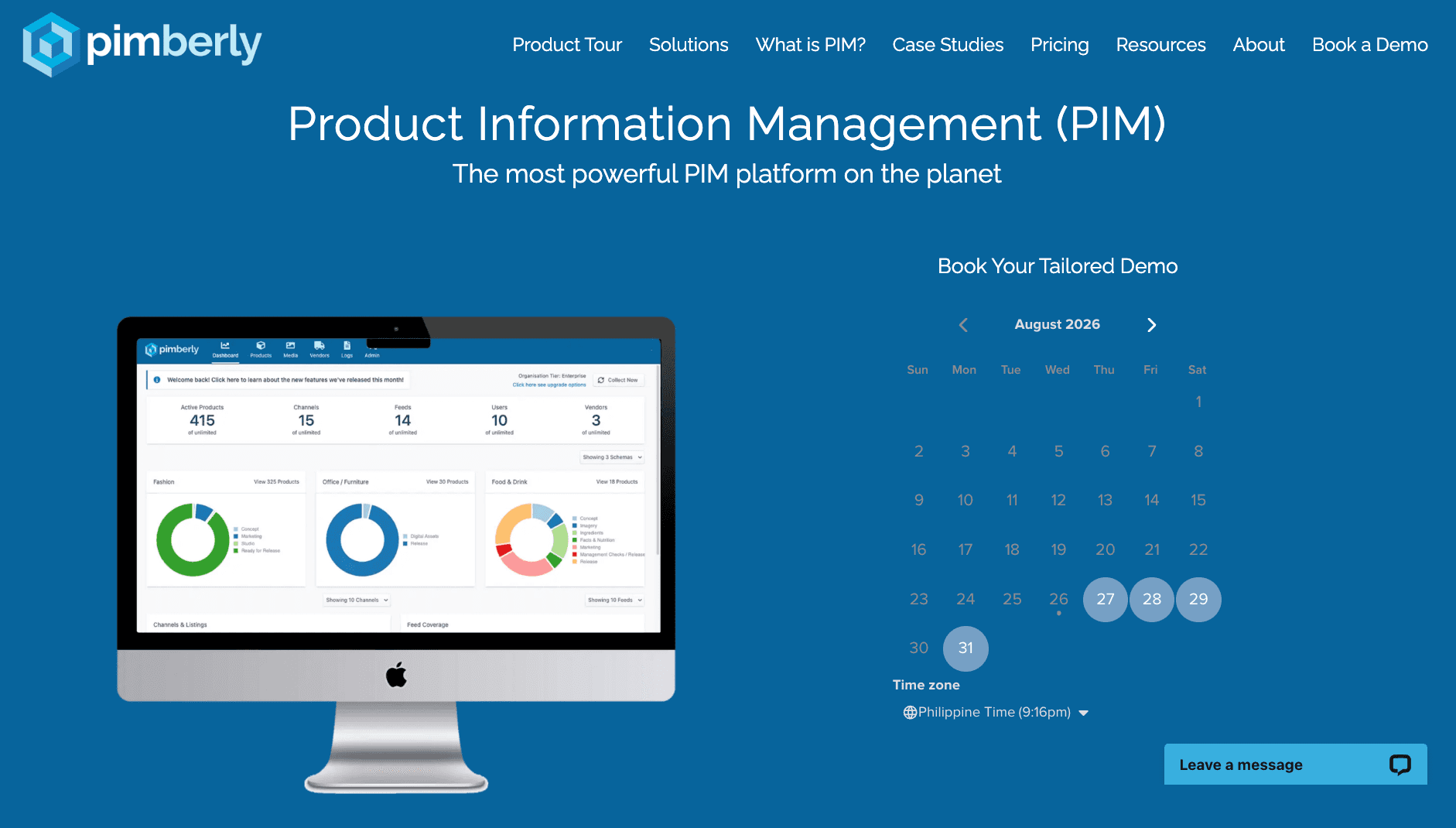
Pimberly combines product information management with built-in digital asset management.
The platform centralizes product data and assets, supports enrichment, and distributes information to different commerce systems and sales channels.
Source: pimberly.com
Why It Fits Fashion
For fashion and apparel companies, Pimberly can handle large catalogs with product variations, images, descriptions, and other information needed for apparel listings.
Its workflows can also support the frequent product updates that come with seasonal collections and seasonal drops.
Pimberly connects with ecommerce platforms, ERP systems, and other business software through integrations and an API.
That makes it possible to exchange product information with systems used for areas such as inventory management, without positioning Pimberly itself as inventory software.
Key Capabilities
Product data centralization and enrichment
Integrated digital asset management
Product variation and high-volume SKU support
Automated workflows and data syndication
API and ecommerce integrations
Best For
Fashion and apparel brands with large or frequently changing catalogs that need PIM and DAM capabilities in the same platform.
4. Salsify
Salsify is a PIM platform built around product information, syndication, and commerce distribution.
It gives brands a central system for managing product data, then adapting that information for different regions, retailers, and channels.

Source: salsify.com
Why It Fits Fashion
For fashion e-commerce, Salsify is useful when the same product needs different versions of its content for an online store, marketplaces, retail partners, or other e-commerce destinations.
Its data model supports product attributes, validations, regional requirements, and channel-specific versions of product information.
Salsify also combines PIM with native syndication, which can help brands maintain consistent information as product data moves to different commerce endpoints.
That is relevant for fashion brands providing customers with product details that need to stay accurate on every shopping destination.
Key Capabilities
Central product information management
Channel- and region-specific product versions
Native product syndication
Data validation and governance
Workflow automation and AI-assisted enrichment
Best For
Fashion brands selling through multiple digital and retail channels that need PIM and syndication in the same commerce-focused platform.
5. Inriver
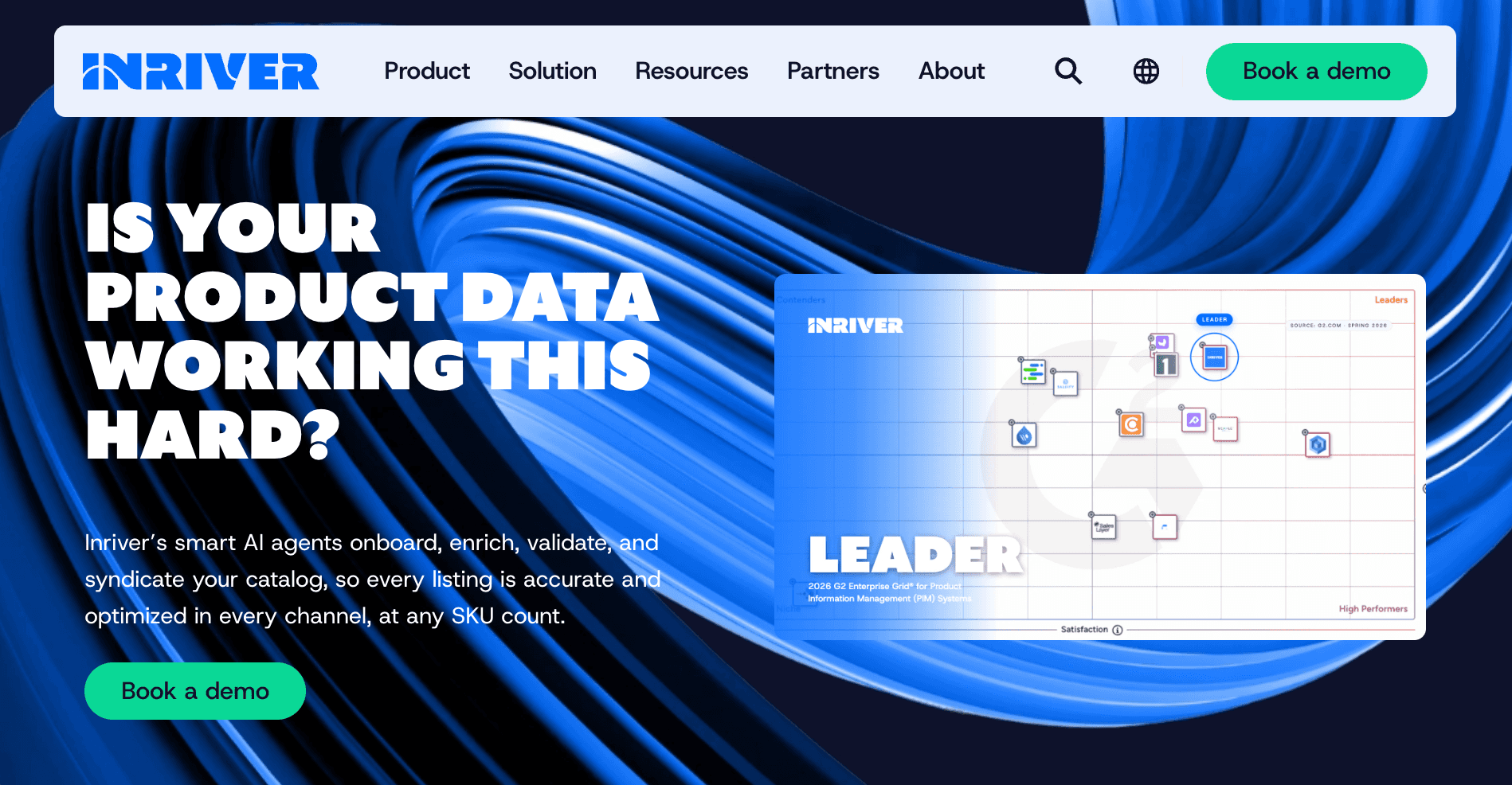
Inriver is a PIM platform for managing, enriching, validating, and syndicating product information.
It can bring together supplier data and product information from PLM, ERP, and other systems in the supply chain, then prepare that content for different commerce destinations.
Source: inriver.com
Why It Fits Fashion
Fashion brands can use Inriver to manage data for catalogs with high SKU counts and product variations.
Product information can be structured and enriched before being adapted to retailer and channel requirements, which is useful when assortments change frequently and listings need to stay up to date.
Its integrations can also sync product information from ERP, PLM, supplier, and ecommerce systems.
This gives internal teams a central place to work with product content before it is syndicated to ecommerce platforms, marketplaces, and retail destinations.
Key Capabilities
Product data onboarding and enrichment
High-volume SKU and catalog management
AI-assisted validation and workflows
Channel-specific content syndication
ERP, PLM, supplier, and ecommerce integrations
Best For
Fashion brands with large SKU catalogs that need to prepare and syndicate frequently changing product information to multiple retail and ecommerce destinations.
6. Quable
Quable is a PIM platform for centralizing product information, enriching catalogs, and distributing product data to ecommerce, marketplaces, B2B, and other commercial touchpoints.
It also includes an asset library, workflows, analytics, and AI tools for content enrichment and translation.

Source: quable.com
Why It Fits Fashion
The platform supports catalog management, product content, translations, and omnichannel distribution, which can suit brands managing large or international assortments.
Quable also reduces reliance on spreadsheets and repeated manual data entry by keeping product information in one place.
That can cut manual effort when teams update product data for different markets and channels.
Key Capabilities
Product catalog and variant management
Integrated asset library
AI-assisted enrichment and translation
Omnichannel feeds and integrations
Workflow and analytics tools
Best For
Fashion and luxury brands managing international product catalogs, digital assets, and channel-specific content in one connected setup.
When Does a Fashion Brand Need PIM?
A dedicated PIM usually becomes worth considering when the product catalog starts getting difficult to maintain with the systems already in place.
For fashion teams, that point may come when SKU and variant counts keep growing, product records live in several systems, or ecommerce and wholesale information no longer matches.
Product teams may also find themselves repeatedly transferring the same details between spreadsheets and systems to meet the requirements of fashion retailers, marketplaces, and other channels.
Data quality is another sign to watch. Missing attributes, outdated records, and uncertainty over which version is approved can become more common as the catalog expands.
Brands selling in multiple markets may also need different product information for each region or channel.
At that stage, maintaining a single source of approved product information may justify the total cost of a PIM system. A smaller fashion brand with a limited assortment and one sales channel may not need dedicated PIM software yet.
Build Better Product Data Before It Reaches PIM With Onbrand
Product data does not begin in PIM. It starts much earlier, when a fashion team is still defining the design, materials, colorways, measurements, specifications, samples, and approvals behind each style.
That is where Onbrand fits.
Onbrand AI Design
Onbrand AI Design supports the creative stage before product information moves into development. Fashion designers can start from a prompt, sketch, or reference image, then explore colorways, silhouettes, trims, and design variations in the same workspace.
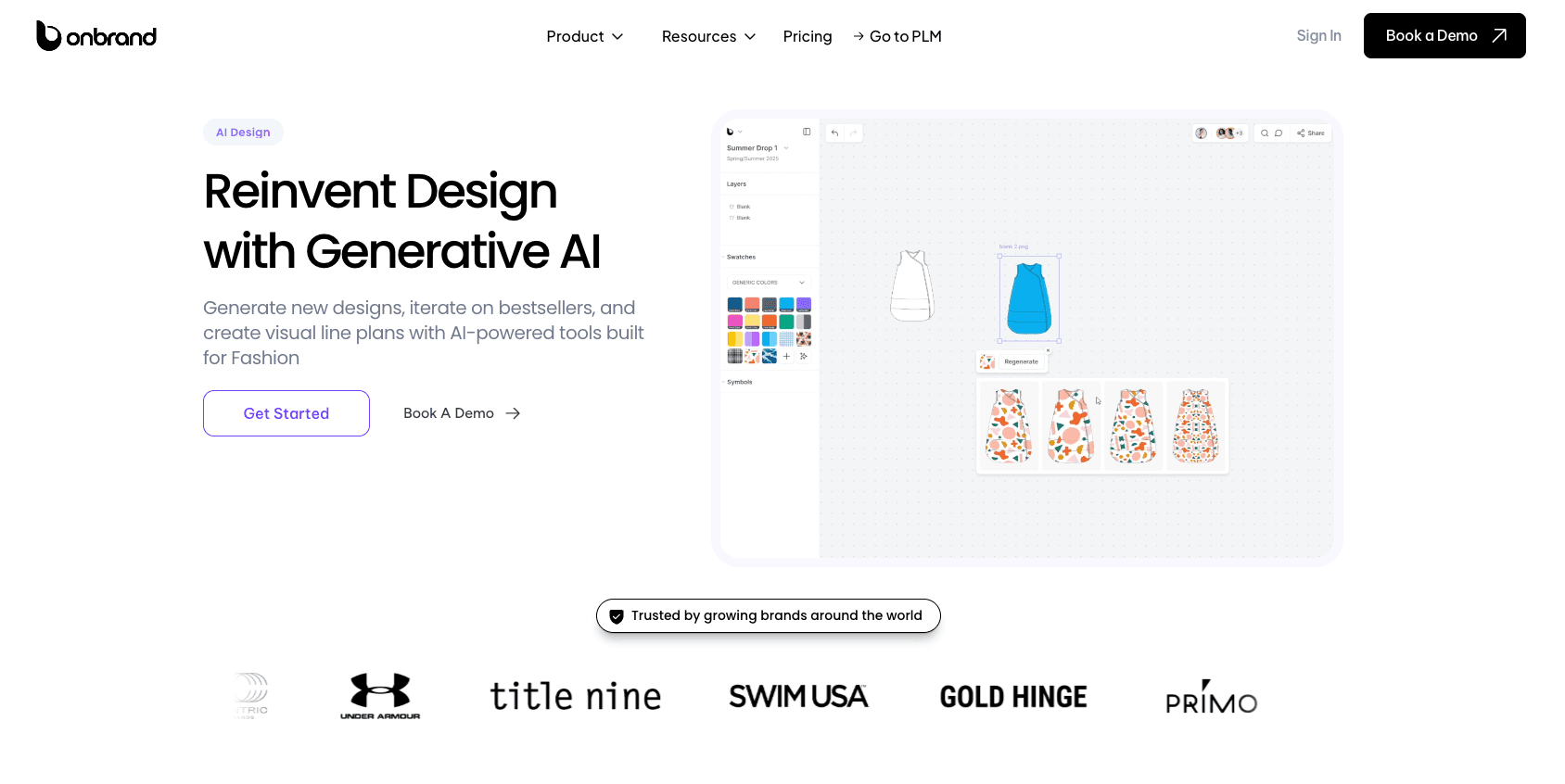
Teams can also turn sketches into polished mockups, create on-model visuals, build mood boards, and organize styles into visual line plans. Shared canvases, comments, version history, and direct PLM connection keep early design decisions together as concepts move forward.
Onbrand offers up to 10x faster design turnaround, 30–50% fewer physical samples, and more than 10 weeks saved each year.
Onbrand PLM
Once a concept is approved, Onbrand PLM carries product information into the development stage. Fashion product teams can use it to manage:
Styles
Materials
Specifications
Bills of materials (BOMs)
Tech packs
Samples
Revisions
Approvals
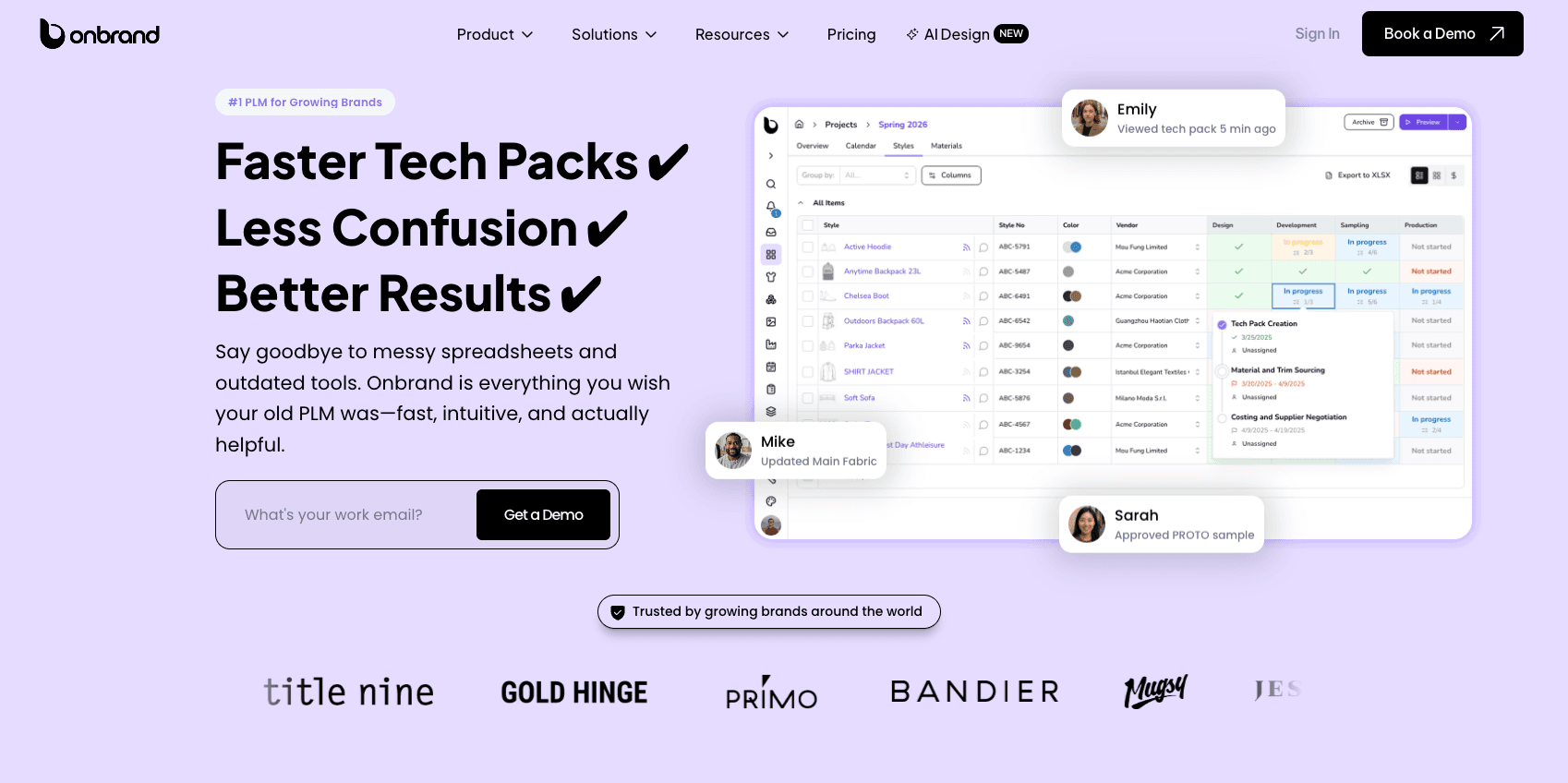
Live tech packs keep current information available without creating another PDF or spreadsheet version every time something changes.
Dedicated libraries and configurable project management keep product lifecycle management and product data management connected to the work behind each collection.
Onbrand delivers 55% faster tech pack creation and reduces development timelines by four weeks. Data migration and implementation take 10 days.
Once products are finalized, that structured information can move into downstream systems such as PIM, ecommerce, and PCM.
Bring Design and Development Together With Onbrand

The right PIM depends on catalog complexity, variant structure, distribution requirements, and the systems already in place. The best fit is one that matches how your brand organizes products and where that information needs to go.
Accurate downstream product information also depends on the work that happens before PIM. Onbrand keeps design and product development connected so finalized product information has a better foundation when it moves forward.
Book a demo to see how Onbrand can support your fashion design and product development process.
FAQs About Fashion PIM Software
What is PIM software used for?
PIM software centralizes, organizes, enriches, and distributes product information. Fashion brands can use it to manage product attributes, variants, descriptions, sizing, care details, and other commercial content, reducing data silos and supporting a more consistent customer experience.
How much does PIM software cost?
PIM software costs vary based on catalog size, users, integrations, channels, and required features. Open-source PIM options are also available, but implementation, hosting, development, support, or paid editions can still add costs. Brands should compare pricing and technical requirements against their own needs.
What software do most clothing designers use?
Clothing designers use different software for different parts of their work, including Adobe Illustrator for fashion flats and technical drawings and 3D apparel software for garment visualization. Fashion PLM can support the development process, while PIM generally comes later to manage commercial product information. Because of all these different use cases, there is no single software platform used by every clothing designer.
Is PIM software a must-have for every fashion brand?
PIM software is not a must-have for every fashion brand. A smaller brand with a limited catalog and few sales channels may be able to manage product information with its existing systems. PIM becomes more useful as SKU counts, markets, product variants, and distribution requirements grow.
Can PIM help fashion brands get products to market faster?
PIM can help fashion brands get finalized product information to market faster by reducing repeated data entry and making approved product details easier to prepare for ecommerce, marketplaces, retailers, and other channels. In a competitive market, this can reduce the time between finalizing a product and publishing accurate information to sales channels.