May 7, 2026

Garment construction is the step where a design turns into a physical garment using pattern pieces, stitching, and finishing.
In the fashion design process, designers start with an idea, but the basics of construction shape how that idea holds up in real samples. Issues often show up once a garment is made. The fit is not right, seams sit differently, or small details are missing.
This is a normal part of growth. It usually means construction details need more clarity before production.
In this guide, you’ll see how garment construction works and how to keep it consistent through development and production.
TL;DR
Garment construction is the process by which pattern pieces, seams, and stitching come together to turn a design into a production-ready garment.
Issues usually appear during sampling, including misaligned seams, poor stitching choices, fabric distortion, and inconsistent fit.
The core elements include seams and stitch types, fabric behavior, pattern accuracy, and finishing techniques, all of which affect fit and durability.
The garment construction process follows clear steps: prepare pattern pieces, cut fabric, assemble and stitch, add trims, and complete finishing and quality checks.
Keeping construction details consistent requires clear tech packs, accurate product data, and a PLM system like Onbrand PLM to manage revisions, samples, and vendor communication.
What Garment Construction Means in Fashion Design
Garment construction is how fabric and pattern pieces come together to form a finished garment.
It covers how seams are placed, how stitching is applied, and how the structure holds its shape once worn. Every decision at this stage affects how the garment fits, moves, and holds its form on the body.
In clothing construction, each step shapes how the garment performs in real use. Pieces are cut, joined, and built into something that can be tested through samples.
Seams define how parts connect. Stitching holds everything in place. Structure controls how the garment keeps its shape through wear and production.
This step starts with pattern work, but it quickly connects to sampling and production. Clear construction details reduce confusion when working with vendors and reviewing samples.
Garment construction sets the foundation for consistent results before development moves forward.
What Happens When Garment Construction Moves Beyond Design
Once a design moves forward, garment construction starts to affect how the product holds up in development and production. Fit, cost, and timelines are tied to how well construction details are set from the start.
Your team begins working with samples, tech packs, and vendors. Small gaps in construction decisions become visible fast.
Seams may not align, stitching may not hold as expected, and revisions start to add time and cost. These issues are common in the fashion industry, especially as styles move into fashion product development.
Manufacturers rely on clear construction details to create consistent garments. Without that clarity, miscommunication happens, samples go through more revisions, and production slows down.
Garment construction affects how clothing moves from design to production. It connects the creative idea to a repeatable process that can be produced and worn at scale.
Core Elements Behind Garment Construction
Garment construction depends on a few core elements that shape how a garment comes together and performs in production. These elements guide how pieces are connected, how the garment holds its shape, and how it moves through sampling and approvals.
Seams and Stitches
Seams bring the fabric pieces together, and stitching keeps them in place. The way they are constructed affects how the garment feels, moves, and holds up over time.
You’ll often see plain seams in everyday pieces, with overlock seams helping manage raw edges in production. French seams are chosen when a clean finish is needed inside the garment. Side seams also shape how the garment fits and how it moves when worn.
Clear seam finishes and stitch choices take out a lot of guesswork during sampling and help vendors stay on track with how the garment should be built.
Fabric Selection and Behavior
Fabric selection affects how a garment behaves once it is cut and assembled. Woven fabrics hold structure, while stretch fabrics move with the body. Each fabric reacts differently during sewing and production.
Cotton, silk, and denim all respond in different ways when stitched and finished. Texture also plays a role in how seams sit and how the garment feels during wear.
Fabric doesn’t always behave the same once it’s sampled, so it helps to plan for that early on. Even small differences can change the fit, shape, and how the garment comes together.
Pattern Making and Accuracy
Pattern making defines how all pieces come together. Basic patterns and basic blocks guide how the garment is shaped before construction begins.
Accurate pattern pieces keep seams aligned and support the intended fit. Flat pattern work should reflect how the garment will be built later in development.
When pattern accuracy is off, issues show up quickly in samples. Pieces may not match, and revisions take more time to resolve.
Finishing Techniques
Finishing techniques define how a garment is completed before it moves into production. Edge finishing, hems, and trim details all affect durability and final appearance.
Clean hems and proper edge finishing help maintain the garment’s structure over time. Trim placement also affects how the garment looks and functions in real use.
Clear finishing instructions in tech packs help vendors deliver consistent results and reduce back-and-forth during approvals.
Garment Construction Process: A Step-by-Step Guide
Garment construction follows a clear process that takes a design from pattern pieces to finished clothes ready for production. Each step builds on the last, and small issues tend to show up quickly once work moves into samples.
1. Preparing Pattern Pieces
The process starts with pattern pieces. They are reviewed, adjusted, and prepared for cutting. Accuracy at this stage helps everything line up later.
Any mismatch in key areas, for example, the waist, sleeves, or overall shape, will show up once the garment is assembled.
2. Cutting Fabric
Fabric pieces are cut based on the pattern. Accuracy at this stage is important because small errors can affect alignment later. Different materials, whether used for dresses, skirts, or trousers, react differently during cutting and need to be handled carefully.
3. Assembly and Stitching
Once cut, the fabric pieces are assembled and stitched together using a sewing machine. This is where the garment starts to take form. Seams come together, structure forms, and you can start to see how the final piece will look.
4. Adding Trims and Details
Details such as zippers, pockets, collars, and cuffs are added after the main structure is in place. These elements affect both function and final appearance, so placement and construction need to be clear before moving forward.
5. Finishing and Quality Checks
The final step focuses on finishing and reviewing the garment. Hems are completed, edges are checked, and the garment is reviewed through samples before approvals.
This stage often connects closely with sample management, where revisions are tracked and confirmed before production.
Even at this stage, small construction issues can become clear. Catching them early helps reduce delays and keeps production on track.
Construction Techniques That Shape the Final Garment
Garment construction techniques shape how a garment looks, fits, and performs in real use. These choices go beyond basic assembly and directly affect the final style, structure, and quality of the garment.
Seam Types
Different seam types are used depending on the fabric and how the garment is meant to perform. Each option affects durability, comfort, and overall appearance.
Plain seams are used in most garments for simple construction
French seams enclose raw edges and create a clean finish for lighter fabrics
Overlock seams help control fraying during production
Clear seam choices support consistent results and make it easier for vendors to follow the intended construction.
Dart and Shaping Techniques
Shaping techniques control how the garment fits the body. These sewing techniques help turn flat fabric into a structured form.
Darts adjust fit around areas like the waist and bust. Pleats and gathers add volume and movement. These details influence how the garment sits and how it feels when worn.
Small changes in shaping can affect the desired look, especially during sample reviews.
Structure and Fabric Manipulation
Fabric can be shaped and controlled in different ways to create structure and visual detail. These techniques are often used to support both fit and design intent.
Pleats create movement in skirts. Gathering adds fullness in sleeves or waist areas. Interfacing supports areas like collars and cuffs to hold their shape.
These techniques are used as both functional and decorative touch points in garment construction.
Closures and Functional Details
Closures complete the garment and affect how it is worn and handled in production.
Zippers, buttons, and other fastenings need to be placed and constructed correctly. Poor placement or unclear instructions can lead to rework during sampling.
Clear construction details support quality control and make approvals more consistent.
Where Garment Construction Starts to Break Down
Garment construction issues usually show up during sampling, not on paper. Small gaps in construction details become visible once the garment is built and reviewed.
Misaligned seams often come from pattern or cutting errors. Incorrect stitching types may not hold up in wear or may not suit the fabric. Fabric distortion happens when materials are handled without accounting for stretch or structure.
Fit inconsistencies are common when shaping or tailoring details that are not clearly defined.
Missing construction details in tech packs leave vendors guessing, especially when working with various types of garments. That leads to inconsistent samples and repeated revisions.
Most of these problems start early in the process, but only become clear once samples are reviewed. Clear instructions and accurate construction details help reduce back-and-forth and keep development moving.
How Construction Details Move From Design to Production
Construction details move from design into production through structured documentation.
Most teams rely on a tech pack to capture how a garment should be built. That includes specs, a bill of materials (BOM), and clear instructions for vendors.
When details are incomplete or unclear, problems show up fast. Samples may not match expectations, revisions take longer, and timelines slip.
Consistency depends on how product data is managed. Changes made during sampling need to be tracked and applied to every version.
Without a clear system, teams end up working from different information.

Fashion PLM tools like Onbrand PLM help keep these details organized. Construction details, specs, and BOMs stay tied to one product record. Updates carry through each sample round, so vendors and internal teams stay aligned.
Book a demo today and learn how you can improve your garment construction process with Onbrand.
What Changes When Garment Construction Scales
Once collections start to grow, garment construction gets harder to keep on track.
More styles, more revisions, and more vendors make consistency harder to maintain. What worked for a few samples no longer holds up the same way.
Construction details need to stay consistent from one revision to the next. Specs, BOMs, and instructions must be easy to update. Without that clarity, small changes get missed, and samples start to drift.
Common issues at this stage:
Construction details do not match between samples
Vendors receive different instructions for the same garment
Updates are not reflected in the latest tech pack
Communication gaps slow down approvals and production
Manufacturers rely on clear and consistent information to build the garment correctly. Strong vendor communication becomes critical as more people are involved.
Having everything in one place makes it easier for teams to work together and stay aligned as development continues.
Keep Garment Construction Consistent With Onbrand PLM
Garment construction gets harder to manage when details live in spreadsheets, static files, and disconnected tools.
Onbrand PLM keeps construction details tied to one product record, so specs, BOMs, seams, stitching, and sample updates stay current from one stage to the next.
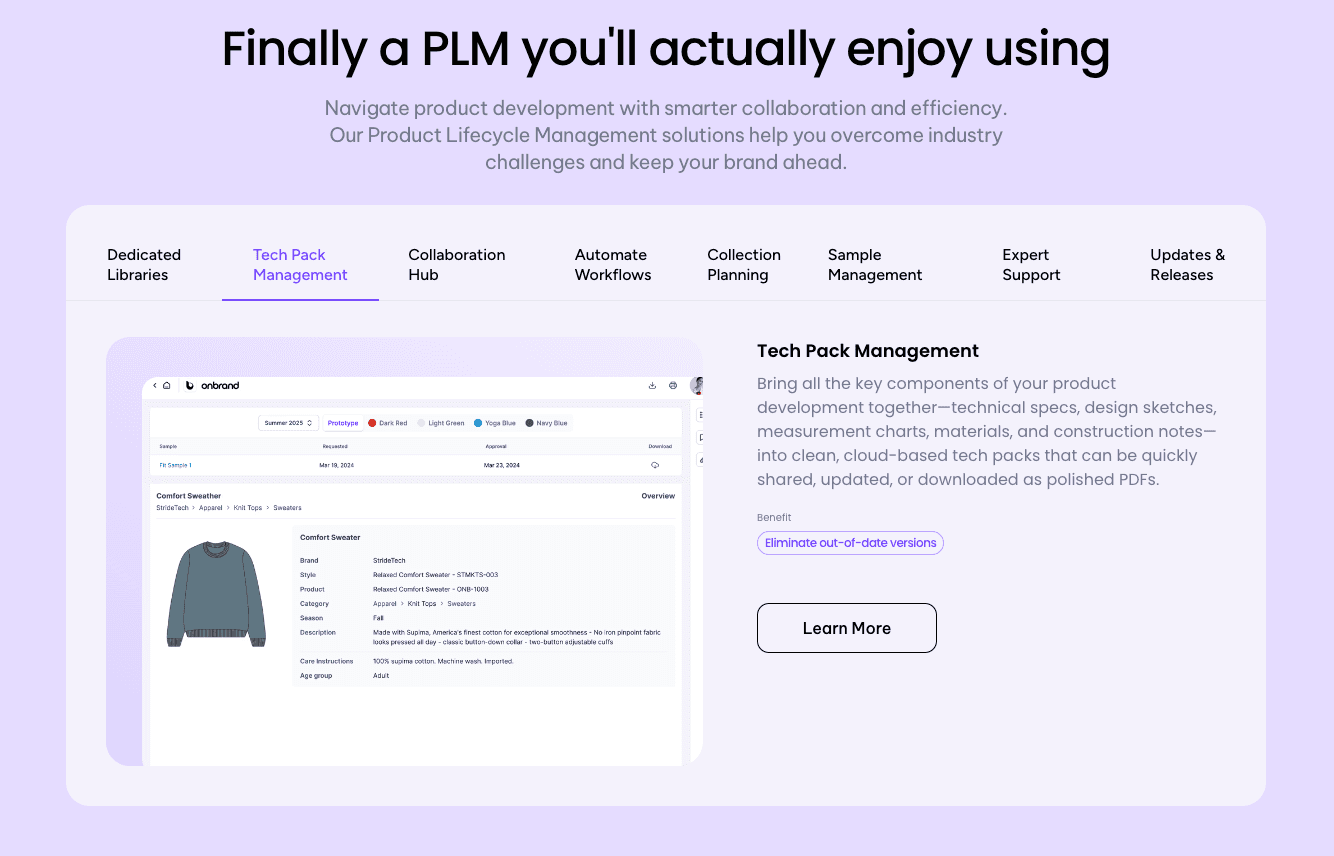
Your team can manage live tech packs, track sample changes, and keep vendors working from the latest information without chasing versions. That means less confusion during development and fewer mistakes once production moves forward.
Onbrand PLM is built for growing brands that need a faster, easier way to manage product development. Teams using Onbrand have cut tech pack creation time by 55%, reduced development timelines by four weeks, and gone live in as little as 10 days.
FAQs About Garment Construction
How do beginners learn garment construction?
Beginners learn garment construction through videos, classes, and hands-on practice. These methods help build foundational skills step by step. Garment construction combines technical execution with applied art, as it involves both precision and creative understanding of how garments are built.
What is the difference between garment construction and patternmaking?
Patternmaking focuses on shaping and creating pattern pieces, while garment construction focuses on how those two pieces and other components are assembled into a finished garment. Patternmaking defines the form, while construction defines how the garment is built and functions.
What tools are used in garment construction?
Garment construction uses tools such as sewing machines, cutting tools, measuring tools, and pressing equipment. These tools support each step of the process, from cutting fabric to assembling and finishing fabric pieces.
How do you check the quality of garment construction?
Quality is checked after sampling through post-sample reviews. Teams go through seams, stitching, fit, and finishing to make sure the garment is ready for approval and consistent for production.