Jun 16, 2026
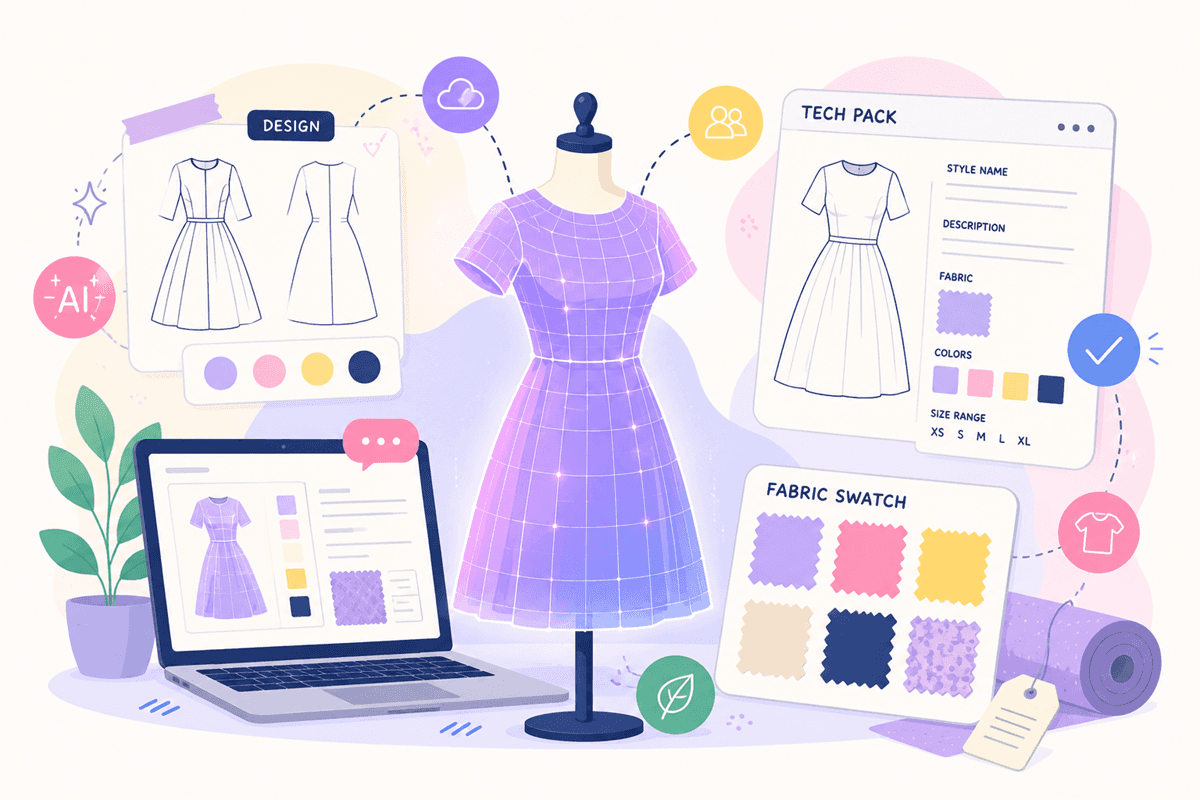
Apparel technology has become a bigger part of product creation, with more people, suppliers, and systems involved in managing information.
Many fashion brands still manage tech packs, approvals, sourcing updates, and production planning through a mix of disconnected tools. Small mistakes can create delays, duplicate work, and costly revisions later in the process.
The challenge is not creating more information but keeping product information organized as products move from concept to production.
That is one reason apparel technology continues to play a larger role in the fashion industry.
In this guide, you'll learn what apparel technology is, where it fits into product development, and which technologies have the biggest impact on modern apparel operations.
TL;DR
Apparel technology refers to the digital tools, systems, automation, and data used to support design, development, sourcing, manufacturing, and product management throughout the apparel lifecycle.
Apparel technology supports every stage of the product lifecycle, including design and concept development, product development, sourcing, manufacturing, and product data management.
Key technologies used by fashion brands today include PLM, AI design tools, 3D fashion design software, digital tech pack software, supplier collaboration platforms, and data analytics tools.
These technologies help brands reduce errors, improve collaboration, lower sampling and rework costs, and manage product information more effectively.
Onbrand combines AI-powered design exploration with modern PLM capabilities, helping fashion brands move from concept to production in one connected system.
What Is Apparel Technology?
Apparel technology refers to the digital systems, automation tools, and data used to support product creation and management throughout the apparel product lifecycle.
Fashion brands use technology to organize product information, manage product workflows, communicate with vendors, track revisions, and prepare products for production. It supports many parts of the clothing industry, from early design concepts to finished clothes arriving at retailers.
Modern apparel technology includes everything from product lifecycle management (PLM) systems and digital tech packs to 3D design tools and AI-powered applications.
These systems help teams maintain consistency, manage product data, and keep style development moving forward.
How Apparel Technology Has Evolved
Product development used to rely heavily on manual processes. With larger collections and more complex supplier networks, brands needed better ways to manage product information.
Paper sketches – Designers drew concepts by hand, and factories often received physical documents, patterns, and specifications.
Spreadsheets –Teams began using digital files for measurement charts, bills of materials (BOMs), costing information, and product tracking.
Computer-aided design (CAD) – Patternmakers moved from drafting tables to digital patternmaking and technical design tools.
Cloud collaboration – Product information, tech packs, approvals, and revisions became easier to share between internal teams and suppliers.
Artificial intelligence (AI) – Brands now use the latest technology to generate concepts, analyze product data, and support development decisions.
The rise of these tools reflects the need to track more product details without slowing down day-to-day work. Traditional methods still work for small product lines, but ongoing innovation helps brands manage development with less manual work.
Why Apparel Brands Invest in Technology
Fashion brands invest in new technologies to move products from concept to production faster.
Better tools reduce errors, improve collaboration between designers, sourcing teams, and production managers, and cut sampling costs. Modern systems help teams track revisions, maintain accurate product data, and respond to changing timelines.
Some brands also consider environmental impact when selecting materials and processes, using digital systems to support sustainability goals while keeping projects moving.
How Apparel Technology Supports the Fashion Industry
Apparel technology appears throughout the product lifecycle. The sections below show how different tools support design, product creation, sourcing, manufacturing, and product data management.
Design and Concept Development
Design and concept development are often where a product first takes shape. Digital sketching, mood boards, and AI-assisted concept generation give designers more ways to explore ideas before physical sampling.
These tools support collaboration between designers, technical designers, and product developers while allowing designers to test different styles, colors, and patterns without producing physical samples.
Product information is documented earlier, making it easier to communicate ideas and reduce misunderstandings later in development.
Product Development
Tech packs, BOM management, and revision tracking support day-to-day product development work.
Product developers may also manage specifications for smart fabrics, textiles, clothing, and other connected garments. Some garments include sensors to monitor vital signs like heart rate, requiring additional documentation, testing, and supplier coordination.
Product data must stay organized so revisions, approvals, and materials reflect the latest updates before production.
Sourcing and Supply Chain Management
Technology helps manage vendor communication, material sourcing, approvals, and production schedules. Product developers and sourcing teams track supplier performance, maintain up-to-date specifications, and manage product sourcing visibility.
Organized sourcing processes reduce miscommunications and production delays while allowing faster decision-making on materials and suppliers.
Manufacturing and Production
Digital tools assist with production planning, quality control, and compliance tracking. Some manufacturers use robotic sewing machines to automate repetitive tasks, improve consistency, and reduce manual errors.
Real-time production monitoring allows production managers to address issues quickly and keep schedules on track.
Product Data Management
Centralized product information enables version control, cross-functional visibility, and accurate reporting. Organized data helps business leaders track styles, materials, and revisions.
It also allows teams to respond to changes in timelines or production without losing information.
Key Types of Apparel Technology Used Today
Apparel technology includes a variety of tools, but not every system serves the same purpose. Some are built for design work, while others manage product information and development activities.
Product Lifecycle Management (PLM)
A PLM system helps fashion brands manage product information from concept through production. Product developers use PLM systems to maintain tech packs, track approvals, manage revisions, organize development data, and collaborate with suppliers.
Instead of storing information in separate files, PLM keeps product records in one place so everyone works from the latest version. This becomes especially valuable when collections involve multiple vendors, materials, and approval stages.
Artificial Intelligence Design Tools
AI design tools help designers explore concepts, generate variations, and evaluate ideas during early-stage development. Some tools also use AI analytics to identify patterns in product data and support design decisions.
This allows teams to spend less time creating initial concepts and more time refining ideas. These tools support creativity without replacing the fashion design process.
3D Fashion Design Software
Tools such as CLO 3D, Browzwear, and Style3D allow brands to create digital garments before physical samples are produced. Teams use these tools for virtual prototyping, fit reviews, and digital product presentations.
Many systems create digital twins that simulate fabric behavior and garment construction. Some also support virtual try-ons and augmented reality experiences during product reviews and presentations.
Digital Tech Pack Software
Digital tech pack software helps teams manage live product specifications throughout the development process.
Product developers can update measurements, construction details, materials, BOMs, and revision history without rebuilding documents from scratch. Vendors receive updated information faster, which reduces confusion during sampling and production.
This creates a more reliable process for managing factory communication and product changes.
Supplier Collaboration Platforms
Supplier collaboration tools give brands and suppliers a shared place to review product information, approvals, comments, and updates. Product developers can discuss changes, answer questions, and track progress without relying on long email chains.
Better visibility reduces delays that can affect sourcing, production, and product distribution. These tools are often used by larger companies working with multiple suppliers.
Data and Analytics Tools
Data and analytics tools help brands understand product performance, forecast demand, and identify consumer trends.
Merchandising and development teams may use this information to evaluate purchasing patterns, measure customer engagement, and connect product decisions to sales activity.
Some brands also review data from online stores and in-store experiences to support future product planning and merchandising decisions.
Benefits of Apparel Technology for Fashion Brands
The value of apparel technology comes from improving how information moves through the product lifecycle. Small improvements in communication, approvals, and product data can prevent larger delays later in the process.
A technical designer updating measurements in one system instead of several spreadsheets can save hours during a revision cycle. For example, a size chart update can automatically appear in the latest tech pack rather than requiring manual updates in multiple files.
Product developers can review changes faster when tech packs, comments, and approvals stay connected to the same product record.
These digital tools reduce errors that lead to duplicate samples, incorrect specifications, or outdated factory instructions. Fewer mistakes can help brands improve efficiency, reduce costs, lower material waste, and minimize waste during development.
Another benefit is visibility. Product developers, sourcing teams, and production managers can access current product information without searching through emails or shared folders. This makes it easier to respond to changing timelines and shifting consumer demands.
Building a Connected Apparel Technology Stack With Onbrand
Design tools, 3D tools, PLM systems, and supplier communication tools often live in separate places. That can work for a while, but it creates extra handoffs once styles move from idea to development.
Onbrand brings AI-powered design and PLM together in one environment, allowing brands to move from concept to development without relying on separate tools and manual handoffs.
Onbrand AI Design
Onbrand AI Design is an AI-powered design workspace built for fashion teams.
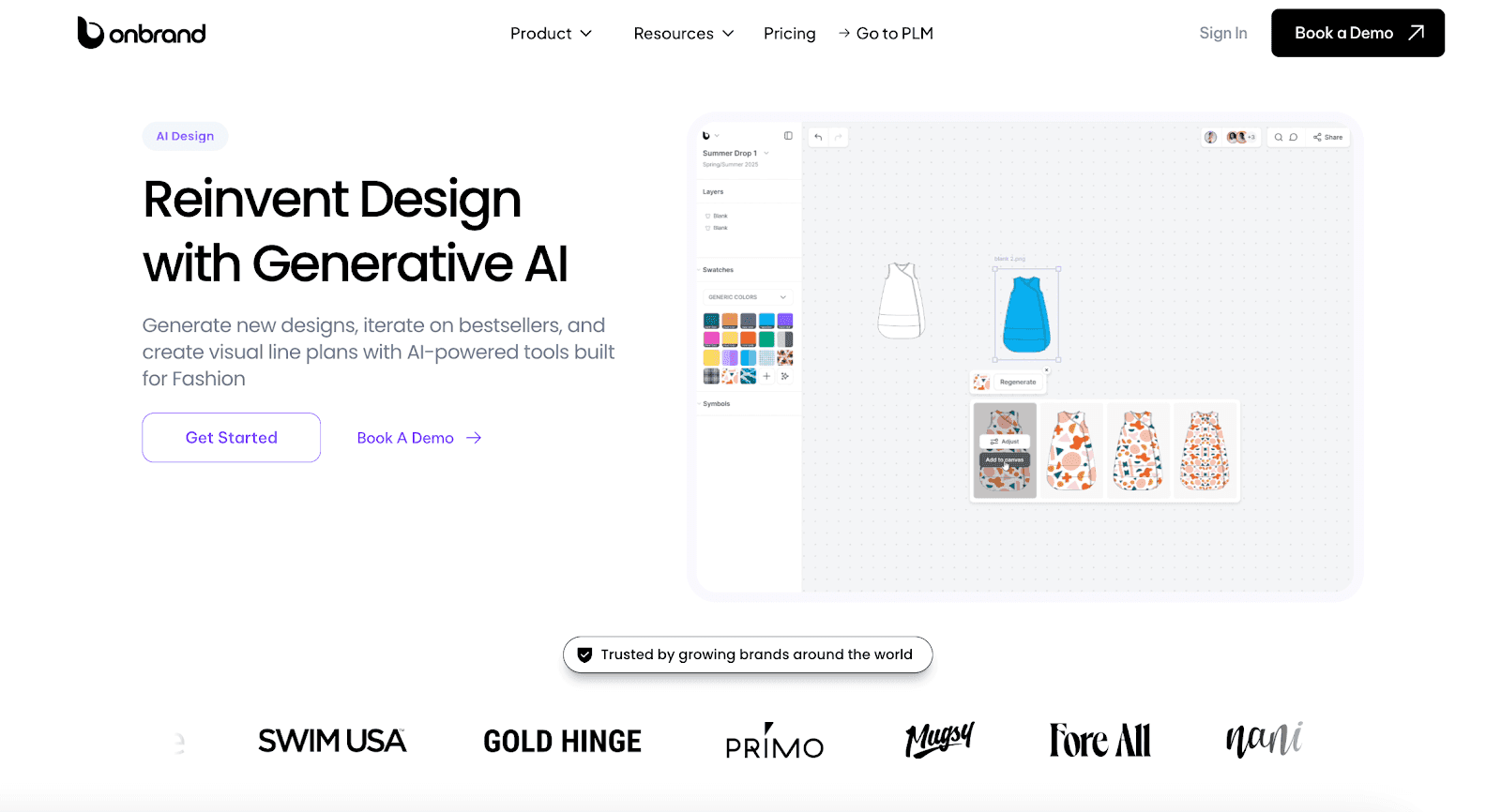
Designers can generate concepts from prompts, sketches, or reference images, then refine colorways, trims, silhouettes, and visual directions before samples enter the conversation.
Onbrand reports 10x faster design turnaround, thousands saved on external resources, 30–50% fewer physical samples, and 10+ weeks saved each year.
That gives designers more room to explore ideas without slowing down the next stage of the process.
Key features include:
Generative image creation from text, sketches, or photos
AI design exploration for colorways, trims, cuts, and variations
Photorealistic renders and on-model visuals
Mood boards, visual line plans, and shared design boards
Comments, feedback, and version history for faster design reviews
Export to Adobe Illustrator for detailed refinement
Connection to Onbrand PLM for smoother handoff into development
Onbrand PLM
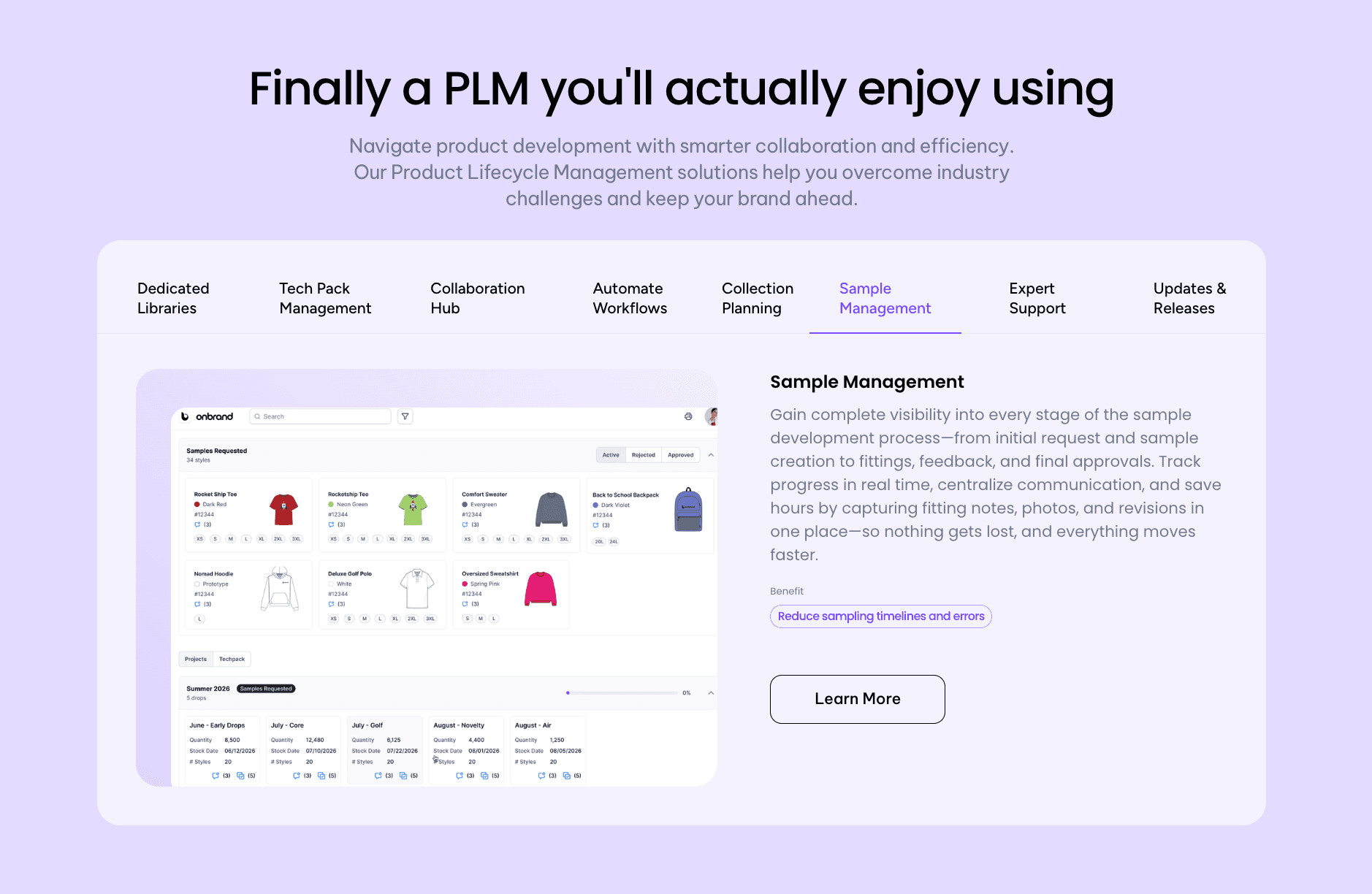
Onbrand PLM is a PLM system that helps fashion brands manage product data, tech packs, BOMs, samples, approvals, revisions, and vendor communication in one place.
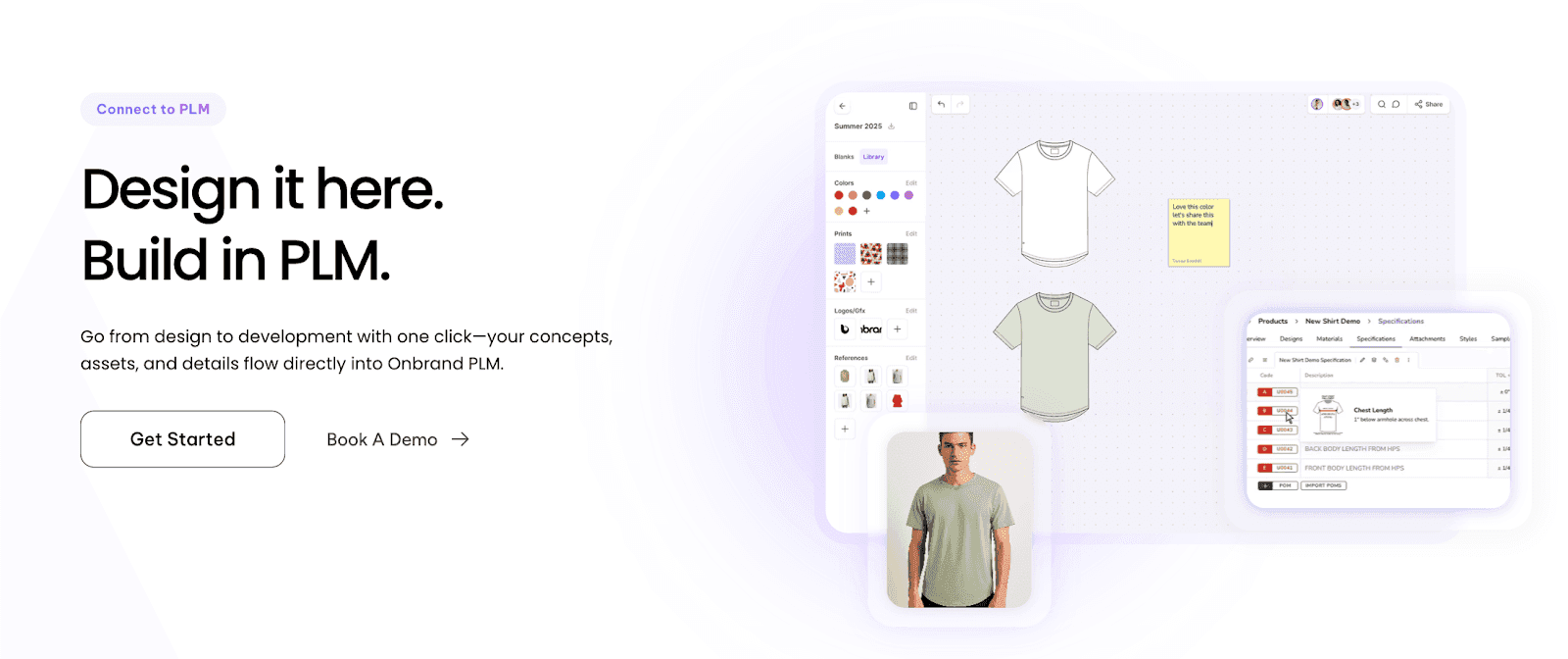
It is built for teams that need current product information without chasing files or updating the same detail in multiple systems. Onbrand reports 55% faster tech pack creation, a four-week reduction in development time, and a ten-day data migration and implementation.
Key features include:
Live tech packs that stay current without PDF or Excel version issues
BOM, material, color, artwork, and specification libraries
Sample management for fit reviews and approvals
Vendor communication directly on product records
Configurable stages, tasks, approvals, and time-and-action calendars
Collection planning for product and line development
Dedicated support and regular product updates
Together, Onbrand AI Design and Onbrand PLM help fashion brands manage both creative development and product execution in one connected system.
Modernize Apparel Product Development With Onbrand
Apparel technology brings design, development, sourcing, and product information into a more organized process. The tools that deliver the most value reduce manual work, improve visibility, and keep current information available throughout the lifecycle.
Onbrand combines AI-powered design exploration with modern fashion PLM capabilities, helping apparel teams move from concept to production with greater speed, visibility, and control.
Book a demo to see how Onbrand can help your team modernize apparel product development.
FAQs About Apparel Technology
What fabrics should you stay away from?
Avoid fabrics that are difficult to source consistently, prone to shrinkage, or have poor durability for the intended garment. Certain synthetic fibers may cause challenges in production or require special handling, so check material specifications carefully.
What is the scope of apparel technology?
Apparel technology covers tools and systems that support design, product development, sourcing, manufacturing, tech packs, revisions, approvals, and supplier communication throughout the product lifecycle.
What metrics or KPIs can apparel technology help track?
Teams can track development timelines, sample counts, revision cycles, production delays, and approval completion. Analytics can also monitor material usage, sampling costs, and overall efficiency in bringing a product from concept to production.
Are there specific technologies for connected or smart garments?
Yes, tools exist to manage smart fabrics, wearable electronics, and garments with sensors that monitor activity or vital signs. These systems coordinate design, materials, testing, and vendor collaboration for connected apparel.
Which apparel technology tools are most useful for small vs. large teams?
Smaller teams benefit from integrated design and PLM tools that reduce manual file handling, while larger teams often need scalable PLM, supplier collaboration platforms, and 3D design tools to coordinate multiple designers, product developers, and vendors simultaneously. These tools help brands stay competitive and organized in the broader fashion world.