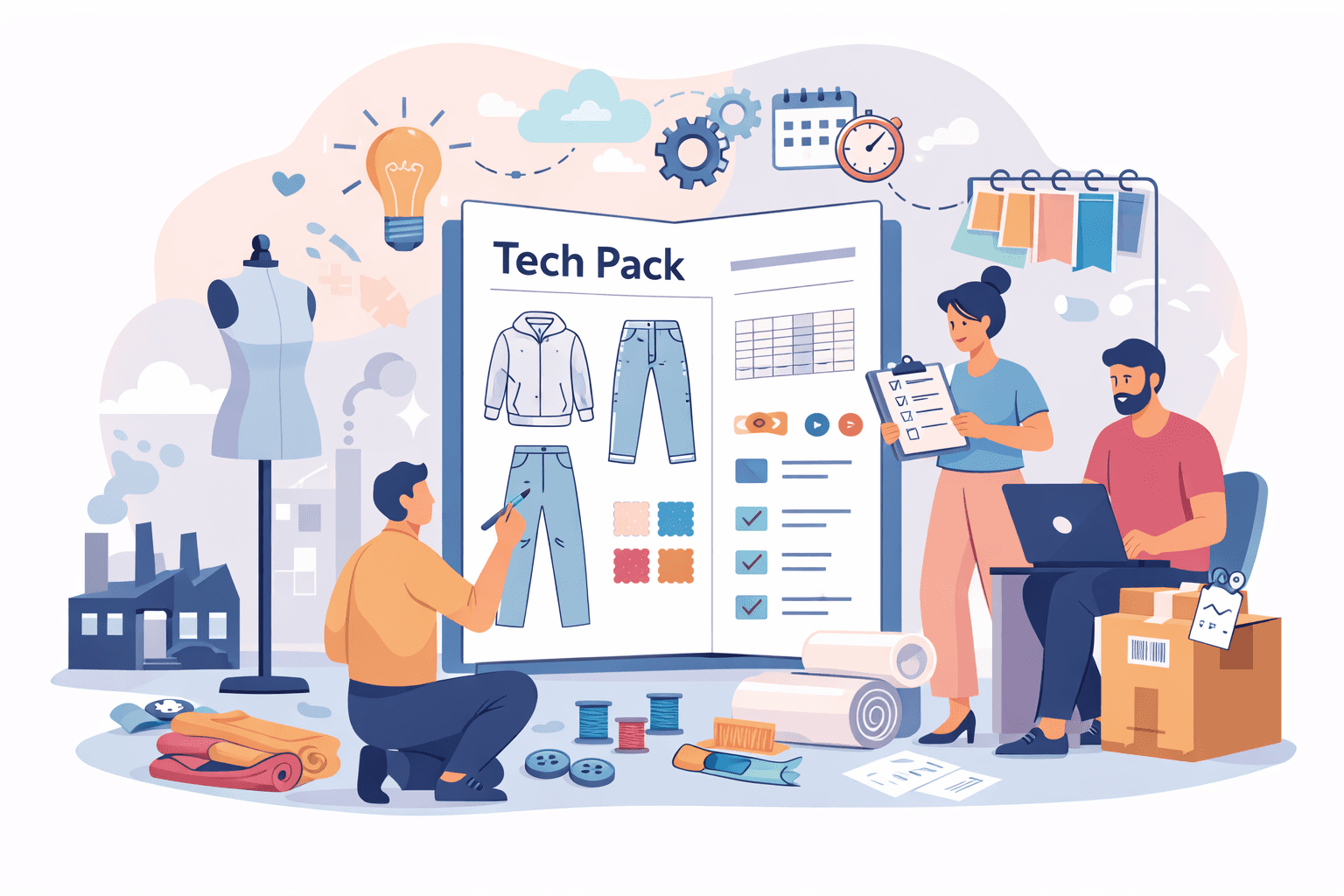
Tech Pack Meaning Explained for Fashion Brands
Feb 2, 2026


A finished garment doesn’t come together by chance. Every style reflects dozens of decisions made during the fashion design process, from measurements and materials to construction details and finishing touches.
When those decisions aren’t clearly documented, issues tend to appear later. Production teams may interpret missing information differently, manufacturers may work from assumptions, and small gaps can turn into missed details, delayed approvals, or rework during production.
Tech packs exist to remove that guesswork. They act as a single reference that connects design intent, construction details, and production expectations across teams and partners.
As collections grow, many brands pair documentation with the best tech pack software to keep product information consistent across teams and production stages.
In this article, we explain the meaning of a tech pack, what it represents in the fashion industry, and how teams use it to stay aligned as collections grow.
TL;DR
A tech pack is the central document that defines how a garment is developed and produced, capturing approved design, fit, and construction decisions.
It serves as a shared reference that records finalized specifications and visuals so designers, developers, and manufacturers work from the same expectations.
Common elements include garment illustrations, measurements, construction details, materials, branding, colorways, labels, and internal tracking notes.
Early tech packs focus on design intent, while production-ready versions include confirmed materials, measurements, and manufacturing instructions.
Growing brands move from static files to PLM systems like Onbrand PLM, where tech packs stay connected to styles, samples, timelines, and approvals in one place.
What Does “Tech Pack” Mean in Fashion?
A tech pack refers to a comprehensive document that defines how a design should be developed and produced.
Sometimes called a technical package or technical pack, it brings together design details, technical specifications, and production expectations in one shared reference.
Across design, development, and manufacturing, the tech pack serves as a single source of clarity. It helps translate creative intent into documented direction so decisions remain consistent as a style moves through the production process.
The meaning of a tech pack goes beyond a single file or tech pack example.
Whether teams work with digital tech packs or static files, a clear tech pack supports alignment during the production process, reduces costly mistakes, and helps both the designer and the factory stay on the same page as styles move toward bulk production.
What a Tech Pack Represents in the Fashion Industry
A tech pack represents a shared point of reference that defines what has been approved for a style. It brings design details and technical details together so everyone works from the same expectations, not memory or interpretation.
Rather than explaining how to make a product, a good tech pack records decisions that have already been finalized.
It captures approved construction details, desired specifications, and elaborate detailing that shape the final garment, giving both the designer and the factory a clear frame of reference.
Over time, a comprehensive tech pack supports alignment across the fashion product development process. It helps teams protect brand consistency, limit costly mistakes, and move styles forward with fewer revisions as collections grow.
Core Elements Commonly Included in a Tech Pack
While every brand structures documentation differently when they make tech packs, most include a core set of elements that support alignment from development through production.
These elements help document key components, limit interpretation, and save time as styles move closer to bulk production.
Garment Illustration and Colorway
Garment illustrations often start early in tech pack creation because they set visual direction before a style enters production.
These visuals typically include flat sketches and reference images created in tools like Adobe Illustrator or generated and refined through Onbrand AI Design. They show overall shape, proportions, and fabric placement.
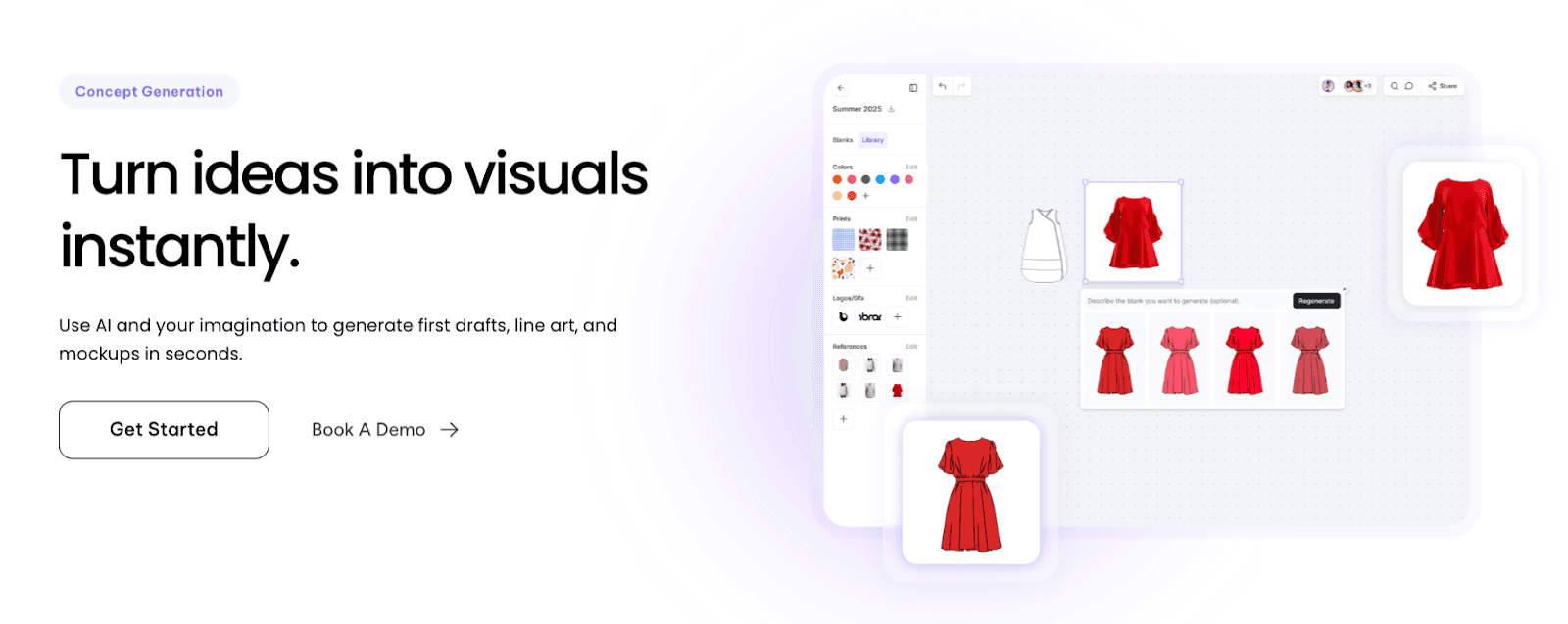
In a fashion tech pack, illustrations help the designer and factory align on how the final garment should appear across approved colorways.
Points of Measurement and Sizing Reference
Measurement information defines how a garment should be evaluated during sampling. Consistent measurement standards help the pattern maker and factory assess fit using the same reference points.
This alignment reduces confusion during fittings, especially when comparing a fit sample to approved specifications.
Construction Details and Technical Sheets
Technical sheets describe how the garment comes together. They capture construction notes, key construction methods, and seam allowances that affect assembly.
Documented construction details translate design intent with instructions into production-ready guidance before work moves into later stages.
Garment Specifications and Materials Summary
The specifications section outlines what goes into the product. It typically includes raw materials, trims, and components listed in the bill of materials, along with notes related to cost and sourcing.
Thorough specifications help production partners understand material choices that influence quality and consistency.
Branding, Graphics, and Decorative Elements
Branding documentation shows how logos, graphics, and decorative elements appear on the product. Placement, scale, and visual intent support brand consistency across styles and collections.
Clear branding reduces misinterpretation when artwork moves from design files into physical production.
Color Variations and Material Finishes
Color references define approved combinations for fabrics, trims, and finishes. Production partners rely on this information to understand how many variations exist for a single style and how each version should appear.
Defined color standards support smoother transitions from sampling into bulk production.
Packaging, Labels, and Product Identification
Packaging and label details describe how the fashion product is identified upon delivery. This includes care labels, size tags, and presentation standards tied to the final product.
Consistent documentation supports reliable handling across shipments and downstream retail requirements.
Development Tracking and Cost Context
Some tech packs include internal tracking information such as timelines, sample notes, or a garment cost sheet.
Although not always shared externally, these records help you monitor progress, manage spend, and keep decisions visible as styles move toward approval and future collections.
How Different Teams Use Tech Packs
A tech pack works as a shared reference, but not everyone uses it the same way. Each role relies on the document for different decisions, depending on where they sit in the product development timeline.
For Fashion Designers
Designers use their own tech pack to document creative intent in a professional tech pack that others can reference. Visuals, reference images, and design details help translate ideas without relying on conversation.
This supports consistency across styles and collections, especially when reviewing a tech pack example or revisiting past work.
For Technical Design and Product Development
For product developers and technical designers, the tech pack becomes a working record of desired specifications.
Details in the spec sheet, construction notes, and fit feedback guide decisions through sampling and approval. A complete tech pack helps manage updates without losing context as styles move forward.
For Manufacturers and Vendors
Manufacturers use the tech pack as their production reference. It outlines what has been approved, from fabric placement to measurements, so both the manufacturer and the brand work from the same expectations.
An effective tech pack reduces back-and-forth before bulk production begins.
Tech Packs at Different Stages of Product Development
A tech pack does not mean the same thing at every point in development. Early-stage documentation often focuses on direction, while later versions reflect confirmed decisions.
In early development, brands may create tech packs that capture intent, rough fabric placement, and early assumptions tied to design exploration. These versions support alignment but are not ready for handoff to clothing manufacturers.
As styles move forward, the tech pack becomes more complete. Production-ready versions include finalized essential components, approved materials such as main fabric, and confirmed specifications that guide manufacturing.
At this stage, the document works as a technical packet rather than a working draft.
Understanding this shift helps avoid internal confusion. The same term can refer to different levels of readiness depending on timing, which is why clarity around stage matters as collections move toward bulk production.
Why Are Tech Packs Important as Brands Scale
Understanding why a tech pack is important helps reduce assumptions once more people work on the same product. Clear documentation keeps decisions grounded as styles move between design, development, and production.
Well-defined tech packs support smoother handoffs, especially when timelines compress, and multiple styles move toward manufacturing at the same time.
Everyone references the same approved details instead of relying on memory or side conversations.
At scale, the tech pack also functions as a visibility tool. It provides a consistent reference while many styles move through the product development process at once.
Shared understanding improves coordination across the business. Decisions remain visible, updates stay connected, and work progresses with fewer disruptions as collections grow.
How Modern Fashion Teams Manage Tech Packs Today
Fashion teams no longer rely on scattered files to manage detailed tech packs. Spreadsheets, exported PDFs, and email threads made it hard to track updates or confirm which version was approved.
That setup worked early on, but it becomes difficult once more styles move through development at the same time.
Shared digital records now support day-to-day work. A single source of truth helps protect key components, reduces version confusion, and keeps documentation aligned as collections grow.
Version clarity matters most when multiple people review the same specification sheet across samples and approvals, and that is one of the significant advantages of shared records.
Many brands manage this work inside fashion PLM systems where tech packs stay connected to styles, samples, and timelines.
Platforms like Onbrand PLM reflect this shift by keeping product details visible in one collaborative environment, so updates stay linked to the work instead of being buried in files.
Onbrand PLM: Where Tech Packs Live and Stay Connected
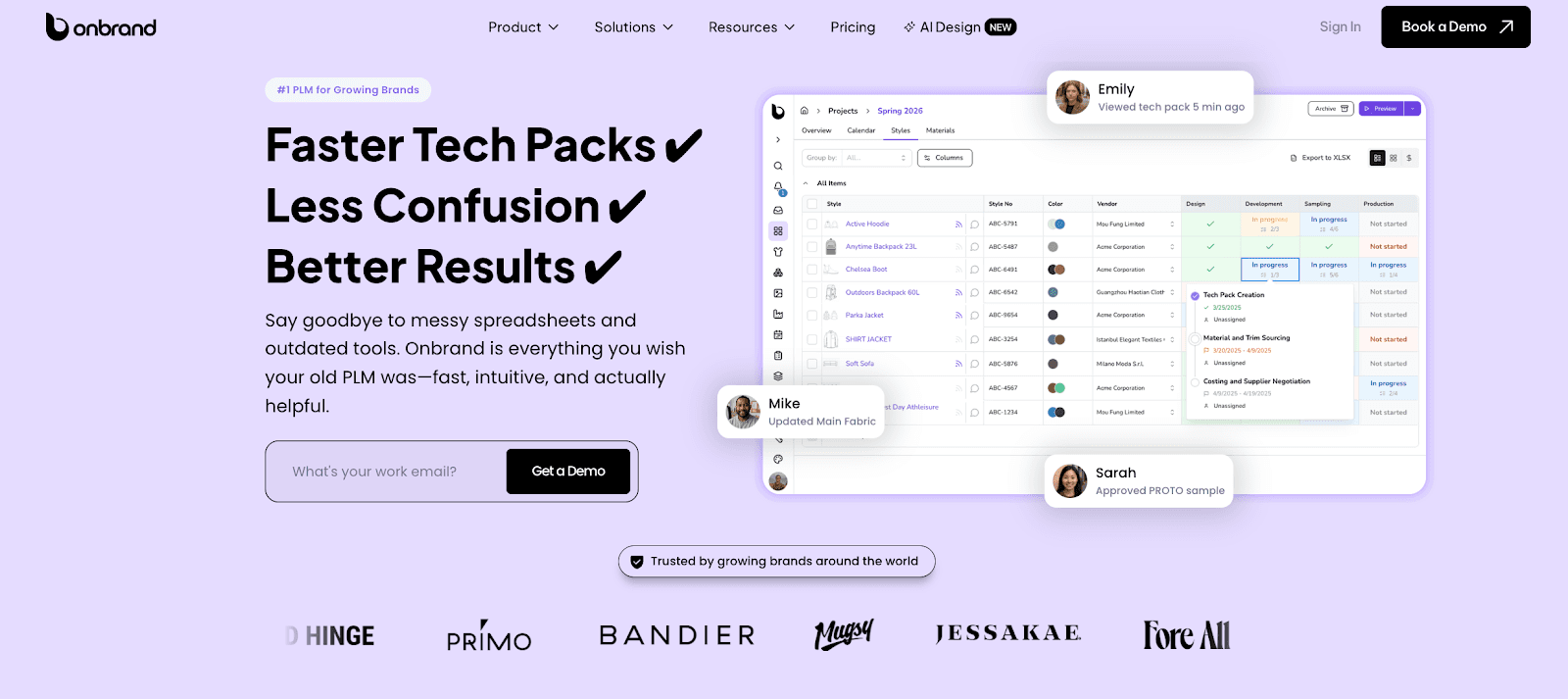
Tech packs often start as files, then turn into a trail of exports. One person updates the spec sheet, another shares an old PDF, and the factory replies to a version that no longer matches what you approved.
That cycle makes it hard to track decisions once styles move through samples and toward production, especially as fashion management becomes more complex for growing collections.
Onbrand PLM treats the tech pack as a live product record. Specs, visuals, approvals, and comments stay tied to each style, so you work from one current version instead of sorting through copies.
What does this change in practice
Live tech packs – Updates stay visible without exporting new files.
Connected context – Tech packs sit alongside samples, deadlines, and decisions.
Clear version history – Everyone references the same approved information.
Built-in project management – Stages, tasks, approvals, and timelines stay tied to each style.
Direct collaboration – Comments and questions stay attached to the style.
Vendor access – Factories work from the same current specs, without email chains.
Fewer handoffs - Less reliance on email threads and shared folders.
Early design decisions also stay linked to development. With Onbrand AI Design, teams can explore concepts, visuals, and variations before production work begins, then carry those assets directly into PLM.
That connection keeps creative intent attached to the tech pack instead of getting lost during handoffs.
FAQs About Tech Pack Meaning
How do you make a tech pack?
To make a tech pack, you document all approved design and production details in one place. This usually includes sketches, measurements, materials, construction notes, and labeling details. Many teams treat the tech pack as an instruction manual that records decisions already made, rather than a step-by-step guide for creativity. For a deeper walkthrough, see our guide on how to create tech packs for fashion.
What tools are used to create a tech pack?
Fashion teams use a mix of tools depending on workflow maturity. Early-stage brands may rely on Microsoft Excel or Google Sheets to organize specs, while designers often create visuals and technical drawing files using computer-aided design tools like Adobe Illustrator. Growing brands usually shift to cloud-based software to keep updates visible and reduce version confusion.
Is a tech pack used for quality control?
Yes. A tech pack plays a direct role in quality control by defining approved measurements, construction details, and materials. Factories use it as a reference during sampling and production to confirm that the final garment matches what was approved.
How do tech packs support sustainable practices?
Tech packs support sustainable practices by documenting materials, trims, and construction decisions clearly. When specifications stay consistent, brands reduce rework, excess sampling, and material waste, which helps limit avoidable production issues.
A finished garment doesn’t come together by chance. Every style reflects dozens of decisions made during the fashion design process, from measurements and materials to construction details and finishing touches.
When those decisions aren’t clearly documented, issues tend to appear later. Production teams may interpret missing information differently, manufacturers may work from assumptions, and small gaps can turn into missed details, delayed approvals, or rework during production.
Tech packs exist to remove that guesswork. They act as a single reference that connects design intent, construction details, and production expectations across teams and partners.
As collections grow, many brands pair documentation with the best tech pack software to keep product information consistent across teams and production stages.
In this article, we explain the meaning of a tech pack, what it represents in the fashion industry, and how teams use it to stay aligned as collections grow.
TL;DR
A tech pack is the central document that defines how a garment is developed and produced, capturing approved design, fit, and construction decisions.
It serves as a shared reference that records finalized specifications and visuals so designers, developers, and manufacturers work from the same expectations.
Common elements include garment illustrations, measurements, construction details, materials, branding, colorways, labels, and internal tracking notes.
Early tech packs focus on design intent, while production-ready versions include confirmed materials, measurements, and manufacturing instructions.
Growing brands move from static files to PLM systems like Onbrand PLM, where tech packs stay connected to styles, samples, timelines, and approvals in one place.
What Does “Tech Pack” Mean in Fashion?
A tech pack refers to a comprehensive document that defines how a design should be developed and produced.
Sometimes called a technical package or technical pack, it brings together design details, technical specifications, and production expectations in one shared reference.
Across design, development, and manufacturing, the tech pack serves as a single source of clarity. It helps translate creative intent into documented direction so decisions remain consistent as a style moves through the production process.
The meaning of a tech pack goes beyond a single file or tech pack example.
Whether teams work with digital tech packs or static files, a clear tech pack supports alignment during the production process, reduces costly mistakes, and helps both the designer and the factory stay on the same page as styles move toward bulk production.
What a Tech Pack Represents in the Fashion Industry
A tech pack represents a shared point of reference that defines what has been approved for a style. It brings design details and technical details together so everyone works from the same expectations, not memory or interpretation.
Rather than explaining how to make a product, a good tech pack records decisions that have already been finalized.
It captures approved construction details, desired specifications, and elaborate detailing that shape the final garment, giving both the designer and the factory a clear frame of reference.
Over time, a comprehensive tech pack supports alignment across the fashion product development process. It helps teams protect brand consistency, limit costly mistakes, and move styles forward with fewer revisions as collections grow.
Core Elements Commonly Included in a Tech Pack
While every brand structures documentation differently when they make tech packs, most include a core set of elements that support alignment from development through production.
These elements help document key components, limit interpretation, and save time as styles move closer to bulk production.
Garment Illustration and Colorway
Garment illustrations often start early in tech pack creation because they set visual direction before a style enters production.
These visuals typically include flat sketches and reference images created in tools like Adobe Illustrator or generated and refined through Onbrand AI Design. They show overall shape, proportions, and fabric placement.

In a fashion tech pack, illustrations help the designer and factory align on how the final garment should appear across approved colorways.
Points of Measurement and Sizing Reference
Measurement information defines how a garment should be evaluated during sampling. Consistent measurement standards help the pattern maker and factory assess fit using the same reference points.
This alignment reduces confusion during fittings, especially when comparing a fit sample to approved specifications.
Construction Details and Technical Sheets
Technical sheets describe how the garment comes together. They capture construction notes, key construction methods, and seam allowances that affect assembly.
Documented construction details translate design intent with instructions into production-ready guidance before work moves into later stages.
Garment Specifications and Materials Summary
The specifications section outlines what goes into the product. It typically includes raw materials, trims, and components listed in the bill of materials, along with notes related to cost and sourcing.
Thorough specifications help production partners understand material choices that influence quality and consistency.
Branding, Graphics, and Decorative Elements
Branding documentation shows how logos, graphics, and decorative elements appear on the product. Placement, scale, and visual intent support brand consistency across styles and collections.
Clear branding reduces misinterpretation when artwork moves from design files into physical production.
Color Variations and Material Finishes
Color references define approved combinations for fabrics, trims, and finishes. Production partners rely on this information to understand how many variations exist for a single style and how each version should appear.
Defined color standards support smoother transitions from sampling into bulk production.
Packaging, Labels, and Product Identification
Packaging and label details describe how the fashion product is identified upon delivery. This includes care labels, size tags, and presentation standards tied to the final product.
Consistent documentation supports reliable handling across shipments and downstream retail requirements.
Development Tracking and Cost Context
Some tech packs include internal tracking information such as timelines, sample notes, or a garment cost sheet.
Although not always shared externally, these records help you monitor progress, manage spend, and keep decisions visible as styles move toward approval and future collections.
How Different Teams Use Tech Packs
A tech pack works as a shared reference, but not everyone uses it the same way. Each role relies on the document for different decisions, depending on where they sit in the product development timeline.
For Fashion Designers
Designers use their own tech pack to document creative intent in a professional tech pack that others can reference. Visuals, reference images, and design details help translate ideas without relying on conversation.
This supports consistency across styles and collections, especially when reviewing a tech pack example or revisiting past work.
For Technical Design and Product Development
For product developers and technical designers, the tech pack becomes a working record of desired specifications.
Details in the spec sheet, construction notes, and fit feedback guide decisions through sampling and approval. A complete tech pack helps manage updates without losing context as styles move forward.
For Manufacturers and Vendors
Manufacturers use the tech pack as their production reference. It outlines what has been approved, from fabric placement to measurements, so both the manufacturer and the brand work from the same expectations.
An effective tech pack reduces back-and-forth before bulk production begins.
Tech Packs at Different Stages of Product Development
A tech pack does not mean the same thing at every point in development. Early-stage documentation often focuses on direction, while later versions reflect confirmed decisions.
In early development, brands may create tech packs that capture intent, rough fabric placement, and early assumptions tied to design exploration. These versions support alignment but are not ready for handoff to clothing manufacturers.
As styles move forward, the tech pack becomes more complete. Production-ready versions include finalized essential components, approved materials such as main fabric, and confirmed specifications that guide manufacturing.
At this stage, the document works as a technical packet rather than a working draft.
Understanding this shift helps avoid internal confusion. The same term can refer to different levels of readiness depending on timing, which is why clarity around stage matters as collections move toward bulk production.
Why Are Tech Packs Important as Brands Scale
Understanding why a tech pack is important helps reduce assumptions once more people work on the same product. Clear documentation keeps decisions grounded as styles move between design, development, and production.
Well-defined tech packs support smoother handoffs, especially when timelines compress, and multiple styles move toward manufacturing at the same time.
Everyone references the same approved details instead of relying on memory or side conversations.
At scale, the tech pack also functions as a visibility tool. It provides a consistent reference while many styles move through the product development process at once.
Shared understanding improves coordination across the business. Decisions remain visible, updates stay connected, and work progresses with fewer disruptions as collections grow.
How Modern Fashion Teams Manage Tech Packs Today
Fashion teams no longer rely on scattered files to manage detailed tech packs. Spreadsheets, exported PDFs, and email threads made it hard to track updates or confirm which version was approved.
That setup worked early on, but it becomes difficult once more styles move through development at the same time.
Shared digital records now support day-to-day work. A single source of truth helps protect key components, reduces version confusion, and keeps documentation aligned as collections grow.
Version clarity matters most when multiple people review the same specification sheet across samples and approvals, and that is one of the significant advantages of shared records.
Many brands manage this work inside fashion PLM systems where tech packs stay connected to styles, samples, and timelines.
Platforms like Onbrand PLM reflect this shift by keeping product details visible in one collaborative environment, so updates stay linked to the work instead of being buried in files.
Onbrand PLM: Where Tech Packs Live and Stay Connected

Tech packs often start as files, then turn into a trail of exports. One person updates the spec sheet, another shares an old PDF, and the factory replies to a version that no longer matches what you approved.
That cycle makes it hard to track decisions once styles move through samples and toward production, especially as fashion management becomes more complex for growing collections.
Onbrand PLM treats the tech pack as a live product record. Specs, visuals, approvals, and comments stay tied to each style, so you work from one current version instead of sorting through copies.
What does this change in practice
Live tech packs – Updates stay visible without exporting new files.
Connected context – Tech packs sit alongside samples, deadlines, and decisions.
Clear version history – Everyone references the same approved information.
Built-in project management – Stages, tasks, approvals, and timelines stay tied to each style.
Direct collaboration – Comments and questions stay attached to the style.
Vendor access – Factories work from the same current specs, without email chains.
Fewer handoffs - Less reliance on email threads and shared folders.
Early design decisions also stay linked to development. With Onbrand AI Design, teams can explore concepts, visuals, and variations before production work begins, then carry those assets directly into PLM.
That connection keeps creative intent attached to the tech pack instead of getting lost during handoffs.
FAQs About Tech Pack Meaning
How do you make a tech pack?
To make a tech pack, you document all approved design and production details in one place. This usually includes sketches, measurements, materials, construction notes, and labeling details. Many teams treat the tech pack as an instruction manual that records decisions already made, rather than a step-by-step guide for creativity. For a deeper walkthrough, see our guide on how to create tech packs for fashion.
What tools are used to create a tech pack?
Fashion teams use a mix of tools depending on workflow maturity. Early-stage brands may rely on Microsoft Excel or Google Sheets to organize specs, while designers often create visuals and technical drawing files using computer-aided design tools like Adobe Illustrator. Growing brands usually shift to cloud-based software to keep updates visible and reduce version confusion.
Is a tech pack used for quality control?
Yes. A tech pack plays a direct role in quality control by defining approved measurements, construction details, and materials. Factories use it as a reference during sampling and production to confirm that the final garment matches what was approved.
How do tech packs support sustainable practices?
Tech packs support sustainable practices by documenting materials, trims, and construction decisions clearly. When specifications stay consistent, brands reduce rework, excess sampling, and material waste, which helps limit avoidable production issues.

Discover how Onbrand PLM can streamline your product development!
© 2024 onbrandplm.com. All rights reserved.
© 2024 Onbrand. All rights reserved.

