What Is Fashion PLM? The Key to Smarter Fashion Workflows
Nov 25, 2025


Fashion moves fast. Brands today handle multiple collections, tight launch schedules, and complex supplier networks, often all at once. Keeping design, production, and sourcing aligned takes more than spreadsheets or long email chains.
A modern product lifecycle management (PLM) system changes that. It gives fashion teams one connected platform to manage every product detail from the first sketch to the final shipment, keeping everyone consistent and on track.
Whether you’re scaling a growing label or managing multiple product lines, fashion PLM helps your creative, technical, and sourcing teams work in sync without slowing innovation.
In this article, you’ll learn what fashion PLM is, why it matters, and how it supports every department involved in building a collection.
What Is Fashion PLM?
Fashion PLM is a centralized system that helps fashion brands manage every stage of the product lifecycle, from design to delivery. It brings together product data, timelines, and communication in one shared workspace. Teams can then stay aligned as collections move forward.
In the fashion and apparel industry, PLM integrates people, processes, and tools across design, development, and sourcing. It connects creative, technical, and production teams so everyone works from the same real-time information.
This connection helps companies manage complex supply chains and maintain consistent quality control across the entire value chain.
Modern fashion PLM systems also support sustainability initiatives, supplier management, and collection development. They help teams collaborate efficiently, make informed decisions faster, and reduce waste through accurate planning and version tracking.
For fashion companies and vertically integrated brands, adopting PLM is more than a technology upgrade.
It represents a digital transformation strategy that improves efficiency, strengthens alignment, and helps teams move from concept to delivery with speed and accuracy.
Why Fashion PLM Software Matters for Modern Brands
Fashion moves quickly, and teams need clarity at every stage of production. PLM helps fashion businesses stay organized, adapt to new consumer trends, and deliver products to market faster without losing accuracy or control.
It turns disconnected processes into one unified workflow, helping the entire organization work from the same reliable data.
Whether managing high volumes, complex supply chains, or multiple collections, PLM brings order and visibility to daily operations.
Key benefits:
Faster product development - Teams move from concept to production smoothly, keeping every update visible across departments.
Accurate product data - Real-time information keeps product details consistent from design to sourcing and production.
Better collaboration - Centralized communication replaces long feedback loops and scattered files.
Cost and time savings - Fewer errors, reduced rework, and smoother sample management improve efficiency.
Sustainability tracking - Clear visibility into materials, compliance, and supplier practices supports sustainability goals and transparency.
How Fashion PLM Supports Every Department
Every part of your fashion value chain plays a role in turning creative ideas into finished products.
A strong PLM solution helps your teams stay aligned, respond faster to consumer demands, and maintain quality assurance across the entire product lifecycle.
Design Teams
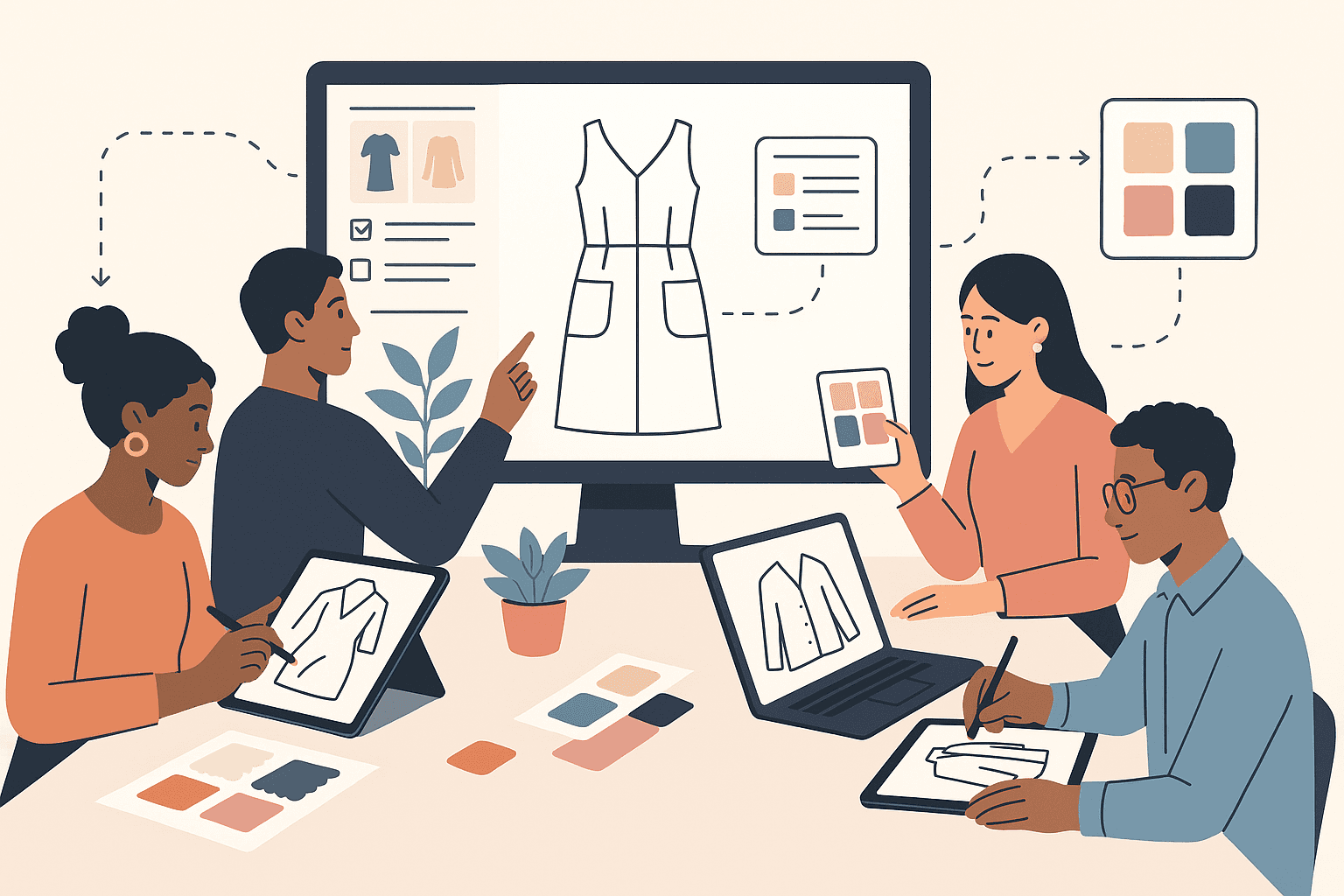
If you manage a creative team, your PLM software acts as the hub for sketches, mood boards, and color palettes. It supports design collaboration, visual line plans, and concept generation while keeping all updates visible in real time.
These intuitive tools connect data across your collections, giving you more space to focus on creativity and less time chasing files.
Product Developers
Your product development team uses PLM to manage tech pack development, BOMs, and sample management in one place. Centralized product data keeps every version accurate and connected with sourcing and production.
When linked with enterprise resource planning (ERP) systems, the process supports inventory management and helps streamline processes as your team prepares collections for the market.
Sourcing Teams
Sourcing teams gain full visibility into supplier communication, material tracking, and quote comparisons. Modern systems include vendor portals and clear production milestones.
These connections create seamless integration with external partners, helping your team manage complex supply chains efficiently.
Merchandisers
Merchandisers rely on PLM to guide collection planning and line planning. You can view assortments, launch timelines, and visual dashboards to make informed decisions that align with your brand’s seasonal goals.
This helps your team adjust quickly to consumer trends and maintain customer satisfaction through balanced, well-timed releases.
Quality Teams
If you oversee quality assurance, PLM gives you real-time visibility into garment testing, apparel inspection, and compliance data. Centralized records support accountability across sourcing and production while helping reduce rework.
When connected with ERP systems, the process strengthens collaboration and keeps quality consistent across global brands.
Signs It’s Time to Adopt a Fashion PLM Solution
Many fashion brands still rely on manual systems that slow progress and create unnecessary rework. When data lives in spreadsheets or scattered folders, communication gaps grow, and production deadlines slip.
Recognizing these signs helps your team see when it’s time to move to a modern PLM solution. You may notice:
Missed deadlines due to version mix-ups and disconnected tools
Confusion around the latest product details and material libraries
Slow feedback loops with vendors that delay approvals
Manual data updates that cause errors across sourcing and production
Limited visibility into the PLM process makes it hard to track timelines or costs
Modern fashion PLM software brings every stage of your workflow into one shared system. It connects design, development, and production through real-time collaboration and reduces the impact of supply chain complexity.
Many brands also integrate PLM with ERP systems to keep product data accurate and aligned across departments.
If two or more of these challenges sound familiar, your team may be ready for a faster, connected solution like Onbrand, designed to help you boost speed, improve accuracy, and stay on track across the entire fashion value chain.
Why Onbrand PLM Stands Out for Fashion Teams
Onbrand PLM is built for today’s fashion industry — fast, collaborative, and always evolving. As the #1 PLM for growing brands, it replaces outdated legacy systems with a platform that’s modern, adaptable, and ready for how creative teams actually work.
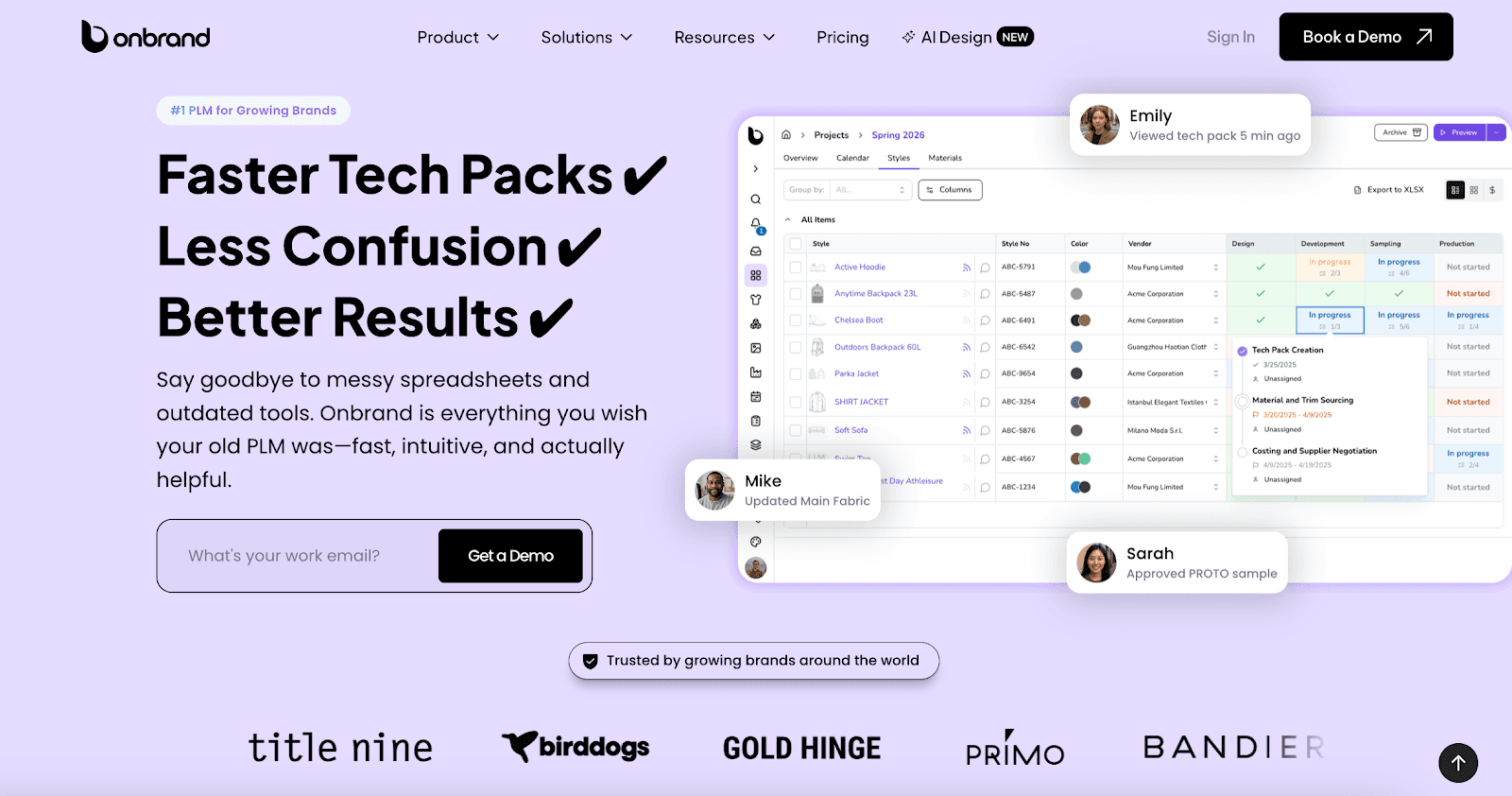
Say goodbye to messy spreadsheets and slow updates. Onbrand keeps every style, material, and approval in one live workspace your team will actually enjoy using.
Unlike traditional PLMs that require long setup times and costly customization, Onbrand is a true SaaS, flexible out of the box, and updated regularly for every customer.
Whether your team focuses on product development, sourcing, or production, Onbrand gives you the tools to organize details, enhance collaboration, and reach the market faster.
Trusted by brands around the world, Onbrand brings structure and creativity together in one platform.
It helps fashion companies handle supply chain complexity, align departments, and maintain visibility across the entire fashion value chain, all with faster tech packs, less confusion, and better results.
Key Features
Live tech packs - Web-based and version-free, keeping everyone aligned with the latest updates instantly.
Built-in project management - Organize timelines, tasks, and milestones without switching tools.
Vendor collaboration - Share updates directly with factories through secure vendor portals.
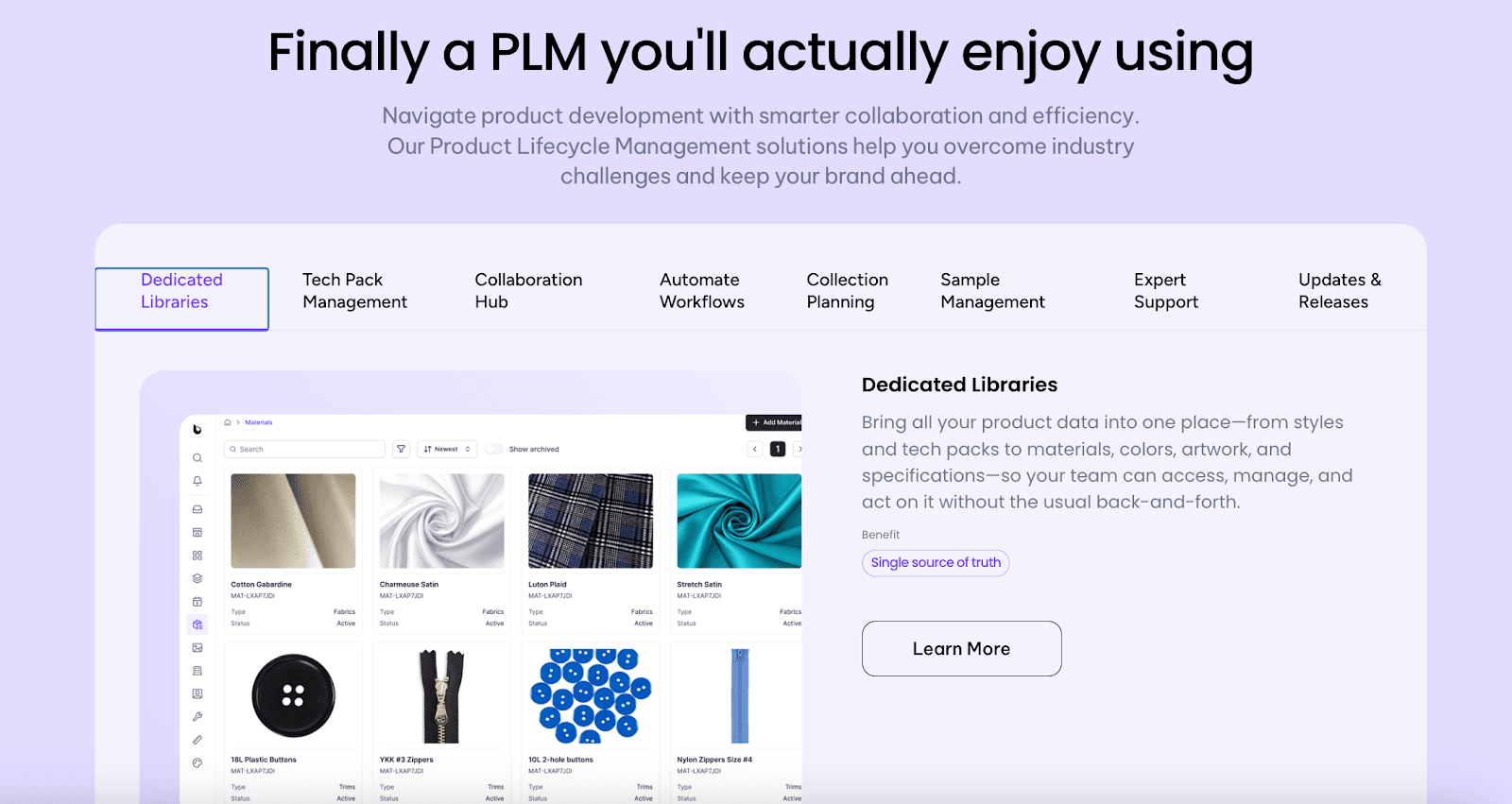
Dedicated libraries - Store styles, colors, materials, and specifications in one reliable source of truth.
Collection planning - Manage assortments and visual line plans for upcoming seasons.
Sample management - Track prototypes, comments, and approvals in real time.
Fast onboarding - Get started in as little as two weeks with guided setup and expert support.
AI-powered data migration - Move from old systems or spreadsheets in as few as ten days.
Integrations and APIs - Connect easily with ERP systems, design software, and e-commerce tools.
Regular updates and releases - Enjoy continuous improvements with no hidden service fees.
Expert support - Access dedicated reps who know your team and your process.
Onbrand goes beyond traditional PLM by extending creativity into the design stage with Onbrand AI Design. This visual-first workspace helps designers explore ideas faster through generative AI, automated sketches, realistic fabric simulation, and collaborative mood boards.
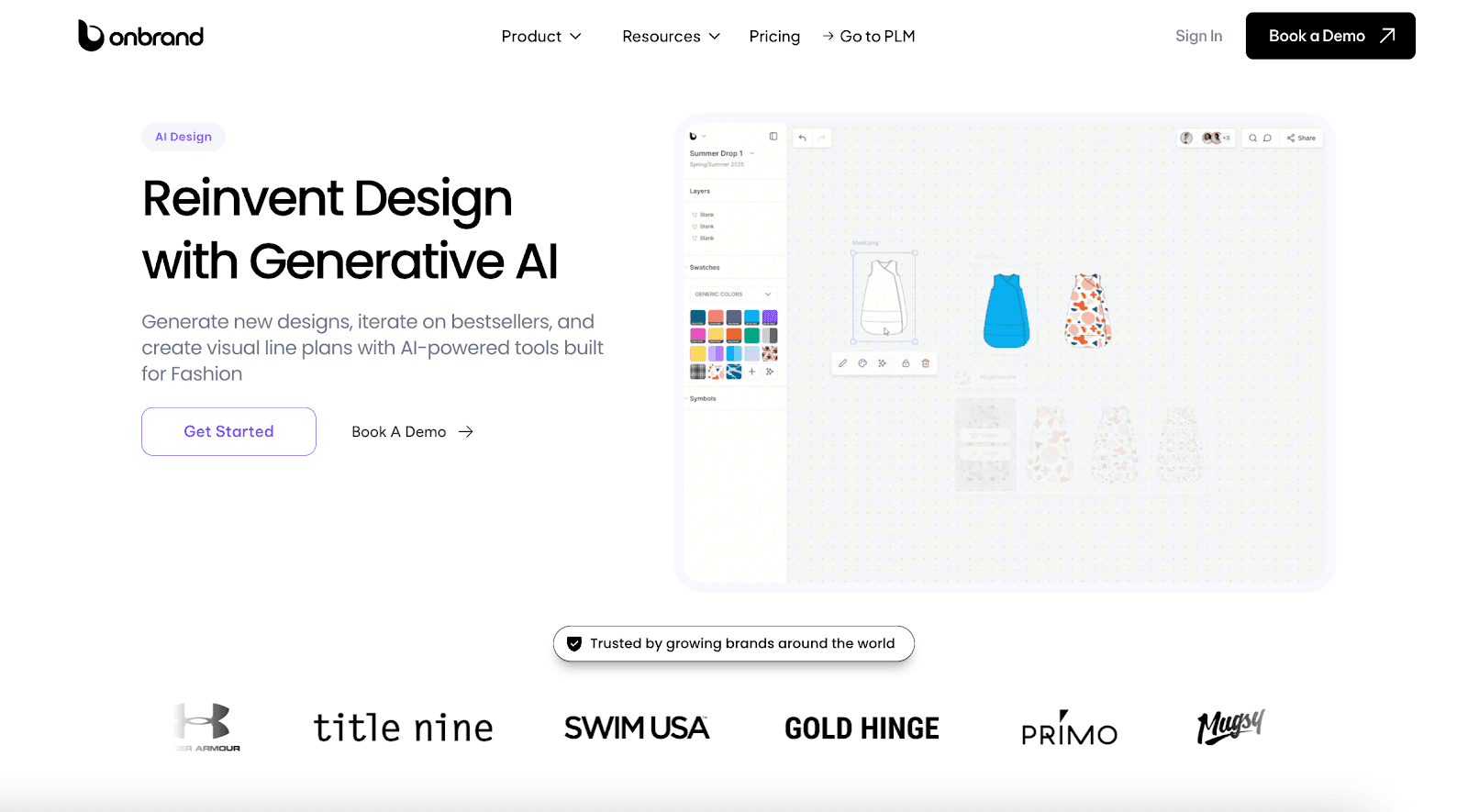
It connects directly to Onbrand PLM, helping teams move from concept to production with less manual work and greater creative freedom.
Fashion teams using Onbrand experience measurable results: 55% faster tech pack creation, a 4-week reduction in development time, and full data migration in just 10 days.
Modernize Your Fashion Process With Onbrand PLM!
Fashion today moves faster than ever, and staying organized is what separates growing brands from those struggling to keep up. A modern PLM helps teams stay connected, reduce errors, and keep every collection on track from concept to delivery.
Onbrand PLM gives fashion teams everything they need to work smarter, including live tech packs, intuitive collaboration, and real-time visibility across design, sourcing, and production.
It is built for how creative teams actually work, helping brands simplify processes, improve accuracy, and bring products to market faster.
For design teams, Onbrand AI Design adds even more creative power. It turns ideas into realistic visuals with generative AI, color simulations, and live collaboration, all directly connected to Onbrand PLM for a seamless move from design to development.
Ready to see it in action? Book a demo today and discover how Onbrand PLM helps fashion teams launch products faster, collaborate effortlessly, and stay ahead.
FAQs About Fashion PLM
What is PLM in the fashion industry?
In the fashion industry, PLM is a system that helps brands manage the entire journey of a product, from design to delivery. It connects creative, technical, and sourcing teams in one shared workspace, enabling teams to collaborate efficiently and bring collections to market faster.
What does the term PLM stand for?
PLM stands for Product Lifecycle Management. It refers to a structured process that organizes product data, timelines, and communication across departments. For fashion brands, PLM supports better collaboration, improves visibility, and helps meet tight deadlines while reducing errors and delays.
What does PLM stand for in merchandising?
In merchandising, PLM focuses on planning assortments and aligning seasonal strategies with design and production. As focus shifts toward efficiency and faster turnaround, PLM gives merchandisers accurate insights to balance creativity with business goals.
What software do most fashion designers use?
Most fashion designers use PLM software to organize styles, track approvals, and manage materials. Modern platforms such as Onbrand PLM help simplify design collaboration and shorten time to market, while integrated AI tools help leverage AI for faster sketching, visualization, and decision-making.
Fashion moves fast. Brands today handle multiple collections, tight launch schedules, and complex supplier networks, often all at once. Keeping design, production, and sourcing aligned takes more than spreadsheets or long email chains.
A modern product lifecycle management (PLM) system changes that. It gives fashion teams one connected platform to manage every product detail from the first sketch to the final shipment, keeping everyone consistent and on track.
Whether you’re scaling a growing label or managing multiple product lines, fashion PLM helps your creative, technical, and sourcing teams work in sync without slowing innovation.
In this article, you’ll learn what fashion PLM is, why it matters, and how it supports every department involved in building a collection.
What Is Fashion PLM?
Fashion PLM is a centralized system that helps fashion brands manage every stage of the product lifecycle, from design to delivery. It brings together product data, timelines, and communication in one shared workspace. Teams can then stay aligned as collections move forward.
In the fashion and apparel industry, PLM integrates people, processes, and tools across design, development, and sourcing. It connects creative, technical, and production teams so everyone works from the same real-time information.
This connection helps companies manage complex supply chains and maintain consistent quality control across the entire value chain.
Modern fashion PLM systems also support sustainability initiatives, supplier management, and collection development. They help teams collaborate efficiently, make informed decisions faster, and reduce waste through accurate planning and version tracking.
For fashion companies and vertically integrated brands, adopting PLM is more than a technology upgrade.
It represents a digital transformation strategy that improves efficiency, strengthens alignment, and helps teams move from concept to delivery with speed and accuracy.
Why Fashion PLM Software Matters for Modern Brands
Fashion moves quickly, and teams need clarity at every stage of production. PLM helps fashion businesses stay organized, adapt to new consumer trends, and deliver products to market faster without losing accuracy or control.
It turns disconnected processes into one unified workflow, helping the entire organization work from the same reliable data.
Whether managing high volumes, complex supply chains, or multiple collections, PLM brings order and visibility to daily operations.
Key benefits:
Faster product development - Teams move from concept to production smoothly, keeping every update visible across departments.
Accurate product data - Real-time information keeps product details consistent from design to sourcing and production.
Better collaboration - Centralized communication replaces long feedback loops and scattered files.
Cost and time savings - Fewer errors, reduced rework, and smoother sample management improve efficiency.
Sustainability tracking - Clear visibility into materials, compliance, and supplier practices supports sustainability goals and transparency.
How Fashion PLM Supports Every Department
Every part of your fashion value chain plays a role in turning creative ideas into finished products.
A strong PLM solution helps your teams stay aligned, respond faster to consumer demands, and maintain quality assurance across the entire product lifecycle.
Design Teams
If you manage a creative team, your PLM software acts as the hub for sketches, mood boards, and color palettes. It supports design collaboration, visual line plans, and concept generation while keeping all updates visible in real time.
These intuitive tools connect data across your collections, giving you more space to focus on creativity and less time chasing files.
Product Developers
Your product development team uses PLM to manage tech pack development, BOMs, and sample management in one place. Centralized product data keeps every version accurate and connected with sourcing and production.
When linked with enterprise resource planning (ERP) systems, the process supports inventory management and helps streamline processes as your team prepares collections for the market.
Sourcing Teams
Sourcing teams gain full visibility into supplier communication, material tracking, and quote comparisons. Modern systems include vendor portals and clear production milestones.
These connections create seamless integration with external partners, helping your team manage complex supply chains efficiently.
Merchandisers
Merchandisers rely on PLM to guide collection planning and line planning. You can view assortments, launch timelines, and visual dashboards to make informed decisions that align with your brand’s seasonal goals.
This helps your team adjust quickly to consumer trends and maintain customer satisfaction through balanced, well-timed releases.
Quality Teams
If you oversee quality assurance, PLM gives you real-time visibility into garment testing, apparel inspection, and compliance data. Centralized records support accountability across sourcing and production while helping reduce rework.
When connected with ERP systems, the process strengthens collaboration and keeps quality consistent across global brands.
Signs It’s Time to Adopt a Fashion PLM Solution
Many fashion brands still rely on manual systems that slow progress and create unnecessary rework. When data lives in spreadsheets or scattered folders, communication gaps grow, and production deadlines slip.
Recognizing these signs helps your team see when it’s time to move to a modern PLM solution. You may notice:
Missed deadlines due to version mix-ups and disconnected tools
Confusion around the latest product details and material libraries
Slow feedback loops with vendors that delay approvals
Manual data updates that cause errors across sourcing and production
Limited visibility into the PLM process makes it hard to track timelines or costs
Modern fashion PLM software brings every stage of your workflow into one shared system. It connects design, development, and production through real-time collaboration and reduces the impact of supply chain complexity.
Many brands also integrate PLM with ERP systems to keep product data accurate and aligned across departments.
If two or more of these challenges sound familiar, your team may be ready for a faster, connected solution like Onbrand, designed to help you boost speed, improve accuracy, and stay on track across the entire fashion value chain.
Why Onbrand PLM Stands Out for Fashion Teams
Onbrand PLM is built for today’s fashion industry — fast, collaborative, and always evolving. As the #1 PLM for growing brands, it replaces outdated legacy systems with a platform that’s modern, adaptable, and ready for how creative teams actually work.

Say goodbye to messy spreadsheets and slow updates. Onbrand keeps every style, material, and approval in one live workspace your team will actually enjoy using.
Unlike traditional PLMs that require long setup times and costly customization, Onbrand is a true SaaS, flexible out of the box, and updated regularly for every customer.
Whether your team focuses on product development, sourcing, or production, Onbrand gives you the tools to organize details, enhance collaboration, and reach the market faster.
Trusted by brands around the world, Onbrand brings structure and creativity together in one platform.
It helps fashion companies handle supply chain complexity, align departments, and maintain visibility across the entire fashion value chain, all with faster tech packs, less confusion, and better results.
Key Features
Live tech packs - Web-based and version-free, keeping everyone aligned with the latest updates instantly.
Built-in project management - Organize timelines, tasks, and milestones without switching tools.
Vendor collaboration - Share updates directly with factories through secure vendor portals.
Dedicated libraries - Store styles, colors, materials, and specifications in one reliable source of truth.
Collection planning - Manage assortments and visual line plans for upcoming seasons.
Sample management - Track prototypes, comments, and approvals in real time.
Fast onboarding - Get started in as little as two weeks with guided setup and expert support.
AI-powered data migration - Move from old systems or spreadsheets in as few as ten days.
Integrations and APIs - Connect easily with ERP systems, design software, and e-commerce tools.
Regular updates and releases - Enjoy continuous improvements with no hidden service fees.
Expert support - Access dedicated reps who know your team and your process.
Onbrand goes beyond traditional PLM by extending creativity into the design stage with Onbrand AI Design. This visual-first workspace helps designers explore ideas faster through generative AI, automated sketches, realistic fabric simulation, and collaborative mood boards.

It connects directly to Onbrand PLM, helping teams move from concept to production with less manual work and greater creative freedom.
Fashion teams using Onbrand experience measurable results: 55% faster tech pack creation, a 4-week reduction in development time, and full data migration in just 10 days.
Modernize Your Fashion Process With Onbrand PLM!

Fashion today moves faster than ever, and staying organized is what separates growing brands from those struggling to keep up. A modern PLM helps teams stay connected, reduce errors, and keep every collection on track from concept to delivery.
Onbrand PLM gives fashion teams everything they need to work smarter, including live tech packs, intuitive collaboration, and real-time visibility across design, sourcing, and production.
It is built for how creative teams actually work, helping brands simplify processes, improve accuracy, and bring products to market faster.
For design teams, Onbrand AI Design adds even more creative power. It turns ideas into realistic visuals with generative AI, color simulations, and live collaboration, all directly connected to Onbrand PLM for a seamless move from design to development.
Ready to see it in action? Book a demo today and discover how Onbrand PLM helps fashion teams launch products faster, collaborate effortlessly, and stay ahead.
FAQs About Fashion PLM
What is PLM in the fashion industry?
In the fashion industry, PLM is a system that helps brands manage the entire journey of a product, from design to delivery. It connects creative, technical, and sourcing teams in one shared workspace, enabling teams to collaborate efficiently and bring collections to market faster.
What does the term PLM stand for?
PLM stands for Product Lifecycle Management. It refers to a structured process that organizes product data, timelines, and communication across departments. For fashion brands, PLM supports better collaboration, improves visibility, and helps meet tight deadlines while reducing errors and delays.
What does PLM stand for in merchandising?
In merchandising, PLM focuses on planning assortments and aligning seasonal strategies with design and production. As focus shifts toward efficiency and faster turnaround, PLM gives merchandisers accurate insights to balance creativity with business goals.
What software do most fashion designers use?
Most fashion designers use PLM software to organize styles, track approvals, and manage materials. Modern platforms such as Onbrand PLM help simplify design collaboration and shorten time to market, while integrated AI tools help leverage AI for faster sketching, visualization, and decision-making.

Discover how Onbrand PLM can streamline your product development!
© 2024 onbrandplm.com. All rights reserved.
© 2024 Onbrand. All rights reserved.

