Apr 9, 2026

Most fashion brands run into issues when product development begins to scale.
Growth adds pressure quickly. Teams manage more SKUs, tech packs, and colorways, while suppliers operate on different timelines. One small mistake, such as a missed spec or an outdated file, can delay sampling or push production back.
Teams see the breakdown in daily work. Tech packs go out with the wrong specs, samples come back incorrect, and vendors follow outdated versions. Teams spend time fixing issues that should not have happened.
Early on, spreadsheets, Illustrator files, and email threads feel manageable. As product volume grows, those tools start to break. Updates get missed, versions split, and timelines overlap.
In this article, we break down the top fashion industry challenges teams face in product development and how to fix each one.
10 Most Common Fashion Industry Challenges and Practical Ways to Solve Them
These challenges show up in how teams manage product development every day.
Below are the most common fashion industry challenges teams face, along with practical ways to fix them before they slow down sampling, production, or delivery.
1. Disconnected Product Data Across Tools
Teams still manage fashion product development in separate files and systems.
Tech packs live in Adobe Illustrator, materials and specs sit in spreadsheets, and comments stay buried in email. Every team touches the product, but no one works from the same record.
The breakdown shows up in small moments. A trim changes from metal to plastic in one file, but the bill of materials (BOM) still shows the old version.
A vendor works from an older file while development reviews updated comments in an email, and sourcing checks a different spreadsheet. Small misses turn into sample errors, delayed approvals, and extra work.
The issue comes from how teams store and update product data.
When product information lives in multiple places, teams spend more time checking which file is correct than moving the product forward. Progress slows, accuracy drops, and decisions take longer.
Solution
Keep core product data in one structured system built for fashion PLM. Tech packs, materials, revisions, and comments stay in the same product record, so design, development, and vendors work from the same source.
Teams can see the latest specs, materials, and updates in one place instead of checking multiple files.
2. Version Control Issues in Tech Packs
Version control breaks when teams work on different copies of the same tech pack.
One version is updated, but another is shared with a vendor. Internal teams review a newer file while production works from an older one. The moment versions split, teams lose control of specs.
The breakdown shows up in the details. Measurements change, materials get updated, or construction notes shift, but those updates do not always carry into the active file. A factory follows an older version while the team reviews a newer one.
The same issue affects the BOM. Trims, fabrics, or components get revised, but the BOM doesn’t always reflect those changes.
Incorrect samples follow, sourcing errors build up, and teams go through extra rounds of revisions that delay production.
Solution
Keep tech packs, specifications, and the BOMs in one system with built-in version control. Every update should reflect in a single product record so teams and vendors always work from the latest version.
Teams can see what changed, who approved it, and what still needs action without checking multiple files.
3. Sample Delays and Rework Cycles
Sample delays start when feedback stays scattered across different tools.
Comments sit in email threads, PDFs, or chat messages, and each team reads them differently. A factory receives partial feedback or misses key changes, which leads to another incorrect sample.
The cycle repeats quickly. One round of fixes turns into two or three because feedback is not tracked in a structured way. Teams spend time repeating the same corrections instead of moving the product forward.
Teams lose track of sample feedback, approvals, and status when they manage them in separate places. No one has a clear view of what changed or what still needs action.
Solution
Centralize sample management in a system where feedback, approvals, and revisions stay linked to the product record. Keep comments structured and visible so teams and vendors work from the same instructions.
Clear project management and status tracking can reduce rework, shorten sample cycles, and keep development moving closer to schedule.
4. Supply Chain Visibility Gaps
Supply chain visibility breaks when teams do not have a clear view of vendor status.
Orders move through the fashion supply chain, but updates stay scattered between emails, spreadsheets, and separate systems. Teams wait for updates instead of working with real-time information.
The problem grows in global supply chains. Production depends on a global network of suppliers, where delays can come from global trade shifts, factory issues, or extreme weather events. One delay at a single step can slow down the rest of the process.
Teams react late because they do not see problems early. Without clear supply chain transparency, issues only surface after timelines slip. Vendor relationships also weaken when communication stays inconsistent, and updates remain unclear.
Solution
Create a single system where product data, timelines, and vendor updates stay connected. Give teams and suppliers shared visibility into status so issues can be identified early.
Clear tracking improves coordination, reduces supply chain disruptions, and keeps production moving on schedule.
5. Overproduction and Poor Demand Alignment
Teams run into overproduction when planning decisions rely on assumptions instead of clear product data.
Styles move forward before teams confirm real consumer demand. Inventory builds early, often before teams see how products perform or how consumer preferences shift.
Inventory planning is where the gap shows first. Teams set quantities without a clear view of consumer behavior, consumer expectations, or consumer priorities.
When demand changes, products no longer match what customers want, which leads to excess stock and markdowns.
Consumer sentiment changes fast. One trend fades while another takes its place, and unsold products move into resale platforms and secondhand markets.
Declining consumer trust follows when brands continue to push products that do not reflect current priorities or quality expectations.
Solution
Use structured product data and demand signals to guide planning decisions. Align inventory management with real consumer demand so teams can optimize inventory and reduce excess production.
Clear visibility into product performance helps teams respond faster, protect margins, and maintain consumer confidence.
6. Sustainability Tracking at the Product Level
Sustainability becomes hard to prove when product data lives in different places.
Material details sit in one file, supplier notes in another, and compliance records somewhere else. Teams then make vague sustainability claims without the data to support them.
The issue shows up when teams need answers. A team checks fiber production, textile dyeing, or chemical usage, but cannot trace the full picture. Synthetic textiles, material origins, and process details stay unclear, which makes environmental impact hard to measure.
That gap can create environmental risks in daily decisions. Teams cannot compare materials properly, track carbon footprint, or manage textile waste with confidence.
Regulatory pressure adds more work, especially when brands need to report on global greenhouse gas emissions or respond to climate change requirements.
Circular work also breaks down. Fiber-to-fiber recycling depends on accurate material data from the start, and weak tracking limits what teams can reuse or recover.
Solution
Keep sustainability data in the product record. Store materials, supplier inputs, and compliance details in one place so teams can trace what goes into each product.
Teams can review materials, confirm sourcing, and support sustainability claims with real data before production starts.
7. Returns Driven by Fit and Product Inconsistency
Returns often trace back to product details that were unclear or incorrect before production.
Measurements get adjusted, but not updated everywhere. Fit comments from earlier samples do not carry into the next round. The final product no longer matches the approved spec.
The issue shows up quickly in online shopping. Customers cannot try items before buying, so they rely on sizing and product details. When fit feels inconsistent, or materials behave differently than expected, returns increase and customer satisfaction drops.
According to WiserReview, return rates in apparel can reach 20% to 30% in e-commerce, and more than half of those returns are due to size and fit issues.
The same problem affects physical retail. Stores deal with inconsistent fit between styles or collections, which creates confusion during in-store trials and lowers confidence in the product.
Most of these issues start with weak quality control during development. When teams do not maintain clear specifications, errors carry from sampling into production and reach the customer.
Solution
Define and maintain clear specifications from the start. Track measurements, fit updates, and construction details in one place so every sample reflects the latest version.
Strengthen quality control during development by reviewing samples against approved specs before production.
8. Shorter Trend Cycles Increasing Development Pressure
Teams feel pressure when trend cycles move faster than development can keep up.
New styles appear, gain attention, and fade within weeks. The fast fashion business model pushes this pace further, which forces brands to release more styles in less time.
Development timelines shrink while workload increases. Teams handle more tech packs, more samples, and more revisions without adding time or structure.
Mistakes increase when teams rush decisions or skip steps to keep up. Brands feel the pressure when they try to match fast fashion speed without the right systems.
Some brands, including luxury brands, try to compete on speed without the systems to support it, which leads to delays, inconsistent quality, and missed launches.
Speed becomes a competitive advantage only when teams can manage the process without breaking it.
Solution
Reduce pressure by structuring development workflows. Prioritize styles based on demand and keep product data organized so teams can move faster without losing control.
Clear processes help teams manage shorter trend cycles while maintaining quality and consistency.
9. Cross-Team Misalignment (Design, Dev, Production)
Misalignment starts during handoffs between design, development, and production.
Design finalizes a concept, but key details do not always carry into the tech pack. Development fills in gaps, and production works from whatever information they receive.
The breakdown builds step by step. Comments stay in email, updates sit in separate files, and teams work from different versions of the same product. Fashion professionals spend time clarifying details instead of moving work forward.
Misalignment grows when product data, comments, and approvals live in different places. Without clear PLM collaboration, each team works in isolation. Small gaps turn into incorrect samples, delays, and extra revisions.
Solution
Keep design, development, and production connected in one system. Store product data, comments, and updates in a shared record so every team works from the same information.
Strong PLM collaboration reduces handoff errors, improves alignment, and keeps development on track.
10. Scaling Product Development Without Structure
Teams hit a breaking point when SKU count grows, but workflows stay the same.
More styles, more variations, and more timelines come in, but the process does not change to support the volume. What worked for a small line no longer holds once product development scales.
Many apparel companies and apparel brands reach this point. Product data starts to spread across tools. Teams switch between files to track updates, decisions take longer, and the same errors repeat.
Work tied to fashion production and manufacturing processes becomes harder to manage when information stays unstructured.
The slowdown affects the full value chain. Planning, development, and production run in separate systems, while enterprise resource planning (ERP) handles finance and operations, but not product development.
Gaps between these steps create delays and confusion.
Solution
Build structure before scale. Define clear workflows for product development and keep product data in one system designed for this stage of work.
Connect development with production so teams can manage growth without losing control. Strong structure supports faster execution and keeps the value chain aligned.
Why Fashion Industry Challenges Show Up in Product Development
Most fashion industry challenges do not start at a high level. Teams see them in product development, where work moves from concept to production.
Fashion brands in the apparel industry deal with these issues every day. Tech packs go out with missing details, samples return with errors, and vendors follow outdated versions. Time goes into fixing problems instead of moving the product forward.
The fashion sector depends on coordination between design, development, and suppliers within complex global ecosystems. That coordination breaks when product data stays unclear or scattered.
Many problems that look strategic start inside the fashion ecosystem. A single product record holds gaps, outdated specs, or missing updates, and those small issues carry through the entire process.
Fashion professionals and product development teams are often the first to feel that pressure. One delay affects the next step. Misalignment between teams creates confusion that slows decisions and increases cost.
Many fashion businesses and fashion companies still rely on disconnected tools to manage this work. Industry leaders and fashion executives see the same pattern, even in the global fashion industry.
Product development becomes the point where small issues turn into larger operational problems. That is why these challenges are best understood through the work itself.
Why Traditional Tools Don’t Solve These Challenges
Traditional tools were not built for fashion product development. They store information without managing how teams update, review, and share it through development.
Business leaders often rely on a mix of spreadsheets, design files, and enterprise systems. Each tool handles part of the process, but none of them manages the full product lifecycle or how product data moves between design, development, and production.
The gaps show up in daily work:
Spreadsheets break product data management. Teams updates multiple files, which creates version gaps and repeated errors.
Design tools hold visuals, not structured product data. Tech packs sit there, but updates do not carry into materials, specs, or revisions.
Email and chat carry feedback. Comments get missed or interpreted differently, which leads to confusion during development.
ERP systems focus on finance, orders, and inventory. They do not support product creation or development workflows.
None of these tools connects design, development, and production in one system. Teams keep switching between files to find the latest information, which slows work and increases mistakes.
How Fashion Brands Are Solving These Challenges
Fashion brands solve these issues by changing how teams work with product data.
Work starts with one product record. Tech packs, materials, specs, and comments live in the same place, so teams do not check multiple files to confirm updates. When a measurement changes or a trim gets replaced, that update reflects in the full product.
Structured tech packs improve specification management. Teams update measurements, materials, and construction details in one record, and those changes carry into every sample and revision. Vendors see the same information that the team works from.
PLM software keeps teams aligned. Design adds comments, development updates specs, and production reviews the same record. Feedback stays visible, and approvals move forward without chasing emails or separate files.
Design also connects directly to development. Teams take a concept and build it into a production-ready tech pack without recreating data. Work moves forward without repeating steps.
Teams use new technology to track product data, manage updates, and keep decisions tied to real information. Fashion technology also supports corporate sustainability by linking materials and sourcing details to each product.
How Onbrand Fits in Your Workflow
Onbrand replaces the disconnected tools teams use to manage fashion and product development. Teams move from concept to production in one system, without switching between spreadsheets, files, and email.
Onbrand has two core parts that support this process.
1. Onbrand AI Design
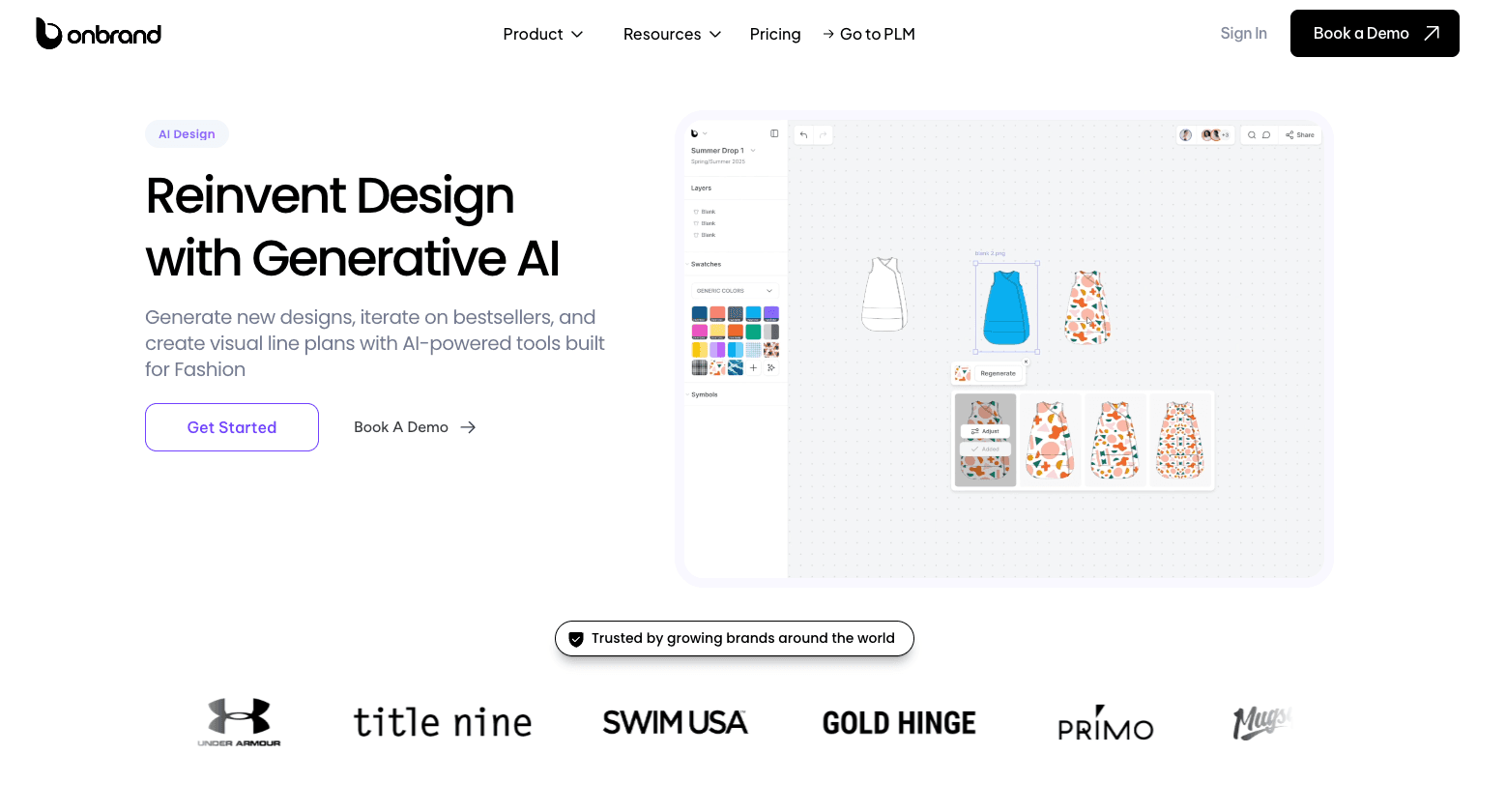
Design starts with faster concept exploration using Onbrand AI Design. Teams generate and refine styles, test variations, and align direction early before development begins. Fewer revisions happen later because decisions get set earlier.
Concepts move forward with structure, so teams do not recreate work when building tech packs or starting development.
2. Onbrand PLM
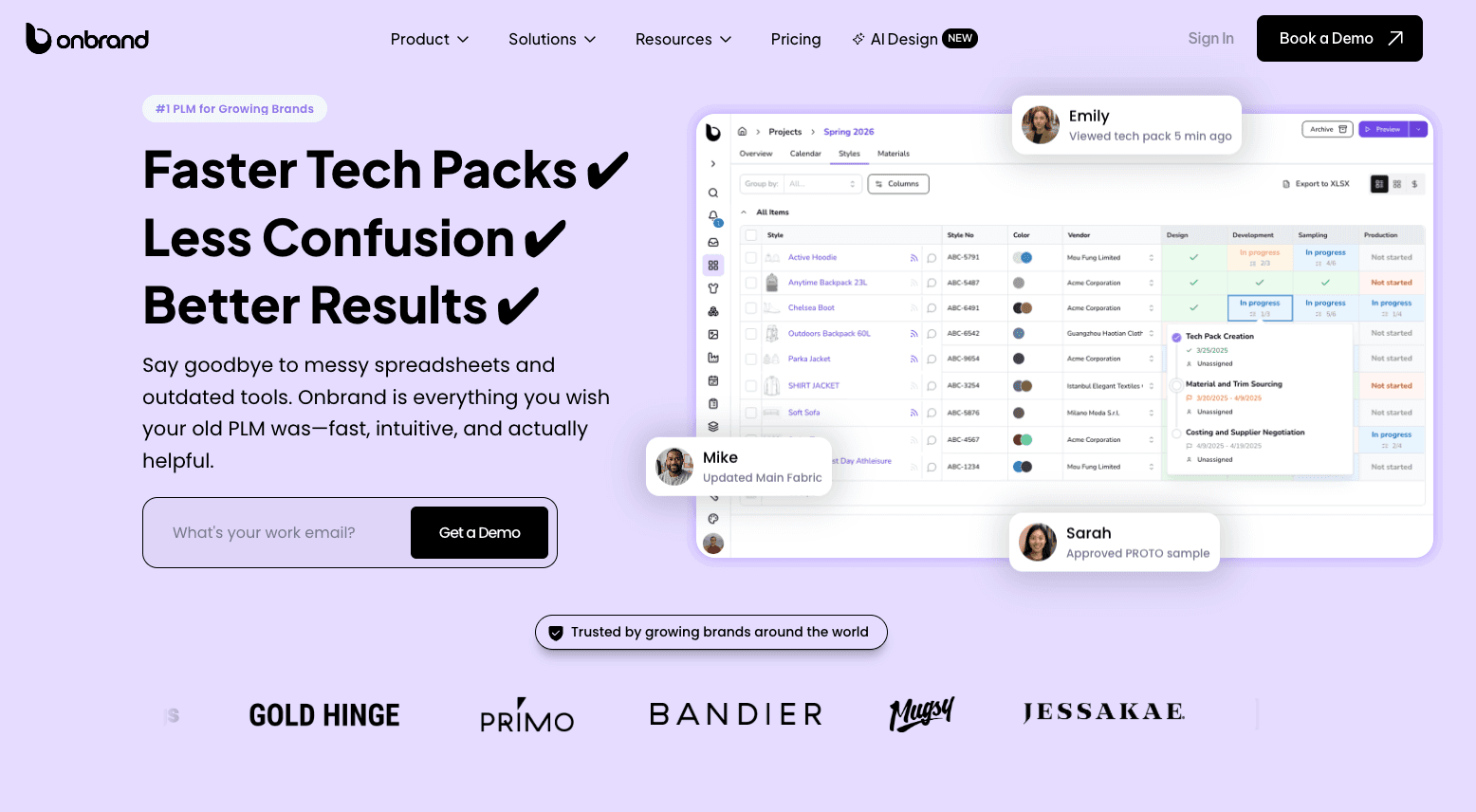
Onbrand PLM manages product development in one place. Tech packs stay live, so teams and vendors always see the latest version. No PDFs, no version confusion, no chasing files.
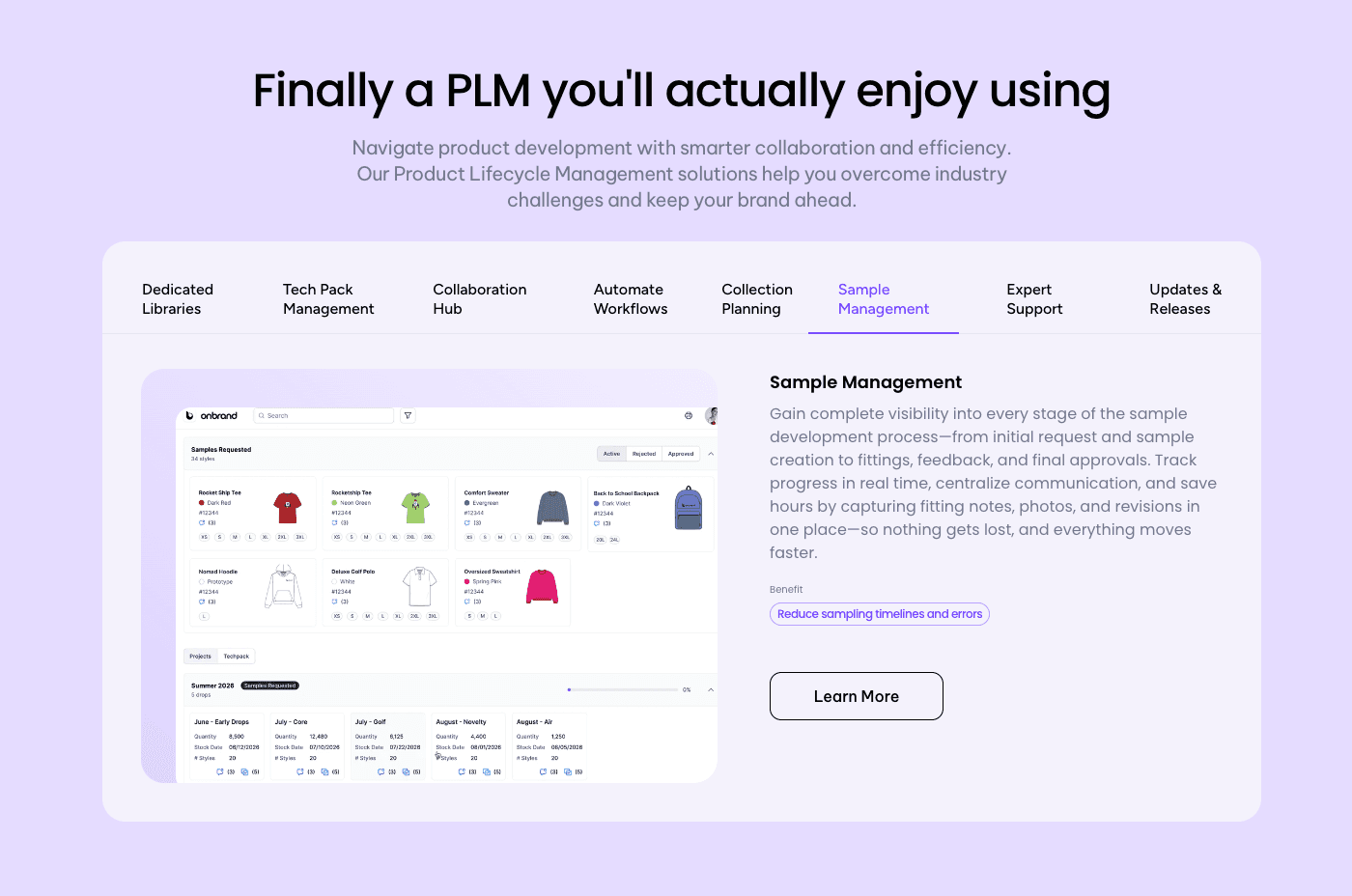
Teams update specs, materials, and comments directly in the product record. Vendors review and respond in the same system instead of email or chat. Sample tracking, approvals, and timelines stay visible, which removes guesswork and reduces delays.
Brands see results quickly. Teams create tech packs up to 55% faster, reduce development time by up to four weeks, and complete onboarding in about ten days.
Instead of managing revisions in separate files, teams work from one product record from concept to production. Design, development, and production stay aligned, which reduces errors, shortens timelines, and keeps work moving without confusion.
Tackle Fashion Industry Challenges With a Better Product Development System
Fashion industry challenges grow with scale. More SKUs, more suppliers, and tighter timelines increase pressure on product development.
Teams that stay in control focus on structure. They keep product data in one place, track updates clearly, and move work forward without confusion.
Onbrand supports that workflow. It connects design and development in one system, so teams manage tech packs, samples, and revisions without switching between tools.
If your team still works in spreadsheets, files, and email, you can replace that setup with a system built for product development.
Book a demo and see how your workflow would run inside Onbrand.
FAQs About Fashion Industry Challenges
Why do fashion brands still overproduce inventory?
Many brands still plan production without clear demand data, which makes overproduction a major contributor to excess stock. In many cases, more than half of inventory issues come from poor planning and missed demand signals. Unsold products often move into the resale market, especially during periods of economic uncertainty.
How do sustainability issues impact product development in the garment industry?
Sustainability challenges in the garment industry come from poor data visibility. Teams cannot track materials, suppliers, or processes clearly, which creates gaps in environmental and social reporting. Without structured data, teams struggle with waste management, reduce visibility into fossil fuel usage, and fail to support responsible sourcing decisions.
Why do brands struggle to implement circular and slow fashion models?
Brands struggle to apply circular economy principles because product data is incomplete or disconnected. Recycling and material traceability require accurate records from the start. Without that structure, teams cannot support reuse or long product lifecycles, which limits progress toward slow fashion.
How are fashion brands improving supply chain operations today?
Brands improve supply chain operations by connecting product data, vendors, and timelines in one system. Digital transformation allows teams to track updates in real time, reduce delays, and keep production aligned. Better visibility leads to fewer errors and more reliable delivery.