Fashion Design Process Explained for Modern Teams

Fashion Design Process Explained for Modern Teams

Dec 25, 2025

Fashion design process

Ever had a style move forward with one version of a tech pack, while samples were built from another? Or a last-minute change that never reached the factory?

These issues don’t come from bad design. They happen when the fashion design process lacks a well-defined structure.

The fashion design process connects ideas to production through defined stages that teams can follow and share.

Designers, developers, and production teams rely on this structure to keep decisions aligned as work moves from sketches to samples and final approvals.

In this article, you will learn how each stage of the fashion design process works and how teams manage it more clearly as collections grow.

TL;DR

  • The fashion design process follows clear stages that move ideas from concept to production without losing track of decisions.

  • Those stages include: researching the trends, creating mood boards, sketching, creating tech packs, material sourcing, sample development, and final approval.

  • Digital tools replace scattered files and emails with shared visibility across tech packs, samples, and vendors.

  • Onbrand supports the full process by combining early concept work with AI Design and structured execution through Onbrand PLM in one shared workspace.

What Is the Fashion Design Process?

The fashion design process is a structured way for teams to move ideas. It connects design, development, and production through well-defined steps that keep work aligned as styles take shape.

In the fashion industry, this entire process helps fashion brands manage creative direction while keeping technical details accurate.

Fashion designers define the design concept and respond to fashion trends. A technical designer translates those ideas into a tech pack that supports correct construction during the product development stage.

Samples, feedback, and approvals stay tied to the same source of information, which reduces rework and delays.

As collections grow, structure helps teams stay focused on the target market and deliver a consistent final garment without losing control of timelines or details.

Stages of the Fashion Design Process

Design work moves fast once a collection starts. Without defined stages, teams lose track of decisions and version changes.

The stages below show how fashion teams move styles from early direction to production with defined ownership at each step.

1. Research and Trends

This stage sets the direction for the entire collection. Teams review market shifts in the fashion industry, past sales, and customer behavior to understand what matters for the season. 

Many designers gather visual inspiration from shows, retail, and social media to shape early design ideas.

Next, teams review options for fabric sourcing and vendor capacity. Early checks help confirm fabric selection, lead times, and access to sustainable materials. These decisions reduce late material swaps and missed lead times.

Detailed research gives teams a shared starting point. It supports a more cohesive design before samples, specs, or timelines come into play.

2. Mood Boards and Concepts

Teams turn early research into a straightforward visual direction. 

Designers pull inspiration images, fashion images, and graphic design references into a mood board that defines color palettes, textures, and tone. It brings focus to the creative process and filters many ideas into a shared direction.

Concepts take shape through design elements like silhouette, proportion, and material intent. Fabric swatches and early fabric choice help teams test what fits the story and supports a cohesive design.

Alignment here reduces changes later and keeps the collection moving with fewer revisions.

Want to align concepts earlier and reduce rework later? Book a demo to see how Onbrand supports early concept work before specs and samples begin.

3. Sketching and Illustration

Designers translate approved concepts into sketches that define shape, proportion, and intent. 

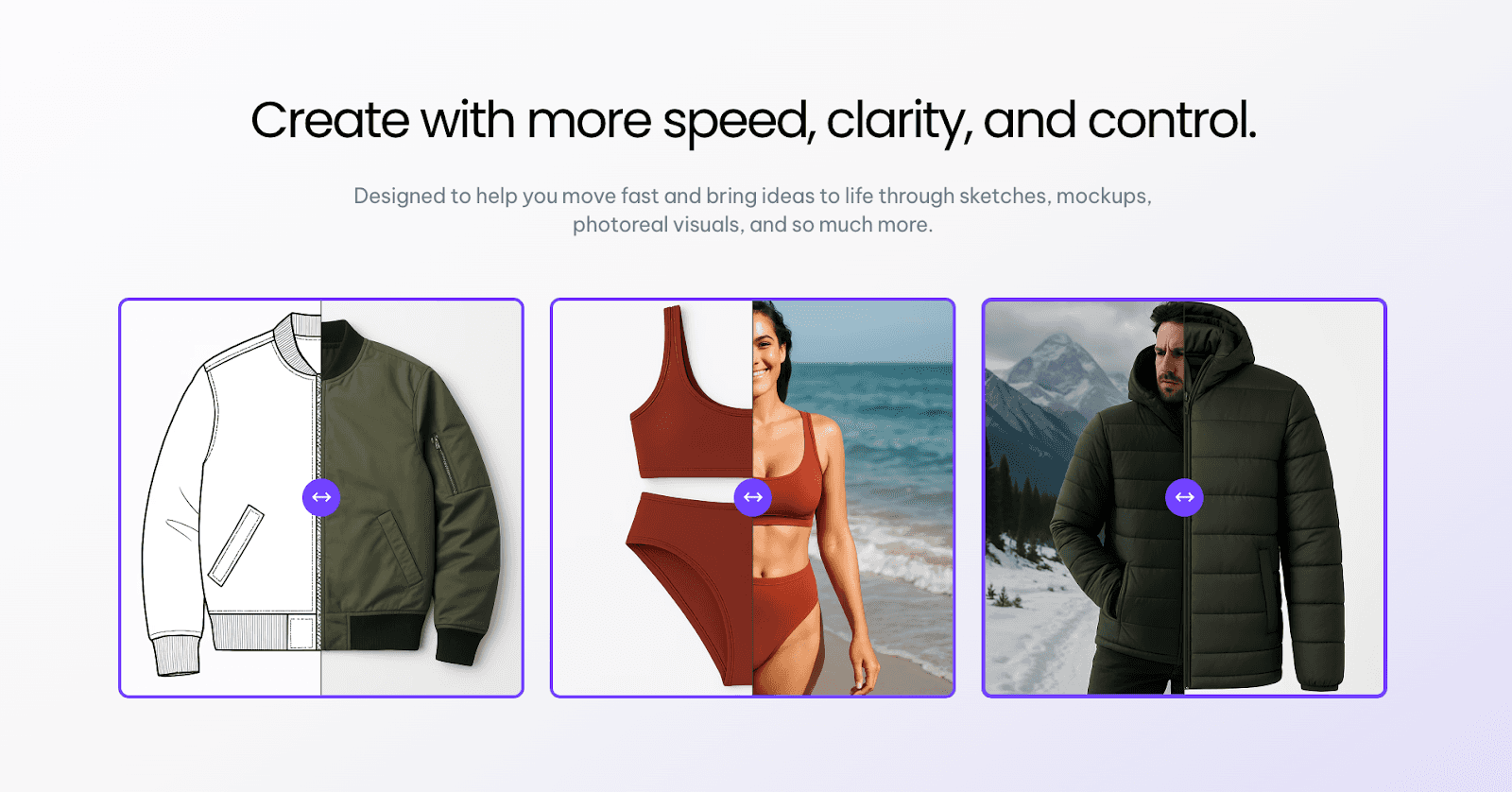
The sketches clarify how a style should look before technical work begins. Many teams create a technical sketch with tools like Onbrand AI Design or Adobe Illustrator to keep details consistent.

Early sketches help teams check balance and fit on a dress form or with fit models. Notes from developers and pattern cutters guide adjustments before work moves closer to sampling. 

It lets teams start developing styles with fewer gaps later.

4. Technical Flats and Tech Packs

This stage turns sketches into easy-to-follow instructions for production. Teams create flat drawings that show seams, construction, and other technical elements. Visuals remove guesswork for clothing manufacturers before sampling begins.

Developers then build the tech pack with measurements, materials, and construction notes for accurate specification management.

A clear tech pack creation process keeps the final design consistent as work moves forward. Keeping this documentation current helps teams avoid errors that lead to lower quality or rework later.

Need one place to manage tech packs without version issues? Book a demo to see how Onbrand keeps tech packs organized and shared in one workspace.

5. Material Sourcing

Teams select fabrics, trims, and colors that match the tech pack and budget. Vendors confirm pricing, lead times, and minimums early. 

Defined fabric sourcing decisions help teams save money and avoid late swaps.

Physical swatches arrive for review before any pre-production sample moves forward. Teams share valuable feedback and approve materials that support quality expectations in the fashion industry.

6. Sample Development and Fit Review

Teams produce development samples from approved tech packs. These samples show how the style works in real materials and construction. 

Fit, balance, and details get checked against the intended outcome for successful fashion design.

Fit reviews focus on measurements, seam placement, and dart manipulation where needed. Changes get logged and applied across rounds, even when working in small quantities.

Each update brings the style closer to the final product and reduces risk before committing to the finished product.

7. Final Approval and Production Handoff

This stage marks the final steps before production begins. Teams confirm approved samples, measurements, and documentation across all steps involved. 

Once signed off, no further design changes should enter the workflow.

Locked tech packs and specs move to vendors as the single reference point. The handoff keeps work aligned across sourcing and production and prevents delays that can become time-consuming.

How Digital Tools Support the Fashion Design Process

Once work begins, fashion teams make decisions quickly. Scattered files, email threads, and offline notes slow down decisions and cause version gaps. 

Digital tools give teams one place to manage the work across design, development, and vendors.

With connected systems, teams can:

  • Keep cloud-based tech packs current as changes happen

  • Share updates through vendor portals instead of email chains

  • Track sample management and approvals against the right style

  • Support project management without losing context

Shared visibility helps everyone work from the same source. Designers, developers, and vendors stay aligned across early concepts to the final sample, which reduces rework and missed details tied to outdated files.

When design, samples, and vendors work from the same system, decisions move faster.
Book a demo to see how Onbrand supports day-to-day fashion workflows.

Managing the Fashion Design Process in One Workspace

Onbrand supports the fashion design process from early concept work through production handoff.

Teams use Onbrand AI Design to shape ideas before samples exist, then move approved designs into Onbrand PLM to manage tech packs, samples, vendors, and timelines in one place.

Early-Stage Design with Onbrand AI Design
Onbrand AI Design

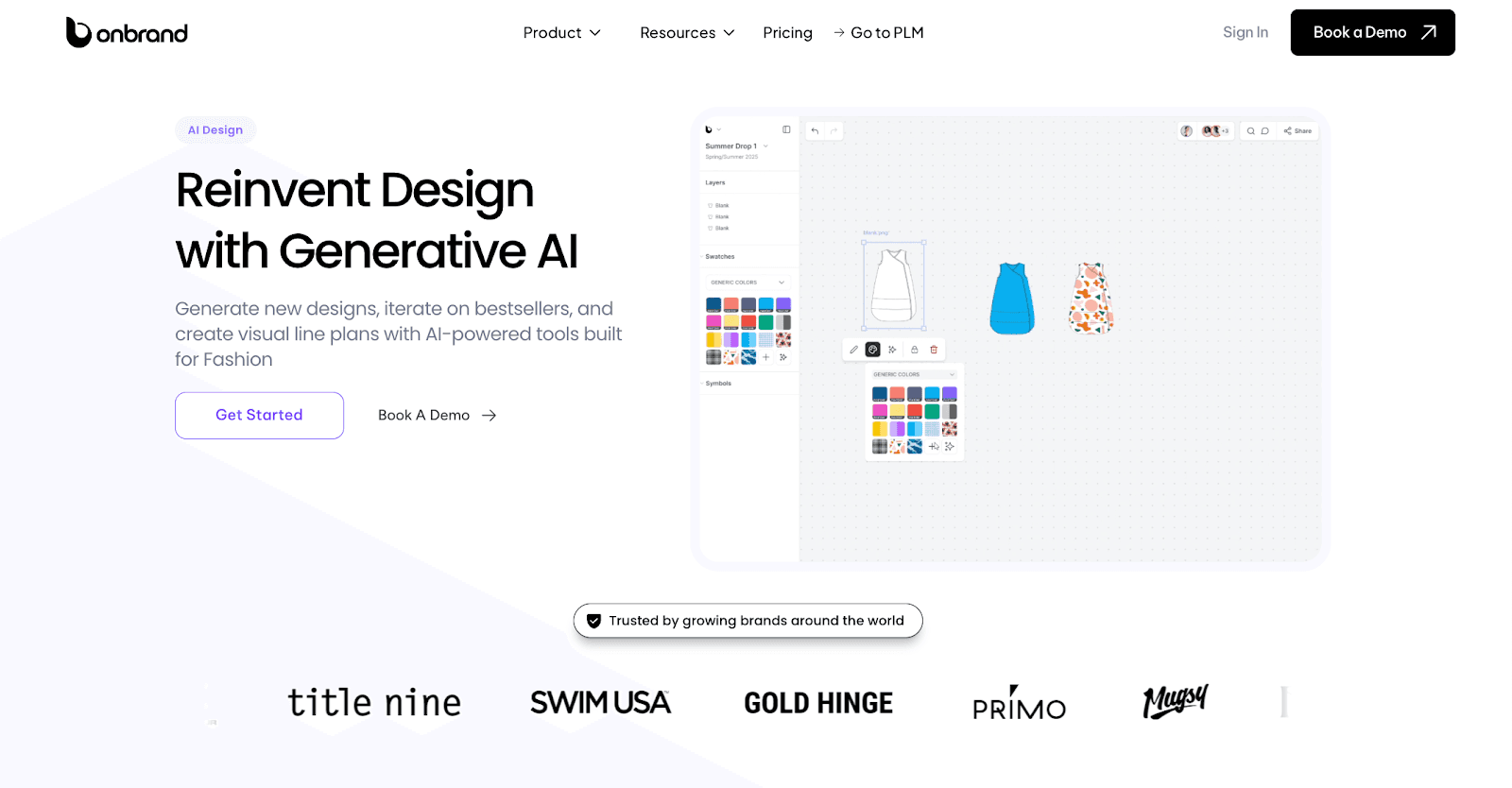
Onbrand AI Design supports the creative process before development begins. Designers describe a garment and generate visual design options to explore direction faster. Teams test silhouettes, textures, and color palettes without committing to physical samples.

Designers can build mood boards, compare variations, and edit layered design elements like sleeves or graphics. Version history keeps changes visible. 

Real-time collaboration helps teams align early and reduce revisions once development starts.

Key features that support early design

  • Generative image creation - Create garment visuals from written descriptions

  • Visual concepts and palettes - Explore material direction before sampling

  • Automated technical sketches - Generate flats faster from design concepts

  • Mood board and inspiration tools - Organize and annotate visual references

  • Version history - Track changes and revert when needed

Product Development with Onbrand PLM
Onbrand PLM

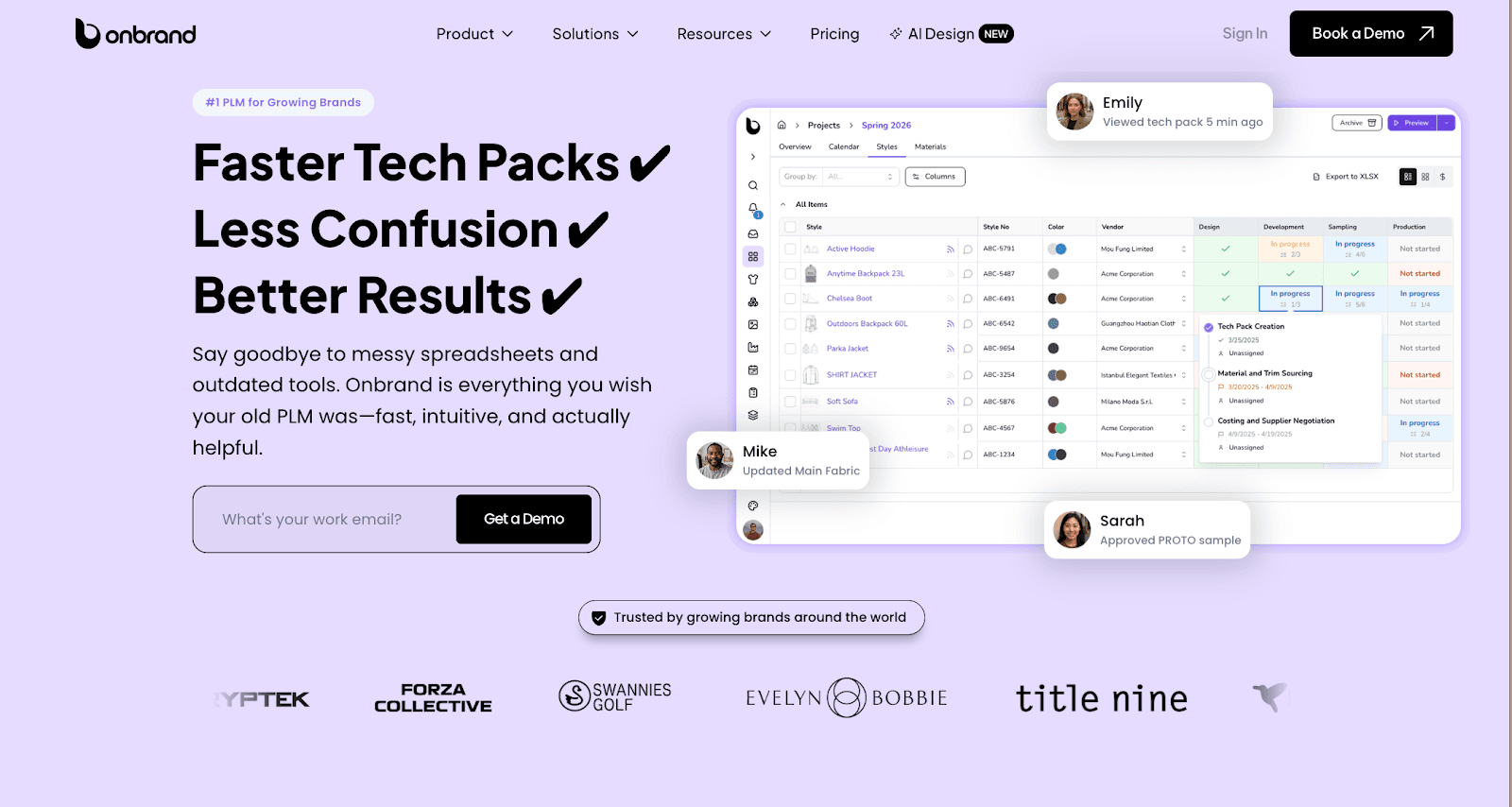
Onbrand PLM manages the product development stage once designs move forward. Teams centralize styles, tech packs, samples, and approvals in one workspace. Live tech packs keep everyone working from the same information without version confusion.

Vendors access the platform directly, which replaces email threads and file sharing. Built-in project management supports tasks, approvals, and timelines across teams. Fast onboarding and data migration help brands get set up sooner.

Key features that support development

  • Live tech packs - Web-based specs with no file versions

  • Sample management - Track rounds, feedback, and approvals

  • Vendor collaboration - Communicate directly on the tech pack

  • Project tracking - Manage stages, tasks, and calendars

  • Central libraries - Store materials, colors, and specifications

Get Your Products to Market Faster Than Ever With Onbrand!
Onbrand

The fashion design process works best when every decision has a defined place to live. From early ideas to final handoff, structure helps teams stay aligned, reduce back-and-forth, and keep work moving without losing details.

As collections grow, relying on scattered files and memory makes mistakes harder to avoid. Structured stages, shared documentation, and visible approvals give designers, developers, and production teams a way to work from the same page.

Onbrand brings that structure into one workspace. Teams can explore concepts early with Onbrand AI Design, then manage tech packs, samples, vendors, and timelines in Onbrand PLM without switching tools or chasing updates.

Ready to bring your full design and development workflow into one shared system? Book a demo to see how Onbrand supports the full fashion design process from concept to production.


FAQs About Fashion Design Process

What are the 7 steps in the design process?

The seven steps usually include research, concept development, sketching, technical documentation, material sourcing, sampling, and production handoff. Teams often start with research and several mood boards that act as an inspiration guide. Each step connects to the next as a common thread, covering all the steps required to move from idea to production.

What is the 3-3-3 rule in fashion?

The 3-3-3 rule is a planning method that limits choices to three silhouettes, three fabrics, and three colors. It helps teams stay focused and avoid overdesigning, especially in haute couture or small capsule lines. The rule supports clarity without limiting creativity.

What are the 5 stages of fashion?

The five stages are concept, design, development, production, and delivery. Early stages focus on ideas and visuals, sometimes drawing inspiration from interior design and other creative fields. Later stages handle specs, samples, and approvals to prepare styles for release.

What is the 7 rule in fashion?

The 7 rule often refers to limiting a collection to seven key pieces or main categories. Teams use it to keep collections focused and manageable. This approach helps a fashion house balance creativity and structure while treating fashion as both a product and an art form.


Ever had a style move forward with one version of a tech pack, while samples were built from another? Or a last-minute change that never reached the factory?

These issues don’t come from bad design. They happen when the fashion design process lacks a well-defined structure.

The fashion design process connects ideas to production through defined stages that teams can follow and share.

Designers, developers, and production teams rely on this structure to keep decisions aligned as work moves from sketches to samples and final approvals.

In this article, you will learn how each stage of the fashion design process works and how teams manage it more clearly as collections grow.

TL;DR

  • The fashion design process follows clear stages that move ideas from concept to production without losing track of decisions.

  • Those stages include: researching the trends, creating mood boards, sketching, creating tech packs, material sourcing, sample development, and final approval.

  • Digital tools replace scattered files and emails with shared visibility across tech packs, samples, and vendors.

  • Onbrand supports the full process by combining early concept work with AI Design and structured execution through Onbrand PLM in one shared workspace.

What Is the Fashion Design Process?

The fashion design process is a structured way for teams to move ideas. It connects design, development, and production through well-defined steps that keep work aligned as styles take shape.

In the fashion industry, this entire process helps fashion brands manage creative direction while keeping technical details accurate.

Fashion designers define the design concept and respond to fashion trends. A technical designer translates those ideas into a tech pack that supports correct construction during the product development stage.

Samples, feedback, and approvals stay tied to the same source of information, which reduces rework and delays.

As collections grow, structure helps teams stay focused on the target market and deliver a consistent final garment without losing control of timelines or details.

Stages of the Fashion Design Process

Design work moves fast once a collection starts. Without defined stages, teams lose track of decisions and version changes.

The stages below show how fashion teams move styles from early direction to production with defined ownership at each step.

1. Research and Trends

This stage sets the direction for the entire collection. Teams review market shifts in the fashion industry, past sales, and customer behavior to understand what matters for the season. 

Many designers gather visual inspiration from shows, retail, and social media to shape early design ideas.

Next, teams review options for fabric sourcing and vendor capacity. Early checks help confirm fabric selection, lead times, and access to sustainable materials. These decisions reduce late material swaps and missed lead times.

Detailed research gives teams a shared starting point. It supports a more cohesive design before samples, specs, or timelines come into play.

2. Mood Boards and Concepts

Teams turn early research into a straightforward visual direction. 

Designers pull inspiration images, fashion images, and graphic design references into a mood board that defines color palettes, textures, and tone. It brings focus to the creative process and filters many ideas into a shared direction.

Concepts take shape through design elements like silhouette, proportion, and material intent. Fabric swatches and early fabric choice help teams test what fits the story and supports a cohesive design.

Alignment here reduces changes later and keeps the collection moving with fewer revisions.

Want to align concepts earlier and reduce rework later? Book a demo to see how Onbrand supports early concept work before specs and samples begin.

3. Sketching and Illustration

Designers translate approved concepts into sketches that define shape, proportion, and intent. 

The sketches clarify how a style should look before technical work begins. Many teams create a technical sketch with tools like Onbrand AI Design or Adobe Illustrator to keep details consistent.

Early sketches help teams check balance and fit on a dress form or with fit models. Notes from developers and pattern cutters guide adjustments before work moves closer to sampling. 

It lets teams start developing styles with fewer gaps later.

4. Technical Flats and Tech Packs

This stage turns sketches into easy-to-follow instructions for production. Teams create flat drawings that show seams, construction, and other technical elements. Visuals remove guesswork for clothing manufacturers before sampling begins.

Developers then build the tech pack with measurements, materials, and construction notes for accurate specification management.

A clear tech pack creation process keeps the final design consistent as work moves forward. Keeping this documentation current helps teams avoid errors that lead to lower quality or rework later.

Need one place to manage tech packs without version issues? Book a demo to see how Onbrand keeps tech packs organized and shared in one workspace.

5. Material Sourcing

Teams select fabrics, trims, and colors that match the tech pack and budget. Vendors confirm pricing, lead times, and minimums early. 

Defined fabric sourcing decisions help teams save money and avoid late swaps.

Physical swatches arrive for review before any pre-production sample moves forward. Teams share valuable feedback and approve materials that support quality expectations in the fashion industry.

6. Sample Development and Fit Review

Teams produce development samples from approved tech packs. These samples show how the style works in real materials and construction. 

Fit, balance, and details get checked against the intended outcome for successful fashion design.

Fit reviews focus on measurements, seam placement, and dart manipulation where needed. Changes get logged and applied across rounds, even when working in small quantities.

Each update brings the style closer to the final product and reduces risk before committing to the finished product.

7. Final Approval and Production Handoff

This stage marks the final steps before production begins. Teams confirm approved samples, measurements, and documentation across all steps involved. 

Once signed off, no further design changes should enter the workflow.

Locked tech packs and specs move to vendors as the single reference point. The handoff keeps work aligned across sourcing and production and prevents delays that can become time-consuming.

How Digital Tools Support the Fashion Design Process

Once work begins, fashion teams make decisions quickly. Scattered files, email threads, and offline notes slow down decisions and cause version gaps. 

Digital tools give teams one place to manage the work across design, development, and vendors.

With connected systems, teams can:

  • Keep cloud-based tech packs current as changes happen

  • Share updates through vendor portals instead of email chains

  • Track sample management and approvals against the right style

  • Support project management without losing context

Shared visibility helps everyone work from the same source. Designers, developers, and vendors stay aligned across early concepts to the final sample, which reduces rework and missed details tied to outdated files.

When design, samples, and vendors work from the same system, decisions move faster.
Book a demo to see how Onbrand supports day-to-day fashion workflows.

Managing the Fashion Design Process in One Workspace

Onbrand supports the fashion design process from early concept work through production handoff.

Teams use Onbrand AI Design to shape ideas before samples exist, then move approved designs into Onbrand PLM to manage tech packs, samples, vendors, and timelines in one place.

Early-Stage Design with Onbrand AI Design

Onbrand AI Design

Onbrand AI Design supports the creative process before development begins. Designers describe a garment and generate visual design options to explore direction faster. Teams test silhouettes, textures, and color palettes without committing to physical samples.

Designers can build mood boards, compare variations, and edit layered design elements like sleeves or graphics. Version history keeps changes visible. 

Real-time collaboration helps teams align early and reduce revisions once development starts.

Key features that support early design

  • Generative image creation - Create garment visuals from written descriptions

  • Visual concepts and palettes - Explore material direction before sampling

  • Automated technical sketches - Generate flats faster from design concepts

  • Mood board and inspiration tools - Organize and annotate visual references

  • Version history - Track changes and revert when needed

Product Development with Onbrand PLM

Onbrand PLM

Onbrand PLM manages the product development stage once designs move forward. Teams centralize styles, tech packs, samples, and approvals in one workspace. Live tech packs keep everyone working from the same information without version confusion.

Vendors access the platform directly, which replaces email threads and file sharing. Built-in project management supports tasks, approvals, and timelines across teams. Fast onboarding and data migration help brands get set up sooner.

Key features that support development

  • Live tech packs - Web-based specs with no file versions

  • Sample management - Track rounds, feedback, and approvals

  • Vendor collaboration - Communicate directly on the tech pack

  • Project tracking - Manage stages, tasks, and calendars

  • Central libraries - Store materials, colors, and specifications

Get Your Products to Market Faster Than Ever With Onbrand!

Onbrand

The fashion design process works best when every decision has a defined place to live. From early ideas to final handoff, structure helps teams stay aligned, reduce back-and-forth, and keep work moving without losing details.

As collections grow, relying on scattered files and memory makes mistakes harder to avoid. Structured stages, shared documentation, and visible approvals give designers, developers, and production teams a way to work from the same page.

Onbrand brings that structure into one workspace. Teams can explore concepts early with Onbrand AI Design, then manage tech packs, samples, vendors, and timelines in Onbrand PLM without switching tools or chasing updates.

Ready to bring your full design and development workflow into one shared system? Book a demo to see how Onbrand supports the full fashion design process from concept to production.


FAQs About Fashion Design Process

What are the 7 steps in the design process?

The seven steps usually include research, concept development, sketching, technical documentation, material sourcing, sampling, and production handoff. Teams often start with research and several mood boards that act as an inspiration guide. Each step connects to the next as a common thread, covering all the steps required to move from idea to production.

What is the 3-3-3 rule in fashion?

The 3-3-3 rule is a planning method that limits choices to three silhouettes, three fabrics, and three colors. It helps teams stay focused and avoid overdesigning, especially in haute couture or small capsule lines. The rule supports clarity without limiting creativity.

What are the 5 stages of fashion?

The five stages are concept, design, development, production, and delivery. Early stages focus on ideas and visuals, sometimes drawing inspiration from interior design and other creative fields. Later stages handle specs, samples, and approvals to prepare styles for release.

What is the 7 rule in fashion?

The 7 rule often refers to limiting a collection to seven key pieces or main categories. Teams use it to keep collections focused and manageable. This approach helps a fashion house balance creativity and structure while treating fashion as both a product and an art form.

Discover how Onbrand PLM can streamline your product development!

© 2024 onbrandplm.com. All rights reserved.