Sep 28, 2026
Put two fashion product lifecycle management (PLM) systems side by side, and they can look surprisingly different.
One may stay close to styles, materials, tech packs, samples, and approvals. Another may connect fashion product development with sourcing, retail operations, or a broader enterprise setup.
That makes choosing between them less about finding the longest feature list and more about understanding what your brand actually needs the system to handle.
For fashion brands, PLM can cover very different parts of the journey from product idea to production.
This guide looks at the eight best PLM systems in fashion, with a focus on their capabilities and the use cases they support.
TL;DR
These are the eight best PLM software options for fashion teams to consider in 2026:
Centric PLM
WFX
PTC FlexPLM
Lectra Kubix Link
Bamboo Rose
CGS BlueCherry
Infor PLM for Fashion
1. Onbrand PLM — For Fashion Product Development
Onbrand PLM is a fashion-focused cloud-based PLM built for brands that want product development to feel easier to manage as more styles move forward.

It gives design and product teams one place to manage styles and product information, from materials and tech packs to samples and approvals.
Sourcing and production teams can work from the same product details when coordinating with suppliers or preparing styles for production.
The setup is configurable, so brands can adapt Onbrand to the way they already develop products instead of rebuilding their process around the software.
How It Handles Fashion Teams
A style can move from early development into technical details without splitting the work between spreadsheets, PDFs, email threads, and separate project tools.
Live tech packs keep the latest product information available to internal teams and vendors, even after specifications change. Sample updates, comments, costing, and supplier communication stay close to the style, giving everyone access to the details they need during development.
Onbrand also includes collection planning and project management tools for stages, tasks, approvals, and time-and-action calendars.
Design work can connect with Onbrand AI Design, giving teams a path from early concepts and visual exploration into PLM once a direction is ready for technical development.

Onbrand has helped teams create tech packs 55% faster and cut development time by up to four weeks, with data migration and implementation completed in as little as 10 days.
Key Features
Live tech packs with current product information
Dedicated libraries for styles, materials, colors, artwork, and specifications
Sample management, costing, approvals, and supplier collaboration
Configurable project management with stages, tasks, and time-and-action calendars
AI Design connection plus integrations and API support
Best For
Growing fashion brands with design and product development teams that want a modern PLM for managing collections from creative development through technical execution and supplier collaboration.
2. Centric PLM — For Enterprise Fashion and Retail
Centric PLM is used by brands, retailers, and manufacturers that manage larger product portfolios and more involved development processes. For fashion and apparel, it covers work from planning and design through sourcing, testing, costing, and commercialization.
That makes it relevant for vertically integrated brands and businesses with complex multi-brand structures that need shared product data to stay connected as more people and products enter the process.

Source: centricsoftware.com
How It Handles Fashion Teams
Centric brings collection development together with the product details teams need as styles take shape, including materials, bills of materials (BOMs), prototypes, costing, and testing.
Centric's product-development environment can also connect with visual planning and collection tools, while sourcing and collaboration features bring external partners into the process.
Connections with 2D and 3D design tools give creative work a path into development without another disconnected handoff. Together, those functions support work through the entire product lifecycle.
Key Features
Product and collection development
Materials, BOMs, and costing
Supplier and sourcing workflows
Connections with visual collection and planning tools
2D and 3D design integrations
Best For
Enterprise fashion and retail organizations managing larger assortments, multiple suppliers, and established product-development workflows.
3. WFX — For Product Development and Sourcing
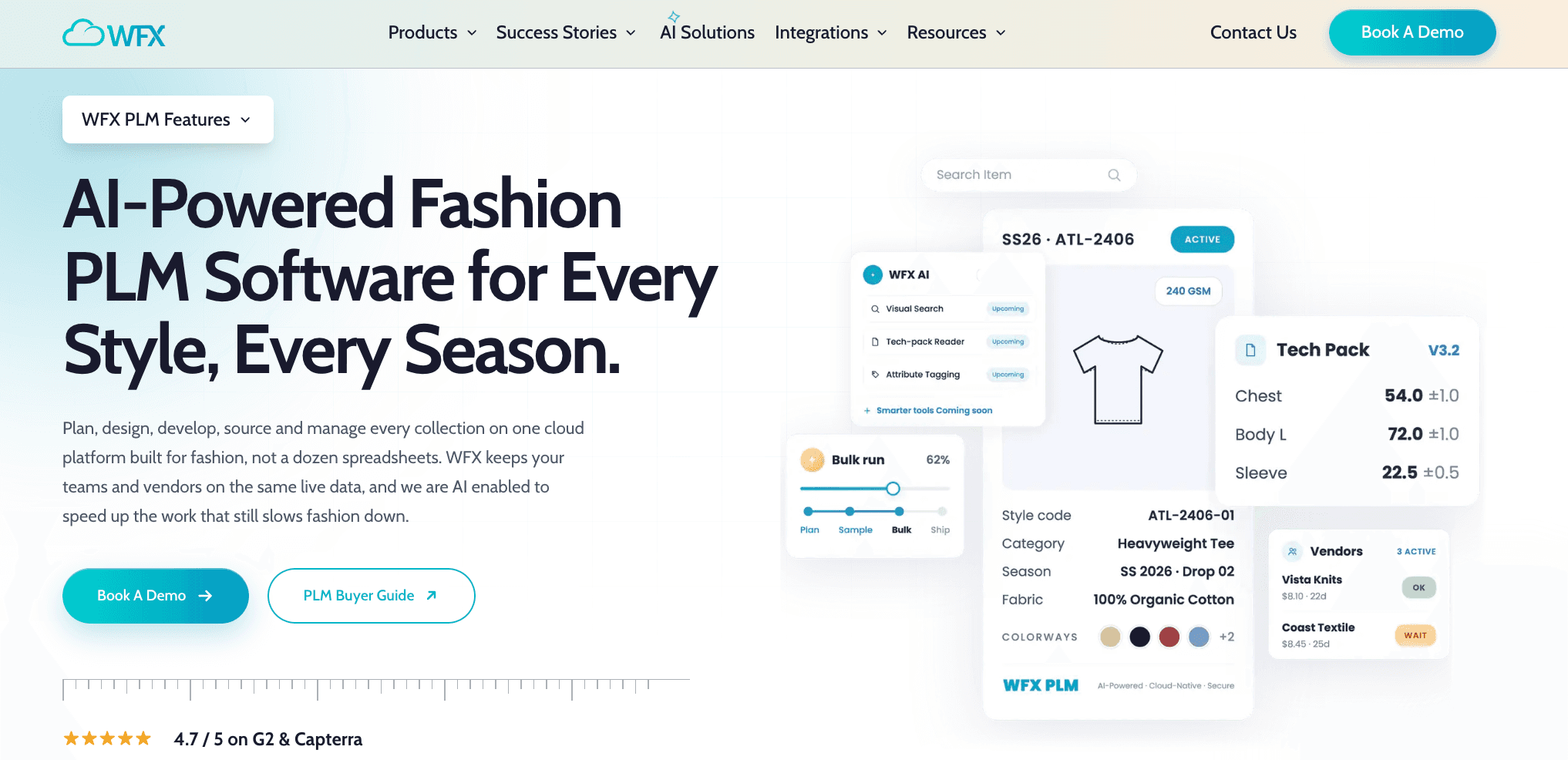
WFX is a fashion-focused PLM built for apparel, footwear, accessories, and related product categories.
It covers work from line planning and design through development, sourcing, sampling, quality checks, and production handoff, with teams and vendors working from shared product records.
Source: worldfashionexchange.com
How It Handles Fashion Teams
A style can move from its tech pack and BOM into costing, sampling, RFQs, vendor quotes, and approvals within the same workflow.
Vendor access gives suppliers a place to contribute comments and sourcing updates. Once development moves closer to production, WFX can track sample progress, inspections, and shipment status, bringing quality assurance activity into that later-stage workflow.
Adobe Illustrator integration helps carry design changes into product records without separate re-entry.
Key Features
Line and assortment planning
Versioned tech packs and BOMs
Vendor portal, requests for quote (RFQs), and costing
Sample, quality control (QC), and production tracking
Adobe Illustrator and enterprise resource planning (ERP) integrations
Best For
Fashion and apparel businesses that want product development, sourcing, supplier work, and production visibility connected in the same PLM workflow.
4. PTC FlexPLM — For Configurable Enterprise PLM
PTC FlexPLM is a retail-focused PLM used by brands and retailers in fashion, apparel, footwear, and consumer products.
It is designed for enterprise-scale product development and can manage large numbers of styles, SKUs, brands, and product categories within one platform.

Source: ptc.com
How It Handles Fashion Teams
Teams can manage product development from design and specifications through sourcing, costing, sustainability, and compliance.
PTC's wider FlexPLM solution suite also provides connections with 2D and 3D design tools and external planning systems, helping product information move between creative, planning, and development work.
Its broader PLM functionality is built to support the entire lifecycle of product development, which can suit businesses handling more complex product structures or established enterprise processes.
PTC also positions FlexPLM as part of wider digital transformation initiatives for retail organizations.
Key Features
Product development and specifications
Sourcing and costing
Multi-brand and multi-category management
2D and 3D design connections through the wider Flex suite
Sustainability and compliance data
Best For
Large fashion and retail organizations managing high product volumes, multiple categories, and configurable enterprise product-development processes.
5. Lectra Kubix Link — For Fashion Product Information and Collaboration
Kubix Link is Lectra’s fashion-focused PLM for collection development, product data management, and collaboration.
It is built for fashion businesses that want creative, technical, and supplier information connected as collections move from planning into development and launch.

Source: lectra.com
How It Handles Fashion Teams
Collection calendars and workflows give teams a way to plan the collection lifecycle and monitor development milestones. Product data and digital tech packs can then be shared with internal and external stakeholders as the collection develops.
Kubix Link also supports digital fitting sessions, collection reviews, supplier communication, and cost monitoring, which helps keep fashion product development work connected as products move through reviews and approvals.
Integrations with systems such as ERP, CMS, WMS, Adobe Illustrator, and InDesign extend that workflow into existing tools.
Key Features
Collection calendars and workflow tracking
Product data management
Digital tech packs
Digital fittings and collection reviews
Supplier and system integrations
Best For
Fashion businesses that want collection planning, product information, and collaboration connected in one shared development environment.
6. Bamboo Rose — For Retail Product Development and Sourcing
Bamboo Rose TotalPLM is a retail supply chain platform that connects planning, merchandising, product development, sourcing, and later operational stages.
It serves fashion and apparel brands alongside retailers in other categories, making its scope broader than product development alone.
Bamboo Rose also acquired Backbone PLM in 2023, adding a designer-focused product development offering for apparel and other consumer-product teams.

Source: bamboorose.com
How It Handles Fashion Teams
Fashion teams can use Bamboo Rose to carry product development into sourcing and supplier work as products move toward market. Internal teams can work directly with suppliers and vendors within the same environment.
Bamboo Rose also extends beyond PLM into purchase order and global trade management, bringing later stages of the retail process into its broader scope.
Key Features
Visual collaboration
Product development
Supplier relationship management and sourcing
Purchase order and global trade management
Best For
Fashion retailers and brands looking for product development and sourcing within a broader retail planning and supply chain workflow.
7. CGS BlueCherry — For Apparel PLM and Business Operations
BlueCherry PLM is apparel PLM software built for fashion, apparel, footwear, and other consumer lifestyle businesses.
It covers product development from early design through costing, approvals, production tracking, and supplier collaboration.
BlueCherry also offers separate ERP and manufacturing solutions that can connect product development with broader business operations.

Source: bluecherry.com
How It Handles Fashion Teams
BlueCherry keeps product data and design files close to the development workflow, with BOMs and costing carried into review and approval.
BlueCherry also supports supplier communication, compliance, factory audits, and production tracking. Integrations with Adobe tools, 3D design software, and ERP systems help product information move into other parts of the business.
For companies looking at PLM and ERP together, BlueCherry offers enterprise resource planning as a related solution.
Its wider product suite also covers manufacturing operations through a manufacturing execution system (MES), including shop floor control.
Key Features
BOM management and costing
Design and 3D integrations
Workflow and approval management
Supplier communication and compliance
Production tracking and ERP integrations
Best For
Apparel and fashion businesses looking for apparel PLM alongside broader ERP and manufacturing capabilities.
8. Infor PLM for Fashion — For Fashion Teams Using the Infor Ecosystem
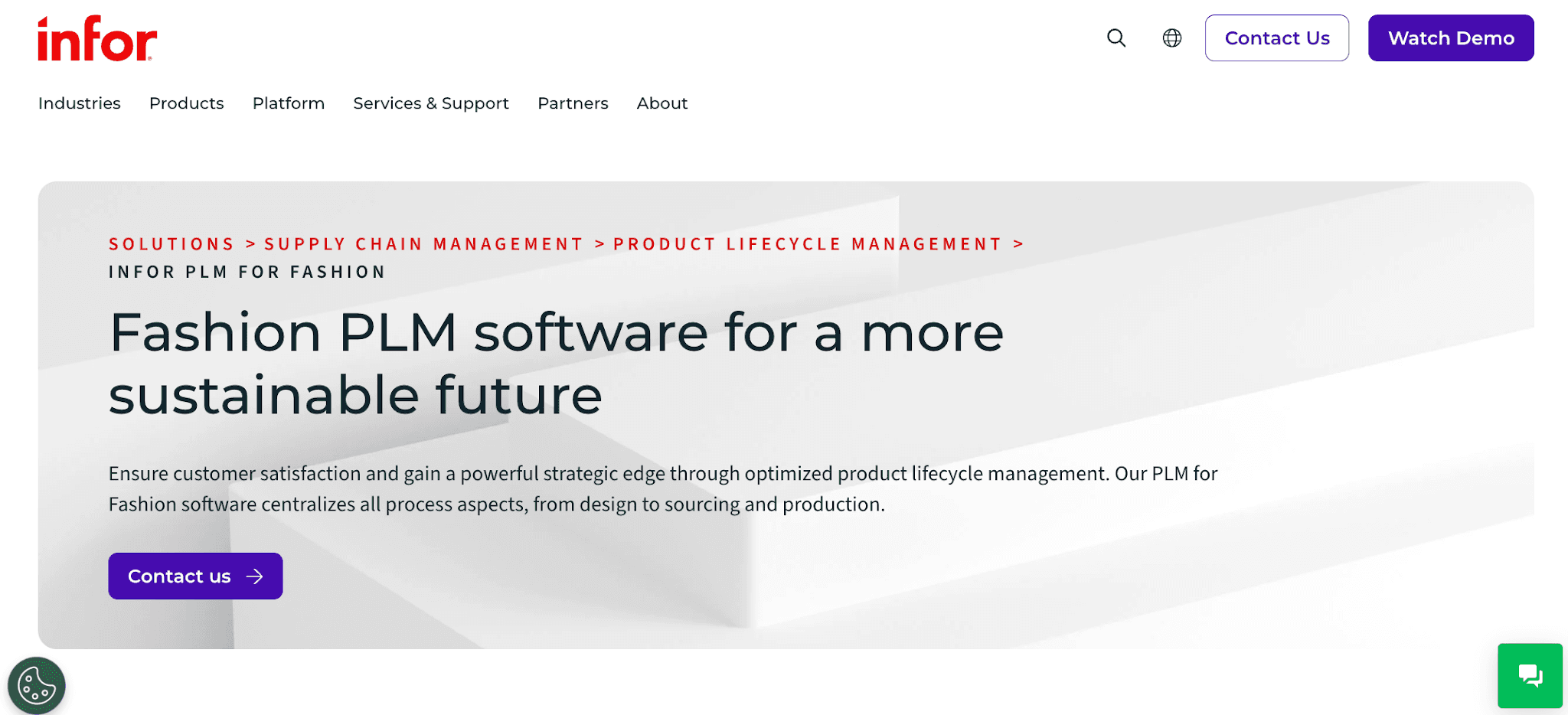
Infor PLM for Fashion is a fashion-specific PLM solution that supports product development from design through sourcing and production.
It is built for fashion companies that need creative, technical, and commercial teams working from shared product information throughout the fashion value chain, with integration options for other Infor and third-party systems.
Source: infor.com
How It Handles Fashion Teams
Collection and style development sit alongside material, trim, and BOM management, with existing product details available for reuse as new styles take shape.
Built-in workflows also cover development calendars, samples, cost quotes, lab dips, tests, and other activities that need to stay aligned before production.
Adobe Illustrator integration connects creative concepts with technical specifications, while collaboration tools let internal teams and external partners share product data in real time.
For a fashion business already using other Infor products, PLM can also connect with Infor OS and related business systems.
Key Features
Collection and style development
Materials, trims, and BOM management
Samples, cost quotes, and testing workflows
Adobe Illustrator integration
Global team and partner collaboration
Best For
Fashion businesses that want dedicated fashion PLM with connections to the wider Infor technology environment.
What to Look for in a Fashion PLM System
A good fashion PLM should fit the way your products are actually developed. There is no single setup that will suit most brands equally well, so the bigger question is how well the system supports the work your team needs to move forward every day.
Here are a few areas worth looking at before making a decision.
Fashion-Specific Product Development
Start with the product development process itself. A fashion PLM should give your team a practical way to develop styles and collections while keeping materials, colorways, BOMs, tech packs, samples, costing, and approvals organized.
Pay attention to how that information is structured and updated. Comprehensive tech packs can keep measurements, materials, construction details, and other specifications together, while reusable component libraries make repeated product details easier to manage.
The right fashion PLM software should fit the level of detail your products require and give your team better visibility into changes that can affect product development costs.
Design-to-Development Connection
Early concepts eventually need to become products that can be sampled and produced. Look at how easily designs, specifications, and product details move between those stages.
Modern fashion PLM platforms may connect with design tools or provide visual collaboration features. Look at whether those connections reduce repeated manual data entry and keep product information current when designs change.
Team and Supplier Collaboration
Consider who needs access once development is underway. Designers, product developers, merchandisers, and suppliers may all need different information at different points.
Look for a practical way to handle comments, revisions, approvals, permissions, and vendor collaboration without losing track of the latest decision.
If suppliers will work directly in the system, check what its supplier portal allows them to view or update. It is also worth asking how supplier seats are handled, particularly if several factories or external partners need access.
Integrations With Your Existing Tools
Think about the software your team already relies on, including design, 3D, ERP, and digital asset management systems.
Integration count alone does not tell you much. Check which product data can move between systems, where updates happen, and whether your team would still need to enter the same information twice.
Ease of Adoption and Implementation
Finally, consider what it will take to get the system into daily use.
A PLM implementation may involve data migration, onboarding, training, and changes to how your team handles everyday product development. Ask how much training users will need and whether a steep learning curve could slow adoption.
The scope of fashion PLM implementation can vary depending on the system and your existing setup. Small fashion brands, for example, may have different implementation needs from mid-market brands with larger teams and more established systems.
Cost also needs context. Fashion PLM pricing can depend on factors such as users, modules, services, and implementation requirements. Compare those costs with the capabilities your team actually needs and how well the system fits your existing workflow.
Bring Your Fashion Product Development Into Onbrand PLM

Choosing a PLM comes down to how well it fits the way your team develops products.
Onbrand PLM is built specifically around fashion product development. Collections, materials, live tech packs, samples, costing, approvals, and supplier communication stay tied to the same product information as styles move forward.
Onbrand AI Design extends that workflow into the earlier creative stage. Teams can explore concepts and visuals, then carry approved ideas into PLM for technical development without creating another disconnected handoff.
The result is a workspace that keeps creative decisions and day-to-day product development closer together.
FAQs About Best PLM Systems in Fashion
Which fashion PLM software is the best?
The best fashion PLM software depends on your product development needs, team size, and existing systems. Onbrand PLM is a strong fit for fashion brands that want cloud-based PLM, live tech packs, supplier collaboration, and connected design work in one system.
What is PLM in the fashion industry?
PLM in the fashion industry is software used to manage product information and development from early design through materials, tech packs, samples, costing, approvals, sourcing, and production handoff. It gives teams one place to keep product details current as a collection moves forward.
How much does fashion PLM software cost?
Fashion PLM software cost varies by provider and can depend on users, modules, onboarding, support, data migration, and implementation fees. Pricing may also change based on the amount of configuration or functionality a brand needs.
What should a fashion PLM system include?
A useful fashion PLM should support product data, tech packs, materials, samples, costing, approvals, supplier collaboration, and workflow automation. Depending on the system, teams may also find project calendars or critical-path tools useful for managing development milestones.
What should fashion brands check before choosing PLM software?
Fashion brands should check usability, integrations, supplier access, migration requirements, pricing, and how well the system fits their current process. A steep learning curve can slow adoption, and brands with traceability or compliance requirements may also need to consider support for a digital product passport.