A product may start as a design idea, but getting it into production requires coordination between fashion designers, developers, suppliers, and production teams. Product information changes frequently, and every update needs to reach the right people at the right time.
Many fashion brands use product lifecycle management (PLM) in fashion industry workflows to organize product details and development activities. A PLM approach brings structure to the work that happens between concept, sampling, approvals, sourcing, and production.
In this guide, you'll learn what PLM in the fashion industry means, how it fits into fashion product development, why it has become important in modern fashion, and when brands typically decide to adopt it.
TL;DR
PLM in the fashion industry helps fashion brands organize product data and manage development workflows, so styles move from concept to production in a structured way.
Fashion product development involves constant changes and coordination between designers, developers, suppliers, and production teams, which makes consistent product information critical.
A fashion PLM system brings together tech packs, BOMs, materials, samples, approvals, and supplier data into a single, connected source of product information.
PLM improves day-to-day work by reducing time spent searching for updates, keeping revisions organized, and helping teams and suppliers work from the same information.
Onbrand supports this process with live tech packs, approvals, vendor communication, and connected product development workflows built for fashion teams.
What Is PLM in the Fashion Industry?
Fashion product lifecycle management is the process of organizing and managing product data throughout a fashion product's lifecycle. This includes the activities, decisions, and information involved from the first concept through production.
The PLM process provides a structured way to manage product development. It covers the work involved in design, material selection, sampling, costing, approvals, and production preparation.
When people refer to fashion PLM, they may be describing both the process itself and the software that supports it.
Why Fashion Product Development Is Difficult to Manage
Fashion products move through many people, decisions, and revisions before production begins.
The fashion product development process often involves designers, developers, sourcing teams, suppliers, manufacturers, and other external partners, each working with different information at different stages.
Product Information Lives in Too Many Places
Product information often exists in multiple formats and locations throughout the development process. Designers, developers, sourcing teams, and suppliers may all work with different pieces of information at different times.
Product Changes Happen Constantly
Product details rarely stay the same throughout development. Fabric selections change, measurements are updated, colors are revised, and sample feedback leads to additional adjustments.
A single style may go through several rounds of revisions before production begins. Every change creates another update that must be communicated and documented.
Multiple Teams and Suppliers Need the Same Information
Many people contribute to the development of a product.
Designers, developers, sourcing teams, production staff, suppliers, and other external partners all rely on the current product record to do their work. Internal teams also need access to the latest decisions, updates, and requirements throughout development.
This level of coordination is one reason product development becomes difficult to manage. Product details move through many people, activities, and business processes that make up the broader fashion value chain.
How PLM Supports the Fashion Product Lifecycle
Fashion products move through several stages before production begins. Each stage involves different activities, stakeholders, and decisions that contribute to the development of a finished product.
Collection Planning and Product Creation
Development often begins with collection planning.
Product teams review business goals, seasonal direction, customer demand, and product opportunities before deciding which styles to move forward with. Early decisions shape the rest of the development process.
Design and Development
Designers and product developers work together to refine product concepts and prepare them for development.
Teams evaluate options, review updates, and make decisions that shape a style's direction. Revisions and reviews often continue throughout this stage as product details take shape.
Material and Trim Management
Materials and trims influence product appearance, cost, sourcing, and production requirements.
Teams evaluate options, review supplier availability, and make decisions that affect later stages of development. This stage often involves sourcing specialists, developers, and suppliers.
Sampling and Fit Reviews
Products move through sample reviews before production approval.
Teams assess fit, construction, and development requirements while discussing revisions and next steps. Several review cycles may take place before a product is ready to advance.
Supplier Collaboration and Costing
Suppliers play an important role throughout the development process. Brands and suppliers exchange updates, discuss sourcing decisions, and review manufacturing requirements as products approach production.
Cost discussions, sourcing decisions, and manufacturing considerations often involve multiple stakeholders. This stage also connects product development with broader supply chain management activities and the entire supply chain.
Production Readiness
The final stage focuses on preparing products for manufacturing.
Teams review requirements, confirm decisions, and prepare products for production. These activities support planning and the production processes that take place before manufacturing begins.
What Lives Inside a Fashion PLM System?
Fashion product development generates a large amount of information. Teams need a place to store, organize, and reference those records during development.
A product lifecycle management system serves as a central repository for product records and PLM data throughout the product lifecycle.
Tech Packs
Fashion tech packs contain the information needed to define a product. They often include construction details, materials, measurements, product requirements, and other information used to describe how a style should be developed.
Bills of Materials (BOMs)
A bill of materials lists the components that make up a product. This information may include fabrics, trims, labels, packaging items, and other materials associated with a style. Teams use BOMs to understand exactly what goes into a finished product.
Fabrics, Trims, and Colorways
A fashion PLM system stores information about fabrics, trims, colors, and material options. Product teams use these records to reference material details, sourcing information, and approved color selections.
Measurements and Specifications
Measurement records contain sizing information, dimensions, grading details, and technical specifications. These records help define how a product should be sized and constructed.
Artwork and Product Assets
Artwork records may include graphics, logos, label files, packaging artwork, and product imagery. Systems support digital asset management, providing teams with a dedicated location for product-related creative files.
Samples, Fit Comments, and Approval Records
Sample records store review notes, fit comments, revision history, and approval documentation. Teams use this information to reference previous feedback and product decisions.
Supplier and Costing Data
Supplier information, sourcing references, pricing details, and cost records are also commonly stored within a PLM system. Product teams use this information when reviewing product requirements and associated costs.
All of this information becomes part of the PLM data used throughout development. A PLM system supports product data management by consolidating records into a centralized data source, while some systems also offer integration with inventory management platforms and other business applications.
How PLM Changes Day-to-Day Work for Fashion Teams
Fashion product development involves constant updates, reviews, and communication. A PLM solution changes how teams manage that work by providing a shared place to reference product information and development updates throughout the product lifecycle.
Designers Spend Less Time Searching for Information
Designers often need access to material details, product requirements, previous comments, and development updates. When information lives in multiple files and folders, finding the latest version can take time.
A PLM platform keeps product records in one location. Designers can reference materials, comments, and product requirements from the same product record instead of checking multiple folders and files.
Product Teams Keep Revisions and Approvals Organized
Product development teams deal with frequent revisions. A fabric change, sample comment, or cost update can affect several product records.
With PLM for fashion, teams can review previous revisions, comments, product updates, and decisions without searching through multiple files, email threads, or shared drives.
Suppliers Receive Current Product Requirements
Suppliers often need access to the latest product details during development. A change to a material, color, or construction requirement can affect future work if outdated information is referenced.
Apparel PLM software systems support vendor collaboration by giving suppliers access to current product records. This helps everyone stay on the same page when product requirements change.
Teams Spend Less Time Chasing Updates Between Systems
Without a shared source of information, teams often spend time requesting updates, confirming product details, and checking the status of decisions.
A centralized platform gives teams one place to reference product records. Because the system centralizes product data, designers, developers, and suppliers can stay on the same page during updates.
Some systems offer seamless integration and capabilities for integrating with related business applications, helping teams avoid switching between multiple tools throughout the day.
Example: How PLM Supports a Hoodie From Concept to Production
To see how PLM fits into product development, it helps to follow a single product through the development process. Consider a fleece hoodie as it moves from an idea to a production-ready style.
Stage #1: Collection Planning
A product team begins planning a new collection and identifies a fleece hoodie as a potential addition. The decision is influenced by market research, seasonal demand, and consumer preferences discussed during planning.
The team reviews creative concepts, target pricing, and category goals before deciding to move the style into development.
Stage #2: Product Development
Designers and product developers begin refining the hoodie. Material options are reviewed, construction details are discussed, and early product requirements are documented.
The team also evaluates expected production costs and product requirements before moving forward. Product decisions made during this stage influence sourcing, manufacturing, and overall product quality.
Stage #3: Sampling and Revisions
The first sample arrives for review. Product developers, technical teams, and other stakeholders assess fit, construction, and appearance.
The team requests adjustments to sleeve length and hood construction after reviewing the sample. Additional comments lead to another revision before the next review.
Product developers share updated requirements with the supplier and review feedback before approving the next sample. Consistent reviews support quality control before production begins.
Stage #4: Production Preparation
Once revisions are approved, the hoodie moves into final preparation. Teams confirm product requirements, sourcing information, and manufacturing details before production begins.
Attention shifts to production planning, final costing, and preparation for mass production. At this point, product information supports day-to-day decision-making, more organized recordkeeping, and efficient management of development activities.
After planning, development, sampling, and multiple rounds of revisions, the hoodie reaches a production-ready state.
Why PLM Has Become Important for Modern Fashion Brands
Fashion product development looks very different today than it did a decade ago.
Changes in the fashion and apparel industry have increased the number of product decisions, sourcing relationships, and development activities required to bring products to market.
Shorter Product Development Cycles
Fashion brands are under pressure to respond more quickly to changing market demands, shifting consumer demands, and new trends. Product development timelines have become shorter as brands seek to respond to customer demand and changing buying behavior.
The rise of fast fashion has also influenced expectations throughout the industry. Brands now release products more frequently than in the past, creating additional pressure during development.
Global Supplier Networks
Modern product development often involves suppliers, manufacturers, and sourcing partners located in different regions of the world. As the apparel industry has become more global, product information frequently moves between multiple organizations during development.
This shift has increased the need for global collaboration between brands and external partners responsible for sourcing, development, and manufacturing activities.
Increasing Product Complexity
Fashion products often involve more variations, material options, compliance requirements, and customer expectations than they did in the past. Product teams also rely on trend analysis and consumer data to identify trends that influence future collections.
At the same time, ongoing digital transformation has changed how information is created, shared, and reviewed throughout product development.
Greater Demand for Visibility and Accountability
Companies throughout the retail industry face increasing pressure to understand how products move from concept to market. Product decisions can influence sourcing outcomes, product performance, sales performance, and ultimately customer satisfaction.
As product development becomes more complex, brands place greater emphasis on documenting decisions, tracking product information, and maintaining accountability throughout the development process.
When Do Fashion Brands Typically Adopt PLM?
Most fashion companies do not start looking for PLM on day one. Interest usually grows when product development becomes harder to manage using existing tools and processes.
The decision often comes from practical challenges that affect day-to-day work rather than a single event.
Teams Lose Confidence in Product Information
Product information tends to accumulate over time. Product details may be stored in spreadsheets, email threads, shared folders, and individual documents.
At some point, teams begin spending more time searching for information, verifying updates, and confirming which records are current. This is often one of the first signs that a fashion business has outgrown its existing approach.
Collections and SKUs Continue to Grow
As a fashion business introduces more products, colors, sizes, and seasonal collections, the amount of information associated with development also increases.
Product teams may find themselves managing a larger volume of product records, sourcing information, costing details, and development requirements than existing processes were originally designed to handle.
Supplier Communication Becomes Harder to Manage
Product development relies on ongoing communication with suppliers. Questions about materials, revisions, costs, and product requirements can quickly add up when multiple products are in development simultaneously.
Teams begin evaluating PLM when supplier communication becomes difficult to track and important product discussions are spread throughout multiple channels.
Teams Spend Too Much Time Updating Spreadsheets
Brands begin product development with spreadsheets because they are familiar and easy to use. Over time, spreadsheets may become difficult to maintain as product information grows and changes more frequently.
Teams may spend significant time updating records, checking versions, and reconciling conflicting information. These activities can affect time-to-market, contribute to rising product development costs, and often trigger PLM implementation discussions.
Onbrand: Fashion PLM Built for Modern Product Teams
Product information is only one part of fashion product development. Teams also need a way to manage tech packs, samples, approvals, vendor communication, and timelines as products move toward production.
Onbrand brings those activities into one platform built specifically for fashion brands. Product teams can manage styles, materials, approvals, and development milestones in one place instead of switching between spreadsheets, email threads, and separate tools.
Manage Product Development in One Connected Platform
Onbrand PLM combines product data, project management, and development activities in a single system.

Teams can manage live tech packs, materials, colors, artwork, specifications, samples, approvals, tasks, stages, and time-and-action calendars from one location. Dedicated libraries keep product data organized, while configurable workflows support how each brand prefers to work.
Unlike many legacy PLM systems that require extensive customization and long implementation projects, Onbrand is designed for faster onboarding and day-to-day usability.
Brands using Onbrand have reported up to 55% faster tech pack creation, while some teams have reduced development timelines by several weeks. Fashion teams complete implementation and data migration in as little as 10 days, and many brands are fully onboarded within two to four weeks.
Keep Teams and Suppliers Aligned With Live Product Data
One of the biggest challenges in product development is keeping everyone working from the latest information.
Onbrand uses web-based live tech packs that function more like shared documents than exported PDFs or spreadsheets. Designers, developers, sourcing teams, and vendors can reference the same product data without managing multiple file versions.
Comments, updates, approvals, and product discussions stay connected to the product record itself. Vendor communication happens directly within the platform, reducing the need to track conversations through email, WhatsApp, or WeChat.
Every customer also receives dedicated account support, with ongoing updates included in the platform.
Move From AI-Generated Concepts to Production-Ready Products
Onbrand also includes Onbrand AI Design, a workspace built for apparel concept creation and design exploration.
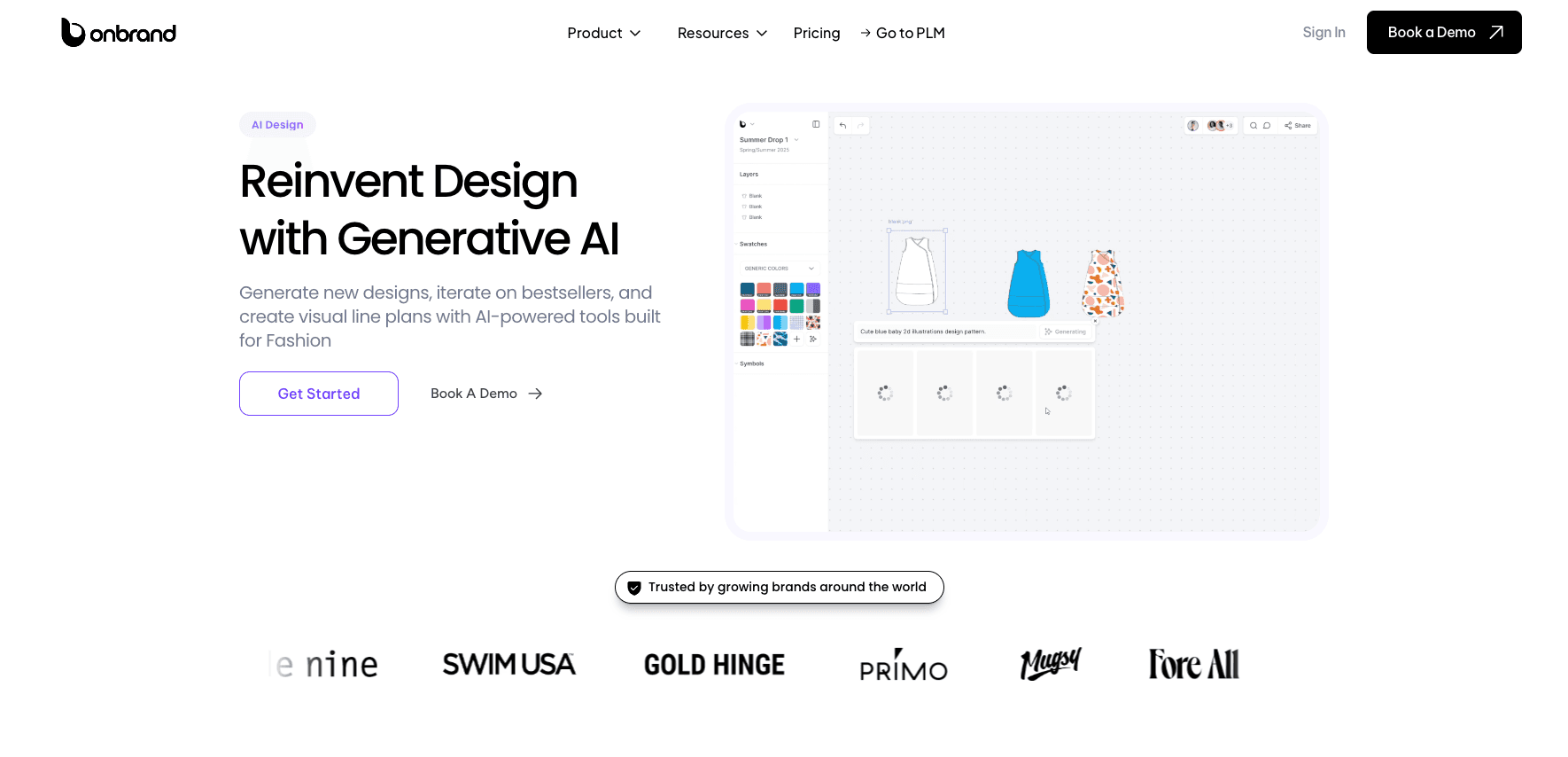
Designers can generate concepts from text prompts, sketches, photos, and inspiration images. Teams can explore variations, create colorways, generate mockups, build mood boards, and review ideas together before development begins.
Once a concept is approved, design assets can move directly into Onbrand PLM. Product teams can continue development using the same product information without having to recreate files or manually transfer details between separate design tools and development systems.
This integration between Onbrand AI Design and Onbrand PLM provides fashion brands with a direct path from concept generation to product development within a single environment.
Build a Better Fashion PLM Process With Onbrand

Fashion product development involves hundreds of decisions, updates, and product details long before manufacturing begins. As product lines expand and more people become involved, keeping information organized becomes a larger part of the job.
That is why PLM has become an important part of the fashion industry. It provides a structured way to manage product information, development activities, and the work required to move products from concept to production.
Many brands reach a point where spreadsheets, email threads, and disconnected tools no longer support the way they develop products. A modern PLM system helps create more consistency throughout development while giving teams greater control over product data.
Onbrand combines live tech packs, sample management, approvals, vendor communication, project management, and AI-powered design tools into a single platform built specifically for fashion brands.
FAQs About PLM in the Fashion Industry
What are the five phases of PLM?
The five phases of PLM typically include concept and planning, product development, testing and validation, production, and end-of-life management. In fashion, these phases often cover collection planning, design, sourcing, sampling, production, and product retirement.
Can PLM help manage supplier communication?
Yes. PLM systems include tools that support supplier communication and vendor support during product development. Teams can share product requirements, review updates, discuss revisions, and keep development conversations tied to product records rather than relying solely on email.
Do small fashion brands need PLM?
Small fashion brands can benefit from PLM when product data becomes difficult to manage. As collections grow and development activities become more complex, PLM can help organize information, support real-time collaboration, and reduce manual work. Brands adopt PLM to help streamline processes before operational challenges become larger.
What are examples of PLM software used in the fashion industry?
Examples of fashion PLM software include Onbrand PLM, Centric PLM, Backbone PLM, WFX PLM, Aptean PLM, and Bamboo Rose. These platforms help fashion brands manage product data and product development from concept through production.
What is the difference between PLM and ERP in fashion?
PLM focuses on product creation and development, while ERP focuses on business operations after products are ready for sale. A PLM system manages design, sourcing, materials, samples, and product development activities. An enterprise resource planning (ERP) system typically manages inventory, purchasing, finance, orders, and other operational functions.