Aug 25, 2026

Every fashion product starts with an idea, but turning that idea into a finished product involves many moving parts.
Designs, materials, tech packs, samples, supplier communication, approvals, and production planning all need to stay connected. Without a clear system, product information can quickly become difficult to manage over time.
Product lifecycle management (PLM) gives fashion brands a more organized way to manage product information and development workflows in one place. Teams can work from the same source of information as products move from concept to production.
In this guide, you'll learn what PLM is, how a PLM system works, what it manages, and why it has become an important part of modern fashion product development.
TL;DR
PLM helps fashion brands manage product information from the first concept through production and beyond.
A PLM system organizes product records such as materials, tech packs, specifications, samples, supplier information, approvals, and timelines in one place.
The key stages of PLM include research and concept development, design and product development, sourcing and pre-production, manufacturing and commercialization, and product performance after launch.
Fashion brands use PLM to improve collaboration, manage suppliers, reduce manual work, maintain product quality, and keep product information connected throughout development.
Onbrand combines Onbrand AI Design with connected PLM workflows, helping teams move from early concepts into product development more efficiently.
What Is PLM?
PLM is a business approach for managing the entire lifecycle of a product, from the initial concept and design through development, production, and eventually retirement.
It brings together people, business processes, systems, and product data so teams can manage products more effectively throughout development.
A product lifecycle management system supports that approach by giving teams one place to organize specifications, materials, bills of materials (BOMs), tech packs, costs, supplier information, approvals, timelines, and compliance documents.
Using centralized data management helps teams access up-to-date information, supports document management, and helps maintain data integrity throughout product development.
Designers, product developers, sourcing teams, and production teams can work from the same product record, reducing duplicate files, limiting version confusion, and helping everyone stay aligned.
How Does a PLM System Work?
A PLM system organizes product information in one place, so every stage of development stays connected. As a new style moves from concept to production, teams continue building the same product record instead of creating separate files for each stage.
Comments, revisions, approvals, and supporting documents remain connected to that record, making it easier to track changes and keep everyone working from the latest information.
A Central Source for Product Information
Product information is created when a new style enters development. Teams can add specifications, materials, colorways, measurements, costs, bills of materials, tech packs, and supplier details as the product develops.
Using a centralized platform keeps everything connected to the same product record. Version history remains available, documents stay organized, and fewer files become scattered in emails or shared folders.
That reduces data silos and makes it easier to find the latest information when decisions need to be made.
Connected Workflows and Approvals
Product development rarely moves in a straight line. Designs change, samples are reviewed, costs are updated, and approvals happen at different stages.
A PLM system keeps these activities connected through shared workflows. Comments stay attached to the relevant style, review stages remain visible, and assigned tasks move through product calendars and approval processes.
When specifications change, everyone works from the latest version instead of searching through multiple files.
Collaboration Between Internal Teams and Suppliers
Internal teams work from the same product records, while suppliers can access the approved information and updates relevant to their work.
Sharing real-time data makes collaboration easier, reduces confusion caused by outdated files, and supports global collaboration throughout product development.
Modern PLM platforms keep product records, workflows, and contributors connected throughout development.
The Key Stages of PLM
Every product moves through a series of development steps before it reaches the market.
A PLM system keeps product information connected throughout the process, making it easier for design, development, sourcing, and production teams to work from the same product record as decisions are made.
The exact stages managed inside a PLM platform vary by industry and software, but fashion workflows commonly include the following phases.
1. Research and Initial Concept
The process begins with the initial concept. Fashion brands review market research, seasonal trends, customer feedback, and collection goals before developing new styles.
During this stage, teams review research, define product requirements, explore early ideas, and establish the direction for the collection.
Good planning creates a clear foundation for innovation and requirements management, helping teams make consistent decisions about materials, costs, sampling, and production.
2. Design and Product Development
Once a concept is approved, design and development teams begin creating sketches, selecting materials, and building product specifications.
As product development processes continue, product records expand with product data such as measurements, bills of materials, colorways, tech packs, costing, prototypes, sample reviews, and revisions.
Teams review samples, measurements, and specifications throughout development to prepare products for production.
3. Sourcing and Pre-Production
After designs are approved, attention shifts to suppliers and production planning.
Teams confirm materials, evaluate suppliers, review samples, finalize costs, and complete compliance checks before production starts.
A PLM system keeps supplier information, approvals, and supply chain records organized. It also stores documentation for product compliance and regulatory compliance, making it easier to manage sourcing activities as production approaches.
4. Manufacturing and Commercialization
Once products are approved for production, final specifications, bills of materials, and production details are shared with manufacturing partners.
Teams monitor the manufacturing process, complete production approvals, and prepare for product launches.
They also manage commercialization processes before approved information is shared with ERP systems, inventory platforms, or e-commerce systems where integrations help support globalized supply chains.
5. Product Performance and End-of-Life Management
Some PLM systems continue to support products after launch by linking performance data, returns, fit comments, and product updates to future development decisions.
Fashion brands can use this information to refine future collections, improve carryover styles, and make informed updates to existing products.
Depending on the platform and its integrations, PLM may also help organize information related to reuse, recycling, and other sustainable practices throughout the later stages of the product lifecycle.
Why Is PLM Important?
PLM helps fashion brands keep product information organized from concept through production. It gives every team access to the latest product details, reducing manual updates and making everyday product development easier.
Better collaboration – A PLM system enables cross-functional collaboration by centralizing product information. Designers, developers, sourcing teams, merchandisers, and production teams collaborate using the same product records, approvals, and specifications.
Faster product development – Centralized product information helps teams make decisions sooner, streamline operations, reduce duplicate work, and bring products to the market faster. Organized workflows also help accelerate innovation during product development.
Improved product quality – Product specifications, sample reviews, and revision histories stay connected throughout development. This improves quality control and enhances product quality before production begins.
Greater business value – Better visibility into product information helps reduce errors, avoid repeated work, and improve planning. Faster decisions and more consistent workflows create long-term business value and can provide a competitive advantage as brands develop future collections.
PLM in the Fashion and Apparel Industry
Fashion product development involves constant communication between design, development, sourcing, merchandising, and production.
A fashion PLM system provides development teams with a centralized platform where product information, approvals, materials, tech packs, and timelines stay connected throughout development.
Working from real-time data helps teams review the latest product information without relying on multiple spreadsheets or email attachments. This reduces duplicate work and keeps product records consistent as styles move toward production.
PLM also supports global collaboration by giving internal teams and manufacturing partners access to the same product information.
As products move from concept to production, the digital thread connects design decisions, revisions, approvals, and supplier updates within a single product record.
PLM can also integrate with other enterprise systems, such as ERP, inventory, and e-commerce platforms, so that approved product information flows into the next stages of the business.
The Unique Challenges of Fashion and Apparel
Fashion brands manage multiple collections each year, changing supplier requirements, and growing volumes of product information. A PLM system helps organize these activities so teams can keep product development moving with fewer manual handoffs.
Short development calendars – Fashion teams often manage multiple projects simultaneously, each with its own deadlines and approvals. A PLM system supports project management by keeping schedules, product records, and development activities organized throughout the collection process.
Distributed teams – Designers, developers, sourcing specialists, and project managers often work from different locations. A shared product record helps reduce data silos by giving everyone access to the latest product information.
Supplier complexity – Fashion products often move through global supply chains involving fabric mills, trim suppliers, manufacturing partners, and other vendors. PLM supports supply chain management by organizing supplier information, approvals, and sourcing records in one place.
Product traceability – Product information grows throughout the value chain, from materials and samples to finished products. Keeping product compliance documents and regulatory compliance records connected makes approvals and supplier communication easier.
Business coordination – Product development affects merchandising, sourcing, production, and other business operations. A connected PLM system helps teams work from the same product information as products move toward launch.
How PLM Improves Fashion Development
Fashion product development involves constant updates, reviews, approvals, and coordination between teams. Modern PLM solutions improve this process by connecting product records, teams, and supporting systems, helping collections move from concept to production with fewer manual updates.
Simplified design processes help designers manage design revisions, specification updates, and sample changes within the same product record. This supports engineering change management and documents engineering change processes as products move through development.
Fashion PLM systems also improve material and supplier management by organizing materials, trims, supplier information, approvals, and sample reviews in one place. Keeping these records connected helps teams prepare accurate product information for downstream manufacturing.
Replacing spreadsheets and other legacy tools with shared product records makes collaboration easier. Seamless integration with ERP and other business systems also allows approved product information to continue through the development process.
Improved quality control comes from keeping specifications, approvals, revisions, and sample reviews connected throughout development. Teams can identify issues earlier and reduce costly production mistakes.
Product information collected throughout development also supports future planning, seasonal reviews, and product analysis. These insights help fashion brands refine their business strategy and adapt their business models as products and markets change.
Who Uses PLM Software?
PLM software supports everyone involved in fashion product development. Although each role works with the same product records, the information they use depends on their responsibilities.
Designers develop concepts, sketches, colorways, and design revisions.
Product developers manage specifications, materials, tech packs, samples, and product records.
Technical designers review measurements, construction details, grading, and fit comments.
Sourcing teams coordinate suppliers, materials, costing, and production readiness.
Merchandisers monitor assortments, collection progress, and product information.
Production teams prepare approved styles for manufacturing and vendor communication.
Quality and compliance teams review testing requirements, approvals, and product documentation.
Project managers track milestones, deadlines, and development progress for multiple collections.
Brand founders and product leaders monitor collection status, priorities, and business decisions.
Suppliers and vendors receive approved specifications, tech packs, and updates needed to support production.
Working from one shared product record helps teams stay aligned throughout the product lifecycle. Instead of searching through emails and spreadsheets, teams collaborate using the same information as products move from concept to production.
When Does a Fashion Brand Need a PLM System?
Many fashion brands begin with spreadsheets, shared drives, and email.
Those tools often work for small collections, but managing product information becomes more difficult as the number of styles, suppliers, approvals, and team members increases.
A PLM system becomes valuable when everyday product development starts taking more time than it should. Teams may spend extra time searching for the latest product information, recreating tech packs, tracking approvals, or sending updated specifications to suppliers.
Product records may be spread across spreadsheets, emails, and shared folders, making it harder for everyone to stay aligned.
As collections become more complex, manual updates can slow product development and reduce visibility into timelines, production progress, and product changes.
A PLM system brings product information into one place, helping teams organize development, improve collaboration, and reduce manual work.
Choosing the Right PLM Solution for Fashion and Apparel
Every fashion brand has a different product development workflow, so the right PLM should fit how your team works. The right PLM solution should support product development, encourage team adoption, and remain practical as collections, suppliers, and product information grow.
Ease of use – Designers, developers, and sourcing teams need software that is easy to learn and use. Simple workflows encourage adoption and reduce the need to work outside the system.
Simplicity – A platform with every possible feature can become difficult to manage. Focus on the capabilities that solve your team's everyday product development challenges.
Scalability – Choose a PLM that can support larger collections, additional materials, suppliers, users, and product records without adding unnecessary complexity.
Fast implementation – Faster onboarding helps teams begin using the system sooner and reduces disruption during adoption.
Integration capabilities – A good PLM should connect with ERP, CAD, e-commerce, and other business systems so approved product information continues through the development process.
Support for sustainability – Look for tools that help track materials, supplier information, and compliance records to support sustainability initiatives and reporting.
Onbrand: The Modern PLM Built for Fashion Brands
Onbrand is a leading PLM solution built for fashion brands, bringing AI-assisted design and product development together in one connected platform.
Fashion teams can develop ideas, manage product information, and prepare styles for production without relying on disconnected tools.
The platform combines Onbrand AI Design for early creative work with Onbrand PLM for tech packs, samples, approvals, suppliers, and development timelines.
Onbrand PLM Keeps Product Development Organized
Onbrand PLM is built for growing fashion, footwear, outdoor, and lifestyle brands that have outgrown spreadsheets and older PLM systems.
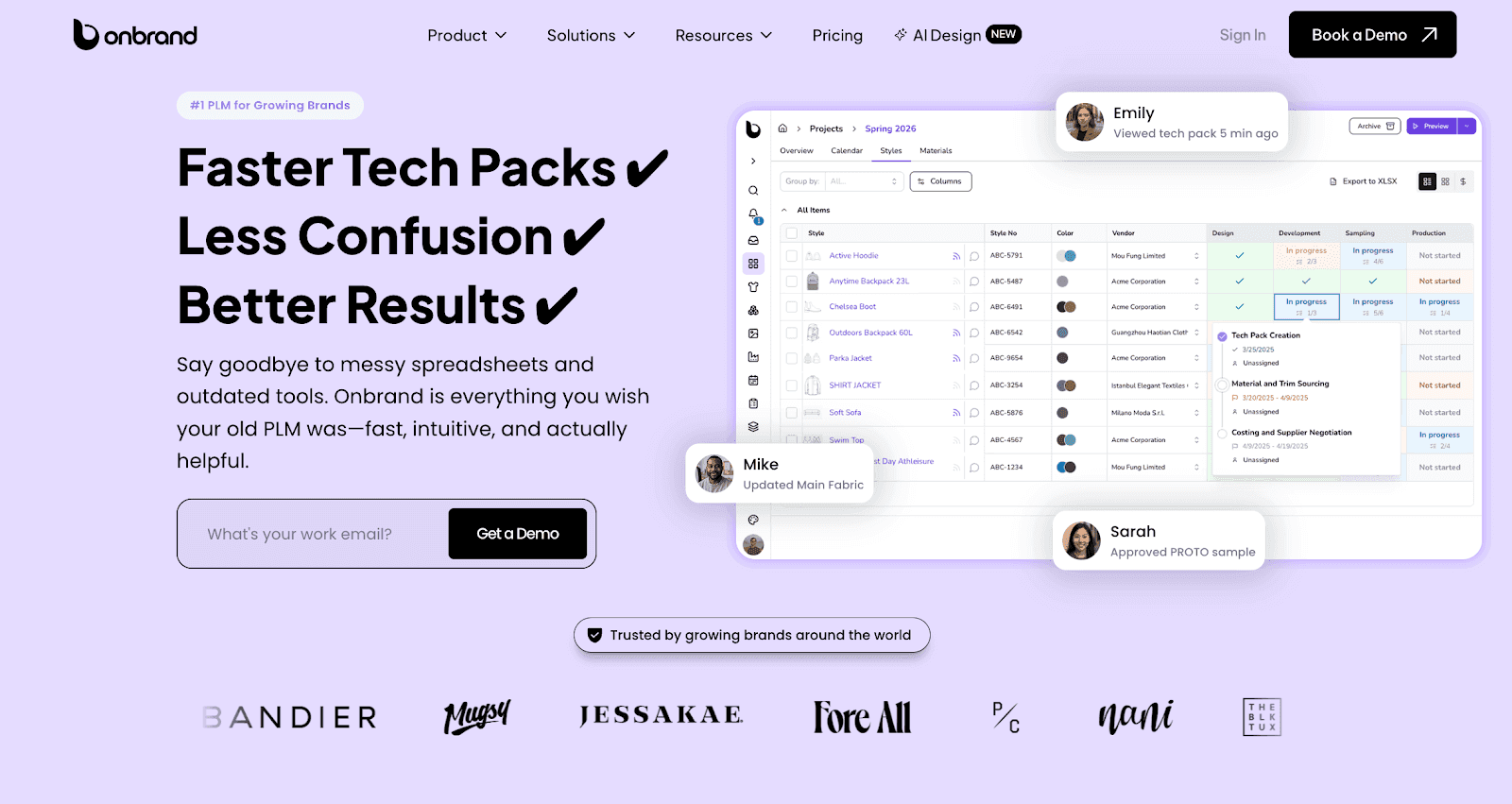
Teams can manage styles, materials, colors, artwork, specifications, collections, samples, tasks, and approvals from one shared platform.
Live tech packs function like online documents, so internal teams and vendors always have access to the latest product information without needing to create new PDF or Excel versions after every update.
Onbrand also includes configurable stages, tasks, approvals, and time-and-action calendars. Brands can adapt the platform to their existing product development process without paying for extensive professional services as workflow needs change.
Customers have reported 55% faster tech pack creation and development timelines shortened by up to four weeks. Data migration can take about 10 days for some teams, with most implementations completed within two to four weeks.
Onbrand AI Design Connects Concepts to Development
Onbrand AI Design supports the creative work that goes into a style before it's ready for a tech pack. Designers can generate concepts from text prompts, sketches, or reference images, then explore colorways, trims, silhouettes, alternate views, and design details.
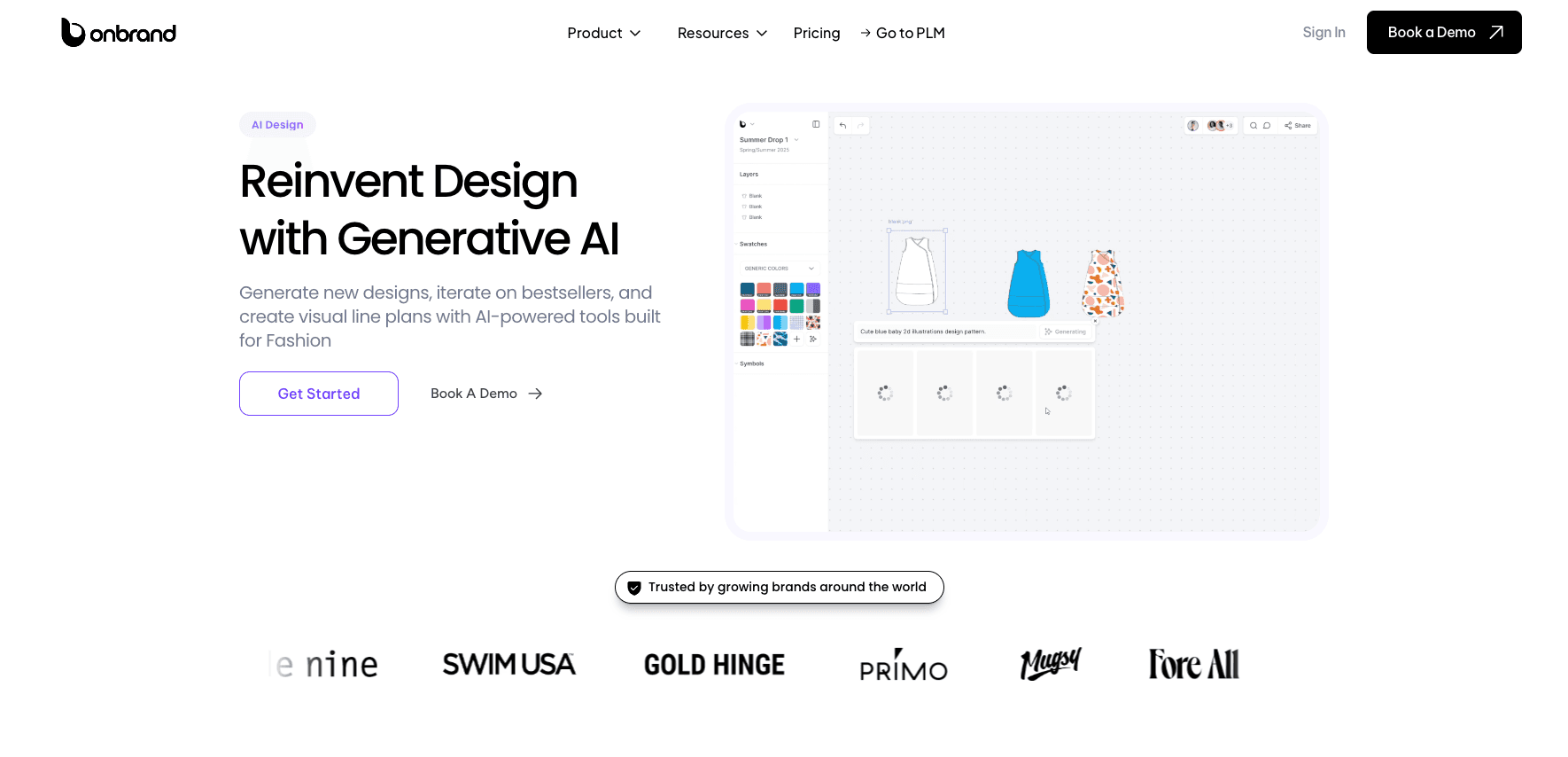
Teams can organize ideas on shared boards, leave comments directly on visuals, compare revisions, and build visual line plans together. Sketches can also be transformed into mockups, flat drawings, or on-model images for internal reviews, buyer presentations, and early factory discussions.
Approved concepts and design assets stay connected as they move into Onbrand PLM, reducing the need to recreate product information or manage separate folders.
Onbrand reports design turnaround up to 10 times faster, 30–50% fewer physical samples, and more than 10 weeks saved each year for some customers.
Together, Onbrand AI Design and Onbrand PLM connect the product development process from the first design concept to tech packs, samples, vendor collaboration, approvals, and production.
Upgrade Your Product Development With Onbrand PLM
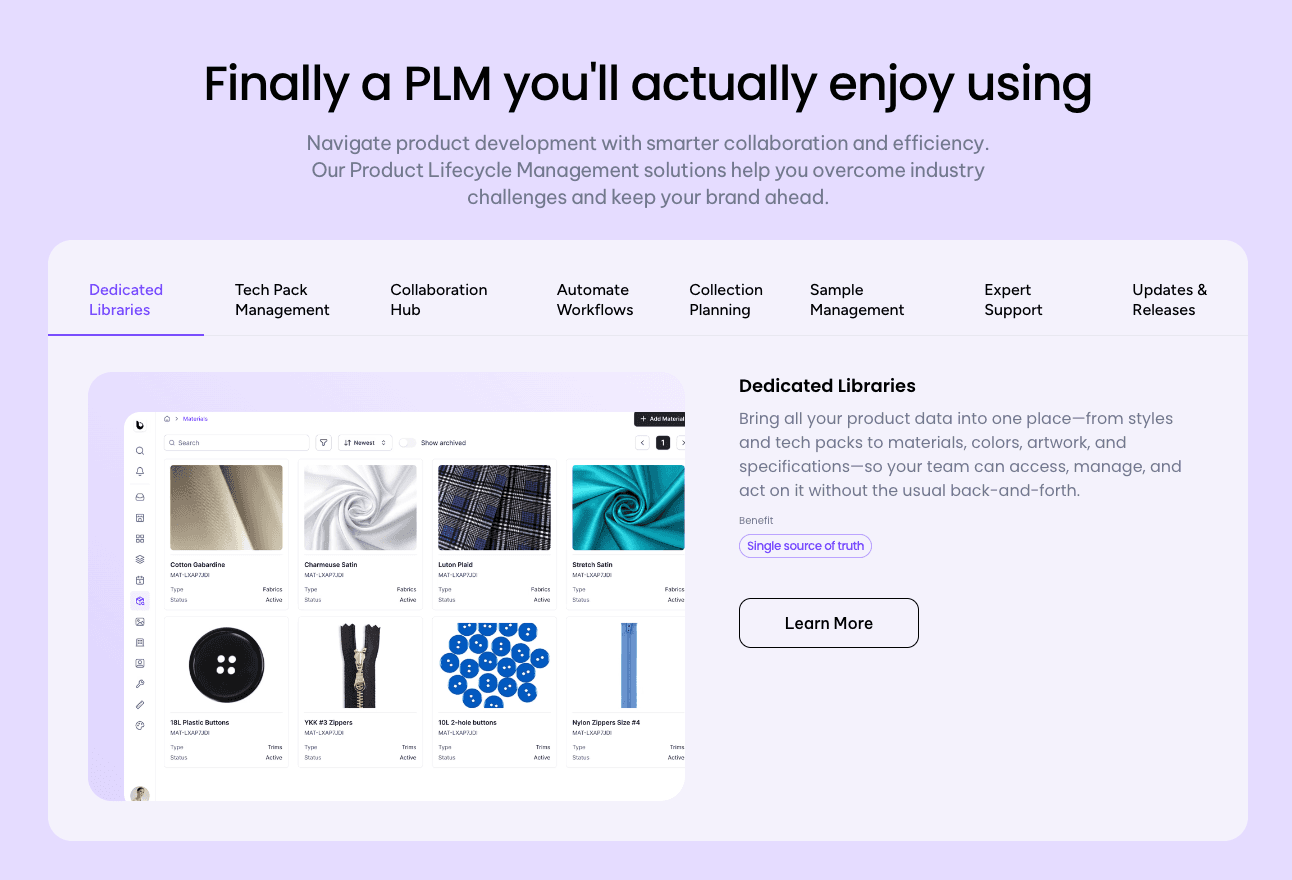
In the fashion and apparel industry, product development depends on keeping designs, materials, tech packs, samples, suppliers, and approvals connected.
A PLM system helps brands organize product information, improve collaboration, and manage products more effectively from concept through production.
As product development becomes more detailed, working from one connected platform helps teams reduce manual work, make better decisions, and keep product information up to date throughout the product lifecycle.
If you're looking for a modern PLM built for fashion brands, Onbrand combines Onbrand PLM and Onbrand AI Design in one connected platform.
From early concept exploration to live tech packs, vendor collaboration, approvals, and production, Onbrand helps fashion teams move products through development with greater confidence.
Book a demo to see how Onbrand can support your next collection.
FAQs About What Is PLM
What is a PLM vs ERP?
A PLM system manages product development, including designs, materials, tech packs, approvals, and product specifications. An ERP system manages business functions such as purchasing, inventory, finance, and order processing. Fashion brands often connect both systems so approved product information moves smoothly into production and business operations.
Is SAP a PLM system?
SAP offers PLM capabilities as part of its enterprise software portfolio. Businesses can use SAP PLM to manage product information and development while connecting it with ERP, manufacturing, and supply chain processes.
Why do fashion brands use PLM?
Fashion brands use PLM to organize product information, improve collaboration between cross-functional teams, and keep designs, materials, suppliers, samples, and approvals connected throughout product development. This helps reduce manual work and gives every team access to the latest product information.
Can PLM support global fashion supply chains?
Yes. PLM helps brands manage supplier information, approvals, materials, and production records throughout global supply chains. Working from one shared product record makes it easier for internal teams and manufacturing partners to stay aligned during product development.
How did PLM develop?
Product data management (PDM) systems emerged in the 1980s to organize design files and engineering data generated by computer-aided design (CAD) software. During the 1990s and early 2000s, PLM expanded beyond file management to connect product information, teams, and development workflows throughout the product lifecycle.
Today's PLM software is commonly delivered through cloud PLM platforms that support digital transformation with advanced technologies such as machine learning and digital twins. These modern PLM tools help businesses manage product information more efficiently throughout the development process.