Sep 24, 2026

One approved style can carry a surprising amount of information.
There are materials, measurements, bills of materials (BOMs), tech packs, sample comments, costs, supplier details, and final approvals.
Then the style moves forward, and purchasing, production, inventory, orders, and finance need accurate information from that development process.
That handoff can get complicated for fashion brands, especially when product lifecycle management (PLM) and enterprise resource planning (ERP) live in separate systems.
Choosing the best fashion PLM ERP software is not just about finding the platform with the longest feature list. It is about finding the right fit between product development and operations.
Below are eight platforms to consider in 2026.
TL;DR
These are the top eight fashion PLM and ERP software platforms in 2026:
ApparelMagic®
Uphance
WFX
Centric PLM
Infor
CGS BlueCherry
AIMS360
Fashion PLM vs. ERP: Where Does Each System Fit?
PLM and ERP support different parts of running a fashion business. PLM focuses on developing the product, while ERP takes care of the operational work needed to produce, sell, and fulfill it.
PLM Manages Product Development
Fashion PLM organizes the information and decisions behind each product as it moves from an idea toward production.
A team can use it to manage collections and styles, define materials and trims, build BOMs and tech packs, and keep product specifications and costing connected as the style develops. It also keeps sample feedback, approvals, and supplier communication connected to the relevant style.
This gives fashion designers, product developers, technical designers, and sourcing teams a shared place to work from as product details change.
ERP Manages Business Operations
ERP handles more of the operational and transactional work behind the business. It can support purchasing, production orders, inventory management, sales orders, fulfillment, and financial information.
It also helps operations teams coordinate production processes and supply chain management once products move beyond development.
The two systems can work together. PLM can remain the source of truth for product development, with approved product data passed into ERP for purchasing, production, inventory, orders, and finance.
8 Best Fashion PLM ERP Software Platforms in 2026
Fashion brands have several ways to connect product development with the operational side of the business. The eight platforms below offer different levels of PLM, ERP, and integration support, giving teams a range of fashion PLM software options to consider.
1. Onbrand PLM
Best For: Growing fashion brands that want a dedicated PLM for product development while keeping their existing ERP and other business systems.
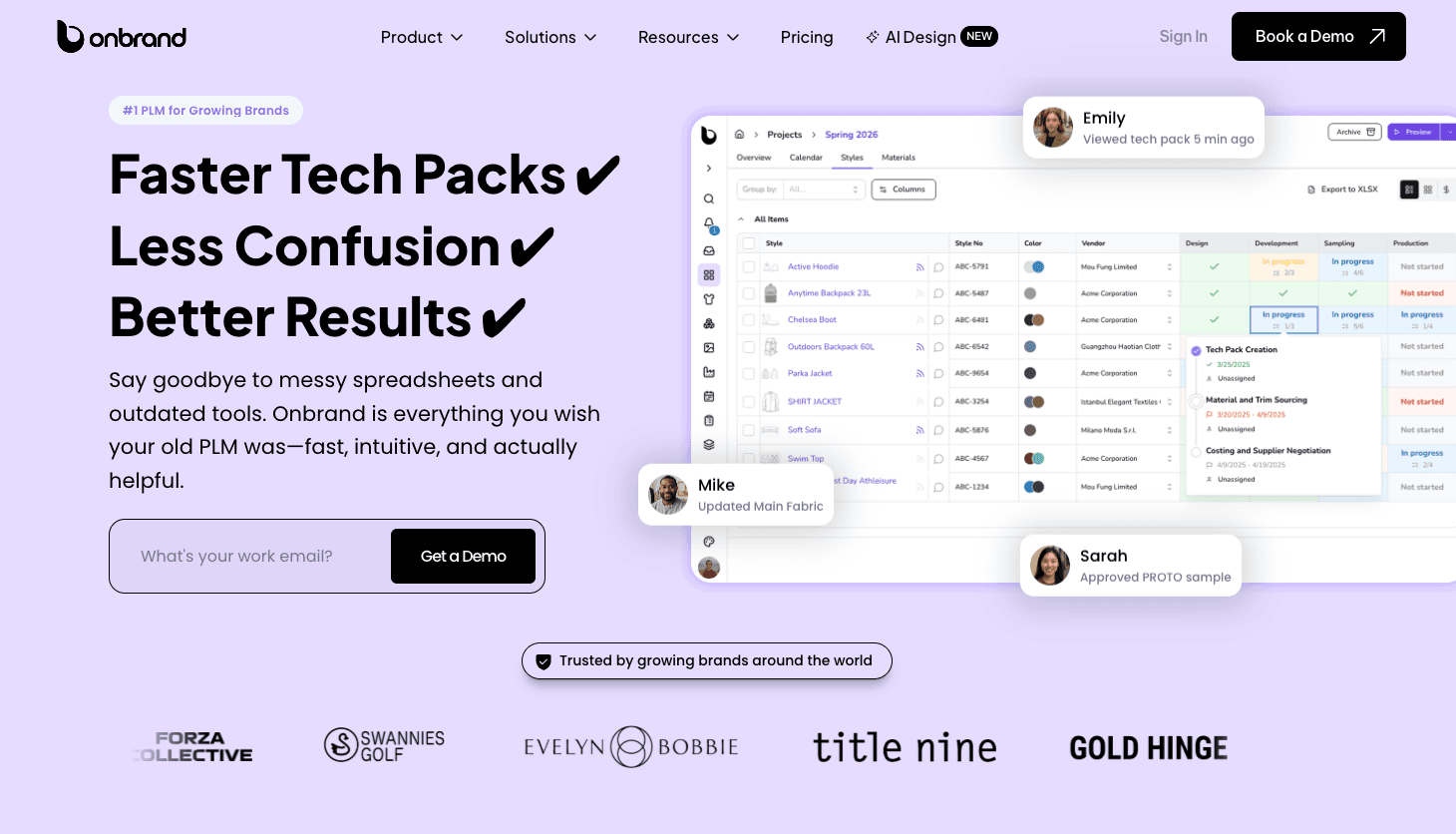
Onbrand PLM is built specifically for fashion product development, giving design, development, sourcing, and production teams a shared place to manage products from early planning through production readiness.
It focuses on the work that happens before approved product information reaches purchasing, inventory, finance, and other ERP processes. Brands can also pair it with Onbrand AI Design to explore concepts before moving selected designs into PLM for development.
Fashion PLM Capabilities
Onbrand gives product teams one place to:
Manage styles and collections
Build BOMs and tech packs
Organize materials and artwork
Review samples
Track costs
Keep supplier feedback and approvals connected to the product
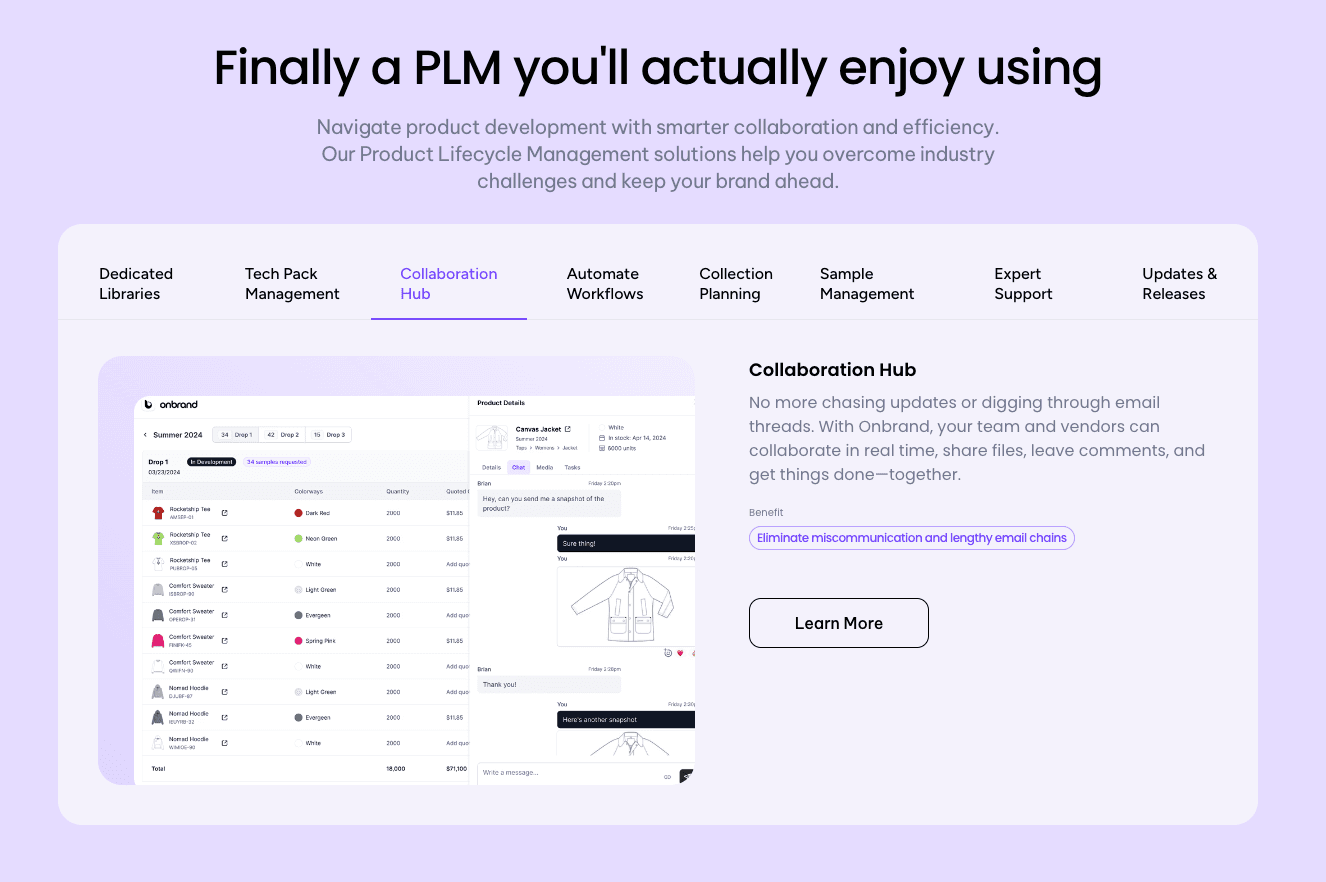
Live, web-based tech packs keep factories and internal teams working from current product information as specifications change. Teams can also manage sample reviews, comments, tasks, approvals, stages, and time-and-action calendars within the same product record.
Dedicated libraries make materials, colors, components, and other product information reusable between styles and collections. Suppliers can work directly with product teams inside Onbrand, keeping comments and updates connected to the relevant style.
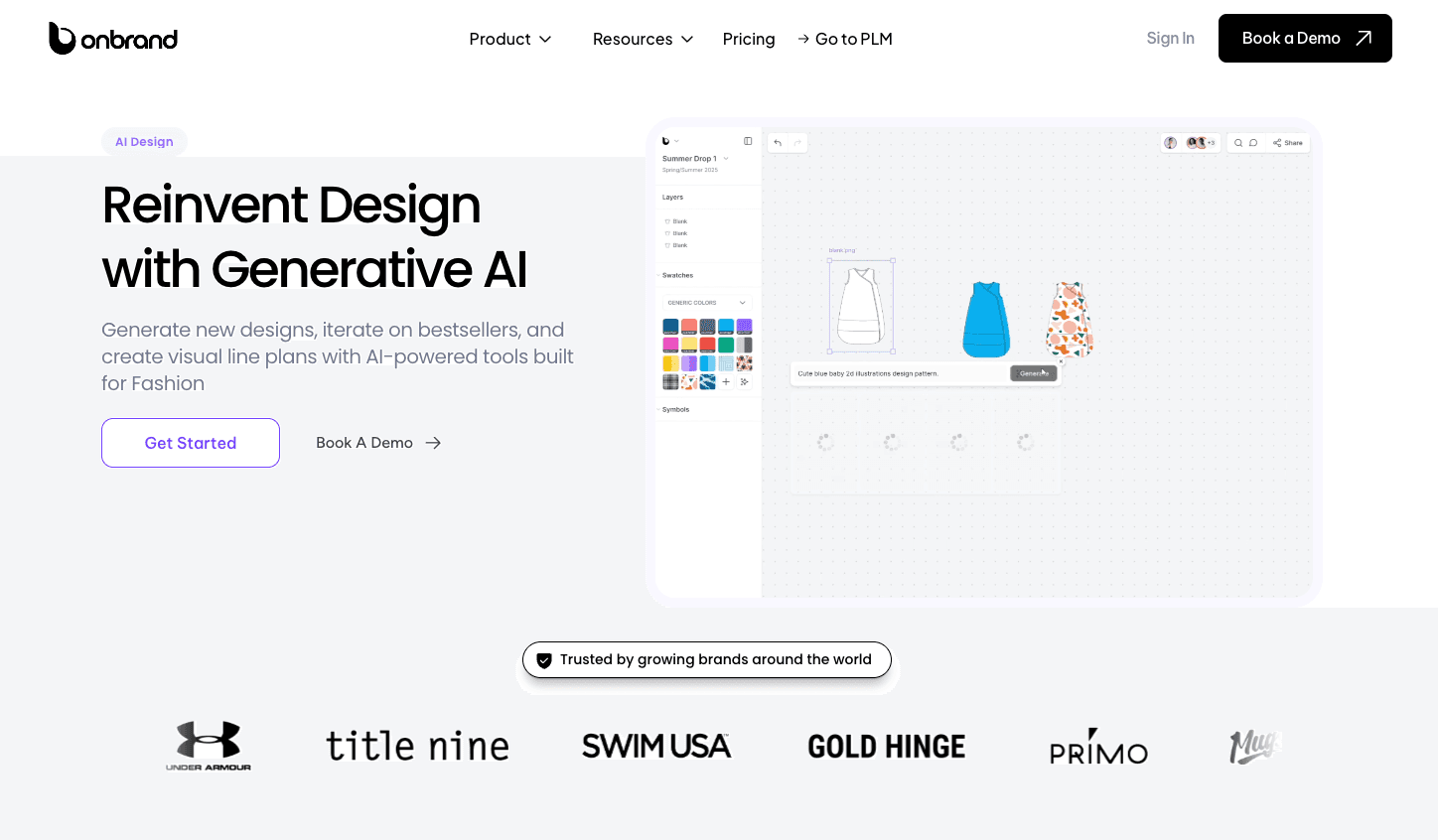
Onbrand AI Design supports the earlier creative stage with concept generation, design variations, photorealistic visuals, mood boards, and visual line planning. Selected concepts can then move directly into Onbrand PLM.
ERP and Business Operations
Onbrand is a specialized PLM, not an ERP. Purchasing transactions, inventory, financial records, and other downstream operations can remain in the business systems already in place.
Onbrand offers integrations and optional API access to connect PLM with ERP, e-commerce, design, and other business tools. This lets fashion teams improve product development without replacing the rest of their technology stack.
2. ApparelMagic
Best For: Fashion brands that want PLM and day-to-day ERP functions in the same apparel-focused platform.
Source: apparelmagic.com
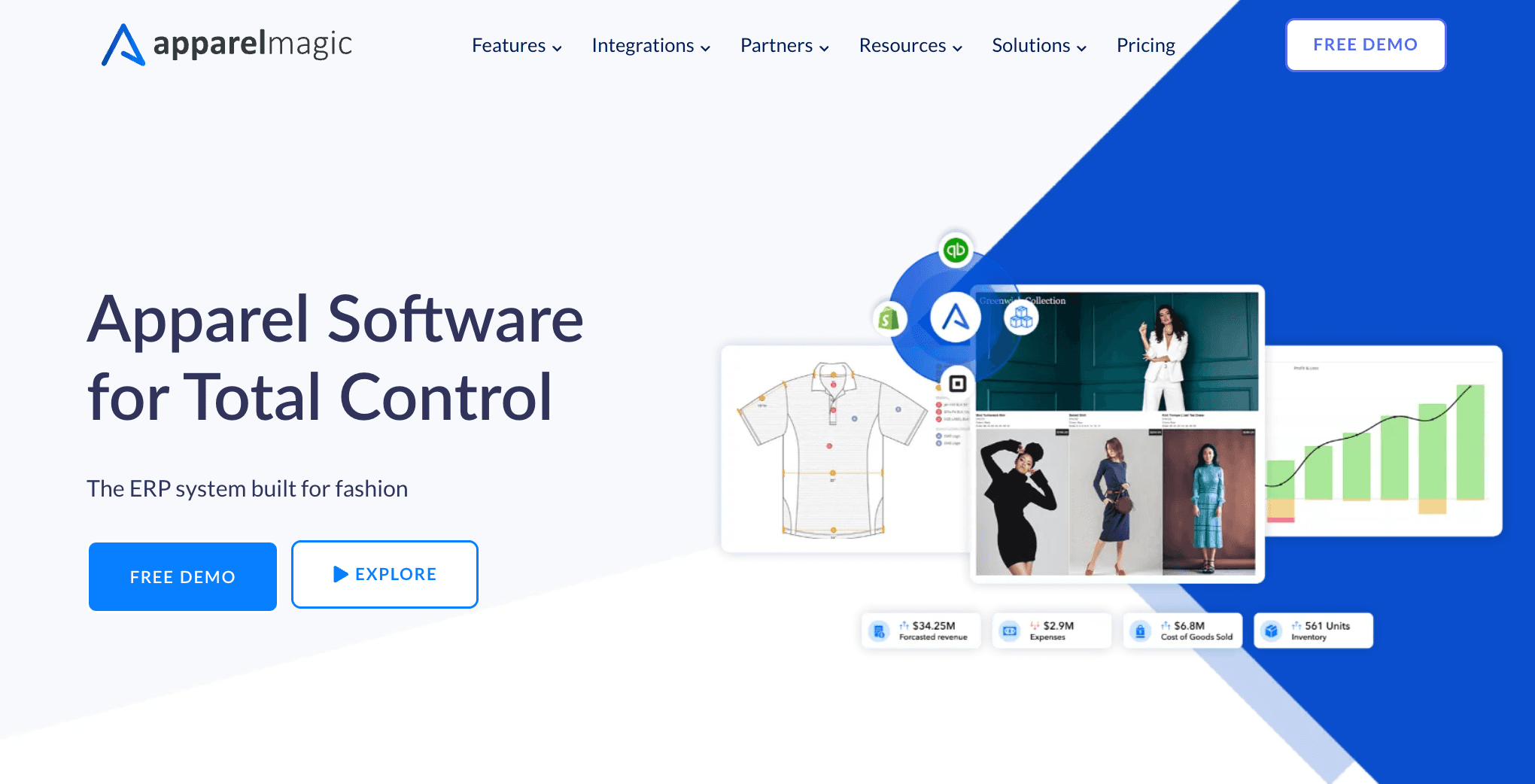
ApparelMagic brings product development and business operations into the same fashion-focused system. Its PLM tools cover the product side, from specifications and materials to tech packs and BOMs.
Beyond development, its functionality extends into inventory, manufacturing, sales, fulfillment, accounting, and B2B e-commerce.
Fashion PLM Capabilities
On the PLM side, teams can organize designs and materials, maintain product specifications, track costs, and keep supplier information connected to the style.
Teams can create tech packs, annotate sketches, manage garment measurements, and organize fabrics, trims, and tags within BOMs.
That gives small fashion brands a built-in tech pack tool and practical BOM management. Vendor-facing tools also support communication around tech packs, product details, purchase orders, and shipments.
ERP and Business Operations
ApparelMagic also covers:
Inventory
Procurement
Manufacturing
Sales
Fulfillment
Accounting
PO management
Style, SKU, and material information can carry into operational workflows such as purchasing and order processing.
B2B e-commerce is included as well, which can support a broader e-commerce stack and multi-channel setup. For brands looking to manage more of the product-to-operations workflow in one system, ApparelMagic covers a relatively broad range of functions.
3. Uphance
Best For: Mid-market apparel brands managing wholesale, direct-to-consumer (DTC), and growing operational complexity in one system.
Source: uphance.com
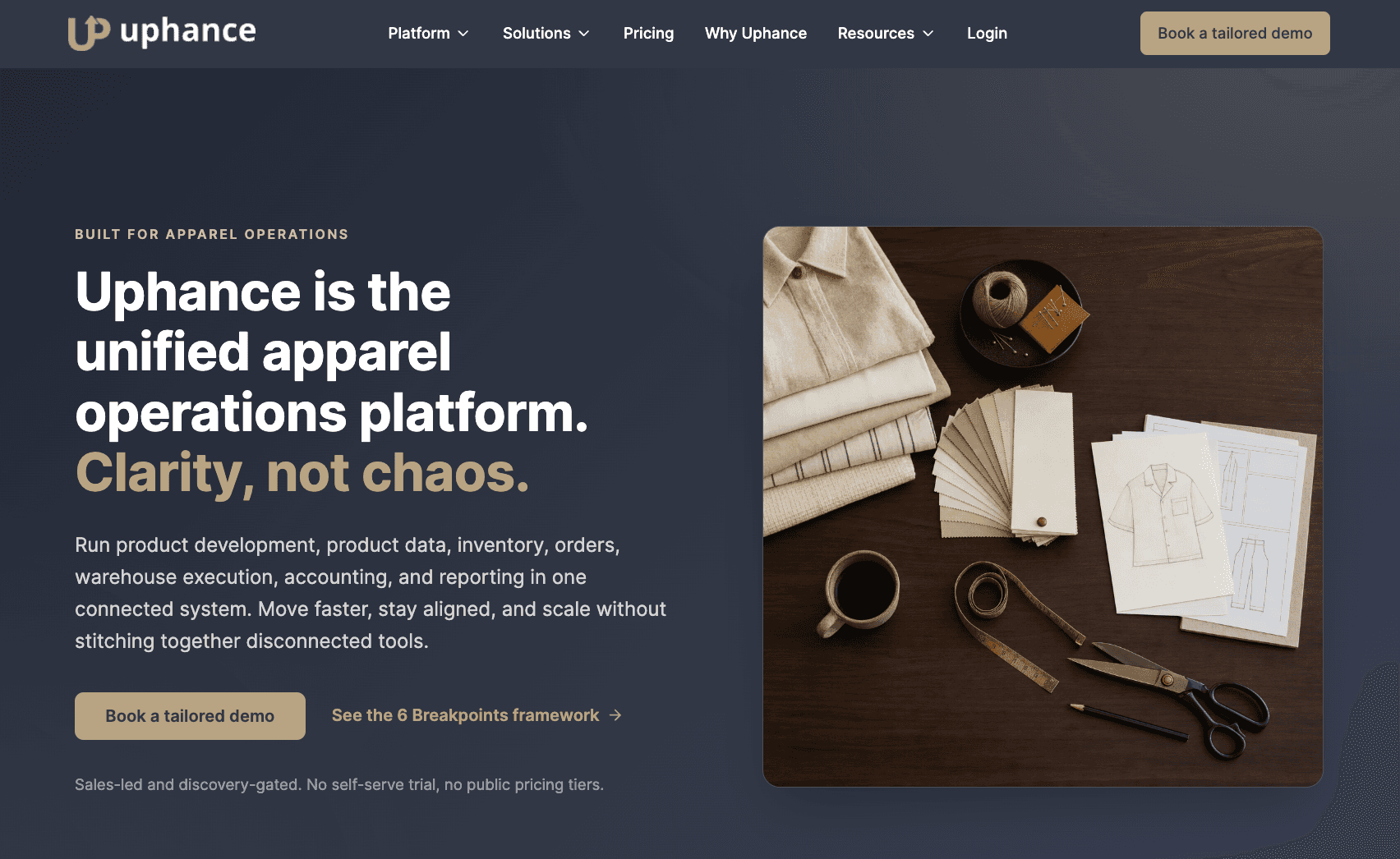
Uphance connects fashion product development with a wider set of operational workflows. Product data can move from development into production and purchasing without being separated from the work that follows.
Its broader functionality covers inventory, orders, warehouse operations, accounting, and reporting.
Fashion PLM Capabilities
Uphance lets teams build tech packs and BOMs, manage size specifications and materials, record sourcing details and approvals, and keep a version history as products change.
Teams can also track development stages and use a time-and-action calendar to follow milestones and dependencies for each style.
Product records keep sketches, specifications, colorways, and other details in one place. That gives growing brands a way to keep product development tied more closely to downstream operations.
Uphance also supports wholesale and DTC workflows, making it relevant for DTC brands and mid-market brands managing multiple channels or more complex operations.
ERP and Business Operations
Uphance extends into production, purchasing, inventory, wholesale and DTC orders, warehouse execution, payments, accounting, and reporting. Production records can connect tech packs and BOMs with factory purchase orders and incoming stock.
Uphance also supports integrations with commerce, accounting, marketplaces, 3PLs, shipping, B2B, and other external systems.
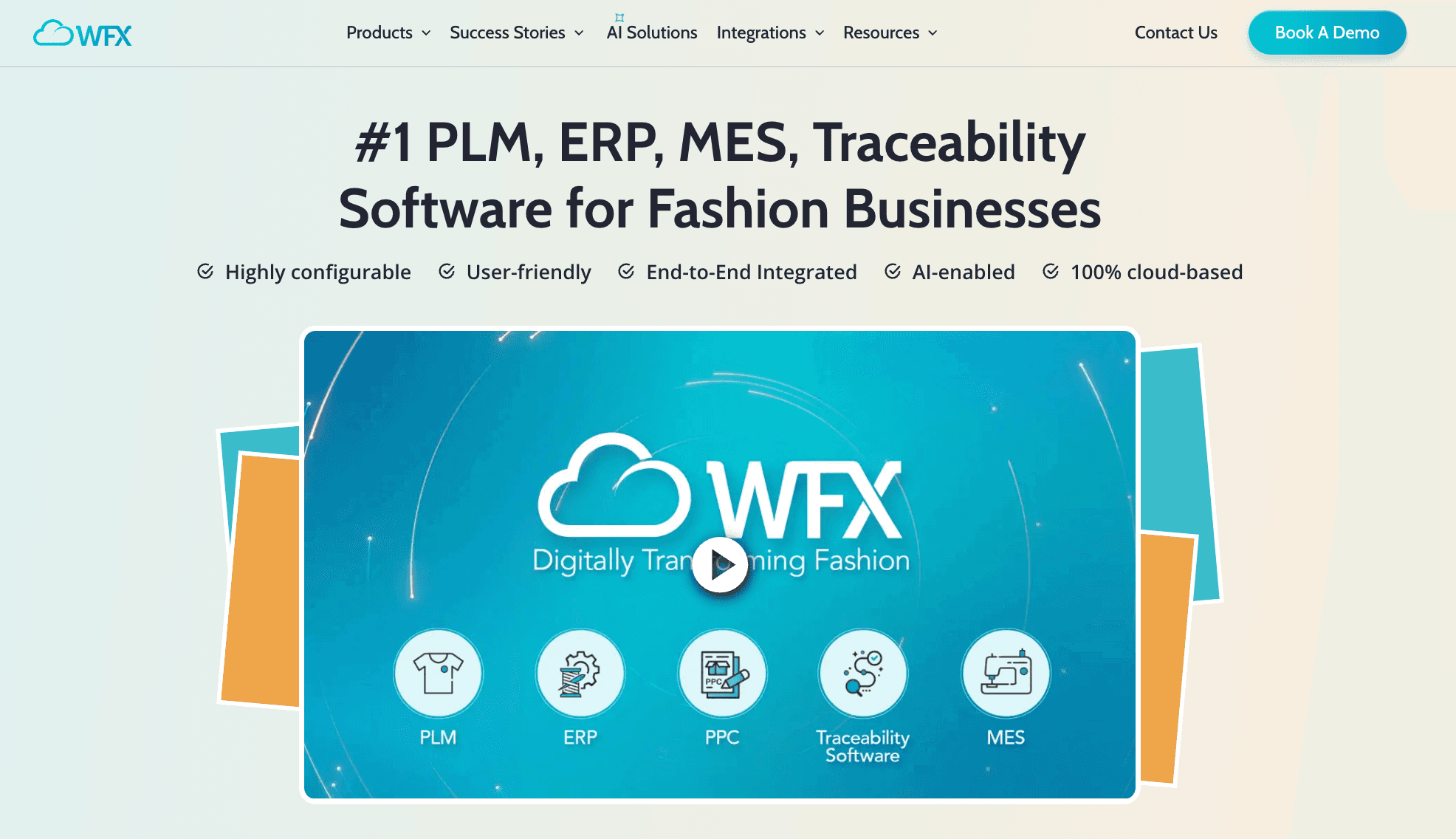
4. WFX
Best For: Mid-market and enterprise fashion businesses managing larger product ranges and supplier networks.
Source: worldfashionexchange.com
WFX offers separate fashion PLM and apparel ERP products that cover different parts of the product-to-production workflow.
Its PLM is geared toward brands and product teams, with tools for planning, design, development, sourcing, and production readiness.
WFX Apparel ERP is designed more specifically for apparel manufacturing and factory operations.
Fashion PLM Capabilities
WFX PLM supports the development process from tech packs and BOMs through materials, costing, sampling, quality checks, and supplier collaboration. A vendor portal lets factories respond to RFQs, review product information, and provide updates within WFX.
Teams can also manage the critical path for sampling and delivery milestones. These capabilities can support businesses with complex supply chains, where product information and supplier activity need to stay coordinated.
WFX also includes automated workflows within parts of its product development and sourcing processes.
ERP and Business Operations
WFX Apparel ERP is a separate product designed around apparel manufacturing operations. It covers procurement, material planning, inventory, production, quality control, costing, finance, and reporting.
WFX also offers MES software for more detailed shop floor control. Together, these products support global operations and broader supply chain workflows, though brands should evaluate which WFX products and integrations their setup requires.
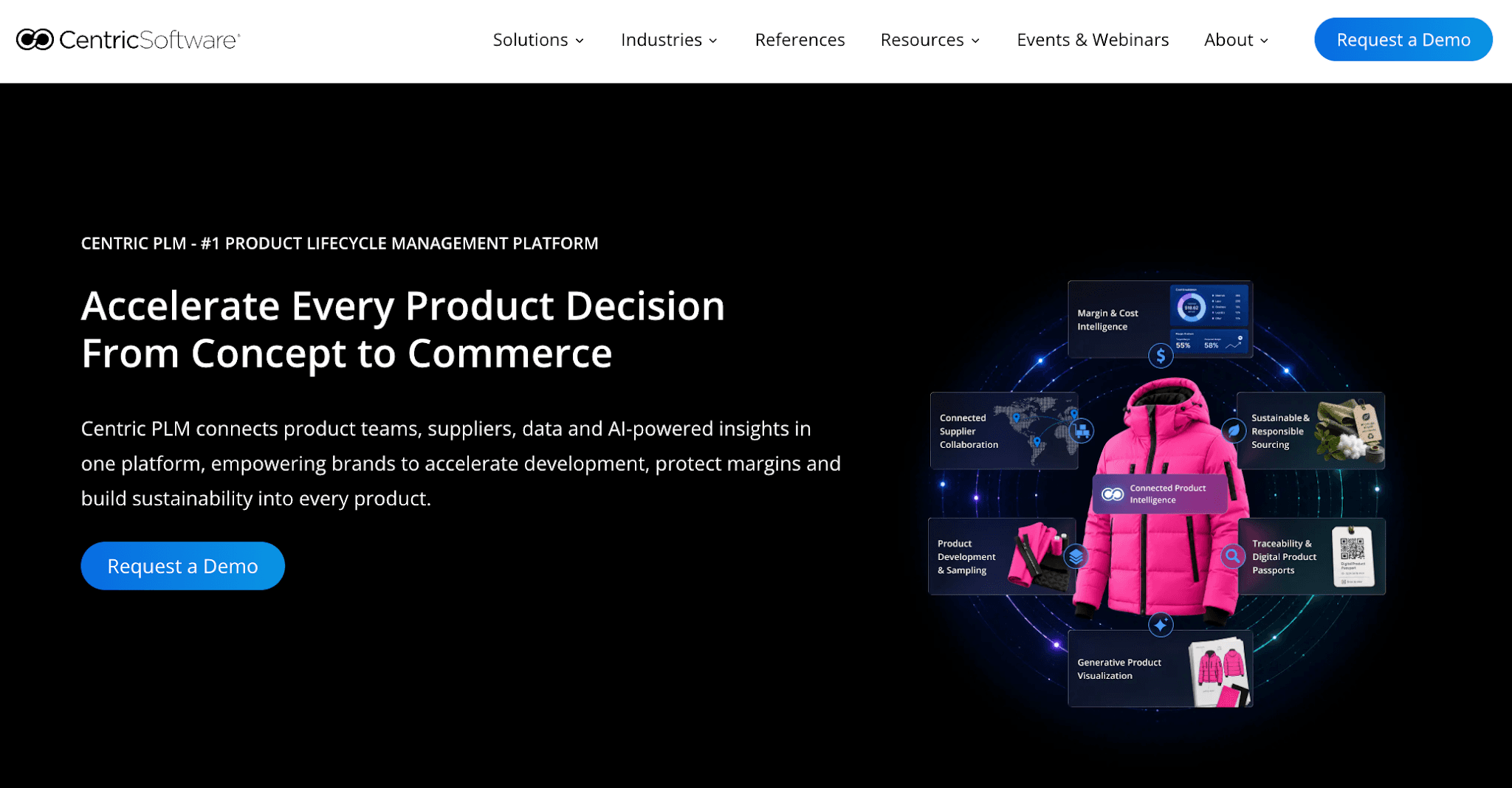
5. Centric PLM
Best For: Larger and enterprise fashion brands that want a specialized PLM connected to an existing ERP.
Source: centricsoftware.com
Centric PLM is built around PLM rather than traditional ERP. It supports product teams from planning and design through sourcing, costing, testing, and commercialization.
Other Centric products extend into planning, pricing, inventory, market intelligence, and product experience management.
Fashion PLM Capabilities
Centric PLM covers product creation from early development through sourcing, prototyping, and testing, with BOMs, costing, supplier collaboration, and product data managed within the same PLM environment.
It also connects with 2D and 3D design tools and provides tools for visual collaboration.
For enterprise fashion brands, that depth can support larger assortments, supplier networks, and more complex development processes.
Centric’s broader suite adds capabilities such as digital asset management through PXM, along with planning, pricing, inventory, and additional advanced analytics.
ERP and Business Operations
Centric PLM is not a traditional ERP. Large fashion brands can connect it with existing ERP systems so approved product information can move into downstream operational workflows.
Centric’s broader suite also covers planning, pricing, inventory optimization, PXM, and market intelligence.
That can support businesses managing complex multi-brand structures and higher operational complexity, but buyers should evaluate which Centric products and integrations are actually required.
6. Infor
Best For: Fashion businesses that need industry-specific PLM and ERP products within the same Infor ecosystem.
Source: infor.com
Infor offers both product lifecycle management and enterprise software for fashion.
Infor PLM handles the development side, while its fashion ERP offering takes product information into purchasing, production, inventory, orders, and finance. These are connected products, not a single PLM/ERP application.
Fashion PLM Capabilities
Infor PLM for Fashion gives apparel brands a central place to manage product data from design and development toward launch. It can standardize style information and connect product teams around the same product records.
Its key capabilities also include industry-specific workflows, centralized lifecycle data, collaboration, and integration with ERP and other business systems.
ERP and Business Operations
On the operations side, Infor CloudSuite Fashion centers on industry-specific ERP and can connect with applications such as PLM for Fashion, WMS, supply chain planning, and other Infor tools.
Its ERP side supports the work that follows product development, including procurement and production, inventory and fulfillment, sales orders, finance, and reporting.
Infor describes CloudSuite as modular, so businesses can connect the applications needed for their operating model.
This can give businesses a unified platform for a broader fashion technology stack without treating PLM and ERP as the same application.
7. CGS BlueCherry
Best For: Mid-market and larger apparel businesses that want PLM, ERP, and supply chain functions within the same broader software suite.
Source: bluecherry.com
BlueCherry combines product lifecycle tools with enterprise and supply chain software built for apparel, footwear, and consumer goods.
Its suite extends from concept and product development into sourcing, manufacturing, inventory, logistics, and retail operations. PLM and ERP are offered as distinct solutions within that broader BlueCherry ecosystem.
Fashion PLM Capabilities
BlueCherry PLM supports design collaboration and BOM development, along with costing, margin analysis, approvals, supplier communication, compliance, and product data management. It also connects with Adobe and 3D design tools.
Teams can centralize production tracking and workflow updates as products move toward manufacturing. That setup can fit mid-market apparel businesses managing more suppliers, product lines, and development activity.
ERP and Business Operations
BlueCherry ERP handles the operational side, including;
Inventory
Order processing
Warehouse management
Business intelligence
Electronic data interchange (EDI)
Collaborative supply chain functions
The broader BlueCherry platform covers additional areas through separate products, including manufacturing execution system (MES), shop floor control, AI planning, B2B wholesale, and quality management.
BlueCherry also publishes case studies and reference customers from fashion and apparel businesses, giving buyers examples of how different parts of the suite are used in practice.
8. AIMS360
Best For: Apparel brands that want fashion PLM functions within a broader apparel ERP system.
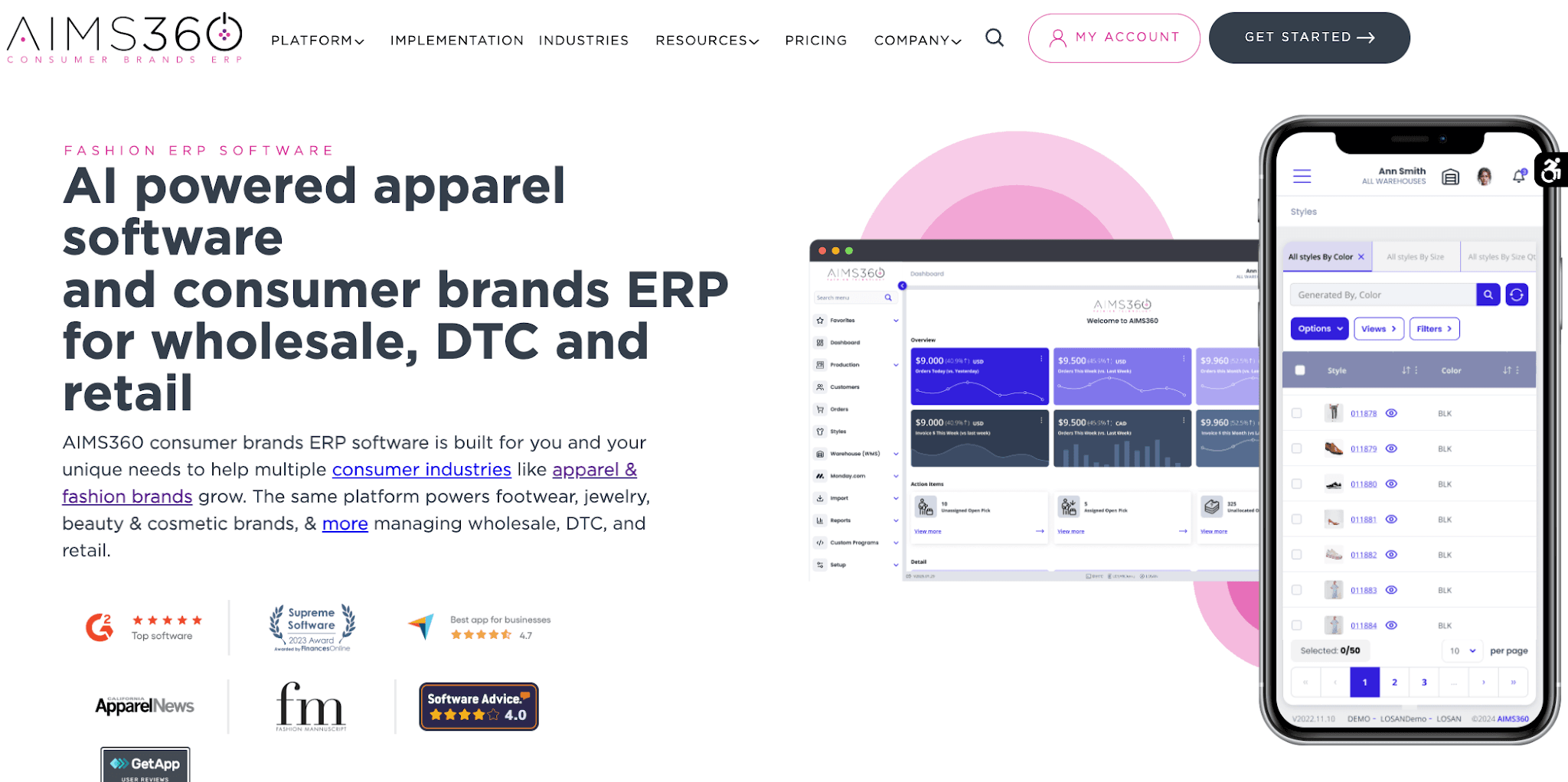
Source: aims360.com
AIMS360 approaches the PLM and ERP relationship from an apparel operations perspective. Product development sits within a broader system covering production, inventory, orders, warehousing, sales, and finance.
This can suit small brands moving beyond lighter tools that want more product development and operational functions managed in one system.
Fashion PLM Capabilities
AIMS360 supports apparel product development through:
Tech packs and BOMs
Material and style records
Sample tracking
Costing
Approvals
Supplier communication
Product data can move into production planning, with support for vendor POs, cut tickets, work orders, and WIP tracking.
The scope is closely connected to apparel production, so teams comparing dedicated PLM systems should consider the feature depth and learning curve they need.
ERP and Business Operations
On the operations side, AIMS360 connects purchasing and production with inventory, order management, warehousing, shipping, accounting, and reporting. Its PO management connects purchasing with vendors, materials, and production activity.
AIMS360 also provides integrations for e-commerce, marketplaces, 3PLs, EDI, shipping, and other business systems.
Like other broader ERP solutions, implementation requires planning, and AIMS360 documents data migration, configuration, integration setup, testing, and training as part of that process.
Do You Need One Fashion PLM ERP Platform or Two Connected Systems?
Fashion brands do not necessarily need PLM and ERP functionality in the same system. The better setup depends on what is already in place and how product information needs to move from development into business operations.
One Platform for More of the Business
A broader system can make sense when a brand is building a new technology stack or wants fewer systems to manage. PLM and ERP functions may sit within the same software or within connected products from the same vendor.
This setup can reduce the number of separate tools involved as a product moves from development into purchasing, production, inventory, and orders. It may also make sense when several teams need to work with connected product and operational information.
Keeping more functions together is not automatically the better choice. The system still needs to provide enough depth for the product development work the fashion team actually does.
Specialized PLM + Existing ERP
If the existing ERP already handles purchasing, production, inventory, orders, and finance well, replacing it may not be necessary. Some brands run product development in a specialized PLM and keep those operational workflows in their current ERP.
In this setup, the right fashion PLM gives designers and product teams a dedicated environment for developing products. Once a style is approved, the relevant information moves into the ERP:
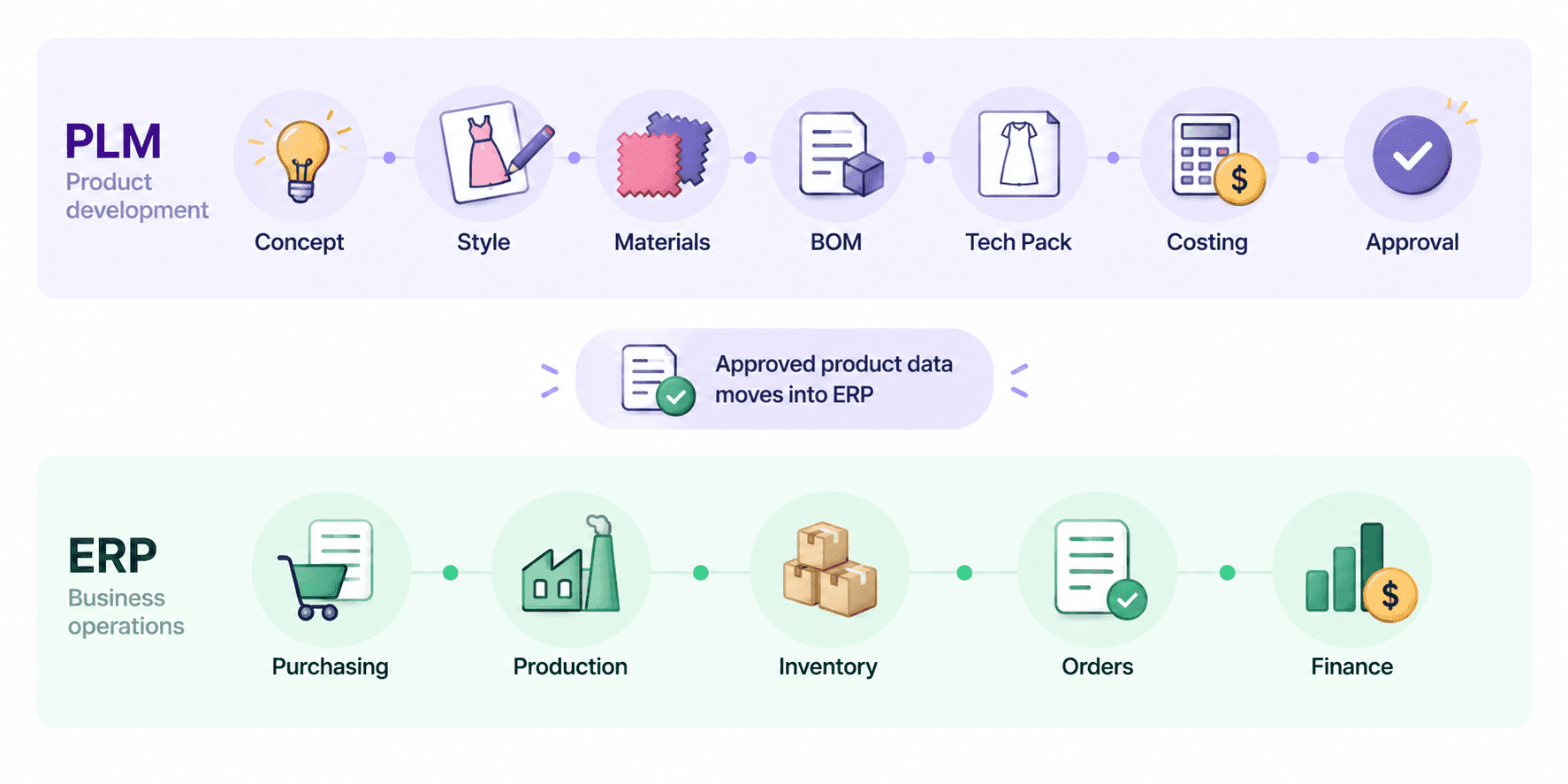
A fashion PLM implementation can focus on improving the development side without rebuilding the rest of the business system.
The amount of data migration required will depend on where current product information is stored and which system will own it going forward.
In practice, the choice depends on how product development is managed, which systems are already in place, and what information needs to move into operations.
How to Compare Fashion PLM ERP Software
Comparing fashion PLM and ERP software gets easier when you start with how your team works today. The best PLM software for fashion should support the development work that needs more structure and connect sensibly with the operational systems your business relies on.
Match the Product Development Workflow
Start with a real style and follow it from initial design through approval. This quickly shows if the software supports the level of detail your product team needs.
For example, can designers create styles, add materials, build BOMs and tech packs, manage samples, update costs, and record approvals without moving between disconnected tools?
Check how changes are handled too. A material update should be reflected wherever that information is used.
The best fashion PLM software should fit the way products are actually developed, not simply offer a long list of key features. For an apparel PLM, useful depth may also include development calendars and component libraries that teams can reuse between styles.
Define the Operational Scope
Next, decide how much of the operational side the new software needs to handle. A brand may need purchasing and inventory support, for example, without needing to replace its accounting system.
Map the functions that need to connect with product development, including manufacturing, orders, fulfillment, and finance. This helps separate essential requirements from functionality that sounds useful during a demo but may rarely be used.
Pay particular attention to how the software supports purchase orders and tracks production after a style is approved.
Examine the PLM-to-ERP Data Handoff
A PLM-to-ERP connection is only useful if the right information can move between the systems.
Take a finished style and identify what ERP needs from it. That could include the style or SKU, approved BOM, final cost, supplier details, and product specifications. Then find out how that information gets there.
If teams have to copy the same details manually into ERP, there is more opportunity for outdated or inconsistent information to enter the workflow. Check which product data transfers automatically and which fields still require manual work.
Check Existing System Compatibility
Write down the systems the business plans to keep before comparing new software. That could include an existing ERP such as Microsoft Dynamics, plus fashion PIM, accounting, sourcing, e-commerce, or other tools.
Then check which connections are available and what each integration actually exchanges. This becomes especially important for a multi-channel business with a larger e-commerce stack.
Cost belongs in this conversation too. Fashion PLM pricing may cover the software itself, but the total fashion PLM software cost can also include integrations, additional modules, implementation fees, training, and ongoing support.
Evaluate Fashion-Specific Depth
General business software may support basic product records without the fashion-specific structures needed for colors, sizes, variants, seasons, materials, and samples.
Test how the system handles these aspects. A style with several colorways and a full size range is a better test than a simple product record.
The software should keep those relationships connected, so a change to a color, size, material, or sample does not become difficult to track as assortments grow.
Consider Who Uses Each System
Finally, think about the people who will actually work in the software. Designers and technical designers may spend their time building product specifications, while sourcing teams need supplier information and operations teams need approved data for downstream work.
Ask each role to test the workflows they would use regularly. A system can have extensive functionality and still create a steep learning curve if everyday tasks take too many steps.
Supplier access deserves the same consideration. If vendors need to participate directly, check if the software provides a supplier portal, what suppliers can see or edit, and whether additional supplier seats are required.
Choose the Right Fashion PLM ERP Setup for Your Brand
The right setup depends on how your team develops products, which systems already work well, and how much of the process you want one vendor to cover.
A broader PLM and ERP system may make sense for a brand that wants more functions under one vendor. A dedicated PLM can be a better fit when the existing ERP already handles business operations well.
The important part is choosing software that fits the way your team handles styles, materials, samples, approvals, suppliers, and the handoff into operations.
For brands that want a focused product development system, Onbrand PLM gives fashion teams a dedicated place to manage that work from early development through approval.
Book a demo with Onbrand to see how it can fit your product development process.
FAQs About Best Fashion PLM ERP Software
What is the most popular PLM system?
There is no single most popular PLM system for every business. Established PLM options include Onbrand PLM, Centric PLM, Infor PLM, and Backbone PLM, with different systems serving different industries, company sizes, and product development needs.
Which software is best for fashion design?
The best software for fashion design depends on the work being done. Creative tools can support sketching, concept generation, and visualization, while fashion PLM software helps teams manage approved designs, tech packs, materials, samples, and production-ready product information.
What is PLM in the fashion industry?
PLM in fashion is software used to manage product information and development from initial concept through production readiness. It helps design, product development, sourcing, and production teams keep styles, materials, BOMs, tech packs, costing, samples, and approvals organized in one shared workflow.
How does PLM support a growing fashion business?
PLM can support digital transformation by bringing product information and development processes into a shared system, reducing reliance on disconnected files and manual updates. For fashion teams choosing new software, the practical focus should be on how well it fits their current process and connects with the business systems they plan to keep.
ApparelMagic® is a registered trademark. ApparelMagic is not affiliated with or endorsing Onbrand.