Mar 24, 2026
Over time, fashion product development pressure often outpaces operational scale. Tech packs multiply, colorways expand, and sample revisions move through email threads and shared drives.
Inventory may remain structured inside one system, while product data sits elsewhere, disconnected from development workflows.
Uphance is a business management and enterprise resource planning (ERP) platform used by many fashion brands to manage inventory, orders, and financial operations.
It helps apparel companies control distribution, retail activity, and reporting within a single system.
Some brands begin reviewing Uphance alternatives to compare functionality, while others look for a clearer separation between ERP and product lifecycle management (PLM).
In this article, we review seven Uphance alternatives and explain which system type best fits different workflows in the fashion industry.
TL;DR
Top Uphance alternatives for fashion brands in 2026:
Oracle NetSuite
Aptean
WFX
Backbone PLM
Centric PLM
BlueCherry
When Fashion Brands Start Looking for Uphance Alternatives
Businesses looking for an Uphance alternative are usually prompted by growth rather than failure. When product volume rises, and more styles, sizes, and colorways move into production, operational pressure builds well before leadership decides to replace a system.
Many fashion brands reach a point where:
Product complexity increases before operational scale supports it. Collections expand, but internal systems do not always grow at the same pace as product volume.
Tech packs sit outside structured PLM software. Specifications live in spreadsheets or even paper files instead of connected digital tools.
Inventory management spans wholesale and retail sales channels, while product data remains separate from development workflows.
Core ERP platforms prioritize financial management, distribution, and order processing, while product development details often require separate PLM systems.
Cross-functional collaboration between design, sourcing, and operations requires a clearer structure as vendor and factory partners increase.
In many cases, brands are reassessing system fit as the business grows. Some compare other ERP solutions, while others evaluate dedicated PLM platforms to support product data control before inventory hits the warehouse.
At this stage, brands need alignment between product development and operations within a modern fashion industry workflow.
7 Best Uphance Alternatives in 2026
Below are seven Uphance alternatives used in the fashion industry. The list includes ERP platforms, PLM systems, and hybrid solutions. Each fits a different workflow and operational structure.
1. Onbrand (AI Design + PLM for Modern Fashion Brands)
Onbrand is built for fashion brands that need stronger control of product development before styles move into inventory.
Uphance supports operational records, including orders, distribution, and financial reporting. Product development data may sit outside that structure. Tech packs live in spreadsheets. Sample comments move through email. Version tracking becomes manual.
Onbrand brings structure to that stage of the workflow.
It combines AI-powered design exploration with structured PLM, so visual direction and technical documentation stay aligned. Materials, measurements, and approvals sit inside the same style record. You are not reconciling multiple files before production.
The difference shows up as collections expand.
More colorways and sample rounds increase revision volume. Without structure, small discrepancies carry forward. Onbrand maintains a stable development record before inventory and accounting systems take over.
Onbrand AI Design
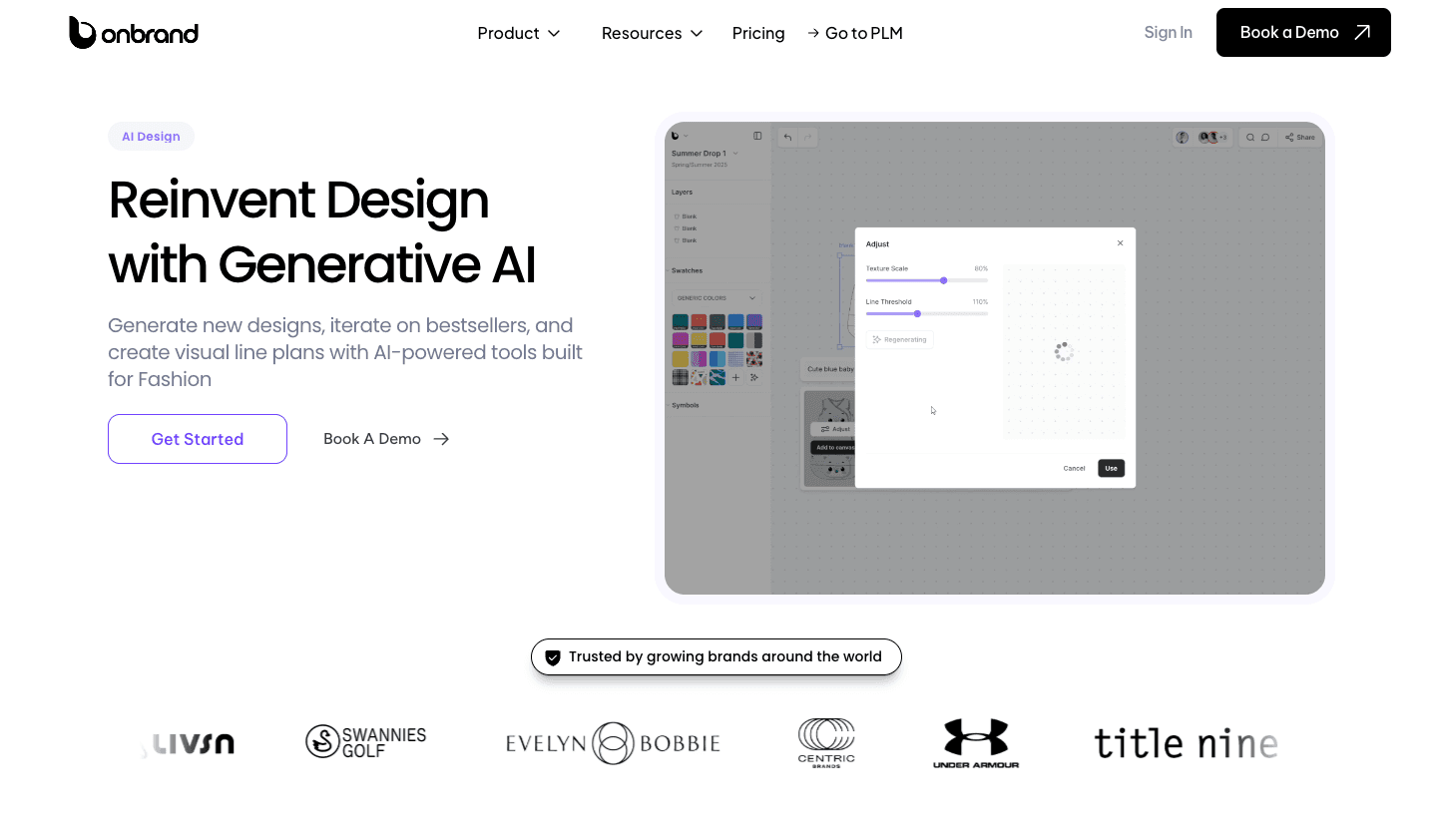
Onbrand AI Design supports early concept work without separating it from development. You can generate garment visuals from text prompts, sketches, or reference images.
You can test colorways, trims, and silhouette changes quickly. Fabric rendering and 3D visualization give a clearer direction before committing to a physical sample.
Reviews happen in the same workspace. Comments stay tied to the visual. Version history remains visible. Mood boards and line plans connect directly to the styles you plan to build.
Once a direction is approved, it moves into PLM without manual re-entry.
Onbrand PLM
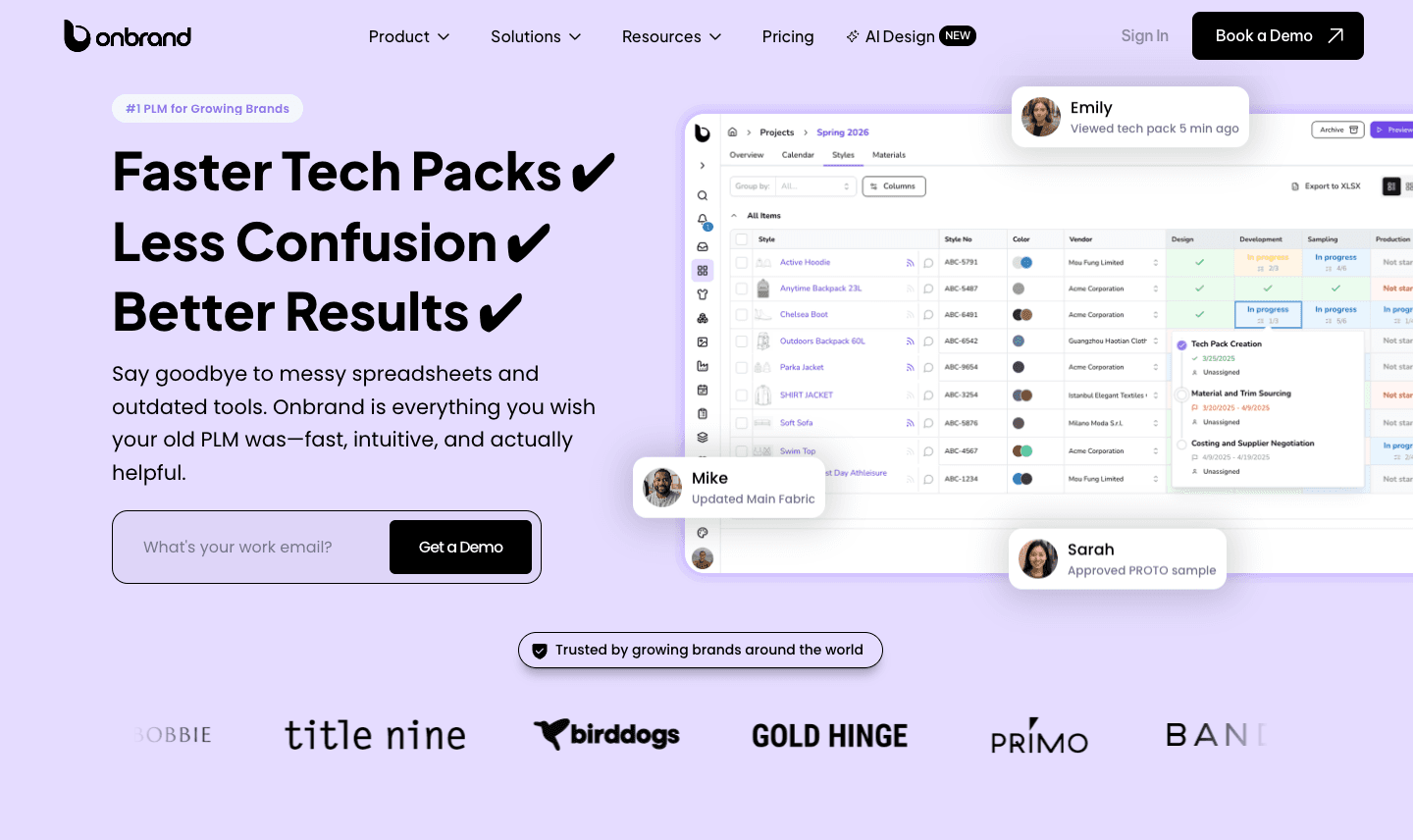
Onbrand PLM manages the structure behind each style. Tech packs are web-based, so vendors always reference the current version.
Bill of materials (BOM) updates stay connected to the correct colorway, measurement revisions are tracked through version history, and sample approvals live within the same record that production will reference.
Project stages, tasks, and time and action calendars sit alongside the product data. Vendor communication happens directly on the tech pack instead of scattered messages. That alignment reduces confusion during sample rounds and factory handoff.
Uphance focuses on operational management after approval. Onbrand focuses on development control before approval. For brands experiencing pressure in tech packs, revisions, and sample tracking, that distinction becomes clear.
2. Oracle NetSuite (ERP for Inventory Management and Distribution)
Source: netsuite.com
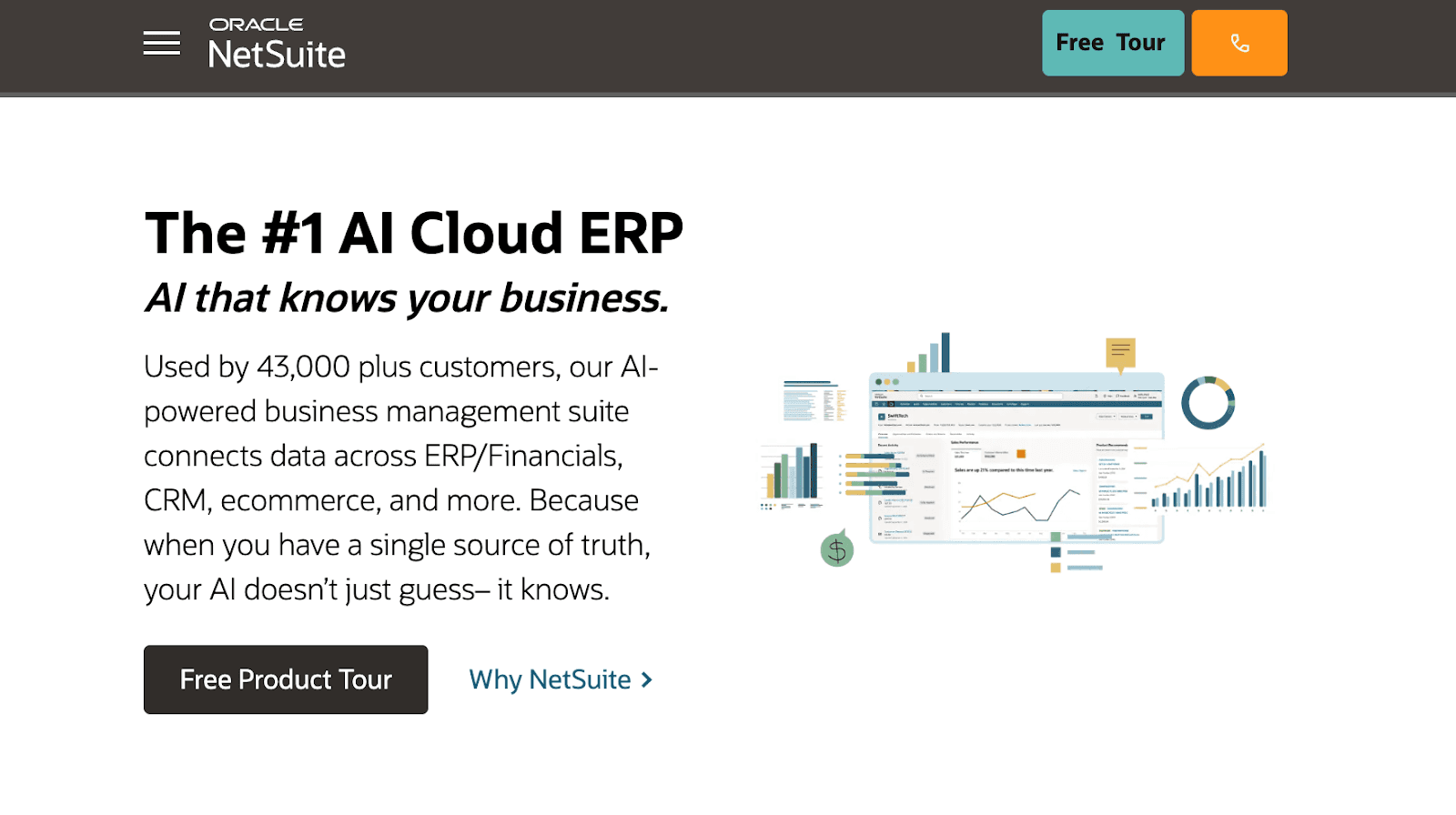
Oracle NetSuite is an enterprise resource planning platform built to handle financials, inventory, order management, and global operations in one system.
Many apparel companies choose it when they need stronger accounting controls, multi-entity reporting, or tighter compliance and security standards.
It also includes modules for customer relationship management (CRM), ecommerce, and human resources, which makes it suitable for brands that want one platform to run the business end-to-end.
For brands currently using Uphance, NetSuite often represents a move toward more complex reporting structures and broader scalability requirements. It usually requires a higher budget, formal training, and implementation support from certified partners.
NetSuite strengthens operational control after styles are approved and move into inventory. It does not replace a dedicated PLM, so product development workflows usually remain in a separate system.
3. Aptean (Apparel ERP Solutions)
Source: aptean.com
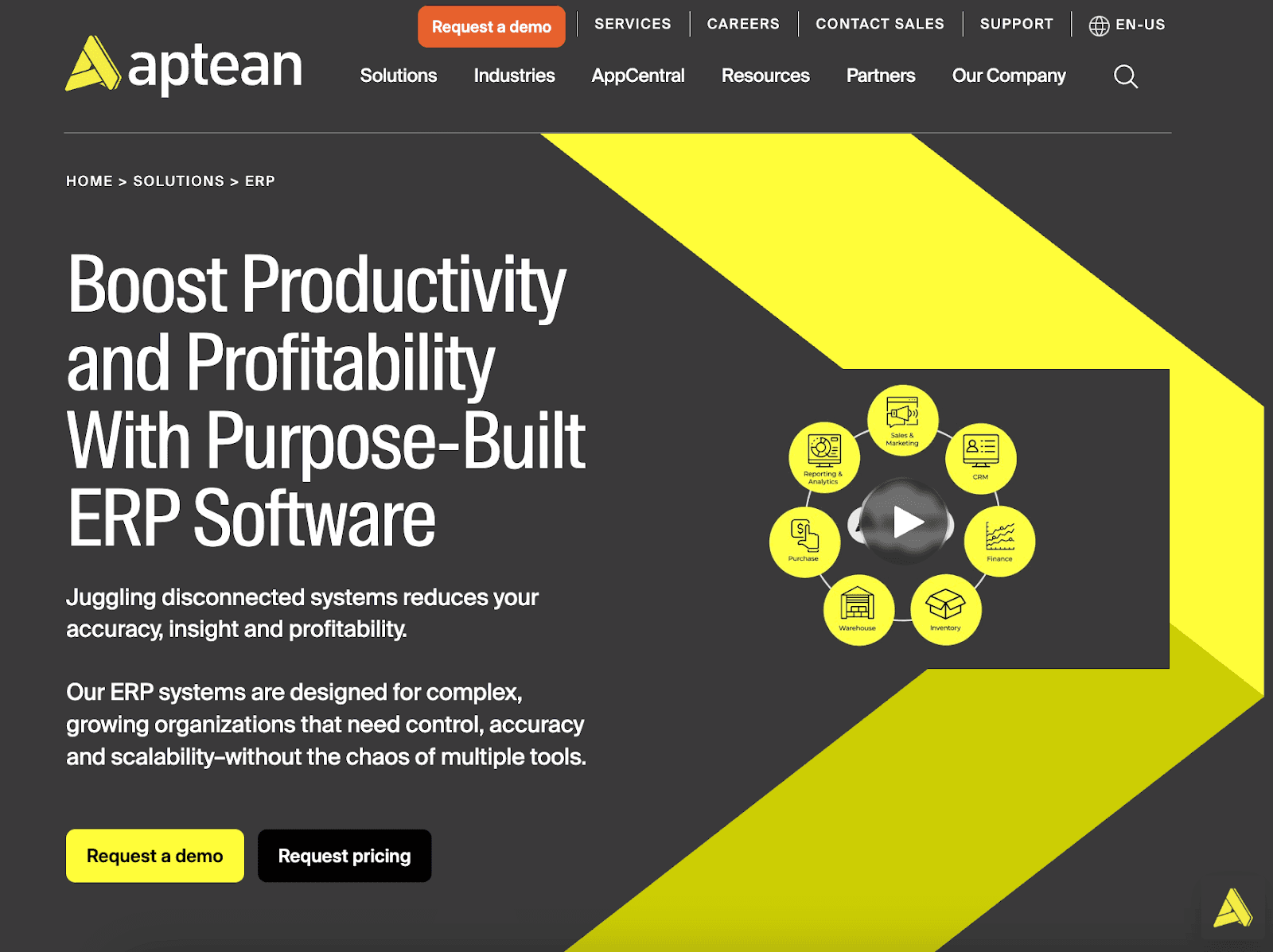
Aptean provides industry-specific ERP solutions for manufacturing, distribution, and select apparel segments. It focuses on financial reporting, production control, and supply chain visibility for companies that have outgrown entry-level systems.
Compared to Uphance, Aptean often serves larger or more process-heavy organizations that require structured implementation and ongoing services support. It is positioned as mission-critical software for established customers, not lightweight startup systems.
Brands evaluating Aptean are usually seeking stronger production planning, traceability, and broader oversight across sourcing and fulfillment.
Like Uphance, Aptean centers on ERP capabilities rather than detailed product development management, so PLM remains a separate decision.
For a fashion brand reviewing Uphance alternatives, Aptean represents a move toward more formalized infrastructure rather than a solution for tech packs or sampling control.
4. WFX (ERP + PLM Hybrid for Global Production)
Source: worldfashionexchange.com
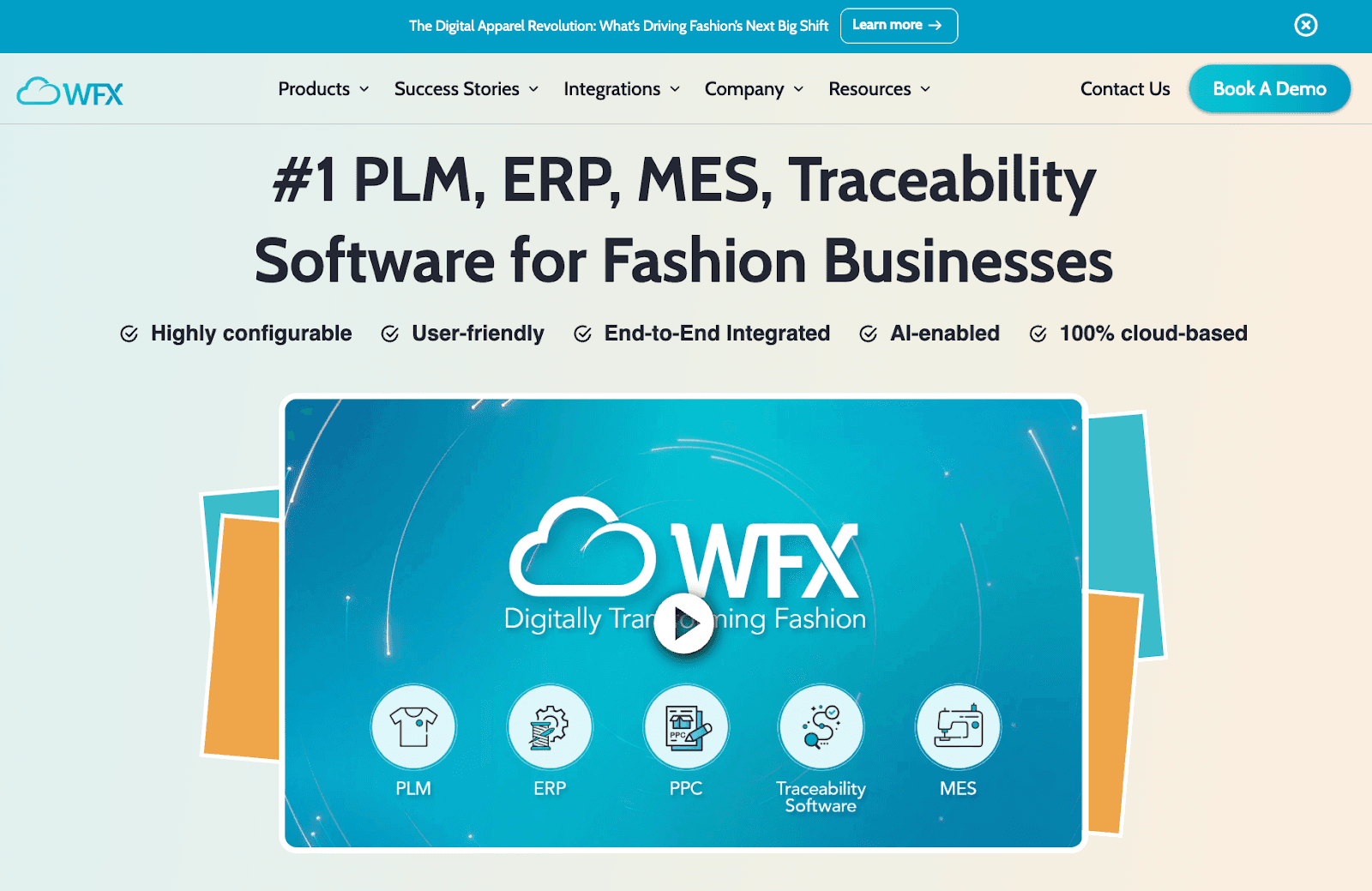
WFX is a cloud-based platform that combines PLM, ERP, and factory-level tools in one system. It serves brands and manufacturers that want product development, sourcing, and production data connected from the first sample to final shipment.
WFX places greater emphasis on integrated product lifecycle control than ERP-first platforms like Uphance. It includes vendor portals and traceability layers that support global production environments.
Brands reviewing WFX are usually trying to reduce the separation between development and operations rather than run them as separate systems.
It typically fits companies with structured supply chains and defined business needs, not early-stage labels. Implementation is more formal than lightweight tools, and scale is a central consideration.
For teams that find ERP alone insufficient for development oversight, WFX offers a more integrated approach, though complexity and rollout effort should be part of the evaluation.
5. Backbone PLM (Lightweight PLM for Growing Fashion Brands)
Source: bamboorose.com/backbone
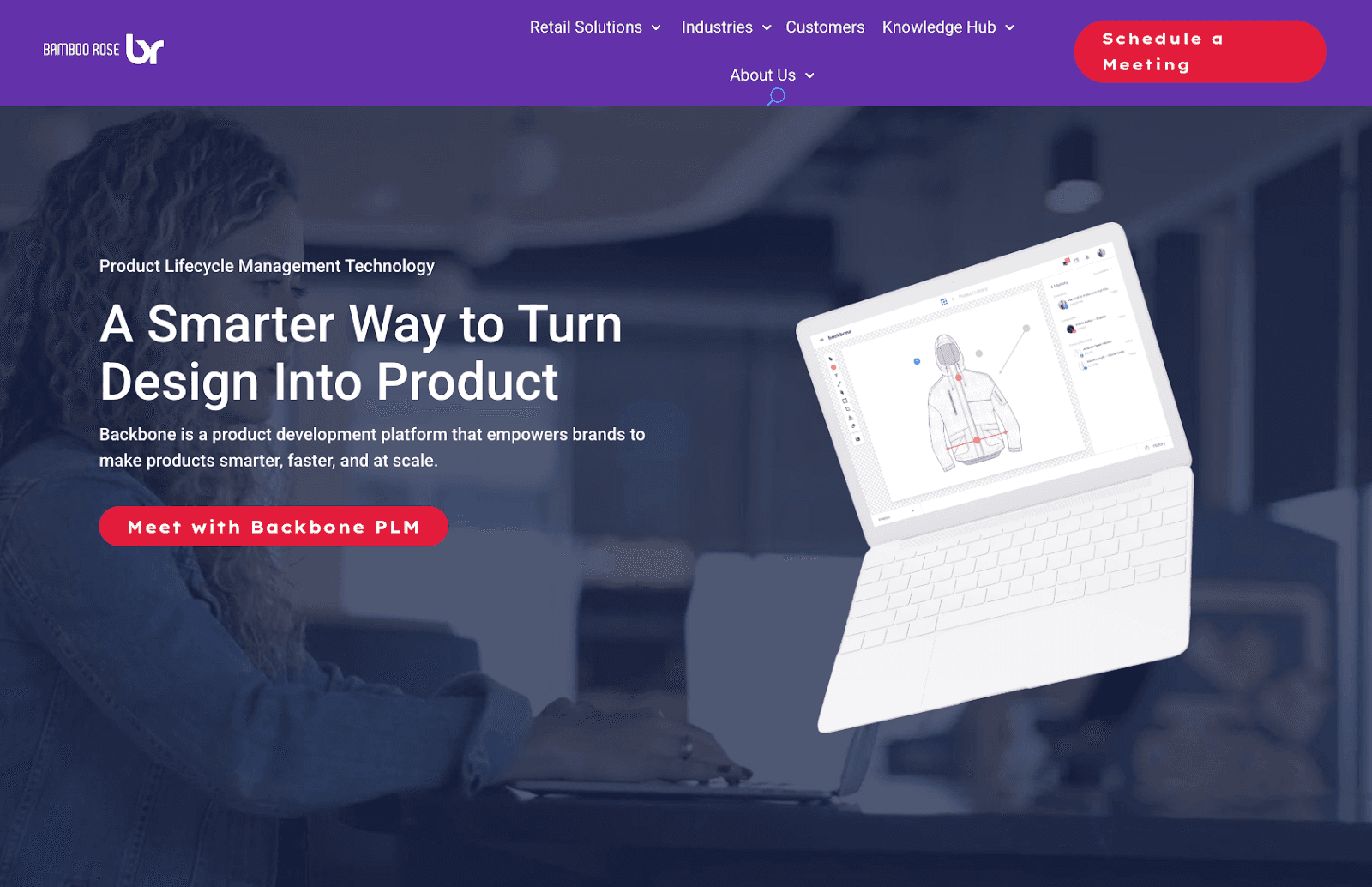
Backbone PLM is a cloud-based PLM platform designed for growing fashion brands that want a more structured product development process without moving into heavy enterprise software. It focuses on tech pack management, BOM libraries, size specs, and collaboration inside one system.
Unlike ERP-first platforms like Uphance, Backbone concentrates entirely on product development rather than financials or order management. That makes it relevant for brands that already run an ERP but still manage tech packs in spreadsheets.
Backbone is typically implemented in a shorter timeframe than enterprise PLM platforms and is designed for faster user adoption.
It is often selected by small to mid-size brands that need better visibility into revisions and sample tracking, but are not ready for complex enterprise rollouts.
Financial reporting and inventory remain outside the platform, so ERP is still required in addition to PLM.
6. Centric PLM (Enterprise-Grade PLM for the Fashion Industry)
Source: centricsoftware.com
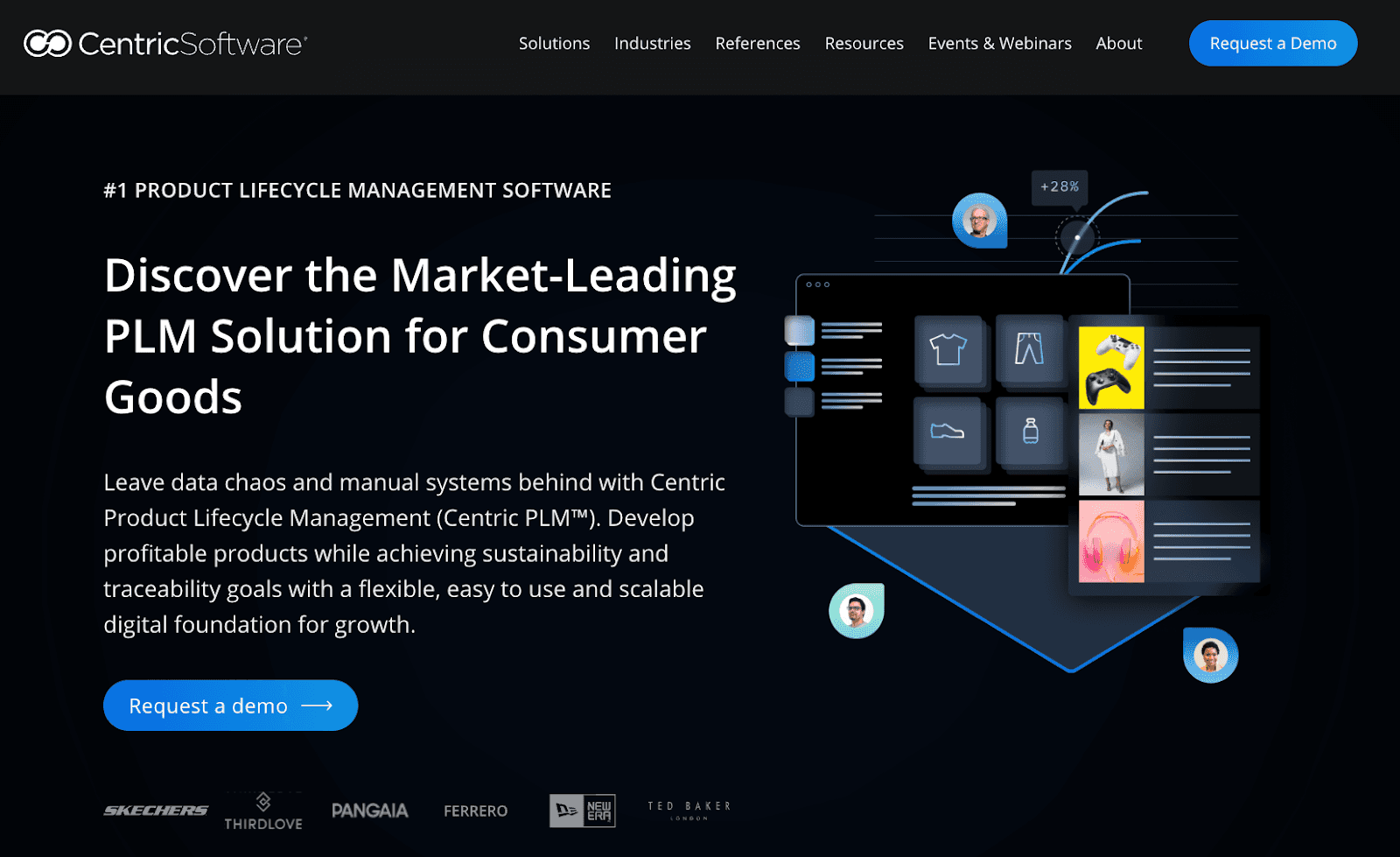
Centric PLM is used by larger brands and retailers that need a deep structure around product data, sourcing, and compliance. It supports season setup, materials, specs, costing, supplier collaboration, and audit documentation inside one platform.
Teams often evaluate Centric when they have complex category volume, multi-market requirements, or heavier governance needs.
It also publishes regular releases and offers security and data compliance programs, which are important for organizations with stricter controls.
For brands coming from Uphance, Centric usually enters the conversation when ERP coverage is not the issue. Product development structure is.
Centric can sit alongside an ERP rather than replace it. Adoption often requires configuration and change management, so it is not always the easy option for smaller teams.
7. BlueCherry (ERP for Apparel Manufacturing and WMS Operations)
Source: bluecherry.com
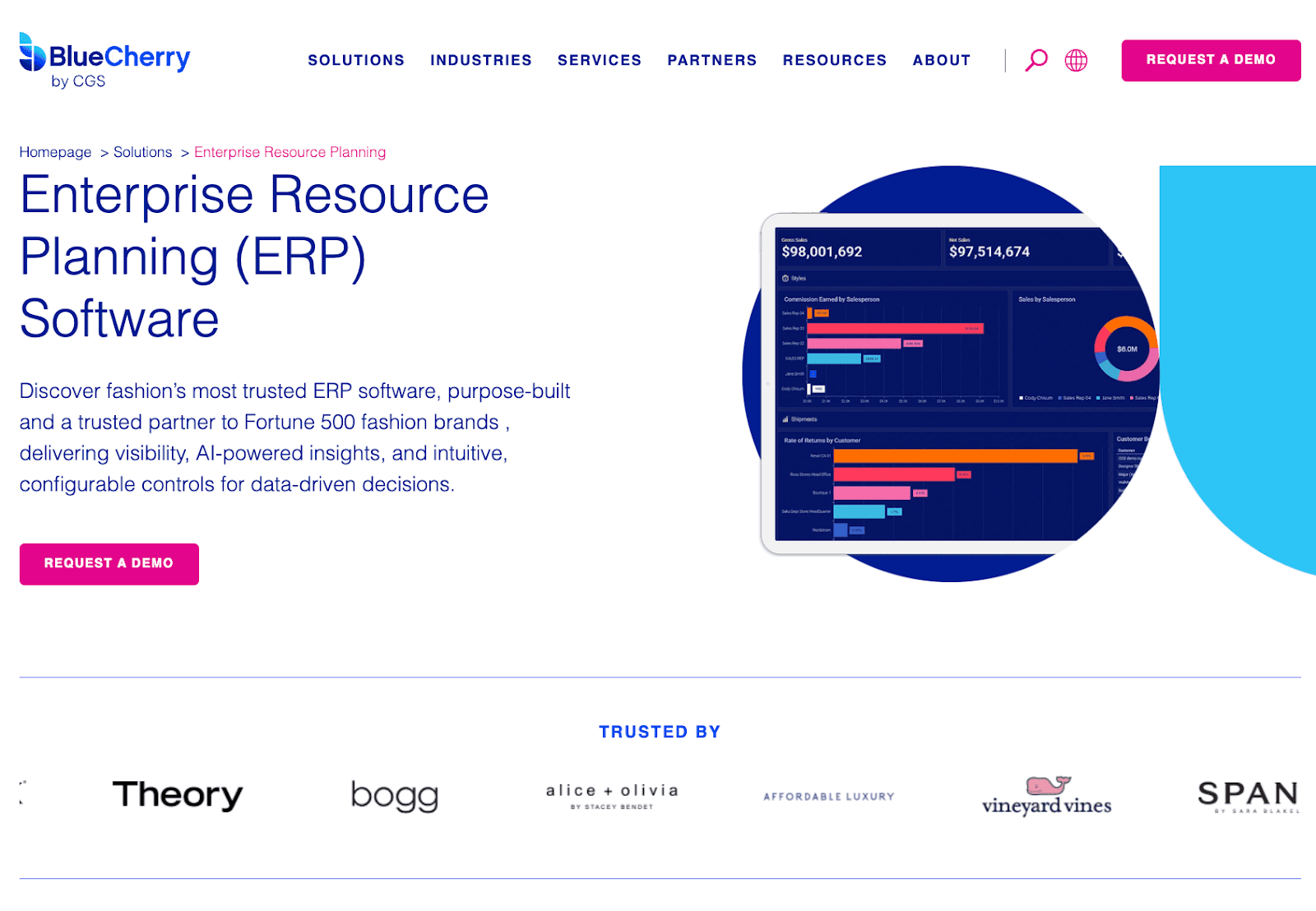
BlueCherry is an apparel-focused ERP developed by CGS that covers financials, production control, warehouse management, and supply chain execution in one system.
It is used by manufacturers and vertically integrated brands that need tighter visibility into factory output, allocation, and fulfillment. The platform also includes WMS, EDI, and business intelligence modules, which support companies managing wholesale, retail, and ecommerce in parallel.
Brands evaluating alternatives to Uphance often look at BlueCherry when operational depth at the manufacturing or warehouse level becomes a priority.
BlueCherry places greater emphasis on production tracking and shop-floor data than lightweight ERP platforms. It does not replace a dedicated PLM, although it offers one as an add-on.
For organizations where factory oversight and distribution control drive system decisions, BlueCherry represents a more operations-centered path than development-focused tools.
ERP vs PLM: What's the Difference
When brands review system changes, confusion often starts with one question. Do we need a stronger ERP, or a real PLM?
The answer usually sits inside your current workflow.
If inventory is accurate but tech pack revisions feel scattered, the issue is not accounting. If orders flow smoothly but vendor comments live in email threads, the gap sits in product development.
ERP manages operations after a style is approved. It controls inventory, orders, financials, and fulfillment, tracking what was sold and what must ship.
PLM, on the other hand, manages development before production begins. It holds tech packs, BOMs, materials, size specs, and revision history, documenting sample rounds and vendor approvals along the way.
Most growing brands rely on both ERP and PLM. The former keeps operational execution steady, while the latter keeps product data structured and controlled from concept through production handoff.
When Do Fashion Brands Choose PLM Over ERP?
Some system issues show up before inventory or accounting ever becomes the problem. They show up inside development.
You might see tech packs living in paper files or scattered spreadsheets. Sample revisions move through long email threads. Colorways exist as duplicated files instead of structured variations. Product data feels loose before production begins.
In those cases, the gap usually sits in PLM, not ERP.
ERP will not organize revision history. It will not structure BOM control before a style is approved. It will not centralize vendor comments during sampling.
That is where development systems make sense.
Onbrand AI Design supports early concept validation, so the design direction is clearer before formal development begins. Onbrand PLM then structures tech packs, materials, colorways, and approvals into factory-ready documentation.
If operational reporting feels stable but development feels fragmented, the priority is product control before production handoff.
Choose Onbrand as Your Uphance Alternative
Seeking an alternative to Uphance doesn’t necessarily mean something is broken. It usually means the business has grown beyond its original systems.
Collections get larger, and colorways expand while sample rounds begin to overlap. What once worked inside a single ERP system starts stretching into shared drives, duplicated files, and manual tracking. The strain often appears first in product development before it reaches production.
That is why most alternative reviews come down to one practical question. Is the pressure coming from operational reporting, or from product structure before approval?
Some brands respond by upgrading ERP for broader financial and inventory control. Others introduce a dedicated fashion PLM to stabilize tech packs, revisions, and vendor communication before inventory ever reaches the warehouse.
Onbrand focuses on that development layer.
With Onbrand AI Design, teams can validate concepts early and refine direction before physical sampling begins. Onbrand PLM then keeps tech packs, colorways, materials, and approvals structured through sampling and factory handoff, so what reaches production reflects the latest agreed version.
FAQs About Uphance Alternatives
Do I need to replace ERP and PLM at the same time?
No. Most fashion brands replace one system at a time. If product data lacks structure, PLM is often addressed first. If reporting, inventory, or financial control is the issue, ERP may take priority. Many brands review competitors and phase implementation to protect speed and reduce operational risk. A staged approach also helps leadership understand system impact before committing to a full replacement.
Will switching systems disrupt production calendars?
It can if timing is poorly planned. Brands typically avoid go-live during peak sampling or bulk production windows. A structured rollout verifies data accuracy before production milestones. Some companies run parallel systems temporarily to protect workflow continuity. Careful planning reduces risk to delivery dates and factory commitments.
Are Uphance alternatives suitable for small fashion brands?
Some are, but not all. Enterprise platforms often require higher budgets and formal onboarding. Smaller brands should review implementation scope, support structure, and long-term fit before selecting competitors. It is important to understand whether the system matches current workflow needs rather than future assumptions.