Jul 31, 2026

Bringing a new fashion product to market involves much more than creating a good design.
Product teams review materials, manage revisions, coordinate approvals, and prepare products for production, often within tighter timelines than before.
Keeping product information organized and decisions aligned from concept to production is now a central part of product development for fashion brands.
That's why more companies in the fashion industry are using artificial intelligence to support everyday product development decisions.
This guide explains what fashion product development AI is, where it fits in the workflow, its benefits and limitations, and how it helps teams move approved products toward production with greater confidence.
TL;DR
Fashion product development AI uses artificial intelligence to support product development from concept approval to production readiness while complementing human expertise.
AI fits throughout product development, including concept development, design refinement, material and color evaluation, technical documentation, sampling, and cross-team collaboration.
The main benefits include shorter development timelines, fewer revision cycles, earlier design validation, lower sampling costs, and better visibility into product information.
AI cannot replace human judgment, physical material testing, product approvals, or well-organized product data.
Onbrand combines AI Design and PLM to help fashion teams carry approved concepts into development with fewer disconnected files and manual handoffs.
What Is Fashion Product Development AI?
Fashion product development AI refers to the use of artificial intelligence to support apparel development from early concept exploration through production readiness.
It combines technologies such as generative AI with other digital tools to assist both creative and technical tasks throughout the creative process.
Unlike tools that depend mainly on manual updates, fashion AI can interpret inputs, generate outputs, and assist with selected product development tasks.
It works alongside human creativity and professional expertise, giving fashion teams additional support without replacing the knowledge and judgment needed to develop successful products.
Where AI Fits in the Fashion Product Development Process
AI supports various stages of product development, from initial design concepts to team reviews before production. It doesn't replace designers or product developers. Instead, it helps with specific tasks as products move through the development process.
Concept Development
The first stage of fashion design focuses on turning ideas into initial concepts. Fashion designers often begin with mood boards, reference images, and early sketches to shape the creative vision for a collection.
During this stage, AI can generate different silhouettes and creative directions from the same idea. Teams can review a diverse range of clothing designs before deciding which concepts should move into development.
Design Refinement
Once a concept is selected, teams begin reviewing revisions and comparing design alternatives.
At this stage, AI helps organize revisions and present different creative possibilities without losing earlier versions. It also enables designers to refine product ideas through digital design before development continues.
This gives fashion companies another way to evaluate design changes before finalizing the design.
Material and Color Evaluation
Teams often compare several fabric, trim, and color combinations before making a final decision. AI helps visualize those options before physical samples are available.
Some platforms use fabric simulation to preview how materials may look, generate flat sketches, and display material specifications. Others support virtual fitting on different body types and body shapes.
These previews help with visual evaluation, but physical material testing is still necessary before production.
Technical Documentation
Once the design direction is approved, product details need to be documented for manufacturing.
AI can assist with creating technical flats, organizing digital assets, drafting product descriptions, and preparing production-ready patterns that support fashion production.
Every document should still be reviewed by product developers before it is shared with manufacturers.
Sampling and Review
Sampling gives teams the opportunity to evaluate a product before production begins.
Before physical samples are made, teams can use AI for sample planning, visual reviews, and identifying obvious design issues. Some platforms also create virtual prototypes for early evaluation.
These previews support quality-control discussions and highlight visible concerns regarding structural integrity, but they cannot replace physical samples or wear testing.
Cross-Team Collaboration
Fashion product development depends on regular communication between designers, product developers, sourcing teams, vendors, and manufacturers.
AI can help organize approvals, shared feedback, and vendor communication while working alongside existing systems.
Keeping revisions organized through version control also makes it easier for everyone to review the latest product information before development continues.
Benefits of AI in Fashion Product Development
AI supports better decision-making throughout product development, but its greatest value lies in helping fashion teams review information earlier and move forward with greater confidence.
Here are some of the practical outcomes brands often see.
Shorter Development Timelines
Product development often slows when teams spend too much time reviewing options or waiting for revisions. AI helps organize information so teams can compare ideas earlier and keep projects moving.
Better data analytics, data-driven insights, and trend analysis also help teams respond to emerging trends before products move further into development.
With fewer questions left unresolved, products can move into the next stage with less back-and-forth.
Fewer Revision Cycles
Earlier reviews make it easier to identify issues before they affect later stages of development.
AI can also support trend forecasting and demand forecasting, and help teams predict fashion trends using historical product information, market trends, and other available data.
This gives product teams more confidence when selecting designs to move forward.
Earlier Design Validation
AI gives teams another way to review concepts before physical development begins.
Product decisions can also be informed by customer data, feedback, demand, and preferences when available.
Earlier validation helps product teams make informed decisions before investing more time and resources.
Lower Sampling Costs and Less Material Waste
Reviewing designs earlier can reduce the number of physical samples needed during development. It also helps minimize waste because teams are less likely to remake samples after late design changes.
For brands working with sustainable materials or following sustainable practices, earlier decision-making can support more responsible product development without replacing physical testing.
Better Product Visibility Throughout Development
Keeping product information in one place makes it easier to follow a product as it moves through development.
Designers, product developers, and suppliers can review the latest revisions, approvals, and supporting details without searching through multiple files.
Everyone works from the same product information, making communication throughout the supply chain much more consistent.
Limitations of AI in Fashion Product Development
AI supports product development, but it cannot replace professional judgment or every step of the process. Fashion teams should understand where the limits begin.
Construction quality. Visual outputs cannot verify stitching, garment construction, durability, or overall workmanship. These checks still rely on traditional methods and expert review.
Physical material testing. Visualizations, virtual try-ons, and design simulations help teams review products earlier, but they cannot replace real fabric testing, fit sessions, or wear trials.
Product approvals. Final decisions still depend on designers, product developers, and other stakeholders. Human expertise is essential before products move to production.
Dependence on reliable product data. Machine learning performs best when information is complete and well organized. Disconnected or inaccurate product data limits the quality of AI-generated insights.
Legal or business decisions. Teams still need to consider intellectual property, compliance, and product standards. Human review also plays an important role in delivering products that meet customer expectations and contribute to customer satisfaction.
What Fashion Teams Need Before Adopting AI
Successful AI adoption starts long before the first tool is introduced.
Before integrating AI into product development, fashion teams should have a well-defined workflow so everyone understands how products move from concept approval to production.
AI works best when it supports an existing process rather than replacing it.
Teams also need organized product information, reliable design references, and a consistent review process.
The quality of the information going into AI-powered tools directly affects the quality of the output, making accurate product data just as important as the technology itself.
Finally, decide what success looks like before introducing AI fashion tools. Your goals might include reducing revision cycles, improving review consistency, or helping teams make decisions earlier.
Having measurable objectives makes it easier to see what's working and where adjustments are needed.
Why AI Works Best as Part of a Connected Product Development Workflow
Many AI tools stop after generating an image. Fashion product development continues long after a concept receives approval.
The selected design still needs materials, specifications, technical documentation, approvals, and vendor input before it is ready for production.
When those details sit in separate files and tools, teams often copy information manually and recreate work that already exists.
Connecting AI-assisted design with a product lifecycle management (PLM) system keeps the approved concept close to the product information needed for development.
Onbrand supports both parts of that process through Onbrand AI Design and Onbrand PLM.
Turn Creative Concepts Into Actionable Product Designs With Onbrand AI Design
Onbrand AI Design gives fashion teams a shared space to create, refine, and review concepts before they move into development.
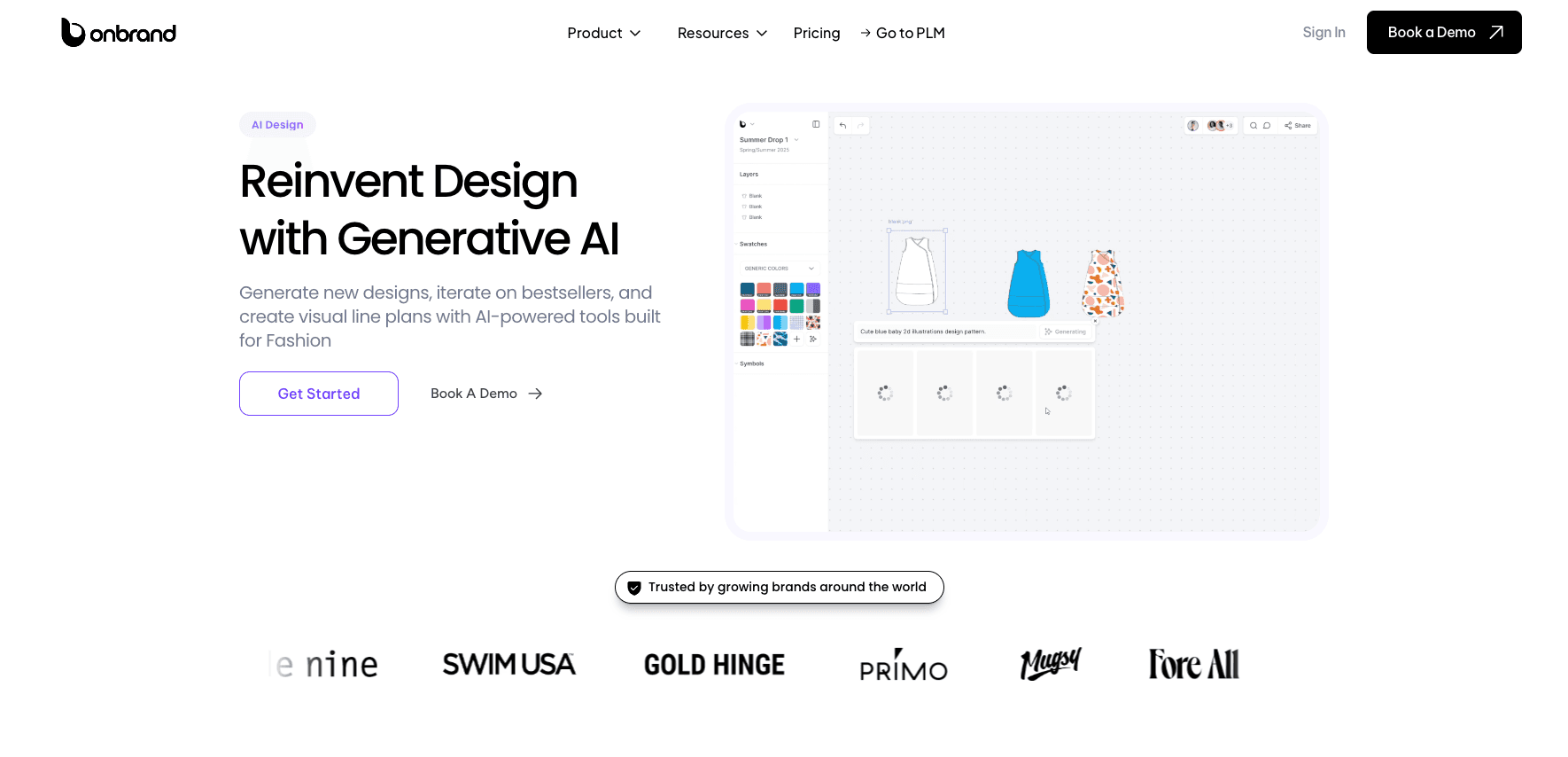
Designers can begin with a text prompt, sketch, or reference photo. The platform can turn that input into line art, mockups, photoreal visuals, or on-model renders. Teams can then test new colorways, trims, cuts, and alternate design directions without rebuilding the original concept each time.
The workspace also supports mood boards, visual line plans, contextual comments, and shared reviews. Teams can compare versions, leave feedback directly on a design, and keep visual decisions connected to the relevant concept.
Onbrand reports that brands can achieve up to 10× faster design turnaround, reduce physical samples by 30–50%, and save more than 10 weeks each year. Results will depend on the brand, collection, and current process.
Instead of stopping with a generated image, approved concepts remain connected to the next stages of product development.
Move Approved Designs Into Development With Onbrand PLM
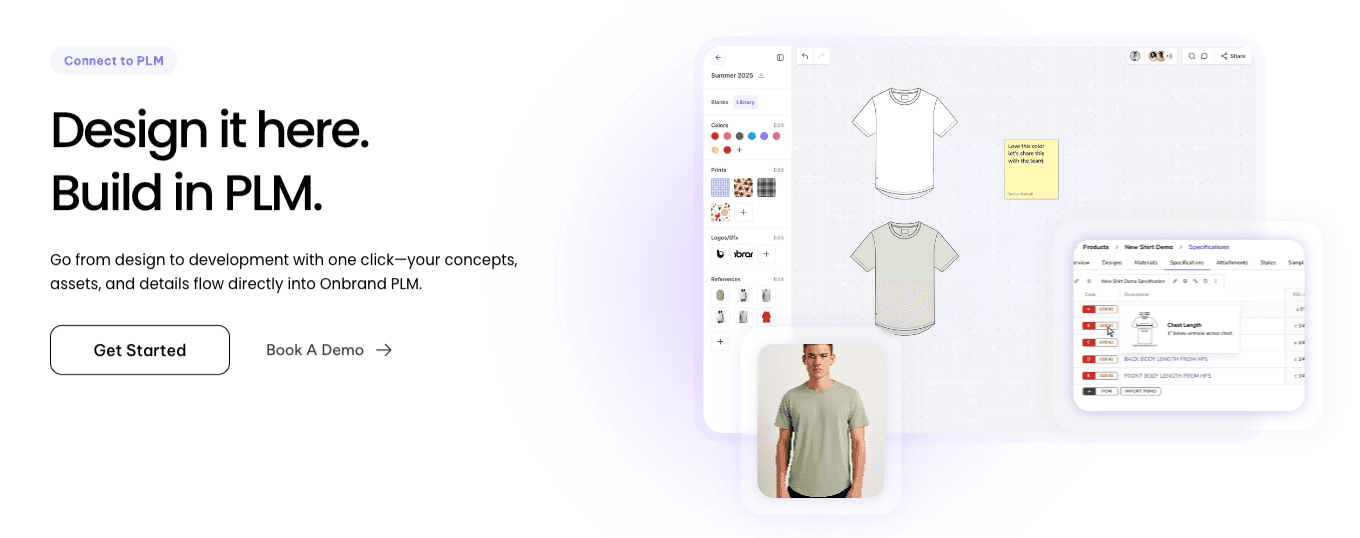
Onbrand PLM carries approved designs into the work required for production.

Teams can manage styles, materials, colors, artwork, specifications, samples, and approvals in one place. Live tech packs keep the latest product details available to internal teams and vendors without creating another PDF or spreadsheet each time information changes.
Product developers can track tasks, review sample status, manage approvals, and communicate with factories directly on the product record.
Version history provides context when teams need to review past changes, and dedicated libraries keep recurring product data available for future styles.
Onbrand reports 55% faster tech pack creation, a four-week reduction in product development, and data migration and implementation in around 10 days for some customers. Implementation time can vary based on product data and onboarding needs.
Together, Onbrand AI Design and Onbrand PLM create a connected workflow where concepts become production-ready products without recreating information or relying on disconnected files.
Bring AI Design and Product Development Together With Onbrand
AI can support many parts of fashion product development, but human expertise still guides the final decisions. Designers, product developers, and production teams remain responsible for reviewing materials, confirming construction, approving samples, and preparing products for manufacturing.
The bigger opportunity comes from keeping those decisions connected as a product moves forward.
Onbrand brings AI-assisted design and PLM into a single workflow, so approved concepts can flow into styles, materials, tech packs, approvals, and vendor collaboration without unnecessary handoffs.
FAQs About Fashion Product Development AI
What is the difference between AI design tools and PLM?
AI design tools help create and refine design concepts, while a PLM system manages product information throughout the development process. AI supports creative work, and PLM keeps styles, materials, specifications, approvals, and other product data organized as products move toward production.
Can AI create fashion concepts from sketches or reference images?
Yes. Designers can use text prompts, sketches, or reference images to generate new fashion concepts with AI. From there, teams can review different variations, refine the strongest ideas, and continue developing the selected design.
Can AI generate virtual fashion models?
Yes. AI can generate AI fashion models and virtual models to present garments during the design process. They give teams another way to review concepts and communicate ideas, but they do not replace physical samples, fit testing, or the work involved in product development.
How do AI fashion models differ from physical samples?
AI models are digital visualizations used to present garments during the design process. Physical samples are real garments that teams evaluate for fit, construction, materials, and manufacturing quality before production.
Can AI replace traditional product photos during development?
AI-generated visuals are helpful for showing design ideas before physical products exist. They can reduce the need for some early product photography, but they don't replace real product photos or garment reviews. Before production begins, fashion teams still need to evaluate the finished product in person.