BeProduct is a product lifecycle management (PLM) platform used by many fashion brands to organize product information, manage development workflows, and collaborate with suppliers. However, no PLM platform fits every team, workflow, or business requirement.
Product development becomes more challenging when collections grow, supplier networks expand, and additional stakeholders become involved. Teams often reassess the software they use when implementation timelines, collaboration requirements, reporting needs, or usability expectations change.
That is why many companies start exploring BeProduct alternatives. The right platform depends on how your team manages product development, supplier communication, approvals, and the entire product lifecycle.
This guide reviews the six best alternatives to BeProduct and highlights the types of fashion brands each platform may be best suited for.
TL;DR
These are the best BeProduct alternatives to consider in 2026:
Centric PLM
Backbone PLM
WFX PLM
Bamboo Rose
DeSL
Why Fashion Brands Look for BeProduct Alternatives
Software evaluations do not always start because something is broken. Product development becomes more complex when new collections, suppliers, and stakeholders are added to the process.
A platform that worked well during one stage of growth may not align with future priorities. That is why many companies periodically compare their current system with other options on the market.
Need for Faster Implementation
Implementation timelines can become an important consideration when teams need to move quickly. Long setup periods, internal resource requirements, and user onboarding can affect how soon a platform starts delivering value.
The process often becomes more complicated when multiple departments need training or when existing systems require significant configuration.
Brands eventually reach a point where reducing the learning curve becomes a priority, especially when product calendars leave little room for waiting.
Desire for More Modern Collaboration Tools
Product development relies on communication between fashion designers, developers, sourcing teams, production teams, and suppliers. Collaboration becomes harder when feedback, approvals, and product information are spread between multiple systems.
Many companies review their software stack when they want product teams to collaborate more closely throughout development.
Real-time reviews, shared visibility, and supplier communication often become larger priorities as organizations expand.
Evaluating Cost and Long-Term Scalability
Software decisions are rarely based on current requirements alone. Companies also consider future growth, operational complexity, and long-term ownership cost.
A platform that works well for a smaller organization may require a different evaluation once collections expand, supplier networks increase, and operations become more demanding.
Scalability concerns often become part of broader planning discussions as operational requirements become more complex.
Exploring New Product Development Capabilities
Product development tools continue to change. Many companies now evaluate software based on capabilities that extend beyond traditional product management.
AI-assisted design, concept exploration, visual development tools, and workflow modernization are becoming part of more software evaluations.
Teams often evaluate how software supports concept development, product reviews, and decision-making earlier in the development cycle.
6 Best BeProduct Alternatives for Fashion Brands in 2026
Not every fashion PLM platform is built for the same type of company. The options below serve different team sizes, product categories, and development workflows, making it easier to compare where each solution fits.
1. Onbrand PLM
Onbrand combines AI-powered design and fashion PLM in one product development workspace.

Onbrand AI Design helps designers generate concepts, explore variations, build mood boards, and turn sketches or prompts into visual product ideas.
Onbrand PLM carries those ideas into development through live tech packs, sample tracking, vendor communication, approvals, and project management.
The platform is built for growing apparel, footwear, outdoor, sports, and lifestyle brands that want design and development connected within a single platform.
Why Teams Consider It Instead of BeProduct
Teams evaluating BeProduct choose Onbrand when they want design and product development connected more closely from concept through production.
The ability to move from AI-generated design ideas into PLM helps reduce manual handoffs between creative work and fashion product development.
Onbrand also focuses on usability and faster onboarding. The platform reports a ten-day data migration and implementation process, 55% faster tech pack creation, and a four-week reduction in development time.
These figures may appeal to brands looking to shorten setup timelines and reduce administrative work during product development.
Key Features
AI concept generation from prompts, sketches, or reference photos
Visual collaboration with shared boards, comments, and version history
Mood boards and visual line planning
Live tech packs connected to current product details
Project management for stages, tasks, approvals, and timelines
Sample management for tracking sample rounds and feedback
Vendor collaboration inside the same product workspace
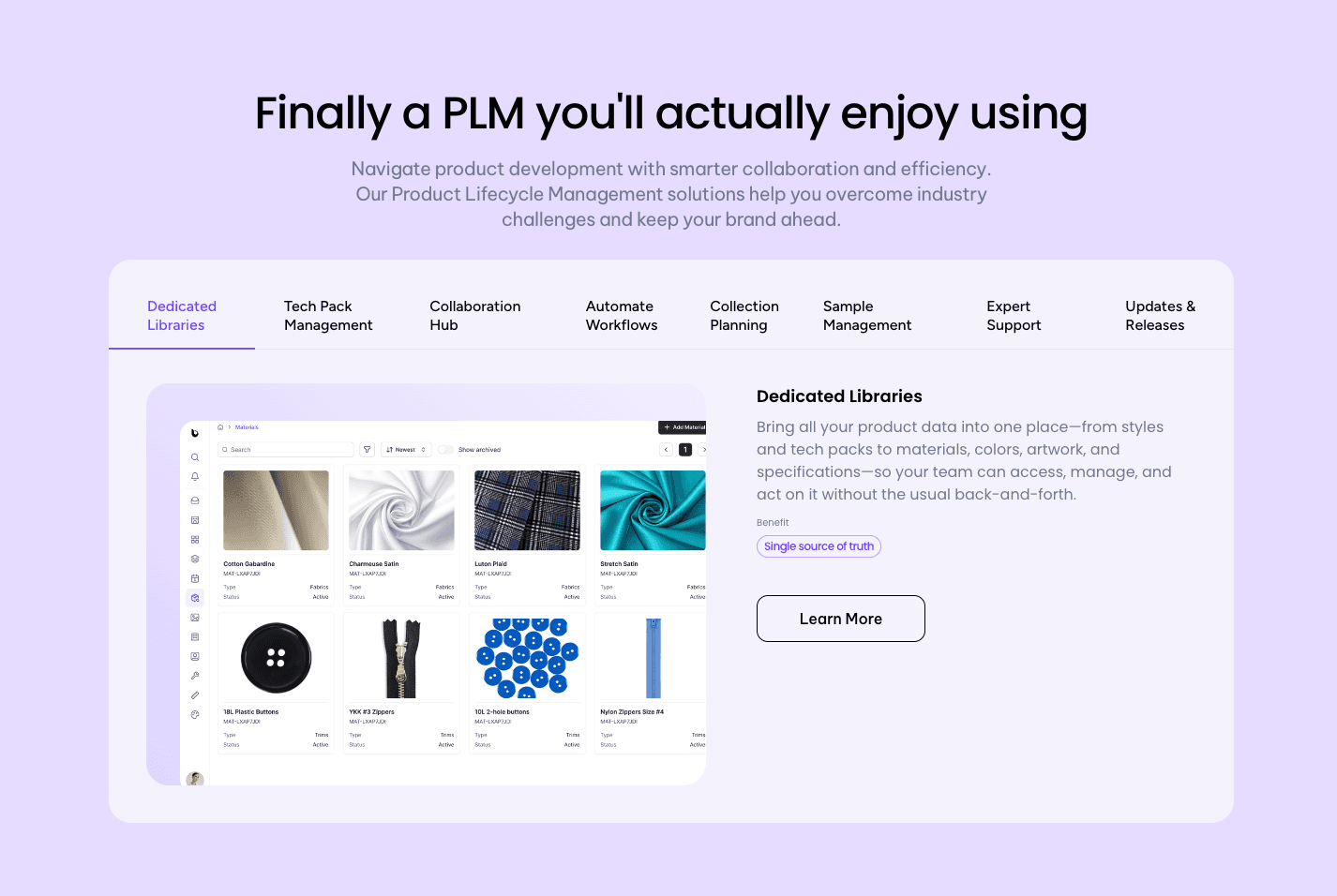
Libraries for materials, colors, artwork, styles, and specifications
PLM connection that helps move designs into development
Best For
Onbrand is best for apparel brands that want to connect AI design, tech packs, approvals, sample tracking, vendor collaboration, and product development within one platform.
2. Centric PLM
Source: centricsoftware.com
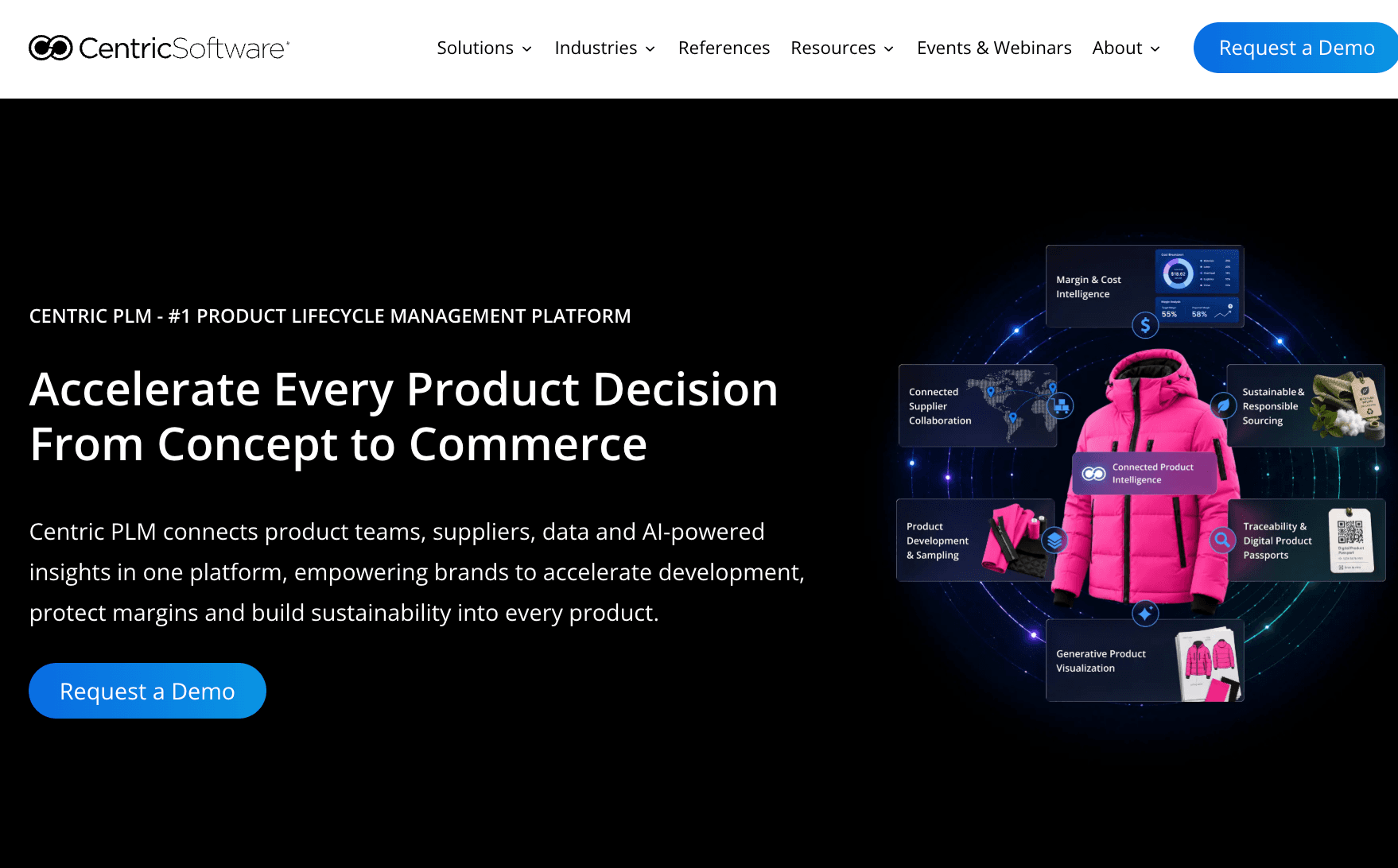
Centric PLM, developed by Centric Software, is a product lifecycle management platform designed to streamline product development, sourcing, and product data management for businesses in the fashion, footwear, retail, outdoor, and consumer goods sectors.
The platform supports product development, sourcing, assortment planning, commercialization, and product data management within a single environment.
Why Teams Consider It Instead of BeProduct
Teams evaluating BeProduct often add Centric to their shortlist for managing large product assortments, global supplier networks, or highly structured development processes.
Centric PLM is commonly used by organizations that need support for complex workflows, detailed governance, and product information management involving multiple departments.
Key Features
PLM from concept through commercialization
Assortment planning and collection management
Product data management and bill of materials (BOM) tracking
Supplier collaboration and sourcing tools
Product testing, certification, and compliance management
Potential Considerations
Centric PLM is often associated with larger organizations and enterprise product operations. Buyers should evaluate implementation requirements, internal resources, and the level of customization needed to support their processes.
Certain capabilities may exceed the requirements of smaller teams with less complex product operations.
Best For
It’s suitable for enterprise fashion and retail organizations managing complex product development, sourcing operations, and large product assortments.
3. Backbone PLM
Source: bamboorose.com
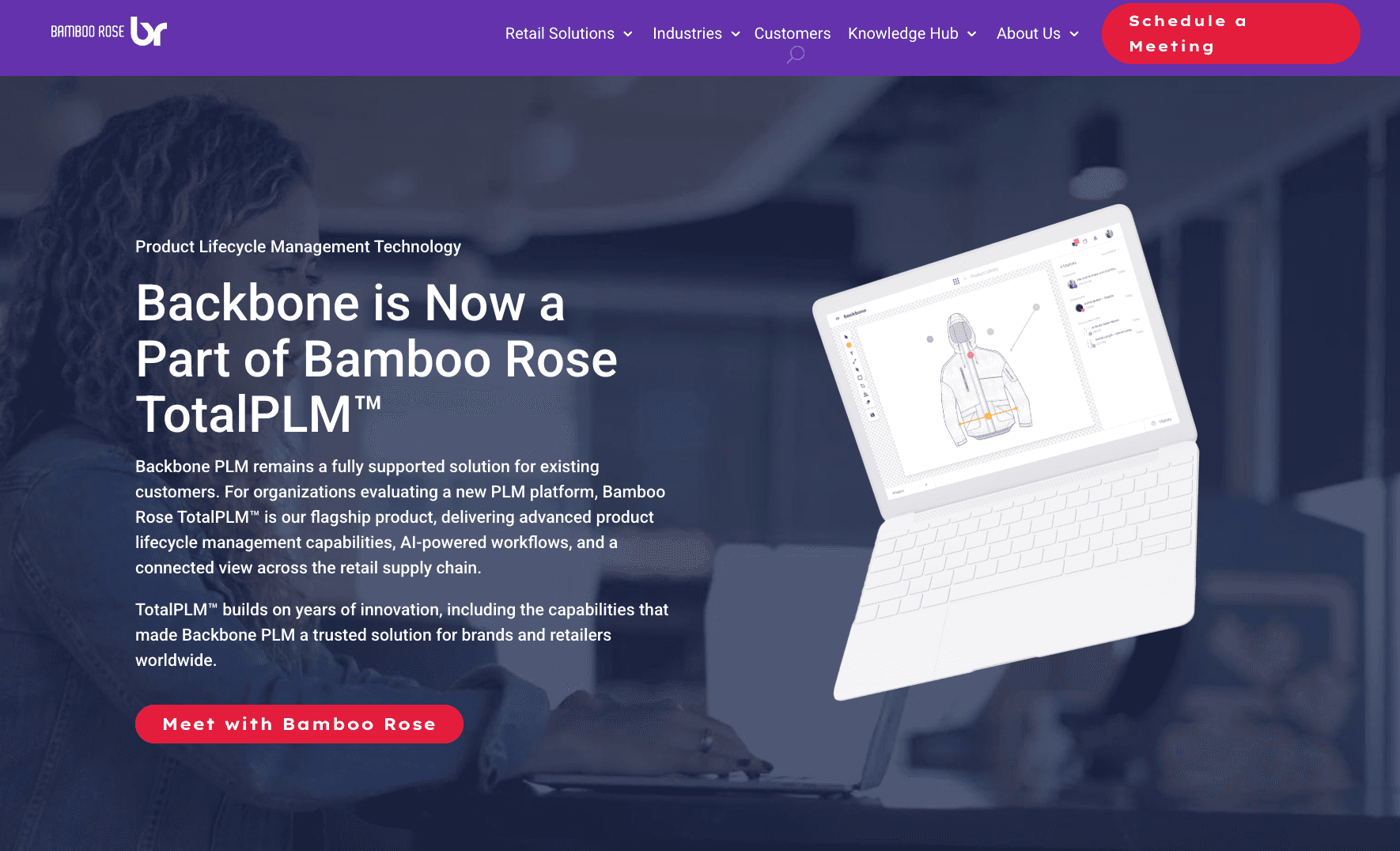
Backbone PLM is a cloud-based PLM platform used by fashion brands, retailers, and product development teams.
It focuses on product data organization, tech pack management, and collaboration during product development. Backbone is now part of Bamboo Rose, though it remains available and supported for existing customers.
Why Teams Consider It Instead of BeProduct
Backbone PLM is frequently reviewed by brands looking for a design-focused approach to product development.
Its focus on product organization, technical specifications, and day-to-day usability may appeal to companies that want a simpler way to manage development records.
Key Features
Tech pack creation, customization, and live sharing capabilities
Dedicated BOM, specification, and product information libraries
Adobe Illustrator integration for design file management
Version history tracking and product record updates
Cloud-based product data management and reporting tools
Potential Considerations
Backbone PLM is commonly used by growing brands and small teams. Buyers should evaluate whether the feature range supports future requirements and review how access to product information fits their internal processes.
Best For
Backbone PLM is good for small to midsize fashion brands focused on product organization, tech packs, and design collaboration.
4. WFX PLM

Source: worldfashionexchange.com
WFX PLM is a cloud-based PLM platform built for fashion, apparel, and consumer goods companies.
The platform covers product planning, development, and sourcing, while bringing product information, vendors, and development activities into one system.
Why Teams Consider It Instead of BeProduct
Supplier communication plays a significant role in many software evaluations.
WFX PLM places considerable focus on sourcing visibility, vendor collaboration, and coordination between internal teams and suppliers throughout the development process.
Key Features
Collection planning and visual merchandising tools
Digital tech packs and product development management
Vendor portal for supplier communication and collaboration
Dynamic libraries for product data, specifications, and materials
Integrations with Adobe Illustrator, CLO 3D, Browzwear, ERP systems, and e-commerce platforms
Potential Considerations
WFX includes functionality that spans planning, development, and sourcing activities. Brands should evaluate how those capabilities align with their internal processes, product collections, and vendor management requirements.
Companies managing a broad product line may also want to review the platform's planning and reporting options.
Best For
WFX PLM suits fashion brands that prioritize sourcing visibility, supplier communication, and collection management.
5. Bamboo Rose
Source: bamboorose.com
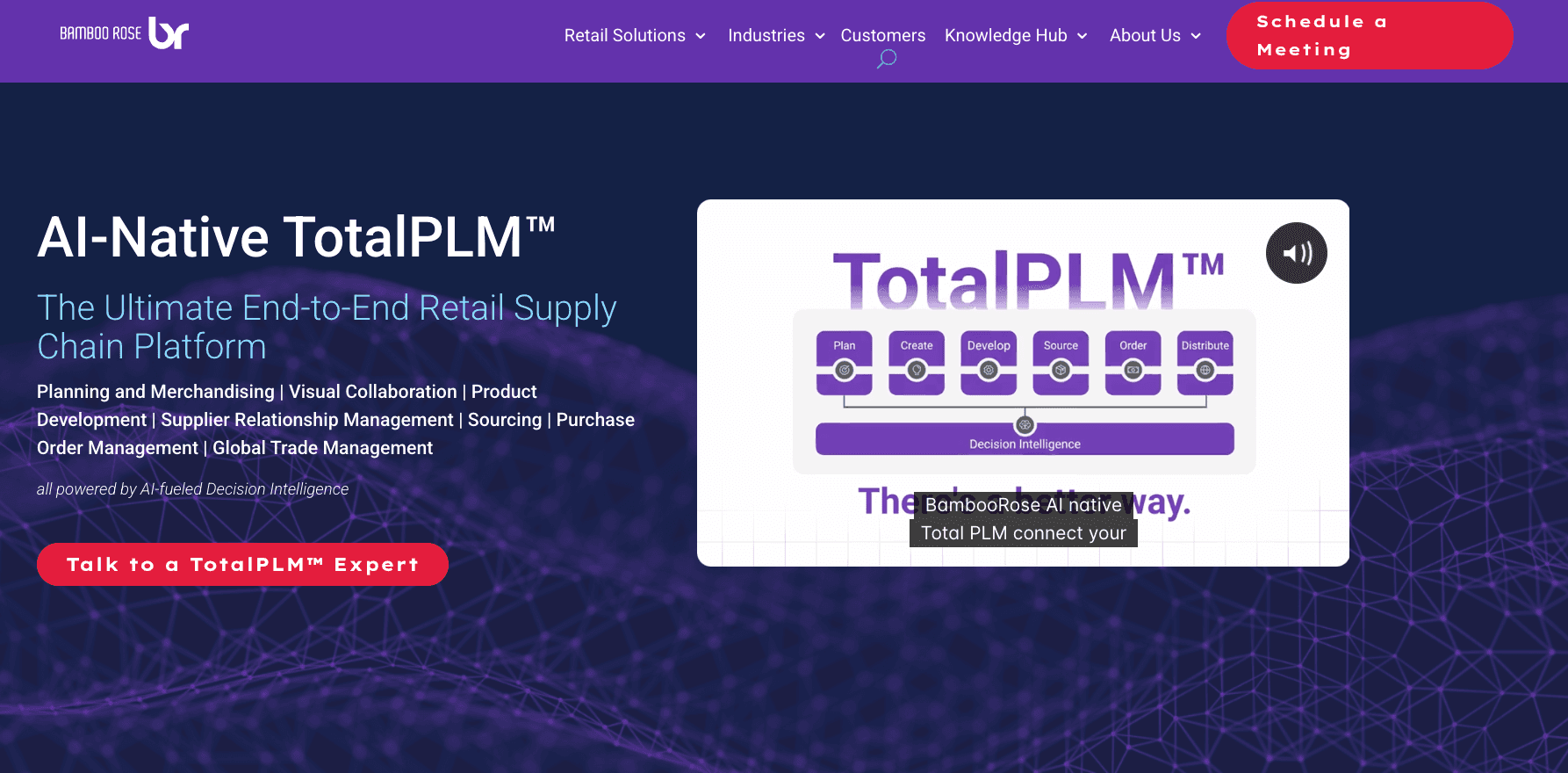
Bamboo Rose is a retail-focused PLM and supply chain platform. The system combines product development, sourcing, supplier relationship management, purchase order management, and global trade functions within a single environment.
It serves brands, manufacturers, and retailers managing large product assortments and supply chain operations.
Why Teams Consider It Instead of BeProduct
Product development does not always operate independently from sourcing, purchasing, and supply chain planning.
Bamboo Rose is often evaluated by retailers and larger organizations that want those activities connected within the same platform.
Key Features
Product development and PLM functionality
Global sourcing and supplier relationship management
Purchase order and supply chain management tools
Planning, merchandising, and visual collaboration capabilities
ERP integration and trade management functionality
Potential Considerations
Bamboo Rose extends beyond product development into sourcing, purchasing, and supply chain activities. Buyers should evaluate how that broader feature range aligns with their requirements.
Organizations may also want to review how product development connects with procurement, inventory, sales planning, and global trade processes.
Best For
Bamboo Rose suits retailers and larger organizations connecting product development, sourcing, purchasing, and supply chain activities.
6. DeSL
Source: desl.net
DeSL is a cloud-based PLM platform built for fashion, apparel, retail, and footwear companies.
The platform supports product development, sourcing, quality management, supplier collaboration, and product information management through a connected set of modules.
Why Teams Consider It Instead of BeProduct
DeSL is often evaluated by companies looking for greater visibility into product information, sourcing activities, and compliance requirements throughout development and delivery.
Its modular structure can appeal to organizations that want to connect multiple business functions while maintaining a single source of product data.
Key Features
PLM and product information management
Digital planning boards for merchandising and development teams
Supplier relationship management and sourcing tools
Purchase order and quality management functionality
Digital color approvals and compliance tracking
Potential Considerations
DeSL offers a modular platform that can support different business requirements and implementation approaches. Buyers should evaluate which modules are needed and how those capabilities fit their internal processes.
Organizations may also want to review deployment options, information security requirements, and reporting needs when assessing long-term platform performance.
Best For
DeSL is suitable for fashion and footwear companies looking for PLM, sourcing, quality management, and supply chain functionality within a connected platform.
How to Choose the Right BeProduct Alternative
A platform can look great on paper and still be the wrong fit for your organization. Taking time to evaluate how your team works today and what it may need in the future can make the decision much easier.
Here are a few factors worth considering during your evaluation.
Team Size and Growth Plans
Start with the structure of your team today and where you expect it to be in the future.
A platform that works for a small group may require a different evaluation once additional departments become involved. Product development, sourcing, technical design, and production teams often have different requirements.
One thing worth noting is the level of support available during adoption. Training resources, implementation partners, and user community resources can influence long-term success.
Product Development Workflow Requirements
Product development requirements vary from one company to another. Review how your team manages collections, approvals, product information, and cross-functional reviews today.
The best PLM software for your business should support the processes your team already relies on while giving you room to manage future projects and product categories.
A PLM system should fit your workflow instead of forcing major operational changes.
Supplier Collaboration Needs
Supplier communication plays a significant role in product development. Companies that work with a small group of vendors may have different requirements than organizations managing large sourcing networks.
Review how product information is shared, how feedback is collected, and how suppliers participate throughout development. Sourcing visibility often becomes more important as vendor relationships become more complex.
Implementation Timeline
Implementation expectations vary from one organization to another. Some companies want a faster deployment process, while others are comfortable with longer rollout timelines.
Review the internal resources available for training, onboarding, data migration, and change management. It is also worth understanding how much configuration, customization, or code work may be required before the platform is fully operational.
Future upgrade requirements may also influence the overall implementation experience.
Budget and Total Cost of Ownership
Software costs extend beyond licensing. Training, implementation services, support, and future changes can all affect long-term pricing.
Evaluating the total cost of ownership helps create a more complete picture of the investment. Looking at both short-term and long-term expenses can make software comparisons more practical.
Optimize Your PLM Process With Onbrand
As you evaluate alternatives, focus on the areas that have the biggest impact on day-to-day work. Product development workflows, supplier collaboration, implementation requirements, and scalability often play a larger role than feature lists alone.
Teams interested in combining AI-powered design with modern fashion PLM workflows should take a closer look at Onbrand. With AI Design and PLM working together, brands can move from concept development to tech packs, approvals, vendor collaboration, and production planning within a connected environment.
FAQs About BeProduct Alternatives
What should I consider when switching from BeProduct?
Focus on implementation requirements, product development processes, supplier collaboration, reporting needs, and long-term scalability. It is also worth evaluating how much data migration, training, and workflow configuration may be required during the transition.
Which fashion PLM software is easiest to implement?
Implementation timelines vary by platform, company size, and product complexity. Onbrand emphasizes fast implementation and states that most teams are up and running within 2–4 weeks, depending on onboarding and data migration requirements. Internal resources, data quality, and process alignment can also affect how quickly a new PLM is adopted.
How do fashion brands manage approvals and product development?
Many brands use PLM software to centralize product information, track samples, coordinate reviews, and manage approvals throughout development. These platforms often replace spreadsheets, email chains, and other tools that make collaboration harder as product volumes increase.
Can fashion PLM software connect with inventory and sales systems?
Many fashion PLM platforms support integrations with ERP, merchandising, and business management systems. These connections can help keep product information aligned between development, purchasing, inventory, and sales activities, reducing duplicate data entry and improving visibility throughout the product lifecycle.
Is a modern interface important when evaluating fashion PLM software?
Yes. The interface can influence how quickly users adopt a platform and how easily product information is maintained over time. A system that feels difficult to navigate may slow down daily work, especially for design, development, and sourcing teams. Companies with limited internal resources often pay close attention to usability because training and onboarding can affect implementation success.