Sep 23, 2026

A luxury handbag may look simple when it reaches the customer, but the work behind it can be anything but simple.
Behind the finished piece are detailed decisions about how the product should look and be made. Those decisions can involve specialist components, supplier input, and several rounds of development before approval.
Once fashion brands manage more products, suppliers, and internal teams, keeping every update aligned becomes harder.
Product lifecycle management (PLM) software for luxury brands helps keep that product information organized throughout the product development process.
This guide compares the top seven PLM platforms and looks at how each one fits the demands of luxury product development.
TL;DR
These are the seven best PLM software options for luxury brands in 2026:
Centric PLM
Lectra Kubix Link
PTC FlexPLM
Infor PLM for Fashion
Delogue PLM
Bamboo Rose TotalPLM
What Makes Luxury Product Development Different?
Luxury product development often comes down to details that cannot be treated as interchangeable.
Take a leather bag as an example. The team may need to define the leather type, surface finish, and key construction details that affect how the product should be made.
A change to one detail can affect the next prototype or require another review before the design moves forward.
That level of detail can involve multiple suppliers. One partner may provide a specialist material, for example, while another is responsible for a component or a specific manufacturing process.
Fashion designers may review the creative direction, while product development and sourcing teams focus on the information needed to turn it into a finished product.
These requirements are especially important in the fashion industry, where collections often follow seasonal trend cycles and launch schedules.
Within the broader fashion and apparel industry, luxury products may also require more prototypes before the team approves the final materials and construction.
Each decision becomes part of the fashion value chain, connecting the original design direction with the people and processes that eventually make the finished product.
What PLM Software Needs to Handle for Luxury Brands
Once product development involves that level of detail, the PLM process needs a reliable way to keep information connected as a style moves forward.
A centralized platform should give everyone involved one current product record to work from. As the style changes, technical information, sample feedback, supplier updates, and approvals should remain connected to that record.
For luxury brands, that requires several core capabilities.
Detailed Product Specifications
Each style needs a structured record for technical details, such as:
Measurements
Dimensions
Construction
Colorways
Finishes
Components
PLM data should reflect the current approved product information, so a change to a measurement or component does not sit separately from the rest of the style.
Teams also need to create tech packs from that information and maintain structured tech packs as specifications change during development.
Materials and Component Libraries
Luxury products can involve several materials and components, each with its own specifications.
A PLM should keep those details organized in reusable libraries. Teams can then manage approved materials and supplier information without rebuilding the same records for every style.
For the apparel industry, that structure is useful when the same fabric, trim, or color appears in several styles. Accurate material and component information also supports product quality by giving the people developing the product consistent specifications to work from.
Samples and Product Iterations
A prototype can go through several changes before final approval. The system needs to keep each sample round connected to the feedback and decisions made around it.
Teams should be able to see what was reviewed, which revisions were requested, and if the sample is ready to move forward. That creates a usable history between one iteration and the next.
Keeping those decisions connected can also help teams see where repeated revisions may add to product development costs or put time to market under pressure.
Supplier Information and Communication
Product information also needs to reach the outside partners responsible for making the product. Depending on the product, a main factory may work alongside specialist suppliers responsible for specific materials, components, or packaging.
Supplier portals can give external partners controlled access to the information relevant to their work without relying on separate files being passed back and forth.
For brands working with a broader supplier network, that connection can also support supply chain management by keeping product-development information available to the partners who need it.
Approvals and Version Control
Every important change needs a current version and a visible approval status.
The system should show what changed, who reviewed it, what has been approved, and which information external partners should follow. That record is useful for quality assurance, especially when a product passes through several reviews before production.
Approval status can also connect development decisions to the critical path, making it easier to see when an unresolved decision could hold up the next stage.
Collection-Level Visibility
Individual styles also need context within the collection they belong to. A PLM should make it easy to see how each style is progressing within the wider collection.
Teams should be able to review product status alongside key materials, colorways, milestones, and upcoming dependencies without opening each style individually.
Development calendars can connect those activities to the dates the collection is working toward.
That gives teams visibility into the collection lifecycle without treating every style as an isolated project. It also keeps the collection view connected to individual products as they move through the entire product lifecycle.
Top 7 PLM Platforms for Luxury Brands in 2026
Luxury brands can have very different product-development setups. An independent accessories label may need a focused fashion PLM, while a global luxury group may require deeper controls and support for several product categories.
The modern fashion PLM platforms below suit different levels of product and operational complexity.
1. Onbrand PLM
Onbrand PLM is a fashion-focused PLM platform that keeps product information organized from early development through production.
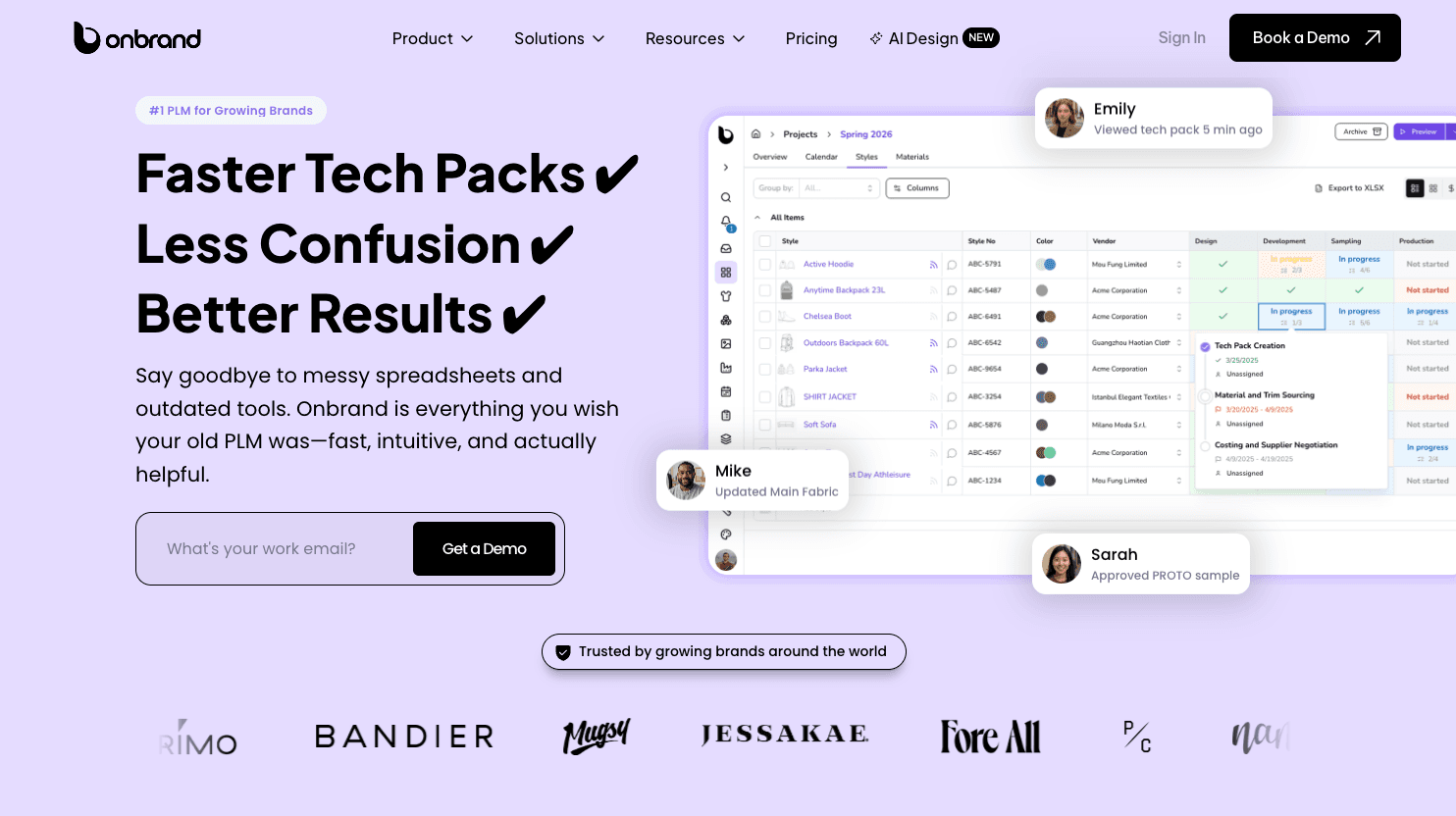
How Onbrand Supports Luxury Product Development
Luxury products often require a higher level of detail throughout development. Custom materials and specialist components may go through several review rounds, with suppliers closely involved as decisions change.
Onbrand keeps that development information connected to the style as it changes. Live tech packs give internal teams and vendors access to current product information, which reduces the need to keep resending updated PDFs or spreadsheets.
Teams can manage sample and approval work in the same PLM environment, with costing and material information kept connected to each style. Vendor communication can stay connected to that development work as well.
For teams that also use Onbrand AI Design, approved visual work can move into PLM when a design is ready for structured development.
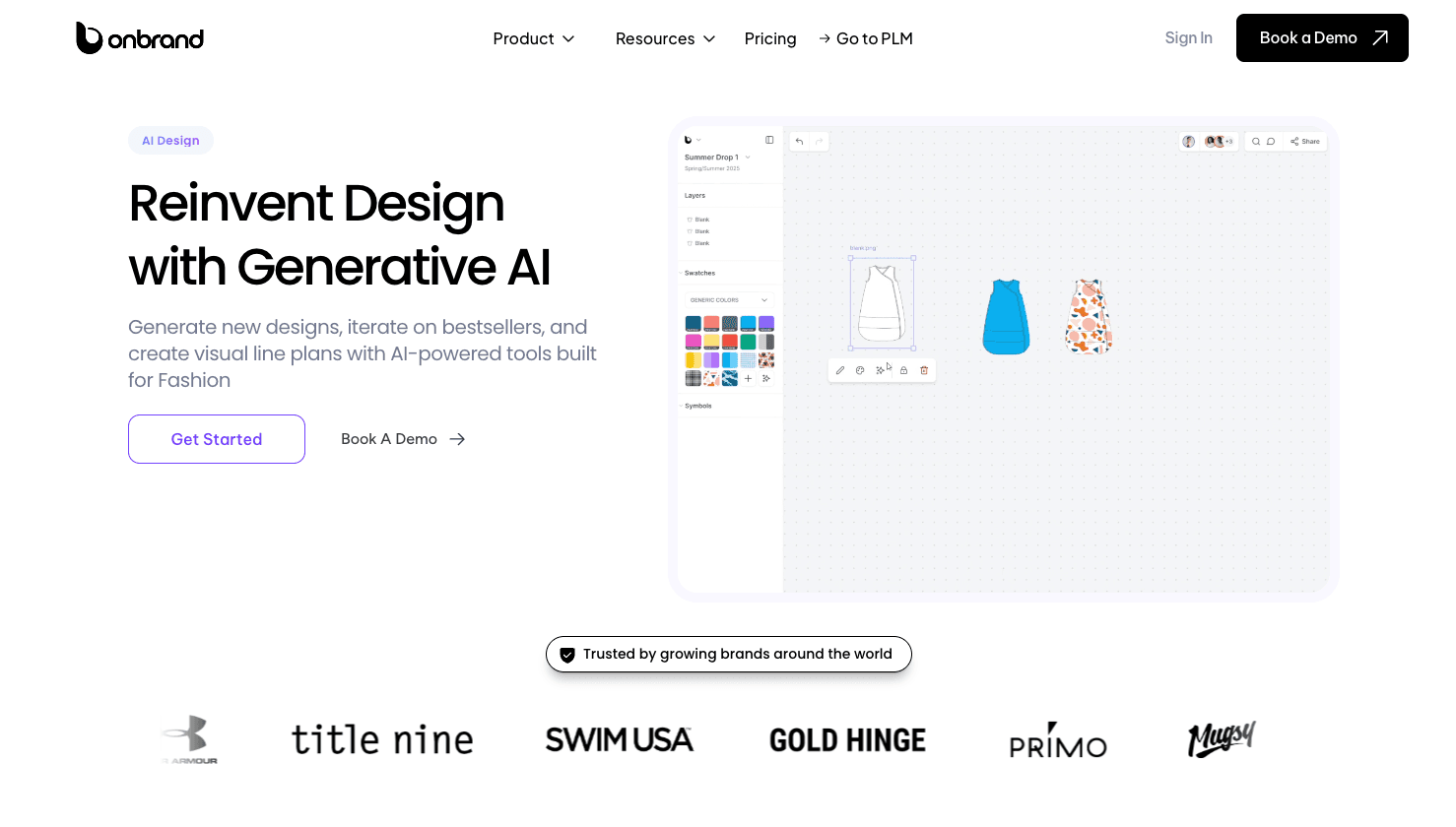
Onbrand has helped customers create tech packs 55% faster, shorten development by four weeks, and complete data migration and implementation in about 10 days.
Main Features
Live tech packs – Keep current specifications available to internal teams and vendors as styles change.
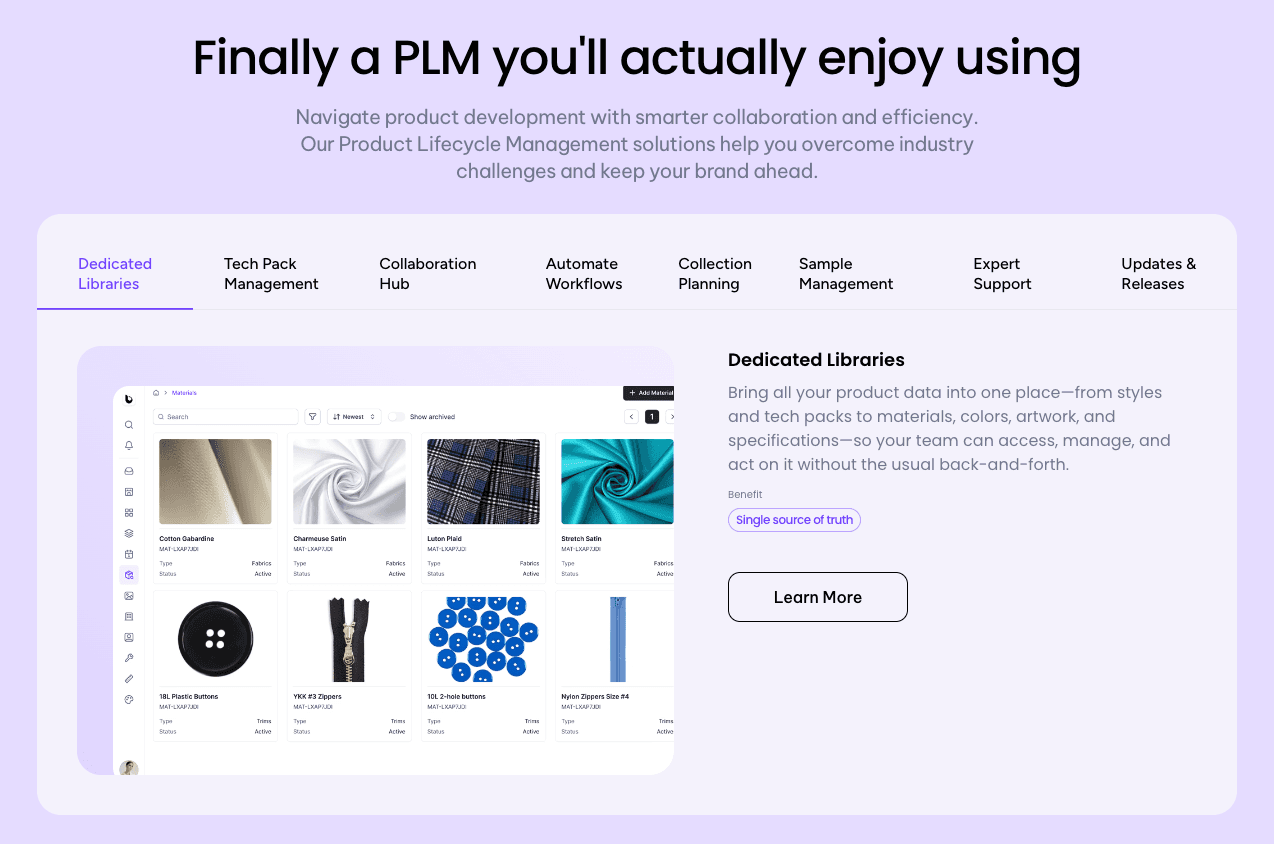
Dynamic libraries – Reuse approved materials, colors, artwork, and product data between styles.
Sample management – Track sample rounds, comments, status, and approvals during development.
Vendor collaboration – Keep product discussions and updates connected to the relevant style.
Workflow management – Track stages, tasks, approvals, and development timelines inside the PLM.
Suitable For
Fashion and luxury product teams that need a modern PLM for detailed product development without the heavier setup associated with traditional enterprise systems.
See how Onbrand PLM can fit your product development process. Book a demo today.
2. Centric PLM
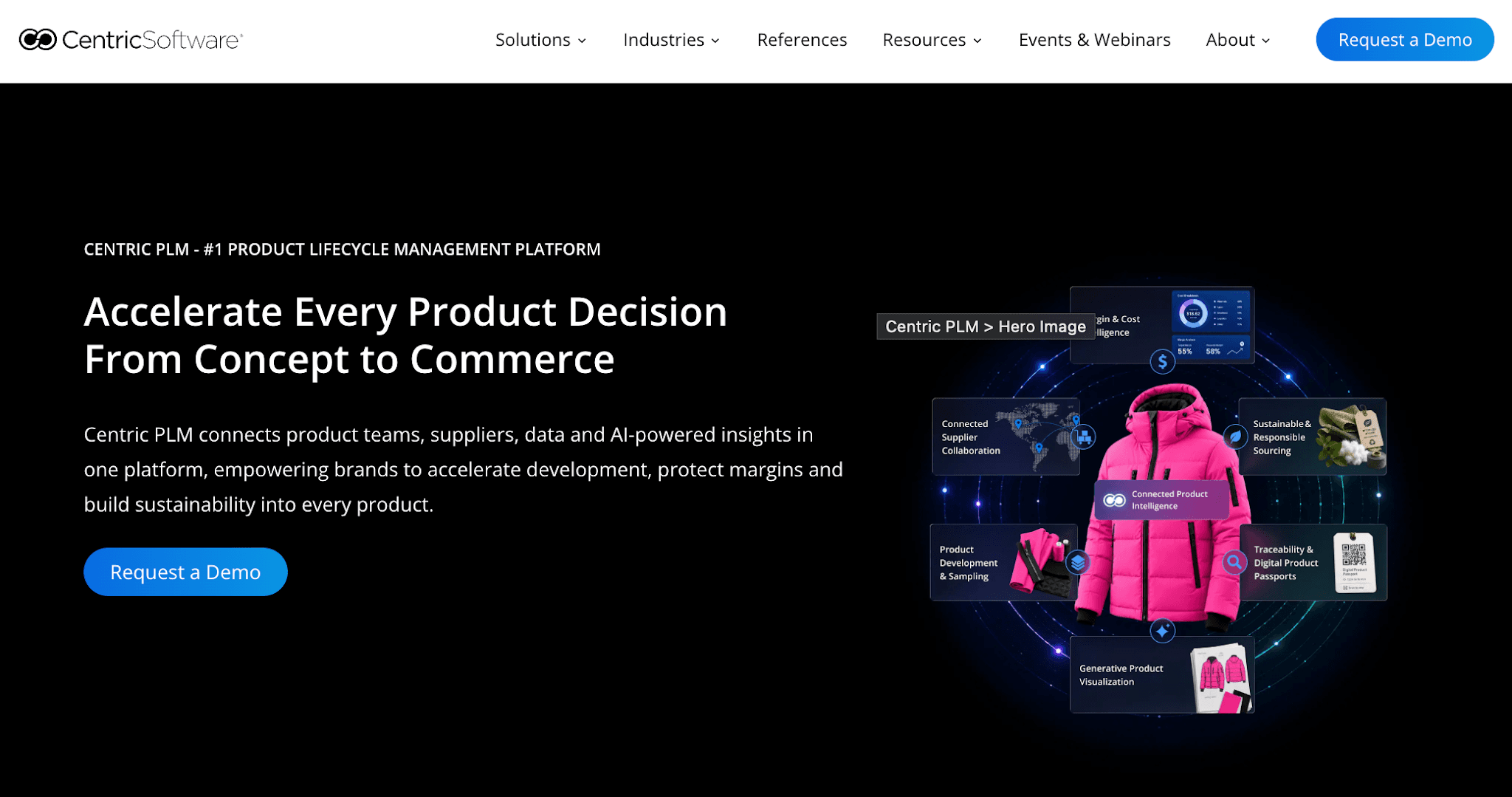
Centric PLM is a PLM platform from Centric Software used by fashion, retail, footwear, beauty, and consumer-product companies. It supports product development from early creation through sourcing and commercialization.
Source: centricsoftware.com
How Centric PLM Supports Luxury Product Development
For luxury brands, Centric can support detailed bills of materials (BOMs) and development work that spans several product categories. Supplier input and prototype reviews can stay connected as products progress toward approval.
Product teams and suppliers can work with connected product data as styles develop. The platform also supports visual collection planning and 2D and 3D design integrations.
Main Features
Product data management – Organize product information from initial development through commercialization.
BOM and material management – Maintain materials, components, and product specifications within detailed BOMs.
Supplier collaboration – Connect sourcing and supplier activity with current product-development information.
Visual collection planning – Build and review collections using visual boards and shared PLM library data.
2D and 3D integrations – Connect digital creation tools with the product-development workflow.
Suitable For
Larger luxury brands and multi-category organizations with complex product development, extensive supplier networks, and several collections to manage at the same time.
3. Lectra Kubix Link
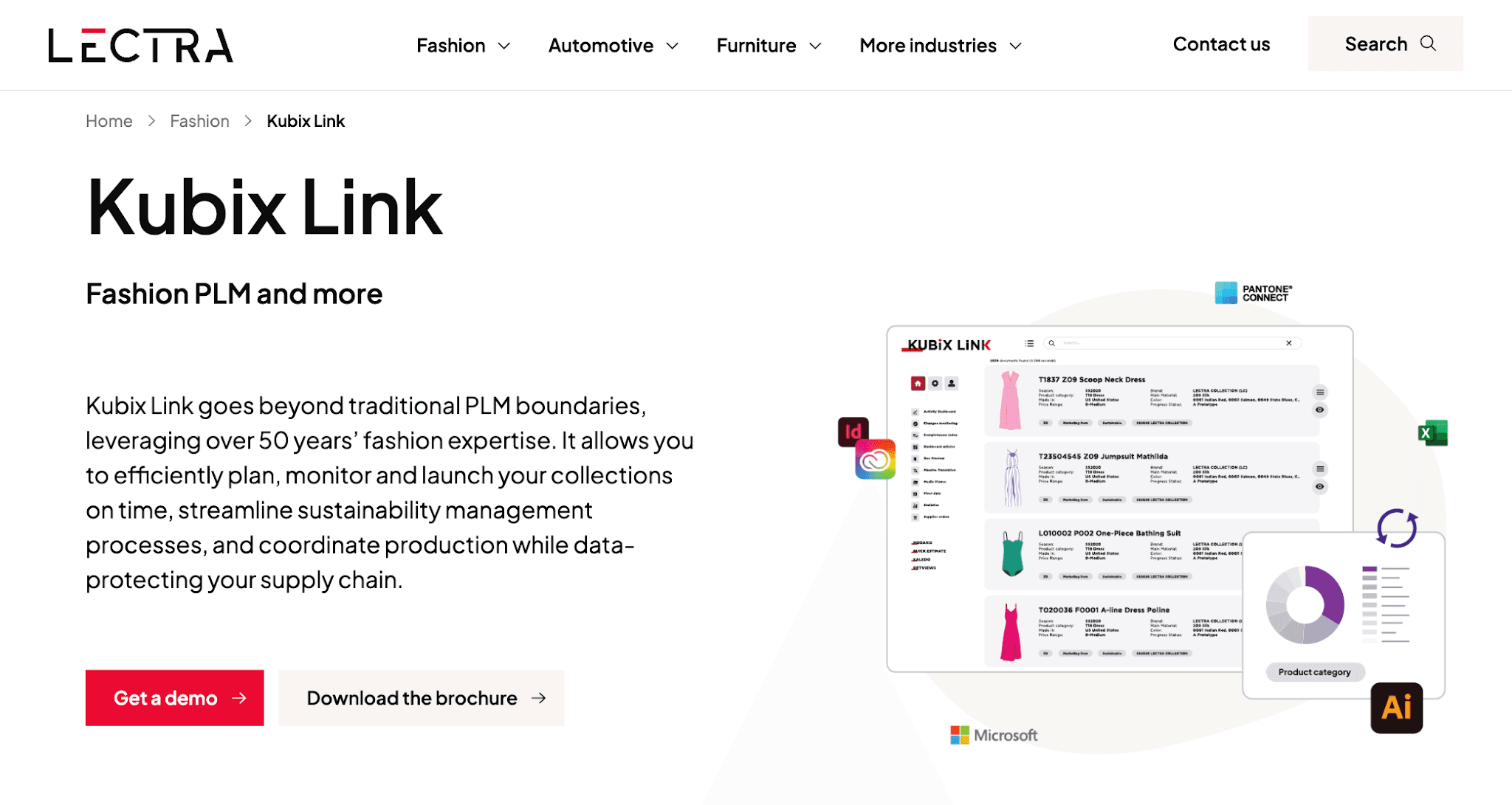
Lectra Kubix Link is a cloud-based fashion PLM platform from Lectra that connects collection development with the product information teams need throughout development.
It also connects with tools such as Adobe Illustrator, ERP, CMS, WMS, and other business systems.
Source: lectra.com
How Lectra Kubix Link Supports Luxury Product Development
Luxury products often pass through several reviews before a collection is ready.
Kubix Link gives teams a shared product record throughout those reviews. Tech packs, fitting feedback, and development changes can remain connected as the product progresses.
Teams can review prototypes and share feedback while keeping supplier information connected to each product. Kubix Link also supports environmental and compliance data for materials and suppliers.
Main Features
Product data management – Keep current style and collection information in one system.
Digital tech packs – Create and share product specifications internally and externally.
Collection planning – Track milestones, calendars, costs, and development status.
Supplier collaboration – Share updates, feedback, and product details with external partners.
System integrations – Connect with Adobe Illustrator, ERP, CMS, WMS, and other tools.
Suitable For
Fashion and luxury brands managing detailed collections, supplier input, product reviews, and several connected business systems.
4. PTC FlexPLM
PTC FlexPLM is a retail PLM platform built for fashion and consumer-product companies.
It supports product development from initial design through sourcing and later development requirements such as costing and compliance.
Source: ptc.com
How PTC FlexPLM Supports Luxury Product Development
For luxury brands managing several categories, FlexPLM can handle large numbers of styles and SKUs in one system.
That makes it relevant for organizations developing several product lines at the same time. Its comprehensive PLM system can keep supplier and material information connected throughout development and link digital product creation with planning workflows.
FlexPLM also connects with 2D and 3D design tools.
Main Features
Multi-category product management – Manage large volumes of styles and SKUs in one instance.
Design and specification management – Keep product-development information connected from design onward.
Sourcing and costing – Manage supplier, cost, and sourcing data within the workflow.
2D and 3D integrations – Connect digital design tools with product development.
Compliance and sustainability – Track supplier, material, and compliance information.
Suitable For
Larger luxury groups that need full PLM functionality for multi-category product development, supplier data, and enterprise-scale operations.
5. Infor PLM for Fashion
Infor PLM for Fashion is a fashion-specific PLM platform that connects design, sourcing, and production in one system.
Infor PLM keeps style development connected with the material and product information behind each design. Creative, technical, and commercial teams can work from shared information as collections progress.
Source: infor.com
How Infor PLM for Fashion Supports Luxury Product Development
For luxury brands, the platform can keep detailed material and BOM information connected to supplier input throughout development.
Teams can reuse approved component information as they develop collections and connect creative work through Adobe Illustrator. Product documents can stay with the relevant style, with role-based access available for distributed teams.
This can be useful when several people need to work from the same product information without product updates becoming disconnected between design and production.
Main Features
Material and trim management – Organize fabrics, trims, components, and BOMs in reusable libraries.
Collection development – Create and update styles using templates, visual libraries, and development workflows.
Adobe Illustrator integration – Sync creative concepts and technical specifications with design files.
Document management – Store images, reports, and product files within the PLM environment.
Global collaboration – Support multilingual teams, permissions, and external partner access.
Suitable For
Established fashion organizations, including luxury brands with similar development requirements, managing several collections, product categories, suppliers, and distributed teams.
6. Delogue PLM
Delogue PLM is a product development platform used by fashion and lifestyle brands working in several product categories, including home textiles.
Its workflow keeps the product record at the center of development. Sample feedback and specifications can stay connected to BOM and costing information as teams work with suppliers and move toward approval.
Source: delogue.com
How Delogue PLM Supports Product Development
Delogue PLM keeps product information, supplier input, and approval history in the same workflow.
That can be useful when a style goes through several revisions and the people involved need to see the latest development decisions.
Delogue also supports shared work with suppliers, which helps reduce reliance on separate emails and spreadsheets during development.
Main Features
Product data and specifications – Keep style details, BOMs, samples, and documentation in one product record.
Supplier collaboration – Share updates and decisions with suppliers in the same workflow.
Costing and pricing – Track product costs as styles develop.
Approval history – Keep decisions and changes visible through development.
Collection overview – Review product status and progress at collection level.
Suitable For
Fashion and lifestyle labels, including smaller luxury businesses with similar product-development needs, that want structured product and supplier collaboration without an enterprise-scale setup.
7. Bamboo Rose TotalPLM
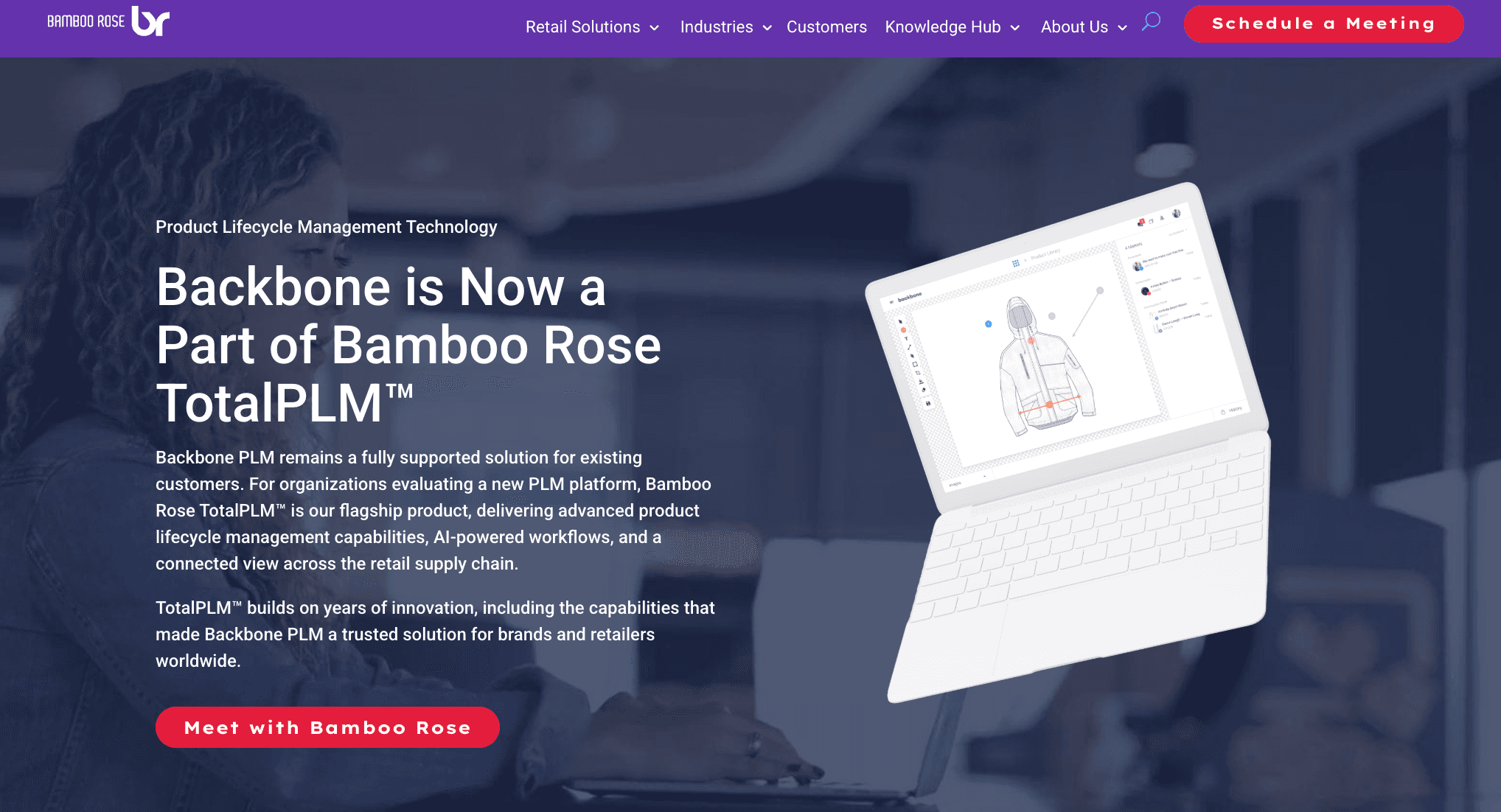
Bamboo Rose TotalPLM is the company’s current PLM platform for brands and retailers, connecting product development with broader retail and supply chain workflows.
It builds on capabilities from Backbone PLM, which Bamboo Rose continues to support for existing customers.
Source: bamboorose.com
How Bamboo Rose TotalPLM Supports Luxury Product Development
TotalPLM connects product information and development work throughout the entire lifecycle.
Teams can keep detailed product information connected from design into development and sourcing. Supplier activity can remain connected to the same product record.
For product teams working with detailed specifications and several external partners, this provides a shared view of product information as styles progress toward production.
Main Features
Product development – Manage product information and development activity from initial concepts through production.
Design tools – Connect creative work with product development and shared product data.
Sourcing and supplier management – Coordinate sourcing activities and supplier relationships.
Product data management – Keep development information available to teams working throughout the lifecycle.
Decision intelligence – Use connected product and supply chain data to support planning and development decisions.
Suitable For
Larger fashion and retail organizations evaluating fashion PLM systems that connect product development with sourcing and broader supply chain operations.
Match PLM to How Your Luxury Brand Develops Products
The right PLM software depends on how your products are developed, who is involved, and how much information needs to pass between people and systems.
A fashion business developing one product category with a small supplier network may need a different setup from a multi-category brand coordinating several teams and external partners.
Use the areas below to decide which capabilities deserve the most attention when comparing platforms.
Product Category
Start with what your brand actually makes because each category creates different development requirements.
Apparel PLM software may need to support detailed sizing and fit development. Footwear introduces structures such as lasts and soles, and handbags come with their own construction and component requirements.
Jewelry and eyewear may require another level of technical detail.
If you manage several categories, look closely at how well a platform can accommodate those differences without forcing every product into the same development structure.
Material Complexity
Consider how much detail sits behind the materials and components used in each product.
A brand working with a relatively consistent material base may have simpler requirements. Custom-developed materials create more complexity because their specifications need to remain connected to the correct product and supplier.
You should also consider how often materials are reused between collections and how many specialists contribute to them.
The more detailed those requirements become, the more important it is to compare platforms based on the depth of material information your team actually needs.
Sampling and Prototype Process
Map what happens between the first prototype and final approval.
How many sample rounds are typical? Who reviews them? Which decisions require supplier input? How does feedback pass between design, development, technical, and production staff?
A relatively short approval process may not require the same depth as a workflow involving several prototypes, reviewers, and sign-offs.
Look at your current process first. Repeated rounds and late decisions can also affect development workload, so the platform should match the level of control your sampling process requires.
Supplier Network
Consider how closely outside partners need to participate in development.
A brand working with a few long-term manufacturers has different requirements from one relying on a wider network of specialist partners. Different suppliers may contribute to specific parts of the product before final manufacturing.
The important question is how much supplier collaboration your workflow requires.
Decide which external partners need direct access, what information they should see, and how often they need to contribute to product decisions.
Level of Product Detail
Look at how much information must remain accurate before a style can enter production.
Products that depend on custom construction or specialist workmanship usually require more documentation than simpler styles. Finishes, packaging requirements, and product variants may also need their own instructions.
Consider how detailed your technical specifications become and how often they change.
If manufacturers depend on comprehensive tech packs to reproduce those decisions accurately, technical documentation should carry more weight in your comparison.
Collection Complexity
Think beyond the number of individual products.
Your fashion product development process may involve several types of collections at the same time. Seasonal launches may sit alongside carryover or permanent styles, with different categories following their own development schedules.
Complexity also increases when products need to support different sales channels or markets. A brand with one focused collection may need relatively simple oversight.
A larger assortment with thousands of SKUs requires a platform that can accommodate more relationships, statuses, and simultaneous development activity.
Existing Systems
List the systems your team already depends on before comparing PLM platforms.
Design work may happen in Adobe Illustrator or a 3D design application. Product information may also need to connect with enterprise resource planning (ERP) software or fashion PIM.
Also consider where inventory management and production management currently happen. The PLM does not need to replace those systems, but information may need to pass between them.
Brands preparing for traceability requirements should also consider how product data may eventually support a digital product passport or related compliance workflows.
Team Size and Implementation
Finally, consider how much software complexity your organization can realistically support.
Small fashion brands, including independent luxury labels, may prioritize usability and a shorter setup. Larger groups may need more configuration and stronger controls over permissions and data migration.
Look beyond claims about tools that streamline processes when assessing fashion PLM implementation.
For larger organizations, PLM may be part of a broader digital transformation. Consider who will manage the rollout, how existing product data will be migrated, and what training and vendor support your team will need.
Fashion PLM software costs should also account for the resources needed to implement and connect the system. Customization and the number of users can affect the overall investment too.
When a Luxury Brand Is Ready for PLM
There is no specific team size or number of products that tells you it is time to adopt a PLM solution.
The need usually becomes easier to see when product development requires more coordination than your current tools comfortably support.
For fashion companies, common signs include:
More styles moving through each collection
New product categories with different development requirements
More sample rounds before approval
A larger number of suppliers involved in development
More people reviewing and approving products
Tech packs going through repeated revisions
Product information spread between spreadsheets, email, shared drives, and other tools
More time needed to check the current status of a style
More files requiring manual updates as product details change
More coordination between design, development, and production
None of these signals alone means a brand needs PLM. The stronger indication is when several start happening together and fashion teams find that their existing setup requires more manual coordination to keep development organized.
At that point, the question is less about company size and more about how difficult the product-development process has become to manage through disconnected tools.
Why Luxury Product Development Becomes Harder Without PLM
When product information is spread between spreadsheets, emails, shared folders, and separate systems, it becomes harder to know which information should guide the next decision.
An old tech pack may remain in use after specifications change. A material or finish update may not reach the right person. Sample feedback can stay buried in an email thread, and approval history becomes harder to follow.
The same problem extends outside the team. Suppliers may work from outdated product information, while production teams spend time checking details or rebuilding product data manually.
Updates made outside the main product record can also leave collection status difficult to confirm.
For luxury products, these gaps can have a direct effect on the finished item. A missed change to even one product detail may lead to another correction or additional rework, especially when that information affects how the item is made.
That is why fragmented product information becomes more difficult to manage as a product moves from design toward production.
Choose the PLM That Fits Your Products With Onbrand
The right PLM comes down to how your brand actually develops products.
A smaller leather-goods label working with a focused group of specialist suppliers will have different requirements from a global luxury group. A larger organization may be coordinating thousands of SKUs between several product categories, regions, and development teams.
The better comparison is based on your product complexity, development process, supplier model, and organizational scale. Choose a platform that fits those realities without adding more complexity than your team needs.
Onbrand PLM gives fashion and luxury teams one place to connect design with structured product development. Product information stays connected through technical development, approvals, and vendor collaboration.
Ready to see how it could fit your product development process? Book a demo with Onbrand.
FAQs About PLM Software for Luxury Brands
What is the most popular PLM software?
There is no single PLM platform that is the most popular for every fashion business. Common options include Onbrand PLM, Centric PLM, PTC FlexPLM, Infor PLM for Fashion, Lectra Kubix Link, Delogue, and Bamboo Rose TotalPLM, with suitability varying by company size, product category, and development complexity.
Which fashion PLM software is the best?
The best fashion PLM software depends on your product complexity, team structure, supplier network, and development process. Onbrand is a strong option for fashion and luxury teams looking for a modern PLM that connects tech packs, samples, approvals, collections, and vendor collaboration.
What is an example of a PLM software?
Onbrand is one example of PLM software built for fashion product development. It gives teams one place to maintain product information throughout development, with technical work, approvals, and vendor collaboration connected to the same system.
What happens before a product enters PLM?
Before detailed product development begins, market research and trend analysis can help fashion brands understand consumer demands and decide which products or collection directions to pursue. PLM then helps manage the product information and development work once those ideas move forward.
How can a fashion brand measure the impact of PLM?
A fashion brand can look for improved efficiency in practical areas such as fewer manual updates, faster access to current product information, and less time spent checking files or correcting version issues.