Sep 25, 2026

Developing a fashion collection can get messy faster than expected.
A style may start in one file, then the tech pack gets updated somewhere else. Sample comments can end up buried in an email thread.
Once materials, costing, supplier updates, and approvals enter the picture, keeping everyone on the latest information becomes harder.
Product lifecycle management (PLM) software helps bring that work into a more connected process. The harder part is choosing the right platform.
Not every PLM system is built around the same workflows. Fashion-focused platforms can stay close to product development, whereas larger platforms may extend into sourcing, planning, supply chain, ERP, and other operations.
The best PLM software for your brand depends on what you develop and how your team works. In this article, we’ll review the top seven options for 2026.
TL;DR
These are the seven best PLM software options for fashion teams in 2026:
Centric PLM
WFX PLM
PTC FlexPLM
Lectra Kubix Link
Infor PLM for Fashion
Bamboo Rose
How PLM Systems Differ by Industry
Product lifecycle management software gives companies a way to organize product information and the work that happens around it.
What goes into that system depends heavily on the product being developed. Building an aircraft, for example, involves very different information and processes from developing a fashion collection.
Here are a few examples of how PLM requirements differ by industry.
Automotive and Aerospace
Automotive and aerospace companies deal with high product complexity, with products that can have thousands of parts, configurations, and technical requirements.
PLM can support systems engineering by keeping engineering data, computer-aided design (CAD) files, and bills of materials (BOMs) connected as designs develop.
Configuration management helps teams keep different product configurations organized, while engineering change management provides a structured way to track updates.
Traceability is especially important in these regulated industries. Detailed records can support approvals and quality workflows and help teams ensure regulatory compliance throughout development.
Industrial Manufacturing
PLM in industrial manufacturing often connects engineering work with what eventually needs to happen in production.
Industrial manufacturers developing equipment or industrial machinery, for example, may need to manage product structures, technical data, design changes, and the information used to prepare a product for manufacturing.
For discrete manufacturing industries, this can extend into manufacturing process planning, where product and engineering data inform how individual parts and assemblies will be produced.
Consumer Products and Retail
Consumer product companies work with a different mix of information.
Specifications, packaging, supplier details, compliance requirements, product quality, and product variations may all need to stay connected as an item moves toward market.
Retail can bring sourcing and assortment information into the picture too. PLM requirements here depend on the products a business develops and how they move from initial idea to sale.
Fashion and Apparel
Fashion PLM is built around the information needed to develop styles and collections. That can include:
Materials and colorways
Bills of materials
Tech packs
Samples and costing
Approvals
Supplier details
For fashion teams, the focus shifts toward keeping those creative and technical decisions connected as a style moves from concept toward production.
What Should PLM Software Manage for a Fashion Team?
For a fashion team, PLM should keep the information behind a style connected as it moves through the entire product lifecycle. It starts with styles and collections, then builds as materials, trims, colorways, sizing, and other product data are defined.
Once a design moves further into development, the technical side becomes more detailed. BOM management keeps components organized, while measurements and specifications feed into tech packs that suppliers can work from.
Sample management, costing, and development calendars then give internal teams a clearer view of what needs attention and what comes next.
Revisions are part of the process too. Good version control helps people work from the latest information, while change management keeps updates to specifications, materials, and other details easier to follow.
Comments and approvals also need to stay attached to the style instead of getting lost in separate messages.
From there, supplier information and supplier collaboration help carry approved details toward production.
PLM platforms can support these product development processes to different depths, with product data management helping keep the work connected from development toward production.
7 Best PLM Software Options for Fashion Teams in 2026
The seven PLM platforms below all support product development, but they differ in how closely they fit fashion workflows and how far their capabilities extend beyond them.
We’ll look at what each platform is built for, its key features, and where it may fit within a fashion business.
1. Onbrand PLM
Best For: Growing fashion brands that want a modern PLM for managing product development, tech packs, samples, approvals, and vendor communication without heavy setup.
Onbrand PLM brings product information and development work into one shared system built around fashion teams.
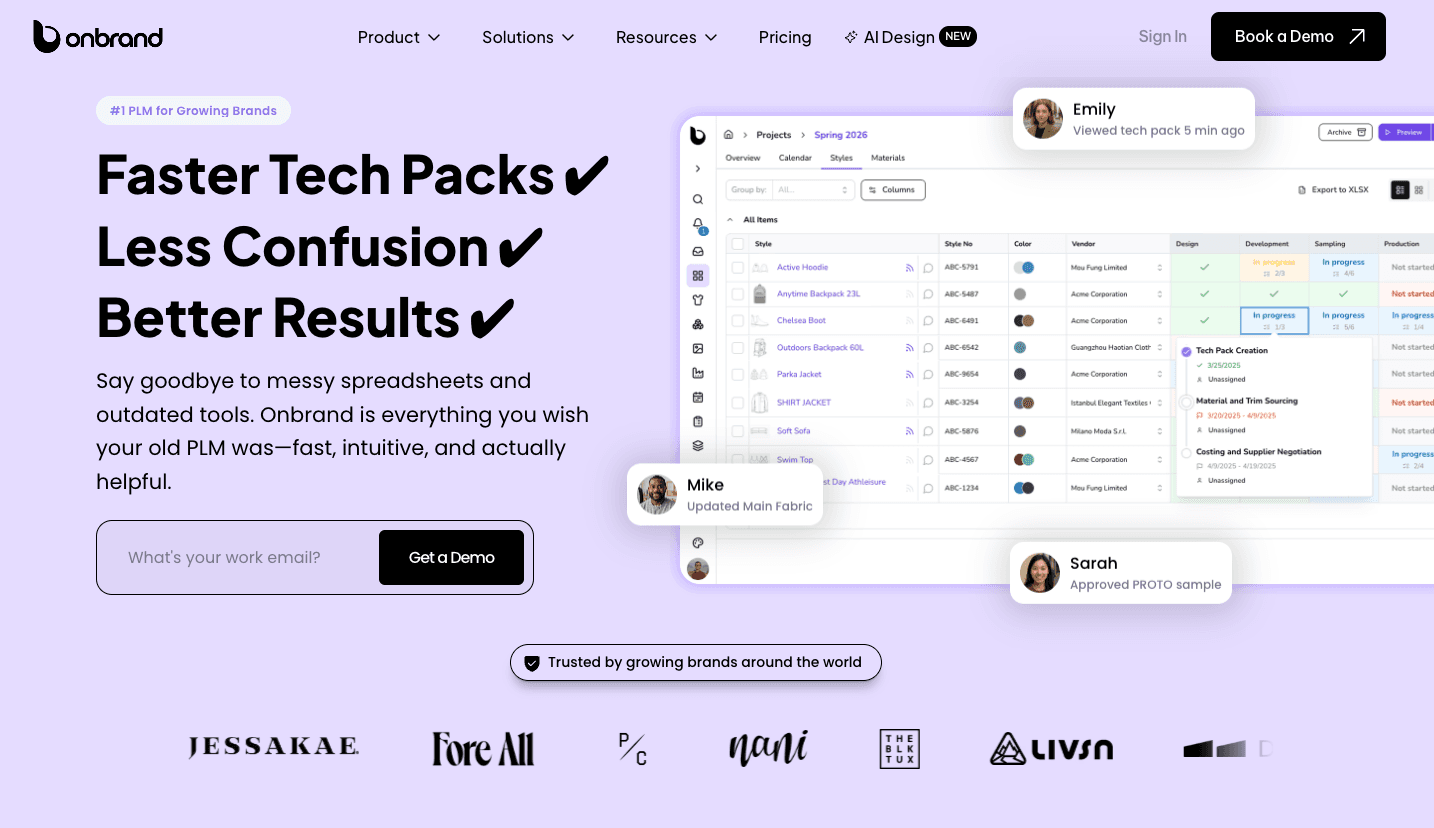
Fashion designers, product developers, sourcing teams, and vendors can manage styles, materials, tech packs, samples, approvals, and timelines without spreading updates between spreadsheets, PDFs, and email threads.
Onbrand is highly configurable out of the box, so brands can adapt it to their existing process. Most teams can be up and running within 2–4 weeks, depending on onboarding and data migration needs.
Brands have achieved 55% faster tech pack creation and a four-week reduction in development time, helping teams accelerate product development with less administrative work.
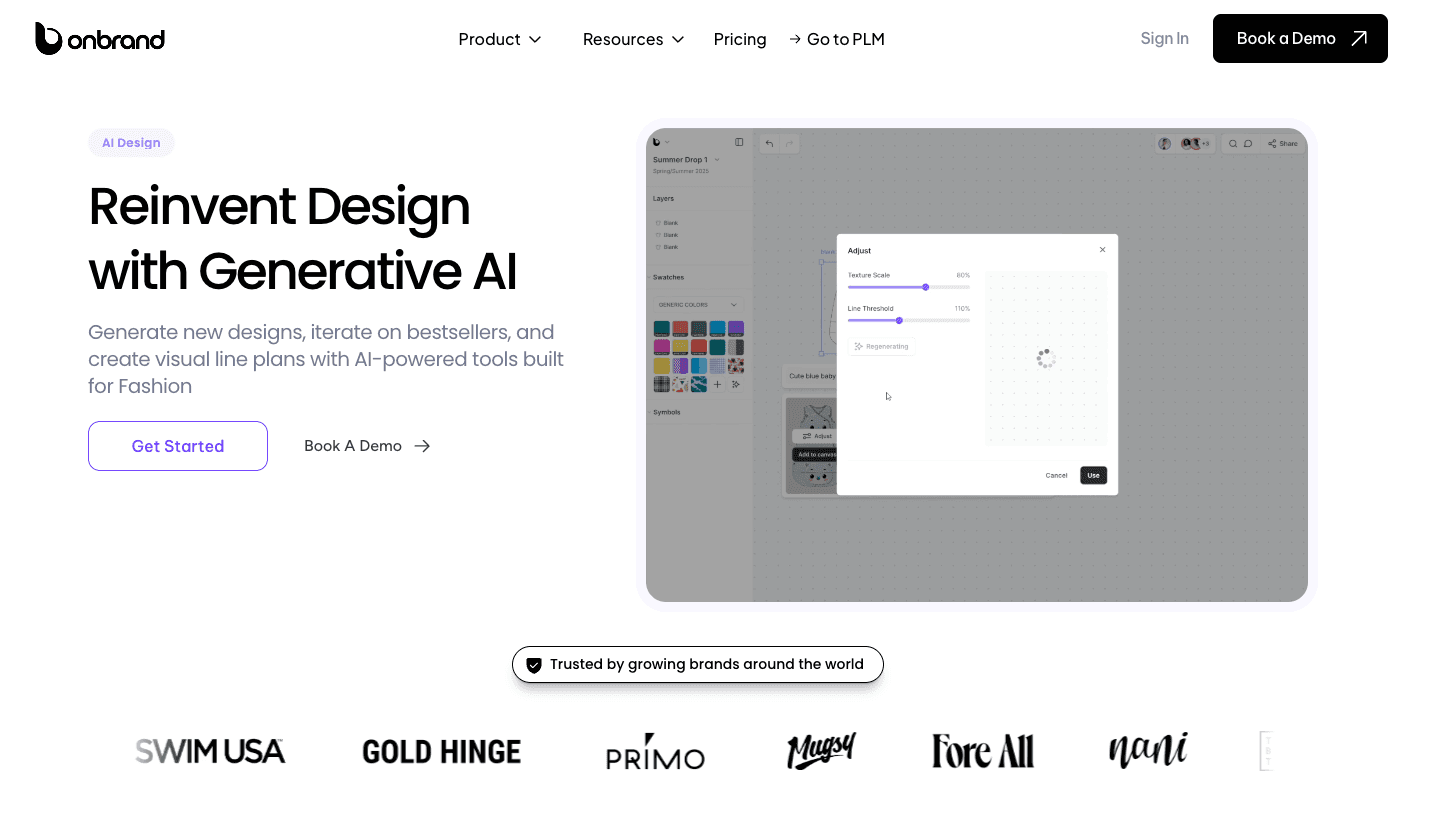
Onbrand AI Design also connects directly with PLM. Teams can generate and explore concepts, review visuals, and move approved design assets into development without rebuilding the work elsewhere.
Key PLM Capabilities
Live tech packs – Keep web-based tech packs current so internal teams and vendors can work from the latest specifications without passing updated files back and forth.
Product libraries – Organize styles, materials, colors, artwork, and specifications in one shared place that stays accessible throughout the entire lifecycle.
Sample and approval management – Track sample rounds, comments, revisions, and approvals alongside the relevant product information.
Project management – Configure stages, tasks, approvals, and time-and-action calendars around your brand’s development process.
Vendor collaboration – Give vendors access to product information and communicate directly around tech packs instead of moving updates through separate channels.
Onbrand also connects with design software, ERPs, e-commerce systems, and other tools through integrations and APIs.
2. Centric PLM
Best For: Fashion and apparel companies managing complex product development, sourcing, and commercialization workflows.
Source: centricsoftware.com
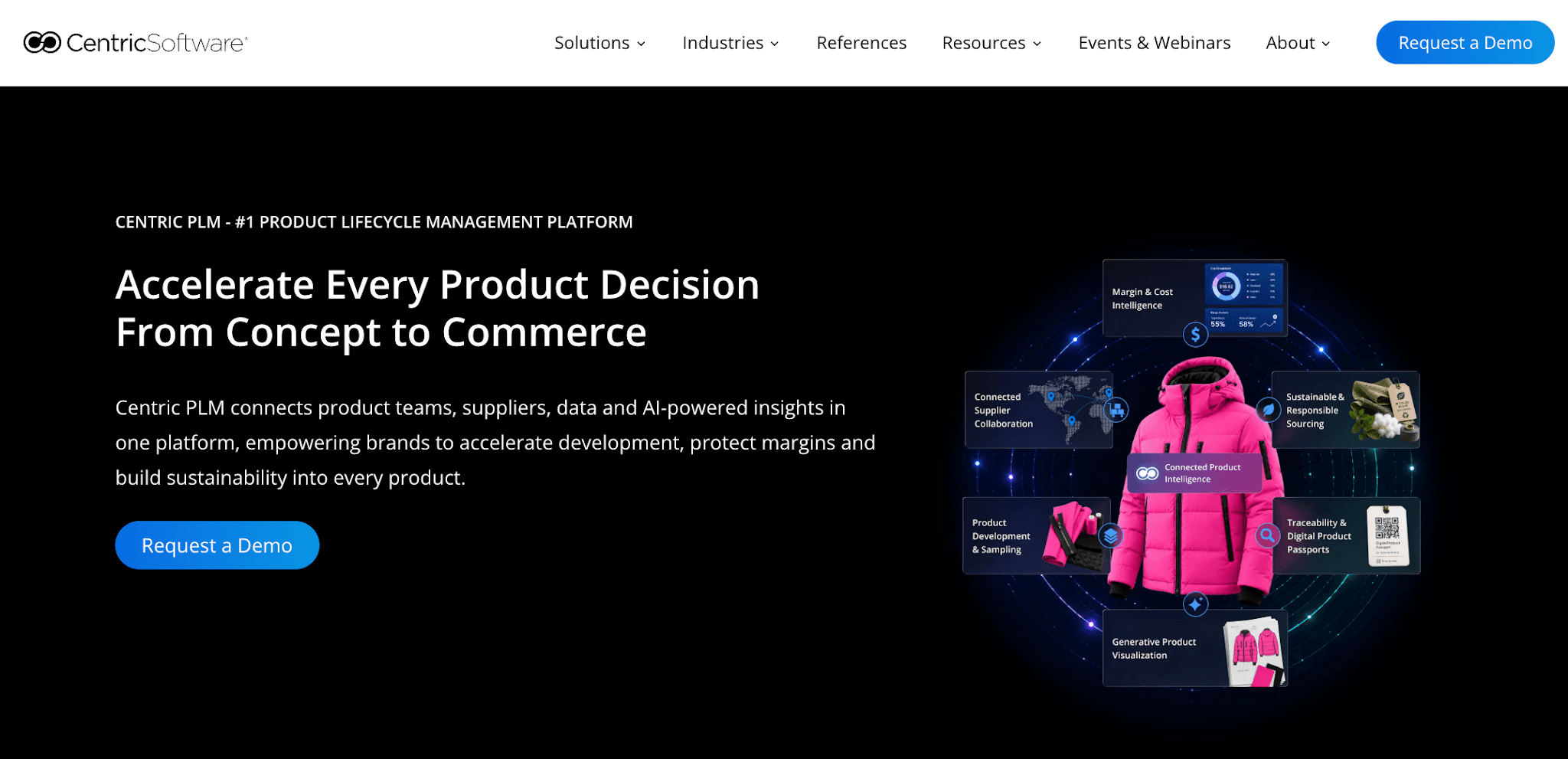
Centric PLM is a PLM platform built to connect product teams, suppliers, product data, and development work from concept through commercialization. For fashion and apparel, its scope covers design, sourcing, costing, testing, and launch within the same product lifecycle.
Its broader environment can also connect with other enterprise systems and design tools, which may suit brands managing larger product ranges or more complex development processes.
Key PLM Capabilities
Product creation and data control – Manage product information, collections, costing, and development details in one shared environment.
Design and visualization – Connect 2D and 3D design tools and use visual boards to support collection planning and product review.
Sourcing and supplier workflows – Link product development with sourcing activities and supplier input as products move toward commercialization.
BOM, prototyping, and testing – Manage bills of materials alongside prototyping, testing, and sampling work during development.
Collaboration features – Give product, design, sourcing, and other teams a shared place to review information and coordinate decisions, helping streamline product development without splitting work between multiple systems.
3. WFX PLM
Best For: Fashion brands that want to manage product development and supplier work in a fashion-specific cloud PLM.
Source: worldfashionexchange.com
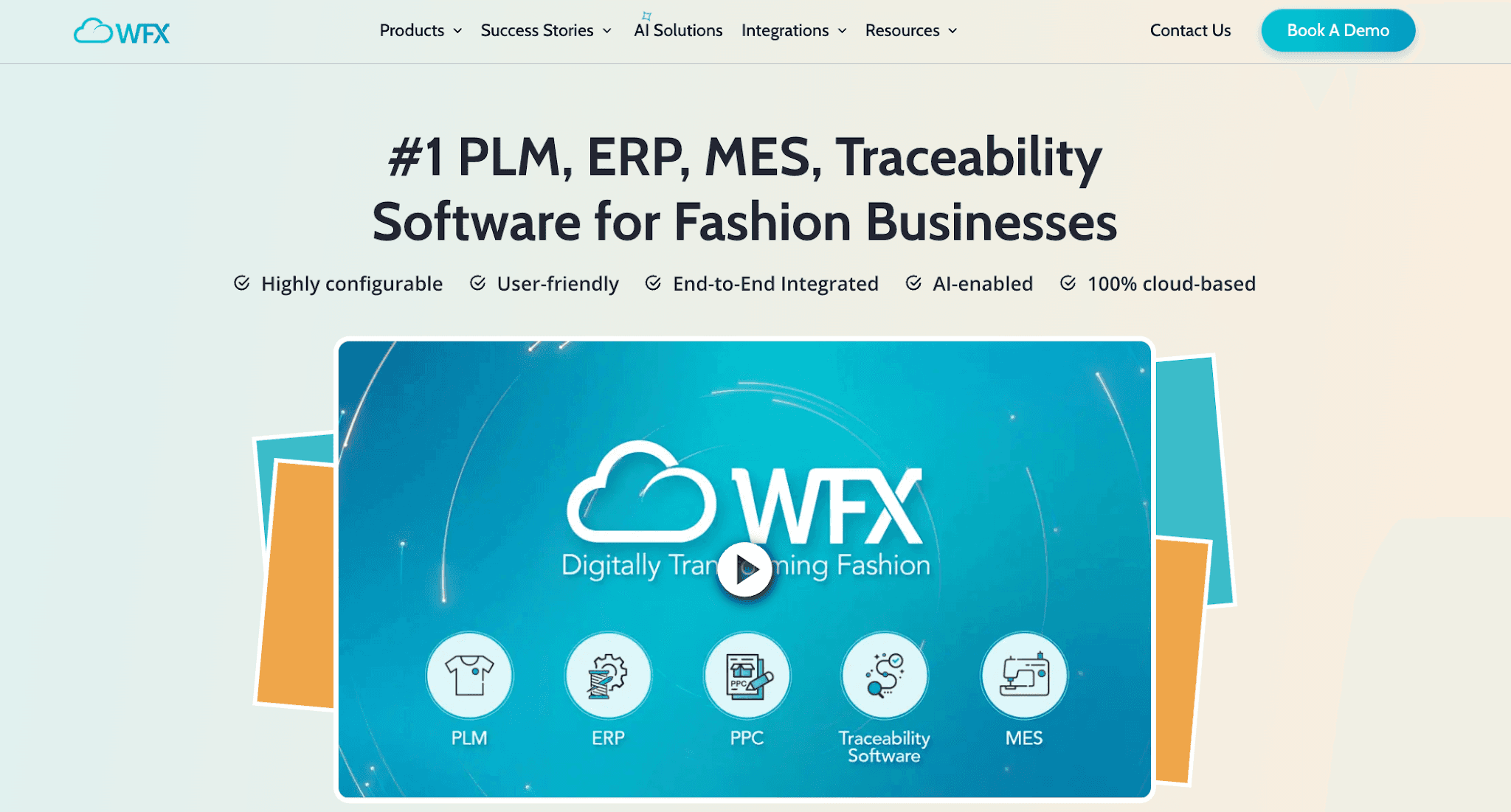
WFX Fashion PLM brings product information and development work into one cloud-based system for designers, product developers, and merchandisers. It sits within a wider WFX suite that also includes apparel ERP, manufacturing, traceability, and showroom tools.
Its fashion focus makes it relevant for teams coordinating product development with suppliers and other external partners, especially when development involves several people, milestones, and handoffs.
Key PLM Capabilities
Product data management – Keep product details and development information in a shared cloud environment that teams can access throughout the process.
Supplier collaboration – Use WFX’s vendor portal to communicate with suppliers and keep their input connected to ongoing product work.
Critical path management – Track timelines, actions, and milestones with automated workflows and alerts, adding project management structure to development.
Design and development workflows – Give design, merchandising, and product development teams a visual workspace for planning and developing fashion products.
Connected fashion operations – Link PLM with WFX’s broader ERP and production tools when product information needs to move beyond development. That connection can help speed product launches and keep teams coordinated during new product introductions.
4. PTC FlexPLM
Best For: Fashion and retail companies managing large product ranges, multiple categories, and complex development workflows.
Source: ptc.com
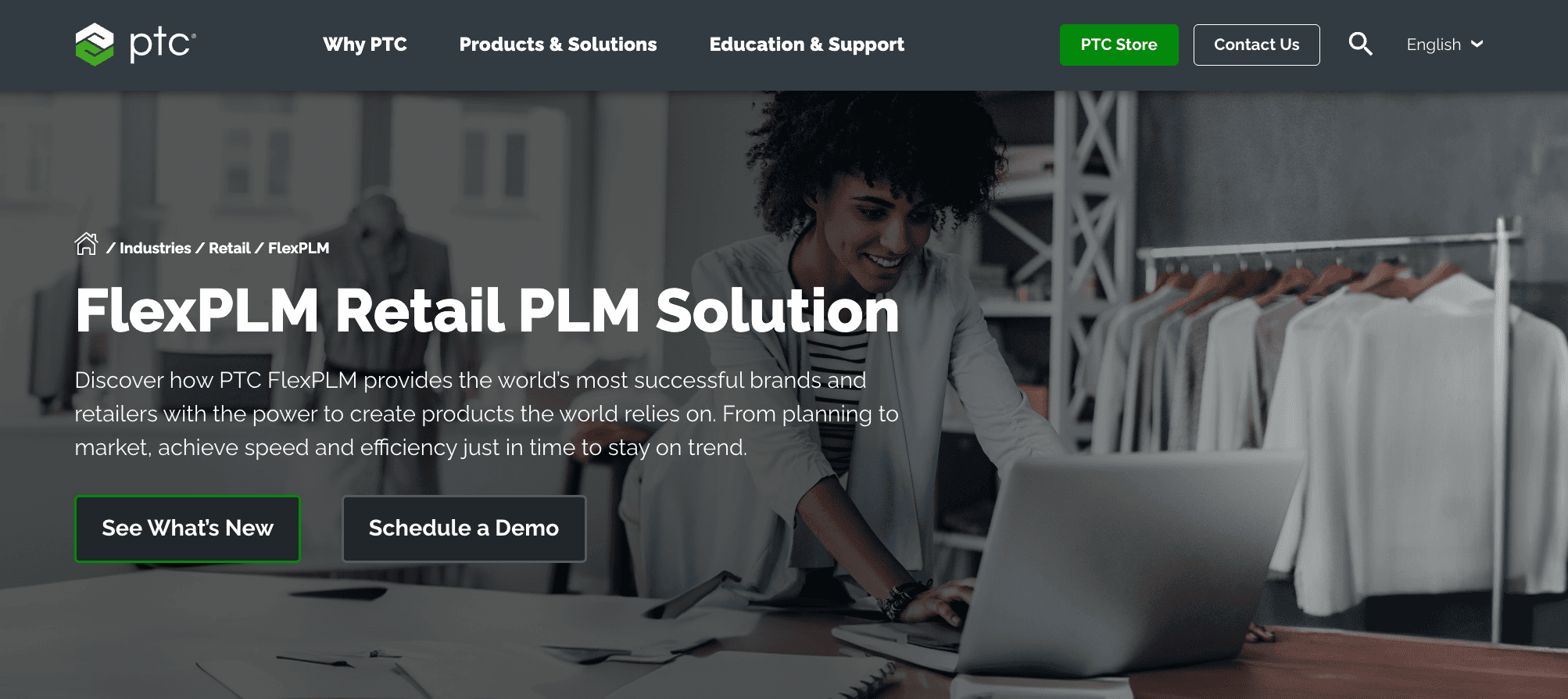
PTC FlexPLM is a retail-focused PLM solution for managing product development from design and specifications through sourcing, costing, and sustainability. It is used in fashion, apparel, footwear, retail, and other consumer product categories.
FlexPLM is designed for enterprise-scale product development, including businesses managing thousands of styles and SKUs. It also connects product information with planning and 2D and 3D design tools as products move toward market.
Key PLM Capabilities
Product development management – Manage design information, specifications, sourcing, and costing as products move through development.
Large assortment management – Organize high volumes of styles and SKUs for multiple brands and product categories within one FlexPLM environment.
Digital product creation – Connect FlexPLM with 2D and 3D design tools through bidirectional integrations, with additional optimization and visualization capabilities.
Planning and system connections – Synchronize product data with other applications through Flex Connect and access FlexPLM data from compatible planning tools.
Compliance and sustainability – Manage product, material, and supplier data for sustainability work, and track required social compliance documents and related information.
5. Lectra Kubix Link
Best For: Fashion brands that want to manage collection development, product data, supplier input, and sustainability work in one fashion-focused PLM.
Source: lectra.com
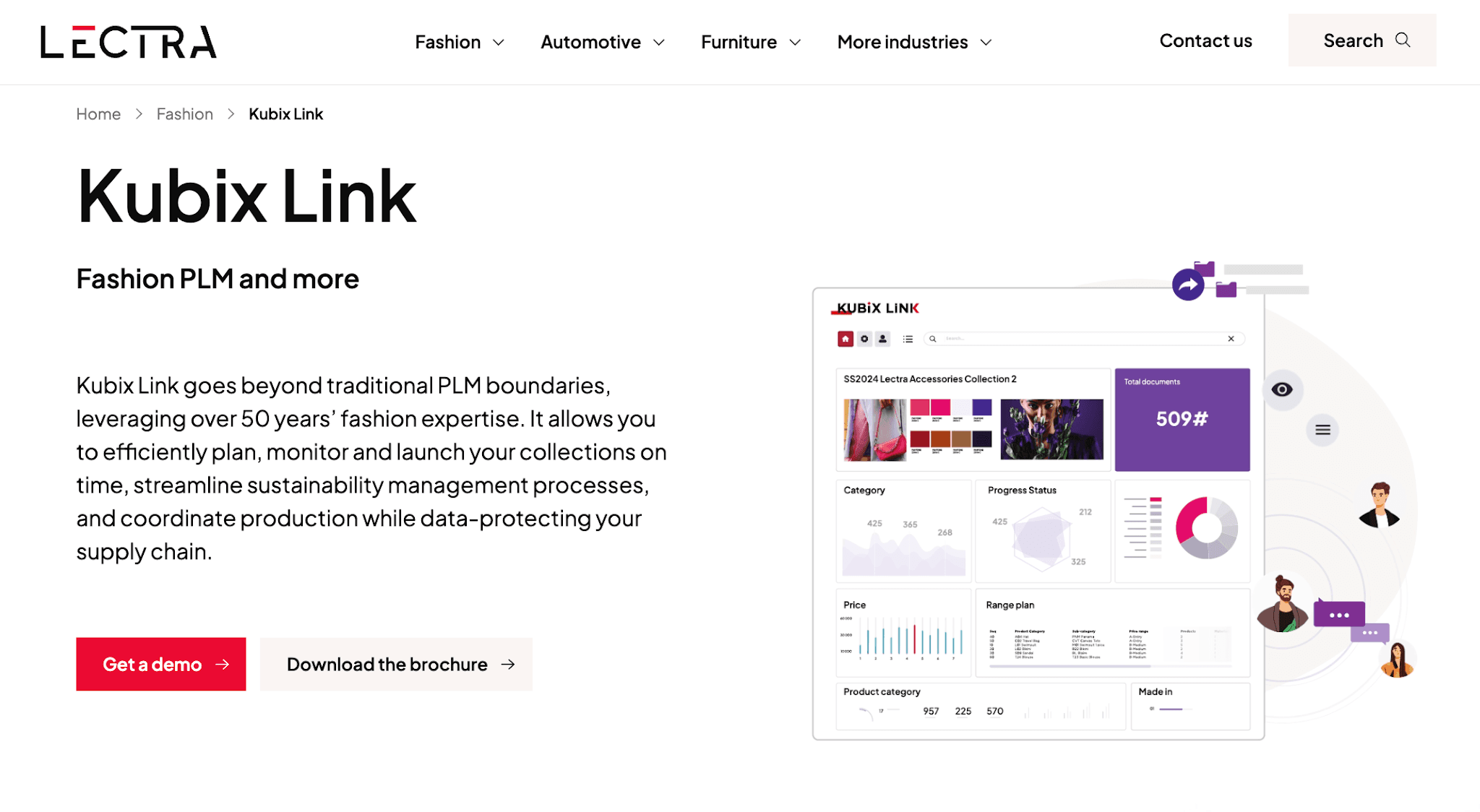
Lectra Kubix Link is a cloud-based fashion PLM for planning, monitoring, and launching collections. It also extends into product data, supplier communication, sustainability, and production coordination.
It focuses on keeping creative, technical, and supplier information connected as a collection develops. That can help the teams involved stay on the same page without splitting updates between separate tools.
Key PLM Capabilities
Collection planning and tracking – Use calendars, dashboards, milestones, and configurable workflows to monitor collection progress and costs.
Product data management – Support managing product data with change tracking, fashion CAD integrations, one-page product documents, and digital tech packs.
Document management – Create and share product documents and tech packs internally or with suppliers from the same environment.
Team and supplier collaboration – Run digital fitting sessions, collection reviews, and feedback workflows with internal and external stakeholders.
Sustainability and compliance – Use product and supplier environmental data to assess carbon impact and support compliance work. Kubix Link also includes moodboard, PIM, and integration capabilities that can support broader product innovation around collection development.
6. Infor PLM for Fashion
Best For: Fashion brands that want product development, materials, compliance, and supplier work connected within a broader Infor business environment.
Source: infor.com
Infor PLM for Fashion is a fashion-specific PLM solution that connects design, sourcing, costing, materials, and production-related information from concept through development. It is built to support creative, technical, and commercial teams working with shared product data.
Infor also positions PLM alongside its wider fashion and ERP products, with integrations available for Infor and third-party systems. This can suit brands that want product development to sit closer to supply chain management and other business operations.
Key PLM Capabilities
Design and product development – Connect creative concepts, technical specifications, style development, and Adobe Illustrator workflows in one fashion-focused environment.
Materials, trims, and BOMs – Manage materials, trims, reusable component libraries, and bills of materials in bulk as styles develop.
Compliance management – Track samples, cost quotes, lab dips, tests, and required information through automated workflows and alerts.
Global collaboration – Support multilingual teams, role-based access, and secure permissions for product work involving different regions and partners.
Document and access management – Store images, files, and reports in Infor Document Management, with role-specific configurations and secure permissions controlling access to product information.
7. Bamboo Rose
Best For: Fashion retailers and brands that want product development connected with sourcing, supplier management, ordering, and global trade workflows.
Source: bamboorose.com
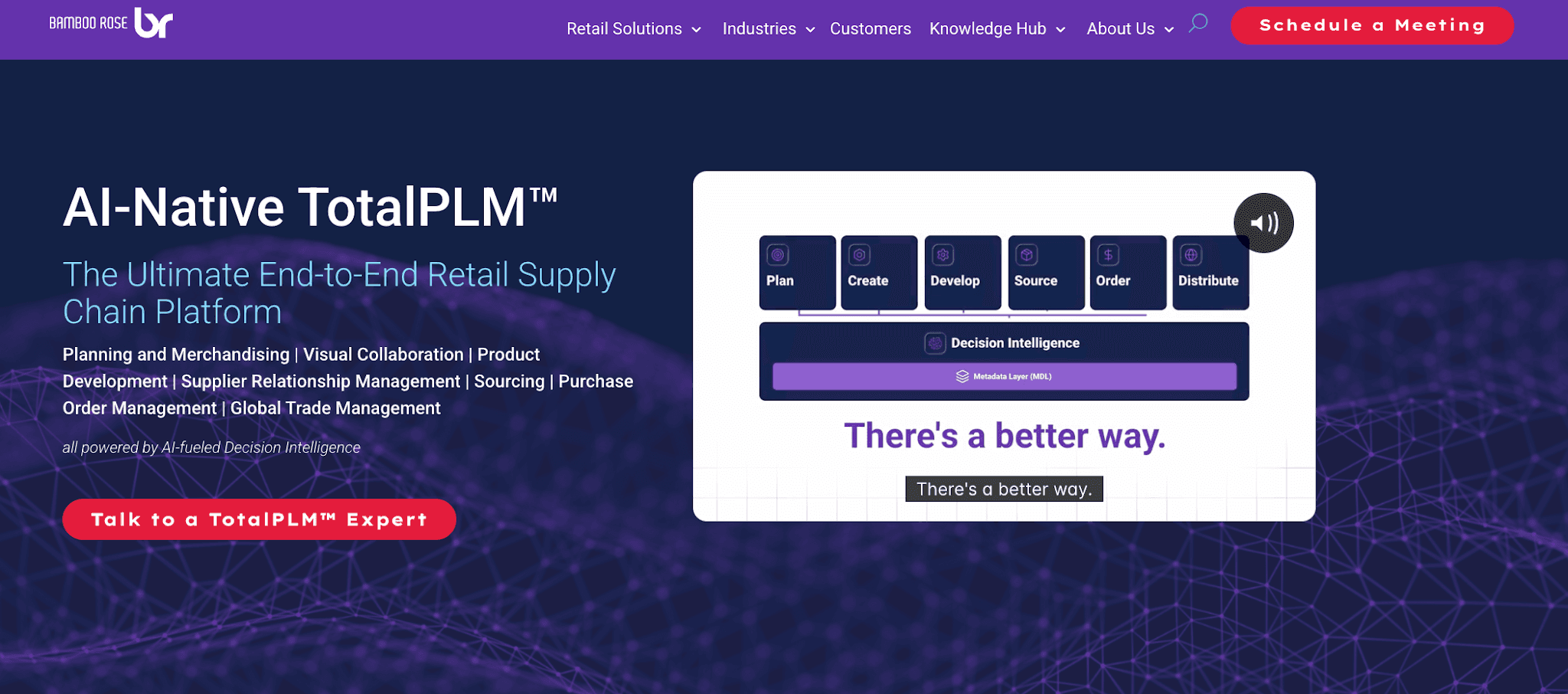
Bamboo Rose TotalPLM is an end-to-end retail solution that connects planning, visual collaboration, product development, sourcing, purchase order management, and global trade. It serves fashion and apparel alongside other retail categories.
For fashion teams, its PLM scope sits within a wider retail supply chain environment. Product development can stay connected with the supply chain partners and operational processes involved in moving products from initial planning toward delivery.
Key PLM Capabilities
Product development – Manage product development as part of a connected workflow that links design and development with later sourcing and execution activities.
Visual collaboration – Support creative work and product decisions through Bamboo Rose Create, which connects visual collaboration with the wider product lifecycle.
Sourcing and supplier management – Coordinate sourcing and supplier relationship management within the same TotalPLM environment, including work with vendors in different countries.
Ordering and global trade – Connect developed products with purchase order and global trade management workflows, helping coordinate work within global supply chains.
Cross-functional collaboration – Bring internal teams, suppliers, and vendors into a shared system so product information and decisions can move between development and downstream retail processes.
How These PLM Platforms Differ
The seven options cover PLM, but they are not built around the same type of business or product development setup. The differences become easier to see when you look at what each PLM system is designed to manage and how far its scope extends.
Fashion-First vs. General Enterprise PLM
Fashion-first software is structured around the way styles and collections move from design through development and supplier handoff. The way the product structure is organized, along with the terminology used, can reflect how fashion teams already work.
General enterprise PLM can support a wider range of products and more complex technical environments. That may include deeper connections with CAD tools and files, engineering systems, or digital thread management.
If your company already has an existing PLM, those connections can become especially important when evaluating the right PLM platform. The priority is finding PLM software that suits your team, based on the products and processes you actually manage.
Focused PLM vs. Broader Business Suites
Scope is another difference. A focused PLM may concentrate closely on design and product development, while broader suites can connect PLM with sourcing, planning, retail operations, or the supply chain.
For brands with several business systems, ERP integration can be just as important as the PLM features themselves. Connections with other enterprise systems can also help product information move into later business processes without turning PLM into an ERP replacement.
Implementation and Team Complexity
Team structure also affects fit. Growing fashion brands may prefer straightforward workflows that are easier to introduce.
Larger distributed teams can have different requirements. They may place more emphasis on permissions, governance, integrations, and choosing a secure solution for managing product data.
As development becomes more complex, workflow automation can help reduce repetitive tasks and keep work moving. Lifecycle analytics can also give teams a broader view of product activity and progress.
Still, more functionality does not automatically mean a better fit. The better fit is the one that matches how your team actually develops products.
Bring Fashion Product Development Together With Onbrand PLM
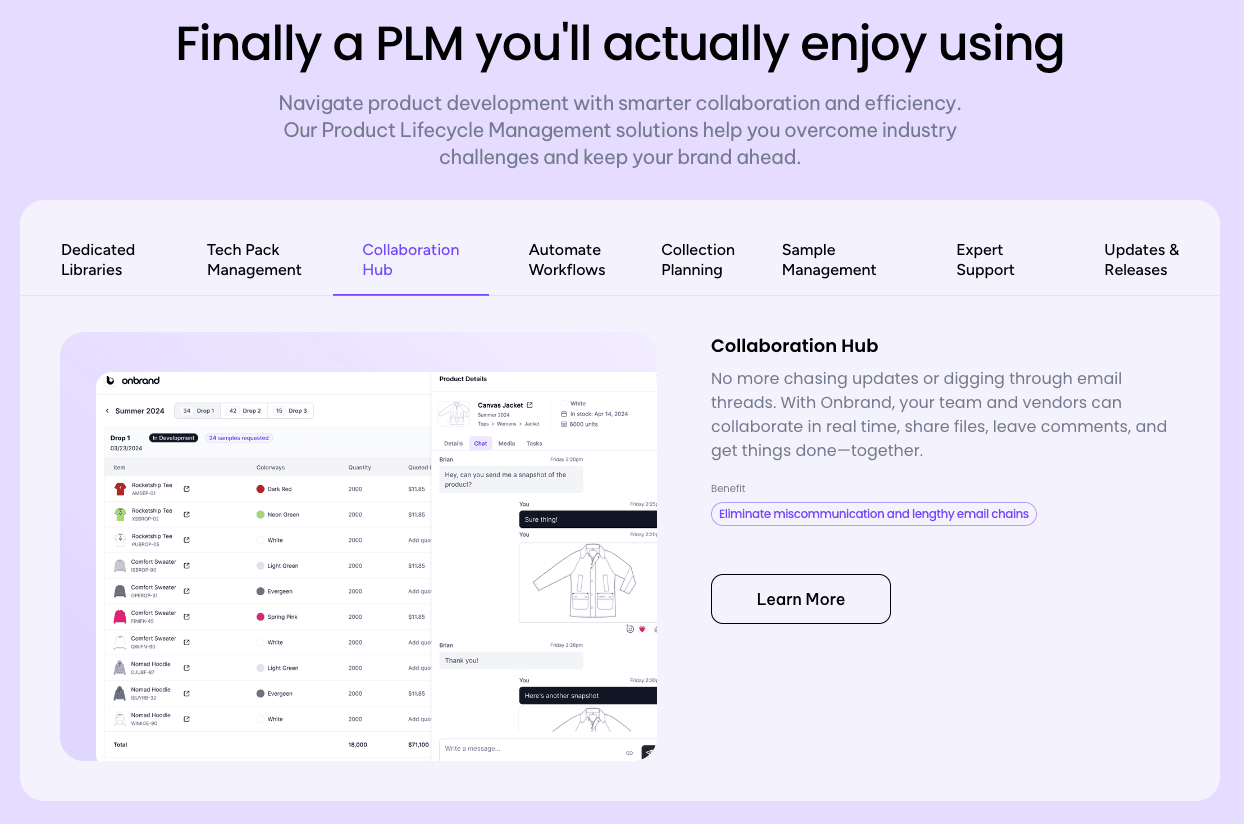
Choosing PLM software is ultimately about giving your team a better way to move products forward. When information, feedback, and decisions stay connected, there is less time spent figuring out which update is current or what needs to happen next.
That becomes especially useful as collections grow and more people take part in development. A PLM should make the process easier to follow without forcing the brand to completely change how its team works.
Onbrand PLM is built with that approach in mind. It gives fashion brands a configurable system that can fit their existing development process and support the team as the business grows.
See how Onbrand PLM can fit the way your team develops products. Book a demo today.
FAQs About Best PLM Software
Which PLM software is easy to learn?
Onbrand PLM is designed for straightforward adoption by fashion teams, with most teams getting up and running within 2–4 weeks depending on onboarding and data migration. Ease of learning still depends on your team, existing processes, and the amount of product information being moved into the system.
Who are some major PLM vendors?
PLM vendors in this market include Onbrand, Centric Software, PTC, Siemens, Lectra, Infor, and Bamboo Rose. PTC Windchill and Siemens Teamcenter serve broader enterprise and manufacturing needs, while fashion-focused options include Centric PLM, PTC FlexPLM, and Onbrand PLM.
For growing fashion brands, Onbrand stands out for its focus on tech packs, samples, approvals, vendor collaboration, and straightforward implementation.
What are common PLM systems?
Common PLM systems include Onbrand PLM, Centric PLM, PTC FlexPLM, Siemens Teamcenter, PTC Windchill, and Infor PLM. They serve different product development needs, so the right choice depends on your industry, team, products, and existing systems.
How does PLM differ for fashion brands and discrete manufacturers?
Fashion brands use PLM to manage styles, materials, tech packs, samples, costing, approvals, and suppliers. Discrete manufacturers typically use PLM to manage engineering data, product structures, BOMs, configurations, and design changes. The requirements of mid-market manufacturers can also vary based on product complexity, existing systems, and the amount of engineering data they manage.
Do fashion brands need digital twin capabilities in PLM?
Not every fashion brand needs a digital twin. Digital twins are often used in engineering and manufacturing to create a digital representation of a physical product or system and connect it with relevant product data. Fashion teams are generally more likely to prioritize styles, materials, tech packs, samples, approvals, and supplier collaboration.