Aug 25, 2026

Good product development begins with clear design decisions.
Before a style reaches a tech pack or sample, teams need confidence that they're moving in the right direction.
Generative artificial intelligence (AI) is helping fashion brands explore concepts, visualize garments, compare colors and materials, and review ideas earlier in the process.
This guide explains what generative AI is, how it fits into the fashion industry, what it can and cannot do, and why human judgment remains essential throughout product development.
TL;DR
Generative AI in fashion helps brands explore concepts, visualize garments, compare colorways, and review collection directions before product development begins.
The best generative AI fashion design tools include Onbrand AI Design, Raspberry AI, Refabric, Fashable, NewArc, and Mercer (formerly CALA).
The workflow moves from designer input to AI-generated concepts, human refinement, team evaluation, and product development.
Fashion brands use generative AI for concept development, sketch-to-render visualization, colorway exploration, textile design, collection planning, and presentation imagery.
Onbrand connects AI-assisted design with PLM, allowing approved concepts to continue into styles, materials, tech packs, approvals, vendor collaboration, and product development.
What Is Generative AI in Fashion?
Generative AI in fashion creates new visual and written content from prompts, sketches, reference images, and other creative inputs.
Common applications include:
Textile patterns
Colorways
Fashion illustrations
Product renders
On-model imagery
Collection directions
Fashion designers use these outputs to explore and compare ideas before product development begins. Human judgment still determines which concepts fit the brand, collection, construction requirements, and product goals.
Generative AI vs. Traditional AI in Fashion
Traditional AI analyzes, classifies, or predicts information. In fashion, it often supports trend forecasting, demand planning, and customer preference analysis.
Generative AI serves a different purpose. It creates new garment concepts, patterns, design variations, images, and written product content that designers can review and refine before development.
How Generative AI Works in Fashion Design
Generative AI fits into the early stages of the fashion design process. It starts with creative direction, produces visual options, and then relies on people to review, refine, and approve the best ideas before product development begins.
Step #1: Designers Provide Direction
Every project starts with direction from the design team.
That direction may come from textual descriptions, a hand sketch, visual references, a reference garment, early design ideas, design concepts, mood boards, or planned color palettes.
The more relevant the creative direction, the more closely the generated concepts reflect the intended outcome. AI responds to the guidance it receives. It does not decide the direction on its own.
Step #2: AI Generates Concepts
The platform interprets the creative direction and generates several visual options.
Depending on the AI tools being used, the output may include different silhouettes, garment details, textures, colors, layouts, or complete outfit concepts.
Instead of producing a single answer, the system gives designers a larger design space to explore before selecting a direction.
Step #3: Designers Review and Refine
The first result is rarely the final design.
Designers review the concepts and adjust the shape, proportions, colors, material appearance, styling, and product details until the design reflects the intended direction.
Design teams often compare several design variations before selecting the concept that should move forward.
Step #4: The Team Evaluates the Direction
Once the visual direction looks promising, the wider product team reviews it before development moves forward.
The discussion usually focuses on practical questions such as:
Does it fit the brand?
Does it balance the rest of the collection?
Can it be constructed?
Are the materials appropriate?
Does it fit the target cost?
Is it ready for development?
A concept only moves forward after those questions have been answered.
Step #5: Approved Concepts Move Into Development
Approval is not the end of the fashion design workflow. It marks the beginning of product development.
The selected concept then moves into product development, where teams connect it with styles, materials, colorways, specifications, tech packs, approvals, and supplier communication.
How Fashion Brands Use Generative AI
Generative AI supports several activities during the early stages of fashion design and product development. Most fashion brands use it to explore ideas, compare visual directions, and review products before committing to the next stage of development.
The exact workflow varies from one brand to another, but these are some of the most common applications today.
Concept Development
Many design projects begin with a creative brief rather than a finished garment.
Designers use prompts, sketches, mood boards, and reference images to generate early concepts that match a collection theme or product direction. The goal is to explore several creative directions before selecting one to develop further.
The designer provides the creative vision. Generative AI simply turns that direction into visual concepts that can be reviewed and refined.
Sketch-to-Render Visualization
Early sketches often communicate construction ideas but not the finished appearance of a garment.
Generative AI can turn flat sketches or rough drawings into more realistic visuals through digital rendering. These images help product teams understand the proposed direction before physical samples are created.
The renders support discussion and enhanced creativity, but they are not production specifications or final product artwork.
Silhouette and Detail Exploration
Small design details can change the overall look of a garment.
Generative AI allows designers to compare different necklines, sleeves, pockets, closures, proportions, trims, and surface details without rebuilding every concept from scratch.
Reviewing several variations together helps teams decide which details best fit the collection before development continues.
Colorway and Material Visualization
Color and fabric choices often change throughout development.
Generative AI allows teams to compare different colorways, apply prints and textures, and visualize possible fabric directions before physical samples are available.
Designers can also visualize concepts using sustainable materials, compare colors and textures, and review different combinations during early concept reviews.
These visuals help guide discussions, but they cannot confirm how a material will drape, stretch, or perform in real life.
Textile and Print Development
Generative AI also supports the creation of original textile concepts.
Design teams use it to develop repeating prints, placement graphics, knit directions, surface patterns, and experimental textile ideas for early review.
These concepts give teams more options to evaluate before selecting designs that move into product development.
Collection and Range Planning
Individual garments are only one part of a successful collection.
Generative AI can present multiple products together so teams can review assortment balance, repeated silhouettes, color distribution, category gaps, and the overall collection direction.
Seeing products as a group makes it easier to evaluate how well they work together before development progresses.
On-Model and Presentation Imagery
Generative AI can also create on-model visuals for internal presentations and design reviews.
Fashion brands use these images during stakeholder discussions, early lookbook concepts, merchandising conversations, and visual storytelling. Some teams also use concept imagery when discussing future campaigns or targeted marketing ideas.
These visuals are intended for concept review and communication. They should not be treated as final campaign photography or production-ready marketing assets.
6 Best Generative AI Fashion Design Tools in 2026
Fashion brands can choose from a growing number of AI design platforms. Each tool approaches fashion design differently and supports different stages of the product development process.
Here are the six best tools commonly used by fashion teams today:
1. Onbrand AI Design
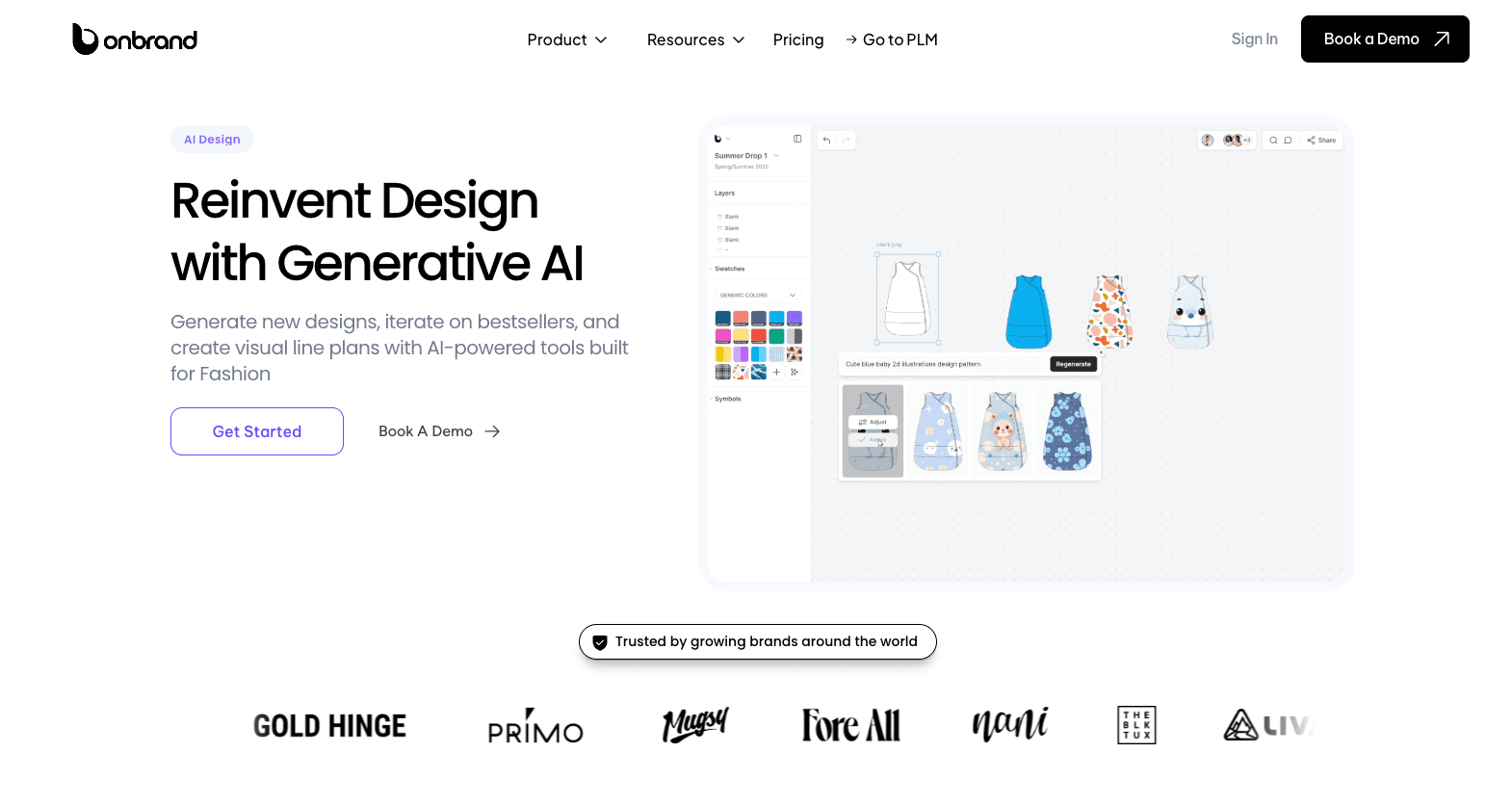
Onbrand AI Design is built for fashion teams that want to move from early ideas to product development without losing context between tools.
Designers can generate concepts from text prompts, sketches, or reference photos, then create mockups, flat images, photorealistic renders, and on-model visuals for reviews.
It also supports design exploration through alternate cuts, trims, colorways, one-click variations, Pantone and Coloro recoloring, shared mood boards, visual line plans, comments, and version history.
Beyond image generation, Onbrand AI Design helps design teams explore concepts, review options together, and keep approved visuals connected to the next stage of development.
Key Features
Generate designs from text prompts, hand sketches, and reference photos
Create line art, mockups, flat images, photorealistic renders, and on-model visuals
Explore alternate trims, cuts, colorways, and one-click variations
Collaborate through shared canvases, mood boards, comments, visual line plans, and version history
Send approved concepts into Onbrand PLM for styles, tech packs, approvals, materials, and product development
Best For
Onbrand AI Design is a good fit for fashion brands that want AI-assisted concept creation plus a direct path into product development.
It works especially well for design, merchandising, and product teams that need to move from visual exploration into tech packs, approvals, and vendor-ready product information without rebuilding the same work in separate systems.
2. Raspberry AI
Source: raspberry.ai
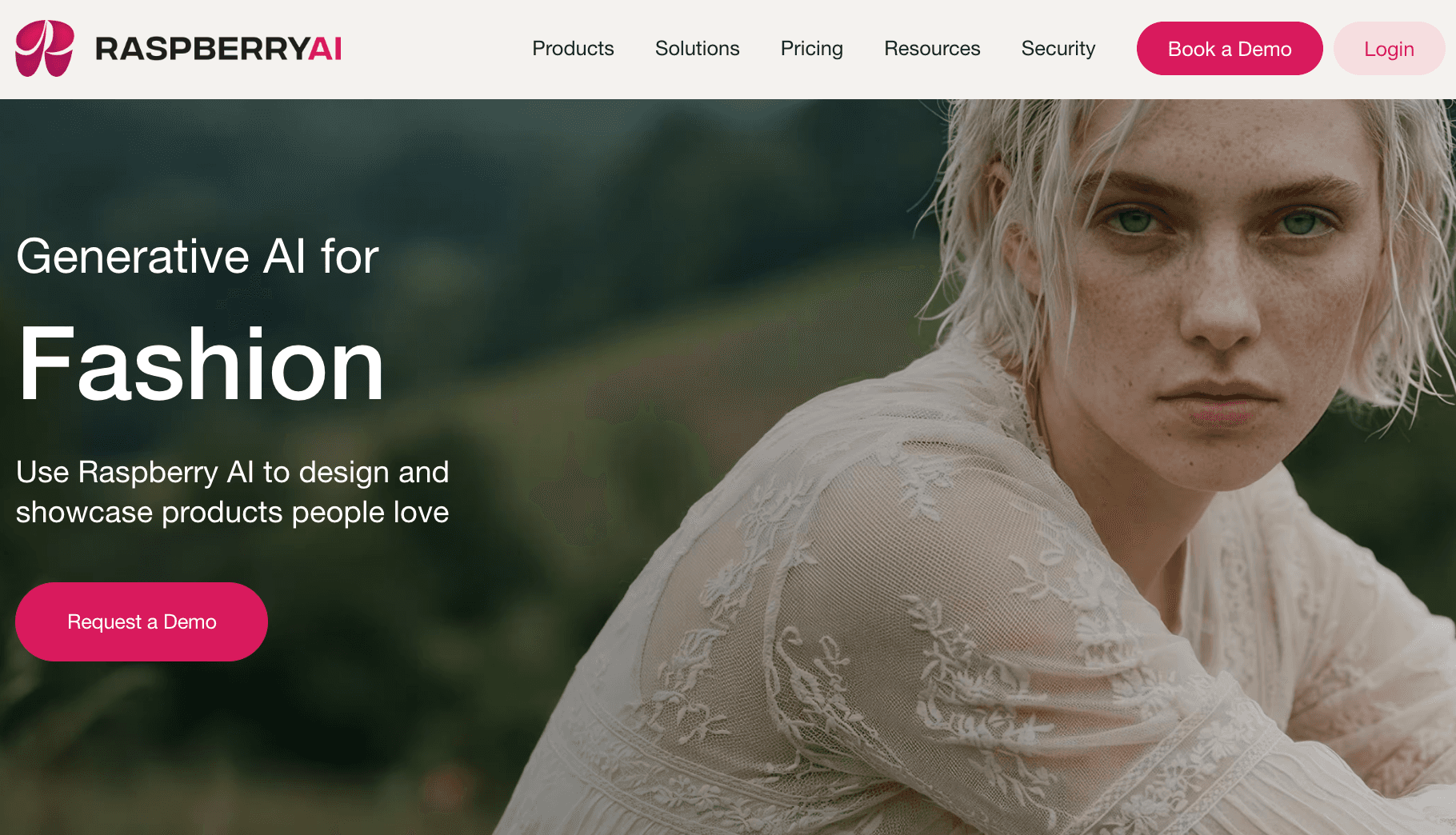
Fashion brands use Raspberry AI to generate garment concepts, explore design variations, and create visuals for product reviews and marketing.
It accepts prompts and reference images, giving teams a way to test ideas before moving them into development.
Companies can also train AI models using their own design language and visual references.
Raspberry AI includes collaboration tools that help design, product, and marketing teams review work and prepare visual assets for internal presentations and campaigns.
Key Features
AI-generated fashion concepts from prompts and reference images
Brand-trained AI models based on a company's visual identity
Product and campaign image generation
Collaboration workspace for design, product, and marketing teams
Private cloud hosting and SOC 2 Type II certification for enterprise customers
Best For
Teams that want to generate fashion concepts and campaign visuals while keeping outputs aligned with their own brand identity. It suits design, product, and marketing groups that review concepts before development and launch.
3. Refabric
Source: refabric.com
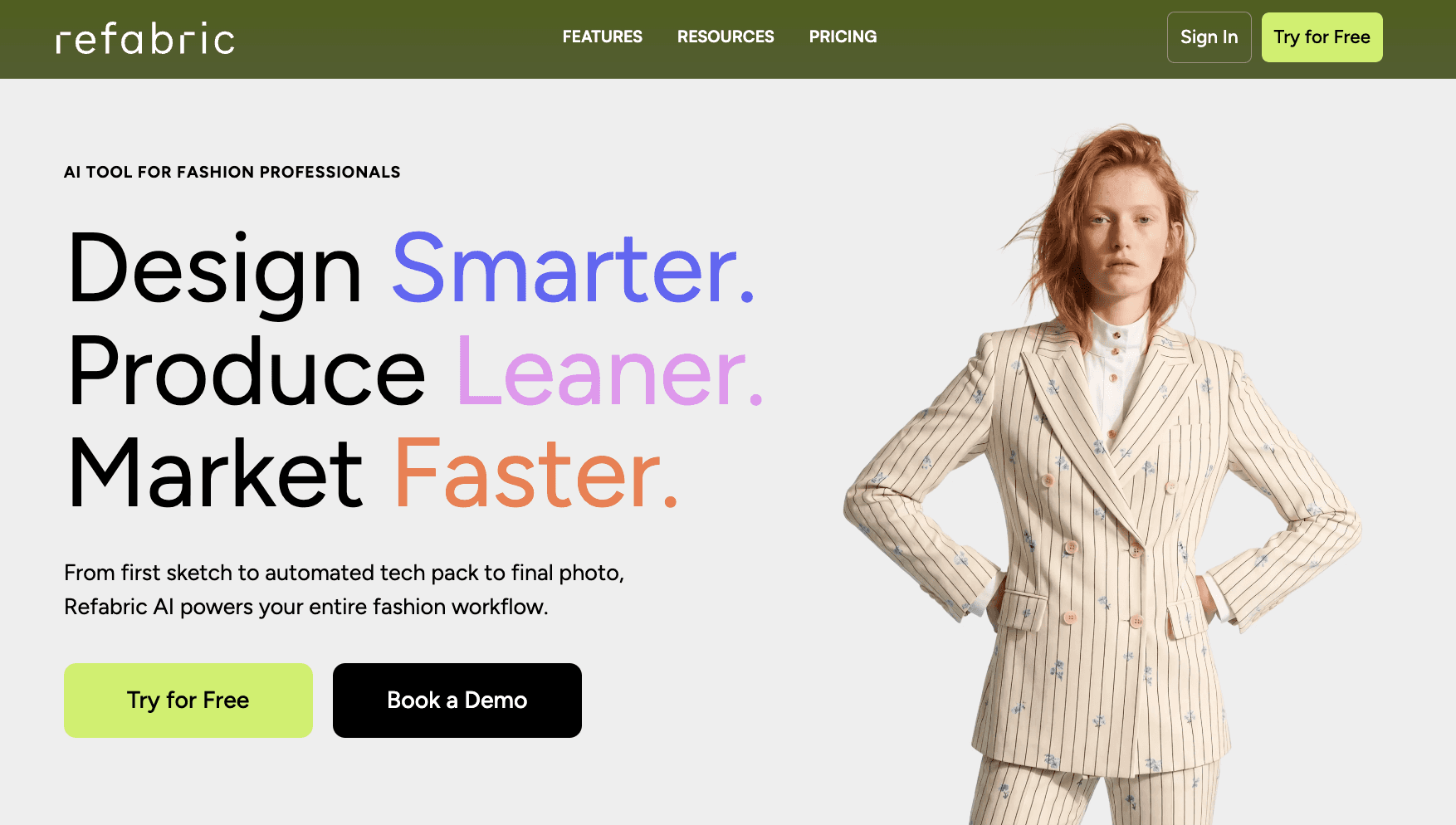
Refabric is a generative AI fashion design platform that combines concept generation with tools for product visualization and documentation.
Designers can create fashion concepts, generate e-commerce imagery, produce AI-assisted tech packs from product images, and develop designs based on their brand's visual identity.
Refabric also includes trend analysis and brand training features. Users can upload previous collections, mood boards, and design references so the AI can generate concepts that better reflect their existing design style.
It also supports AI-generated photoshoots and production documentation in one platform.
Key Features
AI-generated fashion concepts from prompts and design references
Brand-trained AI using past collections and mood boards
AI-powered trend analysis based on runway and social media data
AI-generated product photos and e-commerce imagery
AI-assisted tech pack generation from product images
Best For
Designers and fashion brands that want concept generation, AI photoshoots, and early production documentation in one place. It also suits teams that create tech packs from design concepts before manufacturing.
4. Fashable
Source: fashable.ai
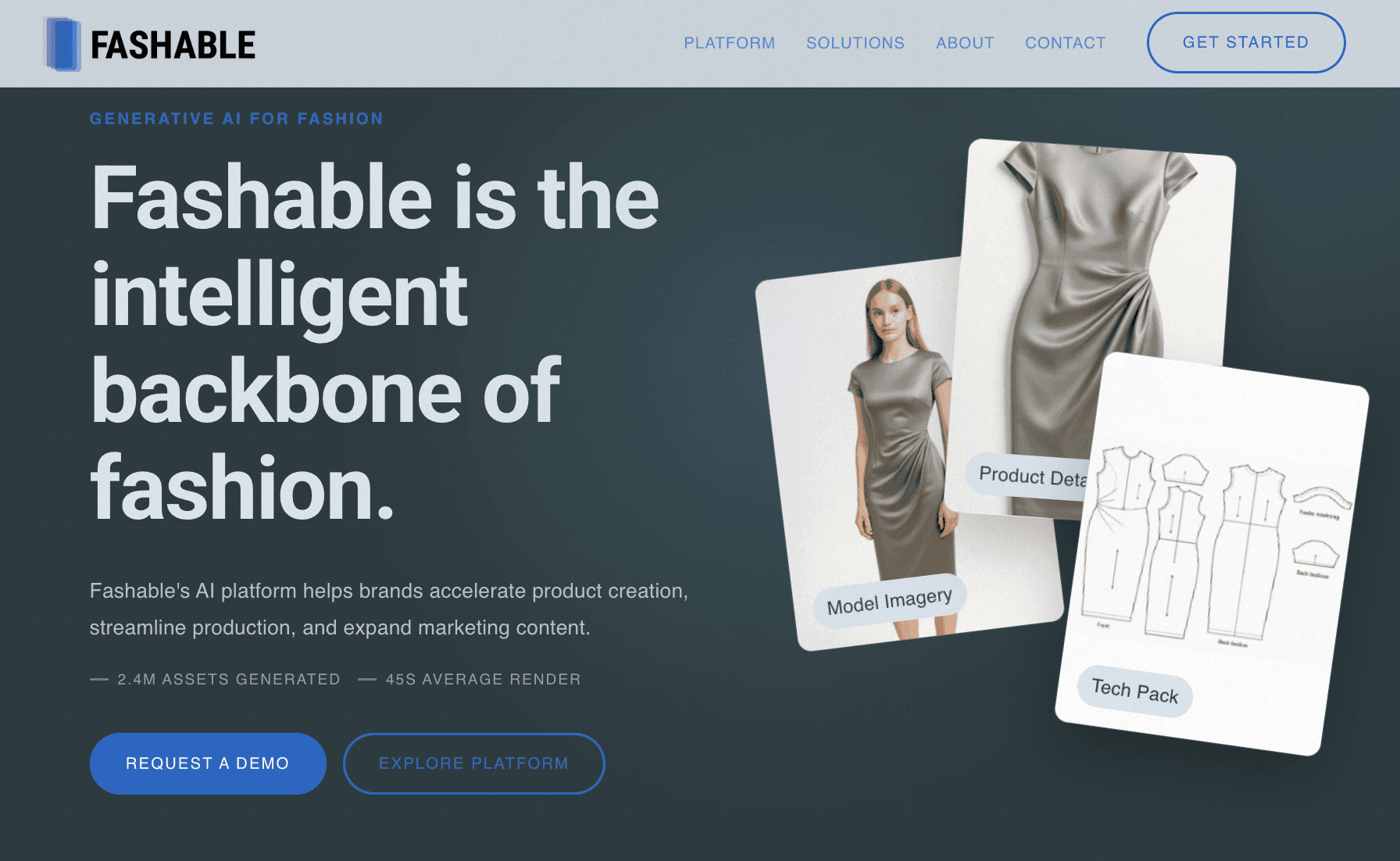
Fashion teams use Fashable to create AI-generated concepts, develop technical assets, and prepare marketing visuals within the same product creation process.
It supports prompt-based design generation, sketch-to-image creation, tech pack development, and on-model imagery for product reviews and campaign planning.
Trend analysis, workflow automation, and virtual try-on features are also available. Designers and product teams can move from creative briefs to production assets and marketing content without relying on separate applications for each stage.
Key Features
AI-generated fashion concepts from prompts and sketches
Trend analysis and mood board support
AI-assisted tech pack development
On-model imagery and virtual try-on generation
Workflow automation for design and production tasks
Best For
Brands that want one environment for concept creation, technical preparation, and marketing assets. It can support teams working from early design through product presentation.
5. NewArc
Source: newarc.ai
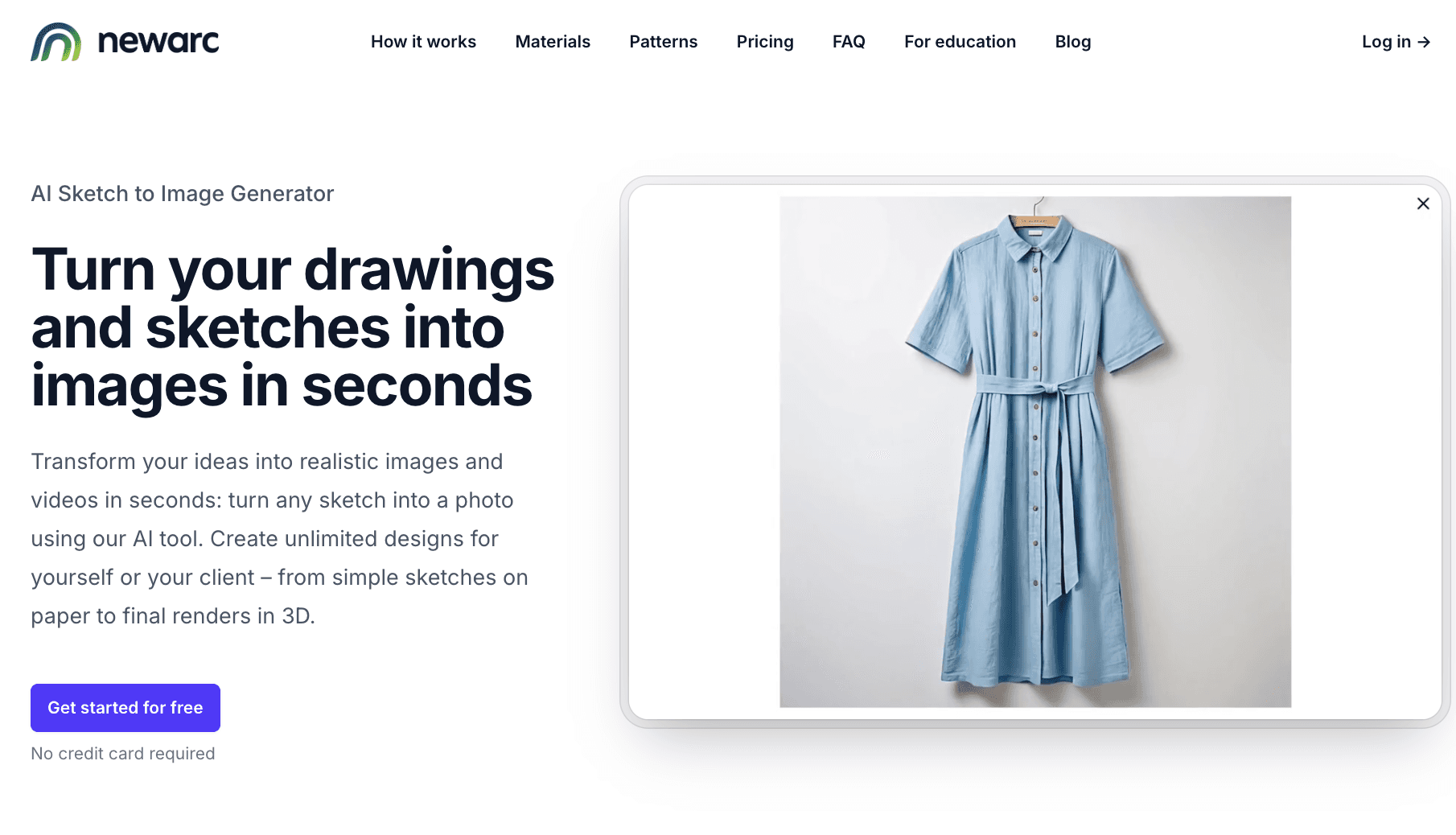
NewArc focuses on turning sketches, technical drawings, and reference images into realistic product visuals during the early stages of design.
Fashion designers can use it to explore materials, colorways, patterns, and different design directions before creating physical samples.
It also includes tools for image-to-sketch conversion, virtual try-on, image-to-video generation, and material visualization.
These features support design reviews, client presentations, supplier communication, and early marketing preparation while allowing teams to refine concepts from one workspace.
Key Features
AI sketch-to-image generation from hand sketches and technical drawings
Image-to-sketch conversion for production documentation
Virtual try-on and AI-generated model imagery
Material, pattern, and colorway visualization
Image-to-video generation for presentations and marketing
Best For
Designers who sketch by hand or work from technical drawings and need realistic visuals early in the design process. It also works well for design reviews, supplier discussions, and client presentations before samples are produced.
6. Mercer
Source: mercer.design
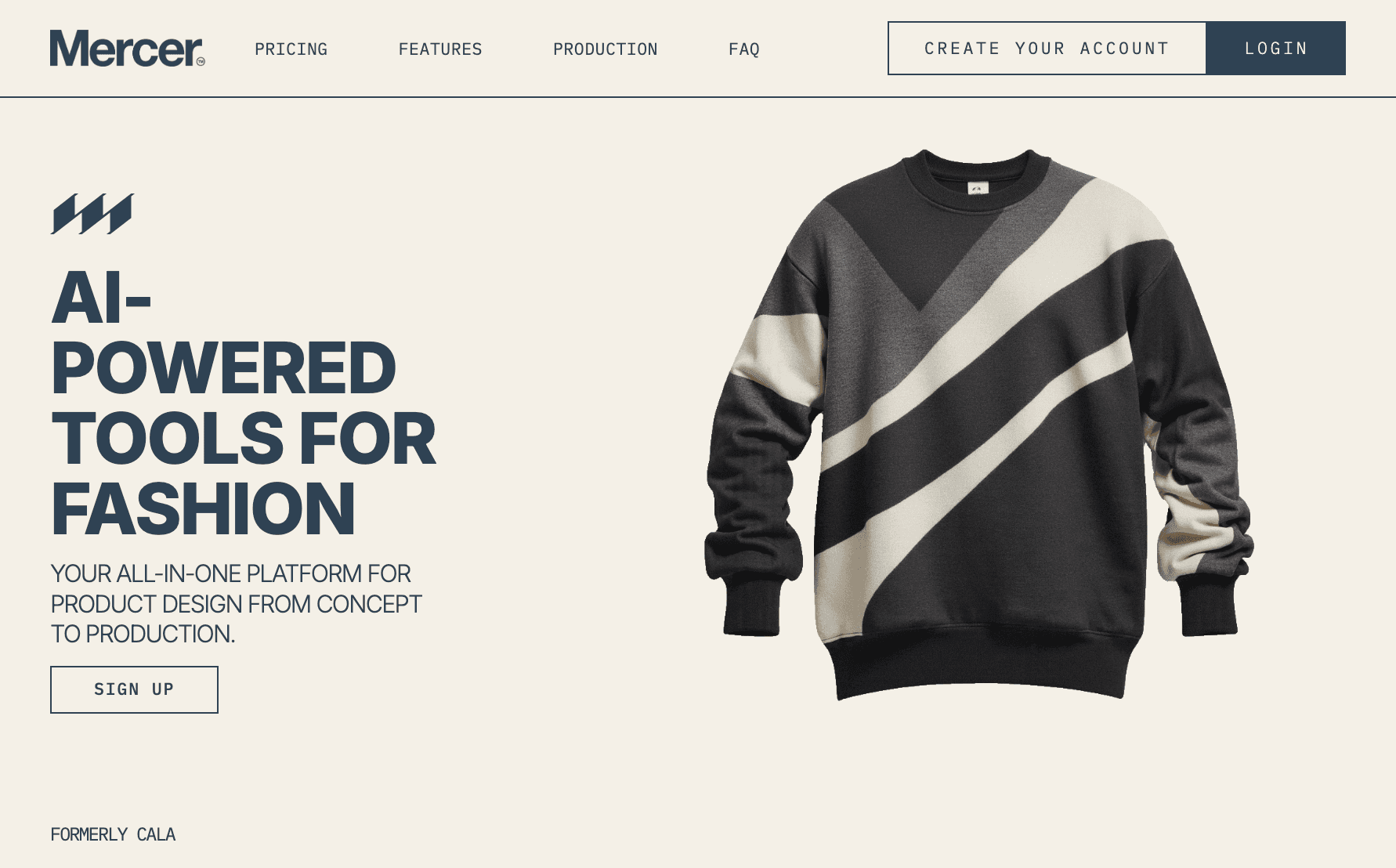
Mercer (formerly CALA) combines AI-assisted fashion design with collection management, collaboration, and production planning.
Fashion teams can generate concepts from inspiration images, sketches, CAD files, or text prompts, then organize creative assets, collect feedback, and manage product information from one place.
It also includes AI-powered design tools, product variations, brand-trained AI models, task management, and production collaboration features.
Mercer supports communication with manufacturing partners and production teams, making it suitable for brands that want to connect concept development with later production stages.
Key Features
AI-generated designs from prompts, sketches, CAD files, and reference images
Brand-trained AI models using previous collections and inspiration boards
Product variations, text-to-image generation, and AI editing tools
Collection management, task assignment, and design collaboration
Production planning and manufacturer collaboration
Best For
Independent designers, emerging brands, and product teams that want AI-assisted design alongside collection management and production planning. It also suits businesses that coordinate design work with internal teams and manufacturing partners.
Where Generative AI Creates the Most Value
Generative AI creates the most value when it helps fashion teams evaluate ideas before they commit to product development. The technology does not replace professional judgment.
It gives designers and product teams more information to review while creative decisions are still flexible.
More Design Directions in Less Time
Designers no longer have to rely on one or two concepts before deciding what to develop. Generative AI makes it practical to compare multiple design directions early in the process.
Reviewing several options together gives product teams a broader perspective before selecting the concepts that best fit the collection.
Earlier Visual Alignment
Ideas are easier to discuss when everyone is looking in the same visual direction.
Design, merchandising, product development, and sourcing teams can review garment concepts together before specifications and samples are created.
Earlier visual alignment helps conversations focus on the product itself instead of different interpretations of a sketch or written description.
Better Decisions Before Sampling
Physical samples remain an important part of product development, but not every concept needs to reach that stage.
Generative AI helps teams identify weaker design directions before investing in sampling. Product teams can narrow their options first, then move the most promising concepts into physical development.
Faster Revisions
Product ideas rarely stay the same after the first review.
Designers can compare different colors, details, proportions, and styling options while the concept is still open for discussion. Reviewing revisions early makes it easier to agree on a direction before additional development work begins.
Stronger Collection Visibility
Products are rarely reviewed one at a time.
Generative AI allows teams to see garments together as part of a collection. Looking at the full assortment makes it easier to evaluate category balance, repeated silhouettes, color distribution, and overall range direction before final decisions are made.
Clearer Handoffs Into Development
Creative exploration only delivers lasting value when approved concepts continue into product development without unnecessary rework.
When product information stays connected from concept approval through development, teams spend less time recreating files, copying decisions, or rebuilding product records.
That continuity gives fashion brands a practical competitive edge as collections become larger and product development becomes more complex.
The Gap Between AI Generation and Product Development
A convincing fashion image is not the same as a production-ready design.
Generative AI can produce a concept that looks complete, but a visual alone does not contain the information needed to develop and manufacture a garment.
Before a style can move forward, product teams still need to make technical and commercial decisions that turn the concept into something suppliers can build.
A Generated Concept Still Needs Product Information
An approved concept is only the starting point for design and product development.
The product team still needs to define construction details, such as:
Measurements
Materials
Trims
Color standards
Fit requirements
Cost information
Supplier instructions
Sample revisions
Final approvals
Each decision adds information that guides the garment from an idea to a finished product.
Without that information, even the most realistic concept remains a design reference rather than a product ready for development.
The Workflow Often Becomes Disconnected
Many fashion teams use one platform to generate concepts and another to manage product development.
Once a concept is approved, someone may need to download and rename images, recreate style records, copy comments between tools, rebuild colorways and materials, transfer decisions into tech packs, and track approvals somewhere else.
Product information becomes scattered as work moves through different production processes, making it more difficult to maintain a single source of truth.
The same disconnect can continue into supplier collaboration and the wider supply chain, where missing or duplicated information creates additional work for everyone involved.
Generative AI can shorten concept development, but disconnected handoffs often return that saved time as manual administration and rework later in the workflow.
That is why connecting creative work with product development is just as important as generating the concept itself.
How Onbrand Connects Generative AI With Fashion Product Development
Onbrand combines AI-assisted design and product lifecycle management into a single connected environment for fashion brands.
Designers can generate and refine concepts in Onbrand AI Design, then move approved ideas into Onbrand PLM without rebuilding the same information in another system.
Creative work stays connected to the styles, materials, colorways, tech packs, and approvals needed for development.
Explore and Refine Concepts With Onbrand AI Design
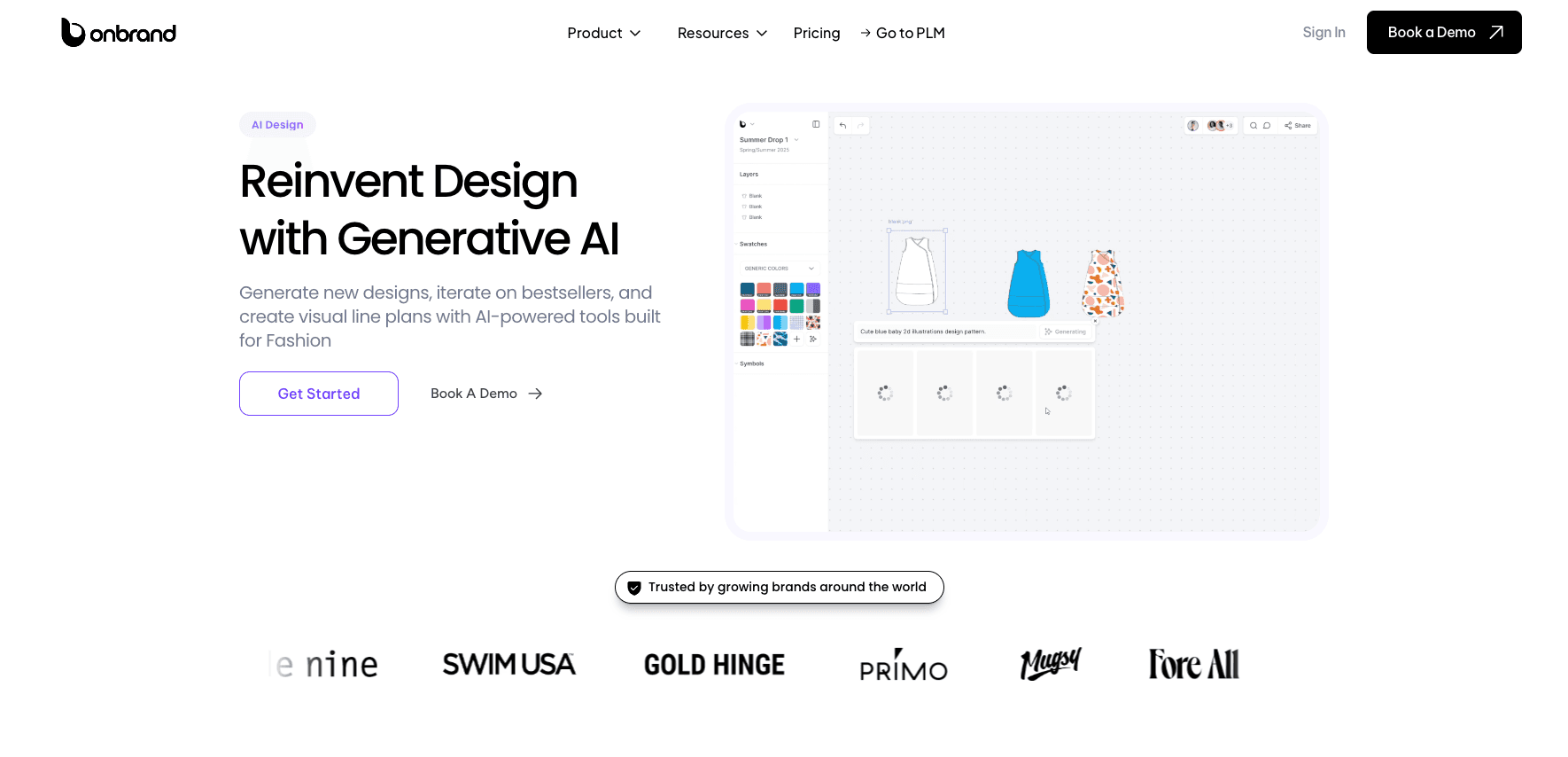
Onbrand AI Design accepts text prompts, hand sketches, and reference photos as starting points. Designers can use those inputs to create line art, mockups, flat images, photorealistic visuals, and on-model renders.
Once a direction looks promising, designers can:
Generate alternate cuts, trims, and colorways
Recolor designs with Pantone and Coloro libraries
Adjust sketches or mockups through text prompts
Visualize fabrics and textures
Create one-click variations
Organize references and concepts on shared mood boards
Export visuals to Adobe Illustrator for detailed editing
The platform also supports shared canvases, contextual comments, visual line plans, and version history. Designers, merchandisers, and product developers can review ideas together without separating the concept from the feedback behind it.
Onbrand reports that brands using its AI design tools can achieve a 10x faster design turnaround, produce 30% to 50% fewer physical samples, and save more than 10 weeks each year. Results may vary by brand, team, and process.
Move Approved Concepts Into Product Development
Once a concept is approved, the work does not have to start over.
Design information can move into Onbrand PLM, where teams continue developing the product from the same approved direction.

Styles, materials, colorways, specifications, tech packs, bills of materials (BOMs), comments, approvals, and vendor communication remain connected to the product record.
Product teams can continue developing the style without recreating files or transferring the same decisions between separate systems.
Limitations of Generative AI in Fashion
Generative AI helps during creative exploration, but it still has practical limitations that fashion teams should understand before moving concepts into development.
Generated designs may not be constructible. AI can create impossible seams, unsupported shapes, inconsistent front-and-back details, or garment structures that cannot be manufactured.
Material visualization cannot replace physical testing. Images cannot confirm drape, stretch, weight, recovery, durability, hand feel, or how a fabric performs in real use.
Outputs still require brand judgment. Designers must decide if a concept fits the brand, target customer, price point, assortment, different body shapes, and cultural expectations.
Product details may change between generations. Even fine-tuned diffusion models can produce inconsistent trims, stitching, proportions, or construction details between revisions.
Intellectual property requires care. Fashion brands should establish policies for source assets, training data, ownership, usage rights, and internal AI policies before using generated content for commercial use.
AI cannot make commercial decisions. Designers, merchandisers, product developers, technical teams, and sourcing specialists still decide which products move forward.
Generative AI supports professional judgment. It does not replace it.
What Fashion Teams Need Before Adopting Generative AI
Generative AI produces better results when it fits an existing product development process.
Before adding AI to daily work, fashion teams should know where it will be used, who reviews the output, and how approved concepts continue into development.
A Defined Use Case
Start with a specific problem instead of using AI for every task.
Most brands begin by leveraging AI to improve slow concept development, review repeated colorway revisions, create presentation visuals, or compare different collection directions.
Focusing on one objective makes it easier to evaluate which AI-powered applications actually support the design process.
Clear Human Review
AI can suggest ideas, but people make the final decisions.
Designers approve the creative direction, technical teams review construction, product developers evaluate materials and specifications, merchandisers assess commercial fit, and sourcing teams confirm cost before a style moves forward.
Strong Brand and Product References
Generated concepts become more relevant when the platform can reference past styles, approved colors, material libraries, mood boards, design standards, and other brand assets.
These references help keep new concepts consistent with the collection instead of producing unrelated ideas.
A Connection to Existing Workflows
Approved concepts should continue into product records, tech packs, reviews, approvals, and development without being recreated in another system.
Many generative AI platforms create images, but fashion teams also need a practical way to connect those images with the rest of product development.
Measures of Practical Value
Success should be measured with practical results, not the number of generated images.
Useful indicators include concept development time, revision rounds, time to design approval, samples avoided, handoff time, and rework caused by missing information.
Tracking these improvements helps brands understand where AI creates a real competitive advantage while also supporting more sustainable practices by reducing unnecessary revisions and samples.
Take Generative AI Beyond Concept Creation With Onbrand
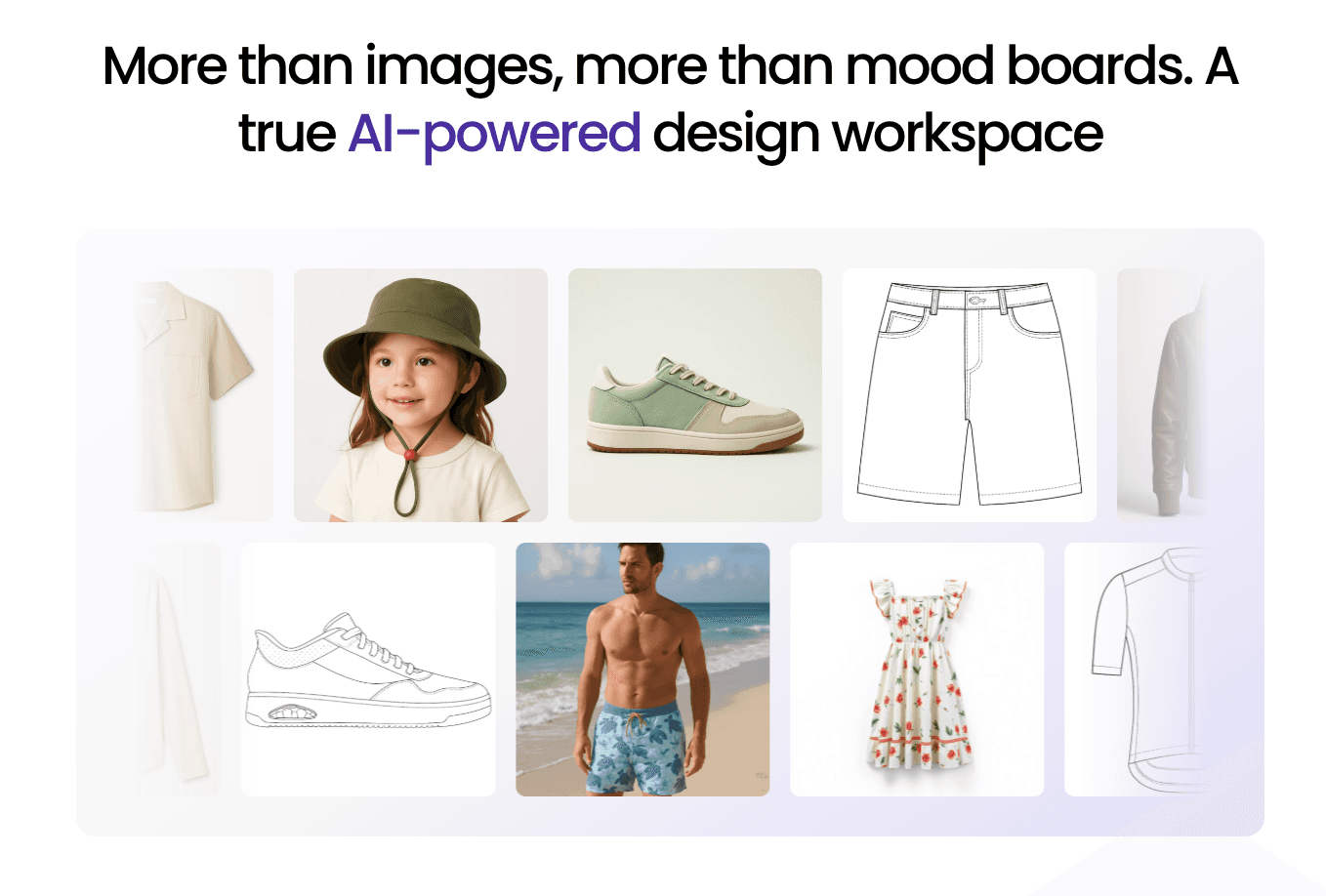
Generative AI helps fashion teams explore concepts, compare design directions, and make better creative decisions before product development begins. Human expertise still guides every final decision, from construction and materials to fit, cost, and commercial viability.
The greatest value comes when approved concepts stay connected to the work that follows.
Onbrand brings AI-assisted fashion design and PLM together in one connected environment. Your team can move from early concepts to styles, tech packs, approvals, vendor collaboration, and product development without disconnecting the work along the way.
FAQs About Generative AI in Fashion
Can generative AI support personalized fashion advice?
Yes. Some fashion brands use generative AI to offer personalized fashion advice based on customer preferences, purchase history, or styling goals. Although this article focuses on product development, generative AI can also create personalized outfit suggestions and shopping recommendations as part of the customer experience.
How is generative AI changing online shopping for fashion?
Generative AI helps improve online shopping by creating product imagery, styling visuals, and product descriptions for online apparel stores. While these customer-facing applications continue to grow, fashion brands also use the same technology earlier in the product lifecycle to develop and review concepts before production begins.
Can generative AI work with 3D fashion design tools?
Yes. Generative AI can create concepts that continue into 3D design software for fit reviews, draping, and visualization. Some brands also combine these tools with virtual try-ons and augmented reality experiences later in product presentation or retail, but those applications serve a different purpose than product development.
What are the emerging trends in generative AI for fashion?
Current emerging trends include better concept generation, improved material visualization, closer integration with product development systems, and stronger collaboration between design and development teams. These new trends are shaping the industry's future by making generative AI a more practical part of everyday fashion product development.
What are some real-world examples of online fashion retailers implementing AI?
Real-world examples include fast-fashion brands such as SHEIN using generative AI applications to create product imagery and personalized shopping experiences, while Levi's has tested AI-generated models for selected marketing content. Many fashion businesses also use AI in fashion retail to generate product descriptions, visualize collections, and support marketing strategies.