A new collection can get complicated pretty quickly because it involves hundreds of smaller decisions.
Which colorway moves forward? Has the latest sample been approved? Did the supplier get the updated details? Is the style still on track for launch?
For smaller fashion brands, those decisions may initially live in spreadsheets, shared folders, email, and conversations between a few people.
Once the brand starts handling more styles, suppliers, collections, and team members, there is simply more to keep track of.
Fashion brand management brings structure to that work.
This guide looks at what fashion brand management involves and how teams in the fashion industry can manage products, people, suppliers, and collections as operations become more complex.
TL;DR
Fashion brand management coordinates the people, product information, and workflows needed to move collections from planning through launch.
It covers collection planning, product development, sourcing, timelines, product data, approvals, and commercial handoffs.
As collections become more complex, define ownership, standardize product information, create a repeatable process, keep decisions in shared systems, set milestones, and review results.
PLM, ERP, inventory, e-commerce, wholesale, and CRM software support different parts of fashion brand management.
Onbrand connects early design and product development through AI Design and PLM, keeping concepts, product data, approvals, and collaboration connected.
What Is Fashion Brand Management?
Fashion brand management is the process of coordinating the people, product information, decisions, and workflows involved in developing and running a fashion brand.
It covers the following:
Brand direction
Product development
Sourcing
Production
Approvals
Product information
Launch coordination
Good fashion business management requires a deep understanding of how these areas affect one another as fashion companies grow.
Fashion brand management is broader than fashion marketing or brand identity. Marketing focuses on reaching customers and creating demand, while brand identity shapes how the brand looks and presents itself.
Both contribute to brand image and the wider brand strategy, but managing a fashion brand also includes the operational work required to develop products and bring them to market.
Who Manages a Fashion Brand?
Fashion brand management is rarely the responsibility of one person.
A brand manager may oversee brand direction and connect product and commercial decisions. Fashion designers and product developers take a more direct role in shaping and developing the collection.
As a style moves forward, other specialists step in to handle its technical requirements, sourcing decisions, production needs, and merchandising plans.
At a smaller fashion business, a founder or design lead may cover several of these responsibilities. As responsibilities expand, the work is usually divided among more specialized roles.
This means fashion brand management is broader than the job of a fashion brand manager. It is a shared management function that keeps the people and decisions behind a collection connected from planning through launch.
What Does Fashion Brand Management Involve?
Fashion brand management covers the work needed to keep a collection moving from early planning through development, production, and launch. Decisions made early in that process influence what happens later.
The direction set for a collection, for example, affects which products are developed, what materials they require, and the timeline the team has to bring them to market.
Brand Direction and Collection Planning
Before individual styles move into development, the brand needs a direction for the collection. That starts with knowing who the target audience is and how the brand positioning should influence what the collection offers and what customers are likely to buy.
Market research can reveal changes in the wider market, but teams also need to understand their own customers. Consumer insights, past consumer behavior, and changing consumer preferences can show why certain products performed well and where there may be room for something new.
Market trends and fashion trends can influence the collection too, but following a trend only makes sense when it fits the brand. A luxury brand in the luxury sector, for example, may respond to the same trend very differently from a mass-market label.
This is where consumer psychology becomes useful. Understanding why customers choose certain products can help teams make collection decisions that feel consistent with the brand experience and build brand loyalty over time.
Fashion Design and Product Development
Once the collection direction is set, individual products move from concepts into designs that can eventually be approved for production.
During fashion product development, an early design becomes more detailed with each decision. A sketch may lead to color and material choices, followed by the technical measurements needed to create a sample.
Feedback from that sample can then lead to further adjustments before the style is approved.
As those decisions become more specific, a tech pack captures the instructions a manufacturer needs to make the product. The bill of materials (BOM) identifies the fabrics, trims, and other components required.
From a product management perspective, the challenge is keeping this information aligned as the design changes. A revised measurement or material choice may require updates elsewhere, so managing fashion design continues well beyond the initial concept.
Materials, Sourcing, and Supplier Management
A style cannot be managed separately from the materials and suppliers needed to make it.
A fabric may look right for the design, for example, but its cost, availability, or minimum order quantity can determine if it is practical for the collection. Lead times can also affect when sampling begins and how quickly the style can move toward production.
Supplier communication needs to stay connected to those decisions. If a material changes after a sample request or approval, the team needs to know which version the vendor should use and how that change affects the style.
Good industry knowledge helps teams anticipate these dependencies, particularly when working with suppliers at an international level, where lead times and sourcing requirements can differ.
Material choices can also reflect a brand's approach to sustainable fashion. When sustainable practices are part of its sourcing requirements, teams can factor those criteria into how they evaluate materials and suppliers.
Production and Timeline Management
Fashion products move through a series of connected deadlines.
A development calendar gives the team a way to see what needs to happen before a style can move forward.
For example, a material may need approval before the next sample can be made, and that sample may need sign-off before production can begin. Each deadline depends on work completed earlier in the process.
When one step runs late, the effect can carry into the rest of the schedule. A delayed material approval can push back sampling, which leaves less time for final revisions before production needs to begin.
Timeline management plays a critical role in making those dependencies visible. It helps teams see where each product stands, which decision is holding up progress, and which upcoming dates could be affected by a delay.
Product Data and Documentation
Every product develops a growing record of information as it moves toward production.
A style may start with a basic identifier and design details, then gain colorways, materials, measurements, costs, and technical documentation as decisions are made.
The challenge is that those details do not stay fixed. A fitting may lead to a new measurement, a material may be replaced, or a cost may change after a supplier update. When that happens, the relevant material specification, tech pack, or other product record needs to reflect the approved decision.
For a growing collection, the issue is less about big data in the technical sense and more about maintaining the relationships between product information. One change can affect several records associated with the same style.
Multiply that by an entire collection, and accurate documentation becomes an important part of keeping product development coordinated.
Team Communication and Approvals
Developing a fashion product requires decisions to move between different people as the style progresses. The person making a technical change, for example, may not be the same person who reviews the next sample or gives final approval.
That makes communication about more than sharing an update.
If a technical designer changes a measurement after a fitting, the people responsible for the sample need to know what changed, which version is current, and what they are expected to do next.
The same applies when a material or color needs approval before development can continue.
For industry professionals working together, each handoff should make it easy to see who needs to review a decision and who has authority to approve it.
Good professional skills support that process too. Specific feedback, documented decisions, and clear ownership help the next person act without having to reconstruct what happened earlier.
Launch and Commercial Coordination
Once a product is approved, the information created during development needs to support the teams preparing it for market.
Merchandisers may use confirmed product and pricing information for fashion buying decisions, while e-commerce and wholesale teams need accurate details to prepare products for sale.
Marketing also depends on that handoff. Approved product information and assets can support campaign planning and help drive brand awareness, including through fashion events or fashion shows when those are part of the launch strategy.
Visual merchandising teams need the same level of certainty about what will actually be available when planning how a collection will be presented.
This becomes especially important for brands using omnichannel strategies. A product presented online should match what sales teams, retail locations, and wholesale partners have been given.
The management responsibility is to make sure commercial teams are working from approved product information when preparing the collection for launch.
How to Manage a Fashion Business as It Grows
More styles, decisions, deadlines, and people add complexity to the same development process. The way you managed ten styles may become difficult to maintain at 50, especially when several collections are moving at once.
A more structured approach does not mean adding unnecessary processes. It means giving your team a consistent way to know who owns a decision, where product information belongs, what happens next, and when something needs approval.
1. Define Workflow Ownership
Start by deciding who is responsible for the main decisions in product development. Ownership should make it obvious who moves a style forward at each stage.
If a sample comes back with fit issues, for example, the team should know who reviews the changes, who updates the product information, and who gives approval for the next sample to proceed.
The same principle applies when work moves between teams. A product developer may coordinate a sample review, while a sourcing lead takes responsibility for resolving a material issue with the supplier.
Having an owner prevents decisions from sitting unresolved because everyone assumed someone else was handling them.
Management skills are useful here because contributing to a decision is different from being responsible for its outcome. Everyone involved should know what they own, what they need from someone else, and when their part is complete.
2. Standardize Product Information
Once collections get larger, product information needs a consistent structure.
Start with the way information is recorded. A material, for example, should have the same name and identifying details wherever it appears.
Measurements should follow an agreed format, and updates to a product should be reflected in the current documentation rather than creating competing versions.
This consistency makes handoffs easier because the next person working on a style does not have to interpret someone else's naming system or figure out which file contains the latest information.
A sourcing team can work from the same approved material details that product development used, and a factory can receive specifications that match the decisions already made.
Standardization does not limit creative innovation in the design process. Designers can explore ideas freely while approved product information follows a predictable structure as the concept moves into development.
3. Create a Repeatable Development Process
Each style should have a recognizable path from concept to production.
For example:
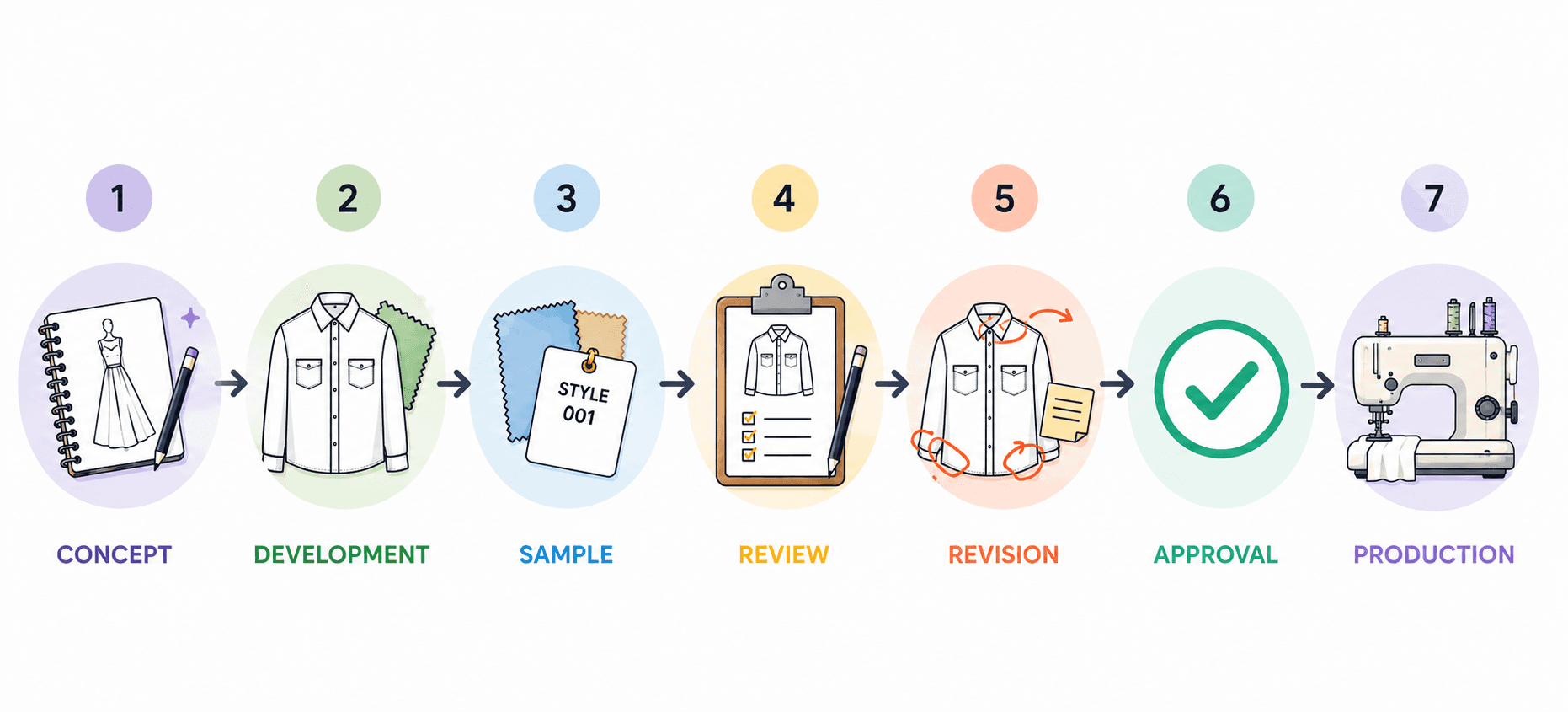
Individual products may need extra sample rounds or additional reviews, but the basic process should tell your team where a style currently sits, what needs to happen next, and who needs to act.
That structure gives brand development a practical operating rhythm. Your team does not have to reconstruct the process every time a new style enters development.
Real-world experience will naturally shape that workflow over time. If the same issue repeatedly appears during sampling or approval, the process can be adjusted for the next collection.
The point is not to make every product follow an identical path. It gives the team a shared starting point and makes exceptions easier to recognize.
4. Keep Product Decisions in Shared Systems
Important product decisions become difficult to follow when they are spread between email threads, chat messages, individual spreadsheets, and local files.
A measurement change discussed in chat may never reach the supplier working from an older specification. A sample approval recorded only in someone's inbox can leave another person unsure about which version moved forward.
Shared systems give the relevant people a common place to check current product information, decisions, and status.
Emerging technologies can support that work, but adding another tool does not solve the underlying problem if information still lives in several disconnected places.
5. Set Collection Milestones and Approval Points
A collection calendar becomes more useful when deadlines are connected to decisions that determine if a style can move forward.
For example, a sample review should end with a decision: approve the sample, request changes, or schedule another round. Material approval should confirm that the selected fabric or trim is ready to use before later development work depends on it.
Build milestones around these decisions and define what must be approved at each point. That way, a date on the calendar represents actual progress rather than simply the end of a task.
This also makes delays easier to spot. If a material is still under review when the next sample should begin, the team can see which later dates may need attention.
The exact milestones will vary by brand and product category, but each one should give the team a clear condition for moving a style to the next stage.
6. Review Results Before Planning the Next Collection
Managing a fashion brand does not stop once a collection launches. Results from one season can give the next collection a better starting point.
Start with sales data to understand which styles and categories customers responded to and which ones underperformed. Then look beyond sales.
Frequent returns or fit complaints, for example, may point to a product issue, while repeated sample rounds or missed development dates can show where the process took more time or cost than expected.
A product that sold well but required several costly revisions tells a different story from one that performed well commercially and moved through development with fewer problems.
A competitive analysis can add context when the team is reviewing assortment or positioning, but it should complement what the brand learns from its own results.
Looking back helps teams decide what to repeat, what to adjust, and what to avoid when planning the next collection.
Where Fashion Brand Management Gets Difficult
Informal ways of working often become harder to maintain as more products enter development. Every additional style brings its own information to update, samples to review, and decisions to approve, all within the collection calendar.
Overlapping collections make coordination harder. A team might be approving samples for one season at the same time it is developing products for the next.
Supplier communication can add another layer, especially when an update discussed over email does not make it into the product file the rest of the team uses.
The problem is not simply having more work. It is keeping each decision connected to the right product and making sure the people who depend on that decision have the current information.
When those connections break down, teams may work from conflicting versions, approvals become difficult to trace, and product status becomes less obvious.
Even an established fashion organization can reach this point as its development process becomes more complex.
What Software Supports Fashion Brand Management?
Fashion brand management usually involves several types of software because product development, operations, sales, and customer management have different requirements. One platform does not necessarily need to manage every part of the business.
The main categories include:
Product lifecycle management (PLM) – Keeps product development information organized as a style moves from concept toward production.
Enterprise resource planning (ERP) – Supports purchasing, financial management, production, and other business operations.
Inventory management – Tracks stock levels and availability as products move through retail operations.
E-commerce platforms – Manage online product catalogs, orders, and direct-to-consumer sales.
Wholesale platforms – Help brands manage B2B orders and relationships with retail accounts.
Customer relationship management (CRM) – Organizes customer and account information used by sales and marketing teams.
These systems may exchange information as products move from development into retail operations and other physical and digital channels.
For fashion teams, PLM plays an important role earlier in that process because product information is still changing. A sample review might lead to a measurement update, for example, or a material change could require the tech pack to be revised.
A PLM system keeps those updates connected to the product before approved information moves into downstream systems.
How Onbrand Supports Fashion Brand Management
Onbrand supports the design and product-development side of fashion brand management. It does not replace ERP, e-commerce, inventory, or CRM systems.
Its role is to help fashion teams move from early concepts into structured product development without spreading design decisions and product information between disconnected files and tools.
Onbrand supports this part of the process through two connected offerings.
Onbrand AI Design for Concepts, Exploration, and Creative Direction
Onbrand AI Design gives designers a shared space to develop early ideas visually.
Teams can start with a written prompt, sketch, or reference image, then refine the direction by testing different silhouettes, colors, and design details before committing to a concept.
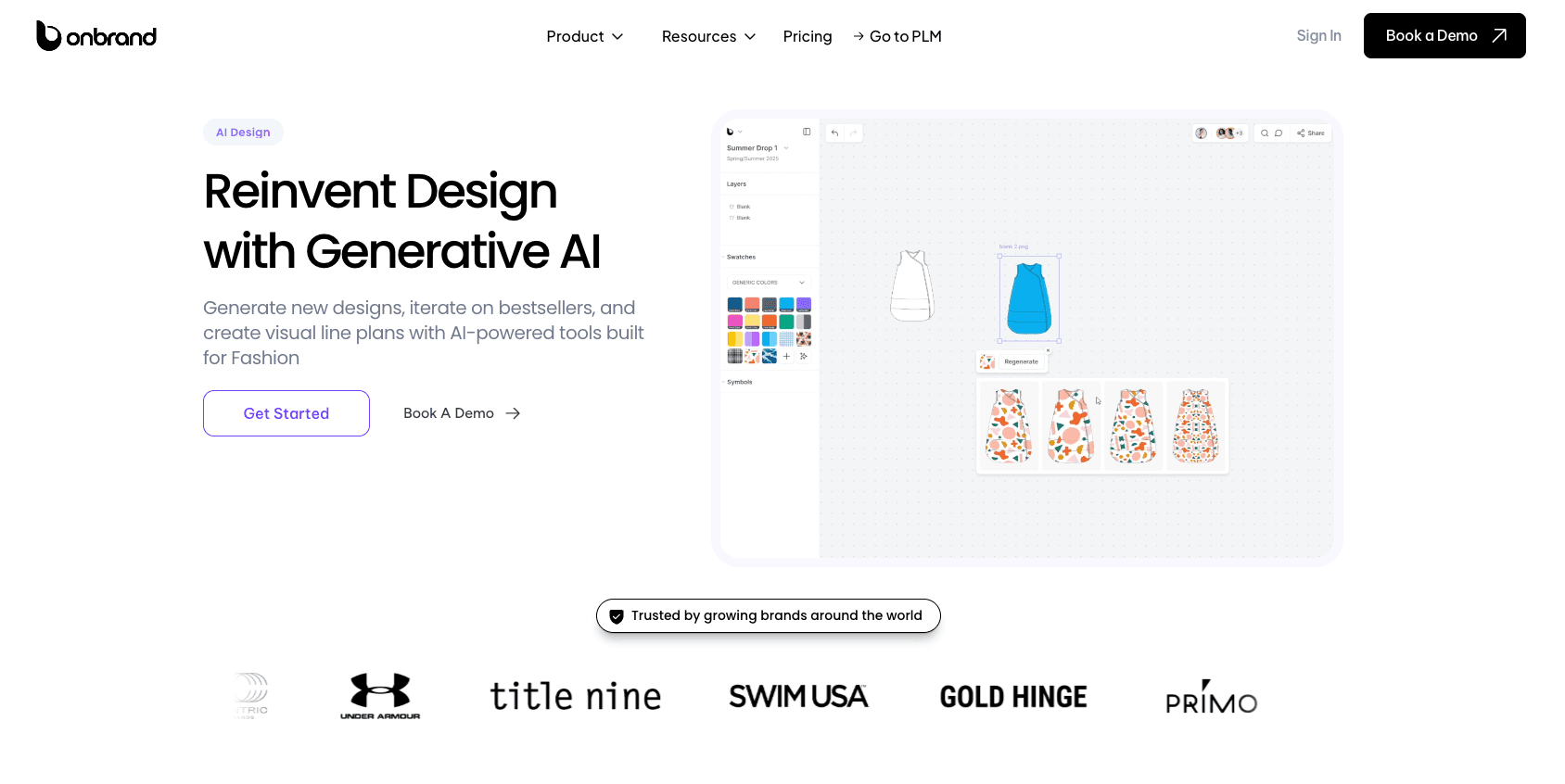
Teams can organize those concepts into mood boards and visual line plans, compare versions, and leave feedback directly on designs.
This gives creative direction a shared visual context and allows approved concepts to move into PLM without recreating the design information in another system.
Onbrand AI Design offers 10x faster design turnaround, 30–50% fewer physical samples, and 10+ weeks saved each year.
Onbrand PLM for Product Development and Collaboration
Onbrand PLM takes approved ideas into the more structured stages of product development.
As a style changes, teams can update its product information, document revisions in the tech pack, review samples, record approvals, and keep supplier communication connected to the product.
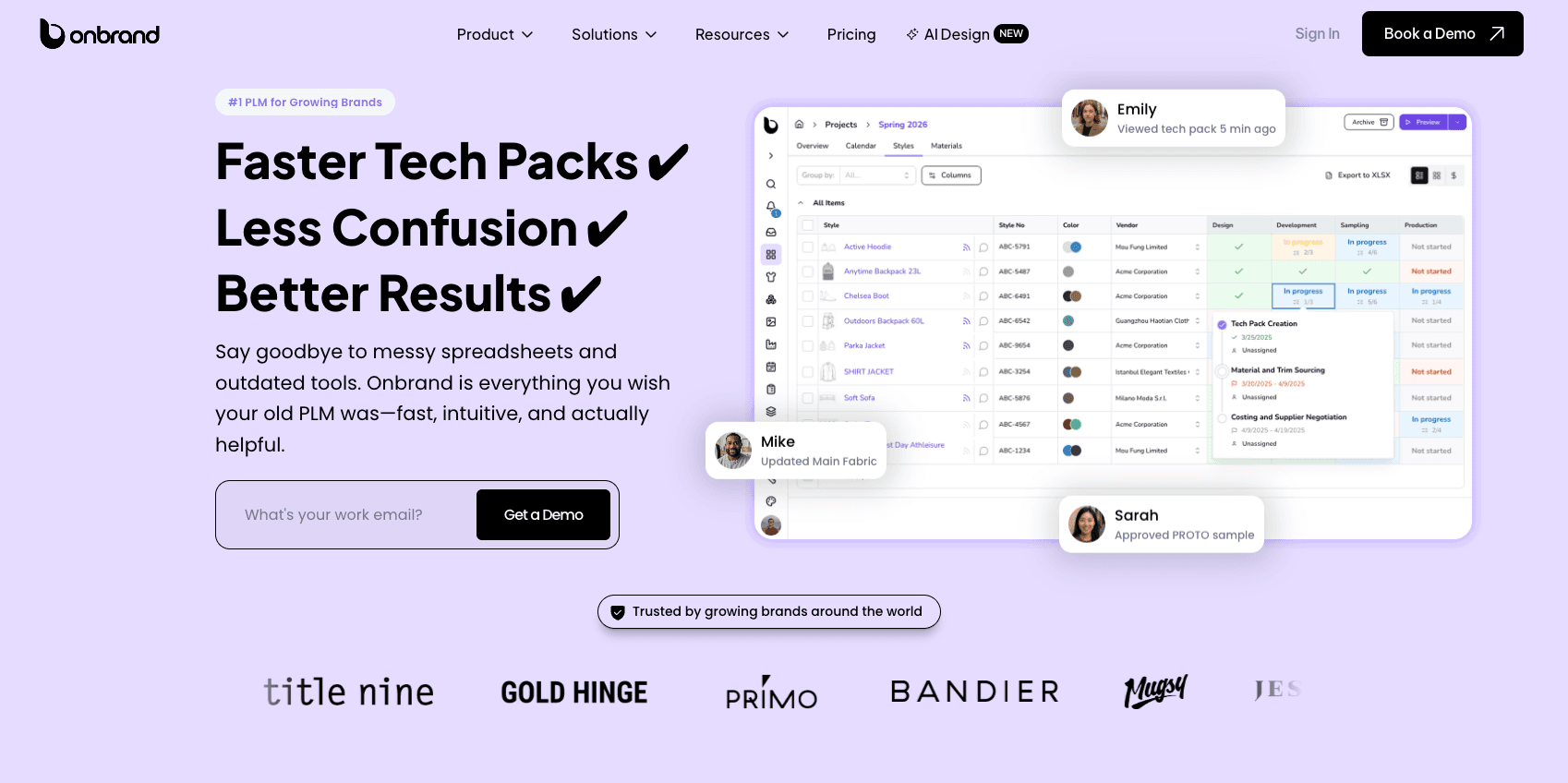
Its live, web-based tech packs keep current product information accessible without sending new spreadsheet or PDF versions every time something changes.
Teams can also use time-and-action calendars to coordinate development stages and upcoming deadlines around their own workflow.
Onbrand PLM offers 55% faster tech pack creation and four weeks faster product development. Implementation can take as little as 2–4 weeks, with data migration often completed in about 10 days.
That makes the platform especially relevant for brands that have outgrown spreadsheets but do not want the long setup and heavy customization associated with older PLM systems.
Manage Your Fashion Brand With Onbrand

Managing a fashion brand becomes harder when product information, decisions, and approvals are spread between different files and conversations. Giving your team a shared way to manage that work can make it easier to keep collections moving and know what needs attention next.
Onbrand AI Design supports early concept development and design exploration. Once a concept moves forward, Onbrand PLM gives teams a shared place to develop the product, document changes, manage approvals, and keep vendor communication connected to the latest product information.
FAQs About Fashion Brand Management
Is a fashion management degree worth it?
A fashion management degree can be useful if you want to work on the business side of the fashion industry. Programs may cover business administration, merchandising, product development, and marketing, although a degree is not the only route into the field. Hands-on experience can also help build practical fashion management skills.
Is brand manager a high-paying job?
Brand manager salaries vary by location, experience, company size, and level of responsibility. Senior roles at larger companies or industry leaders may pay more than entry-level positions, and salaries can also differ between mass-market fashion and the luxury industry.
How does fashion brand management support business decisions?
Fashion brand management supports business decisions by connecting product, customer, and commercial information. Critical analysis of sales, customer feedback, and product performance can guide future collections, while approved product information can support the brand's digital marketing strategy for launches and promotions.
How can practical experience help in fashion management?
Practical experience helps fashion professionals understand how product decisions, deadlines, approvals, and commercial requirements work in practice. Taking part in industry projects can build those skills and support professional growth as responsibilities increase.