Jun 23, 2026

Fashion brands increasingly use 3D models to review products before physical samples are made.
However, creating digital garments is no longer the difficult part.
The bigger challenge is helping designers, product developers, suppliers, and production partners stay aligned as products move through development.
Many brands now use 3D product collaboration tools to support reviews, approvals, revisions, and day-to-day collaboration around digital products.
The process becomes more complicated once multiple stakeholders need to review the same style, compare updates, and make decisions before production begins.
This guide reviews the top 3D product collaboration tools for fashion and explains which workflows each platform best supports.
TL;DR
Here are the best 3D product collaboration tools for fashion brands in 2026:
Style3D
CLO 3D
Browzwear
Centric PLM
Why 3D Fashion Workflows Become Harder as More Teams Get Involved
Creating a 3D garment is only one part of product development. Fashion brands often run into new challenges once multiple team members need to collaborate on reviews, revisions, approvals, and supplier communication.
Here are some of the issues that frequently appear during 3D product development:
3D Models Often Live in Multiple Systems
A 3D garment may start in a design application, move into a tech pack, and later appear in sourcing documents, shared drives, or vendor portals.
The challenge begins when related product data lives in different places. A fit update may appear in the 3D file but not in the tech pack. Material changes may be documented in one system but missing from another.
Without a single source for approved product information, people spend time checking spreadsheets, email threads, and shared folders to find the latest update.
Small details can easily get missed, which increases the risk of losing context behind decisions made earlier in development.
Feedback Gets Scattered Between Teams and Suppliers
A digital sample review typically involves fashion designers, technical designers, sourcing teams, merchants, and factories.
Everyone may be discussing the same product, but conversations frequently happen on multiple platforms. Email threads, chat messages, screenshots, and meeting notes create scattered feedback loops that make follow-ups harder than they need to be.
Important communication can get buried inside long email chains. Suppliers may not know where to provide feedback, and internal stakeholders may not see the latest comments.
Keeping everyone on the same page becomes harder as project collaboration expands.
Product Updates Create Version Confusion
Fashion products rarely stay unchanged after the first review.
A factory may download a file on Monday while a designer updates the sleeve shape on Tuesday. Construction details, measurements, and material selections can change several times before approval.
Without proper version control, approved changes can easily get missed when different people work from different versions of the same file. The risk grows when styles, tech packs, and comments are exchanged through various file formats during development.
Version confusion can lead to unnecessary sample revisions and additional review time.
Design Reviews and Approvals Take Longer Than Expected
Digital samples can reduce physical sampling, but approvals still take time when reviews are difficult to manage.
One review is not always enough. Product developers may need to wait for comments, revisions, and approvals from several groups before moving a style forward.
Those additional review cycles can slow development, especially when comments arrive at different times or from different systems. Delays become more noticeable when distributed teams work in different time zones and review products on separate schedules.
Fashion brands continue to look for better ways to organize reviews and streamline teamwork without creating extra administrative work.
Tech Packs and 3D Designs Fall Out of Sync
Product changes made during a 3D review must also appear in supporting documentation as styles move through multiple iteration cycles.
Measurements, construction details, materials, and bill of materials (BOM) information usually require updates after every revision. Problems appear when teams update the 3D design but forget to update related documentation.
A factory may receive specifications that no longer match the approved digital sample. Tech packs can drift away from approved designs when product structures are maintained separately.
This disconnect creates version confusion, supplier questions, additional review rounds, and extra work before production can begin.
5 Best 3D Product Collaboration Tools for Fashion Brands
Fashion brands use 3D collaboration tools for different reasons. Some focus on digital design reviews, while others help organize product information, approvals, supplier communication, and development activities.
The following platforms support 3D product collaboration in different ways, depending on your fashion product development needs.
1. Onbrand
Onbrand combines Onbrand AI Design and Onbrand PLM, helping fashion brands move from early design concepts into tech packs, approvals, revisions, and vendor communication within the same environment.
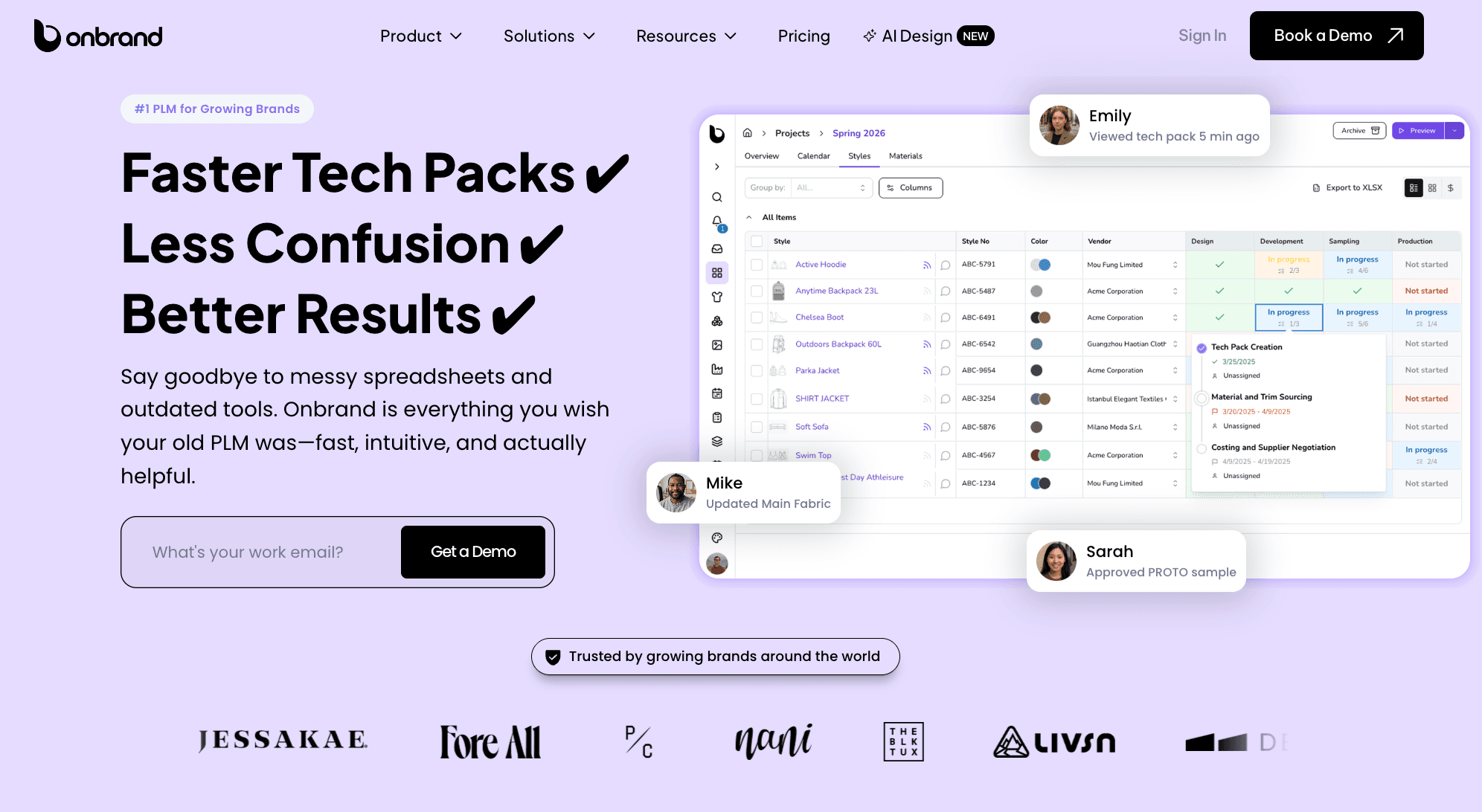
Designers can use Onbrand AI Design to explore concepts, create visual variations, build mood boards, and organize line plans.
Approved concepts can then move directly into Onbrand PLM, where product developers manage live tech packs, samples, vendor comments, approvals, and product data without rebuilding information in separate systems.
How Onbrand Helps With 3D Product Collaboration
Onbrand is ideal when 3D reviews need to connect back to actual product development work. A design review may start with visuals, but the next steps usually involve specs, materials, approvals, and factory communication.
Onbrand gives fashion brands a powerful platform for keeping those details organized as products move from concept to production. Its AI Design workspace supports concept generation, design exploration, visual collaboration, and PLM handoff.
Reported results from Onbrand AI Design include 10x faster design turnaround, a 30–50% reduction in physical samples, and annual time savings of more than 10 weeks.
Onbrand PLM also reports 55% faster tech pack creation, a four-week reduction in development time, and implementation in as little as 10 days.
Key Features
AI design workflows for concepts, variations, mood boards, and line planning
Live tech packs that stay current as products change
Product data management for styles, materials, colors, artwork, and specs
Approval workflows for samples, revisions, and development stages
Vendor collaboration directly on product information
PLM capabilities for product development, sourcing, and production planning
Best For
Onbrand works best for fashion brands that need seamless collaboration between design, development, sourcing, vendors, and production. It is a good fit for teams that want AI design exploration and PLM connected in one place.
2. Style3D
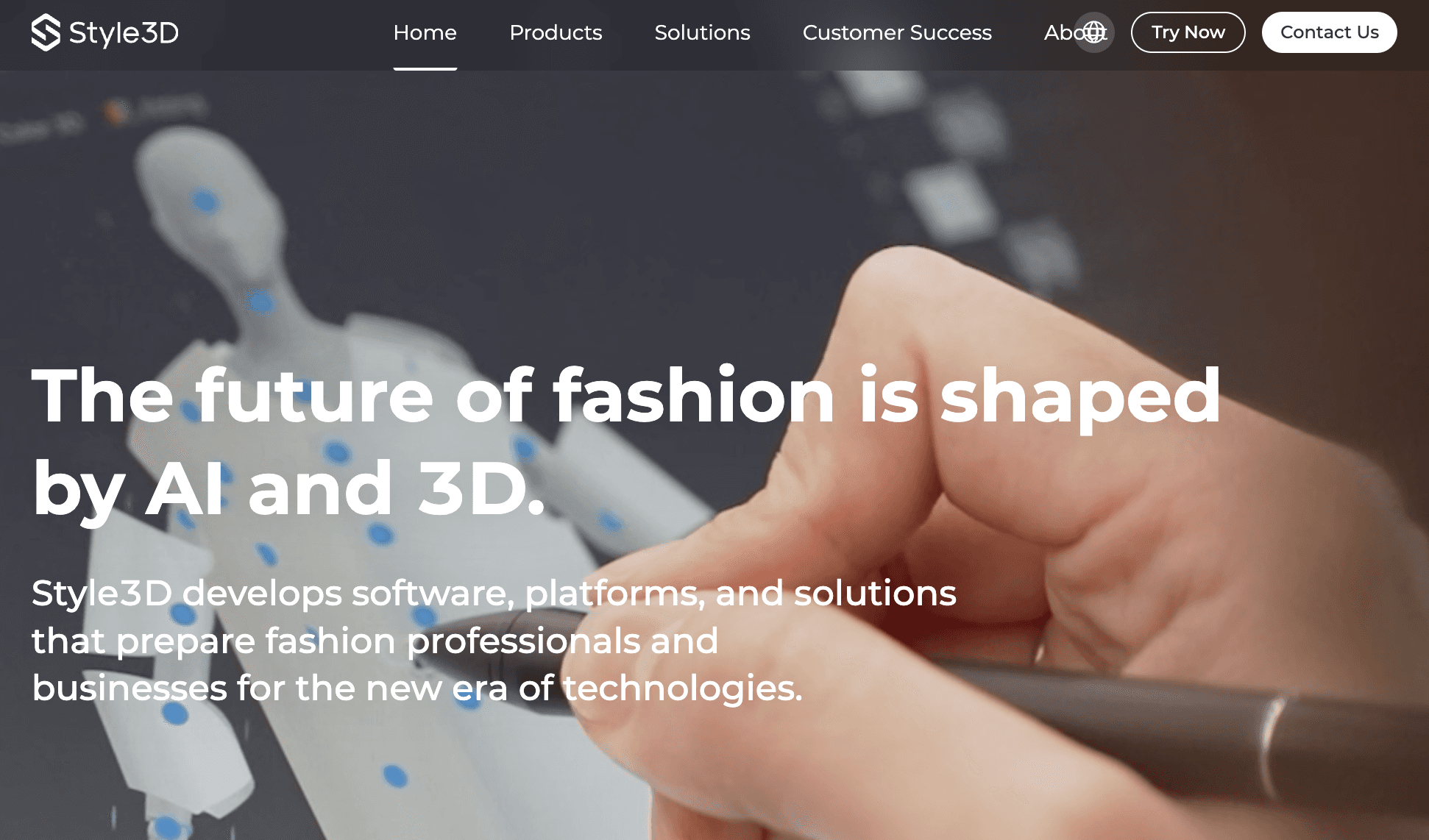
Style3D combines 3D garment creation, digital sampling, and collaboration tools for fashion product development.
Its collaboration capabilities are delivered through Style3D Cloud, where teams can review styles, manage 3D assets, and share feedback during development. It is commonly used by brands that want to connect design reviews with manufacturing workflows.
Source: style3d.com
How Style3D Helps With 3D Product Collaboration
Through Style3D Cloud, a cloud-based platform, designers, product developers, and suppliers can review styles, discuss revisions, and track updates without relying entirely on physical samples.
It also functions as a real-time collaboration tool, enabling users to review styles, leave comments, and support real-time editing of digital assets. Style3D Cloud is accessible through the web.
Key Features
Digital sampling to reduce physical sample rounds
Cloud collaboration for sharing and reviewing 3D assets
Team reviews with comments and revision tracking
Support for manufacturing workflows and style validation
Asset management for storing and organizing digital products
Best For
Brands that want 3D creation, digital sampling, and product development connected in one environment. It may be a good fit for teams that regularly review digital garments with suppliers before production begins.
3. CLO 3D
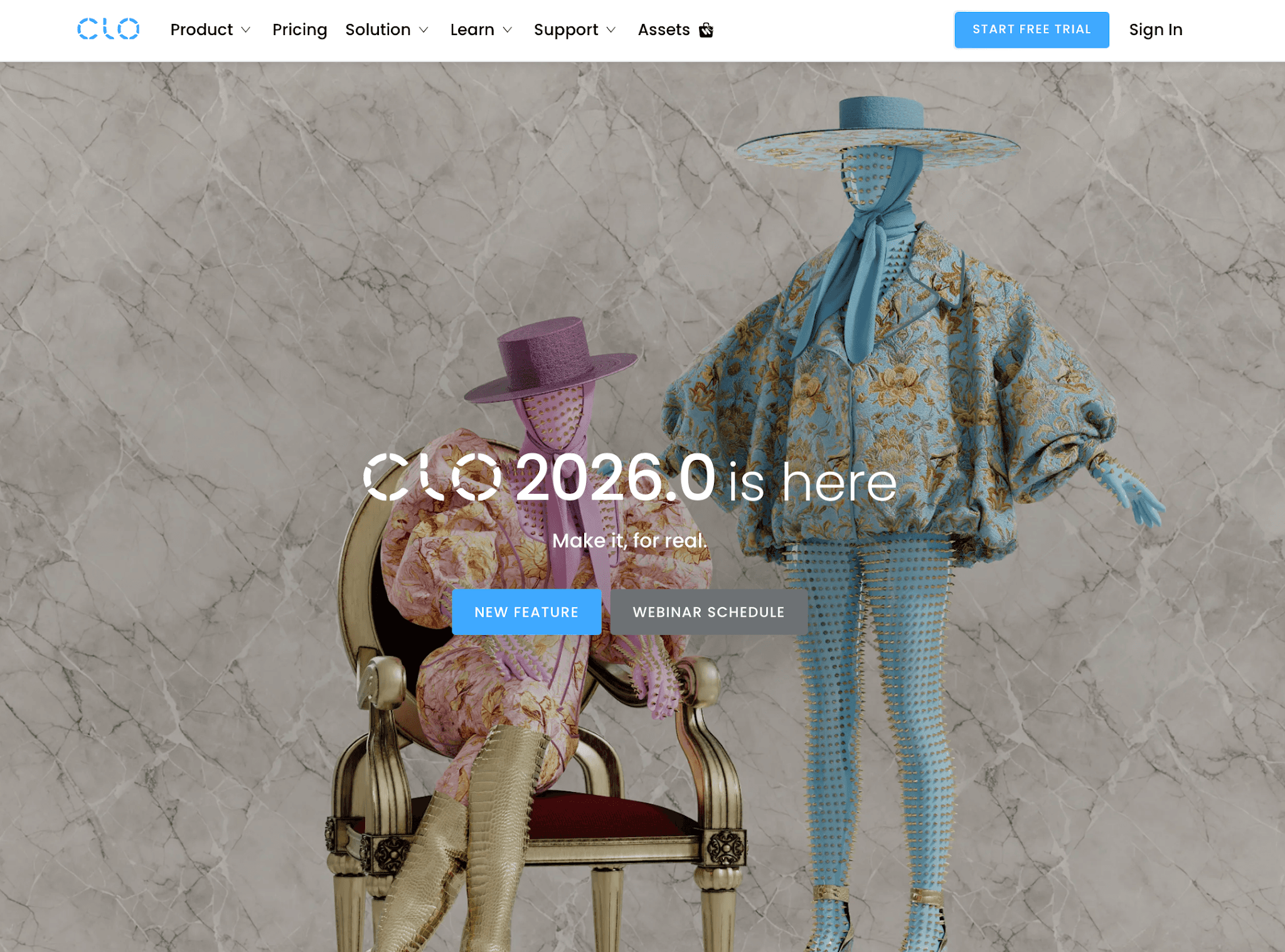
CLO 3D is widely used for digital garment creation, fit visualization, and virtual sampling during product development. Brands use it to test ideas, review fit, and refine garments earlier in the fashion design process.
Source: clo3d.com
How CLO 3D Helps With 3D Product Collaboration
CLO allows designers and product developers to review garment fit, fabric behavior, and garment construction details using digital prototypes. The ability to generate realistic visuals makes it easier to gather visual feedback before samples are made.
Its collaboration capabilities are supported through CLO-SET, where users can share 3D assets, conduct interactive design reviews, and discuss revisions with internal teams or external partners.
Beyond apparel development, CLO is also used by product designers working in virtual reality, animation, and game development projects, reflecting use in various industries that require realistic digital garments.
Key Features
Realistic garment visualization
Fit simulation and fabric testing
Interactive design reviews through CLO-SET
Large user community and learning resources
Support for design reuse and digital asset sharing
Best For
Creative and technical design teams that need realistic garment visualization during development. It is commonly used by brands that review styles digitally before moving products into sampling and production.
4. Browzwear
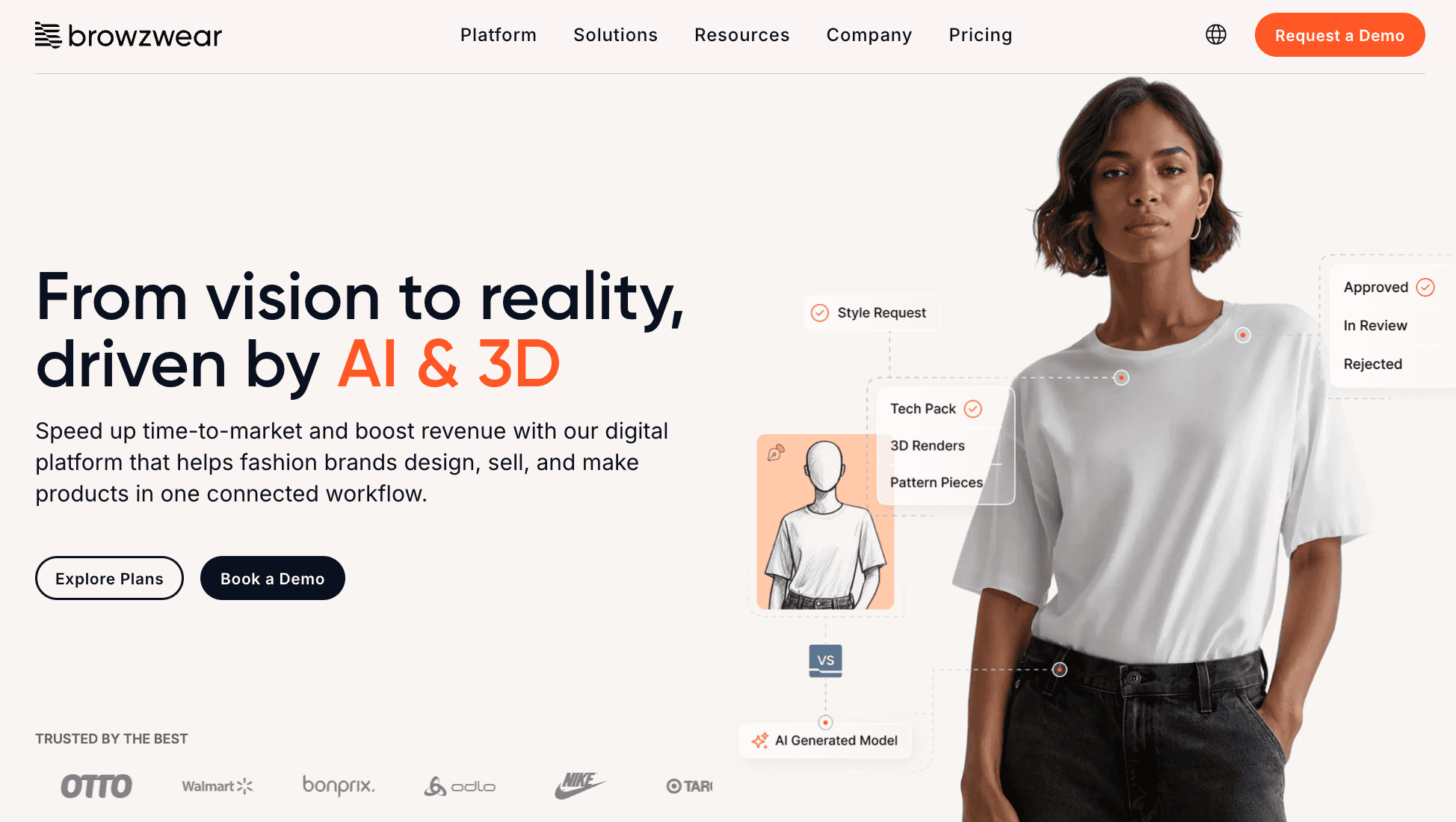
Browzwear is a 3D product development solution commonly used by larger apparel organizations.
It combines digital product creation, fit evaluation, and collaboration suites that support the fashion design process from concept through production.
Source: browzwear.com
How Browzwear Helps With 3D Product Collaboration
Browzwear uses physics-based simulation to help product developers review garment fit, drape, and construction before physical samples are produced.
Technical designers can test different materials, evaluate garment performance, and review digital drawings during development.
Through Stylezone, designers, vendors, and buyers can review the same 3D garment, discuss revisions, and follow updates as development progresses in a shared collaborative environment. Product discussions stay connected to the style, making revision history easier to follow.
Fit reviews often involve several people making decisions at different stages. Having engineering teams and product groups review the same product information helps keep those conversations organized.
Key Features
Physics-based garment simulation for product development
Fit review and digital validation before sampling
Material and fabric behavior testing
Team collaboration through Stylezone
Shared 3D assets with comments and revision tracking
Best For
Enterprise apparel organizations that manage large product assortments and complex development processes. It fits organizations that rely on digital reviews during development before products move to buyers or clients.
5. Centric PLM
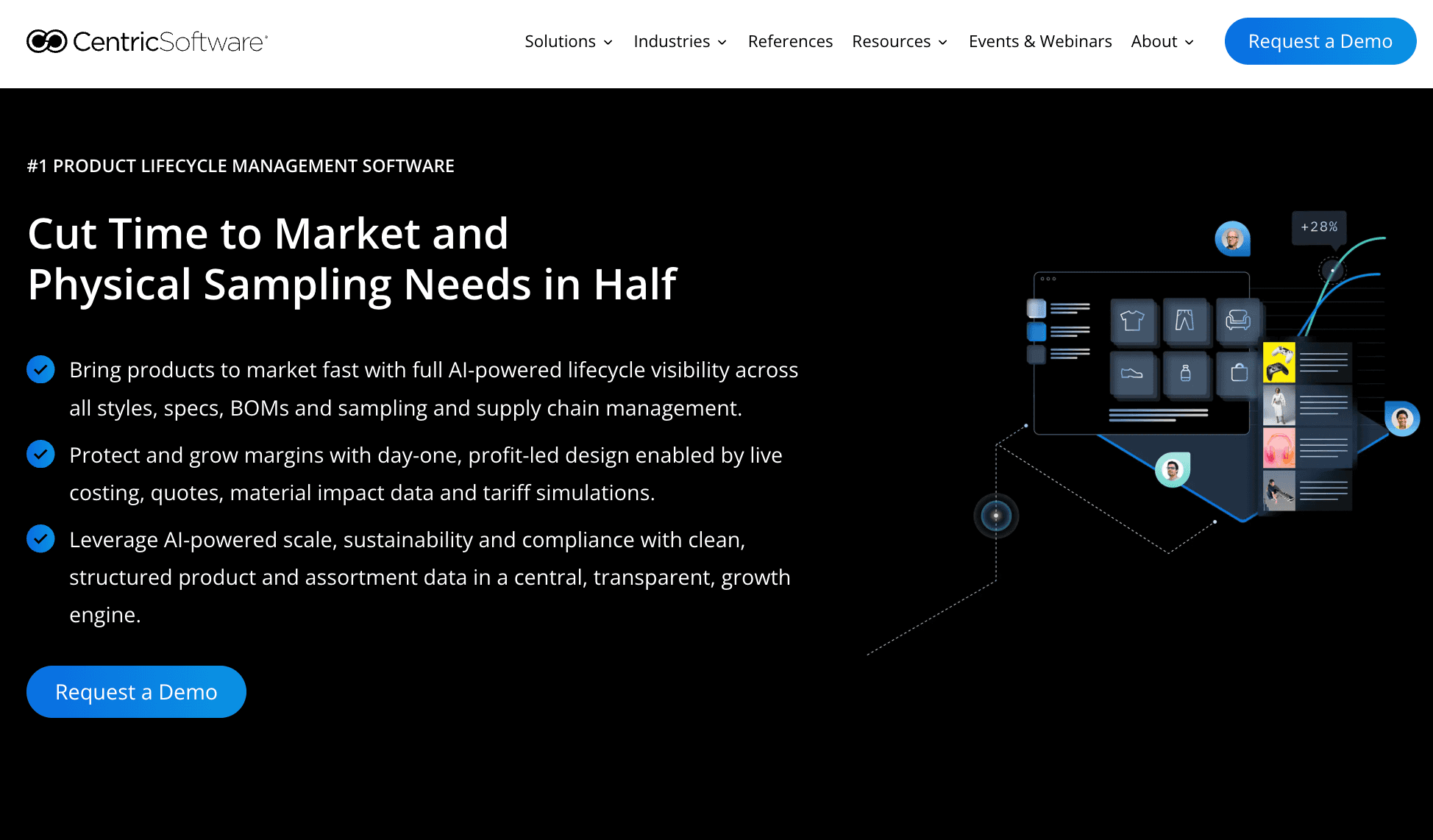
Centric PLM is a product lifecycle management solution used by fashion brands to manage product information, sourcing, development, and supplier activities throughout the product lifecycle.
It is often used when 3D assets need to connect with broader product development processes.
Source: centricsoftware.com
How Centric PLM Helps With 3D Product Collaboration
Centric PLM allows brands to connect 2D and 3D design assets with specifications, BOMs, sourcing information, and development milestones.
Product developers, technical designers, and sourcing teams can reference the same information while products move through development.
Centric PLM also supports supplier collaboration, project management, and data sharing between different business systems through integration capabilities.
This gives brands greater control over product information and access to development updates throughout the product lifecycle.
Key Features
Product lifecycle management for styles, materials, and specifications
Supplier collaboration during development and sourcing
Project management for tasks, milestones, and approvals
Integration with 3D design and business systems
Centralized product information and document management
Best For
Brands connecting 3D assets with broader product development processes. It is commonly used by organizations that want product information, sourcing activities, and development milestones managed in the same system.
Keep 3D Reviews Connected From Design to Production With Onbrand
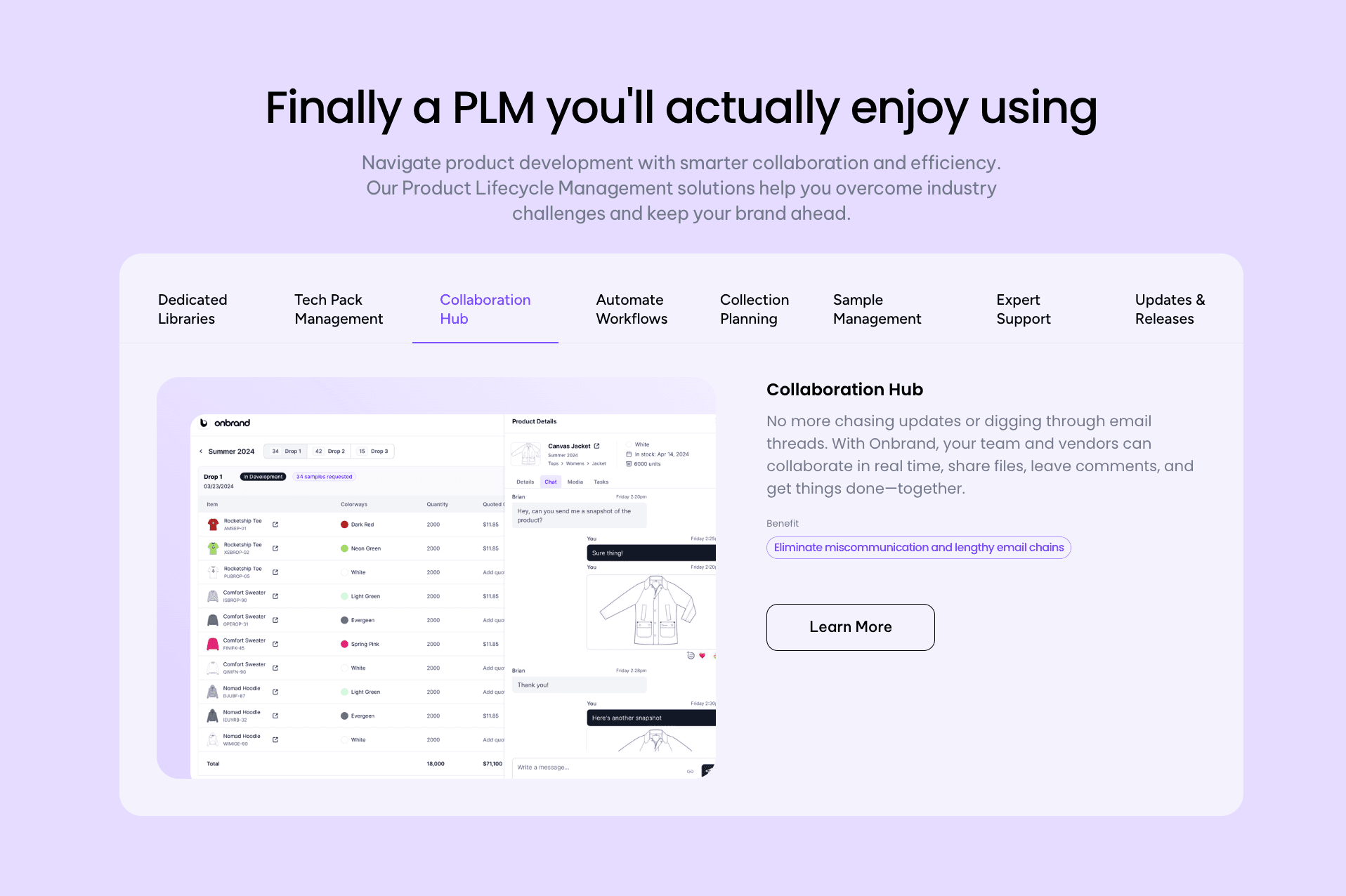
3D product collaboration tools help fashion brands review products earlier, reduce reliance on physical samples, and keep development discussions connected to the product itself.
The right solution depends on where communication and product information start to break down. Some brands need better digital reviews and fit validation. Others need a better way to manage approvals, revisions, supplier communication, and product data after the design stage.
If your team wants to connect 3D reviews with live tech packs, approvals, vendor collaboration, and product development activities in one workspace, Onbrand brings those processes together from concept through production.
FAQs About 3D Product Collaboration Tools
What are the four types of collaboration tools?
The four common types of collaboration tools are:
Communication tools
Project management tools
Document collaboration tools
Design collaboration tools
Fashion brands often use a combination of these systems to manage product development, supplier communication, approvals, and design reviews.
What are the best collaboration tools?
The best collaboration tool depends on your product development process. General teams typically use Monday.com, Asana, or Slack for project coordination, while fashion brands may use specialized solutions such as Onbrand, Style3D, CLO 3D, Browzwear, or Centric PLM.
The right option depends on the feature requirements of your team, including design reviews, approvals, supplier communication, and product information management.
Which software is best for 3D product design?
CLO 3D, Browzwear, and Style3D are widely used for 3D apparel design, fit simulation, and digital sampling. Some fashion brands also use Onbrand AI Design to explore concepts, generate technical sketches, and visualize garments before moving styles into product development.
Can ChatGPT create a 3D model?
No. ChatGPT can generate design ideas, prompts, and technical text, but it does not create production-ready 3D garment models. Fashion teams use specialized 3D design applications to build, drape, and edit digital garments.
What is the difference between 3D design software and 3D collaboration software?
3D design software is used to create, visualize, and refine digital garments. 3D collaboration software is used to review those garments, manage feedback, track approvals, coordinate suppliers, and connect digital assets to product data and tech packs.
These systems help reduce errors, support faster iterations after design reviews, and create a more efficient workflow throughout development.