An AI fashion design generator uses artificial intelligence (AI) to turn text prompts, sketches, or a reference image into clothing concepts.
For fashion designers, these tools offer a faster way to explore ideas, refine concepts, and compare different design directions before moving forward with a design.
Not every platform is built for the same purpose. One may specialize in concept generation, sketch refinement, realistic garment visualization, or collaboration features.
This guide compares six AI fashion design generator tools based on their fashion-specific capabilities, output quality, ease of use, and ideal use cases to help you find the one that best fits your workflow.
TL;DR
These are the 6 best AI fashion design generators in 2026:
Raspberry AI
NewArc
Refabric
Mercer
Style3D AI
What Can AI Fashion Design Generators Create?
An AI fashion design generator can produce much more than a single fashion image. It helps turn a fashion idea into visual outputs that support early clothing design and creative exploration.
Common outputs include:
Clothing concepts – Generate initial design concepts for new garments from text prompts, sketches, or reference images.
Outfit ideas – Explore complete looks by combining different garments, accessories, colors, and styles.
Garment variations – Create multiple versions of the same design by changing the silhouette, colors, patterns, or design details.
Colorways – Test different color combinations on an existing design without recreating it from scratch.
Textile and print concepts – Visualize fabrics, prints, textures, and surface patterns during the early design stage.
Capsule or mini collections – Generate coordinated groups of garment concepts built around a shared theme, season, or customer profile.
Mood-based fashion concepts – Create fashion visuals that reflect a particular aesthetic, trend, or creative direction.
These outputs help designers explore more ideas in less time, making it easier to compare concepts and decide which designs to develop further.
How AI Fashion Design Generators Work
Most AI fashion design generators follow a similar design process, regardless of the platform.
It usually starts when you upload a reference image, provide sketches, or enter text prompts that describe the clothing you want to create.
For example, you might describe a tailored blazer, upload a hand sketch, or provide visual references that match the look you're aiming for. The AI interprets the input and generates one or more visual concepts based on the details provided.
You can then review the results, adjust your prompt, upload a different reference image, or modify details to refine the concept. Repeating this process helps improve the output until it matches your creative direction.
This workflow enables designers to explore multiple ideas without manually redrawing every concept, making it easier to compare options before selecting designs for creative review.
6 Best AI Fashion Design Generators in 2026
To help you compare your options, we've reviewed the six best AI fashion design generators used by fashion professionals. Rather than listing features alone, each review looks at how the platform fits real design workflows, what it does well, and the teams or projects it best supports.
1. Onbrand AI Design
Onbrand AI Design combines AI-assisted concept generation, visual collaboration, and a direct connection to product development in a single workspace built specifically for fashion brands.
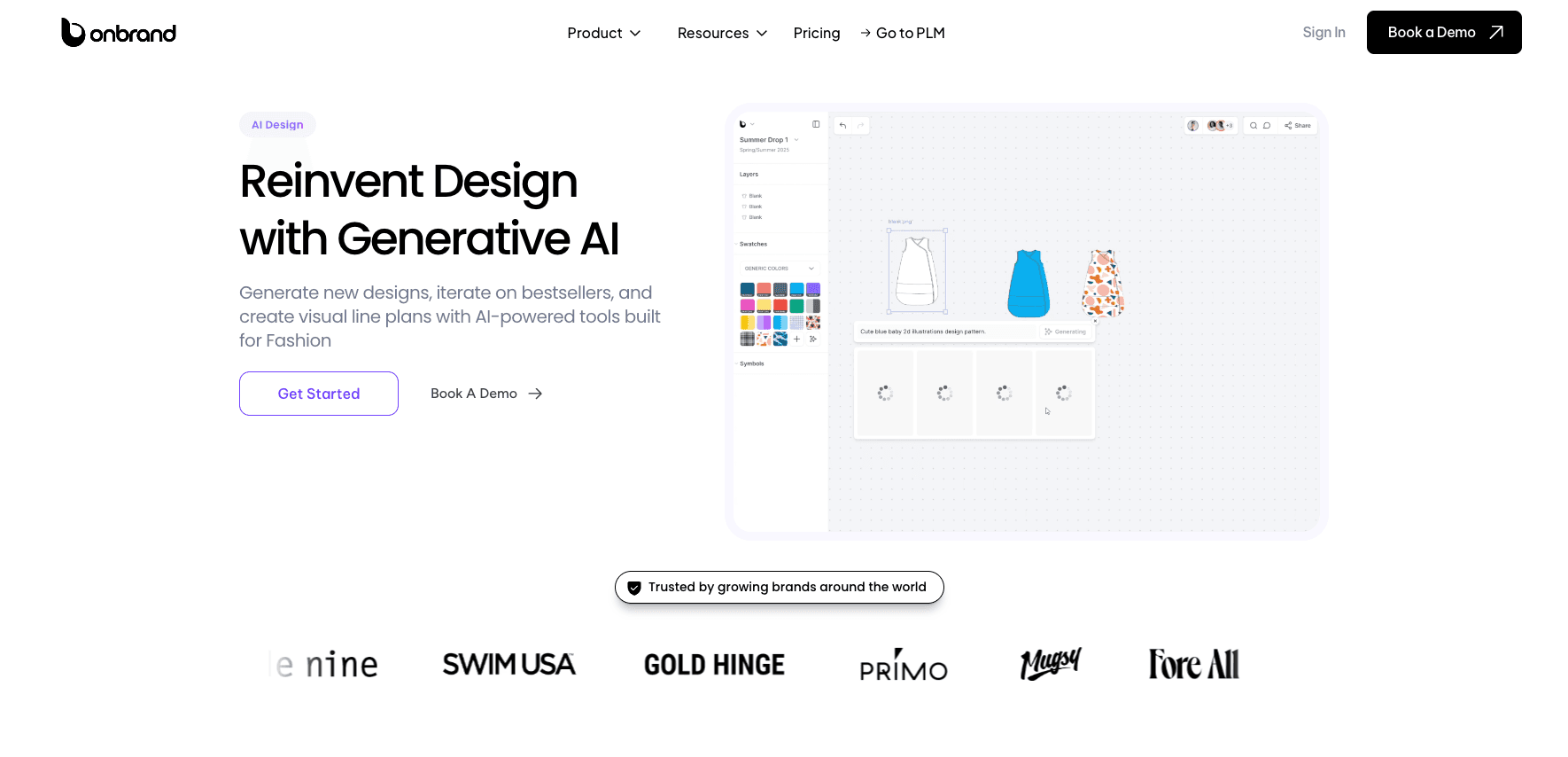
Design teams can generate clothing concepts from text prompts, sketches, or reference images, then refine those ideas through colorways, design variations, mockups, and photorealistic renders.
Because these capabilities are available on a single platform, designers spend less time switching between separate creative tools.
Unlike AI tools that stop at image generation, Onbrand AI Design supports the full creative process. Teams can organize mood boards, compare alternate concepts, build visual line plans, collect feedback, and collaborate on designs without leaving the platform.
Another differentiator is its direct connection with Onbrand PLM.

Approved concepts, assets, and design information move directly into PLM, reducing manual file transfers and helping design and product teams stay aligned as products move into development.
Onbrand reports that brands using AI Design achieve up to 10× faster design turnaround, 30–50% fewer physical samples, and more than 10 weeks saved each year.
Key Strengths
Generates original fashion concepts from text prompts, sketches, and reference images in minutes.
Creates flat sketches, photorealistic renders, mockups, and on-model visuals for design reviews, buyer presentations, and factory communication.
Explores colorways, garment variations, and design refinements without starting over, making it easier to compare multiple design directions.
Brings mood boards, visual line plans, live collaboration, comments, and version history into one shared design workspace.
Connects directly with Onbrand PLM so approved concepts, assets, and design information move into product development without recreating files.
Best For
Fashion brands that want to speed up concept creation and keep designers, developers, and product teams connected from early design through product development.
2. Raspberry AI
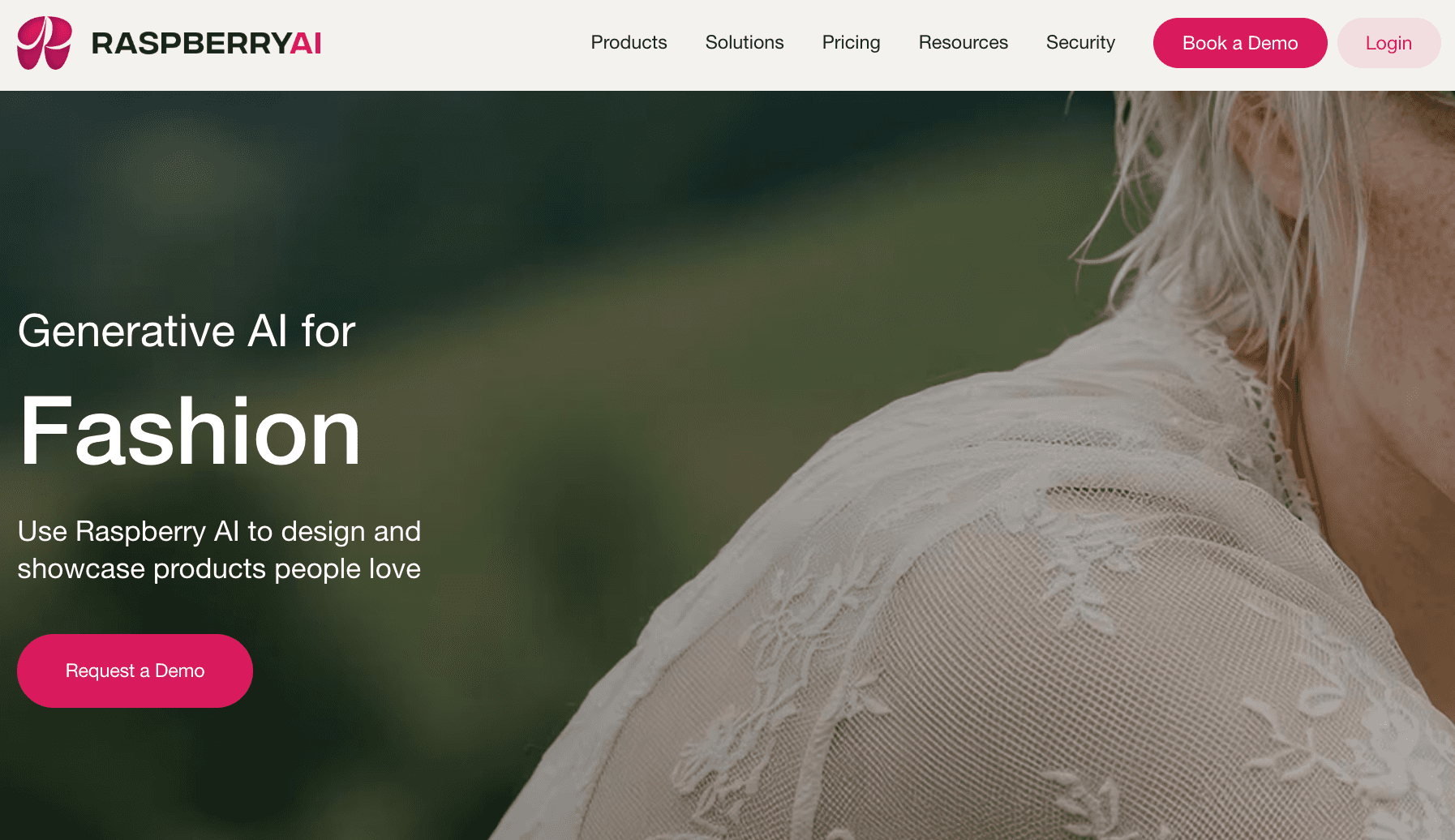
Raspberry AI focuses on AI-assisted fashion concept creation and visual content generation for apparel brands.
Source: raspberry.ai
It supports multiple stages of the creative process, from early design exploration to marketing assets, allowing teams to generate concepts, renders, and marketing visuals within the same platform.
The platform includes capabilities such as sketch-to-render, on-body visualization, print development, product photography, and lifestyle imagery. It also offers brand-trained AI models, allowing larger companies to generate visuals that better match their existing design language.
In addition to concept generation, Raspberry AI supports visual storytelling and can feed generated concepts into early collection-planning discussions before products move into development.
Key Strengths
Generates apparel concepts from prompts and sketches.
Converts sketches into photorealistic renders and on-body visuals.
Supports print, pattern, and graphic development.
Includes product and lifestyle image generation tools.
Offers brand-trained AI models for enterprise customers.
Best For
Fashion brands that want to generate design concepts, marketing visuals, and creative assets and support collaboration between design and commercial teams.
3. NewArc
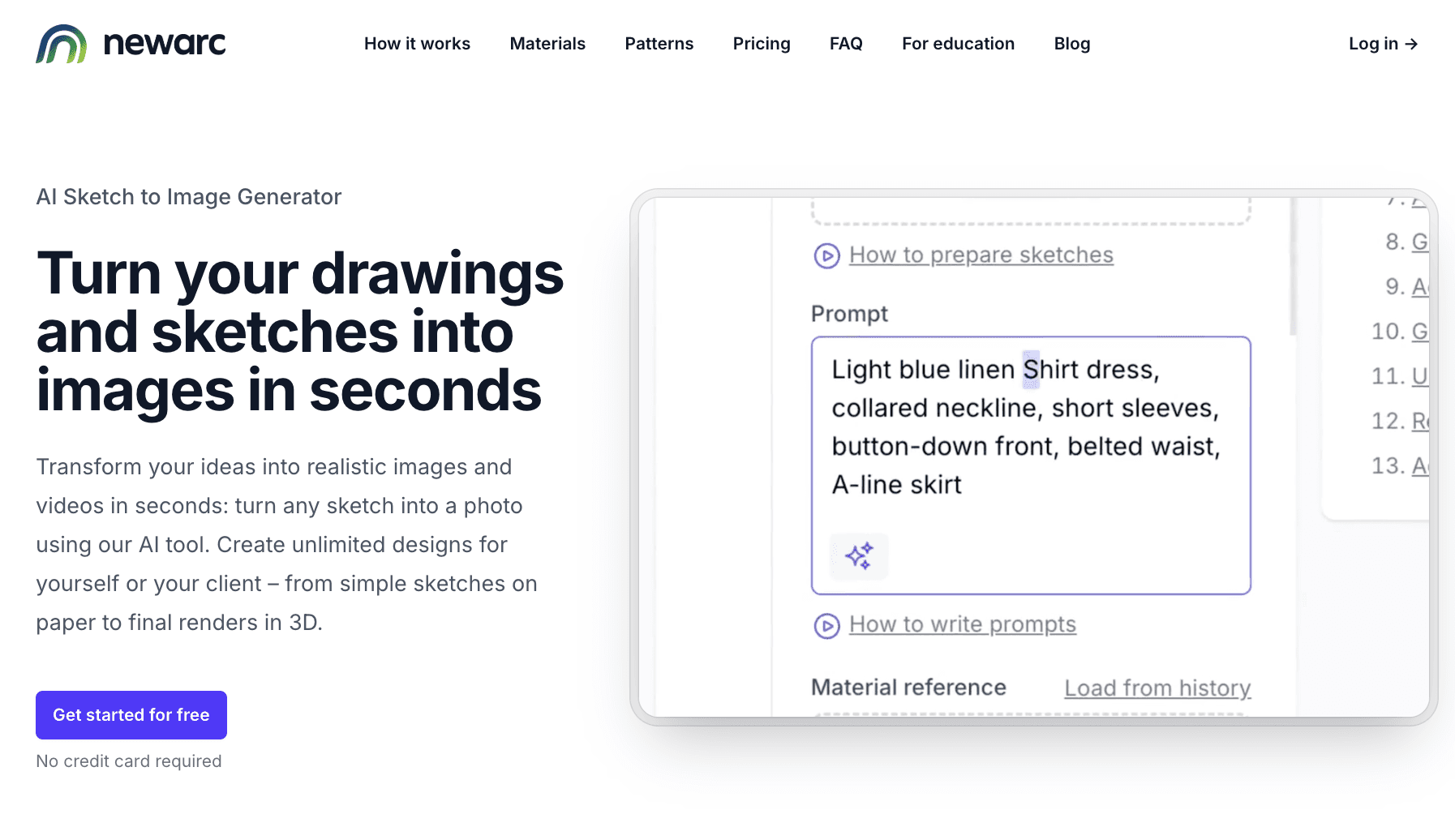
NewArc focuses on turning sketches and design concepts into realistic images and videos for fashion, footwear, and product design.
Source: newarc.ai
It is commonly used during the early creative stage to visualize ideas before sampling, making it easier to review concepts with clients, internal teams, or suppliers.
Beyond sketch-to-image generation, the platform includes tools for virtual try-on, image-to-sketch conversion, material visualization, colorways, and pattern placement.
Designers can experiment with different silhouette options, fabrics, and colors without recreating the design each time. NewArc also supports presentation-ready visuals and marketing content, making it useful beyond concept exploration.
Key Strengths
Converts hand-drawn sketches, technical drawings, and illustrations into realistic images.
Applies different materials, textures, colors, and patterns to existing designs.
Creates virtual try-on images and AI-generated product videos.
Converts product photos back into technical sketches for documentation.
Generates presentation-ready visuals for design reviews and client presentations.
Best For
Fashion designers, footwear designers, and creative teams that want to quickly visualize concepts from sketches and present realistic design options before sampling or further development
4. Refabric
Refabric is an AI platform built for fashion professionals who want to generate designs, edit concepts, and produce marketing-ready visuals from a single workspace.

Source: refabric.com
Alongside concept creation, it includes tools for brand-trained AI, design editing, and content generation, making it suitable for both creative and commercial work.
The platform also supports AI fashion photography, allowing teams to create high-quality fashion visuals using virtual models instead of organizing physical photoshoots for early presentations, lookbooks, and selected marketing assets.
Designers can generate campaign imagery, product photos, flat lay visuals, and lifestyle content for presentations, lookbooks, and online stores while concepts are still being refined.
Key Strengths
Generates fashion concepts and collection visuals using AI trained on brand-specific references.
Supports localized editing of designs with text and visual guidance.
Creates AI fashion photography, product photos, and flat lay images for marketing and presentations.
Produces visuals with virtual models for lookbooks and promotional content.
Helps reduce repetitive design and sketch-to-design tasks through AI-assisted automation.
Best For
Fashion brands and creative teams that want one platform for concept development, design editing, and AI-generated visual content before moving into production or marketing.
5. Mercer
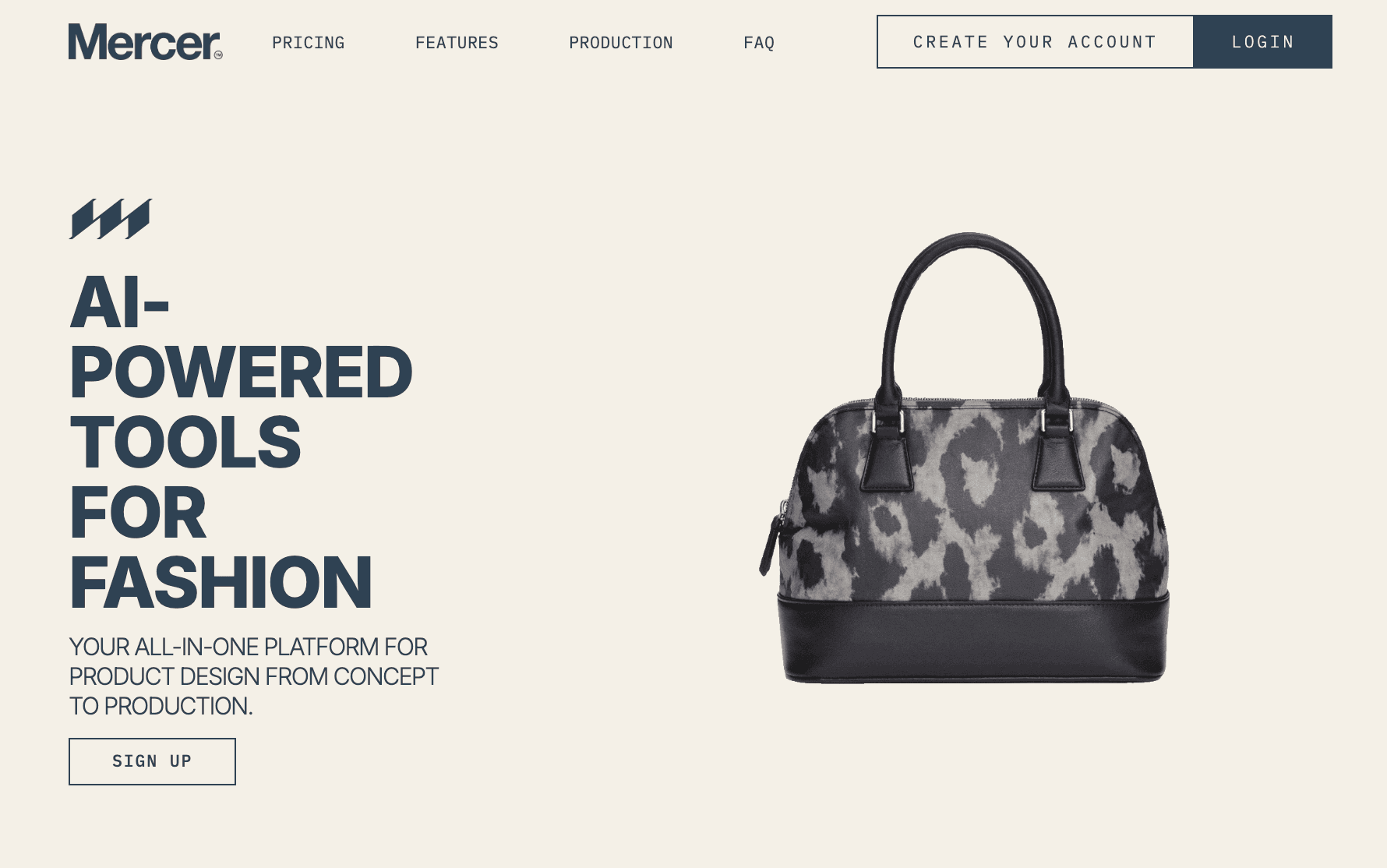
Mercer (formerly Cala) combines AI-assisted fashion design, product development, and team collaboration on a single platform.
Source: mercer.design
It combines concept generation, collaboration, and product management features in one place, allowing teams to organize work from early design through production planning.
The platform allows users to generate concepts from inspiration images, hand sketches, CAD files, or text prompts and keep design files organized throughout development.
It also includes collaboration tools such as comments, measurements, task assignments, and collection management, making it suitable for both independent designers and growing teams.
For larger fashion businesses, Mercer also offers manufacturing and production services through its global manufacturing network, extending beyond design into sourcing support.
Key Strengths
Generates fashion concepts from prompts, sketches, CAD files, and inspiration images.
Organizes collection assets, design files, and project information in one platform.
Supports AI-assisted design variations and brand-trained AI models.
Includes built-in collaboration, task management, comments, and collection organization.
Offers optional manufacturing and production support through a global supplier network.
Best For
Independent designers, growing fashion businesses, and established fashion brands looking for one platform to support design collaboration, collection management, and production coordination.
6. Style3D AI
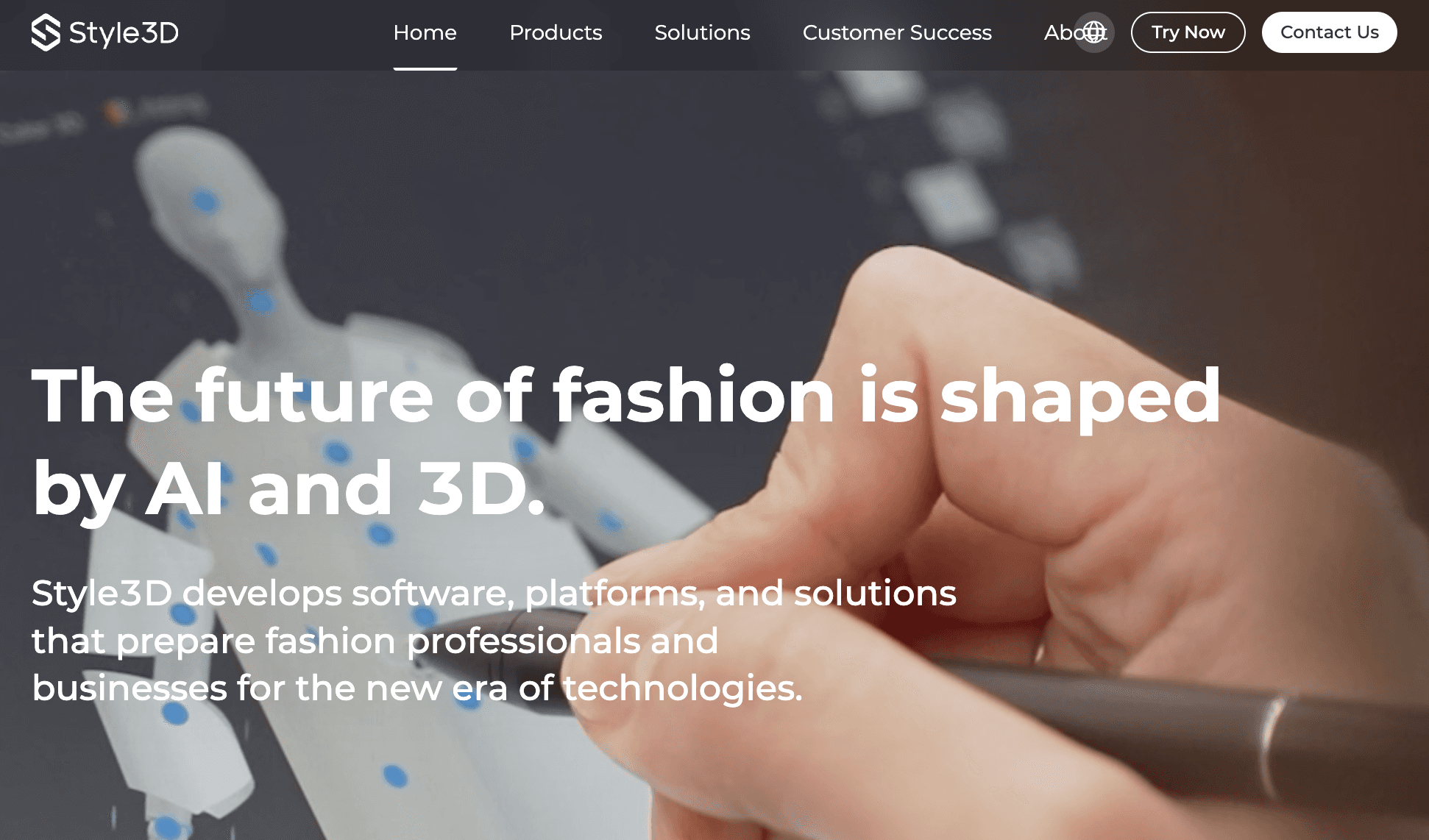
Style3D AI combines artificial intelligence with 3D garment technology to support fashion design, development, and visualization.
Source: style3d.com
Rather than focusing only on concept generation, it works alongside Style3D's broader platform, allowing teams to move from AI-generated ideas to 3D garment simulation and digital product reviews.
It supports inspiration generation, high-quality rendering, and digital asset creation while connecting with Style3D's design and development tools.
Designers can preview different materials, create realistic garment visualizations, and use virtual try-on technology to review how a design looks on a digital model in different environments or poses.
Style3D also emphasizes reducing physical sampling by using 3D simulation during production planning and design validation.
Key Strengths
Generates AI-assisted fashion concepts and creative inspiration.
Combines AI design with 3D garment visualization and simulation.
Supports virtual try-on and realistic garment rendering.
Allows designers to evaluate different materials before physical sampling.
Connects with cloud-based collaboration and digital asset management tools.
Best For
Fashion brands and product development teams that already use 3D design or want to combine AI-generated concepts with digital garment simulation before moving into production.
Things to Consider Before Choosing an AI Fashion Design Generator
Not every AI fashion design tool fits the same workflow.
Before comparing features, think about how you'll use the tool, who will use it, and what you expect it to help you accomplish.
Understand Your Design Workflow
Start by looking at how you normally develop new ideas.
If your process begins with prompts, hand drawings, or reference images, choose a tool that fits naturally into that workflow instead of forcing you to change how you work.
The goal is to support your creative control and human creativity, not replace them.
Consider the Type of Fashion You Design
Different tools may be better suited for different products and audiences.
Think about the types of apparel your brands or clients create, such as streetwear, sportswear, luxury fashion, knitwear, prints, or seasonal collections.
Keeping your design focus in mind helps narrow your options.
Think About How You'll Use the Final Designs
Consider what happens after the concepts are generated. You may need visuals for brainstorming, client presentations, internal reviews, or marketing materials.
Your intended use should influence the type of outputs you prioritize.
Consider Who Will Use the Tool
The right choice can depend on the size of your team.
Freelancers, students, in-house designers, and larger fashion teams may have different expectations for collaboration, project organization, and ease of use. Think about who will be using the tool most often.
Set a Realistic Budget
Compare pricing with the features you'll actually use instead of paying for capabilities that don't support your workflow. If possible, test a free trial or demo before making a decision.
Testing the platform first can also prevent your team from paying for features that do not fit its day-to-day design process.
What Makes an AI Fashion Design Generator Great?
The best AI fashion design tools share several characteristics that help designers create more practical and realistic concepts. Regardless of the platform, look for the following capabilities:
Fashion-trained AI – Models designed for the fashion industry generally produce more accurate apparel concepts than general image generators.
Accurate garment understanding – The AI should recognize garment structure, proportions, and construction details instead of generating unrealistic clothing.
Consistent garment details – Elements such as seams, trims, colors, and same outfit variations should remain consistent as designs are refined.
Sketch editing – The ability to start from a sketch instead of creating every concept from scratch.
Multiple design variations – A powerful tool should quickly generate different design directions from one concept.
Prompt accuracy – The output should closely match the instructions provided without requiring extensive revisions.
Ease of iteration – Designers should be able to refine concepts, adjust details, and continue improving results without restarting the process.
Commercial usability – Review ownership terms, permitted uses, export quality, and whether the visuals can support internal reviews, client presentations, or marketing. An AI fashion model generator can also help present designs on realistic digital models.
Bring Your Ideas to Life With Onbrand AI Design
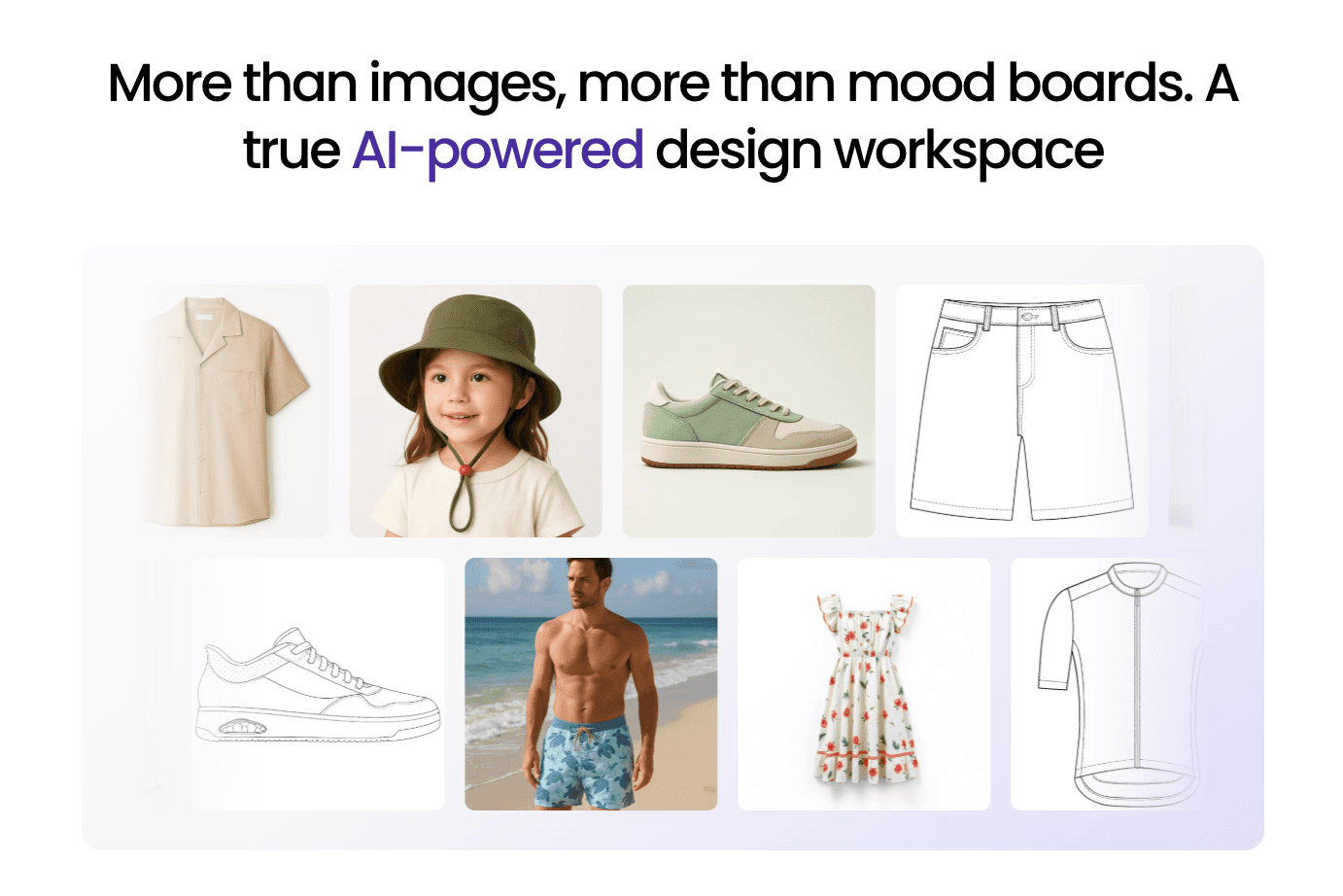
The best AI fashion design generator depends on how your team creates, reviews, and develops new ideas. While every platform in this guide offers different capabilities, fashion brands often benefit from tools that support more than image generation alone.
If you're looking for a solution that combines AI-powered concept creation, visual collaboration, and a direct connection to Onbrand PLM, Onbrand AI Design is worth exploring.
It helps fashion teams move from the first idea to product development in one connected workspace, reducing manual handoffs between design and development.
Book a demo to see how Onbrand AI Design and Onbrand PLM work together.
FAQs About AI Fashion Design Generator
Can AI fashion design generators help reduce physical samples?
Yes. Many fashion teams use AI-generated concepts and realistic renders to review and refine designs before creating physical samples. While samples are still needed for fit, construction, and production approval, AI can reduce the number of early design iterations that require sampling.
Can I use an AI fashion design generator for an entire collection?
Yes. Many platforms support developing an entire collection by generating multiple concepts, colorways, and coordinated designs around a shared theme or season. The level of support varies from one solution to another.
Can AI fashion design generators create technical files or tech packs?
Some tools focus only on visual concept generation, while others extend into product development. For example, Onbrand AI Design connects with Onbrand PLM, where teams can continue building and managing tech packs using approved design assets.
How can AI fashion design generators support sustainable practices?
AI fashion design generators help teams test concepts, colorways, and design variations digitally before producing physical samples. Although physical samples remain necessary for fit and production approval, this approach can support more sustainable practices by reducing avoidable sample iterations.
Can AI fashion design generators support both small brands and enterprise teams?
Yes. Some platforms offer a basic set of AI design features for individuals or small teams, while others provide a full suite of design, collaboration, and product development capabilities for larger fashion organizations.