What Is Fashion Management?
Jan 8, 2026


Fashion management focuses on the business and operational planning behind how fashion brands bring products to market.
It guides decisions around merchandising, sourcing, timelines, and coordination across teams, rather than focusing on design work alone.
While many people first study fashion through formal education, the reality inside active brands looks different once work moves into real timelines, samples, and production.
In practice, fashion management connects business planning with execution so teams can move styles forward with clear ownership, shared timelines, and fewer last-minute surprises.
Many growing brands feel the cracks when this structure is missing. A design update lives in Slack, a tech pack change sits in email, and production moves ahead with outdated details.
Fashion management brings those pieces together by giving teams a clear way to manage decisions, updates, and handoffs across collections.
In modern fashion brands, this often overlaps with fashion project management, where teams track timelines, approvals, and dependencies.
In this blog, we break down what fashion management covers, how it fits into the product lifecycle, and how fashion teams manage work more clearly as they scale.
TL;DR
Fashion management is the business and operational planning that guides how fashion brands manage merchandising, sourcing, timelines, and delivery from concept to market.
It supports teams across the full product lifecycle, from early planning and concept alignment to product development, production oversight, and post-season review.
Growing brands struggle when workflows rely on emails and spreadsheets, which leads to version issues, missed updates, and unclear ownership.
Digital systems help teams replace scattered tools with shared product data, clearer timelines, and stronger collaboration across design, development, and sourcing.
Onbrand supports this process with AI Design for early concept alignment and PLM for product development, execution, and vendor collaboration.
What Fashion Management Covers in the Fashion Industry
Fashion management covers the systems and decisions that guide how fashion brands plan, manage, and deliver assortments and collections to market. It keeps teams aligned across planning, development, sourcing, and delivery.
Rather than focusing on people management alone, fashion management organizes business workflows, product information, and ownership across teams.
While a fashion management curriculum or fashion business courses may outline these areas at a high level, real brand teams apply them daily through hands-on processes and shared tools inside the same program of work.
Designers protect creative vision, developers handle technical design, and sourcing teams work with vendors and the supply chain.
Merchandising and operations teams balance timelines, costs, and retail needs. Shared visibility helps teams avoid missed updates, version issues, and last-minute rework.
Fashion managers and team leads coordinate work such as:
Design planning and coordination - Aligning collection direction, sketches, and early decisions
Product development tracking - Managing tech packs, sample management, and approvals
Timeline and milestone management - Keeping key dates visible and realistic
Cross-team communication - Sharing updates across design, merchandising, and production
Vendor and factory coordination - Managing buying, manufacturing, and external partners
This structure gives teams a clear view of how work moves through the fashion industry.
Fashion Management Across the Product Lifecycle
Fashion management connects day-to-day decisions across teams so work moves forward without confusion. Each stage builds on the last, which makes clear ownership, shared timelines, and reliable information necessary as styles progress in the fashion world.
Below is how fashion management supports teams across the product lifecycle.
Concept And Early Planning
This stage focuses on collection planning, early timelines, and visual alignment. Teams define direction while considering fashion trends before work moves into fashion product development.
Onbrand AI Design supports early concept work by helping teams explore ideas, review visuals, and align faster before decisions lock in. This clarity supports creativity without slowing momentum.
Product Development And Sampling
Once concepts are approved, decisions turn into product details. Teams manage tech packs, revisions, samples, and approvals while tracking changes across versions.
Clear documentation helps independent designers, developers, and sourcing teams move from concept to production-ready styles without version issues or rework.
Production Planning And Quality Control
As styles move closer to manufacturing, accuracy becomes critical. Teams confirm production readiness, manage updates, and track version changes. Quality control checks help catch issues before bulk production begins.
This is where Onbrand PLM supports centralized product data, version control, and collaboration across teams. It keeps everyone working from the same information.
If you want to see how this works, you can book a demo to walk through the workflow.
Delivery And Ongoing Performance Review
After production, teams track delivery status and review what worked across the season.
This stage helps teams carry knowledge forward. Clear records support better planning, stronger buying decisions, and fewer questions when the next collection starts.
Fashion Management vs Traditional Fashion Workflows
Traditional fashion workflows rely on email threads, spreadsheets, and scattered files.
A tech pack update sits in one inbox. A sample note lives in another file. As teams grow, this setup breaks down fast and makes accountability hard to track.
Modern fashion management replaces guesswork with shared visibility. Teams work from the same product data, timelines, and approvals.
Business decisions around merchandising priorities, delivery timing, and cost targets stay aligned, which supports clearer ownership and faster decisions based on analytical processes rather than assumptions.
This structure helps brands apply deeper expertise to daily work to a wider business strategy and make competitive decisions faster when costs change, delivery dates move, or a style needs a quick decision.
Growing teams outgrow manual tools because they need a more comprehensive understanding of what is approved, what has changed, and what is ready for production.
Shared access reduces back and forth and keeps work moving without constant follow-ups.
Why Fashion Management Matters for Fashion Business Management
Fashion management helps teams move faster without losing accuracy. Clear workflows reduce rework, missed updates, and last-minute fixes that slow teams down.
When product information stays consistent, designers, developers, and sourcing teams stay aligned as styles move forward.
For fashion business management, this structure supports stronger business acumen and better day-to-day decisions.
Teams spend less time chasing updates and more time focused on product quality, timelines, and cost control.
As brands grow, this clarity supports long-term career opportunities and changing career goals across teams. Leaders rely on shared data instead of assumptions, which builds practical management and leadership skills across teams.
Clear ownership and reliable information give companies the foundation they need to succeed without adding more process or headcount.
How Digital Tools Support Fashion Management
Digital tools give teams shared systems they can rely on every day.
Instead of searching for the latest file, designers, developers, and sourcing teams work from the same product information, timelines, and approvals.
Some tools support early design work. Teams use visuals to explore ideas, respond to trend forecasting, and align around direction before details lock in.
This early alignment also supports handoffs tied to digital marketing and light marketing campaigns, where visuals need to stay consistent across teams.
Other tools support execution. Teams manage tech packs, samples, and production updates in one place, informed by ongoing research and real feedback.
Shared access reduces challenges, supports better decisions around consumer behavior and e-commerce, and shows how fashion technology supports stronger workflows built for long term success.
Fashion Management With Onbrand
Onbrand supports fashion management across the lifecycle with two connected products.
Brands can start with early concept work, then carry approved decisions into development without losing context, files, or version history.
Onbrand AI Design for Early Concept Alignment
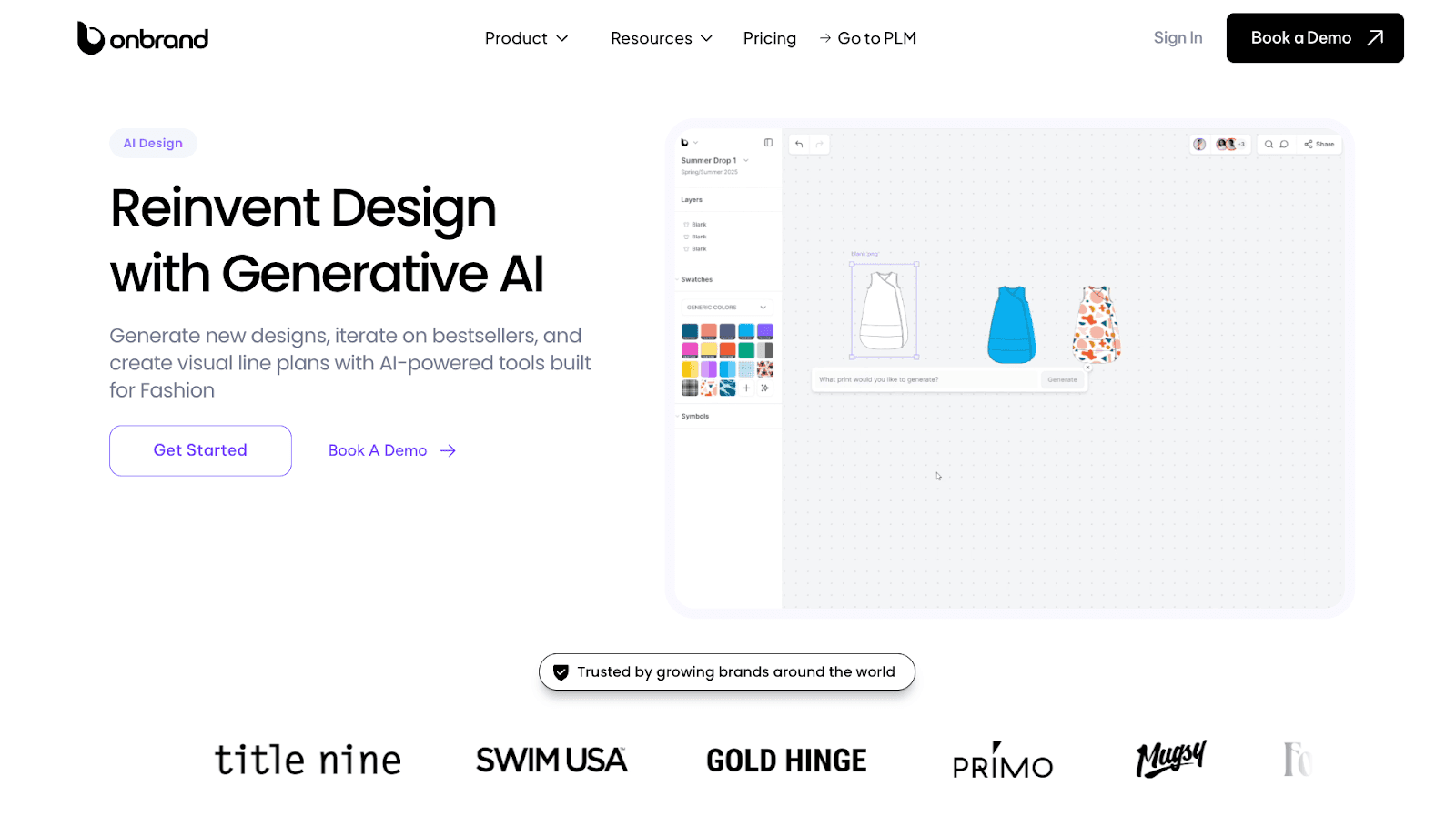
Onbrand AI Design helps teams align earlier through shared visuals.
Designers generate concepts from text, sketches, or reference images, explore variations, create mood boards, and review options together with comments and version history.
Once a direction is approved, teams can move concepts and key assets into fashion PLM so development starts with clear inputs
Onbrand PLM for Product Development and Execution
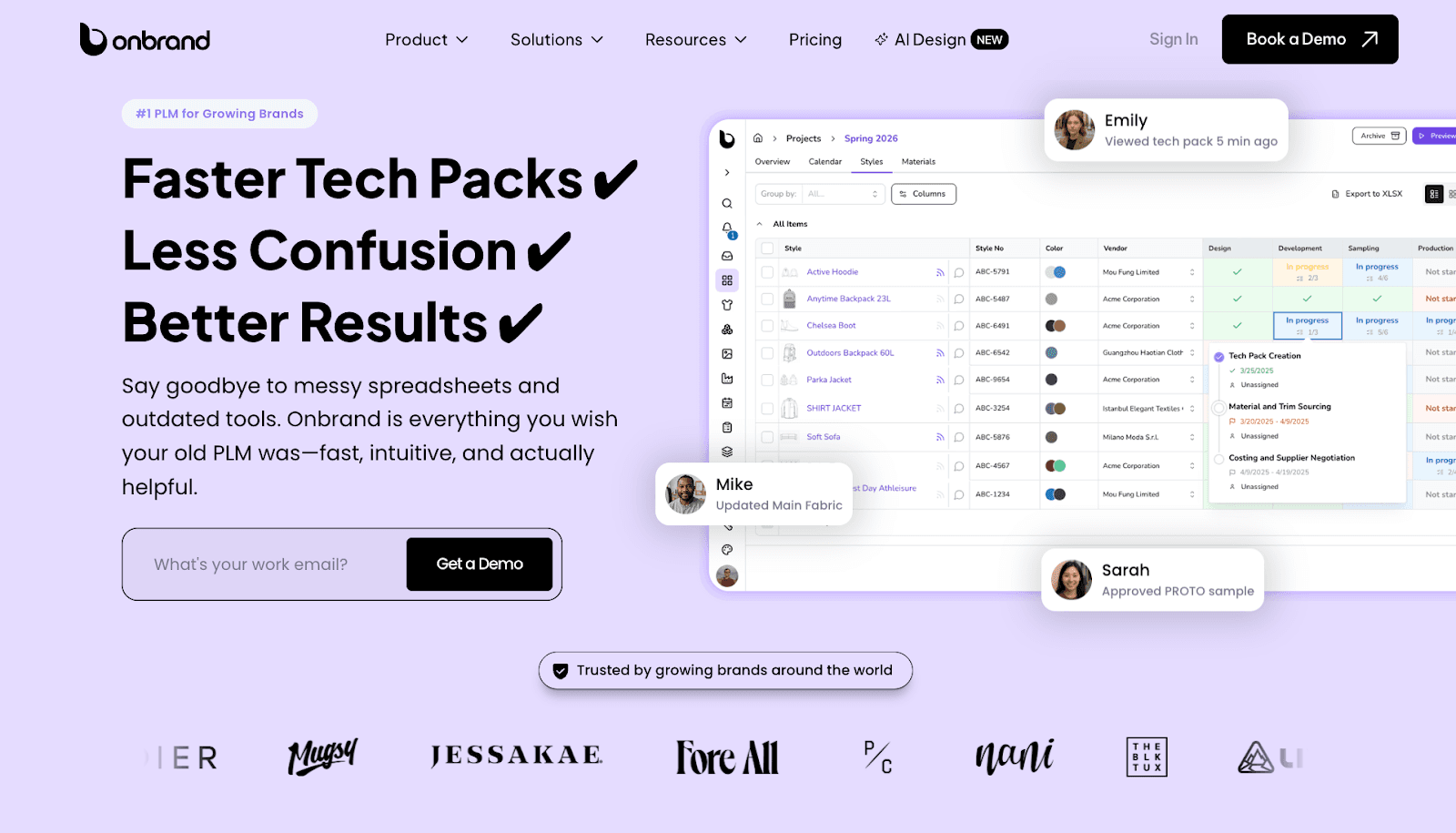
Onbrand PLM supports product development after concept approval. Live tech packs, sample management, version control, and vendor collaboration all stay in one place.
Built-in stages, tasks, and approvals help keep ownership clear across sourcing and production.
When systems support the process, fashion teams move forward with fewer handoffs and fewer missed details.
FAQs About What Is Fashion Management
What do you mean by fashion management?
Fashion management coordinates business operations across the fashion sector. Teams handle merchandising, retail strategy, and supply chain coordination using practical resources from concept through delivery.
What is management fashion?
Management fashion refers to the operational workflows that keep brands running. Buyers, finance teams, and product developers work together to manage timelines, costs, and quality across design and production.
What jobs can I get with fashion management?
Product developers, production coordinators, buyers, merchandisers, and finance analysts. These roles require a global perspective on sourcing, manufacturing, and retail across international markets.
How does fashion school prepare students for management roles?
School programs led by associate professors through bachelor’s degree courses introduce students to entrepreneurship and team coordination. Real brands then develop these skills further through hands-on work and shared systems for daily execution.
Fashion management focuses on the business and operational planning behind how fashion brands bring products to market.
It guides decisions around merchandising, sourcing, timelines, and coordination across teams, rather than focusing on design work alone.
While many people first study fashion through formal education, the reality inside active brands looks different once work moves into real timelines, samples, and production.
In practice, fashion management connects business planning with execution so teams can move styles forward with clear ownership, shared timelines, and fewer last-minute surprises.
Many growing brands feel the cracks when this structure is missing. A design update lives in Slack, a tech pack change sits in email, and production moves ahead with outdated details.
Fashion management brings those pieces together by giving teams a clear way to manage decisions, updates, and handoffs across collections.
In modern fashion brands, this often overlaps with fashion project management, where teams track timelines, approvals, and dependencies.
In this blog, we break down what fashion management covers, how it fits into the product lifecycle, and how fashion teams manage work more clearly as they scale.
TL;DR
Fashion management is the business and operational planning that guides how fashion brands manage merchandising, sourcing, timelines, and delivery from concept to market.
It supports teams across the full product lifecycle, from early planning and concept alignment to product development, production oversight, and post-season review.
Growing brands struggle when workflows rely on emails and spreadsheets, which leads to version issues, missed updates, and unclear ownership.
Digital systems help teams replace scattered tools with shared product data, clearer timelines, and stronger collaboration across design, development, and sourcing.
Onbrand supports this process with AI Design for early concept alignment and PLM for product development, execution, and vendor collaboration.
What Fashion Management Covers in the Fashion Industry
Fashion management covers the systems and decisions that guide how fashion brands plan, manage, and deliver assortments and collections to market. It keeps teams aligned across planning, development, sourcing, and delivery.
Rather than focusing on people management alone, fashion management organizes business workflows, product information, and ownership across teams.
While a fashion management curriculum or fashion business courses may outline these areas at a high level, real brand teams apply them daily through hands-on processes and shared tools inside the same program of work.
Designers protect creative vision, developers handle technical design, and sourcing teams work with vendors and the supply chain.
Merchandising and operations teams balance timelines, costs, and retail needs. Shared visibility helps teams avoid missed updates, version issues, and last-minute rework.
Fashion managers and team leads coordinate work such as:
Design planning and coordination - Aligning collection direction, sketches, and early decisions
Product development tracking - Managing tech packs, sample management, and approvals
Timeline and milestone management - Keeping key dates visible and realistic
Cross-team communication - Sharing updates across design, merchandising, and production
Vendor and factory coordination - Managing buying, manufacturing, and external partners
This structure gives teams a clear view of how work moves through the fashion industry.
Fashion Management Across the Product Lifecycle
Fashion management connects day-to-day decisions across teams so work moves forward without confusion. Each stage builds on the last, which makes clear ownership, shared timelines, and reliable information necessary as styles progress in the fashion world.
Below is how fashion management supports teams across the product lifecycle.
Concept And Early Planning
This stage focuses on collection planning, early timelines, and visual alignment. Teams define direction while considering fashion trends before work moves into fashion product development.
Onbrand AI Design supports early concept work by helping teams explore ideas, review visuals, and align faster before decisions lock in. This clarity supports creativity without slowing momentum.
Product Development And Sampling
Once concepts are approved, decisions turn into product details. Teams manage tech packs, revisions, samples, and approvals while tracking changes across versions.
Clear documentation helps independent designers, developers, and sourcing teams move from concept to production-ready styles without version issues or rework.
Production Planning And Quality Control
As styles move closer to manufacturing, accuracy becomes critical. Teams confirm production readiness, manage updates, and track version changes. Quality control checks help catch issues before bulk production begins.
This is where Onbrand PLM supports centralized product data, version control, and collaboration across teams. It keeps everyone working from the same information.
If you want to see how this works, you can book a demo to walk through the workflow.
Delivery And Ongoing Performance Review
After production, teams track delivery status and review what worked across the season.
This stage helps teams carry knowledge forward. Clear records support better planning, stronger buying decisions, and fewer questions when the next collection starts.
Fashion Management vs Traditional Fashion Workflows
Traditional fashion workflows rely on email threads, spreadsheets, and scattered files.
A tech pack update sits in one inbox. A sample note lives in another file. As teams grow, this setup breaks down fast and makes accountability hard to track.
Modern fashion management replaces guesswork with shared visibility. Teams work from the same product data, timelines, and approvals.
Business decisions around merchandising priorities, delivery timing, and cost targets stay aligned, which supports clearer ownership and faster decisions based on analytical processes rather than assumptions.
This structure helps brands apply deeper expertise to daily work to a wider business strategy and make competitive decisions faster when costs change, delivery dates move, or a style needs a quick decision.
Growing teams outgrow manual tools because they need a more comprehensive understanding of what is approved, what has changed, and what is ready for production.
Shared access reduces back and forth and keeps work moving without constant follow-ups.
Why Fashion Management Matters for Fashion Business Management
Fashion management helps teams move faster without losing accuracy. Clear workflows reduce rework, missed updates, and last-minute fixes that slow teams down.
When product information stays consistent, designers, developers, and sourcing teams stay aligned as styles move forward.
For fashion business management, this structure supports stronger business acumen and better day-to-day decisions.
Teams spend less time chasing updates and more time focused on product quality, timelines, and cost control.
As brands grow, this clarity supports long-term career opportunities and changing career goals across teams. Leaders rely on shared data instead of assumptions, which builds practical management and leadership skills across teams.
Clear ownership and reliable information give companies the foundation they need to succeed without adding more process or headcount.
How Digital Tools Support Fashion Management
Digital tools give teams shared systems they can rely on every day.
Instead of searching for the latest file, designers, developers, and sourcing teams work from the same product information, timelines, and approvals.
Some tools support early design work. Teams use visuals to explore ideas, respond to trend forecasting, and align around direction before details lock in.
This early alignment also supports handoffs tied to digital marketing and light marketing campaigns, where visuals need to stay consistent across teams.
Other tools support execution. Teams manage tech packs, samples, and production updates in one place, informed by ongoing research and real feedback.
Shared access reduces challenges, supports better decisions around consumer behavior and e-commerce, and shows how fashion technology supports stronger workflows built for long term success.
Fashion Management With Onbrand
Onbrand supports fashion management across the lifecycle with two connected products.
Brands can start with early concept work, then carry approved decisions into development without losing context, files, or version history.
Onbrand AI Design for Early Concept Alignment

Onbrand AI Design helps teams align earlier through shared visuals.
Designers generate concepts from text, sketches, or reference images, explore variations, create mood boards, and review options together with comments and version history.
Once a direction is approved, teams can move concepts and key assets into fashion PLM so development starts with clear inputs
Onbrand PLM for Product Development and Execution

Onbrand PLM supports product development after concept approval. Live tech packs, sample management, version control, and vendor collaboration all stay in one place.
Built-in stages, tasks, and approvals help keep ownership clear across sourcing and production.
When systems support the process, fashion teams move forward with fewer handoffs and fewer missed details.
FAQs About What Is Fashion Management
What do you mean by fashion management?
Fashion management coordinates business operations across the fashion sector. Teams handle merchandising, retail strategy, and supply chain coordination using practical resources from concept through delivery.
What is management fashion?
Management fashion refers to the operational workflows that keep brands running. Buyers, finance teams, and product developers work together to manage timelines, costs, and quality across design and production.
What jobs can I get with fashion management?
Product developers, production coordinators, buyers, merchandisers, and finance analysts. These roles require a global perspective on sourcing, manufacturing, and retail across international markets.
How does fashion school prepare students for management roles?
School programs led by associate professors through bachelor’s degree courses introduce students to entrepreneurship and team coordination. Real brands then develop these skills further through hands-on work and shared systems for daily execution.

Discover how Onbrand PLM can streamline your product development!
© 2024 onbrandplm.com. All rights reserved.
© 2024 Onbrand. All rights reserved.

