Mar 18, 2026

The fashion industry has changed for growing brands. You can launch online, source globally, and work with manufacturers without a large in-house team.
That access creates opportunity, but it also increases operational pressure once collections start to expand.
More styles bring more tech packs. More colorways create more revisions. Sample rounds overlap with new development. What felt manageable in your first season becomes harder to control in your second.
Fashion tech for startups helps bring structure to that growth.
Below are six tools shaping fashion tech for startups in 2026 and where each one fits in your workflow.
TL;DR
These are the top 6 fashion tech tools for startups in 2026:
Raspberry
Refabric
NewArc
CLO 3D
Style3D
How Technology Is Reshaping the Fashion Industry
The fashion industry no longer runs on seasonal guesswork alone. Digital tools now shape how you design, sample, and launch a product.
Digital sampling replaces many early physical prototypes. You can review fit, drape, and colorways in 3D before sending patterns to a factory. That shift reduces wasted materials and shortens early development cycles.
AI also supports early concept work. Designers test silhouettes and color directions faster, then move into technical refinement with clearer intent. What once took multiple sketch rounds can now happen in a single working session.
Brands also launch globally from day one. For example, a label based in New York can source fabrics overseas, sell online, and ship internationally without opening a physical showroom. Fashion technology makes that reach possible.
At the same time, product complexity has increased. Even small labels manage more SKUs, more revisions, and tighter delivery calendars. Growth in the fashion world now depends on how well you control product data and deliver consistency to customers, not just how strong your ideas are.
Why Fashion Tech Startups Need Better Systems as They Scale
Fashion tech startups often begin with small groups wearing multiple hats. One person sketches. Another builds tech packs. Someone else tracks samples in a spreadsheet.
That setup works in your first season. It breaks down in your second.
Sample rounds start to overlap. Colorway updates create version confusion. Suppliers ask which spec sheet is current. You spend more time searching for files than reviewing the product.
Disconnected tools make the problem worse. Concept visuals sit on one platform. Bills of materials (BOMs) and points of measure (POMs) live in another. Vendor comments arrive through email threads. There is no single record of truth.
Early system decisions shape long-term control. If product data is scattered, errors compound as demand grows. If your workflow is structured from the start, you protect margin, capital, timelines, and supplier relationships.
Fashion tech startups rarely fail due to a lack of creativity. They struggle when product control fails to scale with ambition.
Top 6 Fashion Tech Tools for Startups in 2026
Here are six fashion tech platforms shaping how startups design, sample, and manage products in 2026. Each tool fits a specific point in your workflow, whether you need faster ideation or tighter tech pack control.
1. Onbrand
Onbrand sits at the center of fashion tech for startups because it connects design exploration with structured fashion product development in one system.
You can move from early visuals to tech packs, specs, and supplier-ready documentation without splitting work between disconnected tools.
Onbrand includes two offerings: Onbrand AI Design for concept creation and iteration, and Onbrand PLM for product data and production control.
Onbrand AI Design
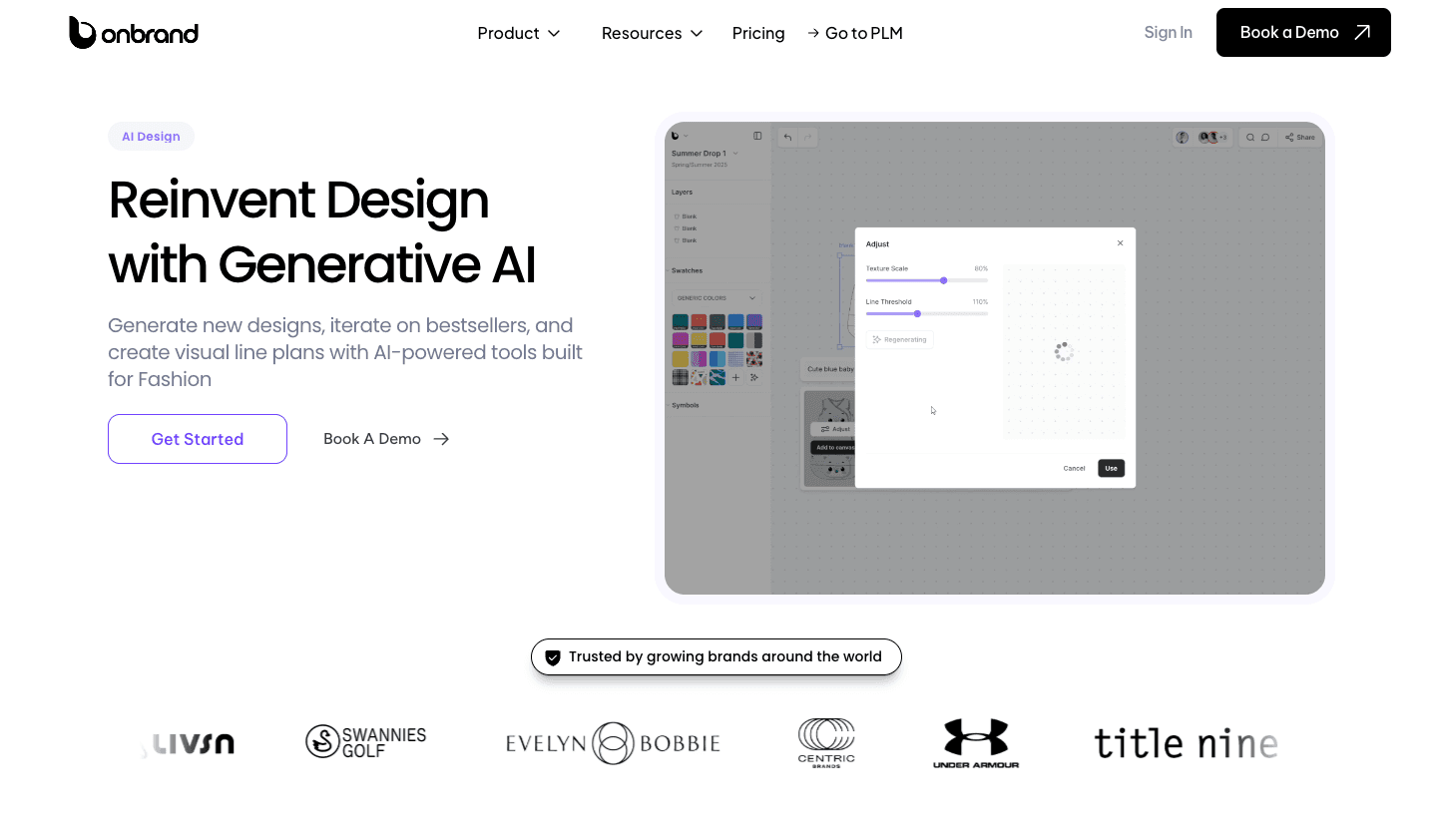
Onbrand AI Design helps designers and merchants generate concepts, iterate on variations, and align on direction with visuals you can actually use.
The workspace supports concept generation, design exploration, visual collaboration, and one-click handoff into product lifecycle management (PLM) software.
Key Features
Generate photoreal garment concepts from text, sketches, or references
Create quick variations for colorways, trims, and silhouette details
Simulate fabrics and textures for more realistic review visuals
Produce clean line art and technical sketch-style outputs
Build mood boards and visual line plans in one workspace
Co-edit live with comments tied to the exact frame
Track versions and roll back when direction changes
Export visuals for presentations and design reviews
Onbrand PLM
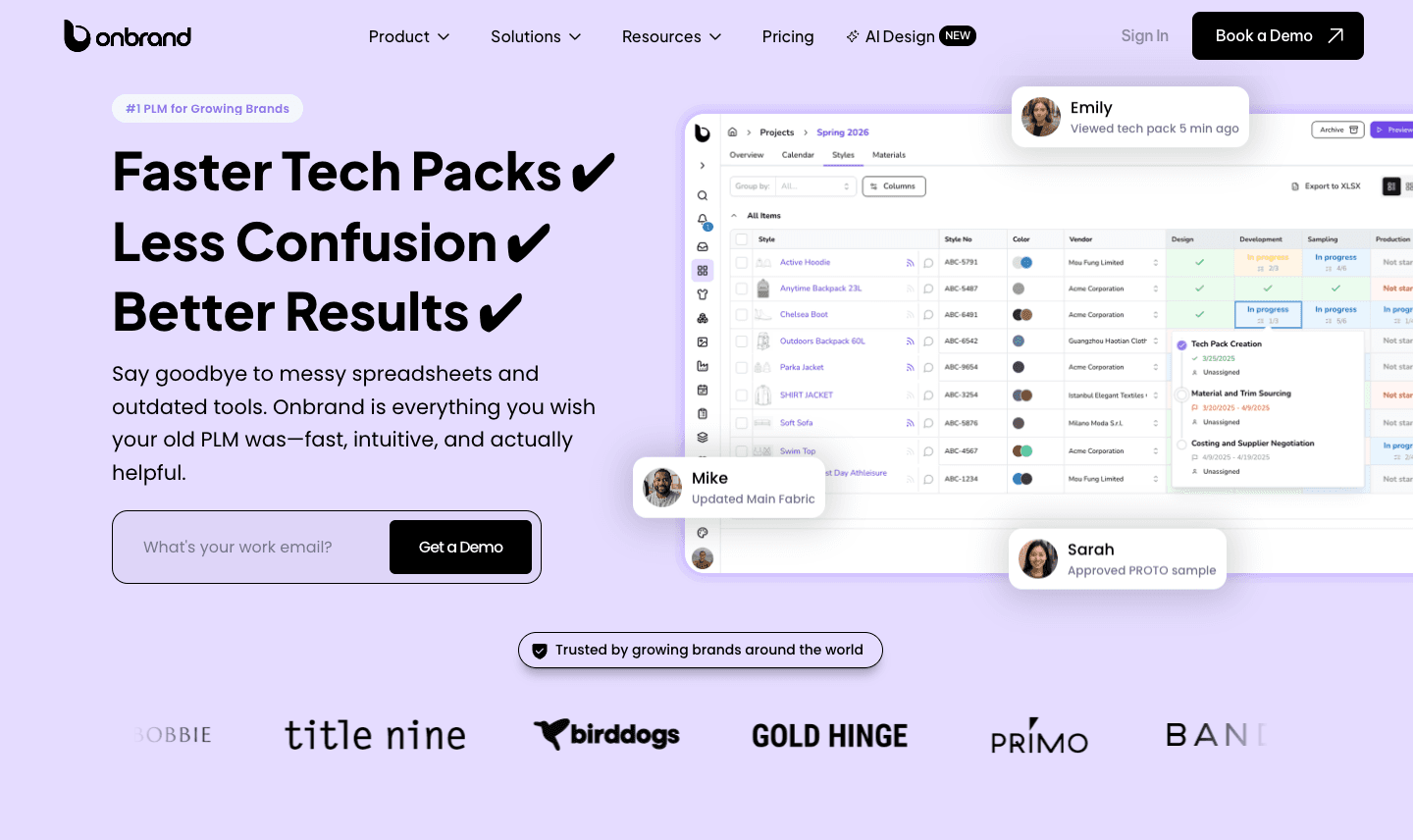
Onbrand PLM gives startups a structured system for tech packs, materials, specs, samples, and approvals.
Product data stays current as styles change, and suppliers work from the same source instead of outdated PDFs. Live tech packs reduce version confusion and keep development moving when timelines tighten.
Key Features
Live tech packs that update without a PDF version of chaos
Material, trim, and color libraries connected to each style
Specification management for POMs, grading, and measurement updates
Sample management with clear status, feedback, and approvals
Vendor collaboration on the product record, not in scattered threads
Time-and-action style project tracking for development milestones
Fast onboarding with migration helps when you are leaving spreadsheets behind
One-click handoff from AI Design into PLM for cleaner development starts
Onbrand brings creative exploration and structured development into the same workflow. You generate concepts, refine direction, and move directly into live tech packs without rebuilding the work in another system.
For startups scaling a product, that continuity protects both speed and accuracy.
2. Raspberry
Source: raspberry.ai
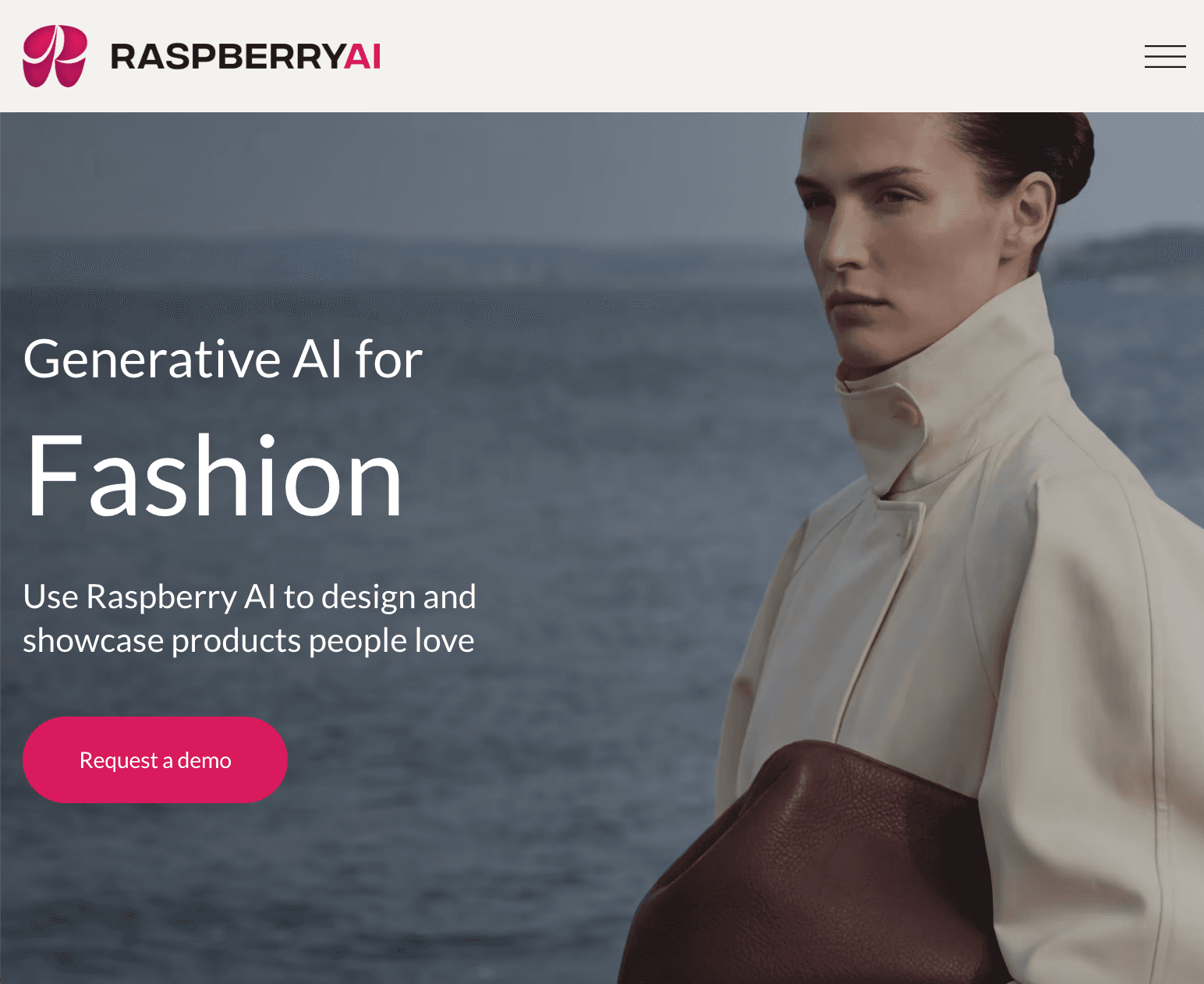
Raspberry is an AI-powered image generation platform built for fashion design and visual development. It allows designers to create garment concepts from text prompts, sketches, or reference images, then refine variations quickly.
Fashion startups exploring early design direction can use Raspberry to test silhouettes, styling ideas, and color concepts before technical development begins. Styled model renders help teams review options visually without producing physical samples.
The tool is centered on visual exploration rather than product data management. It does not replace tech packs or structured product development systems, but it can support early-stage concept work and marketing visuals during the design phase.
Key Features
AI-generated garment imagery from prompts or references
Rapid iteration for silhouette, fabric, and styling changes
Styled model renders for concept review
Editing tools for visual refinement and marketing assets
Exportable visuals for team review and prototypes
3. Refabric
Source: refabric.com
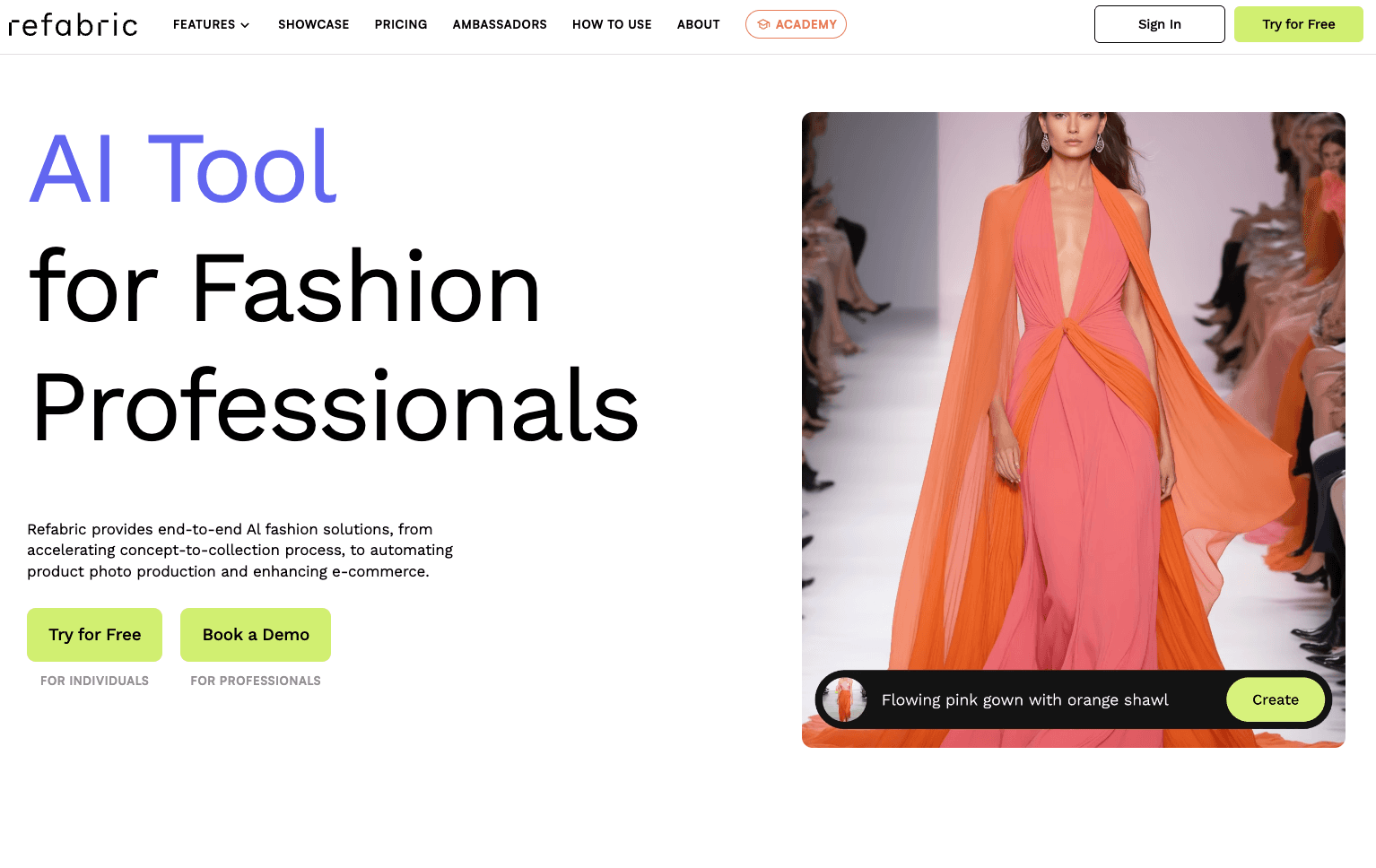
Refabric is a fashion-focused AI platform that supports both concept creation and digital development outputs.
Designers can generate AI apparel concepts from prompts or reference images, then extend those ideas into 3D visualizations and other digital assets that support development workflows.
The platform also includes animation tools that convert designs into short fashion videos for internal review or content drafts.
For fashion startups exploring digital-first workflows, Refabric can help test direction beyond static images. It moves from visual ideation toward digital visualization and asset creation, though physical production management still requires separate systems.
Key Features
AI garment generation from text prompts or reference images
3D visualization and digital model outputs
Digital assets to support concept refinement and review
Short video or animation outputs for presentation and content drafts
Exportable digital assets for review and downstream workflows
4. NewArc
Source: newarc.ai
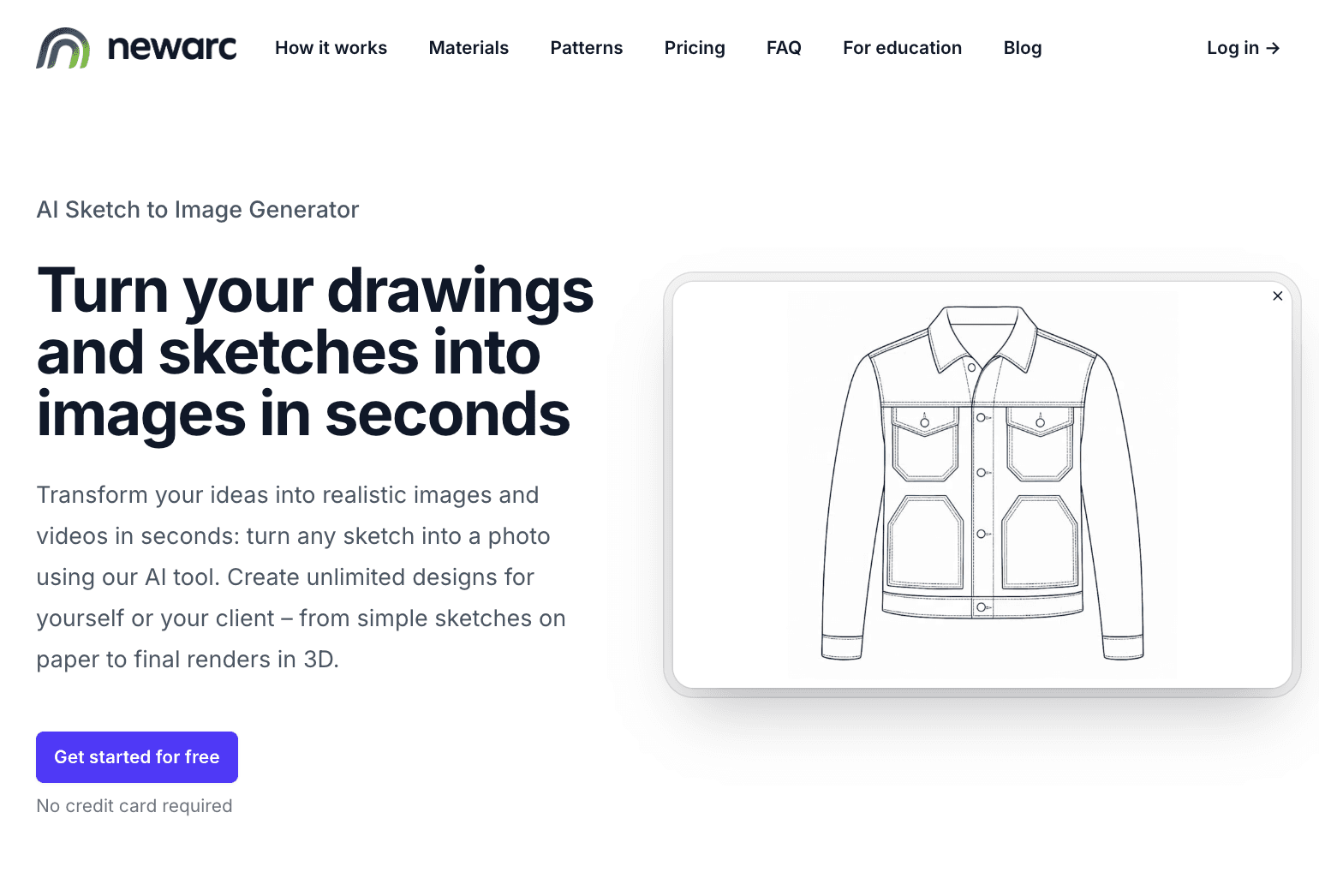
NewArc is an AI sketch-to-image platform built for designers who want to turn drawings into realistic visuals quickly. You can upload a hand sketch, technical drawing, or reference image and generate photo-style renders in seconds.
For fashion startups working through early product ideas, NewArc helps translate rough concepts into clearer visuals before samples are made.
The tool also supports virtual try-on, material overlays, pattern placement, and short video outputs. That makes it useful for internal reviews, remote collaboration with partners, or early marketing previews.
It focuses on visual development rather than tech pack management or supplier coordination, so product documentation still requires a separate system once development moves forward.
Key Features
Sketch-to-image generation from hand drawings or technical flats
Fabric and pattern masking for realistic texture application
Virtual model renders with styling variations
Material and color editing controls
Image-to-video outputs for animated presentations
5. CLO 3D
Source: clo3d.com
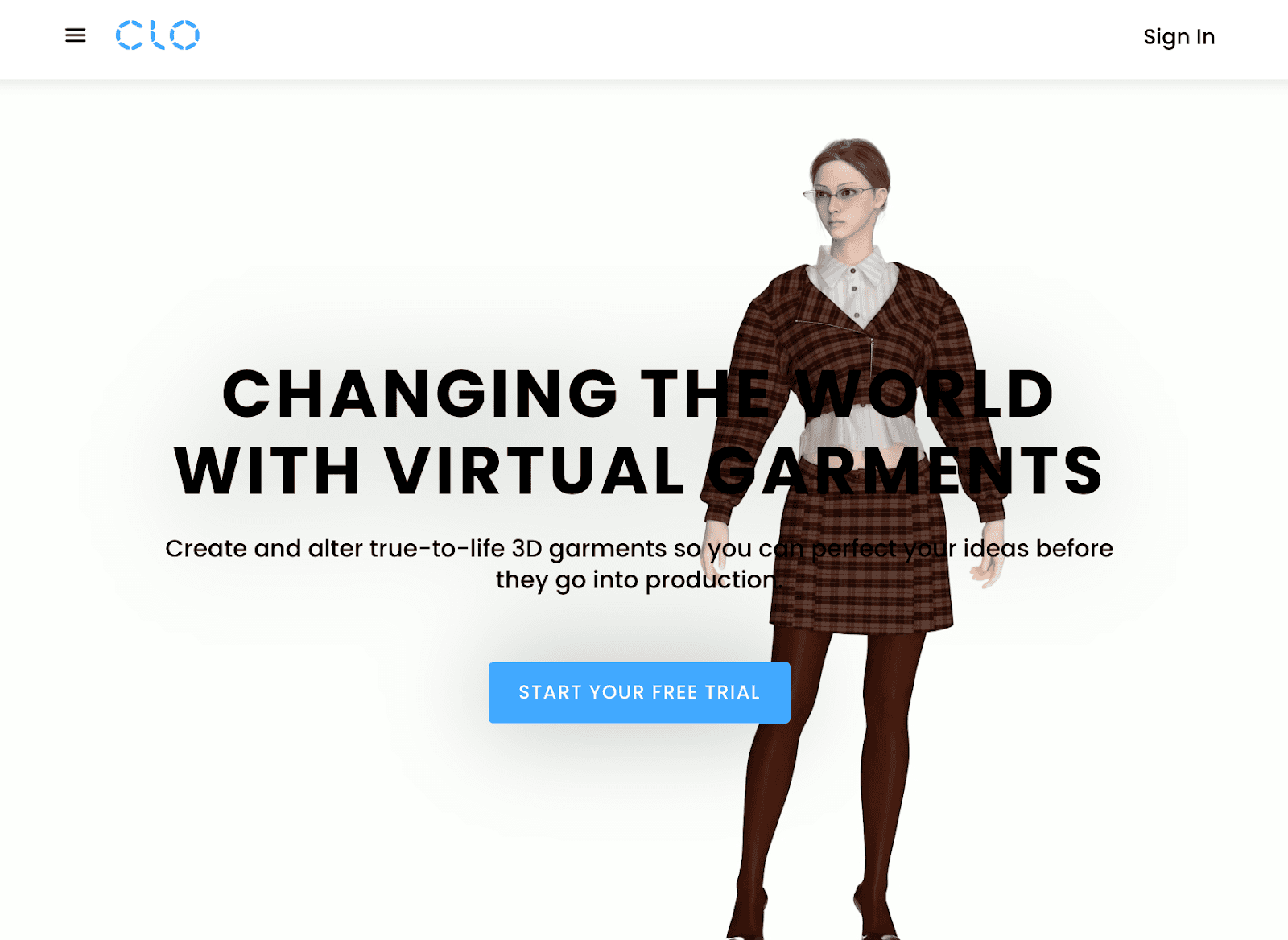
CLO 3D is a digital garment simulation platform used to create and review 3D samples before physical production.
Designers can build garments using 2D patterns, apply fabric properties, and evaluate fit, drape, and grading in a virtual environment. For fashion startups managing development costs, CLO 3D can reduce the number of early sample rounds by validating construction and silhouette decisions digitally.
The software supports pattern import, size grading, and avatar-based fit review. It is widely used by apparel companies and retailers that want clearer visualization before committing to production.
CLO focuses on digital sampling and visualization rather than full tech pack workflow or supplier communication. It can export patterns and 3D assets that support tech pack work, but product documentation and approvals still live in a separate PLM solution.
Key Features
3D garment simulation with fabric physics
2D pattern creation, import, and grading tools
Avatar-based digital fit review
Virtual sampling to reduce physical prototypes
Exportable 3D assets and pattern outputs for downstream documentation
6. Style3D
Source: style3d.com
Style3D is a 3D garment design and digital sampling platform used by brands and manufacturers to create, simulate, and manage virtual apparel assets.
It combines pattern-based 3D simulation, fabric physics, and cloud collaboration tools to support digital product development. For fashion startups investing in 3D workflows, Style3D can help validate fit, materials, and construction before placing sample orders.
The platform includes modules for design, development, and asset management, along with AI-supported rendering tools for marketing visuals.
Style3D also offers cloud-based collaboration features that allow internal groups and external partners to review styles remotely. It focuses on digital prototyping and 3D asset management rather than full tech pack workflow or supplier-driven product lifecycle control.
Key Features
Pattern-based 3D garment simulation
Fabric physics and digital material libraries
Virtual sampling to reduce physical prototypes
Cloud collaboration and 3D asset management
High-definition rendering and animation exports
How Fashion Brands Choose the Right Fashion Tech Stack
Fashion brands do not choose tools based on hype. You choose them based on pressure inside your workflow and the issues that slow the product down.
If your main constraint is concept speed, AI design tools like Onbrand AI Design help you test silhouettes, trims, and colorways before committing to tech packs. You move faster in early concept development without locking decisions too soon. Focus stays on product refinement instead of file cleanup.
If fit and construction create repeat sample corrections, 3D simulation tools give you clearer validation. You review grading, drape, and proportions before shipping physical prototypes. Fewer surprises mean stronger results.
If friction shows up in tech packs, BOM updates, vendor comments, and revision control, fashion PLM systems like Onbrand PLM bring structure. Clear records reduce rework and help you meet delivery timelines as demand increases.
If you want continuity from idea to production, unified systems reduce duplication. Onbrand connects concept creation with live product documentation, so approved designs move directly into structured development without restarting the process.
Technology should support how you build a product. Choose tools based on workflow clarity, not hype about the latest platform.
Build Smarter Fashion Tech for Startups With Onbrand
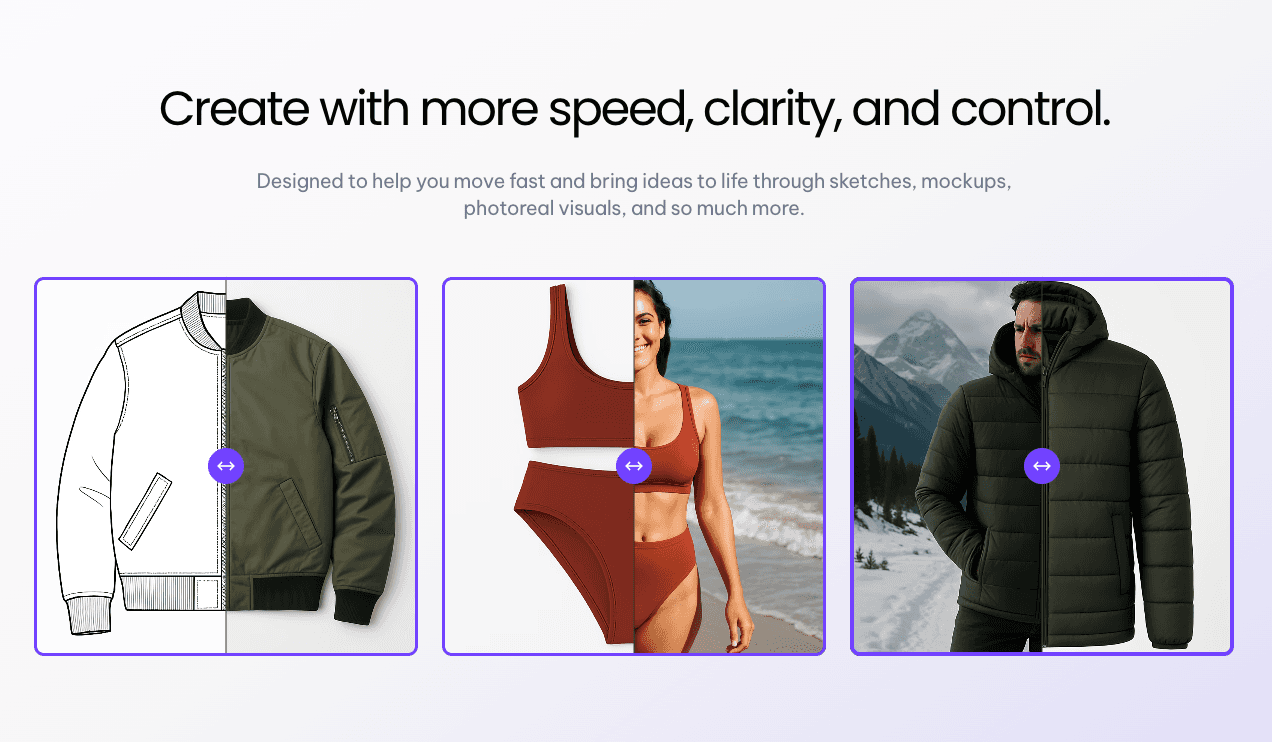
Growth brings creative momentum in the fashion world, but it also brings operational pressure. As your collection expands, styles increase, revisions overlap, sample tracking intensifies, and supplier communication becomes more frequent.
The right software will never replace your design instinct. It gives structure to the work behind it. Fashion AI tools help you explore ideas faster. 3D platforms reduce unnecessary samples. Structured solutions keep specs, materials, and approvals from slipping through the cracks.
What changes the trajectory of a startup brand goes beyond speed. It comes down to continuity. When concept development and product documentation live in separate places, you rebuild work and increase risk. When they connect, you move with clarity.
Onbrand brings AI design and PLM into one continuous workflow. You generate concepts, refine direction, and move directly into live tech packs without restarting the process.
FAQs About Fashion Tech for Startups
What is a fashion tech startup?
A fashion tech startup is a company building technology that supports the fashion industry, such as AI design tools, 3D sampling platforms, or PLM systems. These businesses focus on improving product development, system integration, sourcing, or digital retail workflows. Many are founded by designers or engineers with direct industry experience. Their goal is to lead operational improvement while supporting structured product innovation.
How do you start in fashion tech?
You start in fashion tech by identifying a workflow problem in design, sampling, production, or retail, and building a focused solution around it. Founders often begin with industry insight, test with early users, and refine the product based on real client feedback. Seeking practical advice from operators in the field helps validate demand. Many companies begin small, then expand after proving value to consumers or enterprise buyers.
What are the hottest fashion tech startups right now?
The most talked-about fashion tech startups are innovating in AI design, digital sampling, supply chain visibility, and personalization. Companies that simplify product development or improve data control often attract attention from investors and industry heads. Startups that can prove measurable results, such as reduced sample rounds or faster production cycles, tend to gain traction each year as brands look for stronger operational control.
What are the four Ps of fashion?
The four Ps of fashion are Product, Price, Place, and Promotion. Product refers to the design, quality, and construction of the garment. Price reflects positioning and margin strategy. Place covers distribution channels and where purchases happen. Promotion includes marketing and brand communication that helps consumers understand value. Fashion technology increasingly supports all four areas, especially product development and digital retail experience.