Apr 20, 2026

Fashion product development starts to strain when teams manage more styles, revisions, and vendors at the same time.
Product data sits in disconnected systems, and data silos make it harder to track updates during the product development process. You start to see delays, repeated errors, and confusion around what is current.
This is a normal stage of growth. As collections expand, teams need a better way to manage product data in line with business goals and customer needs.
Product lifecycle management (PLM) software brings structure to how product information is handled from design to production.
Below are the key benefits of PLM and how it supports product development for growing fashion teams.
TL;DR
PLM helps fashion teams manage product data in one system so they avoid version confusion, delays, and errors as product development grows
The key benefits include keeping product data in sync, reducing tech pack and sample errors, speeding up sampling and development, improving workflow ownership and visibility, strengthening vendor communication, supporting SKU and collection growth, and maintaining control over product changes
Onbrand PLM helps teams apply these benefits in daily work with live tech packs, built-in collaboration, and fast implementation, so product development stays clear and easier to manage
1. Product Data Stays in Sync for Teams
When product data lives in different places, teams start to lose track of updates.
Files get duplicated, versions split, and no one is sure which one is current. With product data management built into a centralized repository, teams work from a single source tied to the product.
Version control lets you make changes to tech packs, materials, and specs in real time, so the changes stay the same.
Cross-functional teams no longer have to check a lot of tools or make sure they are up to date. Integrated tools help enhance collaboration by keeping critical data connected and easy to access.
Teams spend less time fixing misalignment and more time moving development forward. This usually leads to improved collaboration throughout the workflow.
2. Fewer Errors in Tech Packs and Samples
Errors usually start when updates do not carry through the tech pack. A change in measurements or materials gets missed, and the sample comes back wrong.
With specification management tied to the product, updates stay consistent from product design to detailed design, so teams work with up-to-date information at every step.
Bill of materials (BOM) management keeps materials, trims, and parts connected. Along with the real raw materials used in development, it keeps those details in line.
Teams do not have to check more than one file twice or confirm what was changed.
This regularity makes the quality of the product better and helps with both quality assurance and quality control during sampling. Fewer mistakes reach production, and teams spend less time correcting issues after samples come back.
3. Faster Sampling and Development Cycles
Sampling slows down when teams go back and forth with vendors to fix missing details or unclear updates.
A measurement gets adjusted, a material changes, and the tech pack does not reflect it. You start to see delays build up with each round. With structured sample management, teams keep updates tied to the product, so vendors work from clear and complete information.
There are fewer gaps between revisions, so teams spend less time on tedious, routine tasks like re-sending files or explaining changes.
Work flows smoothly into downstream processes without the need for multiple fixes when product data is consistent. That helps teams achieve a faster time to market with fewer delays.
It also reduces operational costs over time, which leads to significant cost savings as fewer errors reach production. In practice, PLM helps teams keep sampling on track and development moving forward without constant rework.
4. Clear Workflow Ownership and Visibility
When no one knows who is responsible for the next step, work slows down. People forget to approve updates, and teams waste time looking for progress instead of going forward. There are too many things to keep track of.
With a clear structure in place, project management in fashion becomes easier to follow. Project managers and product teams can see exactly where each style stands, and updates stay tied to the product.
Changes don’t get lost between different departments, and change management stays visible from one stage to the next.
Teams can focus on execution because product management stays connected to daily work. Teams collaborate with fewer gaps, and communication stays linked to the right product details.
When implementing PLM, ownership becomes clear, and teams move forward without constant follow-ups.
5. Better Vendor Communication
Vendor communication breaks down when updates sit in emails or scattered files. A factory works from an older version or misses a change in the tech pack, and the sample comes back wrong. You start to see delays that come from simple misalignment.
When vendors and internal teams work from the same product record, external partners have access to the exact information they need. Product details stay clear, which supports effective collaboration and keeps updates tied to the correct style.
Clear product data also supports supply chain management, especially when working with global supply chains. Teams can move into production planning with fewer gaps, since vendors follow the same information from development to production.
At the same time, teams can stay aligned with regulatory compliance requirements since all product details are documented and easy to track.
6. Scales With SKU and Collection Growth
Growth puts pressure on how teams handle product data. More styles, more materials, and more revisions start to pile up, and manual tracking quickly becomes hard to manage. You start to see gaps in how work moves through fashion product development.
With fashion PLM in place, product data stays structured even as volume increases. Teams don’t need to rely on spreadsheets or patch together legacy systems to keep things moving. Work stays connected to the product, and business processes remain clear as collections grow.
This shift supports digital transformation in a way that fits daily work. Modern PLM solutions built on cloud solutions give teams a solid foundation to handle more complexity without adding friction.
As a result, teams can scale product development while maintaining control. This creates room for competitive differentiation as the business grows.
7. Stronger Control Over Product Changes
Changes start to slip when updates live in different places. A measurement gets revised, a material changes, and not everyone sees it. You start to lose track of what changed and why, which leads to mistakes later in development.
With a PLM system, every update stays tied to the product record. Teams can follow changes through the entire product lifecycle, not just one stage.
That visibility keeps critical data clear and supports managed access, so the right people see the right updates at the right time.
Teams can review decisions, track history, and keep institutional knowledge connected to the product.
Over time, this supports continuous improvement because teams learn from past changes instead of repeating the same issues.
In practice, PLM ensures that updates stay consistent through the entire lifecycle. This helps maintain product performance from design to production.
Keep Product Development Connected With Onbrand PLM
Product development gets harder to control when updates sit in spreadsheets, inboxes, and separate files. Onbrand PLM brings tech packs, materials, samples, approvals, and vendor communication into one place, so teams can work from a live product record instead of chasing the latest version.
That shift shows up quickly in daily work. Brands using Onbrand report 55% faster tech pack creation, up to four weeks less development time, and as little as 10 days for data migration and implementation.
Live web-based tech packs also cut down version confusion because everyone sees the current information.
Onbrand also supports project tracking, sample management, dedicated libraries, and direct vendor collaboration inside the platform. The system is built for growing brands that need a modern PLM without the long rollout and heavy service model common with older tools.
For design teams, Onbrand AI Design adds another layer of speed at the front end of the workflow. Teams can generate concepts, test colorways, build mood boards, collaborate visually, and move approved ideas into PLM with less manual handoff between design and development.
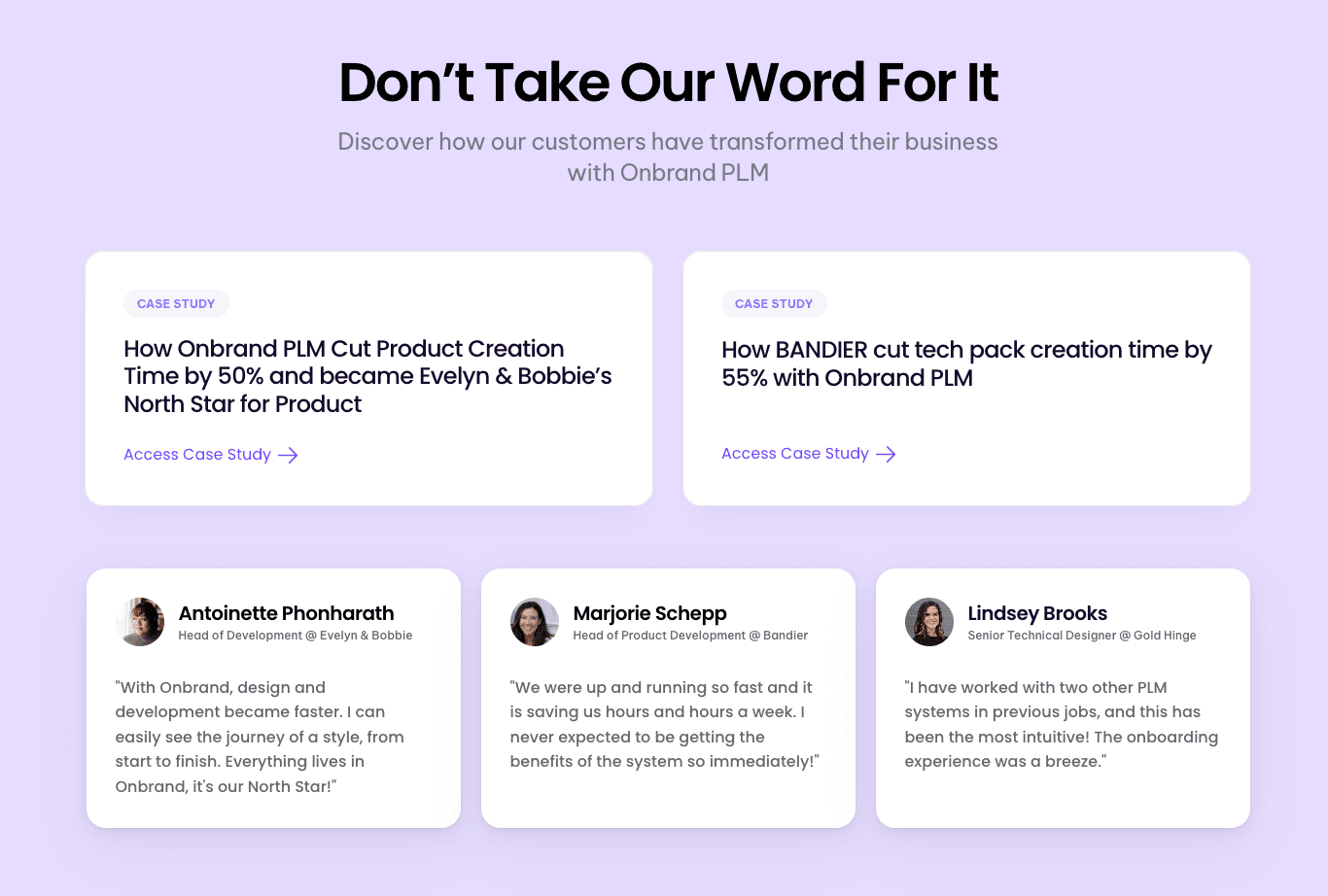
The results are reflected in customer feedback, too. Evelyn & Bobbie said Onbrand became its “North Star” for product, and Bandier reported a 55% reduction in tech pack creation time. Gold Hinge also called it the most intuitive PLM they had used.
Put PLM Benefits Into Practice With Onbrand PLM
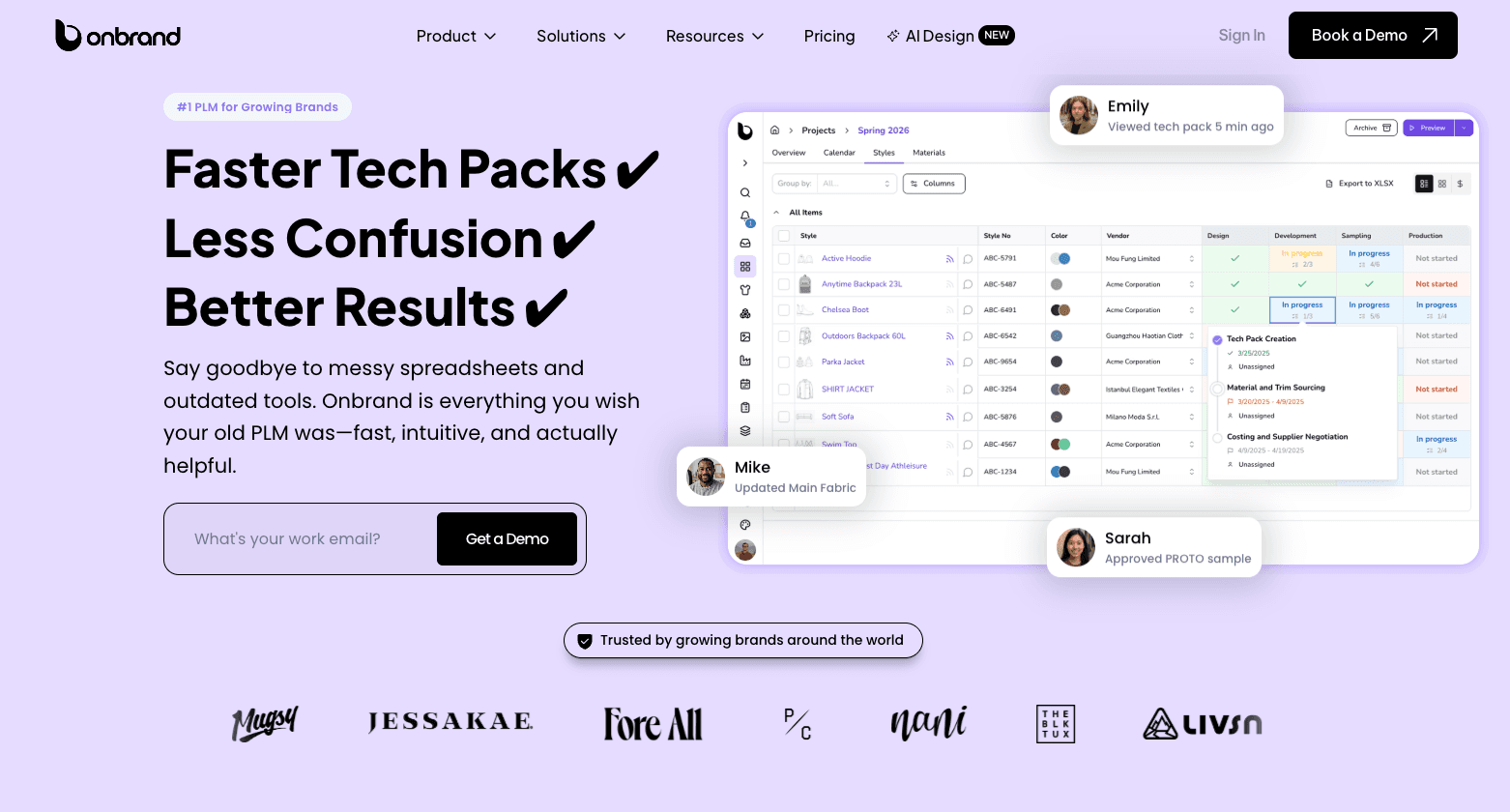
Product development gets easier to manage when teams stop working from scattered information. Work moves forward with fewer interruptions, and updates stay clear from one stage to the next.
Onbrand PLM supports that shift by keeping product data, workflows, and communication in one place. Teams can stay focused on building products instead of tracking changes or fixing errors.
FAQs About the Benefits of PLM
When do fashion teams need PLM?
Teams need PLM when the product development process becomes hard to manage due to growth in styles, revisions, and vendors. PLM supports product data management from the initial concept to the final product, so teams can keep work aligned and avoid delays.
How is PLM different from spreadsheets or shared drives?
Spreadsheets and shared drives store files, but do not connect to updates. PLM enables teams to manage product data in one system, so design and engineering teams stay aligned. It also supports product quality management by keeping updates clear and consistent.
How does PLM support product development decisions?
PLM gives teams visibility into every change that affects a planned product. Teams can track updates, review history, and make decisions that support product engineering and align with the brand’s business strategy. This creates a comprehensive approach to managing development. With fewer delays and better visibility, teams can also market faster with more confidence.
What features should teams expect from modern PLM solutions?
Modern PLM systems include advanced features for managing product data, workflows, and collaboration. These systems help teams stay organized and improve decision-making. Some platforms also use machine learning to support faster and more accurate updates.