Mar 20, 2026

Product lifecycle management (PLM) software is a centralized system that manages product data, development workflows, and documentation throughout the entire product lifecycle.
Teams start evaluating reliable PLM software solutions when SKU counts rise, tech pack versions conflict during sample rounds, or suppliers reference outdated bills of materials (BOMs). Spreadsheets struggle to support structured product data and formal change management.
Reliability in PLM means stable system performance, clear version control, structured records, and a vendor with long-term roadmap continuity.
PLM supports industries such as fashion, manufacturing, aerospace, consumer goods, and medical devices, where product development processes require tight documentation and audit trails.
This article outlines the seven most reliable PLM software providers based on operational use cases and industry fit.
TL;DR
The most reliable PLM software in 2026 depends on your industry:
Onbrand PLM: Best and most reliable PLM for fashion and apparel brands
Siemens Teamcenter: Best for complex, large-scale industrial manufacturing
Arena PLM: Best for high-tech and electronics manufacturers
Oracle Fusion Cloud PLM: Best for large enterprises with heavy compliance requirements
Windchill PLM: Best for engineering-driven, multi-CAD environments
Propel PLM: Best for companies operating within the Salesforce ecosystem
Autodesk Fusion Manage: Best for cloud-native and mid-market product teams
What Makes a PLM Provider Reliable in 2026
Reliable product lifecycle management software starts with system stability.
Teams rely on a centralized system that stays responsive during peak release cycles, large data uploads, and enterprise resource planning (ERP) tool syncs. Consistent uptime protects project management timelines and prevents manual workarounds that introduce errors.
Clear version control is equally important. Distributed product development teams need structured document control, traceable audit logs, and disciplined change management tied to technical specifications and product-related data.
Without that structure, reducing errors becomes difficult and quality control suffers.
Industry-specific data models define another key strength. PLM systems built to manage complex assemblies, regulatory requirements, or detailed product management workflows better support the entire lifecycle and ensure compliance without forcing heavy customization.
Vendor continuity also matters. Reliable PLM vendors demonstrate a stable roadmap, regular bug fixes, advanced integration capabilities with existing workflows, and strong customer feedback from enterprise adoption.
Long-term reliability depends on both software performance and the company behind the PLM solution.
7 Most Reliable PLM Providers by Use Case
There is no single best PLM software for every industry. Reliability looks different in consumer goods, aerospace, medical devices, fashion, and industrial manufacturing. Each environment has distinct data structures, compliance requirements, and development pressures.
The providers below are organized by use case so you can evaluate fit based on how your teams actually operate.
1. Onbrand PLM: Best and Most Reliable PLM for Fashion & Apparel Brands
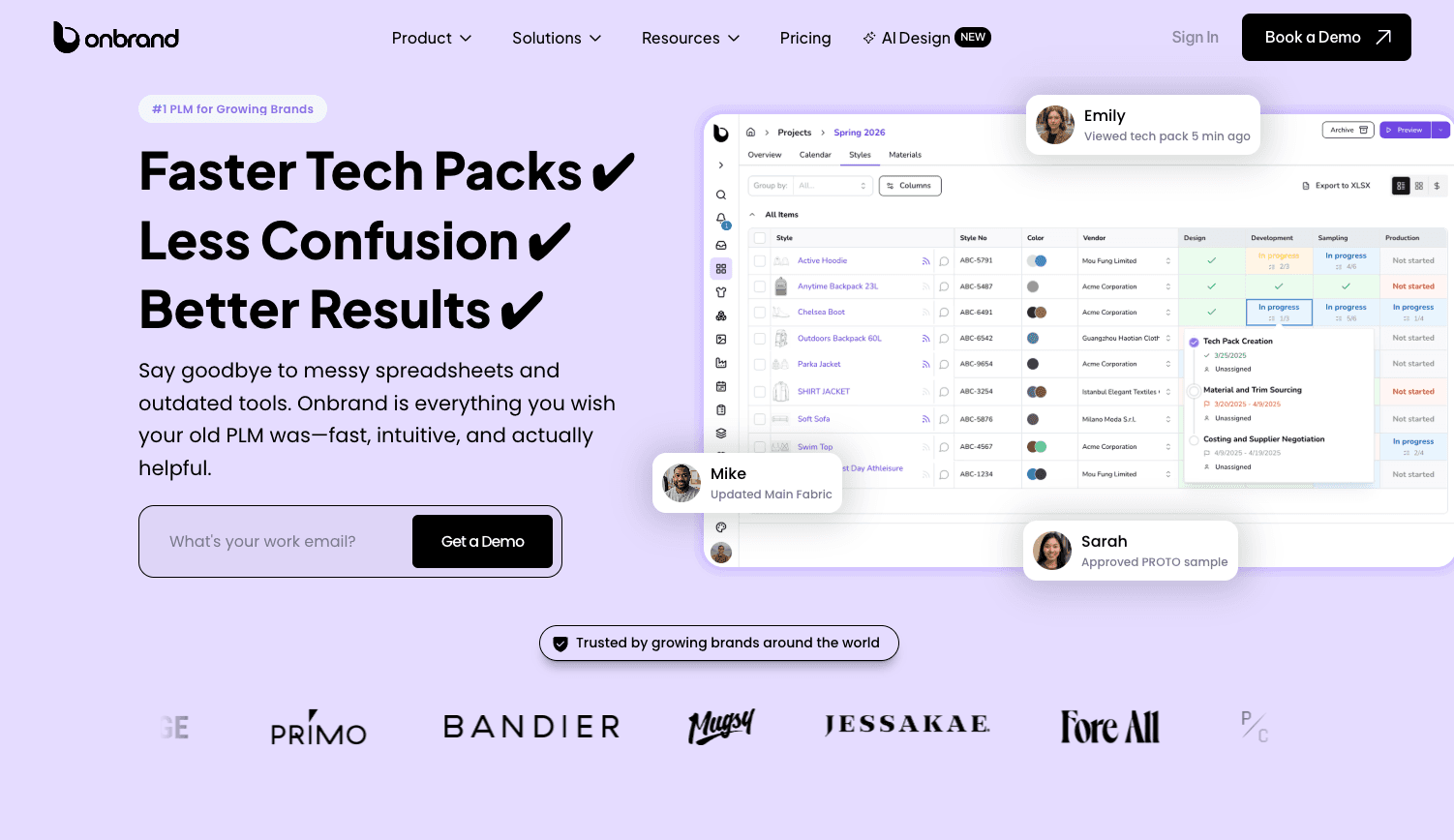
Apparel work breaks when product records live in disconnected files. Tech packs change during every sample round. Colorways multiply. Material decisions shift late. Vendors keep moving, and each handoff creates another version.
Onbrand PLM is built for that reality.
The system keeps each style record structured and current, so design, development, and production teams work from the same source during the full development cycle.
Teams report faster execution without losing control of revisions. Customers cite a ten-day data migration window, two to four weeks to go live, and 55% faster tech pack creation.
Many brands also see development timelines shorten by up to a month, depending on calendar structure and sample complexity.
Key Features
Apparel-native style records with colorways, sizes, materials, and trims in one place
Live tech packs with revision tracking, comments, and approvals tied to the current record
Structured bills of materials and material libraries that reduce duplicate entry and spec drift
Vendor collaboration portals so factories review updates in context, not via email threads
Workflow control for stages, tasks, and time and action calendars
Clear history for what changed, when it changed, and who approved it
Antoinette Phonharath, Head of Development @ Evelyn & Bobbie, shares:
“With Onbrand, design and development became faster. I can easily see the journey of a style, from start to finish. Everything lives in Onbrand, it's our North Star!”
Onbrand also offers Onbrand AI Design, a connected workspace where designers can generate concepts from text, sketches, or reference images, test colorways, build visual line plans, and collaborate live on the same canvas.
Instead of exporting files back and forth, approved concepts flow directly into PLM as structured style records, assets, and early tech pack data, so design exploration moves into development without rework or version confusion.
2. Siemens Teamcenter: Best for Complex, Large-Scale Industrial Manufacturing
Source: siemens.com
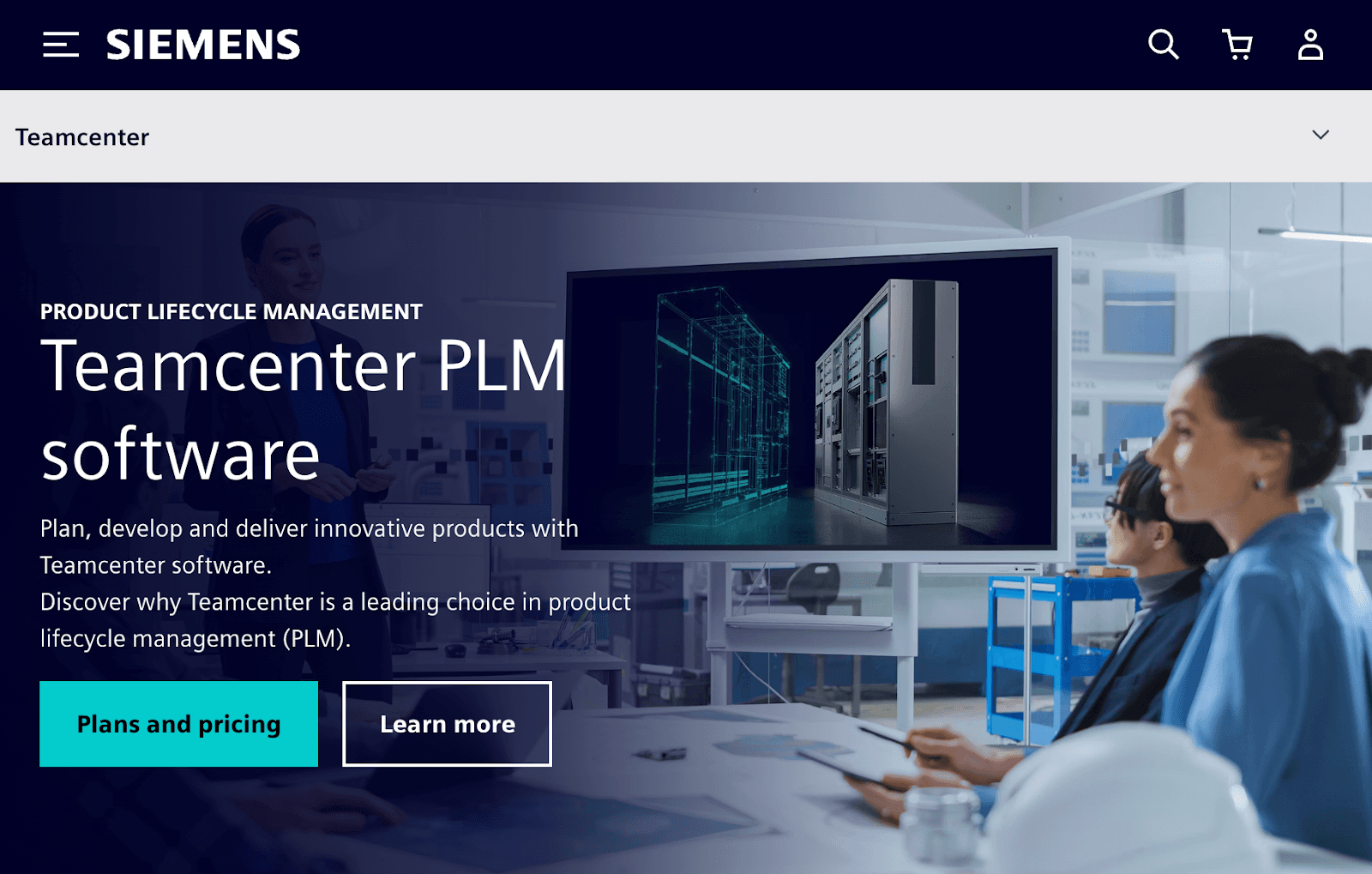
Siemens Teamcenter is an enterprise PLM platform used in aerospace, automotive, defense, and other industrial sectors that manages complex assemblies and long product lifecycles.
It supports structured control of engineering data, configuration management, and formal change processes in global teams.
Organizations with high part counts and strict compliance requirements often evaluate Teamcenter among leading PLM software options due to its depth of integration and governance capabilities.
It is available on-premise or as a SaaS platform (Teamcenter X), depending on IT requirements.
Key Features
Multi-level assembly and configuration management
Engineering change management with controlled workflows
CAD/CAM integration through major engineering systems
Digital twin and digital thread support
Enterprise deployment models with advanced customization options
3. Arena PLM: Best for High-Tech and Electronics Manufacturers
Source: arenasolutions.com
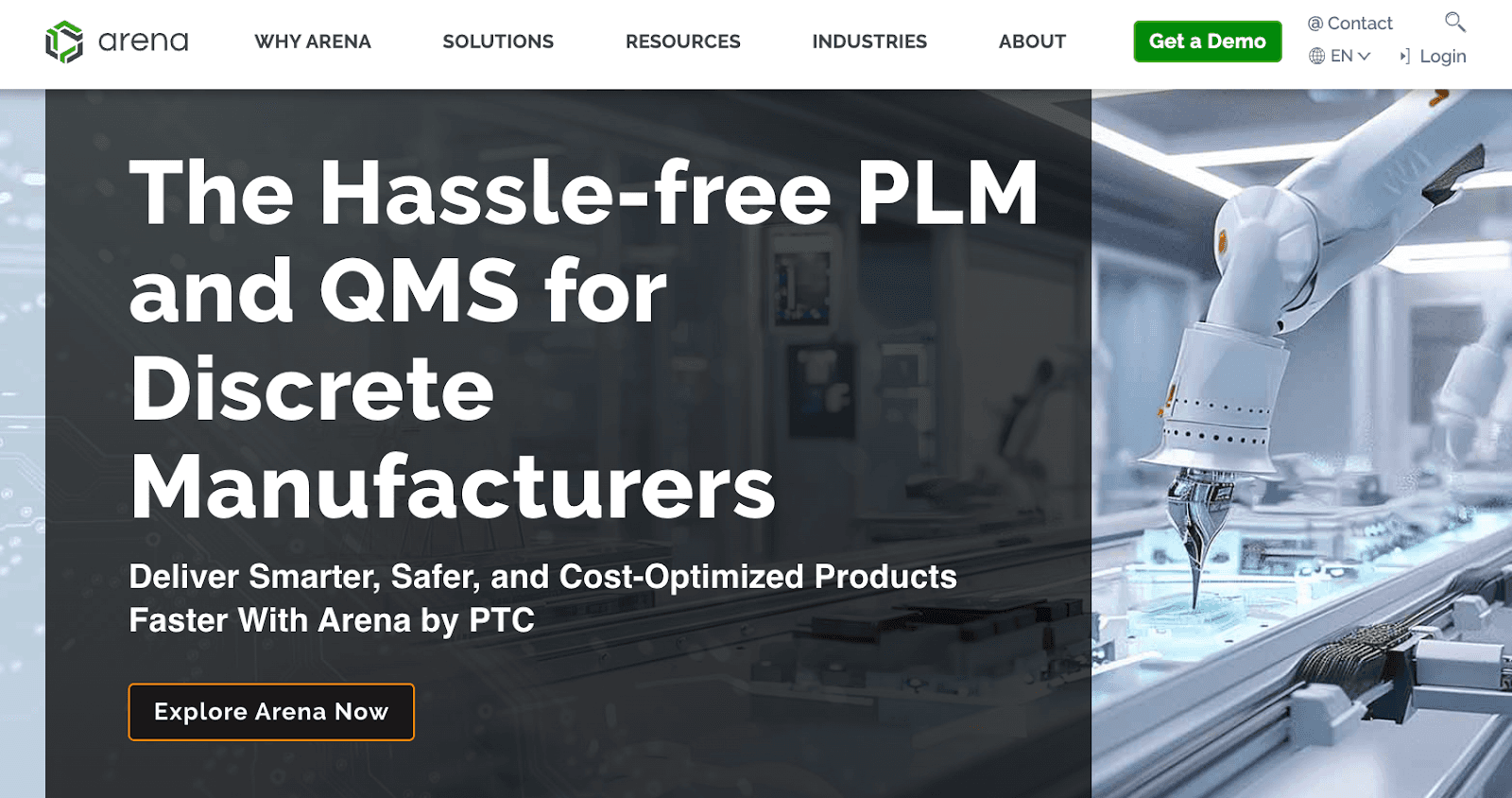
Arena PLM by PTC is a cloud-native platform designed for discrete manufacturers, particularly in electronics and high-tech industries.
It combines product lifecycle management with a connected quality management system (QMS), supporting companies that manage frequent component changes, supplier coordination, and regulatory requirements.
Teams evaluating hardware-oriented reliability often consider Arena for its structured control of BOMs, revision history, and compliance documentation.
Its SaaS delivery model supports distributed engineering and supply chain collaboration without on-premise infrastructure.
Key Features
Cloud-native BOM management with controlled component revision tracking
Engineering change workflows with full audit history
Integrated QMS for compliance and corrective action processes
Supplier and contract manufacturer collaboration tools
Configurable dashboards and customizable workflows for new product introduction (NPI) and production
4. Oracle Fusion Cloud PLM: Best for Large Enterprises With Heavy Compliance Requirements
Source: oracle.com
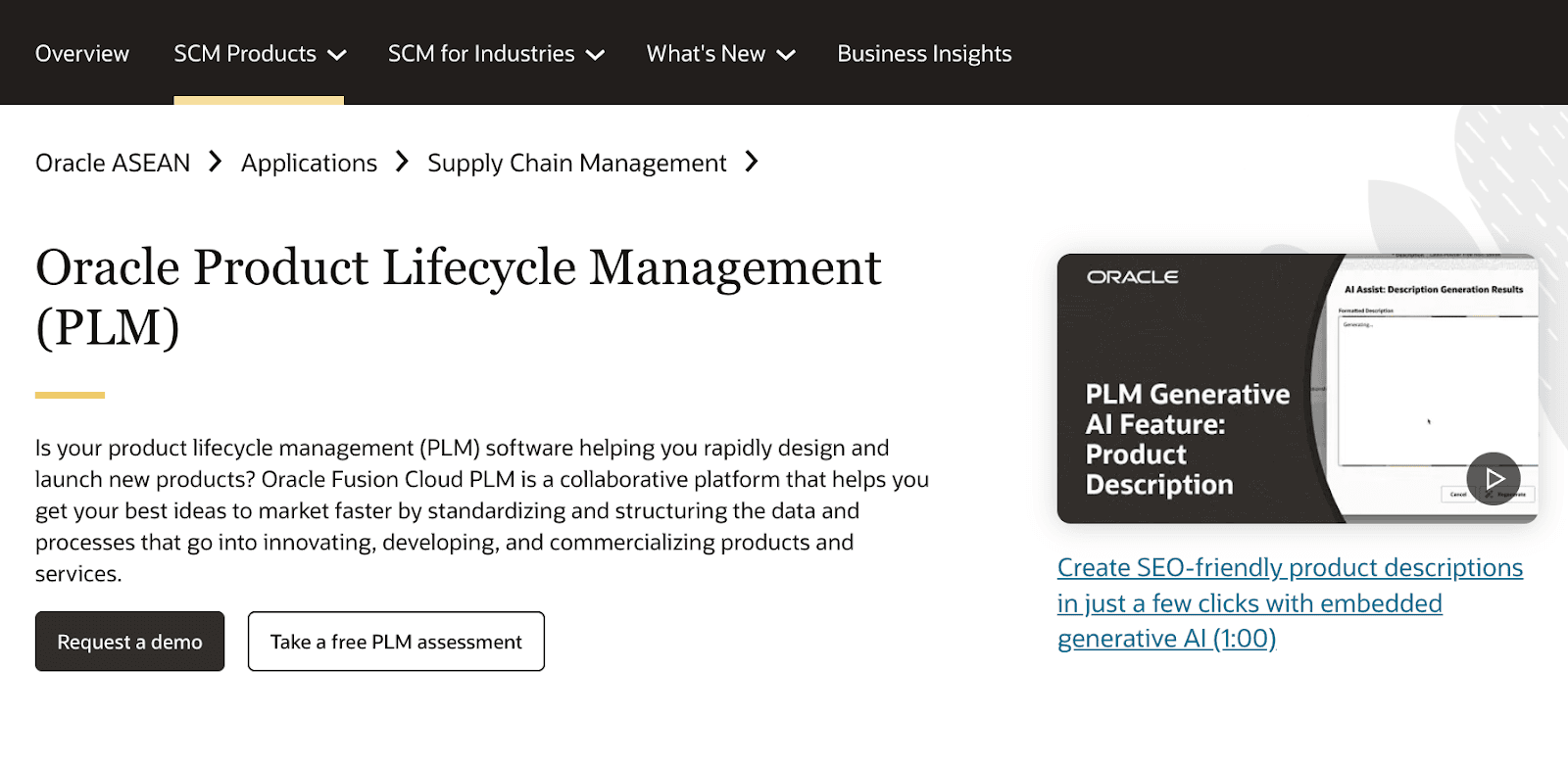
Oracle Fusion Cloud PLM is an enterprise platform designed for organizations that require strict regulatory control, formal governance, and deep ERP alignment.
It supports global manufacturers that manage complex product structures, documentation standards, and quality processes in multiple business units.
Companies in regulated industries such as medical devices, industrial manufacturing, and high-tech evaluate Oracle for its structured enterprise product record and compliance-driven controls.
The system connects product data with supply chain and ERP systems within the broader Oracle Cloud environment.
Key Features
Centralized regulatory documentation and product record management
Structured audit trails with controlled revision history
Formal engineering change governance and approval routing
Native integration with Oracle ERP and supply chain applications
Support for quality management and innovation management workflows
5. Windchill PLM: Best for Engineering-Driven, Multi-CAD Environments
Source: ptc.com
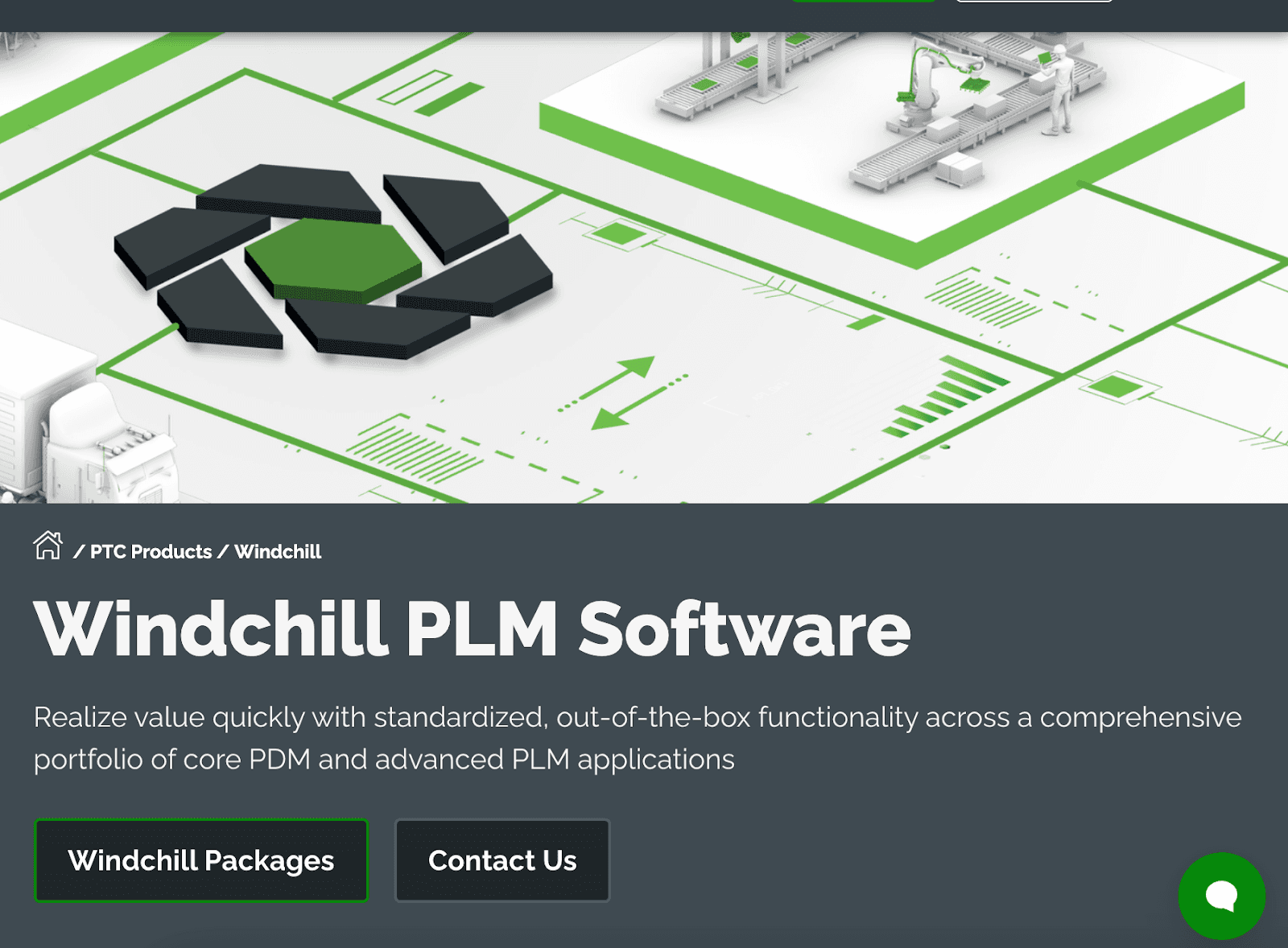
Windchill PLM by PTC is an enterprise PLM platform designed for engineering-led organizations that manage complex products and multi-CAD environments.
It supports structured product data management, configuration control, and formal change processes in global teams.
Manufacturers in automotive, aerospace, industrial equipment, and electronics use Windchill to connect engineering, manufacturing, and supply chain systems within a single digital thread.
The platform is available on-premise and in cloud deployments, including Windchill+. Teams evaluating reliability often consider Windchill for its governance depth and integration with ERP and other enterprise systems.
Key Features
Multi-CAD data management with version and configuration control
Engineering change management with traceable workflows
Advanced BOM management with structure comparison and redlining
Enterprise system integrations, including ERP connectivity
Modernized user interface with role-based access and visualization tools
6. Propel PLM: Best for Companies Operating Within the Salesforce Ecosystem
Source: propelsoftware.com
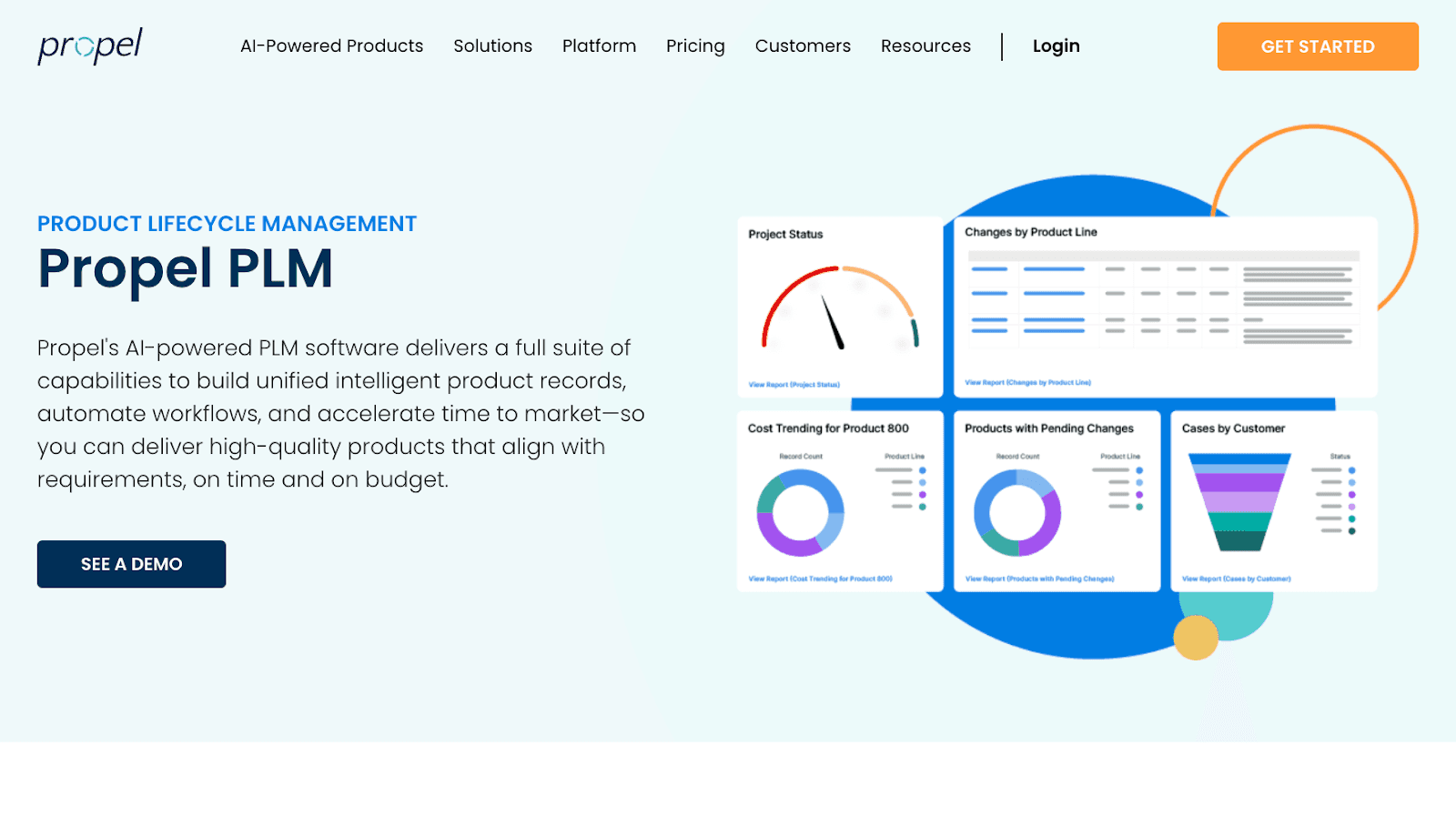
Propel PLM is a cloud-native platform built on Salesforce, designed for product companies that want product, quality, and commercial data connected within the same environment.
Organizations already using Salesforce for CRM often evaluate Propel to unify engineering change, supplier management, and customer-facing data in one system.
It supports new product development, BOM control, and formal change processes while extending visibility to sales and service teams.
For companies prioritizing cross-functional alignment between product and revenue operations, Propel positions PLM inside a broader business system rather than as a standalone tool.
Key Features
BOM management with revision comparison and redlining
Engineering and manufacturing change management workflows
Supplier management with approved vendor tracking
Project management dashboards and real-time analytics
Native Salesforce architecture with a role-based user-friendly interface
7. Autodesk Fusion Manage: Best for Cloud-Native and Mid-Market Product Teams
Source: autodesk.com
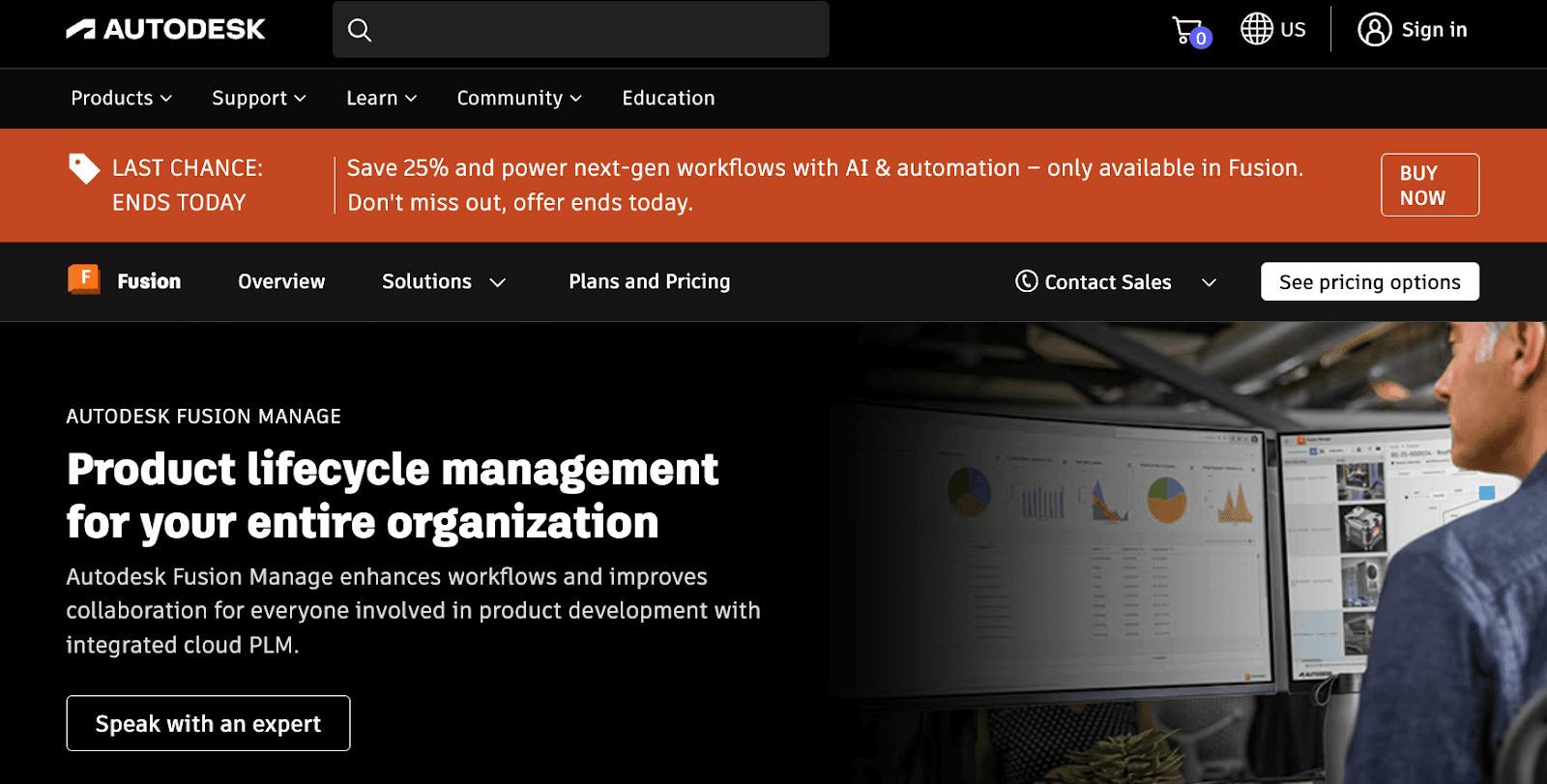
Autodesk Fusion Manage is a cloud-based PLM solution designed to connect product data, change processes, and cross-functional workflows within one system.
It targets mid-market and growth-oriented product teams that want configurable lifecycle management without heavy on-premise infrastructure.
The platform supports BOM control, change and release management, supplier collaboration, and quality processes within a single cloud environment.
Teams evaluating reliability often look at Fusion Manage for its structured workflows, real-time data access, and integration capabilities with ERP and other enterprise systems.
Key Features
Collaborative BOM management with real-time multi-user editing
Change and release management with full traceability
Supplier collaboration with controlled external access
Quality management workflows, including CAPA and NCR tracking
Configurable dashboards and administrative tools within a user-friendly interface
How to Evaluate PLM Reliability Before You Buy
Evaluating PLM reliability should start with system performance.
Ask for documented uptime history and review the deployment architecture. Understand hosting structure, data storage practices, and how the platform supports comprehensive product lifecycle management without slowing project management cycles.
Next, examine how the system structures version control. Review how teams manage product data, lock revisions, and track changes within design workflows. Clear governance reduces manual work and protects product quality.
Request direct access to audit logs. Confirm how the platform stores and retrieves compliance management records. Security certifications should align with your business needs, especially if you handle regulated documentation.
Study the product roadmap and release cadence. Frequent updates should address usability challenges, support configurable workflows, and reflect real customer feedback.
Finally, speak with industry-specific references. Ask what users report about onboarding new users, the steep learning curve, and how the platform supports team collaboration in real production environments.
When PLM Reliability Becomes a Revenue Risk
Reliability issues rarely appear during early growth. Risk increases when SKU expansion outpaces system structure. More styles, materials, and revisions raise the chance of version mistakes that lead to incorrect production runs, write-offs, and margin erosion.
Overlapping development cycles add pressure. Teams need real-time collaboration and disciplined change control to protect launch calendars. Weak controls delay approvals and slow your ability to accelerate innovation in response to market trends.
Vendor communication breakdowns create cost exposure. Outdated specs or misaligned BOMs result in rework, chargebacks, and strained factory relationships.
ERP integration errors create reporting gaps and invoice discrepancies. Finance teams spend hours reconciling data instead of focusing on cost control.
Compliance exposure carries direct financial penalties in regulated industries.
Many leaders search for the right PLM software to reduce costs and protect growth. Reliability is not a feature comparison exercise. It protects revenue, product quality, and launch predictability.
Choose Onbrand: A Reliable PLM Built for the Fashion Industry
PLM reliability is not a universal standard. It depends on what you build, how your teams collaborate, and how complex your product records become over time.
Engineering-led manufacturers need deep configuration control, formal change governance, and tight ERP alignment. Fashion and apparel brands face a different challenge.
They manage fast seasonal cycles, colorway expansion, frequent sample revisions, and global vendor coordination. A system built for industrial assemblies does not always translate cleanly to style-driven development.
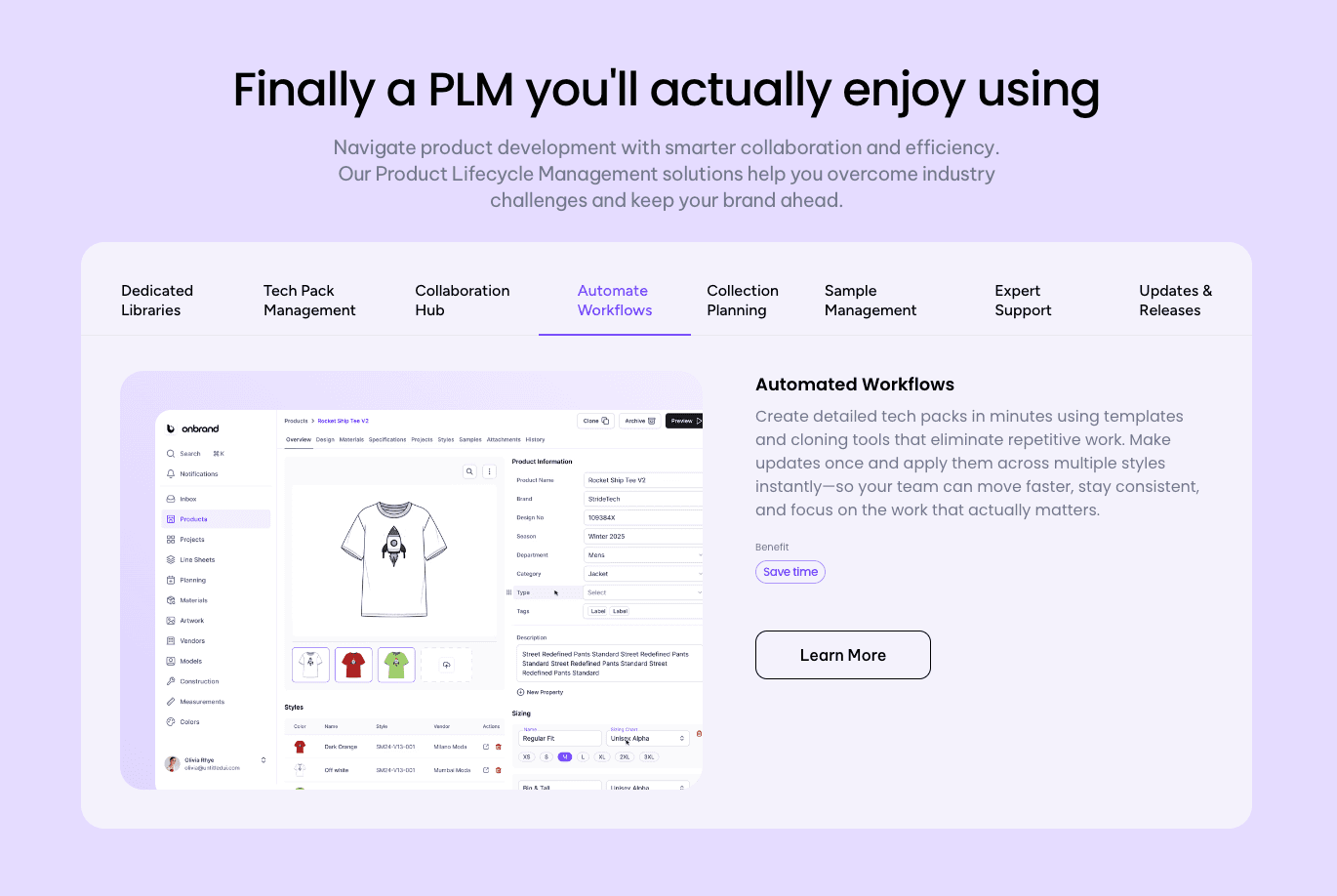
Apparel brands require structured development records that reflect how collections actually move from concept to production. Live tech packs, disciplined BOM control, and clear revision history matter more than repurposed manufacturing workflows.
Onbrand PLM brings that structure into one connected system. Paired with Onbrand AI Design, it links AI-driven concept exploration with organized PLM records, so approved styles move directly into production-ready tech packs without version confusion or manual handoffs.
FAQs About Most Reliable PLM Software Providers
Which PLM software is best?
The best PLM software depends on your industry and product complexity. Large manufacturers often choose Siemens Teamcenter or Windchill PLM for advanced features and strict change control.
Apparel brands scaling SKU counts often choose Onbrand PLM for live tech packs, BOM structure, and vendor collaboration. Users note that reliability improves when the system enforces version control and structured product records.
What is the leading PLM software for large-scale manufacturers?
Leading PLM systems for large-scale manufacturers include Siemens Teamcenter, Windchill PLM, and Oracle Fusion Cloud PLM. These platforms support complex assemblies, formal change governance, ERP integration, and regulatory documentation.
Mid-market tools may feel limited compared to these enterprise systems in highly regulated environments.
What’s the best PLM tool for tech startups?
For tech startups, the best PLM tool depends on the product category. Hardware startups often choose cloud-native systems that support BOM control, change management, and supplier coordination without heavy infrastructure.
Fashion tech startups and digitally native apparel brands often prefer platforms like Onbrand PLM, which manage live tech packs, structured style records, and vendor collaboration in one system. If the product involves regulatory compliance or complex components, founders should prioritize clear version control, audit history, and scalable data structure from the start.