Fashion product development is no longer driven by sketches, spreadsheets, and long sampling cycles alone. As collections grow more complex and timelines tighten, brands are turning to technology to bring structure, speed, and clarity to every stage of the process.
From AI-assisted concept creation to connected product data and real-time collaboration, modern tools are reshaping how ideas move from initial inspiration to bulk production.
The shift is not just about innovation. It is about reducing risk, protecting margins, and building scalable systems that support growth.
Here are ten fashion technology trends redefining product development today.
TL;DR
Fashion technology trends in product development center on AI-driven design, 3D sampling, integrated PLM systems, connected data, and end-to-end visibility to reduce errors, speed timelines, and protect margins.
AI tools help teams validate concepts early, explore variations faster, and reduce unnecessary physical samples before development begins.
Modern PLM platforms act as a single source of truth, centralizing tech packs, BOMs, materials, revisions, and vendor communication.
3D design, digital sampling, connected material libraries, and structured revision tracking improve accuracy, sustainability, and cross-team collaboration.
Onbrand connects AI-powered design with structured development, helping teams move from concept to tech pack without file chaos.
1. AI-Assisted Concept Creation in Early Design
Artificial intelligence now plays a serious role at the start of your design calendar. Instead of developing one concept at a time, you can test multiple silhouettes, color stories, and even complex shapes in minutes using modern AI tools.
Many fashion companies and growing apparel brands use AI-driven design tools to explore variations before committing to fabric, trims, or patterns. You move from idea to visual clarity faster, which shortens internal debates and removes guesswork before sampling begins.
Clear early direction improves product consistency and supports long-term brand loyalty. You avoid mid-season pivots because you validated the concept upfront.
Fewer unnecessary physical samples reduce material waste and give you tighter control over timelines. You protect the margin before production starts.
AI delivers the most value when concept exploration connects to structured product development. Platforms like Onbrand AI Design help you narrow direction early and move into tech pack creation without restarting the process.
2. PLM Becoming the System of Record for Product Data
Product complexity increases faster than most internal systems can handle, especially as you introduce more styles, colorways, and vendors each season.
When tech packs live in spreadsheets and approvals sit in inboxes, small errors turn into costly delays. A change in fabric properties or a measurement update can move forward without full visibility, which pulls you back into manual processes that waste time and create confusion.
A structured fashion PLM platform replaces scattered files with a single, controlled environment.
As part of modern fashion tech, it brings product records, the bill of materials (BOM), comments, and approvals into a single source of truth. You manage revisions inside one style history instead of chasing versions across folders.
Modern specification management gives you tighter control before samples reach the factory. These advanced tools reduce rework during development and limit preventable mistakes in production processes.
Platforms like Onbrand PLM centralize your workflow so product data stays aligned from concept through vendor handoff. Strong structure at this stage protects timelines, margins, and product quality, enabling brands to grow without losing visibility.
Book a demo with Onbrand and learn how the platform can elevate your product development.
3. 3D Design and Digital Sampling as Standard Practice
Physical samples used to be the only way to validate a design. Now you can review proportion, fit, and fabric behavior, including performance details for smart fabrics, through detailed 3D models before cutting material.
Tools built around digital twins allow you to evaluate advanced categories such as smart clothing earlier in the development calendar and catch issues before they reach the supply chain, which strengthens your digital fashion workflow before physical sampling begins.
That shift changes how you manage sampling. You reduce dependency on multiple physical rounds and shorten feedback cycles between fashion design, development, and vendors. Clear visual references improve alignment and limit preventable mistakes.
Digital sampling also supports sustainable fashion goals. Fewer unnecessary prototypes mean less material waste and lower development costs.
Some brands extend these assets into virtual fitting rooms or early virtual try-ons, often supported by augmented reality, to gather feedback from their target audience while product decisions remain flexible.
Earlier validation protects your timeline, strengthens production confidence, builds consumer confidence, and gives you a measurable competitive edge during development.
4. Connected Material and Trim Libraries
Material details create problems when they live in separate files. A wrong dye code or an outdated trim reference can delay sampling and confuse your supply chain. When you link fabric libraries directly to each style, you keep every colorway, trim, and component aligned inside the BOM.
You update a fabric once, and the change reflects everywhere it applies. You remove guesswork for vendors and reduce back-and-forth during development. That clarity helps you respond to shifting fashion trends without having to rebuild documentation from scratch.
Connected libraries also support sustainable fashion goals because you track usage more accurately and move closer to reducing waste. Clear material records improve costing, strengthen inventory management, and give you better control before production begins.
When material data stays structured, you protect timelines and maintain consistency from concept to bulk order.
5. Real-Time Revision Tracking for Fashion Brands
Revisions create risk when you track them in email threads and scattered files. A small measurement update can shift fit for different body types and delay approvals if someone works from the wrong version.
When you log changes in one structured system, you keep every update tied to the product record.
You can see who made the change, when they made it, and why it happened. Clear approval stages guide moves from design to development to sourcing without confusion. Strong tracking supports a data-driven approach that keeps decisions documented instead of debated.
Fewer missed updates protect timelines and support sustainability efforts by limiting rework and unnecessary samples. You can reduce errors before they reach vendors and avoid last-minute corrections that impact cost and quality.
Clean revision control helps you stay competitive in the apparel industry because you move forward with confidence instead of uncertainty.
6. Data-Led Collection Planning
Collection planning works better when you ground it in real numbers instead of instinct. Review past sell-through, returns, and margin by category before locking the style count. That habit helps you align new development with actual consumer preferences instead of assumptions.
Check out which fits drive repeat purchases and which categories weaken customer loyalty. Adjust depth early and avoid overbuilding slow sellers. Clear performance insight also supports stronger customer satisfaction because you deliver a product that your target audience already responds to.
A structured review process helps you stay ahead of short-lived fashion tech trends without chasing every signal. You protect margin and reduce excess production by validating direction before materials move into bulk.
When you base assortment decisions on performance data, you reduce risk and create flexibility for new business models such as limited drops or test capsules.
7. Circular Design Integrated Into Development Workflows
Sustainability goals only work when they live inside your product files. If you track fiber content and certifications outside your core workflow, details get lost before production starts.
When you record material composition directly in the bill of materials, you document decisions while development moves forward.
Attach supplier certifications to the product record and keep documentation ready before placing bulk orders. Clear records help you support environmental impact reporting and document ethical practices without extra administrative work later.
Structured tracking also reduces rework and supports minimal waste because you validate material choices early. You can improve transparency within your process and prepare for growing ethical considerations in the market.
Circular thinking becomes practical when it connects directly to product data instead of sitting in a separate report.
8. Integration Between PLM and ERP Systems
Even if you create clean product data during development, problems can arise when someone retypes it into the enterprise resource planning (ERP) system. Manual re-entry invites mistakes in sizing, costing, or vendor details, and those errors surface later in production or purchasing.
When your PLM connects directly to ERP, approved product data flows forward without duplication. Style names, size ranges, materials, and cost breakdowns stay consistent from development into order management. You can protect accuracy before inventory decisions begin.
Stronger integration supports smoother coordination between product and operations, which helps you deliver a more consistent shopping experience in both traditional retail and digital channels.
Clean data also strengthens reporting that informs planning and supports more personalized shopping experiences.
Connected systems remove unnecessary friction and give you tighter control from concept through fulfillment without extra administrative work.
9. AI-Powered Trend and Market Analysis
You no longer need to rely only on intuition when setting direction for the next season. AI fashion tools now support analyzing consumer behavior and identifying shifts in customer preferences before you move into the sketch phase.
Review sell-through data, search signals, and engagement patterns to see what customers actually respond to and use that insight to inform personalized recommendations in future collections.
Stronger insight shortens the gap between market signals and product decisions. You can adjust silhouettes, price points, or materials earlier in development instead of correcting direction after sampling.
Tools powered by machine learning help surface patterns that would take weeks to uncover manually.
Clearer insight also supports stronger customer engagement because your collection reflects real demand rather than assumptions. When you ground early design choices in structured data, you reduce risk and build future designs with more confidence.
10. End-to-End Product Visibility Across Teams
Growth makes visibility harder. You juggle tech packs, sample status, vendor comments, and cost updates while deadlines tighten. Without clear tracking, small delays stack up and create confusion before production begins.
When you manage milestones inside one structured system, you see exactly where each style stands from concept to bulk order. Shared dashboards give design, sourcing, and production the same view of progress. You can catch bottlenecks early and adjust before they affect launch dates.
Stronger visibility helps you respond faster to shifting consumer demands while enhancing customer experiences through better launch timing. Clean oversight also supports better planning for both digital and physical retail, which protects launch timing and improves sell-through.
Clear product control builds confidence internally and externally because you move forward with fewer surprises and stronger coordination at every stage.
Modern Product Development in the Fashion Industry Starts With Onbrand!
Fashion technology trends in product development point to a clear pattern. You need better validation before sampling and stronger control once development begins. Concept clarity and structured execution now define how modern product teams operate.
Onbrand supports both stages with Onbrand AI Design and Onbrand PLM.
Onbrand AI Design
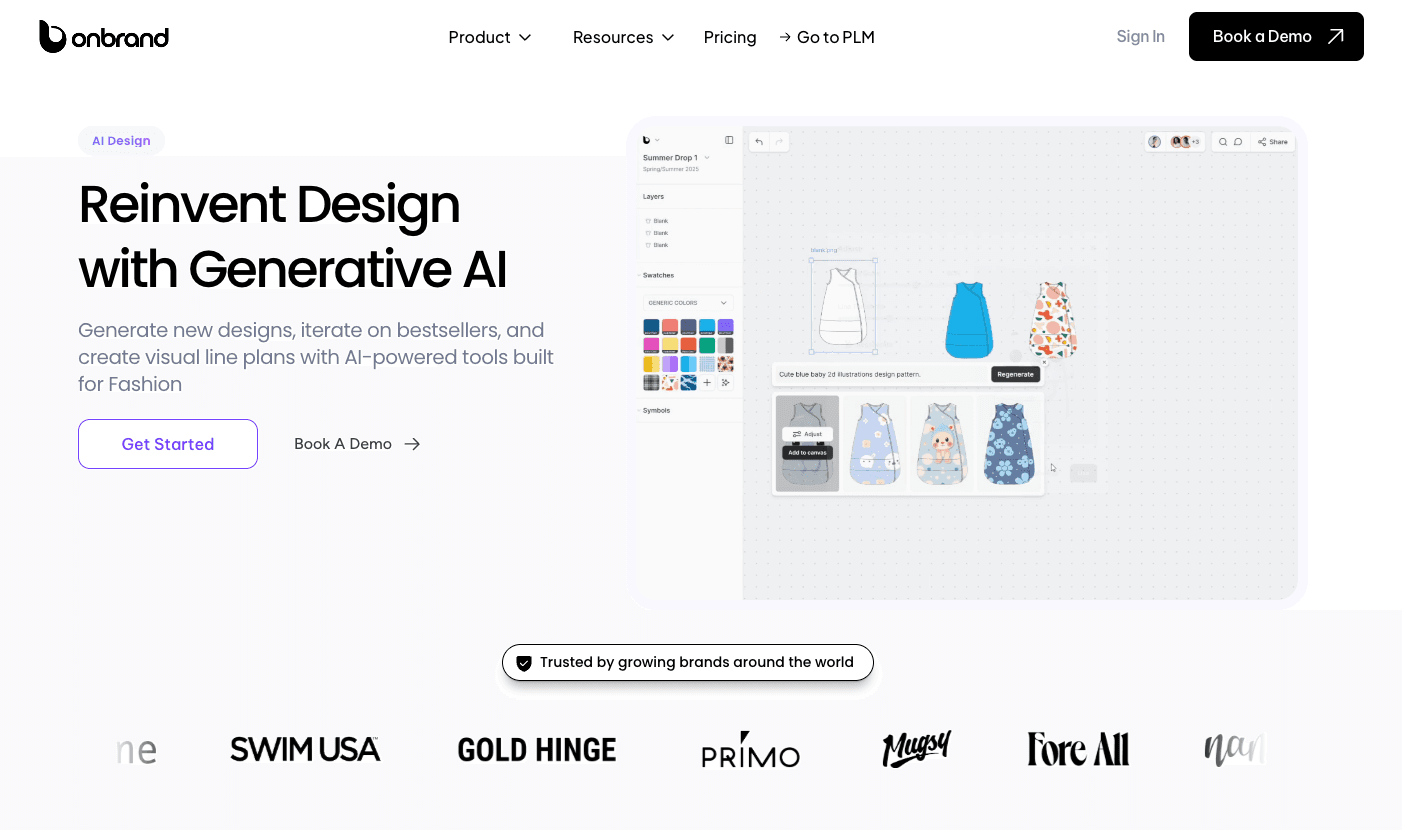
Onbrand AI Design helps you move from idea to usable visuals without waiting through long sketch cycles.
You can generate photoreal design options from a text prompt, a hand sketch, or a reference image. You can also test colorways, simulate fabric texture, and preview garments on different body types before committing to materials.
Onbrand AI Design keeps creative work organized. Mood boards, layered design elements, version history, and live collaboration keep feedback attached to the design instead of buried in email threads. You can create direction early and move into development with clarity rather than assumptions.
Onbrand PLM
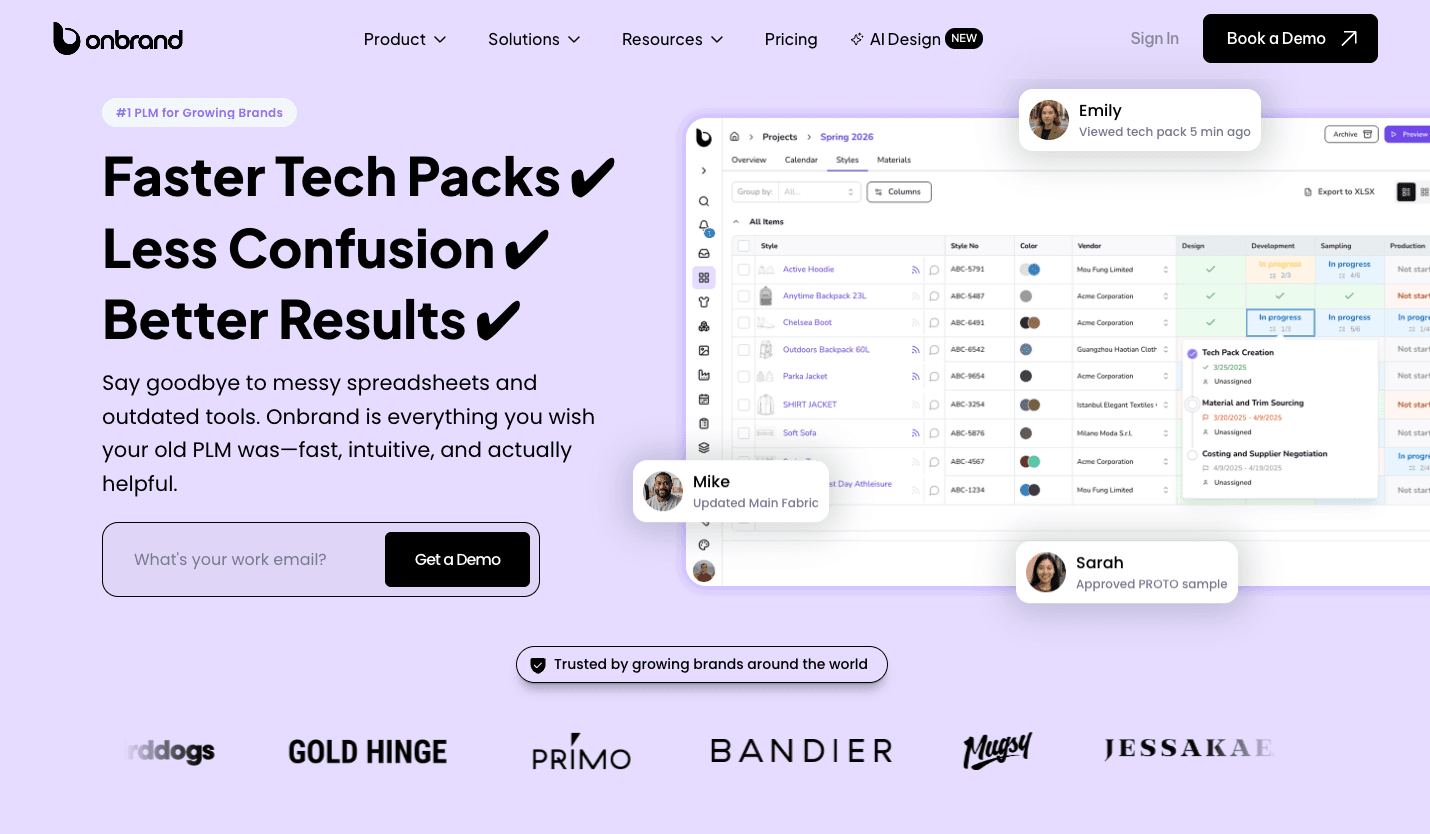
Once a concept moves forward, Onbrand PLM becomes your system of record. You can manage tech packs, materials, bills of materials, approvals, and vendor comments in a single, structured platform.
Live web-based tech packs remove version confusion because everyone works from the same source.
Use it to configure stages, tasks, and approvals to match your process instead of adapting to rigid legacy software. Vendors collaborate directly on the style record, which reduces manual file handoffs and keeps communication tied to the product.
Design to Development Without File Chaos
Onbrand works best when concept creation and fashion product development stay connected.
You generate and refine visuals in Onbrand AI Design, then send approved concepts directly into Onbrand PLM. Palettes, references, assets, and revisions stay aligned with the style record from first idea through production.
You gain speed in design and control in development without adding complexity to your workflow.
FAQs About Fashion Technology Trends
What is the 3-3-3 rule in fashion?
The 3-3-3 rule in fashion is a styling guideline that suggests creating three outfits using three core pieces and three accessories. It is often used to encourage versatility and intentional wardrobe planning. The rule is primarily used by consumers and stylists rather than as a formal product development framework.
What are some current trends in fashion technology?
Current fashion technology trends include AI-supported design tools, 3D digital sampling, integrated PLM systems, and data-driven assortment planning. These technological advances help brands validate concepts earlier, reduce physical samples, and connect product data from design through production. Many brands also use digital assets to improve in-store experiences and online visualization before styles reach bulk production.
How is technology changing the fashion industry?
Technology is changing the fashion industry by creating a seamless blend between creative design and structured product development. Brands now use digital prototypes, connected product records, and AI-driven analysis to improve accuracy and reduce delays. These tools are especially important for luxury goods, where precision in materials, revisions, and approvals directly impacts product value and brand reputation.