Jul 31, 2026

AI is rapidly becoming an essential part of how clothing brands design, develop, and sell products.
What once felt experimental now supports everyday decisions around concepts, materials, production, forecasting, and merchandising.
For brands exploring AI in the clothing industry, the value goes beyond speed. AI helps designers explore more ideas, product teams review information faster, and brands make better decisions before styles move into production.
Still, AI does not replace fashion expertise or human judgment. Its value depends on where it fits, the quality of the data behind it, and how well it supports existing workflows.
This guide explains where AI is used throughout the clothing industry, its practical benefits and limitations, and what brands should consider before adopting it.
TL;DR
AI supports clothing brands during design, product development, material review, forecasting, manufacturing, merchandising, and retail.
Common uses include generating clothing concepts, comparing revisions, forecasting demand, inspecting defects, and organizing product information.
AI supports professional judgment but does not replace designers, product developers, planners, or quality teams.
Onbrand connects AI-assisted design with PLM, so approved concepts can continue into tech packs, approvals, vendor collaboration, and production preparation.
How Does AI Affect the Clothing Industry?
AI in the clothing industry refers to the use of artificial intelligence to support decisions and tasks throughout the apparel industry.
Instead of following fixed rules like traditional automation, AI models are trained on data to recognize patterns, make predictions, generate designs, or recommend actions.
Many AI tools rely on machine learning, AI algorithms, and other AI systems to analyze information that would normally require human intelligence or professional judgment.
Depending on the task, they can process product data, generate clothing concepts, identify trends, or assist with planning and decision-making.
Unlike people, AI does not rely on creativity or human reasoning alone. It works by identifying patterns from the information it receives. That is why the quality of the data and human oversight remain important.
As AI in the fashion industry continues to mature, more clothing brands are using it to support design, product development, manufacturing, and other parts of the product lifecycle while keeping designers and product teams in control of final decisions.
How AI Is Used Throughout the Clothing Industry
AI supports many stages of clothing development, from the first design idea to the final product sold online or in stores. The different ways AI is used depend on the workflow, the information available, and the decisions each team needs to make.
The following examples show how clothing brands apply AI throughout the product lifecycle.
Using AI in Fashion Design
Every clothing collection begins with a concept, and AI is becoming part of the design process from the earliest stages. Designers use AI to explore creative directions before deciding which ideas move into development.
Generative AI tools can create AI-generated images, generate design variations, test different colorways, create mood boards, and produce technical sketches from text prompts, sketches, or reference images.
Designers often begin with one of these inputs, then review, refine, combine, or discard the generated concepts before selecting the ideas worth developing further.
Platforms like Onbrand AI Design bring these capabilities together in one workspace, allowing fashion teams to design clothes, review concepts, and prepare approved ideas for product development.
Brands can also explore emerging design trends while designers remain responsible for the collection’s creative direction within the fashion world.
Supporting Product Development With AI
Once a design moves into product development, AI supports the next stage of the process.
Teams use AI-powered tools to review concepts, compare revisions, organize feedback, and track approvals as a product takes shape.
Some platforms also use computer vision to compare design images, identify visual differences between versions, or highlight changes for review.
Visual comparison features may rely on deep learning algorithms trained to recognize patterns in images and product data.
These capabilities support concept reviews, revision tracking, and sign-offs, while designers and product developers remain responsible for technical decisions.
AI for Fabric and Material Selection
Choosing the right fabric influences how a garment looks, feels, and performs.
AI can help designers compare material properties, review possible fabric options, and visualize textures before requesting physical samples.
When a system has access to material specifications and production data, it may also help teams examine how different choices could affect fabric waste, resource use, and a product’s environmental impact.
These insights can support reducing waste and saving resources, but they do not replace physical testing or verified sustainability data.
Designers compare digital recommendations with fabric swatches and samples before approving the final material.
Demand Forecasting With AI
Demand forecasting helps clothing brands estimate what customers are likely to buy before products reach the market.
AI supports this process by analyzing historical data alongside changing consumer preferences to estimate future demand. It can also compare current fashion trends with broader market trends to give planning teams additional context.
Many AI platforms combine data analytics with fashion trend forecasting to identify trends that may not be obvious through manual review.
They can also predict trends, support sales forecasting, and assist with inventory planning using information from previous collections and current market activity.
Forecasts are still estimates, not guarantees. Product and merchandising teams review AI-generated insights alongside their own experience because no model can produce accurate predictions every time.
AI in Manufacturing
Once production begins, AI helps manufacturers monitor daily operations and inspect products as they move through the clothing manufacturing process.
It supports production scheduling, tracks production activity, and assists with quality control before finished garments leave the factory.
AI platforms use cameras, sensors, and data collection to perform quality inspection and defect detection. In factories with connected equipment and sensor systems, AI can monitor sewing machines, analyze parts of the sewing process, and flag signs of equipment wear.
AI also supports worker safety by identifying conditions that require attention and assists with repetitive inspection work by enabling automation for specific manufacturing tasks.
Factory managers and quality teams continue to review results and make final production decisions.
Using AI in Merchandising and Retail
After products are ready for sale, AI helps brands organize merchandise and present it to customers through physical stores and online platforms.
It supports inventory management, assortment planning, dynamic pricing, and inventory optimization by analyzing product performance and shopping behavior.
Fashion retailers also use AI to improve the online shopping experience.
AI can generate product descriptions, recommend products based on a shopper's preferences, browsing activity, purchase history, or size information, and power virtual try-ons using augmented reality.
Some systems use natural language processing to understand customer searches and return more relevant product results.
Virtual try-on tools may also display garments on models with different body types and skin tones to help shoppers better visualize how products may look.
These capabilities also support fashion marketing by helping brands present products more consistently on digital channels and prepare content for marketing campaigns.
Benefits of AI in the Clothing Industry
Clothing brands are adopting AI because it helps teams make better decisions throughout product development and retail. While the results depend on how AI is implemented, many fashion brands have embraced AI to improve planning, creative work, and product execution.
Common benefits include:
Faster product development – AI can reduce repetitive review work and help products move through development with fewer manual steps.
Better design exploration – Designers can compare more creative directions before selecting concepts.
Improved forecasting – Planning decisions are based on larger sets of product and market information.
Reduced sampling – Teams can review more concepts digitally before requesting physical samples.
Better collaboration – Designers, developers, and other stakeholders work from the same product information.
More consistent product data – Product information stays organized throughout development, helping brands maintain a competitive advantage and support consistent product decisions.
What to Consider Before Adopting AI
Choosing an AI platform starts with understanding what your brand actually needs. Before comparing features, identify the part of your product development process that needs the most attention. That makes it easier to choose the right type of AI for your team.
Think about how the platform fits your business goals, not just the number of features it offers. The best option is the one your team can realistically use during daily product work.
Data quality deserves just as much attention. Most AI models rely on reliable data, so product information should be organized before introducing AI into the process.
Before choosing a platform, look at how it connects with your existing design files, product lifecycle management (PLM), enterprise resource planning (ERP), and other product databases. The easier it fits into your current way of working, the easier it is for your team to use every day.
Another consideration is adoption. Teams need time to learn new tools, and implementation works best when everyone understands AI's role and shares the same implementation goals from the beginning.
How Onbrand Supports Modern Clothing Development
Standalone AI image generators often focus on concept creation and visual output. Fashion teams still need to review ideas, collect feedback, prepare technical information, and move approved styles into product development.
That often means recreating files, switching between different tools, and managing multiple versions of the same product.
Onbrand brings AI Design and PLM together, allowing fashion teams to move from concept to production in one connected platform.
Create and Refine Designs With AI
Onbrand AI Design turns text prompts, sketches, or reference images into garment concepts in minutes.
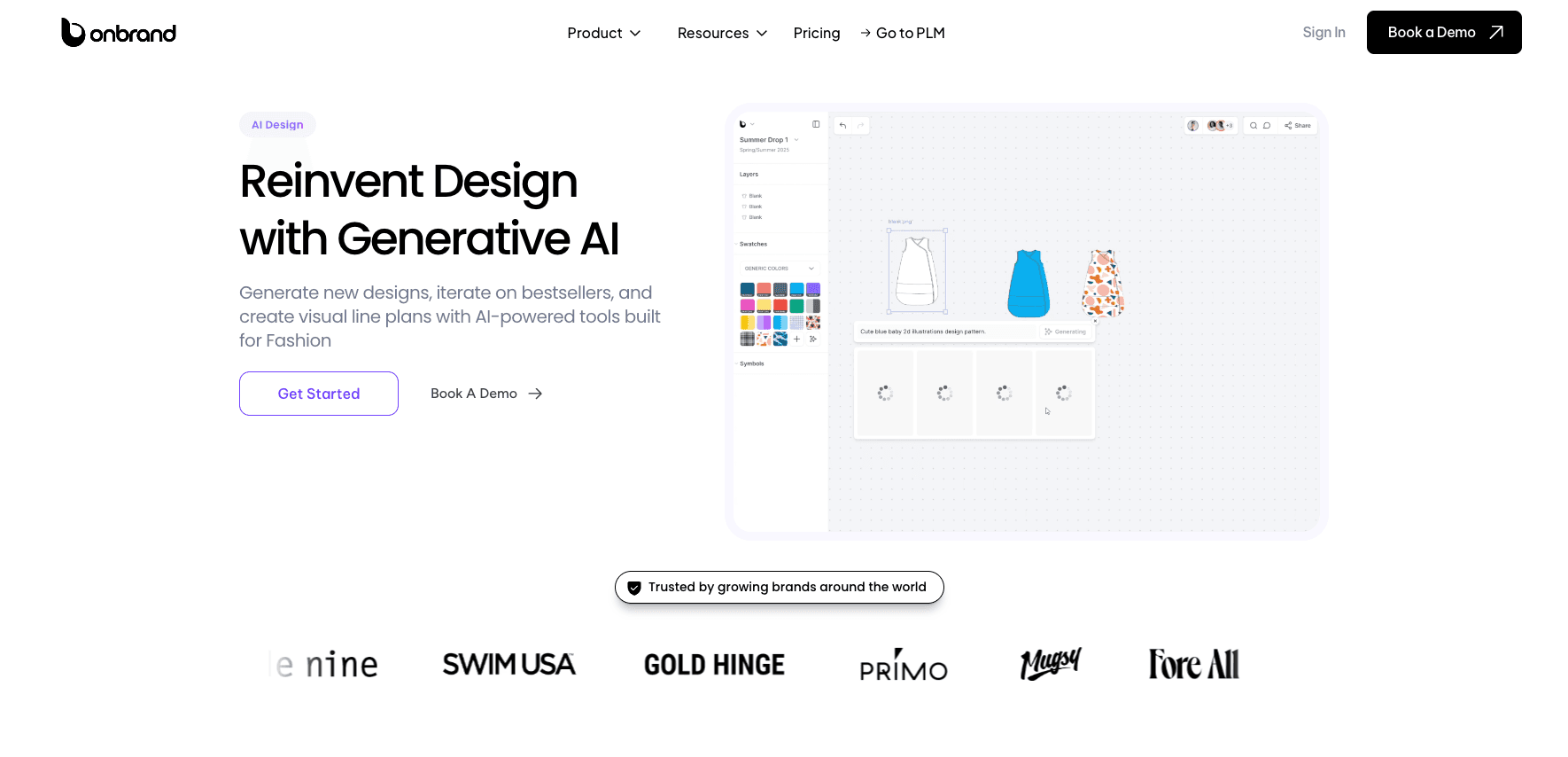
Designers can generate mockups, flat sketches, photorealistic visuals, and on-model renders before exploring new colorways, trims, silhouettes, and design variations.
Ideas stay flexible throughout the creative process. Teams can refine concepts with text prompts, organize inspiration into mood boards, compare versions, and collaborate on the same design without constantly exporting files or starting over.
Brands using Onbrand AI Design report up to 10× faster design turnaround, 30–50% fewer physical samples, and more than 10 weeks saved each year during concept exploration.
Keep Design Collaboration in One Place
Creative work rarely happens in isolation. Designers, merchandisers, and product developers often review the same styles several times before a collection is approved.
Onbrand gives everyone a shared visual workspace where comments, revisions, version history, line plans, and design assets stay connected. Feedback remains attached to each style, making reviews easier to follow from the first concept through final approval.
Move Directly Into Product Development
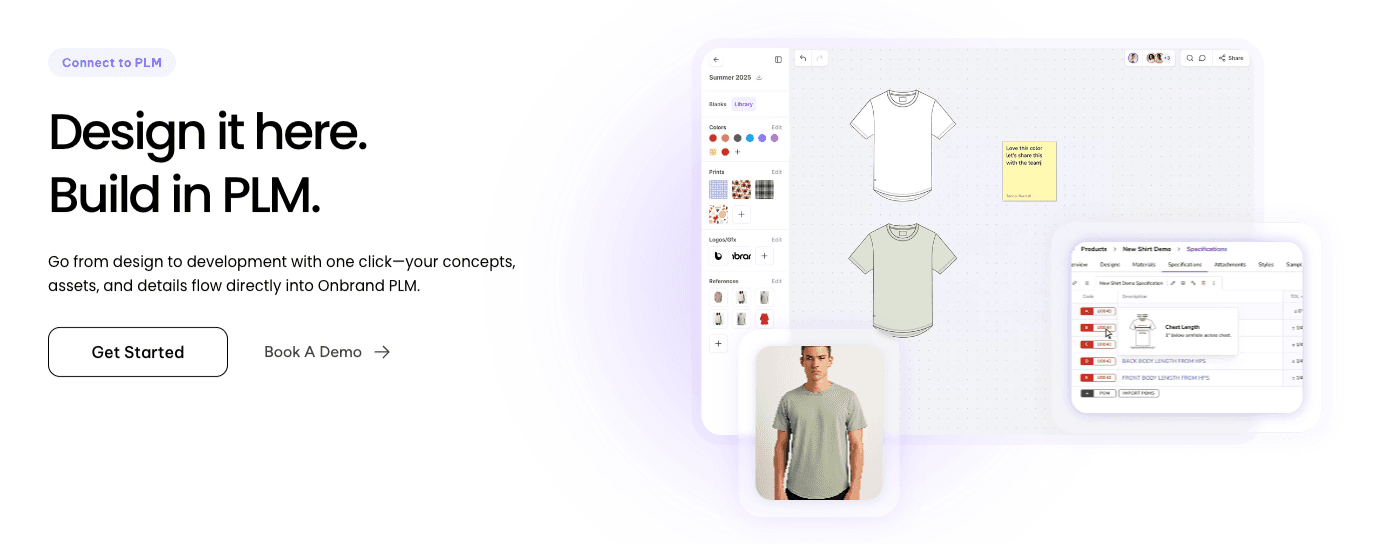
Once a design is approved, the same information flows into Onbrand PLM instead of being recreated in spreadsheets or shared through multiple file versions.

Design visuals, color palettes, comments, and product details stay connected as teams build live tech packs, manage materials, track samples, collaborate with vendors, and oversee project management through configurable tasks, approvals, and time-and-action calendars.
Brands using Onbrand PLM report 55% faster tech pack creation, development timelines shortened by four weeks, and implementation completed in as little as two to four weeks, with data migration often finished in about 10 days.
The biggest advantage comes from keeping design and product information together throughout development. Designers, product developers, sourcing teams, and vendors continue working from the same up-to-date product record instead of managing disconnected files.
Connect AI Design With Clothing Development Through Onbrand
AI can generate ideas, support planning, and assist with product decisions, but its greatest value lies in keeping those activities connected throughout clothing development.
When design concepts, product information, approvals, and production details stay in one place, teams spend less time recreating work and more time moving products forward.
Onbrand combines AI Design with PLM, so your team can continue from concept generation to live tech packs, vendor collaboration, and production using the same connected product information.
FAQs About AI in the Clothing Industry
What is the 30% rule in AI?
The 30% rule refers to AI automating, accelerating, or assisting with around 30% of certain tasks rather than replacing entire jobs. It's a general guideline for explaining AI's impact on workflows, though the actual percentage varies depending on the role, data quality, and how AI is implemented.
Why do 85% of AI projects fail?
Many AI projects fail because organizations adopt the technology without clear goals, reliable data, or a plan for implementation and adoption. The strongest results come when AI solves specific business problems and focuses on operational efficiency rather than chasing trends or simply improving operational efficiency without a defined strategy.
Is AI going to take over fashion design?
No, AI is not expected to replace fashion designers. It helps teams generate ideas, review concepts, and speed up repetitive work, while designers remain responsible for creativity, decision-making, brand value, and even how collections support broader ad campaigns.
Which AI is best for the clothing business?
The best AI depends on your business goals. If you need more than image generation, choose a platform that connects design with PLM and supports product development, supply chain management, and other workflows, as shown in many real-world examples across the clothing industry.