Apr 9, 2026
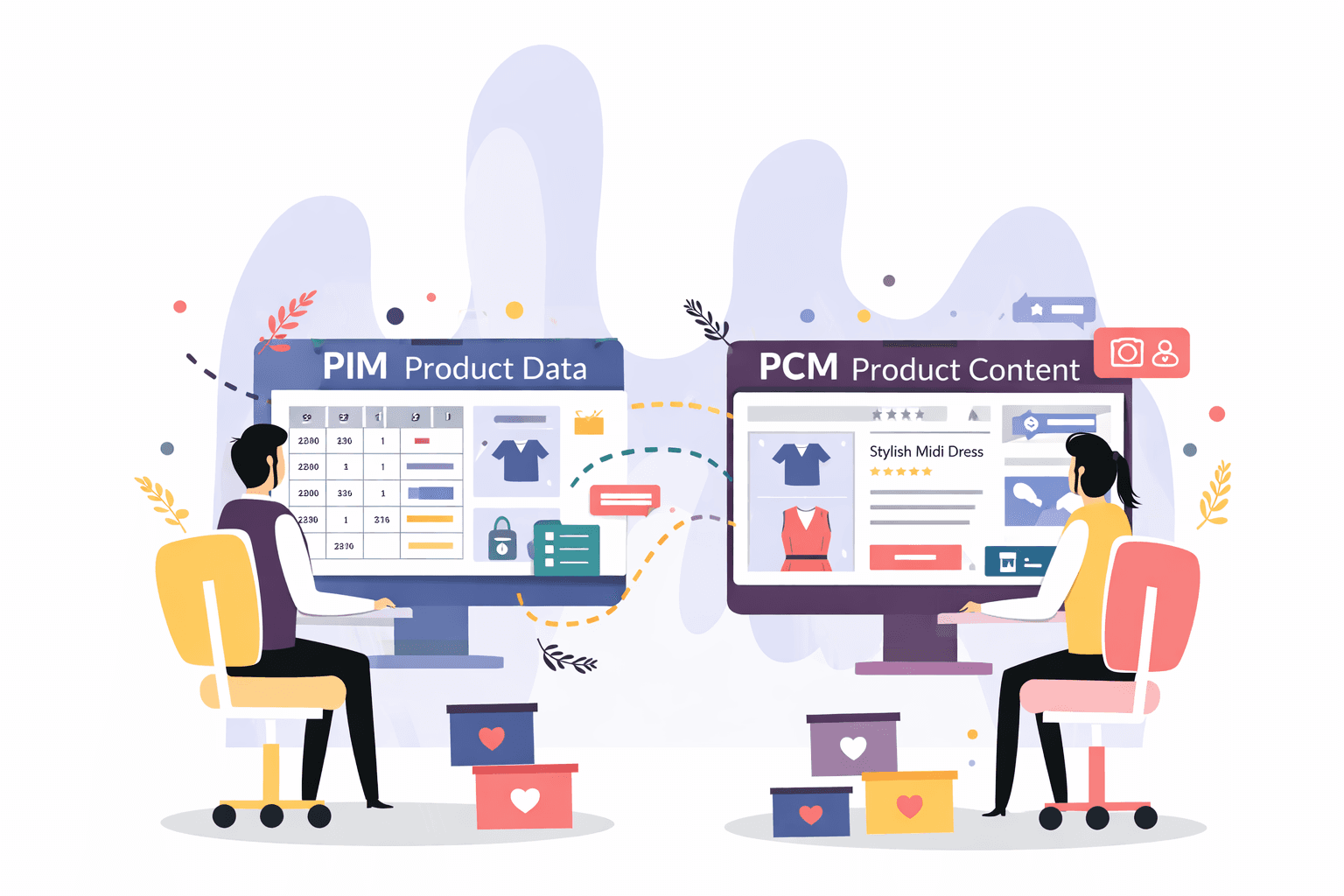
Fashion teams often run into product information management (PIM) and product content management (PCM) when working with product data in e-commerce and retail systems. Both terms show up in the same discussions, which creates confusion early.
They are not interchangeable.
The gap becomes clearer when collections expand, and brands start selling in multiple channels. More SKUs and colorways increase the volume of product data. At the same time, product content grows with it.
Fashion brands deal with two parallel needs. One focuses on structured product data such as specifications, attributes, and pricing. The other focuses on how products are presented through descriptions, imagery, and campaign messaging.
Both need to stay aligned from development through customer-facing channels.
This guide breaks down PIM vs PCM and where each fits for fashion brands managing product data in multiple channels.
TL;DR
PIM vs PCM for fashion brands comes down to scope. PIM manages structured product data such as specs, SKUs, and pricing, while PCM manages how products are presented through content, imagery, and messaging.
Most fashion brands need one or both as SKU count, channels, and content volume grow.
Onbrand supports product data earlier in design and development, so teams can create clean, structured data before it moves into PIM and PCM.
What Is PIM?
Product information management is the process of keeping product data organized in one place so teams can use it without confusion.
In fashion, product data builds up quickly. Each style comes with SKUs, size specifications, materials, attributes, pricing fields, and categories. Those details often come from multiple data sources, including internal systems and external data providers.
A PIM system acts as the layer that brings all of that together. It helps teams organize product data, standardize how it is recorded, and keep product specification data and technical specifications consistent from one record to the next.
In practice, teams use a PIM solution to handle data management without relying on scattered spreadsheets or disconnected files. Product records live in a central repository, which makes it easier to track updates and avoid duplicate or outdated entries.
Data aggregation happens inside the system, so information from different sources turns into structured data that teams can actually use. That structure helps maintain data consistency and improves data quality over time.
For teams managing a company’s product data, the goal is simple. Keep product information accurate, organized, and ready for use in e-commerce platforms, retail systems, and marketplaces.
What Is PCM?
Product content management focuses on how products are presented once the details are already defined.
In fashion, content work expands quickly once product details are set. Each style needs various marketing materials, like product descriptions, campaign messaging, and high-quality images, before it goes live.
Those assets often vary by channel, region, or language, especially for brands selling in multiple languages.
A PCM system helps teams keep that content organized. It gives marketing, brand, and e-commerce teams a place to manage product content without relying on scattered files or long email threads.
In day-to-day work, teams use product content management software to update product descriptions, imagery, and messaging.
Content needs to stay aligned with the product while fitting different marketing channels and formats. That consistency plays a direct role in shaping the customer experience.
Many teams also connect PCM workflows with digital asset management tools to store and track images and creative assets.
A setup like this often includes data asset management features that help store and track high-quality images and creative assets while ensuring brand consistency in every output.
Teams responsible for product content focus on keeping it clear, organized, and ready for e-commerce listings, campaigns, and customer-facing channels, with consistent brand output.
PIM vs PCM: Key Differences
PIM and PCM often get mentioned together, but they serve different roles for fashion teams.
Purpose
The difference starts with the main job each system is built to handle.
PIM focuses on structured product data. Its role is to help teams organize product records, maintain consistency, and prepare information for e-commerce, retail partners, marketplaces, and other downstream systems.
In many cases, it works like a centralized data system for recording data in a clean and usable format.
PCM focuses on product-related content. Its role is to help teams manage the way products are presented through descriptions, imagery, messaging, and other content used in customer-facing channels.
Type of Information
The difference also shows up in the kind of information each system handles.
PIM manages attributes such as SKUs, specifications, pricing fields, categories, materials, and other structured product details. That information needs to stay consistent from one record to the next, especially when large catalogs start to grow.
PCM manages copy, visuals, messaging, media, and other content tied to the product. That may include product descriptions, campaign assets, and content variations used for different channels or launches.
In other words, PIM handles the facts tied to the product. The PCM solution handles the content customers actually see.
Primary Teams Using It
The teams using each system are usually different, too.
PIM is more commonly used by e-commerce operations, merchandising, catalog, and product data teams. Their work depends on keeping product records accurate, complete, and ready for distribution.
PCM is more commonly used by marketing, brand, and content teams. Their work depends on keeping product content organized while supporting a consistent brand image in listings, campaigns, and other customer-facing materials.
Business Stage Where It Applies Most
The gap between the two becomes clearer when you look at timing.
PIM is most relevant when product data is being prepared for channels. At that point, teams need product records that are complete, structured, and ready to move into e-commerce systems and partner environments.
PCM is most relevant when the product is being presented to customers. That is where content needs to be accurate, polished, and aligned with the product details already in place.
Output
The output from each system is different, too.
PIM produces consistent, structured product data that can move into other systems with fewer errors and less manual cleanup.
PCM produces richer product presentation through descriptions, visuals, and messaging that reflect a detailed user concept and help customers understand the product and connect with the brand.
Where PIM and PCM Fit in the Fashion Workflow
Fashion product work starts long before anything reaches e-commerce. Product data begins during fashion design and development, where teams define materials, measurements, colorways, and specifications.
At this stage, product lifecycle management (PLM) and product management shape the foundation of the product journey. Information comes from multiple sources, including internal systems, supplier inputs, and early development files.
Teams often deal with different data formats and manual processes, which can lead to gaps in data quality, and a more process‑focused setup reduces those gaps.
Once a product is finalized, that information moves forward. PIM structures the data for distribution into e-commerce systems and other channels. PCM builds the product content that supports the buyer journey, including descriptions, imagery, and messaging.
Both depend on product data that already exists.
If upstream data is inconsistent, those issues carry forward. Poor data cleaning, weak data consistency, or missing details result in fragmented outputs. Teams end up working with incomplete or outdated records instead of consolidated data that stays up to date.
Clean product data early leads to fewer issues later.
When Do Fashion Brands Need PIM, PCM, or Both?
The right setup depends on how your team handles product data and product content in day-to-day work.
When PIM Is Enough
PIM makes sense when product data starts to break down.
Teams often run into issues when product data is inconsistent between different sales channels or stored in multiple systems. Manual updates become common, especially when working with large SKU counts or multiple catalogs.
Wholesale and e-commerce data may not match, which creates confusion in e-commerce platforms and partner systems. Product data quality becomes harder to maintain, and teams spend time fixing errors instead of moving work forward.
When PCM Is Enough
PCM becomes relevant when content starts to fall behind.
Product descriptions may vary between e-commerce websites, or campaigns may require different messaging for regions and marketing channels. Content teams often manage large volumes of assets, which makes updates harder to track.
Delays between product updates and content changes can affect how products appear in different sales channels and e-commerce solutions.
When Both Make Sense
Many fashion brands need both once they grow.
Product and content teams often work separately, especially in companies operating in multiple locations geographically. Multi-channel selling adds more complexity, with products moving through various commerce systems and multiple distribution channels.
At that point, teams need better business process management and a comprehensive solution to automate data processes and keep product data and content aligned.
When catalog size and content volume increase together, both systems support better coordination and fewer gaps.
Onbrand: The System Before PIM and PCM
Onbrand sits earlier in the workflow than both PIM and PCM.
Product data does not start in e-commerce systems. It starts in design and product development, where teams define materials, specs, measurements, colorways, approvals, and revisions long before a product is ready for launch.
That is where Onbrand fits.
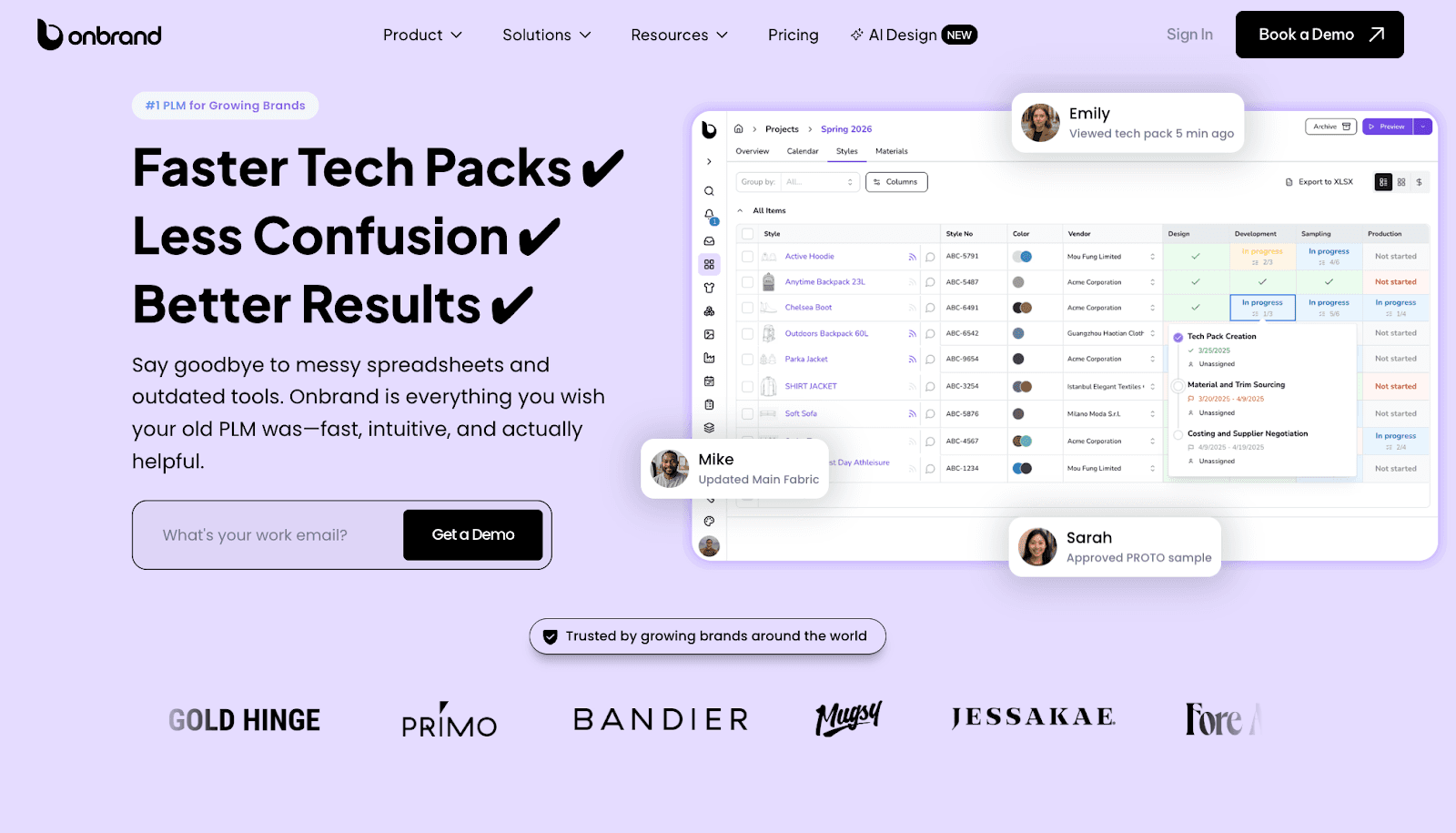
Onbrand AI Design helps teams move from concept to clear design direction faster. Designers can generate ideas, explore variations, build mood boards, and prepare visuals for review without switching between disconnected tools.
Teams using it cut design turnaround time by up to 10x, reduce physical samples by 30–50%, and save more than 10 weeks each year.
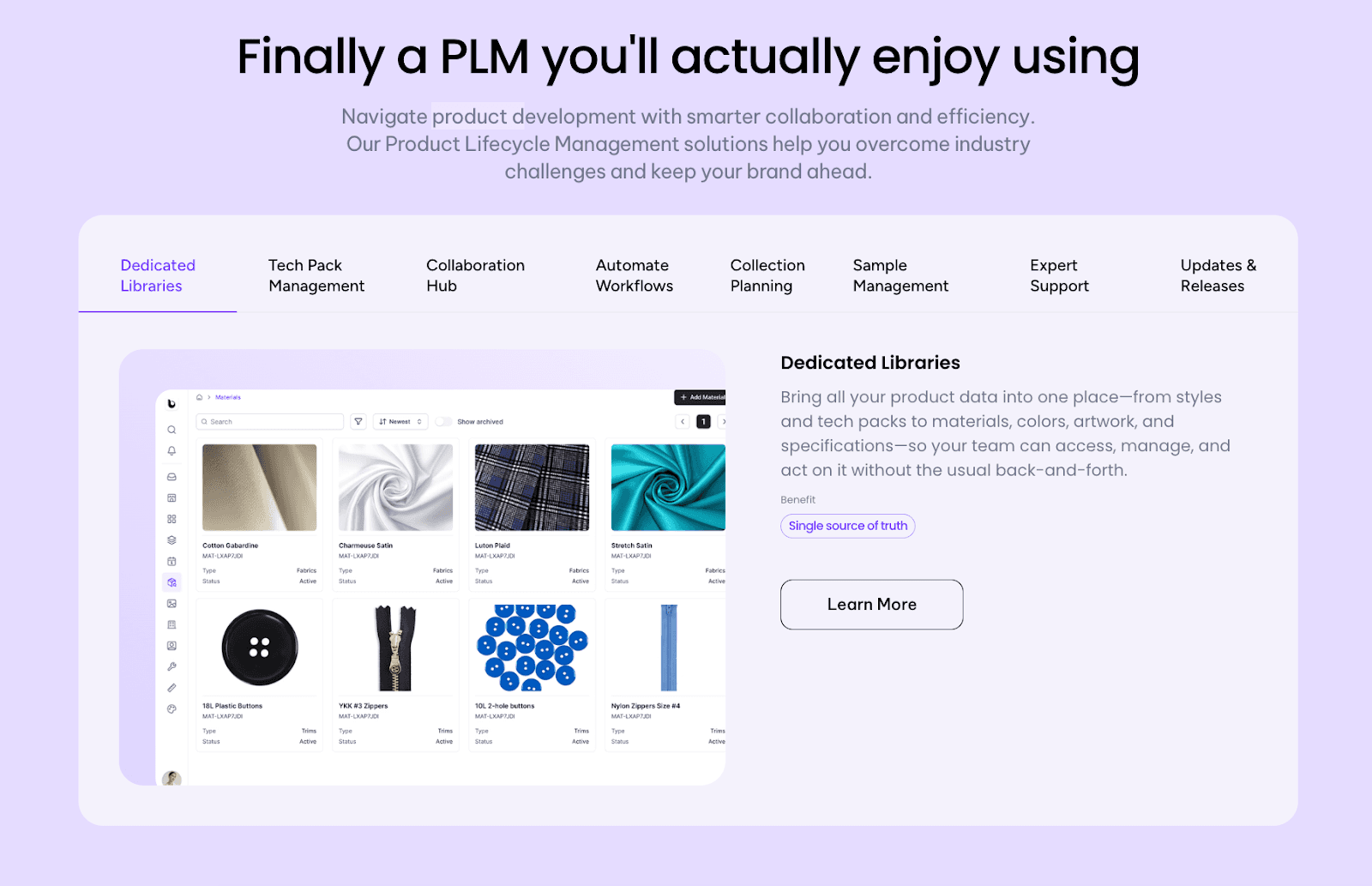
Onbrand PLM supports the next stage through product lifecycle management. Teams use it for managing product data, maintaining product specification data, tracking materials, updating tech packs, reviewing samples, and keeping approvals visible.
Brands using Onbrand cut tech pack creation time by 55%, reduce development timelines by four weeks, and go live in about 10 days.
Downstream systems depend on the quality of that data. Onbrand helps teams get there first, with better data transparency, fewer downstream inconsistencies, and stronger alignment between product, e-commerce, and marketing.
Fix Product Data Before It Reaches PIM and PCM With Onbrand
Most issues teams deal with in PIM and PCM start earlier in the workflow.
Product data begins during design and development, where details change often, and information can break down between teams, tools, and handoffs.
Onbrand helps teams keep that process clear from the start. From concept to tech packs and approvals, product data stays current, structured, and visible as work moves forward.
That leads to fewer downstream issues, better alignment between teams, and a stronger customer experience once products go live.
Want to see how it works in practice? Book a demo and see how Onbrand fits your workflow.
FAQs About PIM vs PCM
What features should you look for in a PIM system?
A strong PIM system acts as a core tool for managing product-related data. It should support structured data organization, handle inputs from multiple sources, and offer data enrichment capabilities to improve product records. Many systems also include pre-built user interfaces that help teams update and manage product data without relying on manual workflows.
How does PCM handle content for different sales channels?
A PCM system helps teams manage product content in multiple formats, including product descriptions, images, and campaign assets. It lets teams distribute consistent messaging in different channels while keeping content aligned with product-related data. This is especially important for brands managing regional or channel-specific variations.
Why is structured product data important before using PIM or PCM?
Structured product-related data allows both PIM and PCM systems to work effectively. When data is clean and organized, teams can distribute consistent product information and content without errors. Without that foundation, even the best tools with pre-built user interfaces or data enrichment capabilities cannot fix underlying data issues.