Apr 16, 2026

Planning doesn’t break all at once. It builds up over time.
Everything stays aligned initially. Current inventory matches well with sales trends for each style and collection. As more collections get added and new channels come in, things start to shift and become harder to track, and suddenly your strategy feels a bit behind.
Your best sellers vanish instantly while the slow movers gather dust. Tiny mistakes snowball as the months pass and eventually lead to lost sales.
Modern retail stores usually depend on specific platforms to manage retail inventory and track demand. Still, those tools don’t always stay aligned once complexity increases in the retail industry.
At that point, planning becomes harder to control.
This is exactly where retail planning software steps in to help.
This article covers the top five retail planning software tools, what they handle, where each fits in a modern planning process, and what needs to be in place before they can work as expected.
TL;DR
These are the top retail planning platforms in 2026.
RELEX
Blue Yonder
Oracle Retail
SAP Retail
Anaplan
For teams dealing with planning issues caused by inconsistent product data, Onbrand helps keep inputs accurate before they reach planning systems.
What Makes Good Retail Planning Software in 2026?
Retail planning software works when it reflects how the planning process actually runs day to day.
Planning goes beyond dashboards. It includes reviewing styles, tech packs, and inventory levels, and adjusting decisions as products move through the season.
Quality software supports demand forecasting using real inputs. That leads to more accurate demand forecasts instead of relying on assumptions.
Clear real-time data gives better context when plans shift. It provides real-time visibility into stock levels, sales, and inventory management updates, so changes are easier to track and act on.
Strong tools also connect systems. End-to-end visibility between planning, supply chain planning, and execution keeps business processes aligned with what is actually happening.
At that point, planning software does more than track numbers. It supports better decisions by keeping forecasts, inventory, and execution in sync.
Types of Retail Planning Software
Retail planning does not reside in a single system. It gets split based on what needs to be planned and how detailed the workflow is.
Merchandise financial planning systems – These tools help set budgets, track category performance, and align plans early in the season.
Assortment planning tools – Used to define product mix before buying decisions are locked. They support assortment planning and shape a clear assortment strategy for each store or channel. Many act as retail assortment management applications used by merchandising teams.
Demand forecasting software – Focuses on demand planning using historical data and signals. These tools guide buying quantities and support inventory optimization.
Unified retail planning platforms – Combine multiple workflows into one planning platform. These tools link sales predictions with inventory and logistics. Large companies use them to manage more complex operations.
5 Best Retail Planning Software Tools in 2026 (by Use Case)
These tools focus on forecasting, assortment, and inventory decisions. Every tool listed here scales to meet the specific demands of your current store operations.
1. RELEX (Best for AI-Driven Retail Planning)
Source: relexsolutions.com
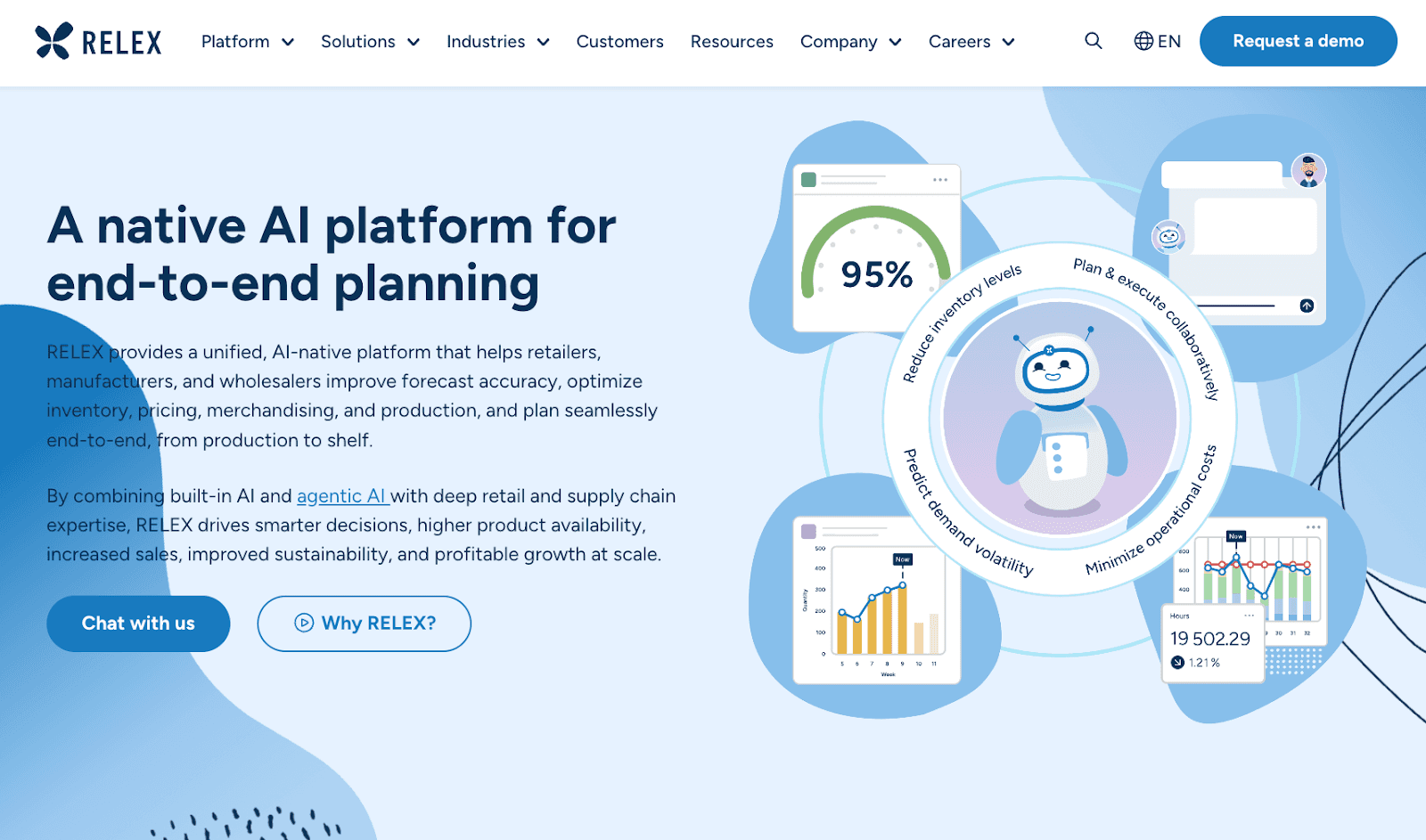
RELEX supports retail planning, where forecasts need to be adjusted as demand changes throughout the season.
Planning often starts with assumptions. Problems show up when those assumptions shift mid-season. RELEX uses machine learning and advanced analytics to produce more accurate demand forecasts, so plans stay closer to what is actually selling.
Linking it helps improve sell-through and maintain stock availability without constant manual updates. Planning decisions stay grounded in current retail performance today, rather than using old data.
The software also supports AI-driven scenario planning. It spots potential issues early so you can fix them before finalizing your orders. That becomes useful early in the planning cycle, where small changes can impact the full assortment.
RELEX helps teams handle high SKU volumes. It balances quick decisions with precise data, so seasonal strategy stays on track from start to finish.
2. Blue Yonder (Best for End-to-End Supply Chain Planning)

Source: blueyonder.com
Blue Yonder supports retail planning where demand, inventory, and supply need to stay linked beyond a single system.
Planning usually breaks after forecasting. What happens next depends on how well those plans carry into supply chain planning and execution. Blue Yonder connects these steps, so planning decisions reflect what can actually be produced, allocated, and delivered.
This tool pulls real data from the market, so your team can pivot fast without wasting hours on spreadsheets. Think of these as markers for your growth. It shows exactly where you stand and where you need to make a change.
That visibility helps optimize inventory and track key performance indicators linked to stock levels, availability, and fulfillment.
Blue Yonder fits larger operations where planning extends beyond assortment decisions and needs to stay aligned with supply, distribution, and execution at scale.
3. Oracle Retail (Best for Large Enterprise Retailers)
Source: oracle.com
Oracle Retail supports planning at a level where financial targets, assortment decisions, and execution must remain tightly connected.
Planning at scale often starts with aligning buys to financial goals. The challenge shows up when those plans need to be adjusted without breaking margins or timelines.
Oracle Retail connects planning with pricing, assortment, and supply decisions, so changes stay tied to the bigger picture.
The platform helps guide strategic decisions using real-time data and structured planning workflows. That becomes useful when managing large assortments, multiple regions, and complex channel setups. Planning stays grounded in numbers that reflect both demand and financial performance.
It also supports more consistent informed decisions during line planning and buy reviews, where small adjustments affect the full season.
Oracle Retail is suitable in environments where planning needs to operate as a full retail planning solution, not just a forecasting tool, especially for brands managing large-scale operations.
4. SAP for Retail (Best for SAP Ecosystem Users)
Source: sap.com
SAP is built for environments where planning, finance, and operations are tightly connected within a single system.
Planning depends on how well data moves between functions. SAP is designed specifically for businesses already using its ecosystem, so planning stays tied to the same business context used in merchandise planning, supply chain, and financial systems.
That connection becomes important during line planning and in-season updates. Plans stay linked to execution, including promotional activities and pricing changes that affect demand and margins.
The system supports better decisions by keeping planning inputs aligned with real operational data. Changes in sales, inventory, or supply reflect back into planning without manual work.
SAP works well for companies that rely on structured processes and need consistency in planning, execution, and reporting, where control helps maximize profitability.
5. Anaplan (Best for Connected Financial and Retail Planning)
Source: anaplan.com
Anaplan focuses on retail planning, where financial targets and product decisions need to stay connected from the start.
Planning often begins before the season, when buys, budgets, and assortment decisions take shape. Anaplan supports pre-season planning by connecting merchandising, finance, and demand into a single platform, so plans stay aligned as they develop.
The platform is highly visual, which makes it easier to review scenarios, adjust plans, and track performance without relying on disconnected files. That visibility helps link smarter decisions to outcomes tied to margins and revenue.
Anaplan also helps connect planning inputs to financial outcomes, so adjustments support efforts to maximize profits without losing control of the bigger picture.
It is commonly used by growing brands and medium-sized retailers that need more structure in planning, especially when financial and operational decisions need to stay closely aligned.
Why Retail Planning Often Breaks in Practice
Planning rarely fails because of the tools. It breaks earlier, in the inputs those tools depend on.
The first gap shows up between planning and retail product development. Plans rely on historical sales data and assumptions about consumer demand, but product details keep changing after planning is set.
During development, updates happen in tech packs, materials, and vendor timelines. Those changes affect what becomes current inventory, but they don’t always flow back into planning systems.
The next issue appears during execution. Market trends and market changes shift demand, but planning still follows earlier assumptions. What looked accurate at the start no longer reflects what is actually selling.
At that point, forecast accuracy drifts away from true demand, and adjustments come too late to fix the outcome.
Planning systems can optimize decisions, but they cannot correct inconsistent product data.
Retail Planning Starts With Structured Product Data
Retail planning depends on product-level accuracy. Forecasts, assortment decisions, and inventory plans all rely on clean data at the start of the planning process.
The issue is that product details don’t stay fixed. Specs change, materials get updated, and timelines shift during product development. When those updates don’t stay connected, decision-making starts to rely on outdated information.
A consistent product record keeps planning grounded. It helps teams move forward with clearer inputs and improves customer satisfaction once the product reaches the market.
Onbrand PLM Keeps Product Data Aligned Before Planning Starts
Onbrand PLM is built to keep product information structured before it reaches retail planning.
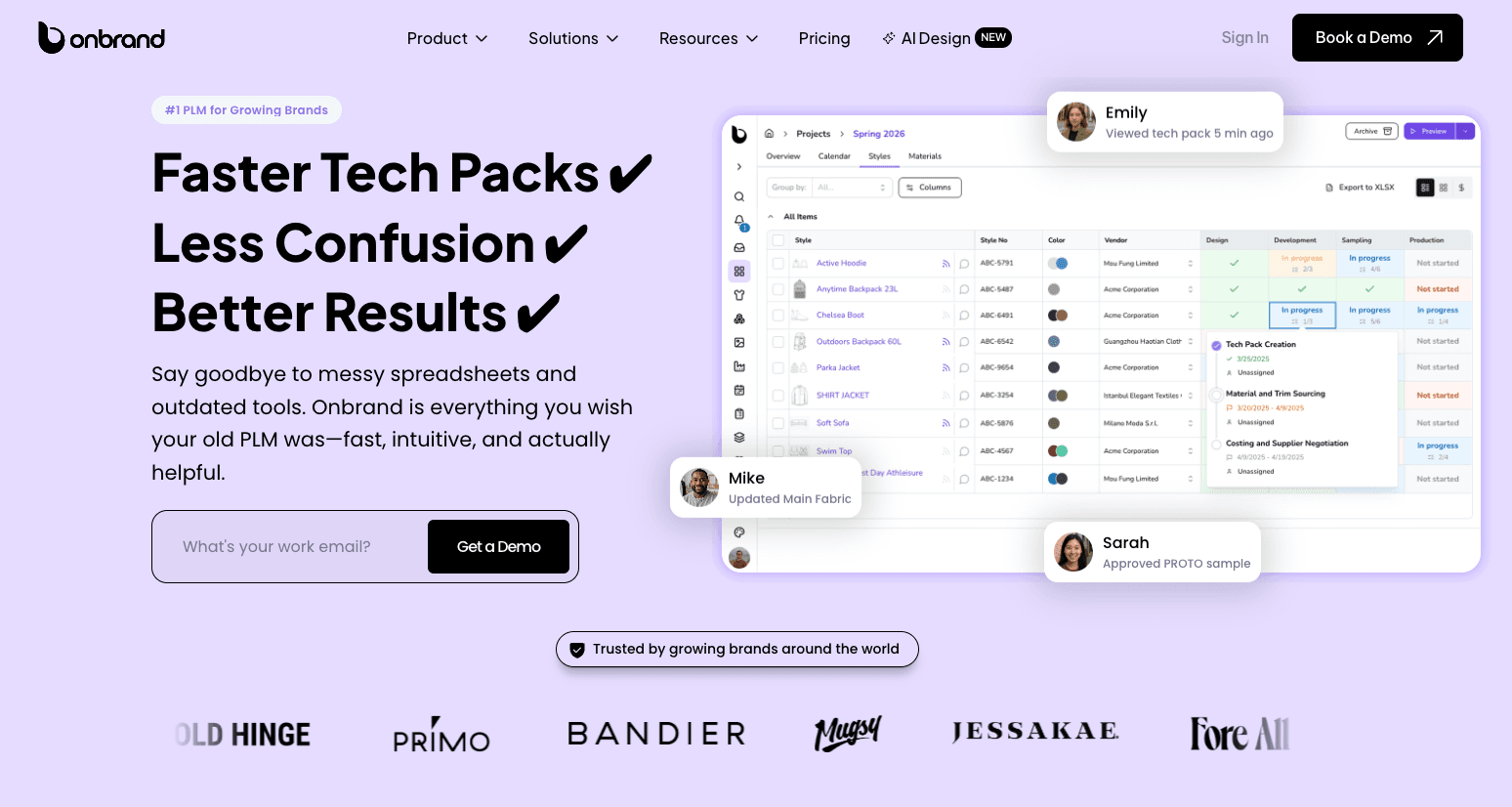
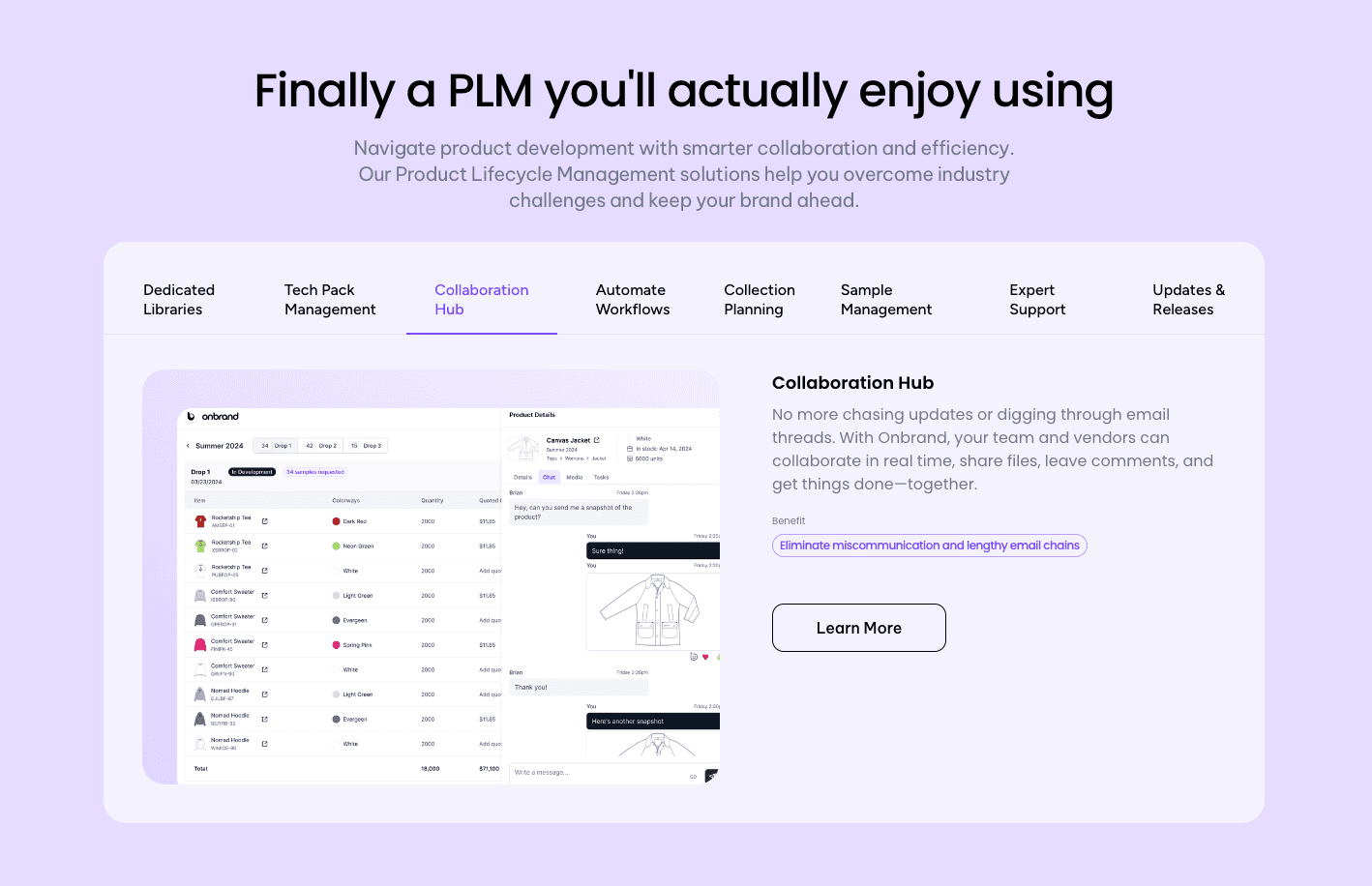
Styles, materials, specs, samples, and approvals stay tied to one live record, so updates do not get lost in spreadsheets, PDFs, or email threads. Tech packs stay current, comments stay attached to the right version, and product data stays easier to trust when planning starts.
That structure is one reason brands use Onbrand to move faster. Customers report 55% faster tech pack creation, about four weeks less development time, and implementation in as little as 10 days.
Onbrand also stands out because it is built for growing fashion brands that want a modern fashion PLM without the weight of older systems. The platform is easier to adopt, easier to configure, and built around how fashion design and development teams actually work.
Alongside PLM, Onbrand AI Design supports the earlier stage of the workflow. It helps teams generate concepts, explore variations, review visuals, and organize line plans before styles move into development.
Once a direction is approved, that work can carry into Onbrand PLM with cleaner handoffs and more reliable inputs for planning.
Start Retail Planning With Better Data Using Onbrand
Retail planning tools help manage forecasts, assortment decisions, and inventory. They handle optimization once the plan is in motion.
Accuracy starts earlier.
Planning depends on the product data behind it. If product details shift without a clear record, even the best planning systems fall out of sync. Forecasts drift, inventory decisions miss the mark, and adjustments come too late.
That is why retail teams need both. Planning systems guide decisions during the season. Clean product data keeps those decisions grounded before planning even begins.
Onbrand PLM helps keep product data consistent from concept through development, so planning reflects what is actually being built. When product records stay connected, planning becomes easier to trust.
FAQs About Retail Planning Software
Do small retailers need retail planning software?
Yes. Small and medium-sized retailers benefit from retail planning software when managing inventory levels, demand, and financial goals. Even simple planning solutions help reduce lost sales, improve stock availability, and support data-driven decisions as the business grows.
Can retail planning software work without a PLM system?
Yes, but results are limited. Retail planning software depends on accurate product data management, specification management, and updates from retail product development. Without a retail PLM, planning often relies on incomplete inputs. This can ruin your sales forecasts and make decisions nearly impossible to trust.
Is AI necessary in retail planning software?
No, but it helps. AI handles the heavy lifting for retail planning. It scans historical data and market signals to tell you what sells next. Tools with machine learning can also spot useful patterns and help make better calls.