Apr 15, 2026
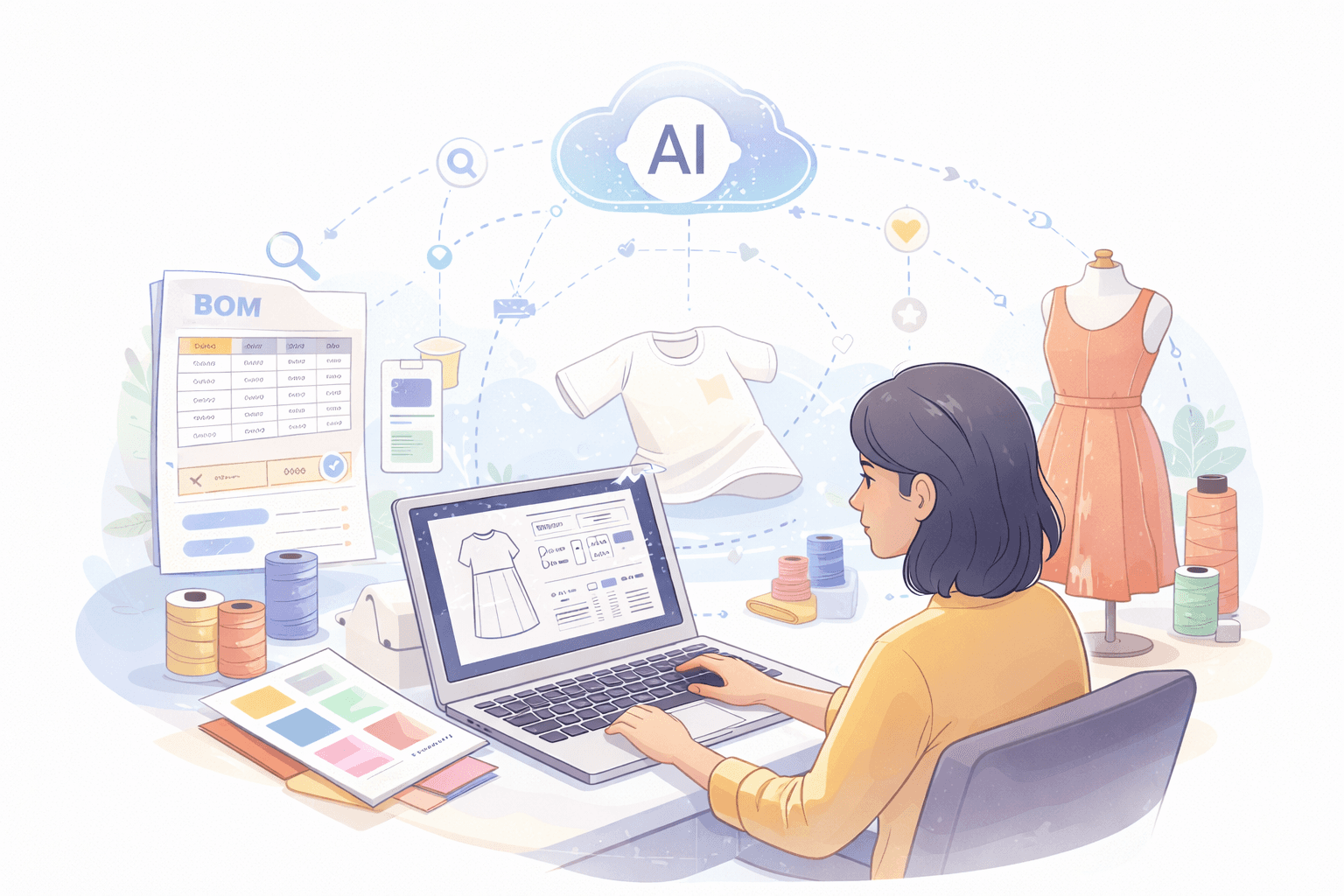
PLM AI brings artificial intelligence (AI) into product lifecycle management (PLM) to improve how product data is managed.
Most problems in fashion product development come from disconnected information. A tech pack update doesn’t carry through. Samples reflect the wrong specs, and teams rely on different versions of the same product.
Manual data entry and unstructured data make it harder to maintain data quality. These gaps slow down development, create issues throughout the supply chain, and make it harder for teams to respond to shifting market trends.
When product details shift, PLM AI keeps everyone on the same page. It links design data directly to manufacturing. This helps teams handle supply chain shifts without losing track of difficult builds.
In this article, you’ll see how PLM AI works in real fashion workflows, where it fits, and how it reduces errors in tech packs, bills of materials (BOMs), samples, and product data.
TL;DR
PLM AI helps fashion teams fix product data issues by keeping tech packs, BOMs, samples, and vendor updates connected inside a single system.
It fits into real workflows like design, tech pack updates, BOM validation, sample tracking, and vendor communication, where most errors happen.
Core use cases include design iteration from past products, tech pack consistency, BOM validation, early sample issue detection, structured product data, and faster product search.
PLM AI fails when product data is incomplete, disconnected, or managed outside the PLM, which leads to version issues, rework, and delays.
Onbrand applies PLM AI directly inside product workflows with live tech packs, fast onboarding, and connected product data so teams reduce errors and move from design to production without rework.
What AI Does in Fashion PLM
AI in fashion PLM brings machine learning and AI models to work with product data during development.
In fashion workflows, AI runs inside PLM software and connected enterprise systems where product data already exists. It connects directly to styles, tech packs, and BOMs, so updates stay tied to the product record and form a connected digital thread.
AI-driven tools help reduce manual tasks in business processes such as checking records, spotting gaps, and keeping updates consistent when product data changes.
AI in PLM uses existing product data to identify missing fields, mismatched values, and keep records consistent. Using this method protects product data from mistakes. It stops the struggle of tracking different file versions.
Now, teams can reuse smart ideas without hunting through a dozen scattered documents.
Integrating AI in this digital age creates the most value when it works inside the PLM environment, where product data is created and updated.
A strong PLM strategy uses these AI capabilities to support PLM optimization and keep product data reliable as complexity increases.
Where AI Fits in the Fashion Product Lifecycle
AI works alongside product teams at every turn. It tracks product data as teams build, fix, and send it out. It supports the workflow without changing how work moves.
Below are the main points in the product lifecycle where AI supports daily work.
Design and Concept Development
At the start of development, AI can reference past styles, materials, colorways, and construction details. That gives product and design teams more context before new work starts.
Early product decisions become easier when product data stays connected to previous records instead of being scattered in different files. This is where AI begins to support faster, more informed decisions without adding new steps.
Tech Pack Creation and Updates
Tech packs change often during development. Specs, measurements, and notes need to stay aligned as revisions happen.
AI keeps spec sheets aligned so everyone works from the same data. This stops old, wrong info from reaching the next person in line. Clean data keeps product teams on track while features move from ideas to reality.
BOM and Material Selection
AI compares BOMs to the latest product records to spot missing parts, double entries, or wrong supplier data.
That helps product, sourcing, and manufacturing teams work from cleaner information and make better use of available manufacturing capabilities before samples move forward.
Sample Tracking and Revisions
Managing samples works best when teams track every version. Clear history helps everyone stay on the same page. AI keeps every edit and sign-off tied to the right file, so it never mixes up old drafts with new ones.
Keeping product data synced means changes show up instantly. Teams will stop wasting time fixing errors from mismatched sample specs.
Vendor Communication and Approvals
Vendor communication often breaks when updates sit in email threads or separate supplier portals. AI supports vendor relationship management by keeping approvals, changes, and comments tied to the correct product record.
That improves PLM collaboration and makes cross-functional collaboration easier when internal teams and vendors need the same information. It also helps unify data so everyone works from the same version of the product while supporting basic regulatory requirements.
Core Use Cases of PLM AI in Fashion
PLM AI shows value when it connects directly to the product record. It keeps product data consistent, flags issues early, and reduces rework during development. This is where emerging technologies start to support real product workflows instead of sitting outside them.
Design Iteration Using Existing Product Data
Innovation relies on looking at yesterday's patterns. Designers study how older structures were put together to find a starting point. Generative AI looks at the current product stats to show which paths actually lead to success.
Teams build from real product records instead of starting from scratch. That keeps design decisions grounded and improves product quality without adding extra to-do list items.
Keeping Tech Packs Consistent During Updates
Tech pack updates often break when changes do not carry through every field. A measurement changes, but notes or materials stay outdated.
AI tracks updates tied to the same product record. It flags mismatched values, so incorrect specs do not get sent to vendors or samples. That reduces revision cycles and prevents avoidable errors.
BOM Validation Before Sampling
BOM issues often surface during sampling when it is already too late. Missing materials or incorrect trims slow everything down.
AI reviews the BOMs against the product record and supplier data. It identifies problems early so teams can fix them before samples are created. That improves cost efficiency and avoids delays tied to rework.
Early Detection of Sample Issues
Sample rounds depend on accurate specs and a clear handoff. When something is wrong, it usually shows up after physical samples arrive.
Teams can use AI‑powered predictive analytics to compare current specs with past product data and spot risks before samples are made.
It flags risks before samples are made, which helps avoid extra rounds and protects cost savings.
Structuring Unorganized Product Data Into Product Records
Product data often sits in spreadsheets, PDFs, and design files. If teams pull data from here, expect flaws. The process creates big gaps and constant errors.
AI handles extracting data from these formats and turns it into structured product records. It fixes bad data and gives the team solid answers. Fashion teams won't have to deal with broken workflows or the headache of managing separate, clunky engineering tools.
Natural Language Search for Product Data
Digging through messy folders for product specs kills every team's productivity.
AI uses natural language processing to retrieve information using everyday language. An AI assistant can grab a specific style, materials, or specs from the product record right away. That supports faster development cycles while basing every move on real numbers.
Where AI Breaks in Fashion PLM
Most issues come from how systems are set up, not the AI itself. Breakdowns usually happen at specific points in the fashion design process where product data is incomplete, disconnected, or handled outside the system.
Product Data Is Missing or Out of Sync
AI depends on clean product data. When tech packs, BOMs, and samples do not match, data quality breaks down.
Unstructured documents like PDFs or spreadsheets create gaps in PLM databases. Key details may be missing, inconsistent, or stored in the wrong place.
AI relies on what is inside the product record. When records are incomplete, they cannot generate relevant information.
That leads to incorrect specs moving forward, errors during development, and delays that impact the supply chain.
AI Is Not Connected to the PLM System
AI often runs outside the PLM platform in separate digital environments. It can generate outputs, but often it does not save them inside the product file.
Doing it this way demands too much effort. Manual data entry creates a mess because people often make typos when they move facts around.
AI implementation breaks down when it is not connected to how product data is managed inside the PLM.
AI Outputs Are Not Tied to the Product Record
AI can generate suggestions all day long. If those notes don't attach to the specific product record, teams can't use them to get things done.
Specs, materials, and revisions still need manual updates. That breaks the workflow and reduces the value of AI. Fashion teams need this connection. Otherwise, AI cannot help reduce costs or improve product quality.
Work Still Happens Outside the PLM
Important project updates often stay buried in spreadsheets, long email threads, and disconnected tools. Supplier feedback, approvals, and revisions often sit outside the system.
When product data is spread between multiple apps, AI cannot access real-time data. That creates gaps in visibility and breaks communication during supplier updates and sample rounds.
Work that sits in silos limits AI capabilities. It cannot track key considerations, support regulatory compliance, or maintain accurate compliance records when data is incomplete or disconnected.
These issues slow development and make it harder to accelerate innovation. Teams struggle to deliver higher-quality products when product data is not connected.
AI works best when product data stays centralized. Without that, even strong AI capabilities cannot deliver consistent results.
How Fashion Teams Start Using PLM AI
Start with your product data.
Check your current styles, tech packs, and BOMs. If key fields are missing or inconsistent, fix those first. AI depends on clean product data to produce reliable outputs.
Then focus on one workflow where problems show up most often.
That could be tech pack updates that do not carry through, BOM errors found during sampling, or sample feedback that gets lost between rounds. Fixing one area gives you a clear result you can measure.
Keep AI inside your PLM.
Tools that sit outside the system create extra work and bring version issues back. When AI is tied to the product record, updates stay consistent and usable.
Make sure everything connects to the same product.
Specs, materials, and approvals should live in one place. When product data stays connected, decisions are easier to manage, and errors are less likely to move from design into production.
How Onbrand Applies AI in Fashion PLM
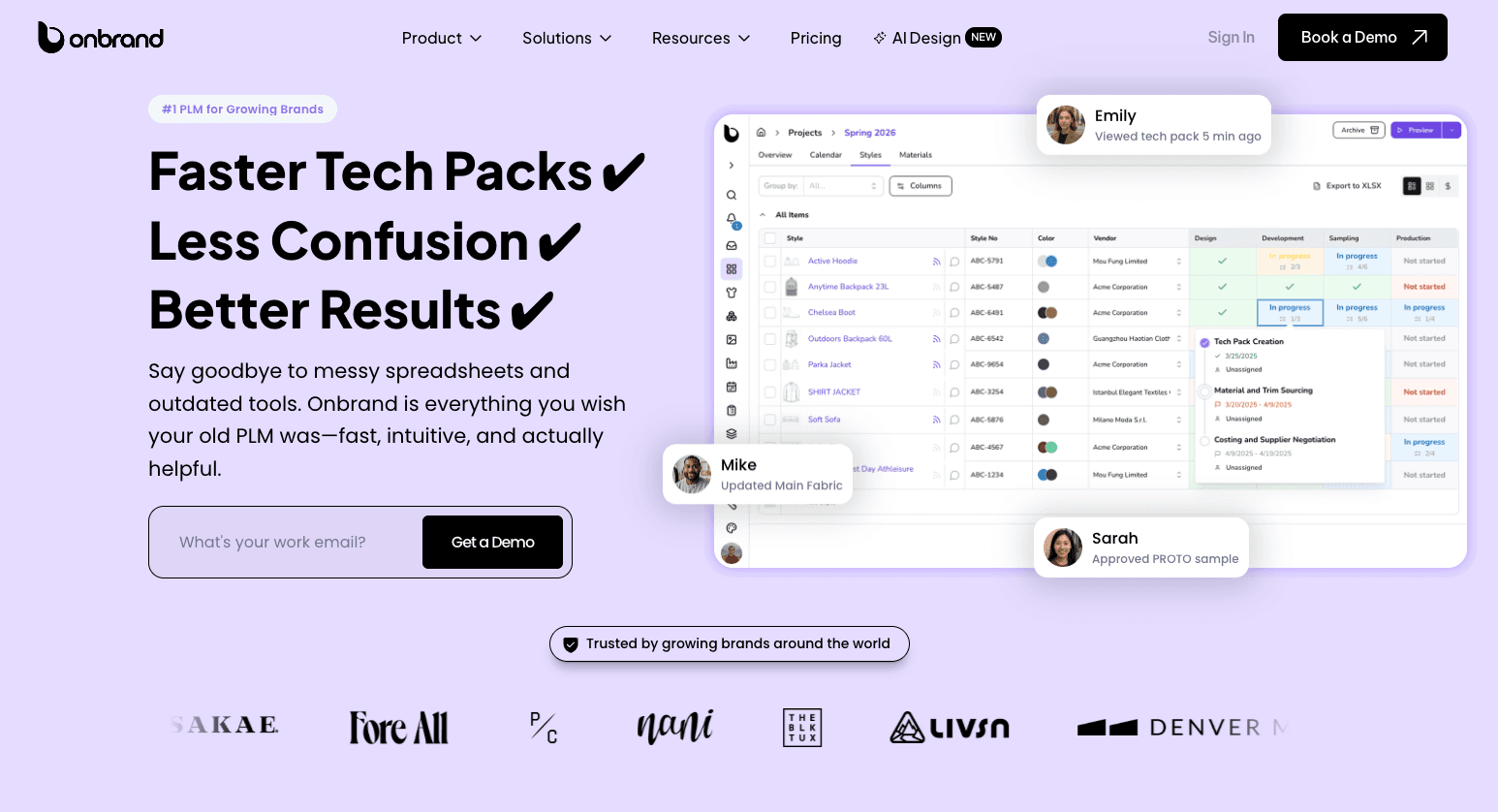
Onbrand PLM applies PLM AI directly inside the product workflows your team already uses. It works within the system, so updates stay tied to the product record instead of creating another place to manage information.
AI That Works Inside the Product Record
AI runs inside styles, tech packs, BOMs, samples, and approvals. Product data stays connected in one place, so updates remain consistent as work moves forward.
When details change, they stay tied to the product record instead of getting lost in spreadsheets, PDFs, or email threads.
Live Tech Packs With Fewer Version Problems
Most brands still rely on static tech packs that go out of date quickly. Onbrand uses web-based tech packs, so everyone works from the current version.
That reduces errors from outdated specs, prevents confusion with vendors, and keeps development moving without rework.
Faster Setup Without Heavy Services
Legacy PLM tools often take months to roll out and depend on expensive customization. Onbrand is built as a true SaaS platform, with onboarding that often takes about two weeks.
Brands have seen 55% faster tech pack creation, up to four weeks less development time, and setup in as little as 10 days.
AI Support for Data Migration and Design Handoff
Data migration is one of the biggest blockers when switching systems. Onbrand uses AI and supporting tools to speed up migration, so you spend less time cleaning files and more time working on the product.
Onbrand PLM also connects with Onbrand AI Design, so concepts, visuals, and design details can move into PLM without a messy file handoff. That gives teams a cleaner path from early design to development.
PLM AI Works When It Stays Connected to the Product
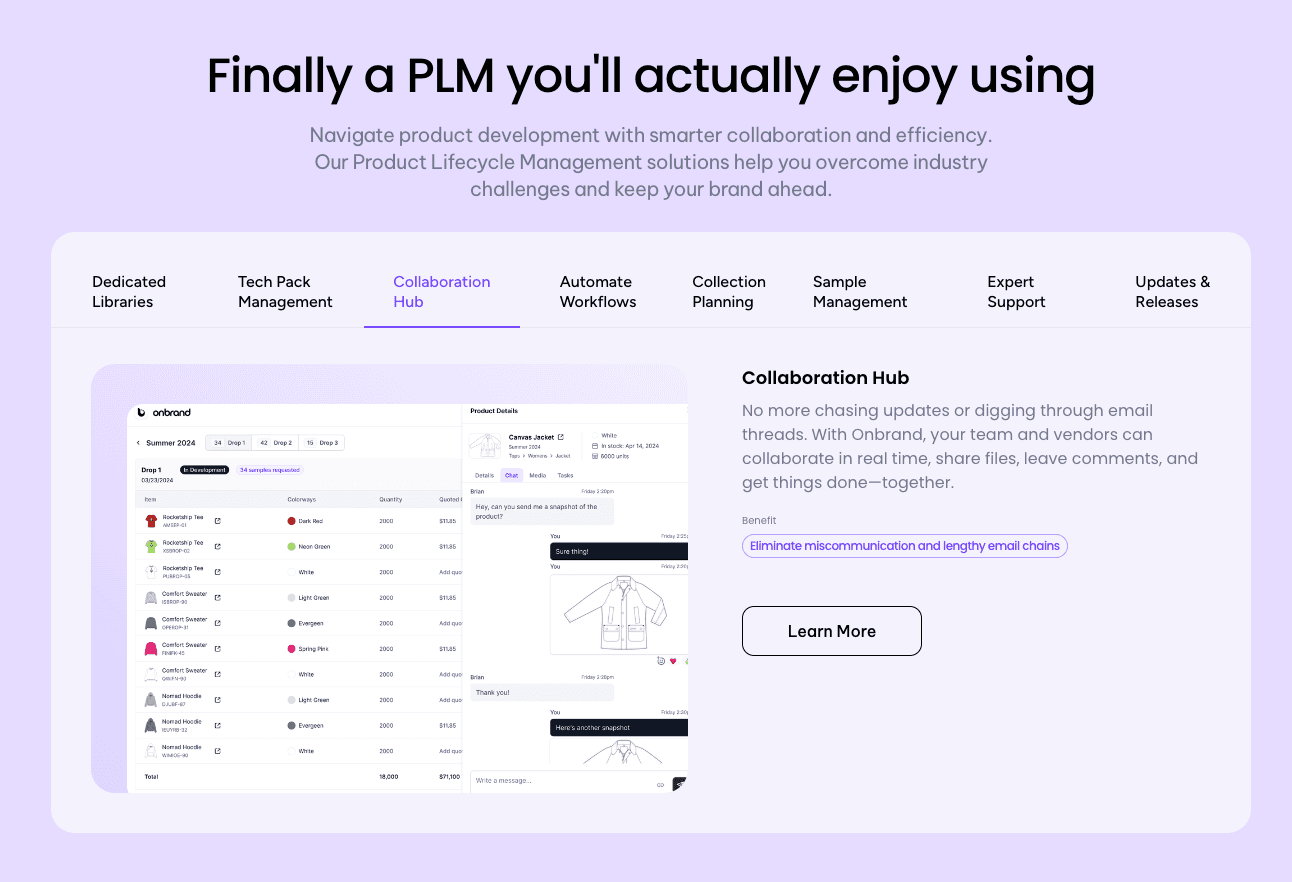
PLM AI is not about adding more tools. It fixes how product data moves through your workflow.
Most issues in fashion product development come from disconnected systems. Tech packs fall out of sync. Samples reflect outdated specs. Product data sits in different places, which makes changes harder to manage and slows development.
AI only works when it stays tied to the product record.
When styles, tech packs, BOMs, and samples stay connected, updates remain consistent, and decisions become easier to manage. That is where PLM AI helps reduce rework and improve product quality without adding manual work.
Onbrand PLM applies this directly. AI works inside the same workflows where product data lives, so updates stay aligned from design through production.
The difference is not the technology. It is how product data is structured and where AI is applied.
FAQs About PLM AI
How is PLM AI different from design AI tools?
PLM AI manages product data and supports development workflows, while design AI tools focus on generating visuals or concepts. Design tools may use CAD tools or generate CAD models, but they do not manage tech packs, BOMs, or product records.
Does PLM AI replace product teams?
PLM AI does not replace product teams. It flags issues such as mismatched specs or missing materials, reduces manual checks in tech packs and BOMs, and helps teams work with more accurate product data. It helps teams handle complex engineering workflows, improve product quality, and align decisions with real product records instead of scattered files.
What role does PLM AI play in product development and manufacturing?
PLM AI supports product development by connecting product data from design to production. It helps teams work with accurate engineering data, reduces errors in physical prototypes, and improves visibility into product changes. It also supports manufacturing innovation by helping teams identify issues earlier and use available manufacturing capabilities more effectively.
Why do leading fashion brands adopt PLM AI?
Leading manufacturers adopt PLM AI to maintain strategic alignment between design, development, and production by keeping all updates tied to a single product record. It supports strategic alignment by keeping every update tied to the same product record, so teams are working from the same information at every stage.