Aug 3, 2026

Growth is exciting until the systems your team depends on struggle to keep up.
Many fashion brands choose PLM software based on their current needs, then face new challenges as the business adds more products, suppliers, users, and approvals.
Replacing software is expensive, but working around its limitations can be just as frustrating. Understanding fashion PLM scalability can help you spot those limitations before they affect product development.
If your brand is planning for future growth or reviewing its current PLM, this guide explains what fashion PLM scalability means, why it is important, and what to evaluate before choosing a platform.
TL;DR
Fashion PLM scalability is a PLM system's ability to support business growth as products, collections, suppliers, users, and product information increase.
Growth makes product development more complex, which is why scalable PLM systems help brands manage larger collections, expanding supplier networks, bigger teams, and international operations.
Key capabilities of a scalable PLM include flexible product data, configurable workflows, user permissions, integrations, reliable performance, and cloud infrastructure.
Before choosing a PLM, evaluate how it handles long-term growth, increasing product data, integrations, customization, and changing business requirements.
Onbrand combines AI Design with PLM to keep design concepts, product information, tech packs, approvals, and supplier collaboration connected as fashion brands grow.
What Fashion PLM Scalability Really Means
Fashion PLM scalability is the ability of a product lifecycle management (PLM) system to support a growing fashion business without becoming harder to use or manage.
As fashion companies introduce more styles, SKUs, collections, and product lines, the amount of product information, users, suppliers, and approvals also increases.
A scalable system continues to support that added complexity without interrupting product development.
For the fashion industry, scalability is about handling increasing complexity over time. A growing brand may expand into new categories, launch additional collections, or manage several labels at the same time.
Every new fashion product adds specifications, materials, revisions, and documentation that become part of the product lifecycle.
The same applies throughout the entire product lifecycle. Product records often continue beyond development into production and remain available until a style reaches end-of-life status.
As more products move through those stages, the amount of information grows with them. A scalable PLM is built to keep supporting that increasing complexity as the business expands.
Why Fashion Brands Should Prioritize PLM Scalability
Expansion rarely affects only one part of the business. Fashion brands usually introduce more products, work with more suppliers, add new team members, and expand into additional markets over time.
Every change increases the amount of product information that needs to be managed. Without a system that can keep up, everyday product development work becomes harder to manage as the business grows.
Growing Product Lines
As brands release new collections, the amount of work behind every product also increases.
Each style needs product specifications, a fashion tech pack, revisions, design files, and construction details before production begins. Ideas from market research and trend forecasting often lead to more design options, which means more product records to organize.
Even a single tech pack can go through multiple revisions before final approval, adding to the volume of information product teams manage every season.
Expanding Supplier Networks
Business expansion often means working with more factories, material vendors, and other external partners.
Every supplier may require different documents, timelines, and communication during material sourcing and production planning. More relationships also increase the amount of supplier collaboration needed throughout development.
Working with more suppliers increases the amount of sourcing and production information brands need to track, making supply chain transparency more difficult to maintain.
Larger Product Development Teams
Growing brands usually add fashion designers, developers, technical designers, merchandisers, and product managers.
Many also work with remote or global teams located in different offices and manufacturing regions. More people reviewing the same products creates additional approval processes and increases the need for team collaboration.
Everyone also depends on up-to-date information so decisions are based on the latest product details instead of outdated versions.
Multiple Brands and Seasonal Collections
Many small brands and emerging brands eventually expand beyond a single product line.
Managing multiple labels and seasonal collections means different calendars, priorities, and product assortments move through the key stages of development at the same time.
Trend analysis may also lead teams to explore more concepts each season, especially in fast fashion, where collection calendars are shorter, and product launches are more frequent.
International Growth
Expanding into new markets often adds more factories, production partners, and regional teams.
The production and manufacturing process may involve different countries, suppliers, and compliance requirements. Larger organizations also rely more heavily on global teams working throughout development.
As production scales toward mass production, coordinating product information becomes more demanding, and delays can have a greater effect on time to market.
What Makes a Fashion PLM Scalable?
A scalable fashion PLM is built to support larger collections, more users, and increasing product information without changing how teams manage day-to-day work.
The platform should continue organizing product data, supporting development activities, and handling additional complexity as the business expands.
Flexible Product Data Structure
A scalable PLM solution should organize centralized data in a way that supports the business's unique product development process.
Every style includes product specifications, materials, measurements, revisions, and supporting documents. As more products are added, version control helps teams keep track of updates without losing previous records or creating duplicate information.
Configurable Workflows
Every fashion brand follows its own development process, so workflows should adapt to the way teams already work.
Configurable automated workflows can support different approval processes, assign work during key stages of development, and keep activities moving in the correct order. Standardized workflows also help minimize errors and improve efficiency as collections grow.
User Roles and Permissions
Growing teams need different levels of access to product information. User roles and permissions allow designers, developers, merchandisers, suppliers, and other external partners to view or edit only the information relevant to their responsibilities.
Clear permissions support real-time collaboration between internal teams and external partners without giving every user access to every record. They also make it easier for participants to review current information and complete the work assigned to them.
Integrations
Fashion brands often rely on multiple business systems throughout product development and production. Good integration capabilities allow a PLM to exchange information with existing systems such as enterprise resource planning (ERP), inventory planning, sourcing, and design applications.
Reliable data migration also helps brands move product information into new PLM software while reducing manual work and addressing important technical aspects of implementation. Well-designed integrations support seamless integration between connected systems.
Performance at Scale
A scalable platform should continue performing well as more users, products, and records are added. Fast access to up-to-date information and reliable centralized data help product teams continue working without unnecessary delays.
Consistent product information also supports data-driven decisions, helping brands maximize profitability as operations become more complex. Performance remains important regardless of the size of the tool designed to manage product development.
Cloud Infrastructure
Cloud infrastructure allows the vendor to manage hosting, updates, and system capacity without requiring fashion brands to maintain local servers.
It also gives authorized teams and suppliers access to current product information from different locations, supporting enhanced collaboration throughout product development.
Cloud platforms receive regular updates and can support digital transformation by making it easier to adopt new capabilities as business needs change.
Product information also remains accessible throughout the entire lifecycle, giving teams continued visibility into styles as they move through development and production.
As new features and workflows are introduced, many brands provide comprehensive training programs to help teams adopt platform updates and use the system effectively.
How to Tell if Your Current PLM Is Holding You Back
Operational problems often appear gradually as product development becomes more complex. If these issues are becoming part of your team's daily work, your current PLM may no longer be keeping pace with the business.
Common signs include:
Product teams regularly exporting information into spreadsheets because fashion tech packs, product records, or design files are difficult to manage in one place
Duplicate records created because version control is inconsistent and teams are unsure which files are current
Product information scattered between emails, spreadsheets, and shared folders
Frequent manual follow-ups to keep approval processes moving
Long approval cycles that delay the production process
Outdated supplier files that create confusion during development
Slow reporting when teams need current product information
Teams repeatedly upload designs or rebuild product records before creating physical samples, increasing the risk of missing or inconsistent details
Questions to Ask Before Choosing a Fashion PLM
Product demonstrations often highlight a platform’s key features under ideal conditions. Before making a decision, it helps to understand how the system performs after months or years of everyday use.
Asking practical questions during the buying process can reveal how well a platform supports long-term growth.
Can the Platform Grow Without Major Reconfiguration?
Expansion usually brings new collections, users, suppliers, and workflows.
Ask the vendor to demonstrate how the PLM system handles those changes after implementation. Can administrators add product categories, fields, or users without rebuilding the system?
Seeing these changes completed during a demonstration gives buyers a clearer picture than reviewing a feature list alone.
How Does the Vendor Support Long-Term Growth?
Implementation is only the beginning.
Ask how new users are onboarded, what customer support is available after launch, how often the platform receives updates, and how release changes are communicated.
It is also worth reviewing what training resources are available as your team grows.
What Happens as Product Data and Collections Expand?
Ask if there are limits on product records, file storage, or attachments. Find out how the platform performs as collections become larger and more historical data is retained.
Questions about search speed, reporting performance, and pricing changes can help identify unexpected costs as the business expands.
Can the Platform Adapt Without Heavy Custom Development?
Ask the vendor to explain which changes administrators can make themselves and which require vendor support or custom development.
It is also useful to understand how long configuration changes typically take and how platform updates affect those customizations.
How Easy Is It to Connect Other Business Systems?
Don't stop at asking if integrations are available. Ask which business systems are already supported, how APIs are used, who maintains integrations over time, and whether additional costs apply.
Request implementation examples, ask who owns the data being exchanged, and learn how connected systems are managed after deployment.
How Onbrand PLM Supports Scalable Fashion Product Development
Onbrand combines fashion PLM software with AI-assisted design tools so growing brands can keep product information connected from early concept work through production.
Teams can develop creative concepts, organize mood boards, and move approved ideas into the product development process without rebuilding the same information in separate systems.
Keep Product Information Connected as Your Business Grows
More collections usually mean more styles, materials, colorways, tech packs, approvals, and revisions to manage. Information can quickly become scattered between spreadsheets, emails, folders, and supplier files.

Onbrand PLM brings these records into one connected system. Styles link directly to materials, colors, artwork, specifications, and live tech packs, so teams do not have to recreate the same details in several places.
Tech packs remain web-based and current as changes are made. Designers, developers, and suppliers can refer to the latest product information without sending updated Excel files or PDFs after every revision. This reduces duplicate records, outdated files, and version conflicts during development.
Onbrand customers have reported creating tech packs up to 55% faster and shortening product development by four weeks.
Support Growing Teams and More Complex Workflows
Scalability also depends on how well a platform supports more people. Growing brands may add designers, developers, sourcing teams, production staff, and suppliers, each with different responsibilities.
Onbrand PLM uses role-based permissions to control what each person can view or edit. Internal teams can manage reviews and approvals, while suppliers can access the product details and tech packs relevant to their work.
Configurable stages, tasks, approval steps, and time-and-action calendars allow brands to organize development around their existing process.
Comments and updates remain connected to the relevant style or tech pack, reducing the need to track decisions through email, WhatsApp, or separate project tools.
Onbrand also provides a dedicated account representative and does not charge separate support fees. Most teams can complete implementation within two to four weeks, with some data migration and setup projects completed in about 10 days.
Scale Product Development Without Losing Visibility
More products create more revisions, approvals, samples, and production updates. Without one place to track them, teams may struggle to see what has changed, what still needs approval, or which files suppliers are using.
Onbrand AI Design supports the early creative stages by helping teams generate concepts, explore variations, review colorways, and organize visual references.
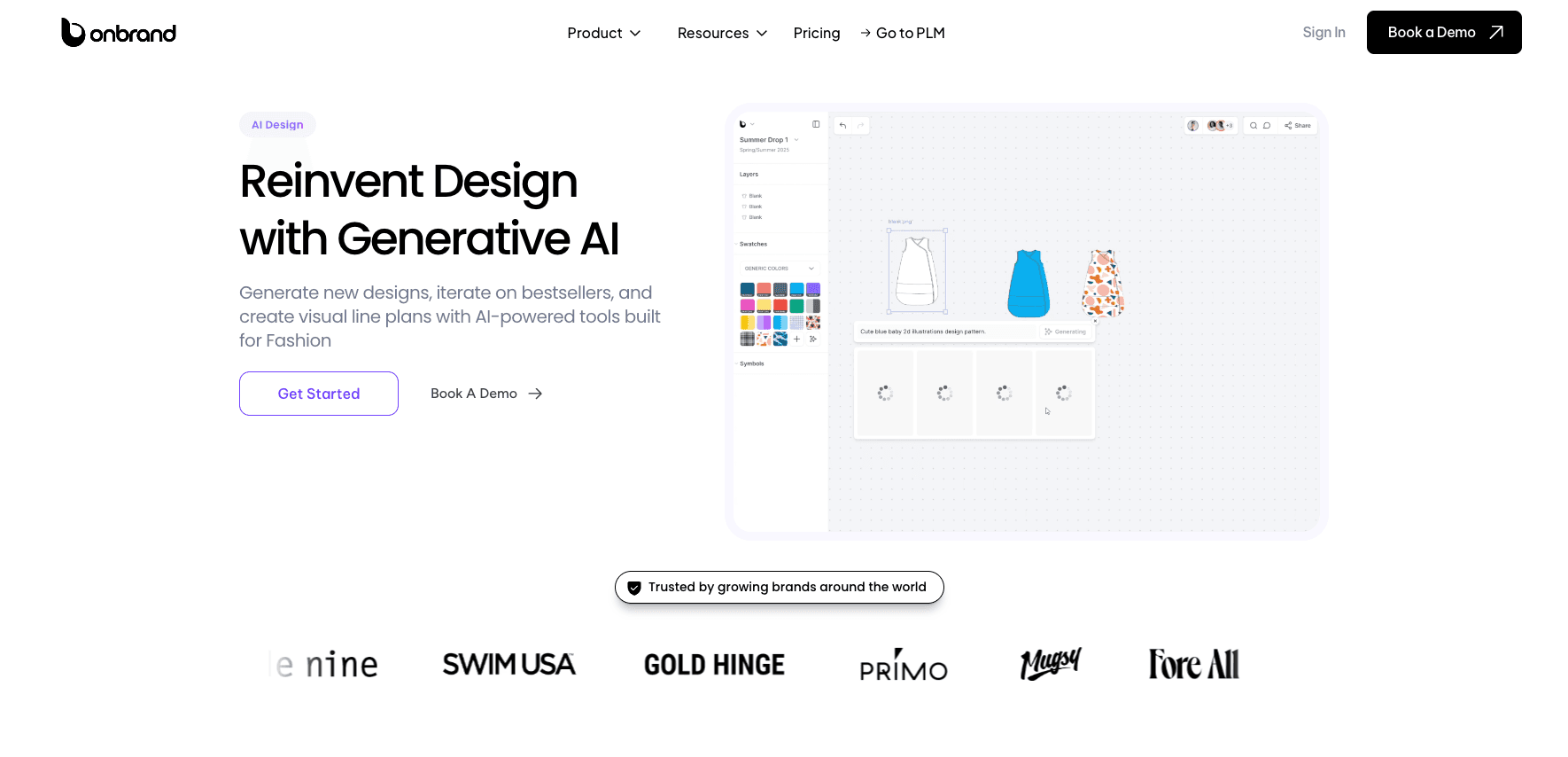
Once a direction is approved, visuals, palettes, and related product details can move into Onbrand PLM for continued development.
Product teams can then review style history, track sample approvals, compare updates, and support better collaboration without checking several files or asking multiple people for status updates.
Brands should not have to replace their product development system each time they enter a new stage of growth.
Onbrand gives fashion teams a connected foundation for managing larger collections, broader teams, and more detailed development work without losing sight of the products moving toward production.
Onbrand: A Fashion PLM That Grows With Your Brand
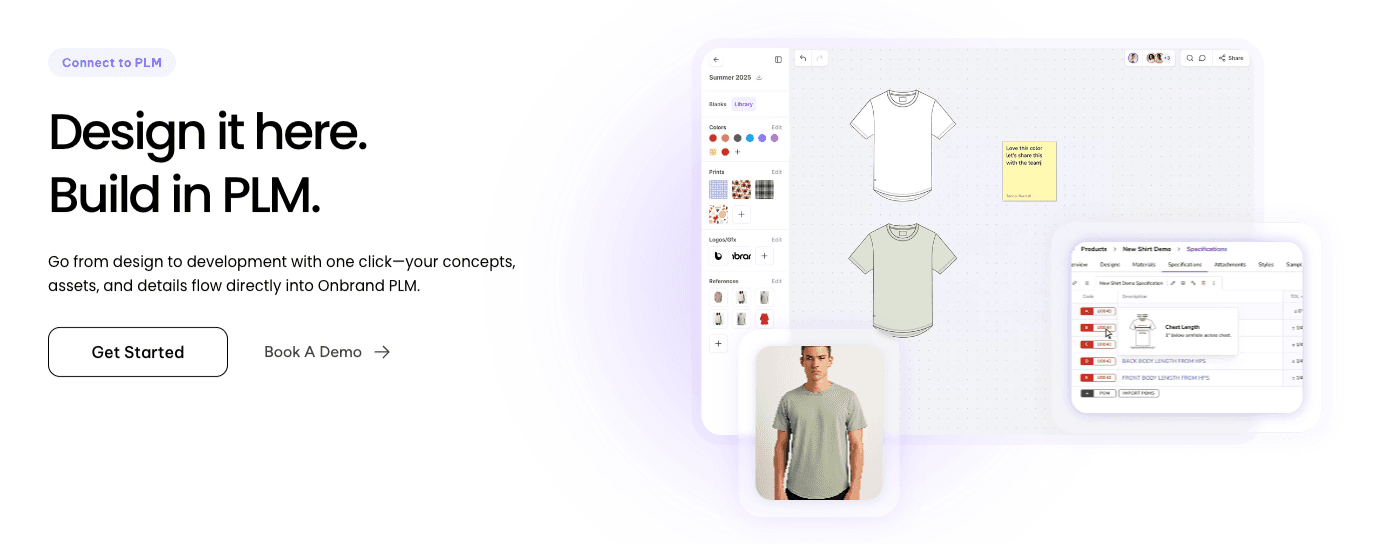
Growth should not mean replacing the systems your team relies on. A scalable PLM gives fashion brands the foundation to manage larger collections, more suppliers, and more complex product development without losing visibility or control.
Onbrand AI Design and Onbrand PLM work together to keep design and product information connected from concept through production, helping teams continue working from the same source of truth as the business grows.
FAQs About Fashion PLM Scalability
How can you measure fashion PLM scalability?
You can measure fashion PLM scalability by evaluating how well the system handles more users, products, suppliers, collections, integrations, and workflow complexity without slowing product development or system performance. A scalable platform should continue supporting reporting, searches, and automated workflows as product information grows.
Can a small fashion brand benefit from a scalable PLM?
Yes. A small fashion brand may not need every advanced capability immediately, but choosing a scalable PLM early can reduce future migration work. It also gives the business room to add more products, suppliers, collections, and team members without replacing the system as it grows.
What's the difference between scalable and customizable PLM software?
Customizable PLM software allows brands to change fields, workflows, or layouts to match their processes. Scalable PLM software continues performing well as product data, users, suppliers, and development activities increase. A platform can be customizable without being scalable.
Does cloud infrastructure affect fashion PLM scalability?
Yes. Cloud infrastructure helps support business growth by keeping product information available as teams, collections, and suppliers expand. It also supports supply chain management by giving authorized users access to the same product information from different locations. Better visibility into product data can help brands respond to new trends, support sustainability efforts, and reduce waste by limiting duplicate records and unnecessary revisions.
When should a fashion brand upgrade to a more scalable PLM?
A fashion brand should consider upgrading when teams regularly rely on spreadsheets, duplicate tech packs, manual follow-ups, or outdated product records to complete daily work. Long approvals, slow reporting, and disconnected supplier information are also common signs that the current PLM is limiting product development.