Jul 30, 2026

Every collection starts with an idea, but ideas need a way to be seen before they can be refined.
Fashion illustration gives designers that visual language.
It helps communicate silhouettes, styling, fabric ideas, and the overall creative direction of a garment before patterns, samples, or production begin.
Although hand-drawn illustrations remain common, digital tools and AI have expanded how fashion professionals develop and present new concepts.
In this article, you'll learn what fashion illustration is, where it fits in the design process, and why it continues to be an important part of modern fashion.
TL;DR
Fashion illustration is the process of visually communicating clothing concepts before garments move into product development.
Fashion illustrations can be created by hand, with digital software, or with AI, depending on the designer’s preferred method and intended output.
Good fashion illustrations communicate silhouette, proportion, fabric, texture, styling, movement, and garment details to help teams review and refine ideas.
AI supports concept generation, creative exploration, colorways, material visualization, and faster design iteration, but it does not replace professional design judgment or product approvals.
Onbrand AI Design helps fashion teams generate illustrations, compare design variations, collaborate on concepts, and connect approved visuals directly to Onbrand PLM for product development.
What Is Fashion Illustration?
Fashion illustration is the visual representation of clothing concepts through art.
It gives designers a way to communicate the appearance of garments, including silhouette, styling, color, and proportion, before they are made.
The purpose is to present creative ideas in a way that people can quickly understand while capturing the beauty of a design.
Why Fashion Designers Use Fashion Illustration
Before committing to a final direction, designers often use fashion illustration to explore different ideas.
A single illustration can compare different silhouettes, colors, fabric choices, or accessories, making it easier to see how small changes affect the overall style of a design.
It also helps convey an artistic vision that words alone cannot fully explain. The way a garment drapes, the mood of a collection, or the feeling behind a design often becomes easier to understand through illustration.
Many collections begin with a source of inspiration, and these illustrations help preserve the original concept as ideas continue to develop.
Fashion illustration also plays an important role in presentations. Designers use it to introduce new collections, build portfolios, and prepare concepts for client presentations.
Illustrations may feature complete looks with shoes, accessories, or costume elements, often shown on fashion models to highlight proportion and styling.
For many professionals, fashion illustration reflects creative skills and passion. It remains one of the most effective ways to present clothes designed for women, men, or children within the fashion world.
Fashion Illustration vs Fashion Drawing vs Fashion Sketch
These terms are often used interchangeably, and fashion teams may define them differently. In general, their differences relate to purpose, finish, and level of detail.
A fashion sketch is usually a quick way to explore an early idea. A fashion drawing is a broader visual study of garments, figures, or fashion concepts. A fashion illustration is often more presentation-focused and communicates the mood, styling, and overall look of a garment or collection.
Feature | Fashion Illustration | Fashion Drawing | Fashion Sketch |
Purpose | Present the creative vision and overall look of a garment or collection. | Create a visual study of clothing, figures, or fashion concepts. | Explore and develop early design ideas quickly. |
Level of detail | Varies from minimal and expressive to highly detailed. | Moderate to high, depending on the artist and purpose. | Low to moderate. Focuses on the main silhouette, proportions, and early garment ideas. |
Style | Expressive, polished, and presentation-focused. | May be observational, expressive, or used to study garments and figures. | Loose, simple, and fast, with emphasis on the overall form. |
Audience | Clients, buyers, internal teams, portfolios, and fashion presentations. | Designers, students, artists, and educators. | Primarily designers during concept development. |
Typical use | Collection presentations, editorials, portfolios, and brand storytelling. | Practice, garment studies, figure studies, concept art, and references. | Brainstorming new styles and testing proportions, silhouettes, and garment ideas before refinement. |
Types of Fashion Illustration
Fashion illustrations can be created by hand, with digital software, or through AI-assisted methods. Each approach uses different tools, but all three communicate clothing concepts visually.
Traditional Fashion Illustration
Traditional fashion illustration is created by hand using paper and a variety of drawing tools. Common tools include pencil, ink, markers, watercolor, and colored pencils, allowing illustrators to experiment with different techniques and artistic styles.
Because every piece is created manually, each artwork has its own unique character and expressive quality. Traditional illustration continues to be taught in fashion schools and remains a common way to develop artistic skills and communicate clothing concepts.
Digital Fashion Illustration
Digital fashion illustration is created using software and digital devices instead of traditional materials.
Programs such as Adobe Photoshop, Adobe Illustrator, Procreate, and Concepts allow designers to create clothing illustrations as digital images that can be edited, refined, and exported in different formats.
Digital illustrations are commonly used in presentations, online portfolios, client decks, and social media platforms. Designers may also combine illustrations with photographs to show styling ideas, compare concepts, or present garments in a more realistic way.
Digital files can be shared through different forms of media or exported for print and online use. Many illustration apps also offer free versions or trial plans for beginners.
AI Fashion Illustration
AI fashion illustration uses artificial intelligence to produce clothing concepts from text prompts, sketches, or reference images. This method uses AI generation models to create visual interpretations based on the information provided by the user.
The output may range from quick concept sketches to more detailed illustrations, depending on the prompts, reference materials, and AI model being used.
What Makes a Good Fashion Illustration?
A good fashion illustration balances creativity with clarity. It captures the character of a garment and presents the designer's vision in a way that's easy to understand long before the first sample is produced.
Key elements include:
Silhouettes – The outline of the garment should be clear enough to communicate its shape at a glance.
Proportion – Figures may follow realistic anatomy or use elongated proportions to emphasize style, but they should always keep the garment easy to read.
Movement and poses – Expressive poses help bring the illustration to life by showing how clothing flows and moves with the body.
Color and light – Color palettes and careful shading add depth, create atmosphere, and highlight important design features.
Fabric and texture – Drawing techniques help suggest the appearance and drape of different materials, adding realism without replacing physical samples.
Styling – Hair, footwear, accessories, and other styling elements complete the look and strengthen the overall presentation.
Garment details – Distinctive details such as pockets, pleats, trims, and decorative finishes give each design its own identity.
When combined, these elements create illustrations that communicate the designer's vision clearly and make creative discussions more productive.
Where Fashion Illustration Fits in the Fashion Design Process
Fashion illustration plays an important role during the early design process. It helps translate initial ideas into visuals that can be reviewed and refined before a creative direction is chosen.
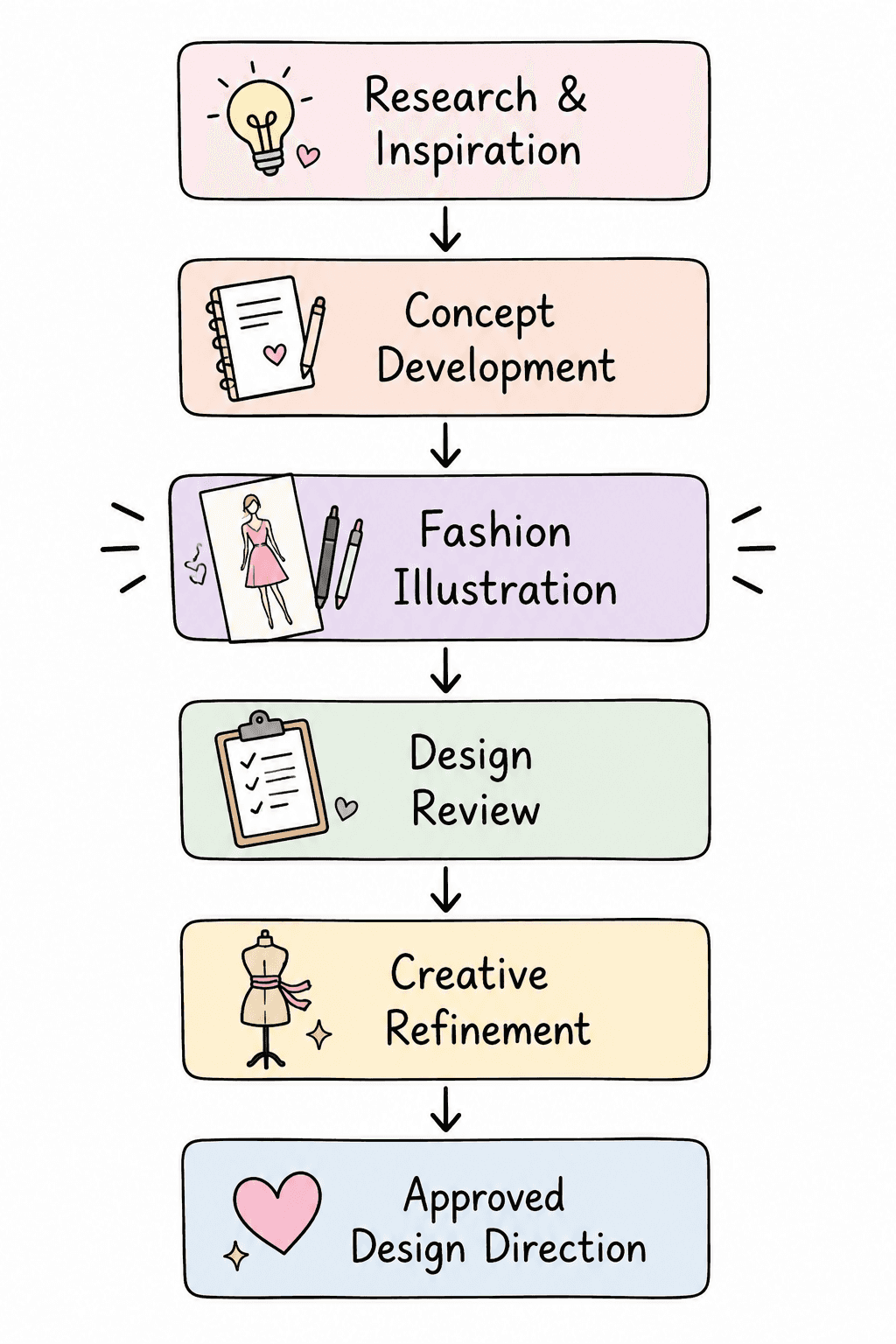
Fashion illustration typically appears near the beginning of the design process, after research and concept development.
At this stage, designers use illustrations to visualize garment ideas, compare different styles, and present concepts for review.
Reference photos, mood boards, fabric samples, and trend research often support the illustrations by providing additional visual context.
Once a creative direction is approved, the project can move into product development, where the approved design is prepared for technical documentation, sampling, and production.
For fashion business teams, fashion illustration serves as the visual bridge between early creative thinking and an approved design direction.
How AI Supports Modern Fashion Illustrators
AI has become another way to create fashion illustrations during the early stages of design.
Instead of drawing every concept by hand, designers can use AI to turn text prompts or reference images into visual ideas. The result is faster concept generation that can support creative thinking.
Today, AI is commonly used for:
Concept generation – Produce initial clothing concepts from written descriptions or reference images.
Creative exploration – Support experimenting with different silhouettes, styling ideas, and visual directions.
Colorways – Generate multiple color variations of the same garment to compare different design options.
Material visualization – Create visual interpretations of different fabrics, finishes, or textures before physical samples are produced.
Faster iteration – Produce several visual concepts in a short period, giving designers a broader range of ideas to review while expanding their imagination.
Although AI can generate fashion illustrations quickly, it cannot replace professional design judgment.
It cannot reliably evaluate garment construction, fit, manufacturing requirements, or brand identity in the same way an experienced designer can.
AI also cannot make approval decisions or determine which concept is the right choice for a collection. Human expertise remains essential for evaluating ideas and moving a design forward.
Create Fashion Illustrations Faster With Onbrand AI Design
Onbrand AI Design gives fashion teams one place to create illustrations, explore visual directions, review concepts, and move approved ideas into product development.
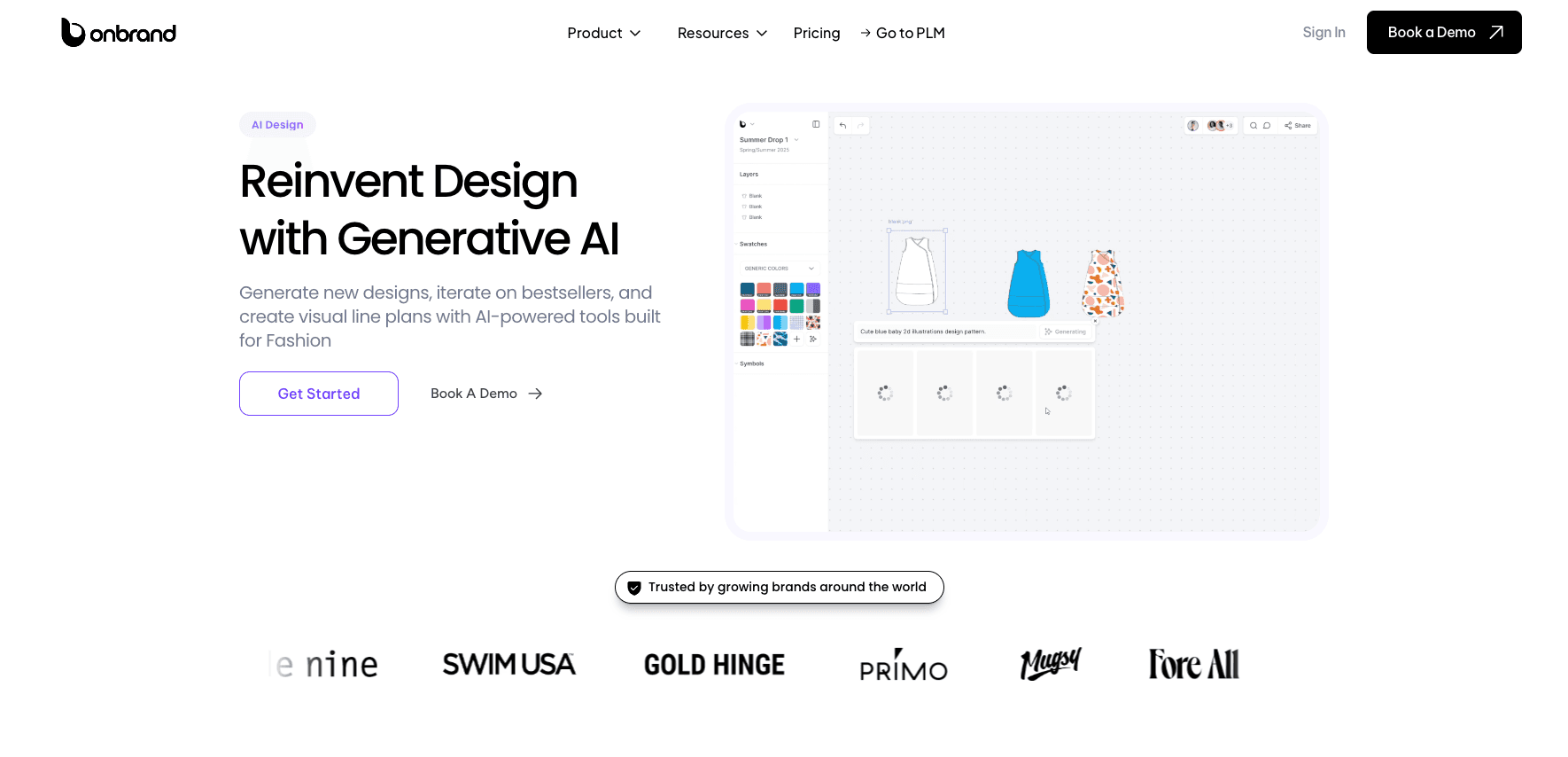
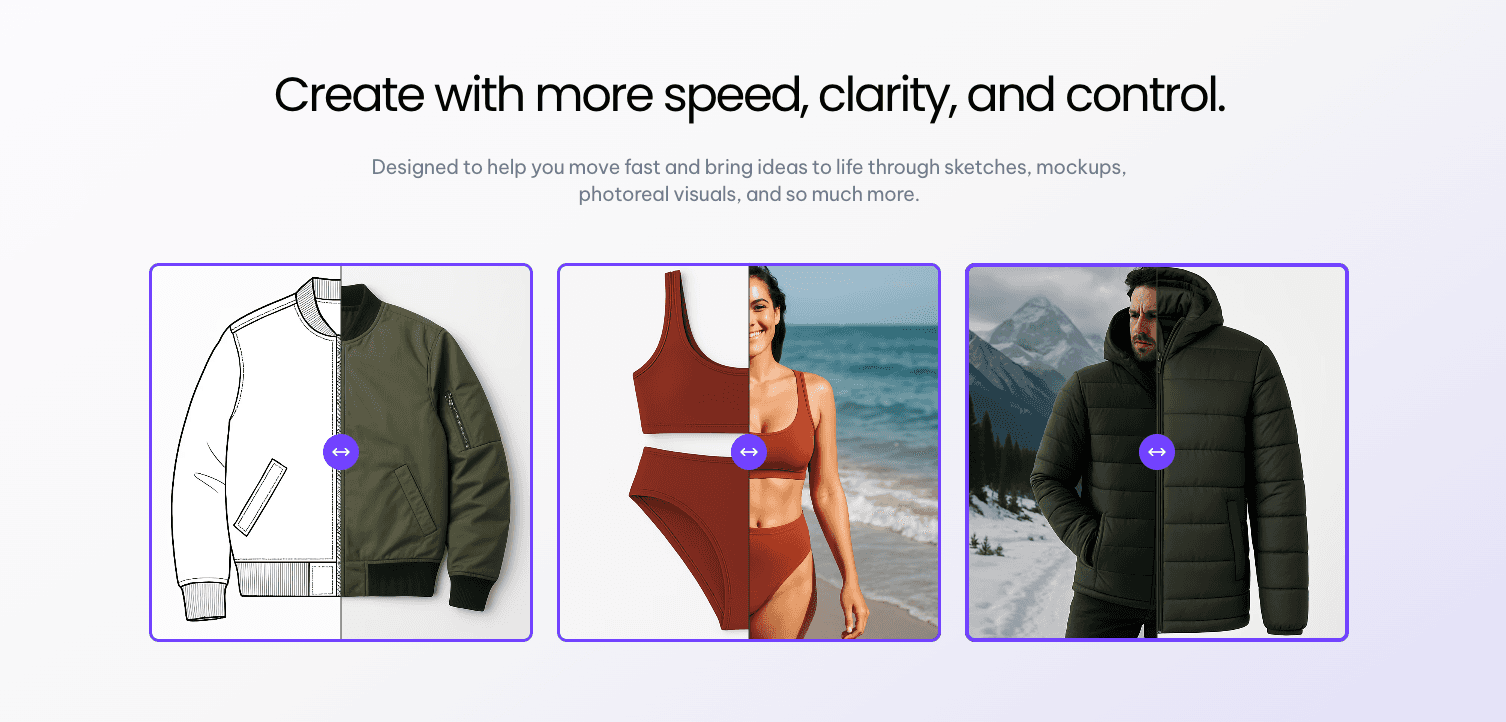
Designers can begin with a text prompt, hand-drawn sketch, flat drawing, or reference photo. Onbrand turns that input into line art, mockups, photorealistic renders, or on-model visuals.
Teams using Onbrand can achieve up to 10x faster design turnaround, create 30–50% fewer physical samples, and save more than 10 weeks each year.
Generate Concepts From Simple Prompts
Designers can describe a garment and quickly turn the idea into a visual concept.
A prompt, sketch, or inspiration photo can become a fashion illustration, polished mockup, flat image, or on-model render. This gives teams a practical starting point without drawing every version manually.
Designers can also turn rough sketches into presentation-ready visuals for internal reviews or collection planning.
Explore Variations Before Choosing a Direction
Once a concept is created, teams can test different versions without starting again. Onbrand supports changes to:
Silhouettes
Colorways
Fabrics and textures
Trims and cuts
Graphics
Styling
Model poses and views
Designers can use prompts to adjust specific parts of a concept or generate alternate versions in one click. Pantone and Coloro libraries also support more precise color exploration.
Selected visuals can then be exported to Adobe Illustrator for further refinement.
Review and Refine Concepts in One Place
Sketches, mockups, references, mood boards, and line plans can stay together on a shared canvas.
Team members can leave comments directly on a frame or visual, compare versions, and review changes without searching through separate folders, messages, or PDFs.
Designers, merchandisers, and category managers can review the same collection and decide which concepts are ready to move forward. Presentation tools also help turn selected illustrations into client decks, buyer presentations, or internal reviews.
Carry Approved Concepts Forward
Approved illustrations can connect directly with Onbrand PLM.

Concepts, assets, palettes, and design details can move into the related product record without rebuilding the information in another system. The approved visual can then support style records, tech packs, materials, specifications, and later product development work.
This connection keeps the original concept close to the product information used after design approval.
Onbrand AI Design supports the full visual process, from the first fashion illustration to the approved direction that moves into development.
Take Fashion Illustration Further With Onbrand
Fashion illustration remains one of the most effective ways to communicate clothing ideas, from the first concept to an approved creative direction.
Hand-drawn, digital, and AI-assisted illustrations each play a valuable role in helping fashion teams visualize, compare, and refine designs before product development begins.
Onbrand AI Design builds on that process by bringing concept creation, visual collaboration, and product development into one connected workspace. When designs are approved, they can continue directly into Onbrand PLM without losing the context behind each decision.
FAQs About Fashion Illustration
Is fashion illustration still used today?
Yes. Fashion illustration remains an important part of the design process. Designers use hand-drawn, digital, and AI-assisted illustrations to explore ideas, present collections, and review concepts before products move into development. It is used by independent designers as well as fashion brands of all sizes.
Do fashion designers need to know how to draw?
No, fashion designers do not need to be expert illustrators, but basic drawing skills can be useful. Many designers also use digital software and AI tools to communicate concepts. The key is presenting the garment clearly enough for others to understand the design direction.
Can fashion illustration show fabric texture and movement?
Yes. Fashion illustration can suggest how a fabric may drape, fold, or move through line, shading, color, and brushwork. It remains a visual interpretation, so it cannot confirm how the physical material will behave. Designers may add labels or annotations to clarify fabric and styling details.
Can AI create fashion illustrations from reference images?
Yes. AI tools can create fashion visuals from reference images, sketches, and text prompts. Designers should still review the output closely because garment details, proportions, trims, and construction may change between generations, including in close-range images.
How did fashion illustration develop over time?
The history of fashion illustration is closely connected to early fashion plates, which reproduced and circulated images of new clothing styles before fashion photography became dominant.
Publications such as Vogue, Gazette du Bon Ton, and other fashion magazines helped popularize fashion illustration and bring the work of leading illustrators to a wider audience within the fashion industry.
Contemporary illustrators such as David Downton remain well known for their distinctive styles and work with fashion publications and luxury brands.
Their work has inspired new generations of illustrators by blending traditional techniques with modern fashion aesthetics while drawing inspiration from the past.