A Practical Guide to PLM for Retail Industry Teams

A Practical Guide to PLM for Retail Industry Teams

Nov 24, 2025

plm for retail industry

Modern retail changes quickly. Fashion and retail teams manage short product cycles, global sourcing, and unpredictable customer demand while keeping track of endless details behind every collection. From sample reviews to supplier updates, the workload can feel nonstop.

Retail Product Lifecycle Management (PLM) helps retail teams stay organized and connected. It gives them one place for product data management, tracking progress, and collaborating across design, development, and production. 

With PLM, brands gain visibility into every stage of the product journey, reducing confusion and keeping collections on track.

In this article, you’ll learn what PLM means for the retail industry, why it matters for growing brands, and how it supports every stage of modern product development.

What Is PLM in the Retail Industry?

If you work in retail, you already know how many moving parts each product involves. A PLM system brings order to that complexity. 

It’s a centralized platform that connects product data, design updates, and supplier communication throughout the product’s lifecycle.

A retail PLM helps your team manage data, track timelines, and stay aligned with suppliers across supply chains. It replaces scattered files and manual updates with digital solutions that improve accuracy and reduce time lost to back-and-forth communication.

You can use PLM software solutions to streamline processes, improve collaboration, and reduce costly errors across development and manufacturing processes. The result is improved product quality, better visibility, and more confident decisions.

Why Retail Product Lifecycle Management Is Different From Traditional PLM

Retail teams face challenges that traditional PLM systems were never built to handle. Older platforms focused on long production timelines and engineering precision, while retail demands speed, flexibility, and creativity.

Retail PLM adapts these systems to keep pace with fashion and consumer goods, helping teams manage constant design changes, rapid supplier coordination, and shorter product lifecycles.

A retail PLM supports rapid product development and enables retailers to make faster, data-driven decisions without sacrificing quality.

It’s designed to connect creative, sourcing, and merchandising teams in one space, allowing collections to move from concept to store shelves in less time. This agility adds measurable business value and helps brands stay relevant in a competitive marketplace.

As part of the broader digital transformation of the fashion industry, modern PLM tools use connected data and visual workflows to simplify collaboration and improve visibility. 

They support retail businesses to respond quickly to trends, manage higher product volumes, and keep every collection aligned with customer demand.

Why PLM Matters for Retail Brands

Running a retail business means keeping design, sourcing, and production connected at every step. When teams use different tools, data silos form, and decisions take longer. 

PLM helps you bring everything together in one place, improving accuracy, speed, and collaboration.

A well-designed retail PLM solution supports your daily work and long-term goals by creating visibility, reducing errors, and supporting better resource allocation across teams. 

It gives you the control needed to handle complex supply chain processes without compromising product quality.

Here’s how PLM delivers value to retail brands:

  • Faster time to market through connected workflows that link design, development, and production.

  • Accurate product data with up-to-date information and fewer manual edits.

  • Cross-team visibility that keeps merchandising, design, and sourcing aligned.

  • Stronger supplier collaboration through shared access and transparent communication.

  • Sustainability tracking that helps manage compliance and monitor materials responsibly.

  • Reduced rework through consistent documentation and automated updates.

  • Better decision-making supported by connected product data and clear insights.

With PLM software in place, retail businesses gain the confidence to adapt quickly, maintain quality control, and meet customer expectations with greater efficiency.

How PLM Supports Every Stage of Retail Product Development

A retail product lifecycle management system helps you manage every stage of development with clarity and control. It connects teams, strengthens supplier relationships, and builds consistency across the entire process.

Each phase benefits from increased efficiency, informed decision-making, and the flexibility to adapt to shifting consumer demands.

1. Design and Concept

At the start, PLM helps your team organize design ideas, materials, and collection plans in one shared space. It connects design and merchandising through real-time data sharing, supporting faster collaboration and creative alignment.

With digital technologies and market research insights, your team can focus on product innovation that fits customer preferences and supports business growth.

2. Development and Sourcing

During development, PLM helps manage samples, materials, and supplier communication across multiple categories. It maintains product compliance and consistency while helping retailers reduce costs through better coordination.

Modern capabilities, including predictive analytics and machine learning, guide smarter sourcing choices and streamline workflows to prevent delays.

3. Production

In production, PLM supports supply chain management by tracking orders, managing quality control, and flagging potential supply chain disruptions. Teams can ensure compliance with sustainability regulations and maintain transparency across partners.

Enhanced collaboration during this stage helps achieve cost savings, maintain product quality, and increase operational efficiency.

4. Launch and Post-Launch

After production, PLM keeps your team aligned through accurate product introductions and merchandising updates. Data from existing products helps refine future decisions and improve customer satisfaction.

With access to advanced tools such as artificial intelligence and digital twins, teams can review performance data, strengthen sustainability initiatives, and maintain a competitive advantage in a fast-changing marketplace.

How Onbrand PLM Helps Modern Retail Teams

Every growing fashion brand needs a system that keeps pace with how quickly collections evolve. Your team deserves tools that match that speed and flexibility.

Onbrand PLM was built for that reality. It’s a flexible, fashion-focused platform designed to help creative and production teams work together without the usual friction of legacy systems.
Onbrand

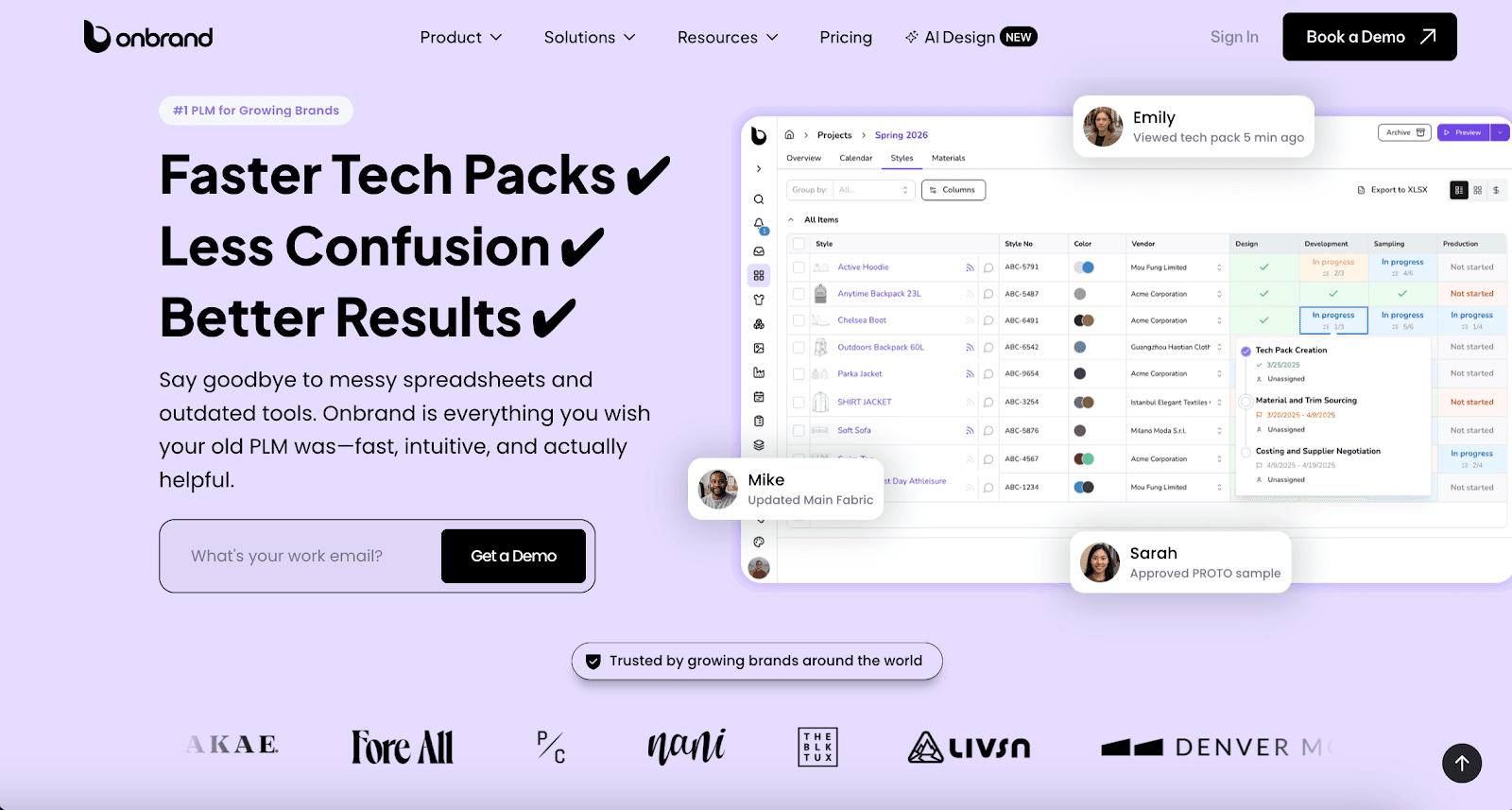
Trusted by brands worldwide, Onbrand gives you faster tech packs, fewer delays, and smoother collaboration across every stage of product development.

Unlike legacy PLM systems that take months to set up, you can get Onbrand running in as little as ten days. Teams report up to 55% faster tech pack creation and a four-week reduction in development time.

Everything about the platform is built for clarity and speed, helping your team stay organized and your products reach the market faster.

Key Features

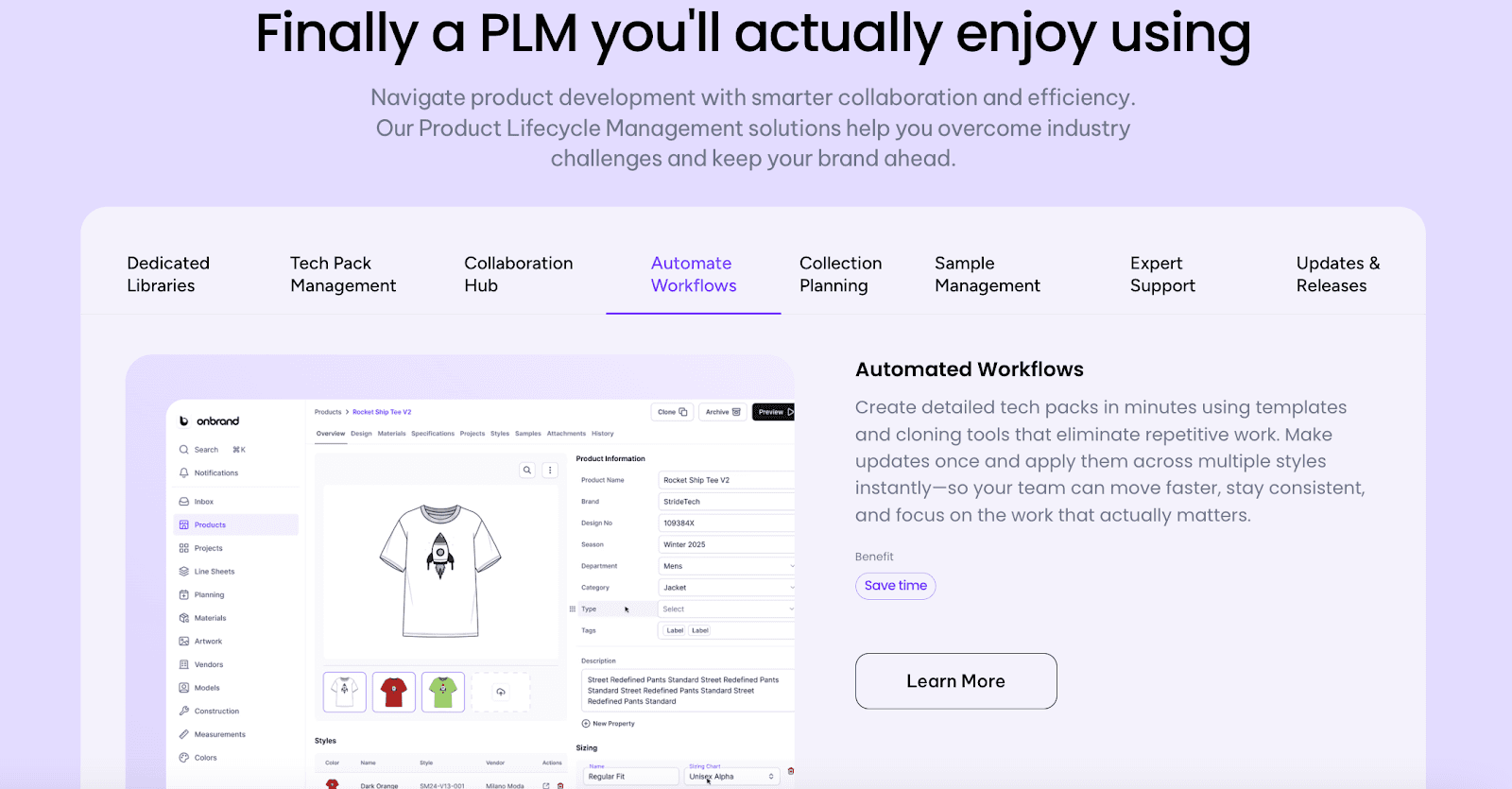
  • Live tech packs that update instantly across design, sourcing, and vendor teams to keep product details accurate and consistent.

  • Collection planning tools that organize assortments, track delivery timelines, and align teams on seasonal priorities.

  • Sample management that monitors progress, revisions, and approvals to speed up development cycles.

  • Built-in project management that helps teams manage tasks, milestones, and approvals in one central space.

  • Vendor collaboration hub that connects brands and factories through shared access, comments, and live updates.

  • Dedicated libraries that store fabrics, colors, and specifications for easy access across multiple collections.

  • Specification management that maintains clear product measurements and construction details for production accuracy.

  • AI-powered data migration that transfers existing product data quickly and accurately for a fast setup.

  • Cloud-based access that allows design, production, and sourcing teams to collaborate in real time from anywhere.

Onbrand simplifies product development for fashion, apparel, footwear, outdoor, and home brands, giving cross-functional teams one reliable space to plan, manage, and communicate. 

Every detail stays connected, reducing costly errors and improving overall business performance.

Finally, a PLM you’ll enjoy using. Discover how Onbrand helps teams stay organized and launch products faster.

Design Smarter With Onbrand AI Design

Creative work should feel inspiring, not repetitive. Onbrand AI Design gives your teams an intelligent, visual-first workspace that helps teams move from concept to ready-to-develop designs with less manual work.
Onbrand

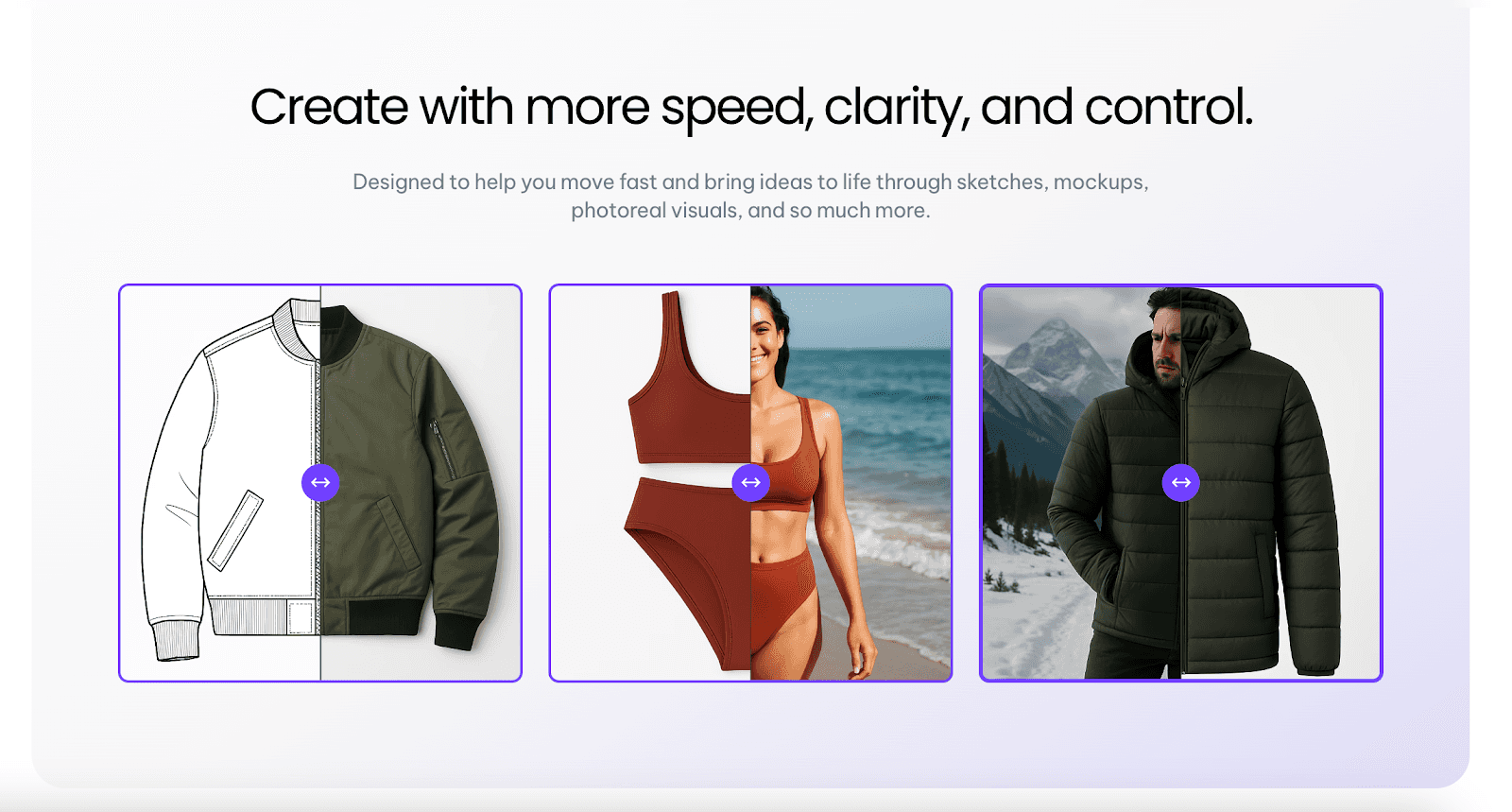
It complements Onbrand PLM by automating early creative tasks and helping you turn ideas into detailed, production-ready visuals that can move straight into development.

Built for designers, category managers, and creative teams, Onbrand AI Design supports faster concept exploration and real-time collaboration. It uses artificial intelligence to generate realistic garment designs, support fabric simulation, and organize creative assets in one shared space.

Key Features

  • Generative image creation that turns written garment descriptions into realistic design options.

  • Automated color palette generation inspired by brand identity and seasonal trends.

  • Intelligent fabric and texture simulation for lifelike fabric draping and finishes.

  • Automated technical sketch creation that converts 3D visuals into flats and sketches instantly.

  • Real-time co-editing that lets multiple designers collaborate on the same design file.

  • Version history and rollback for tracking edits and reverting to earlier versions with ease.

  • Asset library management that organizes templates, color palettes, and graphics in one place.

  • PLM system integration to send finalized designs straight into tech packs and development stages.

Onbrand AI Design and Onbrand PLM work together as one connected ecosystem that simplifies creative collaboration and product development. 

They help designers and fashion teams explore ideas faster, communicate visually, and maintain consistency from the first sketch to final production.

Bring your ideas to life faster with Onbrand AI Design. Schedule a demo to see it in action.

Create Better Retail Products With Onbrand PLM
Onbrand

Retail success depends on how well teams can connect ideas, data, and people. With shorter product cycles and growing customer expectations, having the right systems in place makes all the difference.

PLM helps retail brands bring structure to complexity, turning scattered information into organized, accessible workflows. When paired with modern design tools, it gives teams the freedom to focus on creativity while maintaining control over quality and timelines.

Onbrand PLM brings that balance to life. Built for fashion and retail teams, it combines fast setup, clear collaboration, and intuitive tools that keep projects moving without delay. 

With Onbrand PLM and Onbrand AI Design working together, every stage of the product development process becomes easier, faster, and more connected.

See how Onbrand helps retail teams design, develop, and launch products with confidence. Book a demo today and experience a better way to work.


FAQs About PLM for the Retail Industry

What is a PLM system in retail?

A PLM system in retail is software that manages every stage of a product’s journey. It connects teams, product data, and suppliers in one place, helping brands stay organized and reduce production errors.

Retail teams use PLM to track materials, manage approvals, and coordinate with vendors efficiently, keeping collections on schedule and consistent in quality.

What are the four phases of PLM?

The four phases of PLM are concept, development, production, and launch. In the concept phase, teams plan designs and materials. Development covers sampling, sourcing, and testing. Production focuses on manufacturing, quality checks, and supplier coordination.

The launch phase involves final approvals, merchandising updates, and product performance tracking once items reach the market.

What is ERP software used for in retail?

Enterprise resource planning (ERP) software in retail manages operations such as inventory, finance, and logistics. It tracks orders, handles payments, and maintains stock levels across multiple locations.

While PLM focuses on product design and development, ERP manages post-production processes, helping retailers maintain accurate data and smooth day-to-day operations. 

Modern retail changes quickly. Fashion and retail teams manage short product cycles, global sourcing, and unpredictable customer demand while keeping track of endless details behind every collection. From sample reviews to supplier updates, the workload can feel nonstop.

Retail Product Lifecycle Management (PLM) helps retail teams stay organized and connected. It gives them one place for product data management, tracking progress, and collaborating across design, development, and production. 

With PLM, brands gain visibility into every stage of the product journey, reducing confusion and keeping collections on track.

In this article, you’ll learn what PLM means for the retail industry, why it matters for growing brands, and how it supports every stage of modern product development.

What Is PLM in the Retail Industry?

If you work in retail, you already know how many moving parts each product involves. A PLM system brings order to that complexity. 

It’s a centralized platform that connects product data, design updates, and supplier communication throughout the product’s lifecycle.

A retail PLM helps your team manage data, track timelines, and stay aligned with suppliers across supply chains. It replaces scattered files and manual updates with digital solutions that improve accuracy and reduce time lost to back-and-forth communication.

You can use PLM software solutions to streamline processes, improve collaboration, and reduce costly errors across development and manufacturing processes. The result is improved product quality, better visibility, and more confident decisions.

Why Retail Product Lifecycle Management Is Different From Traditional PLM

Retail teams face challenges that traditional PLM systems were never built to handle. Older platforms focused on long production timelines and engineering precision, while retail demands speed, flexibility, and creativity.

Retail PLM adapts these systems to keep pace with fashion and consumer goods, helping teams manage constant design changes, rapid supplier coordination, and shorter product lifecycles.

A retail PLM supports rapid product development and enables retailers to make faster, data-driven decisions without sacrificing quality.

It’s designed to connect creative, sourcing, and merchandising teams in one space, allowing collections to move from concept to store shelves in less time. This agility adds measurable business value and helps brands stay relevant in a competitive marketplace.

As part of the broader digital transformation of the fashion industry, modern PLM tools use connected data and visual workflows to simplify collaboration and improve visibility. 

They support retail businesses to respond quickly to trends, manage higher product volumes, and keep every collection aligned with customer demand.

Why PLM Matters for Retail Brands

Running a retail business means keeping design, sourcing, and production connected at every step. When teams use different tools, data silos form, and decisions take longer. 

PLM helps you bring everything together in one place, improving accuracy, speed, and collaboration.

A well-designed retail PLM solution supports your daily work and long-term goals by creating visibility, reducing errors, and supporting better resource allocation across teams. 

It gives you the control needed to handle complex supply chain processes without compromising product quality.

Here’s how PLM delivers value to retail brands:

  • Faster time to market through connected workflows that link design, development, and production.

  • Accurate product data with up-to-date information and fewer manual edits.

  • Cross-team visibility that keeps merchandising, design, and sourcing aligned.

  • Stronger supplier collaboration through shared access and transparent communication.

  • Sustainability tracking that helps manage compliance and monitor materials responsibly.

  • Reduced rework through consistent documentation and automated updates.

  • Better decision-making supported by connected product data and clear insights.

With PLM software in place, retail businesses gain the confidence to adapt quickly, maintain quality control, and meet customer expectations with greater efficiency.

How PLM Supports Every Stage of Retail Product Development

A retail product lifecycle management system helps you manage every stage of development with clarity and control. It connects teams, strengthens supplier relationships, and builds consistency across the entire process.

Each phase benefits from increased efficiency, informed decision-making, and the flexibility to adapt to shifting consumer demands.

1. Design and Concept

At the start, PLM helps your team organize design ideas, materials, and collection plans in one shared space. It connects design and merchandising through real-time data sharing, supporting faster collaboration and creative alignment.

With digital technologies and market research insights, your team can focus on product innovation that fits customer preferences and supports business growth.

2. Development and Sourcing

During development, PLM helps manage samples, materials, and supplier communication across multiple categories. It maintains product compliance and consistency while helping retailers reduce costs through better coordination.

Modern capabilities, including predictive analytics and machine learning, guide smarter sourcing choices and streamline workflows to prevent delays.

3. Production

In production, PLM supports supply chain management by tracking orders, managing quality control, and flagging potential supply chain disruptions. Teams can ensure compliance with sustainability regulations and maintain transparency across partners.

Enhanced collaboration during this stage helps achieve cost savings, maintain product quality, and increase operational efficiency.

4. Launch and Post-Launch

After production, PLM keeps your team aligned through accurate product introductions and merchandising updates. Data from existing products helps refine future decisions and improve customer satisfaction.

With access to advanced tools such as artificial intelligence and digital twins, teams can review performance data, strengthen sustainability initiatives, and maintain a competitive advantage in a fast-changing marketplace.

How Onbrand PLM Helps Modern Retail Teams

Every growing fashion brand needs a system that keeps pace with how quickly collections evolve. Your team deserves tools that match that speed and flexibility.

Onbrand PLM was built for that reality. It’s a flexible, fashion-focused platform designed to help creative and production teams work together without the usual friction of legacy systems.

Onbrand

Trusted by brands worldwide, Onbrand gives you faster tech packs, fewer delays, and smoother collaboration across every stage of product development.

Unlike legacy PLM systems that take months to set up, you can get Onbrand running in as little as ten days. Teams report up to 55% faster tech pack creation and a four-week reduction in development time.

Everything about the platform is built for clarity and speed, helping your team stay organized and your products reach the market faster.

Key Features

  • Live tech packs that update instantly across design, sourcing, and vendor teams to keep product details accurate and consistent.

  • Collection planning tools that organize assortments, track delivery timelines, and align teams on seasonal priorities.

  • Sample management that monitors progress, revisions, and approvals to speed up development cycles.

  • Built-in project management that helps teams manage tasks, milestones, and approvals in one central space.

  • Vendor collaboration hub that connects brands and factories through shared access, comments, and live updates.

  • Dedicated libraries that store fabrics, colors, and specifications for easy access across multiple collections.

  • Specification management that maintains clear product measurements and construction details for production accuracy.

  • AI-powered data migration that transfers existing product data quickly and accurately for a fast setup.

  • Cloud-based access that allows design, production, and sourcing teams to collaborate in real time from anywhere.

Onbrand simplifies product development for fashion, apparel, footwear, outdoor, and home brands, giving cross-functional teams one reliable space to plan, manage, and communicate. 

Every detail stays connected, reducing costly errors and improving overall business performance.

Finally, a PLM you’ll enjoy using. Discover how Onbrand helps teams stay organized and launch products faster.

Design Smarter With Onbrand AI Design

Creative work should feel inspiring, not repetitive. Onbrand AI Design gives your teams an intelligent, visual-first workspace that helps teams move from concept to ready-to-develop designs with less manual work.

Onbrand

It complements Onbrand PLM by automating early creative tasks and helping you turn ideas into detailed, production-ready visuals that can move straight into development.

Built for designers, category managers, and creative teams, Onbrand AI Design supports faster concept exploration and real-time collaboration. It uses artificial intelligence to generate realistic garment designs, support fabric simulation, and organize creative assets in one shared space.

Key Features

  • Generative image creation that turns written garment descriptions into realistic design options.

  • Automated color palette generation inspired by brand identity and seasonal trends.

  • Intelligent fabric and texture simulation for lifelike fabric draping and finishes.

  • Automated technical sketch creation that converts 3D visuals into flats and sketches instantly.

  • Real-time co-editing that lets multiple designers collaborate on the same design file.

  • Version history and rollback for tracking edits and reverting to earlier versions with ease.

  • Asset library management that organizes templates, color palettes, and graphics in one place.

  • PLM system integration to send finalized designs straight into tech packs and development stages.

Onbrand AI Design and Onbrand PLM work together as one connected ecosystem that simplifies creative collaboration and product development. 

They help designers and fashion teams explore ideas faster, communicate visually, and maintain consistency from the first sketch to final production.

Bring your ideas to life faster with Onbrand AI Design. Schedule a demo to see it in action.

Create Better Retail Products With Onbrand PLM

Onbrand

Retail success depends on how well teams can connect ideas, data, and people. With shorter product cycles and growing customer expectations, having the right systems in place makes all the difference.

PLM helps retail brands bring structure to complexity, turning scattered information into organized, accessible workflows. When paired with modern design tools, it gives teams the freedom to focus on creativity while maintaining control over quality and timelines.

Onbrand PLM brings that balance to life. Built for fashion and retail teams, it combines fast setup, clear collaboration, and intuitive tools that keep projects moving without delay. 

With Onbrand PLM and Onbrand AI Design working together, every stage of the product development process becomes easier, faster, and more connected.

See how Onbrand helps retail teams design, develop, and launch products with confidence. Book a demo today and experience a better way to work.


FAQs About PLM for the Retail Industry

What is a PLM system in retail?

A PLM system in retail is software that manages every stage of a product’s journey. It connects teams, product data, and suppliers in one place, helping brands stay organized and reduce production errors.

Retail teams use PLM to track materials, manage approvals, and coordinate with vendors efficiently, keeping collections on schedule and consistent in quality.

What are the four phases of PLM?

The four phases of PLM are concept, development, production, and launch. In the concept phase, teams plan designs and materials. Development covers sampling, sourcing, and testing. Production focuses on manufacturing, quality checks, and supplier coordination.

The launch phase involves final approvals, merchandising updates, and product performance tracking once items reach the market.

What is ERP software used for in retail?

Enterprise resource planning (ERP) software in retail manages operations such as inventory, finance, and logistics. It tracks orders, handles payments, and maintains stock levels across multiple locations.

While PLM focuses on product design and development, ERP manages post-production processes, helping retailers maintain accurate data and smooth day-to-day operations. 

Discover how Onbrand PLM can streamline your product development!

© 2024 onbrandplm.com. All rights reserved.