Fashion Retail Technology: What the Industry Uses Today
Dec 24, 2025


Think about the last time your team needed to approve a style fast because a trend picked up overnight. Or when a vendor asked for updates, but the latest tech pack lived in three different files.
These moments occur frequently throughout the fashion retail industry. They show how much daily work depends on the right tools to keep decisions moving when teams face growing demand and tighter timelines.
Fashion retail technology covers the systems teams use to design products, build tech packs, manage samples, work with vendors, and move styles into production and retail.
In this article, you will learn how fashion teams benefit from technology, which tools support each stage of the workflow, and why these systems matter for staying aligned across design, development, and production.
TL;DR
Fashion retail technology includes the tools teams use to manage design, tech packs, samples, vendors, production, and retail execution.
Product teams rely on systems such as PLM, 3D sampling, AR, VR, digital platforms, and supply chain tools to keep files current and approvals on track.
These tools help reduce rework, catch fit issues earlier, improve planning, and keep vendors aligned as timelines tighten.
Onbrand brings product development into one workspace, connecting early design work with live tech packs and structured development workflows from concept through production.
What Is Fashion Retail Technology?
Fashion retail technology is a set of systems and tools that support how fashion brands design, develop, source, produce, and sell their collections. They help retailers manage tech packs, samples, and approvals in one place.
It includes fashion tech used during early design work, as well as digital platforms teams rely on for merchandising, e-commerce, and in-store operations.
Brands choose different tools based on their size, product category, and internal workflows, rather than relying on spreadsheets, email threads, or disconnected files.
A growing label may focus on tightening tech packs, sample tracking, and approvals, while larger teams often invest in tools for demand forecasting, planning, and inventory visibility.
Across the fashion industry, these systems help teams manage daily work more clearly as consumer preferences shift and timelines shorten.
Because these tools support the full product lifecycle, they affect every step of the process, from how a style is first sketched to how it’s presented to shoppers online or in stores.
How Technology Is Changing Fashion Retail
Technology affects how fashion teams handle daily work, from early sketches to final approvals, as consumer demand and timelines increase.
Shared systems, AI tools, and clear data help teams make decisions earlier in the product development process. This reduces last-minute changes and cuts delays tied to missing files or unclear feedback.
Many teams now rely on real-time feedback to review samples, approve tech packs, and respond to vendor questions faster. Without these systems, brands risk falling behind and struggling to stay relevant.
Here is how this shows up in daily workflows:
Faster approvals through real-time updates and tools that support predicting demand
Clearer collaboration across design, development, and production teams
Better fit checks with 3D tools that cut sample revisions and material waste
Stronger planning based on consumer priorities instead of guesswork
More visibility into materials and vendors to support ethical sourcing
Better coordination between stores and online platforms to align online and in-store assortments
With shared files, clear owners, and faster approvals, styles move forward with less back-and-forth.
What Technology Is Used in the Fashion Industry?
As calendars tighten, fashion teams rely on specific tools to keep product work on track and avoid delays across design, development, and production.
Teams use these systems to plan assortments, build tech packs, manage samples, and keep vendors aligned. They also help stop version confusion, track what changed, confirm approvals, and make sure factories see the latest updates.
Here are the systems teams use most often across product development and retail.
AI and Intelligent Automation
AI and intelligent automation help fashion teams review ideas earlier and spot patterns in customer data.
Artificial intelligence and machine learning support assortment planning, design checks, and basic engagement strategies tied to product feedback.
This support helps teams make clearer calls before samples, timelines, and vendor work move forward.
AR/VR and Virtual Experiences
Augmented reality (AR) and virtual reality (VR) give shoppers new ways to explore products before buying.
Virtual fitting rooms and AR technology let teams test how styles look and share styling tips earlier, which supports consumer confidence and helps reduce waste.
Many brands use this feedback to better meet expectations from younger consumers before production starts.
E-Commerce and Digital Platforms
Fashion teams rely on digital platforms to manage online shopping across brand sites and marketplaces.
These systems support product setup, pricing, and availability without adding extra manual steps, which helps teams present clear information as shoppers compare prices across channels.
Merchandising teams use this data to adjust assortments, plan releases, and align marketing strategies with what customers actually view and buy, supporting stronger customer retention over time.
3D and Digital Sampling
3D tools let teams review fit, proportions, and construction before physical samples move forward, a process widely used by industry leaders to catch issues earlier.
Designers and developers use digital prototypes to flag issues early, approve changes faster, and cut down on extra sample rounds and fabric waste.
Supply Chain and Inventory Technologies
Supply chain tools help fashion teams track production, manage deliveries, and keep timelines on schedule.
Production and operations teams use these systems for supply chain management and inventory management, so vendors, factories, and warehouses stay aligned.
When inventory data stays accurate, brands can avoid stock issues and fulfillment problems tied to late updates or missed handoffs.
Sustainability Technologies
Sustainability tools help fashion teams track raw materials, manage sourcing details, and plan production with less waste.
Teams use traceability data and on-demand manufacturing to reduce excess samples and avoid over-ordering. Circular approaches also guide how materials move through design, production, and reuse across collections.
In-Store Retail Tech
In-store technology helps teams keep product details consistent across physical locations. Smart mirrors and mobile apps support clearer product information and stronger customer engagement at the store level.
When store data stays aligned with product and sourcing details, teams can better support sustainable fashion goals across channels.
Why Fashion Technology Matters for Modern Retail Brands
Technology helps fashion teams keep calendars, approvals, handoffs, and the expectations of modern consumers under control as timelines shorten.
It supports clearer decisions and reduces manual work. Teams can adjust business models without disrupting day-to-day product work.
Fashion retailers use technology to understand consumer behavior, plan assortments more accurately, and manage how people shop across digital and physical channels.
AR apps and virtual stores play a role in how brands present products and improve customer experiences, which can support customer loyalty, especially for teams targeting younger buyers.
Technology also supports sustainability efforts. Tools tied to sustainable materials, recycled materials, traceability, and circular fashion help teams reduce environmental impact while staying aligned on sourcing decisions tied to a more sustainable future.
Luxury brands also use these systems to support more personalized store and client interactions without adding complexity behind the scenes.
Onbrand: The Fashion Retail Technology Built for Product Development
Fashion retail moves quickly, and many delays start long before a style reaches stores. Problems often appear early, such as scattered files, outdated tech packs, misaligned calendars, or vendors waiting on updates.
Onbrand gives fashion teams one workspace where design, development, and sourcing stay connected from the first idea to final production. This keeps tech packs current, timelines clear, and vendor communication in one place as collections grow.
Onbrand brings two core tools together: Onbrand PLM and Onbrand AI Design.
Together, they support day-to-day product work by linking early design ideas directly to structured development tasks, so teams can move styles forward with fewer handoffs and less rework.
Onbrand PLM
Onbrand PLM gives fashion teams a clear alternative to legacy systems that slow down daily work.
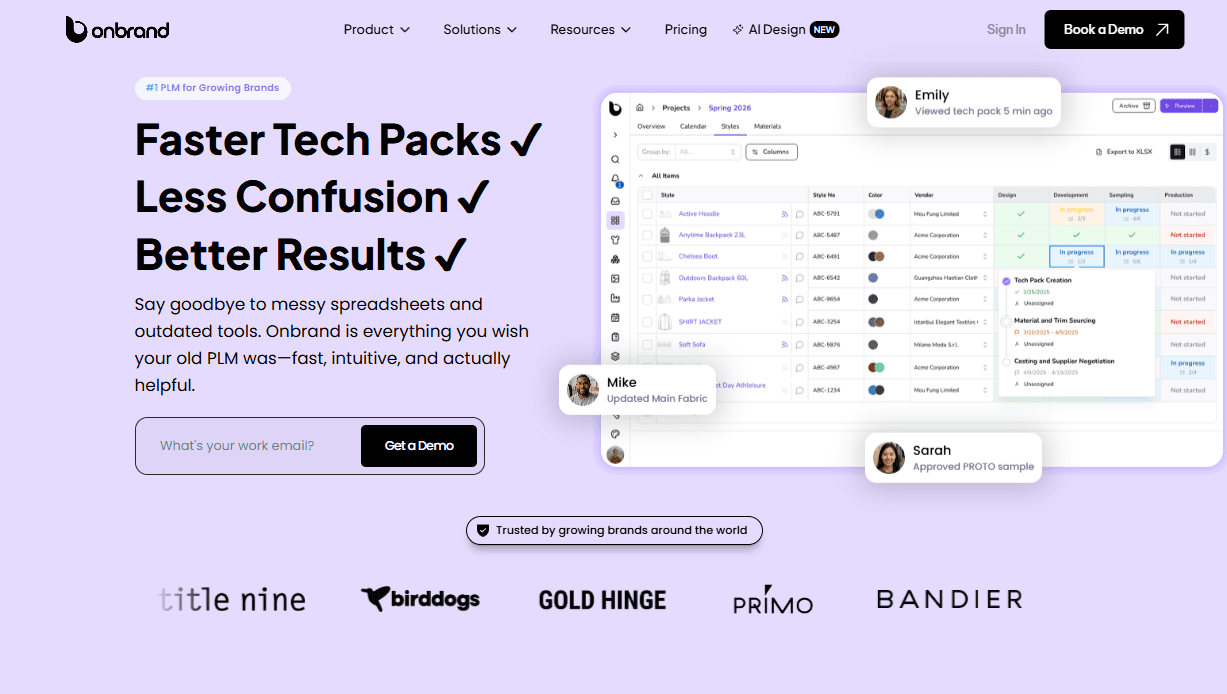
It supports retail product development with live tech packs, shared vendor access, and tools built around real workflows like approvals, calendars, and handoffs.
Teams keep files current, reduce version confusion, and respond to vendor questions without digging through email threads.
Brands using Onbrand report 55% faster tech pack creation and development timelines shortened by up to four weeks, driven by fewer revisions and clearer handoffs.
Key Features
Live tech packs - Cloud-based files that stay current and visible to vendors
Project management - Track tasks, approvals, and deadlines in one place
Vendor collaboration hub - Reduce errors with centralized communication
Dynamic libraries - Store materials, colors, artwork, and specs centrally
AI-powered data migration - Move existing products and materials into the system quickly
As collections scale, Onbrand PLM provides the structure teams need to work accurately across the fashion retail landscape.
Onbrand AI Design
Onbrand AI Design supports early design work and helps teams align faster before development starts.
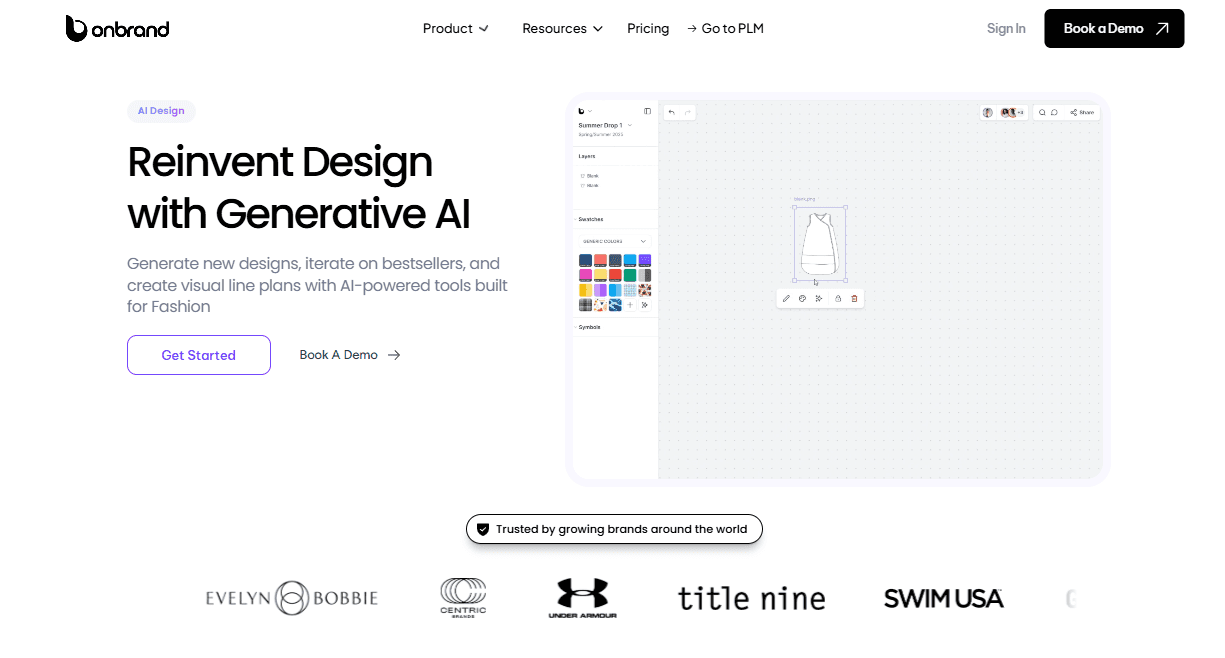
Designers turn rough concepts into usable visuals quickly, which helps teams review options, align internally, and decide what moves forward. This early clarity helps teams respond to feedback sooner and avoid late changes that affect timelines and samples.
Clear design direction also supports stronger customer satisfaction by keeping products aligned with what teams plan to deliver.
Key Features
Generative sketch and image creation - Create flats, sketches, and concept visuals
Colorways and material exploration - Test palettes and fabric ideas early
Mood board tools - Keep references and inspiration organized
Concept version history - Track variations and revisit earlier concepts
PLM integration - Send assets directly into tech packs and development workflows
When design and development stay connected, teams maintain consistency and protect brand visibility from concept through production.
FAQs About Fashion Retail Technology
What does retail technology mean?
Retail technology refers to the systems that help brands manage design, product development, sourcing, inventory, and the shopping experience. It includes digital platforms, virtual try-ons, data and analytics tools, and AI systems that help teams make faster decisions and adapt to the future of fashion.
What does fashion retail do?
Fashion retail manages how products move from development to sale across online and in-store channels. Teams handle assortment planning, inventory levels, pricing updates, and product presentation so shoppers can browse styles, compare options, and complete purchases with accurate information.
What is fashion technology?
Fashion technology includes the tools teams use to create products, manage production, and support sales. These systems help teams track materials, coordinate vendors, and apply sustainable practices while keeping product data accurate throughout development and production.
How are smart textiles and blockchain technology used in fashion retail?
Smart textiles add functional features to garments, such as temperature control or durability, which teams plan during development. Blockchain technology helps track materials and sourcing details, which makes it easier for teams to verify origins and document production steps across the supply chain.
Think about the last time your team needed to approve a style fast because a trend picked up overnight. Or when a vendor asked for updates, but the latest tech pack lived in three different files.
These moments occur frequently throughout the fashion retail industry. They show how much daily work depends on the right tools to keep decisions moving when teams face growing demand and tighter timelines.
Fashion retail technology covers the systems teams use to design products, build tech packs, manage samples, work with vendors, and move styles into production and retail.
In this article, you will learn how fashion teams benefit from technology, which tools support each stage of the workflow, and why these systems matter for staying aligned across design, development, and production.
TL;DR
Fashion retail technology includes the tools teams use to manage design, tech packs, samples, vendors, production, and retail execution.
Product teams rely on systems such as PLM, 3D sampling, AR, VR, digital platforms, and supply chain tools to keep files current and approvals on track.
These tools help reduce rework, catch fit issues earlier, improve planning, and keep vendors aligned as timelines tighten.
Onbrand brings product development into one workspace, connecting early design work with live tech packs and structured development workflows from concept through production.
What Is Fashion Retail Technology?
Fashion retail technology is a set of systems and tools that support how fashion brands design, develop, source, produce, and sell their collections. They help retailers manage tech packs, samples, and approvals in one place.
It includes fashion tech used during early design work, as well as digital platforms teams rely on for merchandising, e-commerce, and in-store operations.
Brands choose different tools based on their size, product category, and internal workflows, rather than relying on spreadsheets, email threads, or disconnected files.
A growing label may focus on tightening tech packs, sample tracking, and approvals, while larger teams often invest in tools for demand forecasting, planning, and inventory visibility.
Across the fashion industry, these systems help teams manage daily work more clearly as consumer preferences shift and timelines shorten.
Because these tools support the full product lifecycle, they affect every step of the process, from how a style is first sketched to how it’s presented to shoppers online or in stores.
How Technology Is Changing Fashion Retail
Technology affects how fashion teams handle daily work, from early sketches to final approvals, as consumer demand and timelines increase.
Shared systems, AI tools, and clear data help teams make decisions earlier in the product development process. This reduces last-minute changes and cuts delays tied to missing files or unclear feedback.
Many teams now rely on real-time feedback to review samples, approve tech packs, and respond to vendor questions faster. Without these systems, brands risk falling behind and struggling to stay relevant.
Here is how this shows up in daily workflows:
Faster approvals through real-time updates and tools that support predicting demand
Clearer collaboration across design, development, and production teams
Better fit checks with 3D tools that cut sample revisions and material waste
Stronger planning based on consumer priorities instead of guesswork
More visibility into materials and vendors to support ethical sourcing
Better coordination between stores and online platforms to align online and in-store assortments
With shared files, clear owners, and faster approvals, styles move forward with less back-and-forth.
What Technology Is Used in the Fashion Industry?
As calendars tighten, fashion teams rely on specific tools to keep product work on track and avoid delays across design, development, and production.
Teams use these systems to plan assortments, build tech packs, manage samples, and keep vendors aligned. They also help stop version confusion, track what changed, confirm approvals, and make sure factories see the latest updates.
Here are the systems teams use most often across product development and retail.
AI and Intelligent Automation
AI and intelligent automation help fashion teams review ideas earlier and spot patterns in customer data.
Artificial intelligence and machine learning support assortment planning, design checks, and basic engagement strategies tied to product feedback.
This support helps teams make clearer calls before samples, timelines, and vendor work move forward.
AR/VR and Virtual Experiences
Augmented reality (AR) and virtual reality (VR) give shoppers new ways to explore products before buying.
Virtual fitting rooms and AR technology let teams test how styles look and share styling tips earlier, which supports consumer confidence and helps reduce waste.
Many brands use this feedback to better meet expectations from younger consumers before production starts.
E-Commerce and Digital Platforms
Fashion teams rely on digital platforms to manage online shopping across brand sites and marketplaces.
These systems support product setup, pricing, and availability without adding extra manual steps, which helps teams present clear information as shoppers compare prices across channels.
Merchandising teams use this data to adjust assortments, plan releases, and align marketing strategies with what customers actually view and buy, supporting stronger customer retention over time.
3D and Digital Sampling
3D tools let teams review fit, proportions, and construction before physical samples move forward, a process widely used by industry leaders to catch issues earlier.
Designers and developers use digital prototypes to flag issues early, approve changes faster, and cut down on extra sample rounds and fabric waste.
Supply Chain and Inventory Technologies
Supply chain tools help fashion teams track production, manage deliveries, and keep timelines on schedule.
Production and operations teams use these systems for supply chain management and inventory management, so vendors, factories, and warehouses stay aligned.
When inventory data stays accurate, brands can avoid stock issues and fulfillment problems tied to late updates or missed handoffs.
Sustainability Technologies
Sustainability tools help fashion teams track raw materials, manage sourcing details, and plan production with less waste.
Teams use traceability data and on-demand manufacturing to reduce excess samples and avoid over-ordering. Circular approaches also guide how materials move through design, production, and reuse across collections.
In-Store Retail Tech
In-store technology helps teams keep product details consistent across physical locations. Smart mirrors and mobile apps support clearer product information and stronger customer engagement at the store level.
When store data stays aligned with product and sourcing details, teams can better support sustainable fashion goals across channels.
Why Fashion Technology Matters for Modern Retail Brands
Technology helps fashion teams keep calendars, approvals, handoffs, and the expectations of modern consumers under control as timelines shorten.
It supports clearer decisions and reduces manual work. Teams can adjust business models without disrupting day-to-day product work.
Fashion retailers use technology to understand consumer behavior, plan assortments more accurately, and manage how people shop across digital and physical channels.
AR apps and virtual stores play a role in how brands present products and improve customer experiences, which can support customer loyalty, especially for teams targeting younger buyers.
Technology also supports sustainability efforts. Tools tied to sustainable materials, recycled materials, traceability, and circular fashion help teams reduce environmental impact while staying aligned on sourcing decisions tied to a more sustainable future.
Luxury brands also use these systems to support more personalized store and client interactions without adding complexity behind the scenes.
Onbrand: The Fashion Retail Technology Built for Product Development
Fashion retail moves quickly, and many delays start long before a style reaches stores. Problems often appear early, such as scattered files, outdated tech packs, misaligned calendars, or vendors waiting on updates.
Onbrand gives fashion teams one workspace where design, development, and sourcing stay connected from the first idea to final production. This keeps tech packs current, timelines clear, and vendor communication in one place as collections grow.
Onbrand brings two core tools together: Onbrand PLM and Onbrand AI Design.
Together, they support day-to-day product work by linking early design ideas directly to structured development tasks, so teams can move styles forward with fewer handoffs and less rework.
Onbrand PLM
Onbrand PLM gives fashion teams a clear alternative to legacy systems that slow down daily work.

It supports retail product development with live tech packs, shared vendor access, and tools built around real workflows like approvals, calendars, and handoffs.
Teams keep files current, reduce version confusion, and respond to vendor questions without digging through email threads.
Brands using Onbrand report 55% faster tech pack creation and development timelines shortened by up to four weeks, driven by fewer revisions and clearer handoffs.
Key Features
Live tech packs - Cloud-based files that stay current and visible to vendors
Project management - Track tasks, approvals, and deadlines in one place
Vendor collaboration hub - Reduce errors with centralized communication
Dynamic libraries - Store materials, colors, artwork, and specs centrally
AI-powered data migration - Move existing products and materials into the system quickly
As collections scale, Onbrand PLM provides the structure teams need to work accurately across the fashion retail landscape.
Onbrand AI Design
Onbrand AI Design supports early design work and helps teams align faster before development starts.

Designers turn rough concepts into usable visuals quickly, which helps teams review options, align internally, and decide what moves forward. This early clarity helps teams respond to feedback sooner and avoid late changes that affect timelines and samples.
Clear design direction also supports stronger customer satisfaction by keeping products aligned with what teams plan to deliver.
Key Features
Generative sketch and image creation - Create flats, sketches, and concept visuals
Colorways and material exploration - Test palettes and fabric ideas early
Mood board tools - Keep references and inspiration organized
Concept version history - Track variations and revisit earlier concepts
PLM integration - Send assets directly into tech packs and development workflows
When design and development stay connected, teams maintain consistency and protect brand visibility from concept through production.
FAQs About Fashion Retail Technology
What does retail technology mean?
Retail technology refers to the systems that help brands manage design, product development, sourcing, inventory, and the shopping experience. It includes digital platforms, virtual try-ons, data and analytics tools, and AI systems that help teams make faster decisions and adapt to the future of fashion.
What does fashion retail do?
Fashion retail manages how products move from development to sale across online and in-store channels. Teams handle assortment planning, inventory levels, pricing updates, and product presentation so shoppers can browse styles, compare options, and complete purchases with accurate information.
What is fashion technology?
Fashion technology includes the tools teams use to create products, manage production, and support sales. These systems help teams track materials, coordinate vendors, and apply sustainable practices while keeping product data accurate throughout development and production.
How are smart textiles and blockchain technology used in fashion retail?
Smart textiles add functional features to garments, such as temperature control or durability, which teams plan during development. Blockchain technology helps track materials and sourcing details, which makes it easier for teams to verify origins and document production steps across the supply chain.

Discover how Onbrand PLM can streamline your product development!
© 2024 onbrandplm.com. All rights reserved.
© 2024 Onbrand. All rights reserved.

