Jul 16, 2026
In the early stages of design work, most delays come from uncertainty. Is the silhouette right? Does the fabric choice work? Are teams aligned on the look before development starts?
Designers sketch, developers review, and feedback moves back and forth while details stay open. Small questions linger longer than they should, and those gaps often resurface later during sampling or vendor conversations.
Artificial intelligence (AI) fashion generators give designers and product teams a faster way to visualize fashion ideas, evaluate AI-generated designs, and narrow direction before committing time, budget, and samples.
They make it easier to explore options, compare alternatives, and align on what a style should become while changes are still easy to make.
Below are the top fashion AI generator tools used by fashion teams to create garment visuals that support real design decisions, not just inspiration.
TL;DR
These are the best fashion AI generator tools for fashion teams in 2026:
Raspberry
Newarc
Fashable
Refabric
Style3D
FASHN AI
Why Fashion Teams Are Actively Searching for AI Generators
Design teams are not searching for AI out of curiosity. They are reacting to gaps in the creative process that slow down decisions early.
In the fashion industry, sketches and reference images often leave too much open to interpretation. Feedback cycles stretch, samples are ordered too soon, and revisions arrive later when changes are costly.
AI tools allow teams to see options sooner through realistic images that better represent the finished garment.
According to Research and Markets, the global market for AI in the fashion industry is expected to reach $17.4 billion by 2030, reflecting increased adoption of tools like virtual try-on, visual search, and creative automation among apparel brands and retailers.
Many fashion businesses use AI-generated visuals to reduce production costs and create a more cost-effective development process.
Before development begins, fashion AI generators help teams:
Explore more concepts before committing to samples
Align on design direction earlier in the fashion design process
Reduce revisions once development starts
Share visual content that supports approvals
When generative AI visuals remain useful beyond concept review, teams can protect brand identity, keep product images consistent, and spend less time revisiting decisions later in development.
7 Best Fashion AI Generators in 2026
Every AI fashion platform solves a slightly different problem. Some help generate concepts, while others focus on materials, garment visualization, or digital fitting.
Each tool below serves a different purpose depending on your design and development workflow.
1. Onbrand AI Design
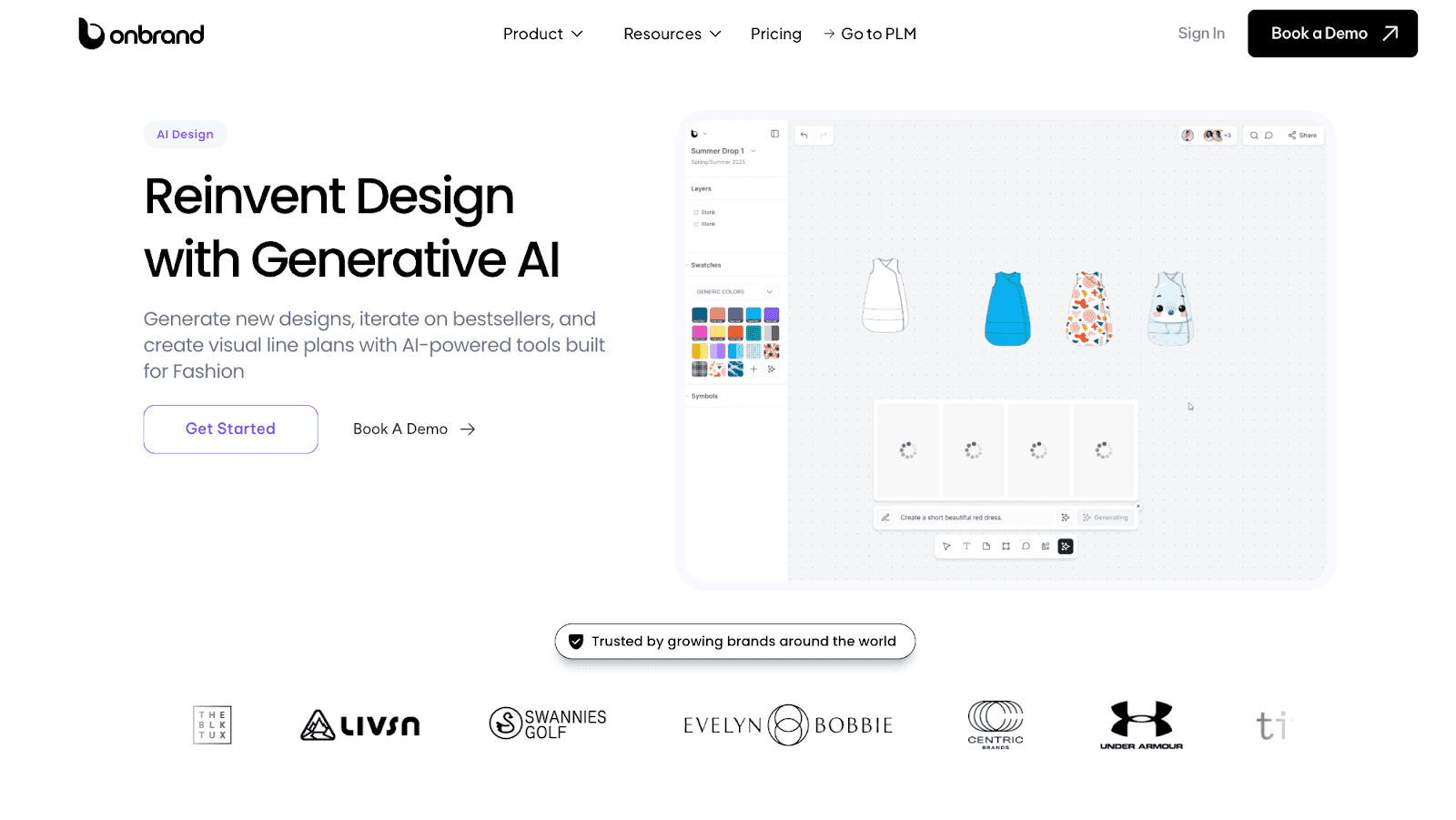
Onbrand AI Design is built for fashion teams that need AI-generated visuals to support real product decisions, not just early inspiration.
It helps you explore silhouettes, fabrics, colorways, and graphics in a way that stays useful once styles move into development.
Designers use it to visualize ideas faster, while developers and merch teams rely on the same visuals to align before tech packs and samples begin.
Fashion brands using Onbrand report 30–50% fewer physical samples by resolving more decisions earlier.
Key Features
Generative image creation from text, sketches, or reference images
Fabric and texture simulation to show material behavior more clearly
Automated sketches and flats for faster handoff into development
Layered editing to adjust components like sleeves or graphics without rework
Version history to track changes during reviews and approvals
Shared canvas and comments so feedback stays tied to visuals
Direct export to a fashion PLM to move designs into development without file cleanup
Onbrand AI Design works with Onbrand PLM so approved visuals and assets flow directly into tech packs, samples, and timelines. Teams that used both save an average of 10 weeks per year by keeping design and development connected.
2. Raspberry
Source: raspberry.ai
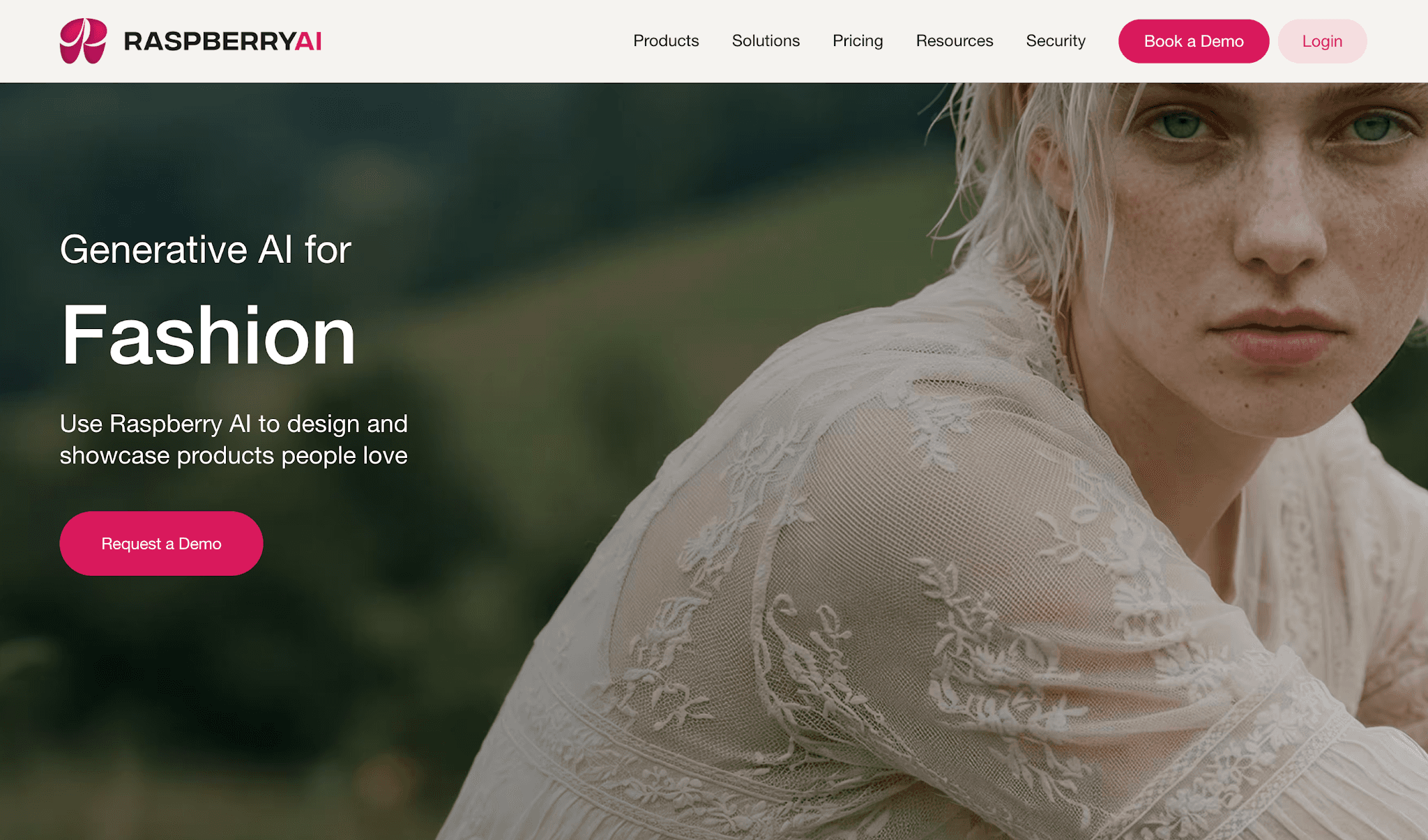
Raspberry is a fashion-focused AI image generator used mainly for early concept work. Fashion designers often use Raspberry to turn written ideas into garment visuals during the early stages of concept development.
It is commonly used by independent designers to evaluate different clothing designs and compare directions before moving into sampling.
Outputs are typically used as reference visuals to support early reviews or internal discussions rather than finalized design documentation.
Raspberry is not positioned as a system for tech packs or production workflows. It is suitable when you explore a unique style, compare different directions, or visualize ideas quickly while details are still open.
Key Features
Focused on AI image generation for fashion garments and styling
Prompt controls that influence presentation, like how garments appear on models
Fast visual output created in just a few clicks
User-friendly interface for quick experimentation
Visuals suited for concept reviews rather than production work
3. Newarc
Source: newarc.ai
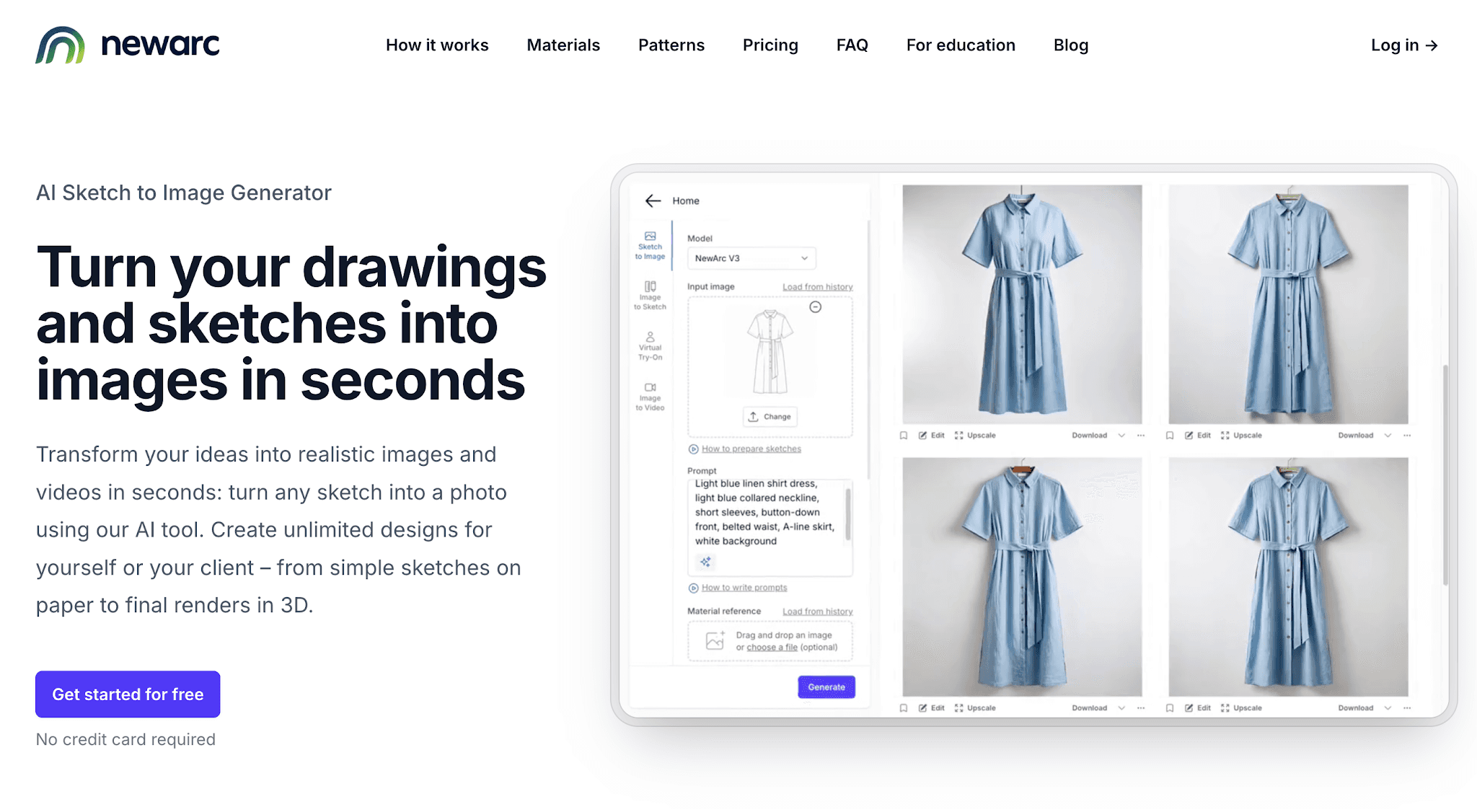
Newarc is an AI-powered fashion image generator that converts fashion sketches and visual inputs into realistic garment images.
It helps translate early drawings or rough concepts into clearer visuals that resemble finished apparel rather than abstract AI art.
Designers use Newarc to move from hand sketches or written ideas to usable images early, when silhouettes and proportions are still open. This AI fashion tool also supports visual review before committing time to detailed sketches, samples, or production files.
Newarc centers on sketch-to-image workflows rather than product documentation.
While the platform does not position itself as a production system, it allows teams to explore different models and visual outcomes as part of early concept validation. Some outputs can also be extended into short AI video formats, depending on the workflow.
Key Features
AI sketch-to-image generation tailored for apparel concepts
Supports exploration through different models for visual comparison
Prompt-based controls that help select model context and styling direction
Rapid iteration for early validation of silhouette and proportion
Designed for concept visualization rather than production workflows
4. Fashable
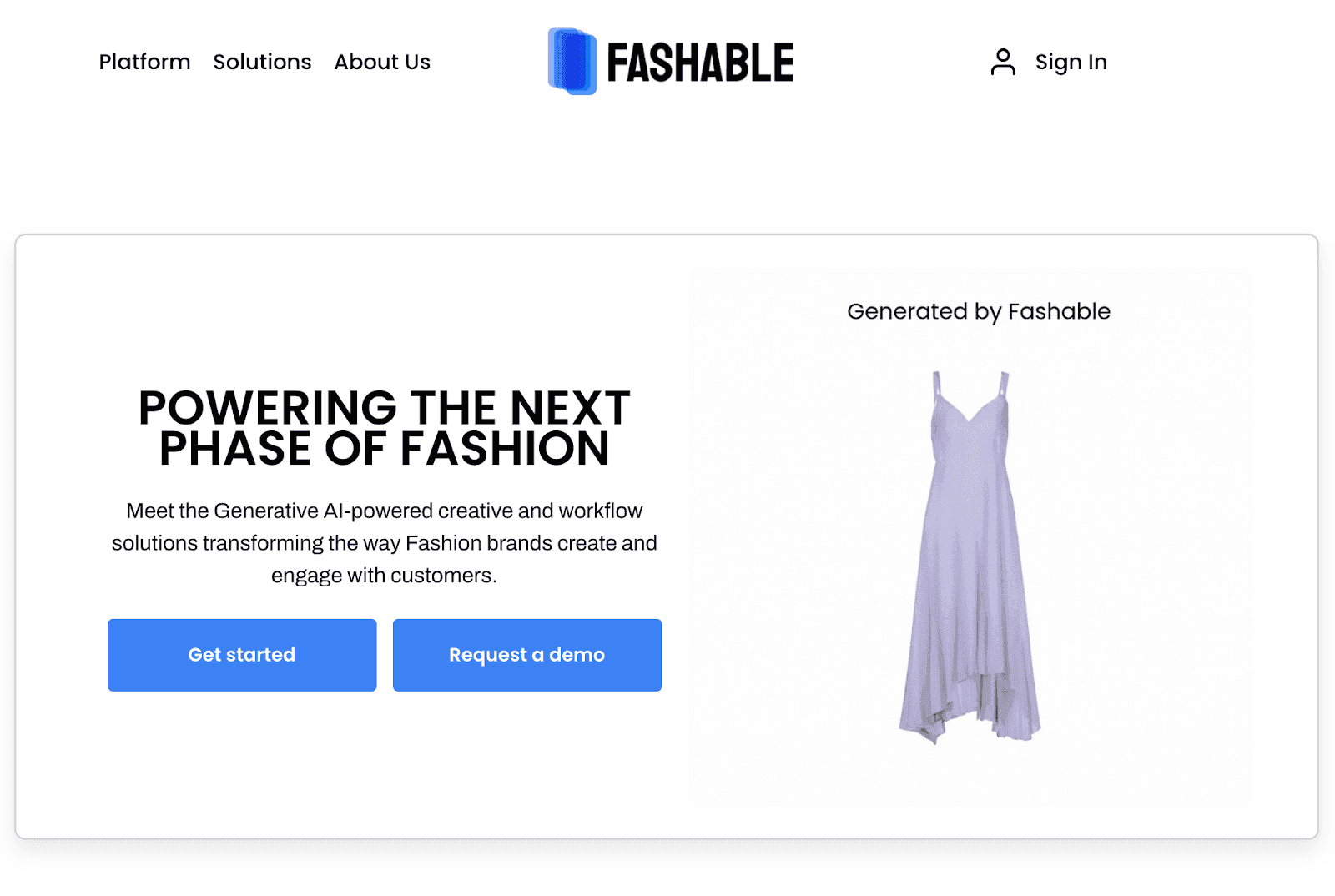
Source: fashable.ai
Fashable is a generative AI platform designed to help fashion brands create visual content during the creative phase of product work.
The tool focuses on generating fashion visuals that support concept presentation, creativity, and early exploration rather than technical development.
Fashion teams use Fashable to visualize design ideas, styling direction, and overall aesthetic before moving into detailed construction or production planning.
The platform is built around creative workflows that help teams translate ideas into images for internal review and discussion. Some teams also use it to experiment with AI fashion photography concepts during early creative reviews.
Rather than supporting technical development, Fashable is often used to explore trends, create fashion photos, and review visual concepts during the early stages of product creation.
Key Features
Generative AI fashion visuals for creative concept development
Tools focused on styling, presentation, and visual direction
Visual outputs are useful for reviews and early alignment
Supports concept imagery for use between online store pages or presentations
Designed for visual exploration rather than production workflows
5. Refabric
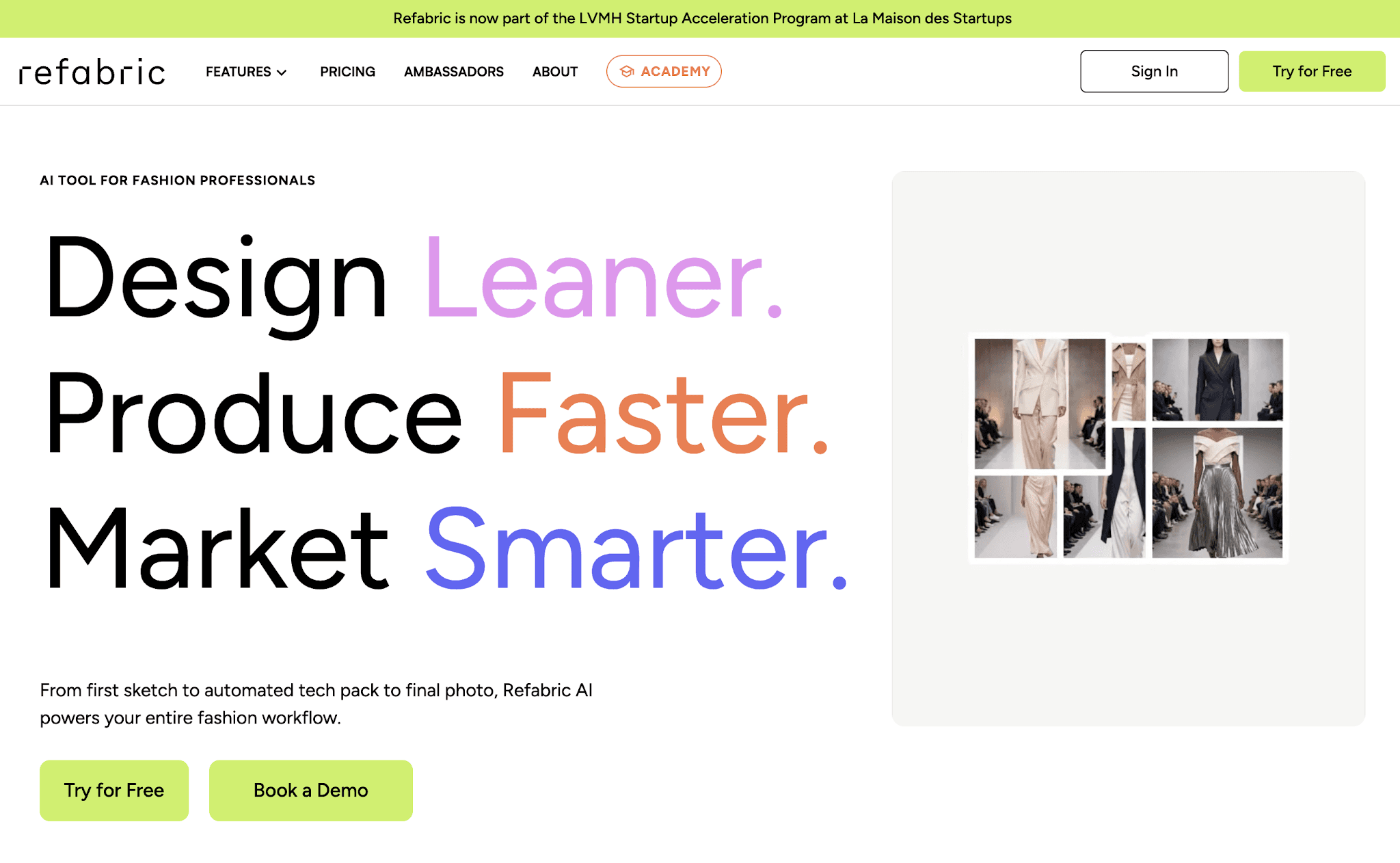
Source: refabric.com
Refabric approaches fashion AI from a material and surface perspective. The platform is commonly used when fabric choice, texture, and pattern drive the concept more than silhouette.
Designers use Refabric to visualize textiles early, especially when exploring prints, weaves, or surface treatments from one image before committing to sampling.
This makes it useful during fabric selection and early concept reviews, before styles move into full fashion product development. Refabric is not built to manage handoffs into tech packs or production systems.
Refabric helps teams evaluate textile ideas through flat lay visuals, clothing photos, and high-quality images, reducing the need for early sampling.
Key Features
AI-generated fashion visuals centered on fabric and surface detail
Pattern-focused exploration for textiles and accessories
Tools that support early textile direction before development
Visual testing that helps reduce reliance on physical swatches
Focused on material concepts rather than workflow continuity
6. Style3D
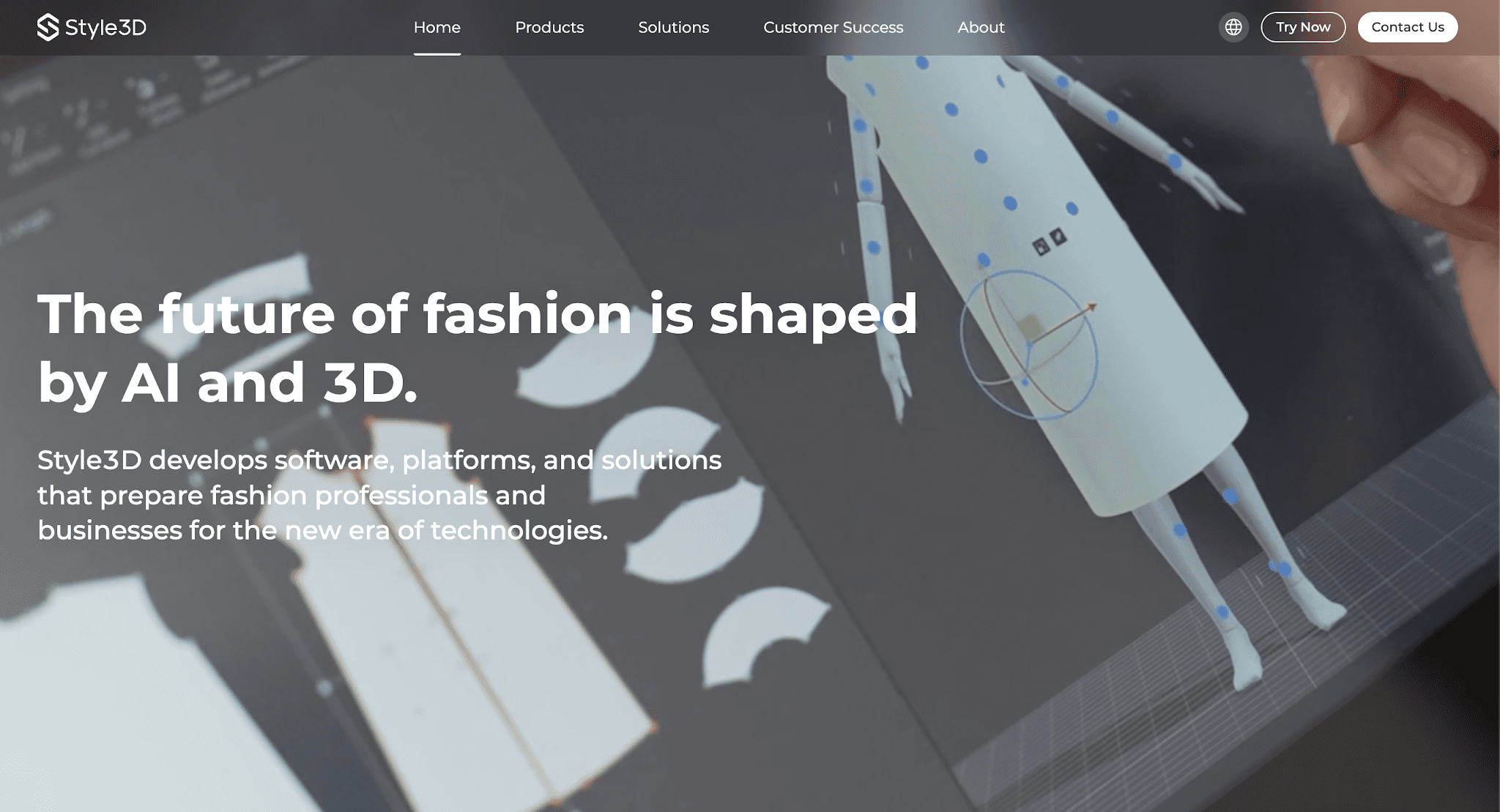
Source: style3d.com
Style3D focuses on building three-dimensional garment visuals that show structure, fit, and proportion earlier than physical sampling allows.
It is commonly used when teams want a better view of how a style holds its shape, how pieces come together, or how changes affect the overall form.
Designers and developers use Style3D to review silhouettes and construction logic before patterns or samples are finalized. Many clothing brands use tools like Style3D to evaluate products before committing to physical samples.
Style3D moves beyond concept imagery by helping teams examine garment structure, fit, and construction in greater detail. Its focus is less about generating ideas and more about evaluating products before sampling.
The platform combines visual reviews with measurable garment data to support product development decisions.
Key Features
AI-supported 3D garment visualization for apparel
Digital rendering that shows structure and proportion clearly
Useful for reviewing the silhouette and construction early
Supports visualization before physical sampling begins
Focused on dimensional accuracy rather than ideation
7. FASHN AI
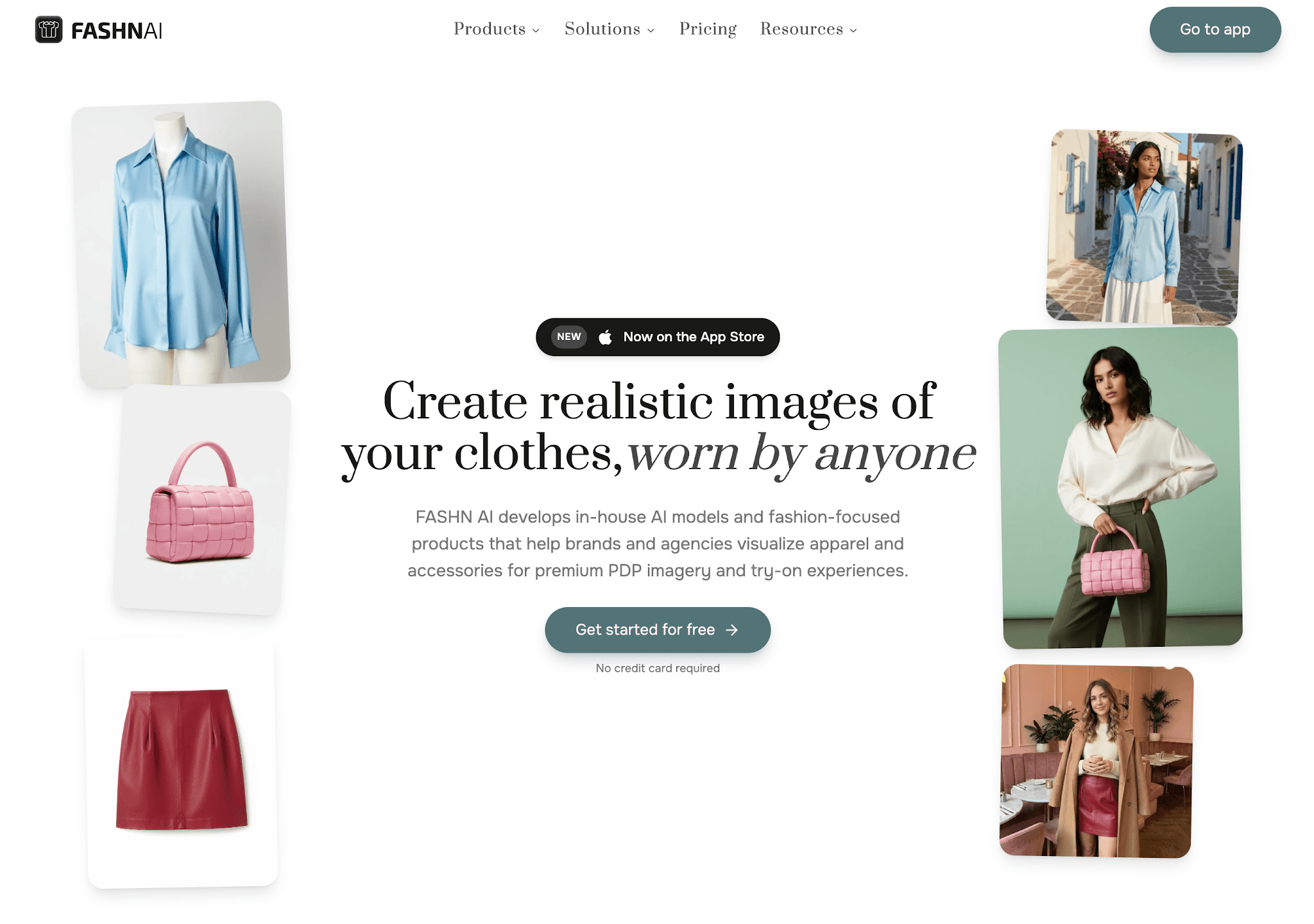
Source: fashn.ai
FASHN AI is used for virtual try-on and garment visualization once new designs are largely defined.
Rather than generating early concepts, the platform places finished apparel onto digital human models so teams can review fit, proportion, and overall appearance before final assets or samples are produced.
Teams use FASHN AI to preview products on a range of body types and skin tone variations, helping answer presentation and fit-related questions before production planning begins.
The tool also supports motion-based outputs, which allow teams to preview how garments appear in short fashion videos without organizing a shoot. Teams can use this to generate on-model photos for product reviews and presentation purposes.
FASHN AI functions similarly to an AI fashion model generator, making it useful later in the design process when visuals are needed for approvals, internal review, or pre-production validation rather than creative exploration.
Key Features
Virtual try-on for apparel using realistic digital models
Support for multiple body types and garment categories
Motion outputs for short fashion video previews
Visual validation before samples or asset production
Focused on presentation, not design-to-production workflows
Where Fashion AI Generators Fit in the Design Process
Fashion AI generators sit at the front of digital fashion design workflows, before tech packs, samples, and vendor outreach begin. They support early decisions when direction is still flexible, and changes cost less.
At this stage, tools like an AI outfit generator help you create generated images that show proportion, styling, and overall direction more clearly than sketches alone. This makes it easier to review options, compare alternatives, and align around a single approach during fashion creation.
Fashion AI generators are most useful for:
Early concept alignment through design and development
Visual decision making before specs are finalized
Locking direction sooner to reduce rework later
As with most tools, AI-generated models and high-quality visuals help keep product discussions focused. They support judgment and precision, not replace it.
Fashion AI Generators Provide More Than Just Images
Not all fashion AI tools play the same role in product work. Other tools focus on inspirational images or stunning visuals that stop at the concept review stage.
Those can help spark ideas, but they often fall short once a style moves toward tech packs, samples, and vendor conversations.
At that point, visuals need to support real decisions, not just presentation.
A true fashion AI generator supports AI fashion design by helping ideas move from concept to development with less rework. It creates garment visuals or product photos that reflect proportion, styling, and intent closely enough to guide next steps.
When visuals hold up in reviews, they keep discussions focused on fit, materials, and construction instead of interpretation.
AI Fashion Models vs Fashion AI Generators
AI fashion models are designed to show how finished garments may appear when worn. They are frequently used for marketing visuals, presentations, and imagery prepared for e-commerce product pages.
Fashion AI generators focus more on helping teams shape and refine products before development.
In some situations, AI fashion models offer a reasonable cost way to create e-commerce visuals before a full photoshoot is scheduled.
Connect Fashion AI Design to Development With Onbrand
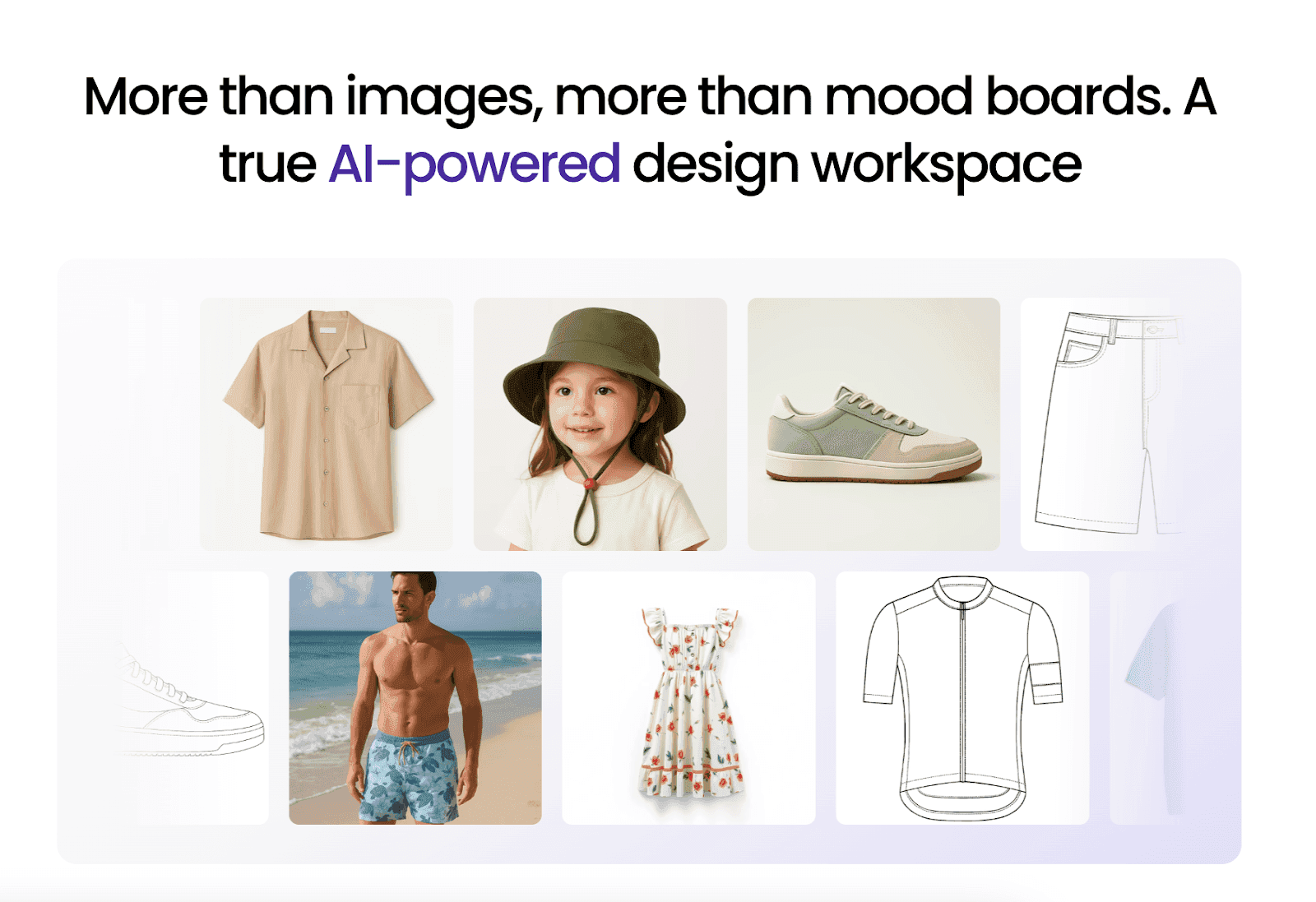
Fashion AI generators are most useful when they help teams make clearer decisions earlier.
The listed tools show how different approaches fit different moments in the design process and reflect what AI offers at each stage, from early concept exploration to visual alignment before development begins.
The most important thing is not how impressive the images look or how many features a generator has, but whether those visuals help you move forward with confidence.
When ideas are clear before tech packs, samples, and vendor conversations start, teams spend less time revisiting decisions and more time building products that stay true to the original intent.
For teams that want design and development in the same workflow, Onbrand is ideal because it connects early design work to the rest of the product process.
Visuals created in Onbrand AI Design do not stop at concept review. They flow directly into development through Onbrand PLM, keeping design, development, and production aligned as styles move forward.
FAQs About the Best Fashion AI Generator
What are AI models in fashion AI generators?
AI models are the technology behind image generation in fashion AI tools. They are trained to recognize garments, fabrics, silhouettes, and styling details, so generated visuals resemble real apparel rather than generic artwork. More capable models often produce better results for concept development, design reviews, and AI model generation projects.
Can fashion AI generators replace sketches or tech packs?
No. Fashion AI generators support early visualization, not final construction. They help clarify direction before sketches, specs, and tech packs are created. Designers still rely on sketches, measurements, and technical documentation once a style moves into development.
Are fashion AI generators useful for production teams or only designers?
They are useful beyond design. Developers, merch teams, and sourcing partners use AI-generated visuals to align on fit, materials, and styling earlier. Clear visuals reduce misinterpretation before samples and vendor conversations begin.
How do fashion AI generators compare to other platforms?
Fashion AI generators focus on creating and refining garment concepts before development begins. While some other platforms focus on presentation and marketing use cases, fashion AI generators are often used earlier in product development. AI-generated visuals can enhance reviews by helping teams evaluate concepts before samples are requested.
What should fashion teams look for in an AI design app?
The best AI design apps help teams visualize concepts, compare options, and make decisions earlier in the product development process. Tools such as Onbrand AI Design, Raspberry, Newarc, and New Black AI support different workflows, from concept generation to product visualization. The right choice depends on your design and development needs.