Top 9 Retail Automation Software Tools in 2026 by Type
Feb 6, 2026


Modern fashion brands don’t struggle because they lack creativity. They struggle when product ideas, inventory decisions, and retail execution fall out of sync as the business grows.
As collections expand and sales channels multiply, teams rely on more systems to manage retail product development, inventory levels, store operations, and fulfillment processes.
When those systems don’t connect, teams spend more time reconciling data than moving products forward.
Retail automation software helps fashion teams replace manual handoffs with connected workflows.
From early product development and specification management to inventory planning and order fulfillment, automation makes decisions easier to align and reduces errors throughout the retail lifecycle.
Below, we break down the key categories of retail automation software and highlight tools fashion and retail teams use as they scale.
TL;DR
These are key retail automation software tools fashion brands use as they scale, grouped by workflow category:
Product development and product data: Onbrand
Inventory and demand planning: Cin7 Core, Inventory Planner
Merchandising and assortment planning: EDITED, Blue Yonder
Store operations and task execution: Yoobic, Zipline
Omnichannel order and fulfillment: Manhattan Active Omni, SkuNexus
Why Retail Teams Use Retail Automation Software
Fashion brands use retail automation solutions to keep product work, inventory, and execution aligned as the business grows. When you manage multiple styles, vendors, and channels, relying on manual labor and disconnected files makes it harder to keep pace.
Automation replaces repetitive tasks with systems that keep inventory data, sales tracking, and approvals moving through one retail automation platform.
That visibility helps you respond faster to customer demand, avoid missed updates, and reduce handoffs between store teams and production partners.
Integrated inventory management systems consolidate inventory tracking, inventory optimization, and low-stock alerts into a single workflow, which improves stock-level accuracy and inventory turnover.
Tying those workflows into supply chain management and ecommerce platforms also reduces errors during fulfillment and reverse logistics.
Relying on shared automation tools instead of manual updates improves consistency, helps reduce human error, and protects customer satisfaction without adding complexity to daily work.
This shift is reflected at the market level. According to Grand View Research, the global retail automation market was valued at $26.26 billion in 2024 and is projected to reach $44.8 billion by 2030, showing how strongly retailers are investing in automation to support operations and the customer experience.
Top 9 Retail Automation Software Solutions in 2026 by Category
Retail automation shows up in different parts of the retail business, not as a single system. Product data, inventory processes, store execution, and fulfillment each rely on different tools, often managed by different roles.
The categories below reflect how fashion and retail organizations structure their workflows today, with examples of retail solutions used by growing brands and larger chains.
Product Development and Product Data Automation Software
Product development and product data automation software keep styles moving from early concepts into production-ready products.
These systems keep sketches, tech packs, bills of materials (BOMs), samples, and approvals connected, so updates stay tied to the right style and version.
Clear product records reduce confusion with vendors and help reduce human error once production timelines tighten.
1. Onbrand
Onbrand connects early design work with production-ready product data, so styles don’t get rebuilt as they move forward.
You can carry a concept from initial visuals into tech packs, BOMs, samples, and approvals using one record that stays current through every revision.
Brands using Onbrand report outcomes like 55% faster tech pack creation, 30–50% fewer physical samples, and development timelines shortened by about four weeks.
Onbrand AI Design
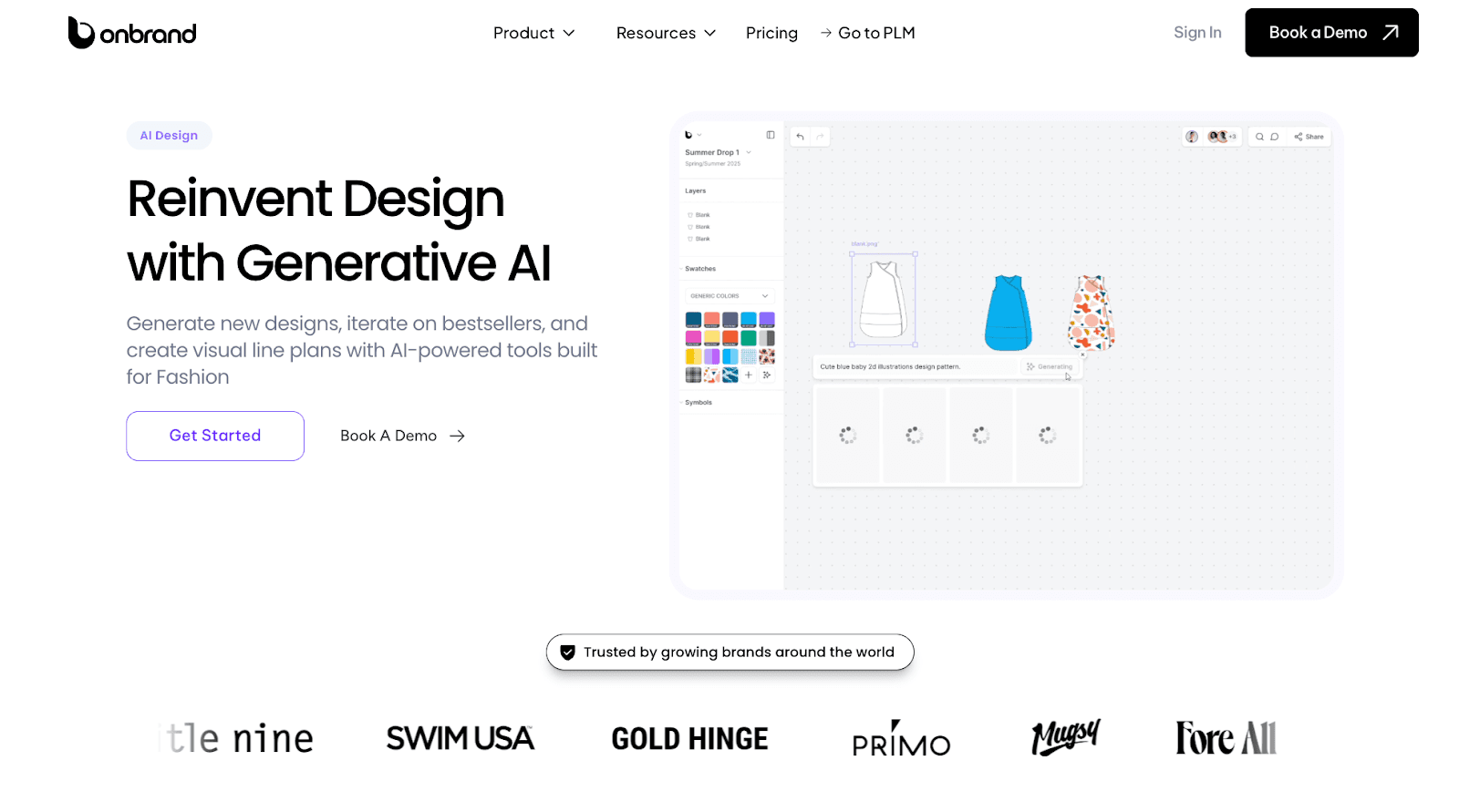
Onbrand AI Design supports the front end of fashion product development, where ideas are still fluid. Designers can start from a text prompt, sketch, or reference image, then explore silhouettes, colorways, and details without losing track of what has already been reviewed.
Visuals stay organized for line reviews, merchant alignment, and early decisions that shape the collection during the fashion design process.
Onbrand PLM
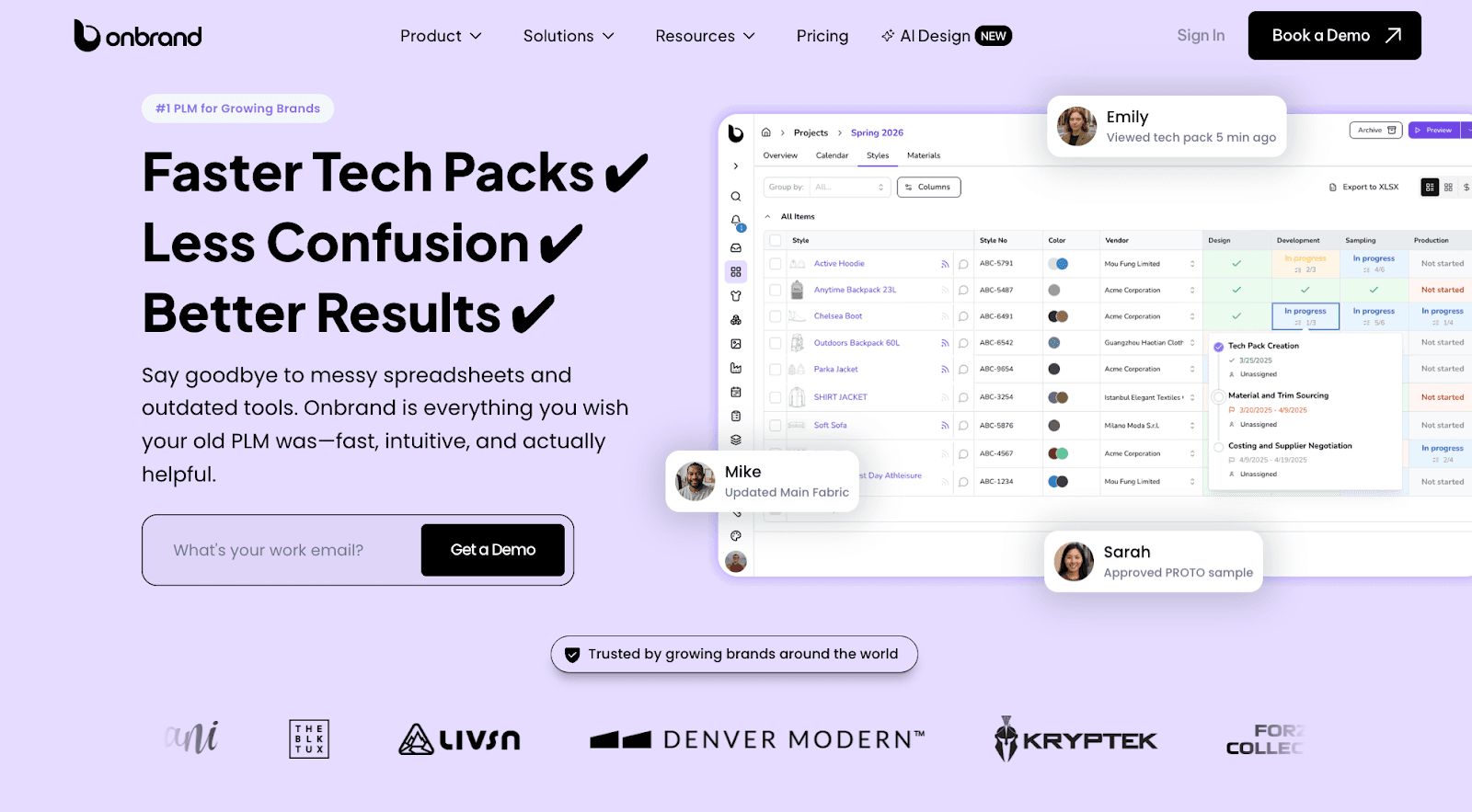
Onbrand PLM takes those approved visuals and turns them into build-ready product work. Tech packs stay live instead of being exported into static files, specs remain tied to the style, and vendor feedback stays connected to the exact version under discussion.
That structure becomes important when a single style undergoes multiple revisions between the first sample and production.
Inventory and Demand Planning Automation Software
Inventory and demand planning automation software helps you manage inventory processes as assortments expand into new sales channels.
Planning teams use inventory management automation and data-driven insights to balance buy quantities, stock levels, and seasonal demand.
Better visibility gives planners clearer signals for resource allocation and fewer last-minute adjustments when demand shifts.
2. Cin7 Core
Source: cin7.com
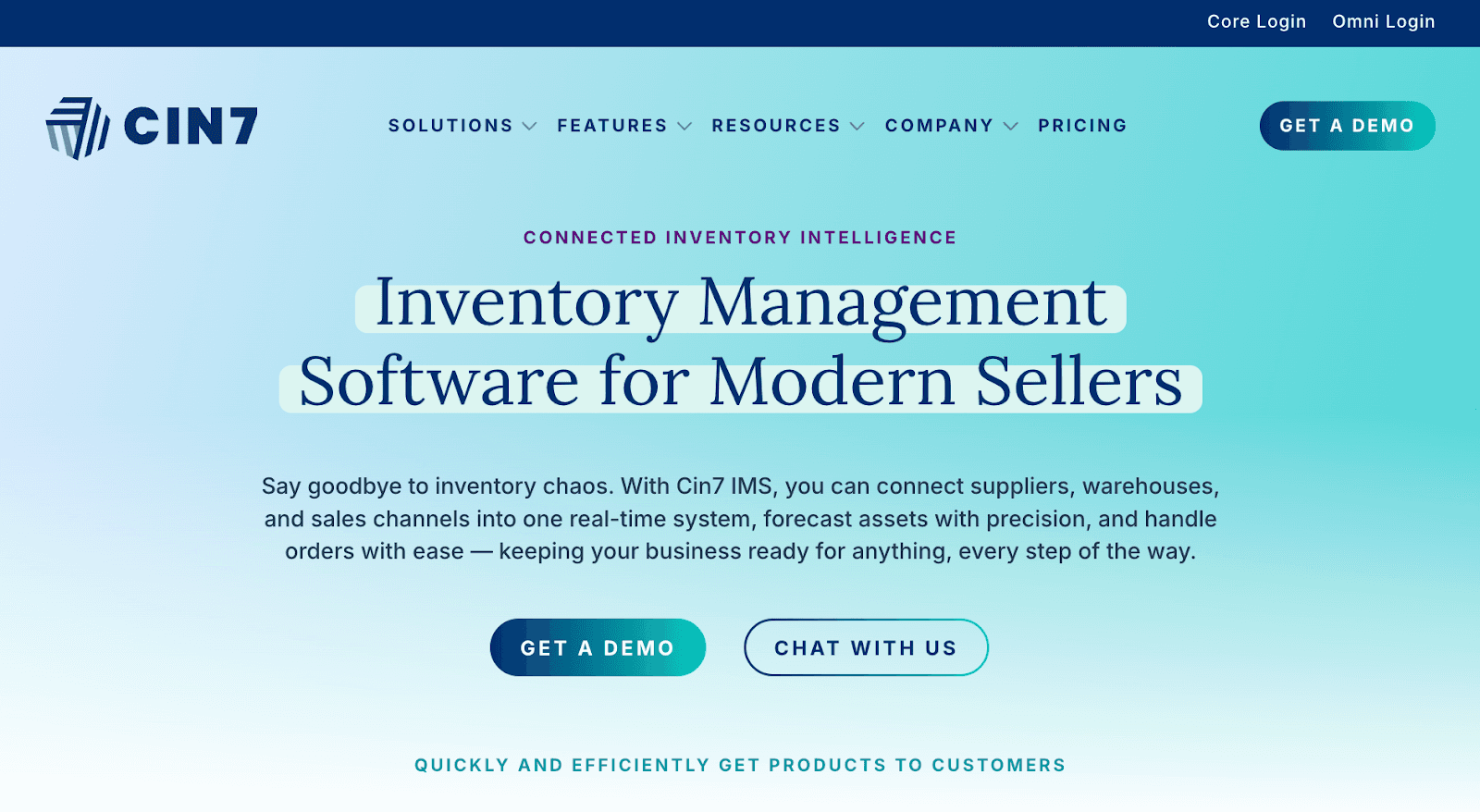
Cin7 Core handles inventory management and demand planning for omnichannel retail brands selling through point-of-sale (POS) systems, ecommerce, and wholesale.
The platform connects customer data, inventory levels, and purchasing activity into unified workflows that work alongside existing systems.
Retailers use Cin7 Core to support demand forecasting, manage stock between locations, and reduce manual coordination between sales and operations.
Its integrations with modern retail tools, including accounting platforms, help reduce labor costs while keeping inventory accurate as volume grows.
3. Inventory Planner
Source: inventory-planner.com
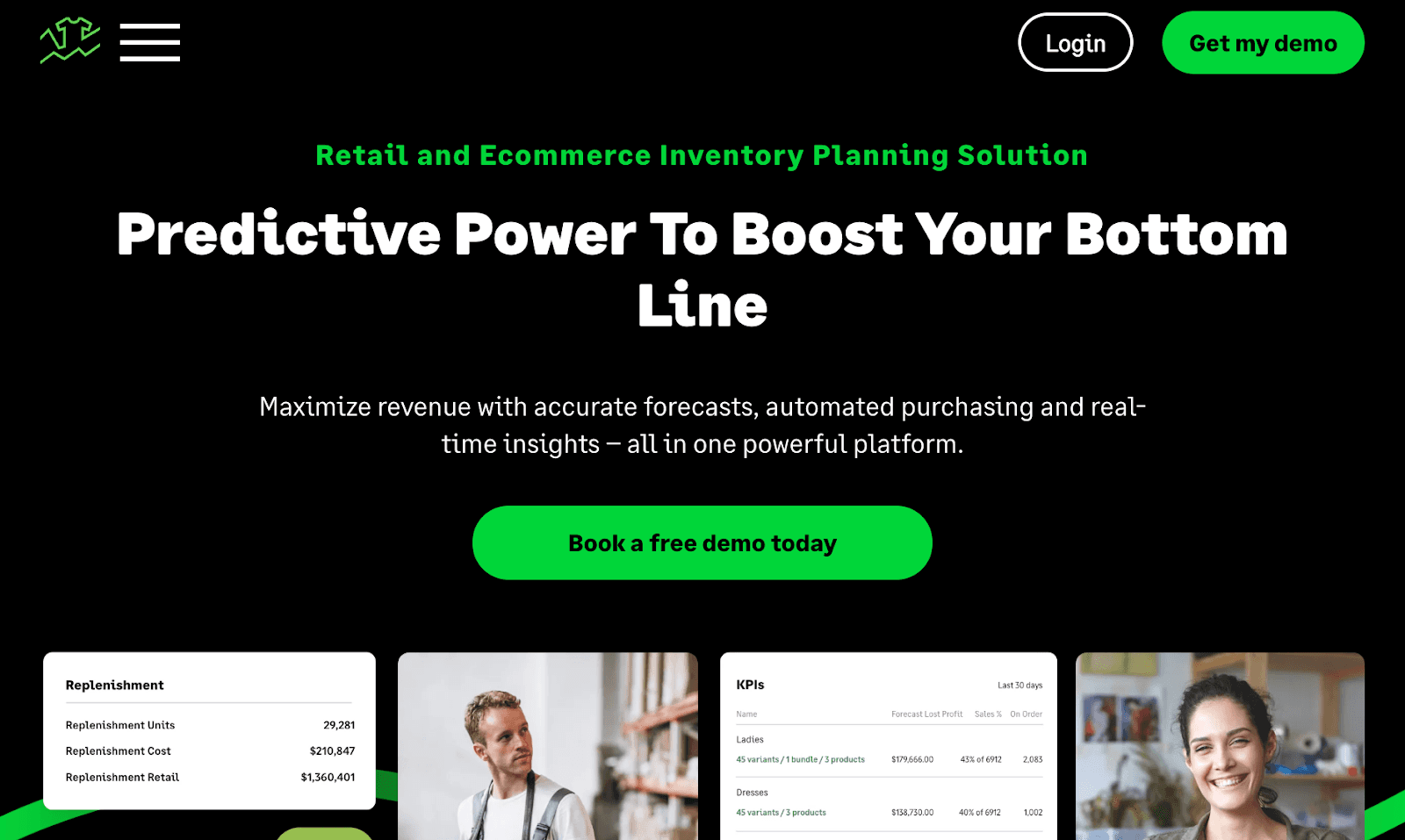
Inventory Planner focuses on demand forecasting and purchase planning for fashion retailers, managing seasonal assortments and size curves.
Planning teams use it to translate sales history, customer preferences, and performance trends into clearer purchasing decisions.
The tool helps retailers respond to demand shifts, plan replenishment, and support supply chain optimization without rebuilding spreadsheets each season.
Inventory Planner slots into advanced systems used in modern retail and keeps planning consistent as retailers face challenges tied to growth and changing demand.
Merchandising and Assortment Automation Software
Merchandising and assortment automation software guides decisions around what to carry, where to place it, and how deep to buy during assortment planning.
These tools use customer behavior, purchase history, and sales performance to guide data-driven decision-making. Clear assortment views help align planning with brand direction and market demand.
4. EDITED
Source: edited.com
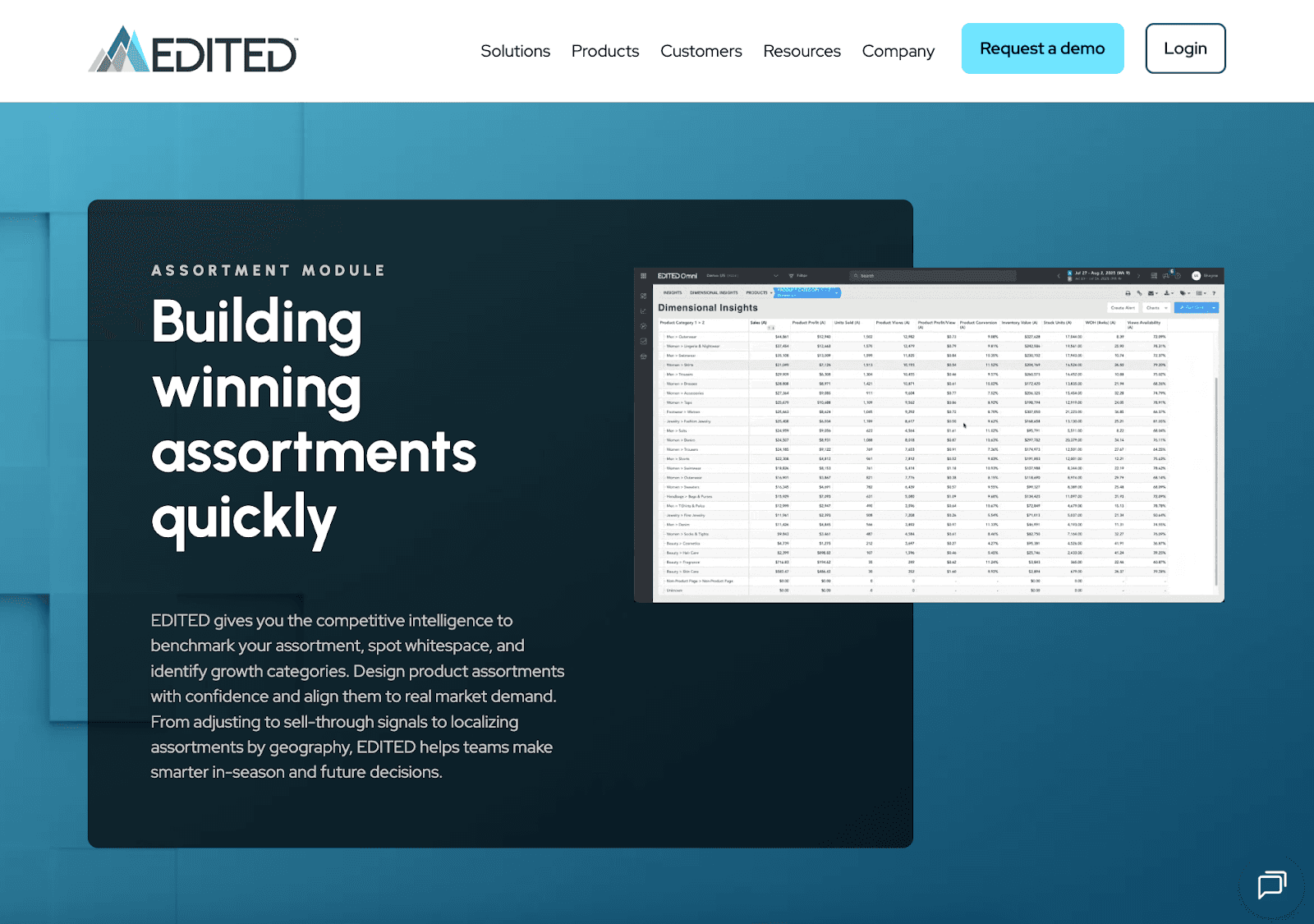
EDITED is a retail intelligence platform used by fashion merchandising teams to guide assortment and pricing decisions using AI-powered market and performance analysis.
It combines internal performance data with external market and competitor signals to show how products perform by category, price point, and season.
Merchants use EDITED to run planning discussions with clearer inputs, align targeted marketing campaigns with product availability, and monitor customer engagement by market.
The platform helps brands respond to shifts in demand while maintaining a consistent assortment strategy that supports long-term brand positioning and customer loyalty.
5. Blue Yonder
Source: blueyonder.com
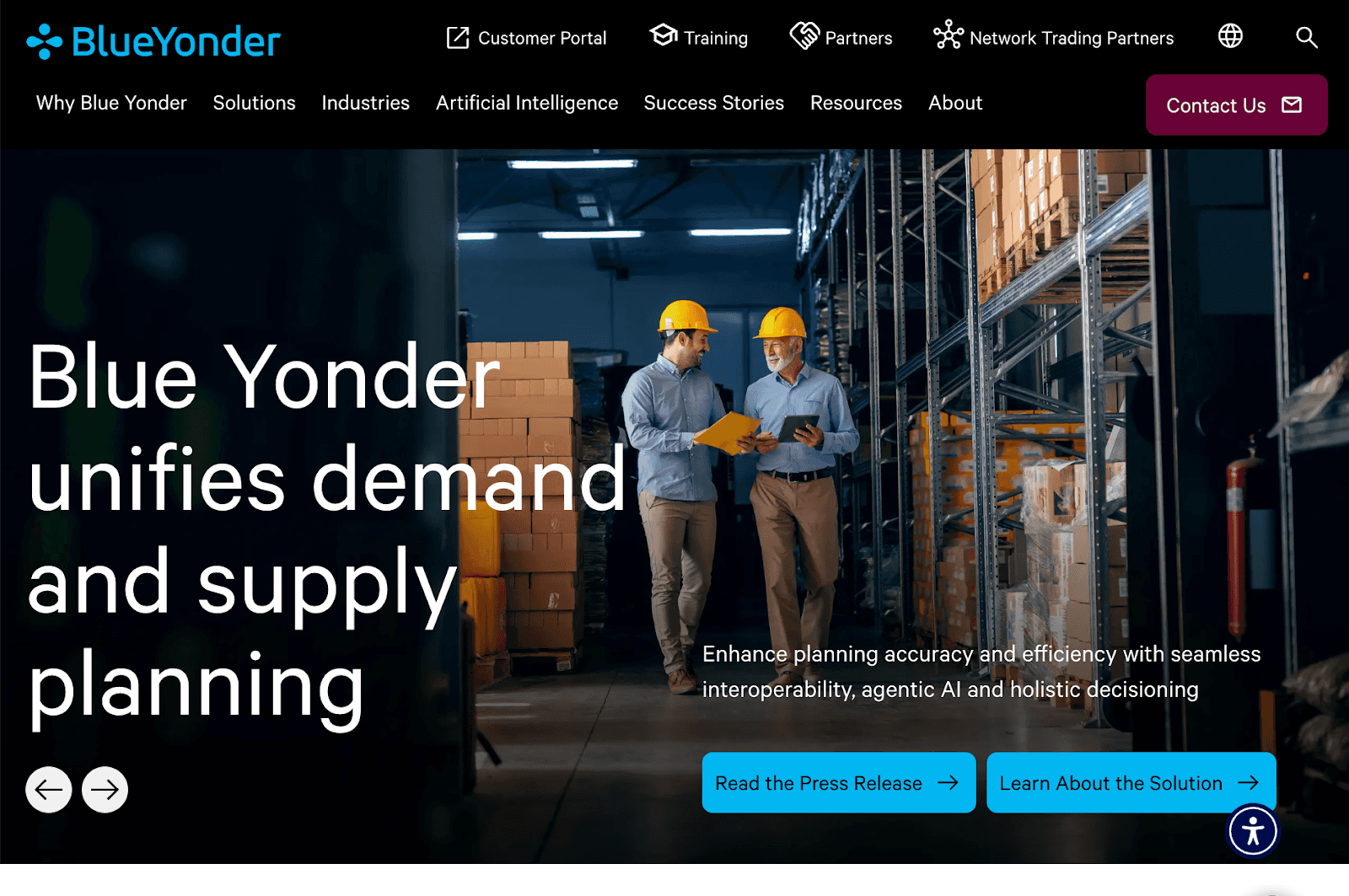
Blue Yonder is an enterprise retail planning platform used by large retailers to manage merchandise, category, supply chain, and human resources decisions at scale.
Within its Retail Planning & Category Management suite, Blue Yonder handles assortment creation, localization, and scenario planning by region and store cluster.
Retailers use it to evaluate different product mix options based on demand signals, financial targets, and inventory constraints before committing to buys.
Blue Yonder typically operates as part of a broader planning and supply chain ecosystem rather than as a standalone merchandising tool.
Retail Operations and Task Automation Software
Retail operations and task automation software focus on day-to-day execution inside stores.
Store teams rely on structured workflows connected to the POS system to manage tasks in-store, respond to customer queries, and keep execution consistent.
Automation reduces manual follow-up and keeps handoffs cleaner between store operations and headquarters.
6. Yoobic
Source: yoobic.com
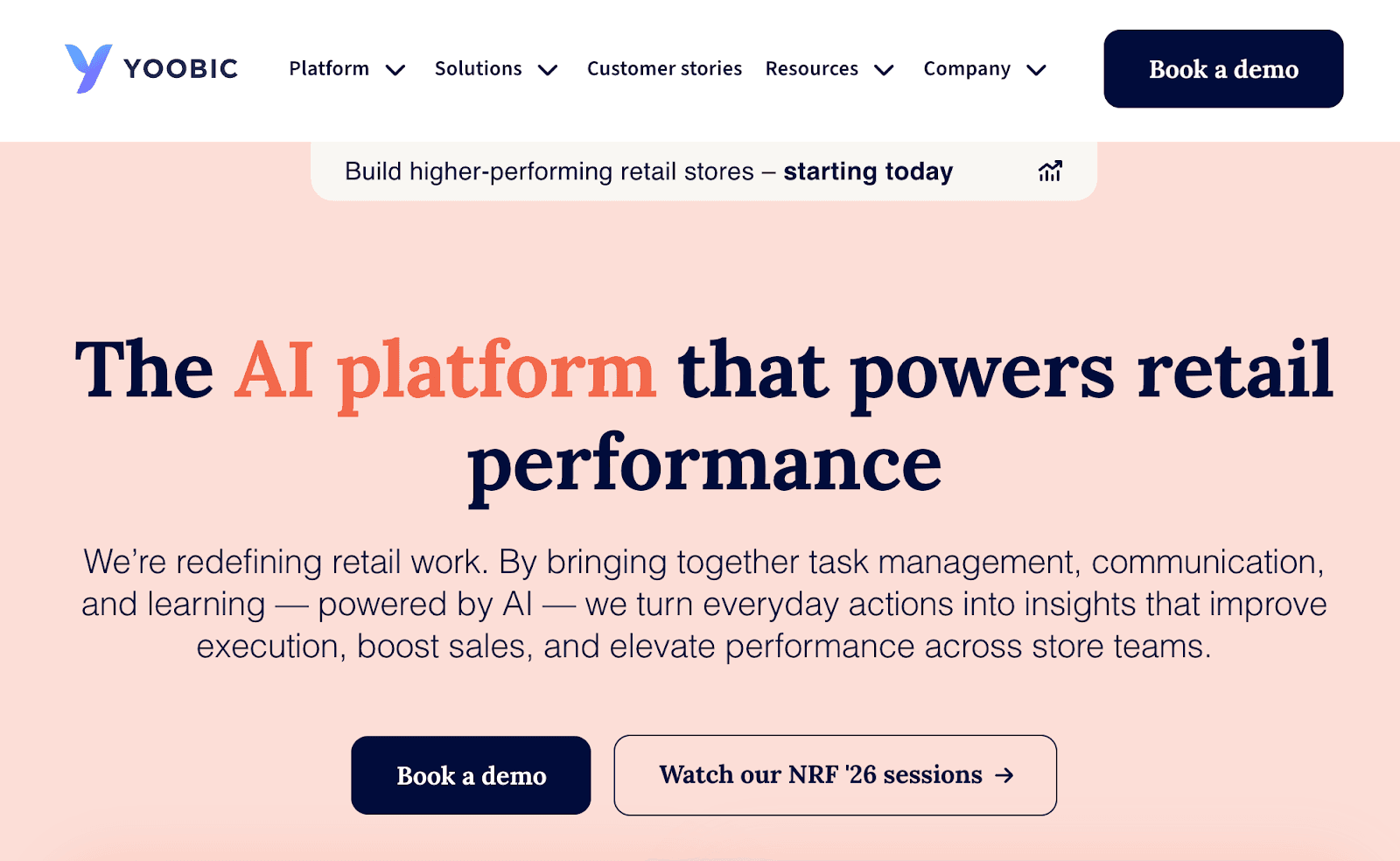
Yoobic centralizes store tasks, communication, and execution tracking in one platform. Store teams use it to receive assignments, follow brand guidelines, and report completion directly from the sales floor.
Yoobic helps maintain consistency between locations, which is especially important when store execution affects customer experience and long-term loyalty.
Brands rely on the platform to reduce missed tasks, improve visibility for headquarters, and keep store operations aligned without adding extra manual follow-up.
7. Zipline
Source: getzipline.com
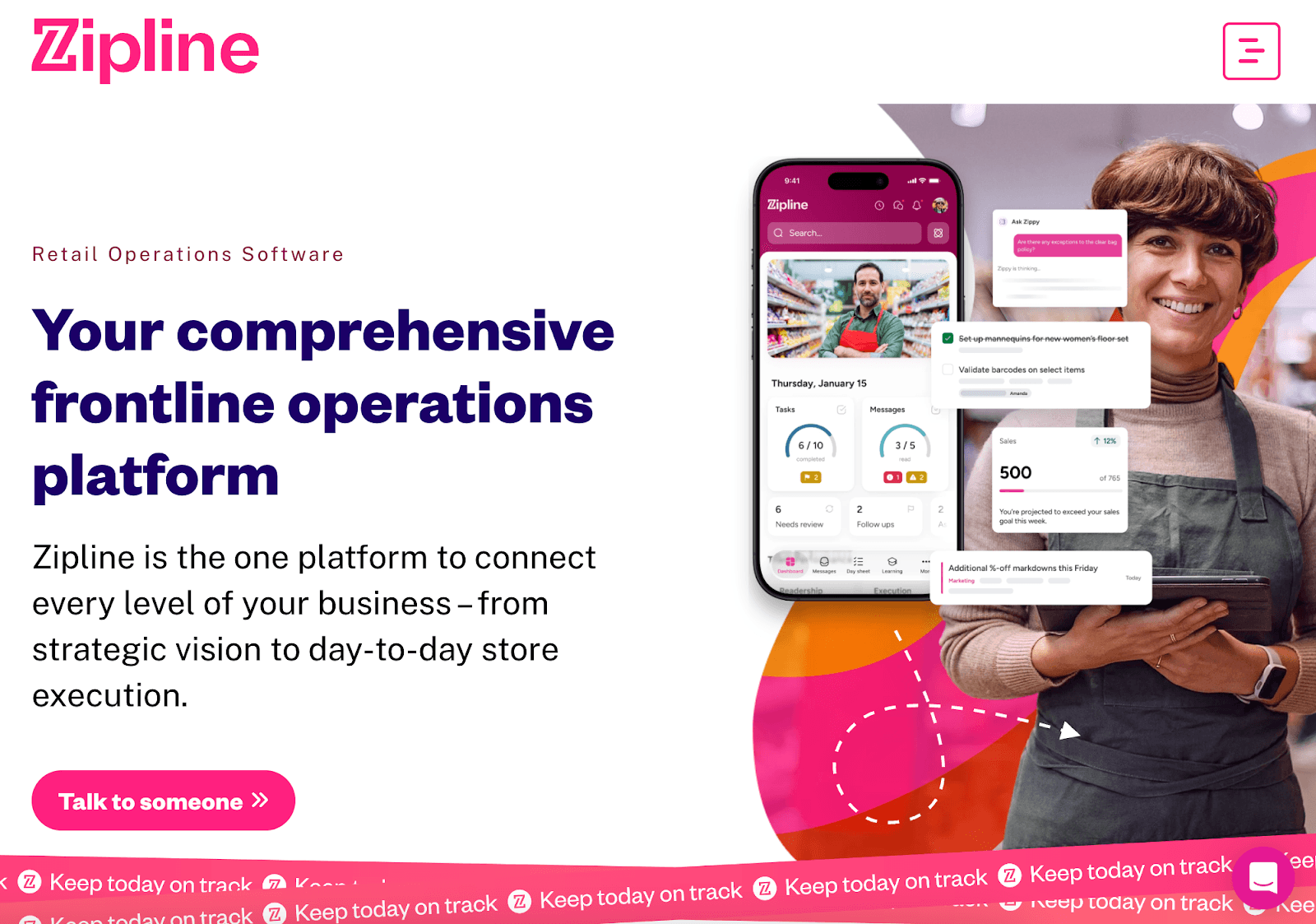
Zipline connects corporate planning to store execution for retailers operating in many locations.
The platform organizes tasks, messages, and deadlines into one system that stores can act on without searching through emails or shared documents.
Leadership teams use Zipline to track execution rates, identify gaps, and adjust priorities quickly. Clear execution supports consistent store experiences, which helps build customer loyalty as brands scale.
Omnichannel Order and Fulfillment Automation Software
Omnichannel order and fulfillment automation software manages how orders move between ecommerce platforms, stores, and warehouses.
These tools connect payment processing, fulfillment, and reverse logistics to keep unified commerce workable between sales channels.
Strong fulfillment workflows improve accuracy and protect the customer experience when orders change or returns come back through different channels.
8. Manhattan Active Omni
Source: manh.com
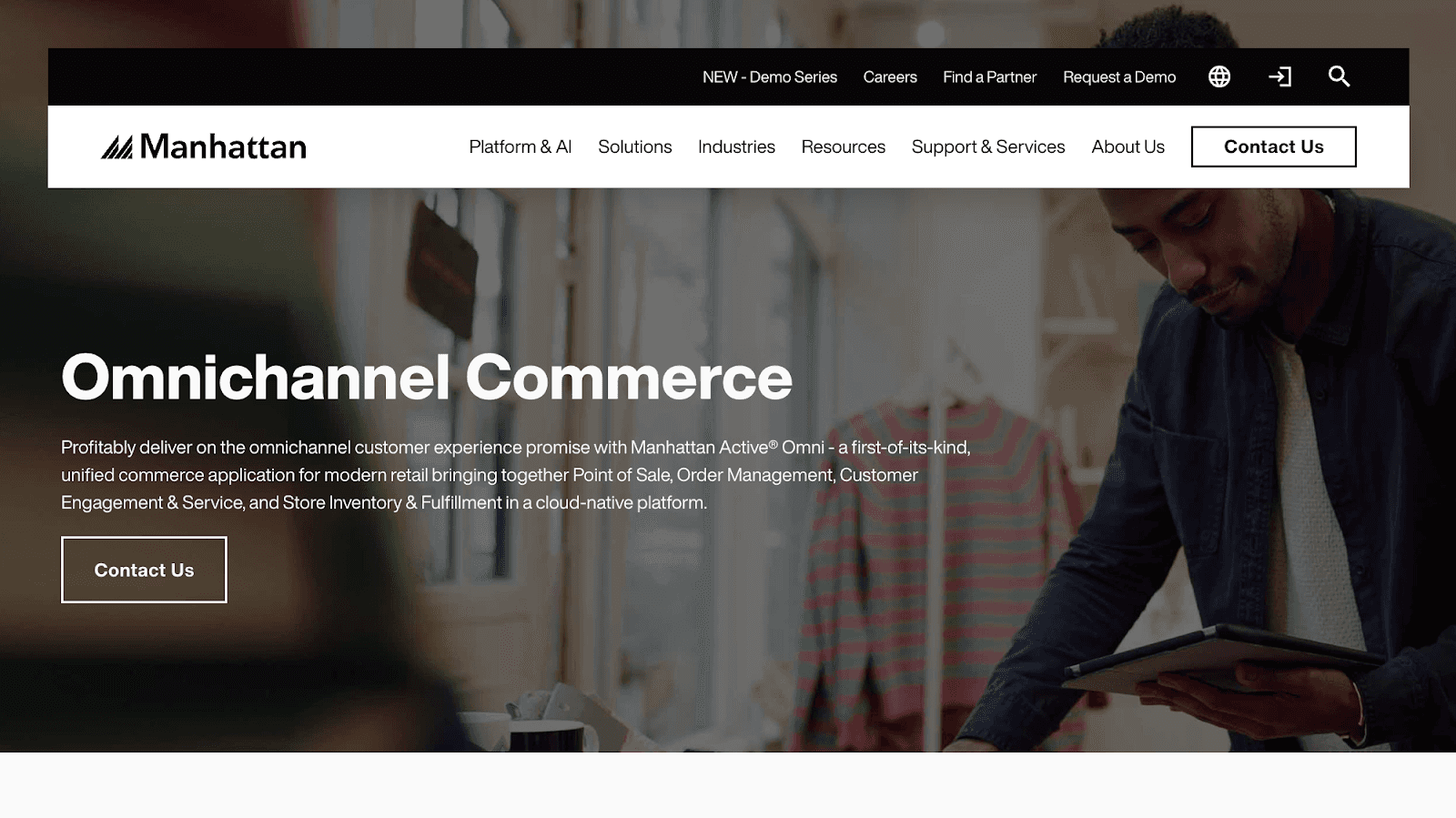
Manhattan Active Omni is an order management system built for retailers operating at scale through physical locations, warehouses, and digital channels.
It manages order routing, inventory visibility, and fulfillment logic between locations, so orders flow to the right node based on availability and service rules.
Large fashion and retail brands use Manhattan Active Omni to support ship-from-store, buy online, pick up in-store, and returns handling between channels.
The platform is often part of a broader enterprise stack that supports high-order volume and complex fulfillment requirements.
9. SkuNexus
Source: skunexus.com
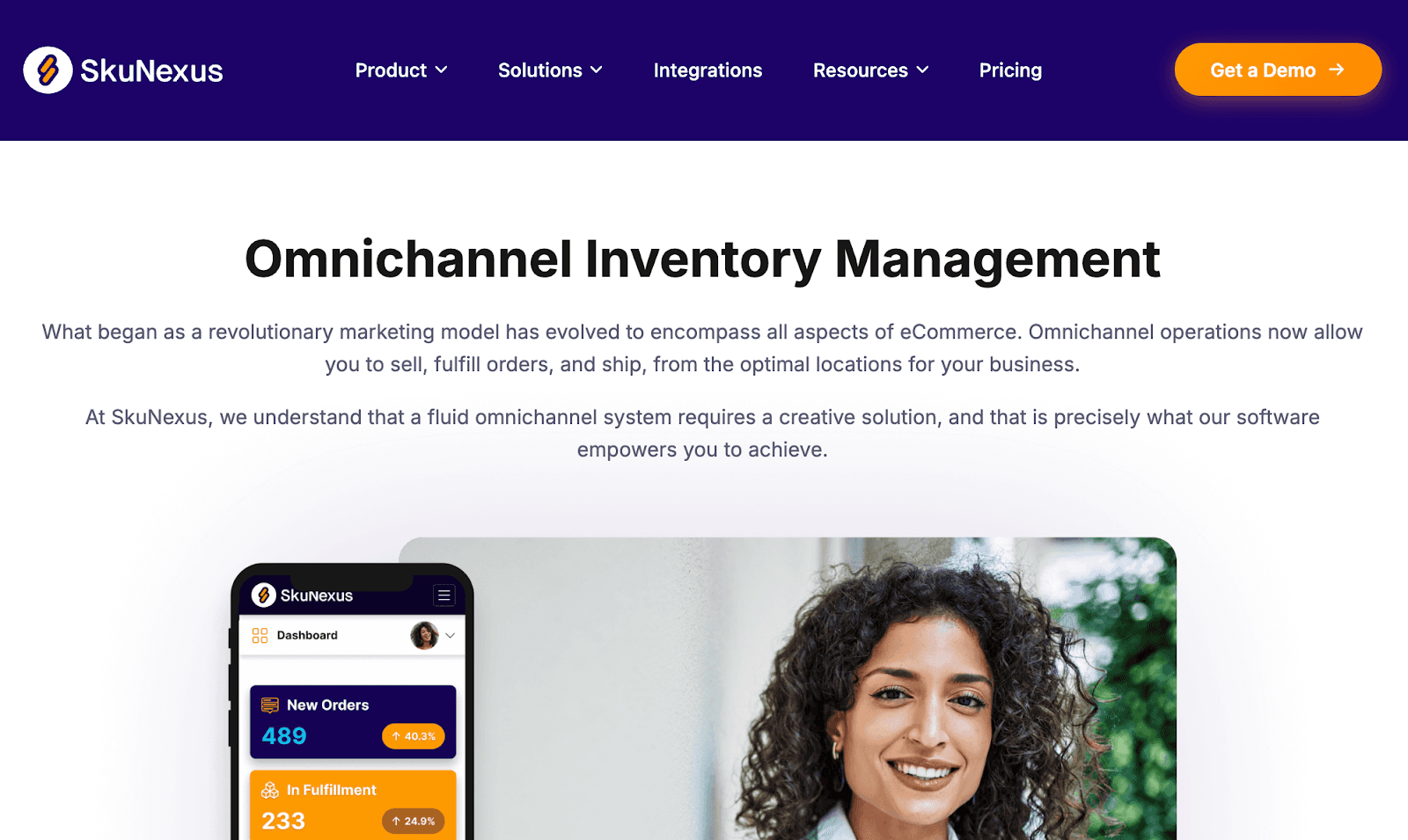
SkuNexus focuses on omnichannel order management for growing direct-to-consumer (DTC) and hybrid retail brands.
It connects ecommerce platforms with warehouses, stores, and dropship vendors to manage fulfillment from multiple sources.
Fashion brands use SkuNexus to coordinate order routing, inventory updates, and returns without custom development.
The system gives brands flexibility as fulfillment models change, especially when adding new vendors or expanding channels.
How Retail Automation Software Supports Customer Satisfaction
Retail automation software protects customer satisfaction by helping you deliver products accurately and on time.
When product data, inventory updates, and store execution stay aligned, fewer mistakes reach the customer. Clear workflows also make it easier to answer questions about availability, delivery, or changes without chasing updates between tools.
Connected systems give your team better context through shared records and customer relationship management (CRM), so responses feel informed rather than reactive.
Fewer manual steps help improve efficiency throughout product work, operations, and fulfillment, which reduces delays that frustrate buyers.
Over time, consistent execution builds trust, supports repeat purchases, and helps boost sales without adding pressure to already busy teams.
Choosing the Right Retail Automation Software for Your Team
Choosing the right retail automation software depends on how your business operates now and where it’s headed next.
Smaller teams often need tools that reduce manual work quickly, without long setup or heavy customization. As complexity grows, software needs to support more styles, more channels, and more people working in parallel.
Pay attention to how well a system fits your current workflows. Tools that adapt to your process tend to get adopted faster than systems that force change too early.
The growth stage also plays a role. What works for a single sales channel may struggle once wholesale, stores, or international vendors enter the picture.
The right choice keeps clarity as you scale, without slowing down design, development, or execution.
Create a More Connected Retail Workflow With Onbrand
Retail automation software works best when it quietly holds everything together as your business grows. Product decisions stay connected to execution.
Inventory stays aligned with demand. Less time goes into chasing updates, and more time goes into moving work forward.
For fashion brands, that stability makes a difference. Collections move faster, vendor communication stays clear, and fewer issues surface late in development.
Automation becomes part of the foundation rather than another system to manage.
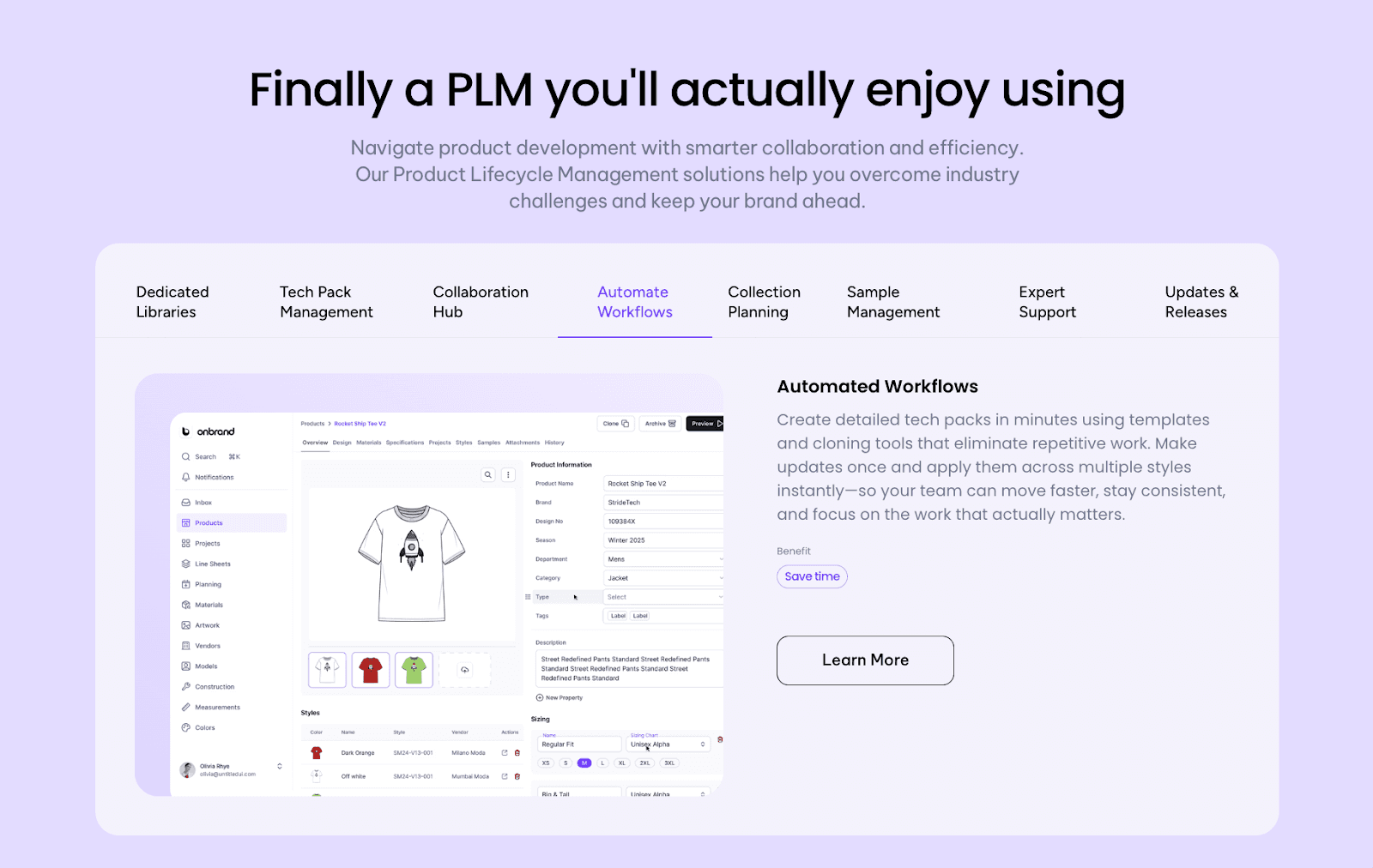
Onbrand PLM and Onbrand AI Design were built with this in mind. Together, they connect early design work with live tech packs, samples, timelines, and vendor collaboration, so ideas continue moving once development begins.
FAQs About Retail Automation Software
What is the best retail software?
There is no single best retail software for every business. The right choice depends on which part of the retail workflow you need to support. For product development and product data, Onbrand connects design, tech packs, samples, and vendor collaboration in one system.
What is retail automation?
Retail automation is the use of software to replace manual work in product development, inventory management, merchandising, store operations, and fulfillment. It keeps data consistent, reduces human error, and makes it easier to run more styles, channels, and locations without adding chaos.
What software is used in retail stores?
Retail stores commonly use point-of-sale (POS) systems, inventory management software, task and communication platforms, and order management systems. Larger retailers may also use workforce scheduling tools, store execution software, and systems that connect in-store activity with ecommerce and supply chain operations.
What are the five Ss of retail operations?
The five Ss of retail operations are:
Sort
Set in order
Shine
Standardize
Sustain
They focus on organizing store environments, maintaining consistency, and creating repeatable processes that support efficient execution and a better customer experience.
Why is customer relationship management important for growing retail teams?
Customer relationship management (CRM) is important for growing retail teams because it keeps customer data, purchase history, and communication in one place as volume increases. A shared system helps teams respond to customer questions faster, coordinate between channels, and avoid duplicate or conflicting information as more people touch the workflow.
Modern fashion brands don’t struggle because they lack creativity. They struggle when product ideas, inventory decisions, and retail execution fall out of sync as the business grows.
As collections expand and sales channels multiply, teams rely on more systems to manage retail product development, inventory levels, store operations, and fulfillment processes.
When those systems don’t connect, teams spend more time reconciling data than moving products forward.
Retail automation software helps fashion teams replace manual handoffs with connected workflows.
From early product development and specification management to inventory planning and order fulfillment, automation makes decisions easier to align and reduces errors throughout the retail lifecycle.
Below, we break down the key categories of retail automation software and highlight tools fashion and retail teams use as they scale.
TL;DR
These are key retail automation software tools fashion brands use as they scale, grouped by workflow category:
Product development and product data: Onbrand
Inventory and demand planning: Cin7 Core, Inventory Planner
Merchandising and assortment planning: EDITED, Blue Yonder
Store operations and task execution: Yoobic, Zipline
Omnichannel order and fulfillment: Manhattan Active Omni, SkuNexus
Why Retail Teams Use Retail Automation Software
Fashion brands use retail automation solutions to keep product work, inventory, and execution aligned as the business grows. When you manage multiple styles, vendors, and channels, relying on manual labor and disconnected files makes it harder to keep pace.
Automation replaces repetitive tasks with systems that keep inventory data, sales tracking, and approvals moving through one retail automation platform.
That visibility helps you respond faster to customer demand, avoid missed updates, and reduce handoffs between store teams and production partners.
Integrated inventory management systems consolidate inventory tracking, inventory optimization, and low-stock alerts into a single workflow, which improves stock-level accuracy and inventory turnover.
Tying those workflows into supply chain management and ecommerce platforms also reduces errors during fulfillment and reverse logistics.
Relying on shared automation tools instead of manual updates improves consistency, helps reduce human error, and protects customer satisfaction without adding complexity to daily work.
This shift is reflected at the market level. According to Grand View Research, the global retail automation market was valued at $26.26 billion in 2024 and is projected to reach $44.8 billion by 2030, showing how strongly retailers are investing in automation to support operations and the customer experience.
Top 9 Retail Automation Software Solutions in 2026 by Category
Retail automation shows up in different parts of the retail business, not as a single system. Product data, inventory processes, store execution, and fulfillment each rely on different tools, often managed by different roles.
The categories below reflect how fashion and retail organizations structure their workflows today, with examples of retail solutions used by growing brands and larger chains.
Product Development and Product Data Automation Software
Product development and product data automation software keep styles moving from early concepts into production-ready products.
These systems keep sketches, tech packs, bills of materials (BOMs), samples, and approvals connected, so updates stay tied to the right style and version.
Clear product records reduce confusion with vendors and help reduce human error once production timelines tighten.
1. Onbrand
Onbrand connects early design work with production-ready product data, so styles don’t get rebuilt as they move forward.
You can carry a concept from initial visuals into tech packs, BOMs, samples, and approvals using one record that stays current through every revision.
Brands using Onbrand report outcomes like 55% faster tech pack creation, 30–50% fewer physical samples, and development timelines shortened by about four weeks.
Onbrand AI Design

Onbrand AI Design supports the front end of fashion product development, where ideas are still fluid. Designers can start from a text prompt, sketch, or reference image, then explore silhouettes, colorways, and details without losing track of what has already been reviewed.
Visuals stay organized for line reviews, merchant alignment, and early decisions that shape the collection during the fashion design process.
Onbrand PLM

Onbrand PLM takes those approved visuals and turns them into build-ready product work. Tech packs stay live instead of being exported into static files, specs remain tied to the style, and vendor feedback stays connected to the exact version under discussion.
That structure becomes important when a single style undergoes multiple revisions between the first sample and production.
Inventory and Demand Planning Automation Software
Inventory and demand planning automation software helps you manage inventory processes as assortments expand into new sales channels.
Planning teams use inventory management automation and data-driven insights to balance buy quantities, stock levels, and seasonal demand.
Better visibility gives planners clearer signals for resource allocation and fewer last-minute adjustments when demand shifts.
2. Cin7 Core

Source: cin7.com
Cin7 Core handles inventory management and demand planning for omnichannel retail brands selling through point-of-sale (POS) systems, ecommerce, and wholesale.
The platform connects customer data, inventory levels, and purchasing activity into unified workflows that work alongside existing systems.
Retailers use Cin7 Core to support demand forecasting, manage stock between locations, and reduce manual coordination between sales and operations.
Its integrations with modern retail tools, including accounting platforms, help reduce labor costs while keeping inventory accurate as volume grows.
3. Inventory Planner

Source: inventory-planner.com
Inventory Planner focuses on demand forecasting and purchase planning for fashion retailers, managing seasonal assortments and size curves.
Planning teams use it to translate sales history, customer preferences, and performance trends into clearer purchasing decisions.
The tool helps retailers respond to demand shifts, plan replenishment, and support supply chain optimization without rebuilding spreadsheets each season.
Inventory Planner slots into advanced systems used in modern retail and keeps planning consistent as retailers face challenges tied to growth and changing demand.
Merchandising and Assortment Automation Software
Merchandising and assortment automation software guides decisions around what to carry, where to place it, and how deep to buy during assortment planning.
These tools use customer behavior, purchase history, and sales performance to guide data-driven decision-making. Clear assortment views help align planning with brand direction and market demand.
4. EDITED

Source: edited.com
EDITED is a retail intelligence platform used by fashion merchandising teams to guide assortment and pricing decisions using AI-powered market and performance analysis.
It combines internal performance data with external market and competitor signals to show how products perform by category, price point, and season.
Merchants use EDITED to run planning discussions with clearer inputs, align targeted marketing campaigns with product availability, and monitor customer engagement by market.
The platform helps brands respond to shifts in demand while maintaining a consistent assortment strategy that supports long-term brand positioning and customer loyalty.
5. Blue Yonder

Source: blueyonder.com
Blue Yonder is an enterprise retail planning platform used by large retailers to manage merchandise, category, supply chain, and human resources decisions at scale.
Within its Retail Planning & Category Management suite, Blue Yonder handles assortment creation, localization, and scenario planning by region and store cluster.
Retailers use it to evaluate different product mix options based on demand signals, financial targets, and inventory constraints before committing to buys.
Blue Yonder typically operates as part of a broader planning and supply chain ecosystem rather than as a standalone merchandising tool.
Retail Operations and Task Automation Software
Retail operations and task automation software focus on day-to-day execution inside stores.
Store teams rely on structured workflows connected to the POS system to manage tasks in-store, respond to customer queries, and keep execution consistent.
Automation reduces manual follow-up and keeps handoffs cleaner between store operations and headquarters.
6. Yoobic

Source: yoobic.com
Yoobic centralizes store tasks, communication, and execution tracking in one platform. Store teams use it to receive assignments, follow brand guidelines, and report completion directly from the sales floor.
Yoobic helps maintain consistency between locations, which is especially important when store execution affects customer experience and long-term loyalty.
Brands rely on the platform to reduce missed tasks, improve visibility for headquarters, and keep store operations aligned without adding extra manual follow-up.
7. Zipline

Source: getzipline.com
Zipline connects corporate planning to store execution for retailers operating in many locations.
The platform organizes tasks, messages, and deadlines into one system that stores can act on without searching through emails or shared documents.
Leadership teams use Zipline to track execution rates, identify gaps, and adjust priorities quickly. Clear execution supports consistent store experiences, which helps build customer loyalty as brands scale.
Omnichannel Order and Fulfillment Automation Software
Omnichannel order and fulfillment automation software manages how orders move between ecommerce platforms, stores, and warehouses.
These tools connect payment processing, fulfillment, and reverse logistics to keep unified commerce workable between sales channels.
Strong fulfillment workflows improve accuracy and protect the customer experience when orders change or returns come back through different channels.
8. Manhattan Active Omni

Source: manh.com
Manhattan Active Omni is an order management system built for retailers operating at scale through physical locations, warehouses, and digital channels.
It manages order routing, inventory visibility, and fulfillment logic between locations, so orders flow to the right node based on availability and service rules.
Large fashion and retail brands use Manhattan Active Omni to support ship-from-store, buy online, pick up in-store, and returns handling between channels.
The platform is often part of a broader enterprise stack that supports high-order volume and complex fulfillment requirements.
9. SkuNexus

Source: skunexus.com
SkuNexus focuses on omnichannel order management for growing direct-to-consumer (DTC) and hybrid retail brands.
It connects ecommerce platforms with warehouses, stores, and dropship vendors to manage fulfillment from multiple sources.
Fashion brands use SkuNexus to coordinate order routing, inventory updates, and returns without custom development.
The system gives brands flexibility as fulfillment models change, especially when adding new vendors or expanding channels.
How Retail Automation Software Supports Customer Satisfaction
Retail automation software protects customer satisfaction by helping you deliver products accurately and on time.
When product data, inventory updates, and store execution stay aligned, fewer mistakes reach the customer. Clear workflows also make it easier to answer questions about availability, delivery, or changes without chasing updates between tools.
Connected systems give your team better context through shared records and customer relationship management (CRM), so responses feel informed rather than reactive.
Fewer manual steps help improve efficiency throughout product work, operations, and fulfillment, which reduces delays that frustrate buyers.
Over time, consistent execution builds trust, supports repeat purchases, and helps boost sales without adding pressure to already busy teams.
Choosing the Right Retail Automation Software for Your Team
Choosing the right retail automation software depends on how your business operates now and where it’s headed next.
Smaller teams often need tools that reduce manual work quickly, without long setup or heavy customization. As complexity grows, software needs to support more styles, more channels, and more people working in parallel.
Pay attention to how well a system fits your current workflows. Tools that adapt to your process tend to get adopted faster than systems that force change too early.
The growth stage also plays a role. What works for a single sales channel may struggle once wholesale, stores, or international vendors enter the picture.
The right choice keeps clarity as you scale, without slowing down design, development, or execution.
Create a More Connected Retail Workflow With Onbrand

Retail automation software works best when it quietly holds everything together as your business grows. Product decisions stay connected to execution.
Inventory stays aligned with demand. Less time goes into chasing updates, and more time goes into moving work forward.
For fashion brands, that stability makes a difference. Collections move faster, vendor communication stays clear, and fewer issues surface late in development.
Automation becomes part of the foundation rather than another system to manage.
Onbrand PLM and Onbrand AI Design were built with this in mind. Together, they connect early design work with live tech packs, samples, timelines, and vendor collaboration, so ideas continue moving once development begins.
FAQs About Retail Automation Software
What is the best retail software?
There is no single best retail software for every business. The right choice depends on which part of the retail workflow you need to support. For product development and product data, Onbrand connects design, tech packs, samples, and vendor collaboration in one system.
What is retail automation?
Retail automation is the use of software to replace manual work in product development, inventory management, merchandising, store operations, and fulfillment. It keeps data consistent, reduces human error, and makes it easier to run more styles, channels, and locations without adding chaos.
What software is used in retail stores?
Retail stores commonly use point-of-sale (POS) systems, inventory management software, task and communication platforms, and order management systems. Larger retailers may also use workforce scheduling tools, store execution software, and systems that connect in-store activity with ecommerce and supply chain operations.
What are the five Ss of retail operations?
The five Ss of retail operations are:
Sort
Set in order
Shine
Standardize
Sustain
They focus on organizing store environments, maintaining consistency, and creating repeatable processes that support efficient execution and a better customer experience.
Why is customer relationship management important for growing retail teams?
Customer relationship management (CRM) is important for growing retail teams because it keeps customer data, purchase history, and communication in one place as volume increases. A shared system helps teams respond to customer questions faster, coordinate between channels, and avoid duplicate or conflicting information as more people touch the workflow.

Discover how Onbrand PLM can streamline your product development!
© 2024 onbrandplm.com. All rights reserved.
© 2024 Onbrand. All rights reserved.

