Jun 16, 2026
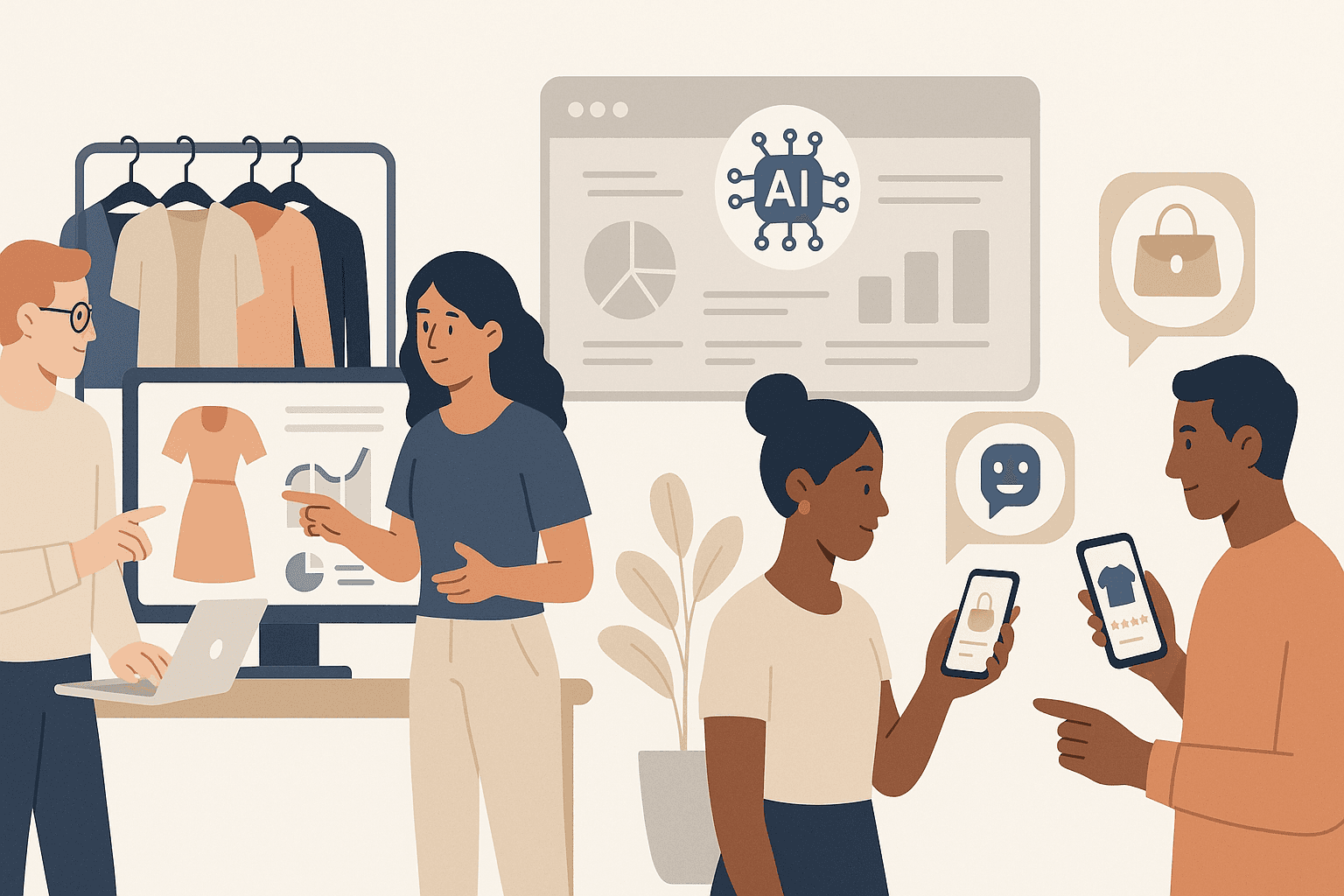
Retail teams balance tight margins, short trend cycles, and complex global sourcing while working to meet rising customer expectations.
Every decision, from design to delivery, affects how quickly products reach stores and how well they perform once they do.
Amid all this pressure, teams need more than hard work to stay ahead. They need fashion tools that help them move faster, spot patterns early, and make better decisions.
Artificial intelligence (AI) helps make that possible.
It supports faster responses to changing conditions, a deeper understanding of customer preferences, better data analysis, and a competitive advantage in the modern retail industry.
In this article, you'll learn what AI in retail means, how it is changing retail operations, and how real brands use it every day to improve performance and deliver better results.
TL;DR
AI in retail examples include virtual shopping assistants, hyper-personalization, voice shopping, visual search, demand forecasting, dynamic pricing, fraud detection, omnichannel support, sustainability planning, and generative AI for creative retail.
Retail teams use AI to understand customer preferences, forecast demand, manage inventory, personalize shopping experiences, and make faster decisions with real-time data.
AI can reduce waste, improve customer service, protect transactions, and help retailers respond faster to changing demand.
Generative AI supports retail product development by helping teams create visuals, test concepts, build campaigns, and refresh e-commerce content faster.
Onbrand helps fashion teams move from concept creation to production with AI-generated visuals, live tech packs, approvals, vendor communication, and production handoffs.
What Is AI in Retail?
AI in retail helps teams use data to make informed decisions throughout their day-to-day work.
It turns information such as sales trends, customer behavior, and purchase history into valuable insights that support product planning, merchandising, and customer engagement.
Retail teams use AI technologies for many of the tasks they already manage every day.
Recommendation engines personalize shopping experiences, predictive analytics support demand forecasting, and computer vision helps identify out-of-stock items more quickly.
Machine learning also helps retail businesses adjust pricing strategies, track competitor pricing, and plan future customer demand with greater accuracy.
From creating targeted promotions to improving data quality, retail AI supports better decisions at every stage of the customer journey. It helps retailers stay competitive and improve customer satisfaction through better use of real-time data and AI-powered solutions.
How AI Helps Retail Businesses
AI helps retail companies plan, design, and deliver products with greater speed and accuracy. It connects people, systems, and supply chain management in ways that reduce manual work and improve operational efficiency.
When teams rely on data-driven decision-making, they respond faster to market trends, automate routine tasks, and optimize retail operations with fewer delays.
Key benefits include:
Faster decisions - Teams act on real-time data, not old reports.
Lower waste - Smarter buys and tighter replenishment prevent excess stock.
Higher conversion - Personalized shopping experiences reduce drop-offs.
Better collaboration - Shared access keeps store associates, suppliers, and partners aligned.
Happier customers - Quick answers to customer queries and consistent service increase customer satisfaction.
Many retailers use AI to forecast demand, support automated inventory management, and maintain more stable supply chains when disruptions occur.
Leading brands now view AI as a practical business tool. It helps them reduce waste, respond to change more quickly, and create more relevant shopping experiences for customers in physical stores and online.
10 Examples of AI in Retail
Below are ten practical examples showing how retail teams use AI to make better decisions, improve operations, and serve customers with more relevant support.
1. AI Shopping Assistants and Virtual Agents
AI shopping assistants are changing how people browse and buy. They’re no longer those scripted chatbots that give canned replies.
Virtual assistants use conversational AI and natural language processing to chat naturally, guide decisions, and make shopping feel personal.
Picture this. You’re online, looking for a new jacket. A virtual shopping assistant pops up, asks about your style, checks your browsing behavior, and recommends pieces that match your taste. It can even look at your past orders or saved items to find something that completes the outfit.
Retailers use these assistants on websites, mobile apps, and messaging channels. They understand what customers like, notice patterns in customer interactions, and respond instantly.
The best part is how adaptive they are. Modern AI agents can learn as they go, predicting what shoppers might want next and offering help before you even ask.
That’s how brands are turning casual browsers into loyal customers through real conversations that feel helpful, not robotic.
2. Hyper-Personalization and Predictive Customer Engagement
Personalization isn’t just about using your name in an email anymore.
Retailers now use AI to understand what shoppers truly care about. They look at historical sales data, customer insights, and browsing behavior to spot patterns that reveal what drives real engagement.
Imagine clicking on a few sneakers in an app. The system remembers, checks your social media posts, reviews past purchases, and sends a message or product offer that fits your style perfectly. That’s predictive analytics at work. It helps brands send exactly the right content at the right time.
Retail teams also use generative AI to create custom descriptions, visuals, and marketing campaigns faster. It gives every shopper an experience that feels built for them.
When done well, hyper-personalization feels effortless. You see products you actually like, receive relevant alerts, and feel understood. All powered by smarter data and automation behind the scenes.
3. Conversational Commerce and Voice Shopping
Shopping no longer happens only through clicks.
More people now chat or talk their way through purchases using conversational AI and voice assistants. It’s faster, easier, and feels more natural than typing out endless searches.
Think about asking your phone, “Find me a pair of white sneakers under $100.” Within seconds, the assistant suggests options, shows reviews, and even helps with checkout. That’s conversational commerce. Shopping through simple, human-like conversations.
Retailers use these tools to handle customer queries, guide product discovery, and offer quick answers about size, fit, or delivery. They also connect messaging apps, mobile platforms, and in-store kiosks into one continuous shopping experience.
These virtual assistants learn from customer data and adjust their tone and recommendations based on context. It’s a small shift that has a big impact with less friction, more convenience, and a shopping journey that feels effortless.
4. AI-Powered Visual Search and Image Recognition
Some shoppers know exactly what they want. They just don’t know how to describe it. That’s where AI-powered visual search steps in.
Instead of typing keywords, customers can snap a photo or upload a screenshot. The system, powered by computer vision, scans the image and shows similar products instantly. It’s quick, visual, and perfect for style-focused shoppers who browse retail websites or social feeds for inspiration.
Behind the scenes, AI uses image recognition to tag photos and sort items accurately. Over time, it learns from customer feedback and browsing behavior, improving search results with every click.
Retailers also use this fashion technology to analyze social media posts and spot new trends early. It shortens the path from “I love that look” to “Add to cart,” giving brands a smarter way to connect inspiration with purchase.
5. Smart Inventory and Demand Forecasting
Getting the right products to the right place at the right time is a constant challenge. AI helps retailers make that happen through more accurate forecasting and supply chain optimization.
Forecasting tools now study historical sales data, local trends, and even weather patterns to predict what shoppers want next. They use supply chain analytics to balance stock, prevent overbuying, and react quickly when supply chain disruptions happen.
Retailers can now support optimized inventory management automatically, sending reorders or transfers based on consumer demand, inventory levels, and performance data.
Instead of relying on guesswork, teams have a clear view of what's selling, where products should move next, and how inventory systems are performing.
Data-driven forecasting helps retailers cut waste, reduce delays, and plan product flow with more confidence. It’s a practical way to keep operations stable and shelves stocked, even in unpredictable markets.
6. AI in Dynamic Pricing and Competitive Intelligence
Pricing used to be manual, but AI makes it smarter and faster. Retailers now use algorithms to analyze transaction patterns, review competitor moves, and adjust prices in real time.
These tools combine customer data, local market insights, and consumer demand to optimize pricing strategies that protect profits while keeping customers interested. If a product starts selling faster, AI raises or lowers the price based on timing, season, and availability.
Dynamic pricing also works alongside store layouts and promotions to attract the right shoppers at the right moment. It helps brands personalize customer experiences by offering discounts, loyalty rewards, or time-sensitive offers when customers are most likely to buy.
7. Fraud Detection and Transaction Security With AI
Retailers handle massive amounts of data every day, such as orders, payments, and account details, all moving at once. With so much activity, spotting fraud manually just isn’t possible anymore. AI steps in to make that process faster and more reliable.
Modern fraud detection tools use AI algorithms to scan patterns within thousands of transactions in seconds. They identify unusual behavior, flag potentially fraudulent transactions, and block suspicious activity before it turns into a loss.
Using customer data and contextual clues, these systems recognize the difference between a real shopper and a potential threat.
For data retailers handling sensitive customer data, AI adds an extra layer of safety without slowing down the checkout flow. It helps identify suspicious activity, reduce chargebacks, and support the trust customers place in every purchase.
At the same time, it helps brands maintain a smooth online shopping experience. One that feels safe, quick, and consistent from cart to confirmation.
8. AI-Enhanced Omnichannel Experiences
Shoppers switch between channels constantly. They browse on mobile, compare prices on desktop, and finish purchases in physical stores. AI helps retailers connect those interactions into one consistent shopping experience.
AI brings all customer data together into one system. It studies browsing habits, purchase history, and engagement to personalize each step of the journey.
When someone starts shopping online and finishes in-store, AI keeps recommendations, discounts, and product details perfectly consistent.
Customer feedback becomes much more useful when AI helps analyze it. Retailers can collect valuable data, identify recurring themes, and use those findings to improve digital shopping experiences and in-store service.
9. AI in Retail Sustainability and Waste Reduction
Retailers everywhere are under pressure to cut waste and operate more responsibly. AI helps make that possible by tracking materials, improving planning, and reducing overproduction.
Smart systems use supply chain analytics, customer data, and historical sales trends to predict demand more precisely.
According to the National Retail Federation's 2026 retail trends report, predictive analytics can help retailers forecast demand more accurately, optimize stock levels, and minimize waste.
Teams make only what’s needed, not what might sell later. AI also supports better logistics, identifying shorter routes and minimizing energy use during delivery.
Retail teams now monitor packaging, materials, and returns in real time, helping reduce environmental impact throughout their operations.
Some use AI solutions to measure sustainability performance and share progress with customers through product pages or marketing updates.
Every improvement counts. When retailers make smarter decisions about inventory, production, and logistics, they can reduce waste, control costs, and show customers they take sustainability seriously.
10. Generative AI and the Future of Creative Retail
Generative AI is opening new possibilities for creativity in retail. It helps teams design, write, and visualize faster without losing the human touch.
Retailers now use these tools to design campaigns, create product variations, and build visuals for new collections. For example, a brand can test ad copy, adjust colors, or build store concepts in minutes instead of weeks.
Generative tools also play a growing role in retail product development. Teams use them to explore concepts, create design assets, test store ideas, and refresh digital experiences without lengthy production cycles.
For retailers, AI creates more space for creative and strategic work. Teams can spend less time on repetitive tasks and more time developing products, refining campaigns, and improving the shopping experience.
How Onbrand AI Design Brings AI to Retail
Onbrand AI Design gives fashion teams a faster path from idea to ready visuals. You can generate concepts in seconds, test variations without waiting, and move into reviews with clear, on-brand images.
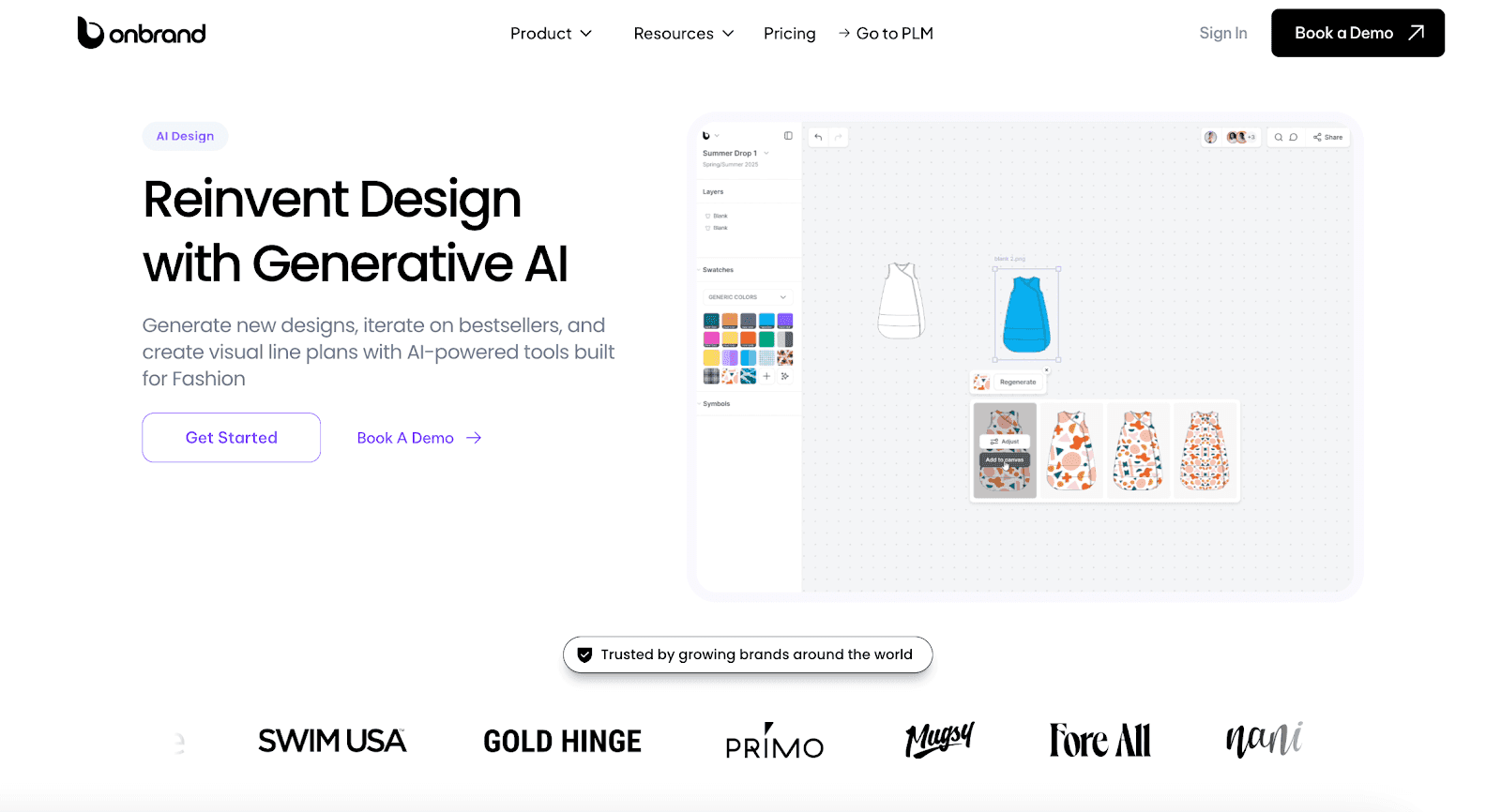
Teams report 10x faster design turnaround, 30–50% fewer physical samples, and thousands saved on external render work.
The workspace fits real design habits. Start with a prompt, a sketch, or a reference photo. See photoreal results, switch colors instantly, and explore alternate trims or cuts without losing context.
Brands using Onbrand AI Design also reclaim 10+ weeks each year through quicker feedback, fewer reworks, and direct handoffs to development.
Key Features
Generative image creation - Describe a garment and create photoreal design options in seconds.
Automated color palette generation - Get smart palettes inspired by brand guides and seasons.
Intelligent fabric and texture simulation - See lifelike drape and finishes before sampling.
Automated technical sketch creation - Turn 3D or mockups into clean flats instantly.
Real-time co-editing - Work together on the same file with comments and quick tweaks.
Layered design elements - Edit sleeves, graphics, trims, and panels independently.
Version history and rollback - Track changes and jump back to earlier versions.
Asset library management - Keep templates, graphics, and palettes in one place.
Presentation mode - Build review-ready boards with notes and callouts.
Mood board and inspiration tools - Collect, arrange, and annotate references.
Responsive design previews - View on multiple body types and poses.
3D garment simulation - Preview realistic drape on virtual bodies.
Automated spec sheet generation - Produce specs and measurements from approved visuals.
PLM system integration - Export designs and assets straight into development.
How Onbrand PLM Fits In
Once designs are ready, Onbrand PLM brings everything together for production. It serves as the single workspace for product data, tasks, vendors, samples, and approvals.
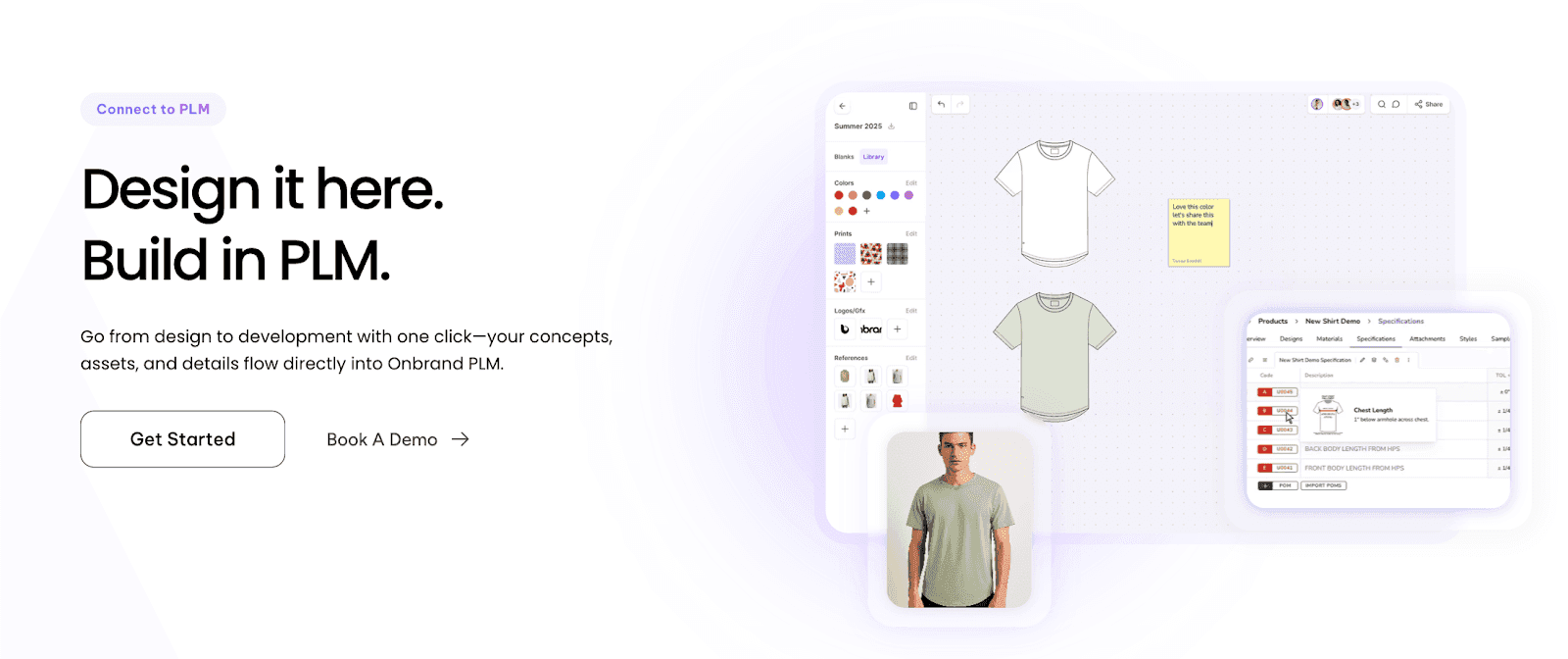
Creative, merchandising, and sourcing teams stay aligned in one system, eliminating long email chains and outdated spreadsheets.
Unlike legacy systems that take months to deploy, Onbrand PLM delivers results within weeks. Teams report 55% faster tech pack creation, a four-week shorter development cycle, and smooth data migration completed in just 10 days.
Together, Onbrand AI Design and Onbrand PLM give fashion brands a connected workflow, from concept to final product, without losing speed or accuracy.
Shape the Future of Retail Design With Onbrand AI Design
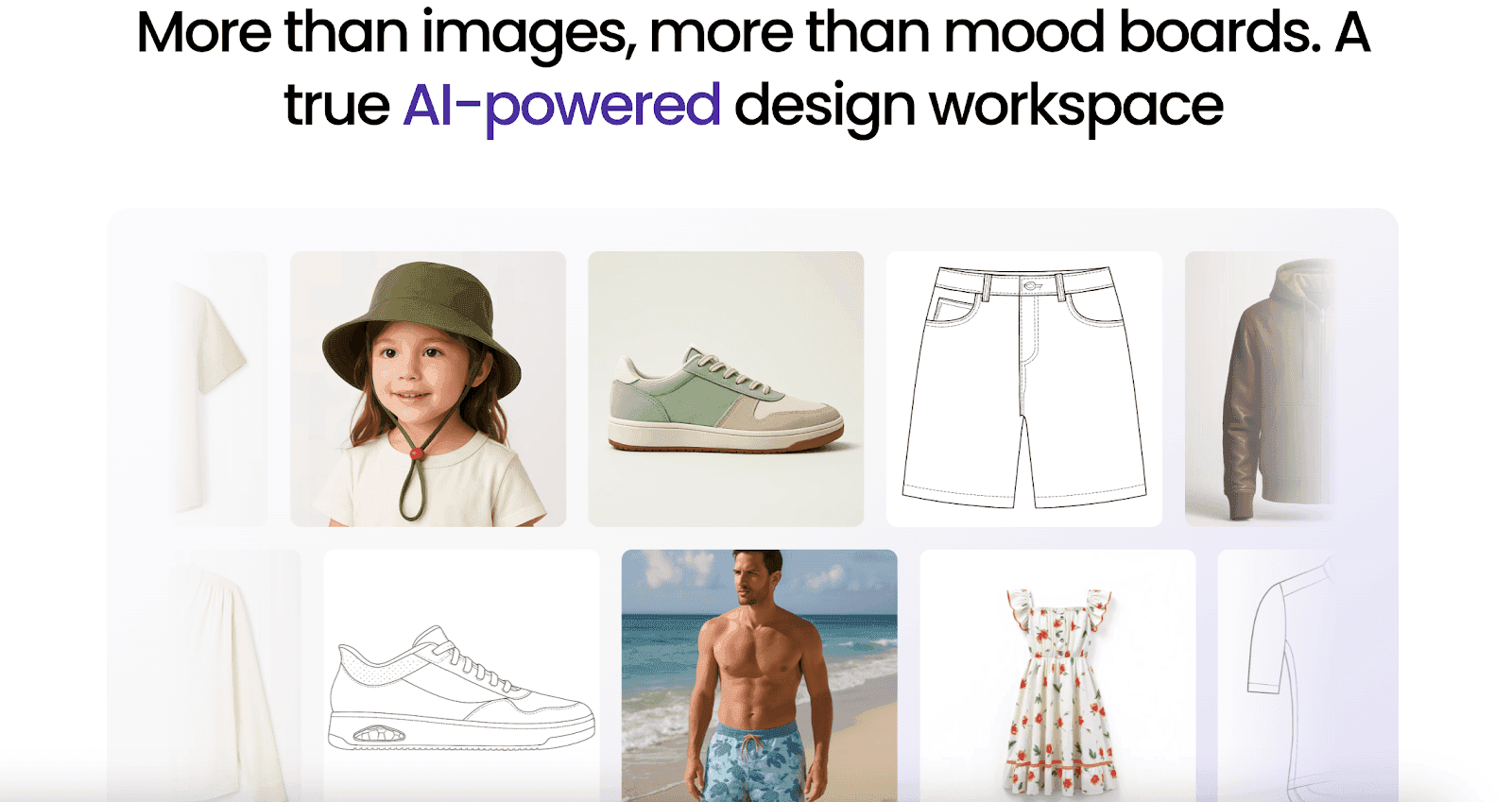
AI in retail now feels practical, not theoretical. You have real tools that help teams move faster, cut waste, and serve customers with confidence. The brands that win treat AI as everyday support for design, merchandising, supply chain, and stores.
Onbrand AI Design gives designers the freedom to explore and create visually stunning concepts in seconds.
From text prompts and sketches to photorealistic visuals, it helps teams experiment, refine, and share ideas in one connected space. The result is a smoother creative process with fewer manual steps and faster collaboration.
Once designs are ready, Onbrand PLM manages everything that follows, from product data and tasks to vendor communication and approvals. It keeps workflows connected and organized, helping retail teams launch collections with confidence and clarity.
FAQs About AI in Retail Examples
What is an example of AI in retail?
A virtual shopping assistant is a common example of AI in retail. Retailers also use AI to forecast demand, recommend products, power visual search, adjust pricing, and identify fraudulent activity.
How can I use AI in my retail store?
Retailers can use AI to forecast demand, optimize inventory, personalize marketing, automate customer support, improve product recommendations, and analyze shopper behavior. Many businesses start with tools that support merchandising, inventory planning, or customer service before expanding into other areas.
How does AI improve customer experience in retail?
AI improves customer experience by delivering personalized recommendations, predicting preferences, and offering instant assistance through chat or voice. It helps retailers provide a more consistent customer experience while giving customer service agents the information they need to respond faster and more accurately.
How does AI help retailers understand customer behavior?
AI helps retailers spot trends in customer behavior by reviewing browsing activity, purchase history, and engagement data from websites, apps, email, and stores to reveal what customers are interested in and how they shop. Those insights help teams adjust product assortments, refine marketing strategies, and support customer retention with experiences that feel more relevant to each customer.