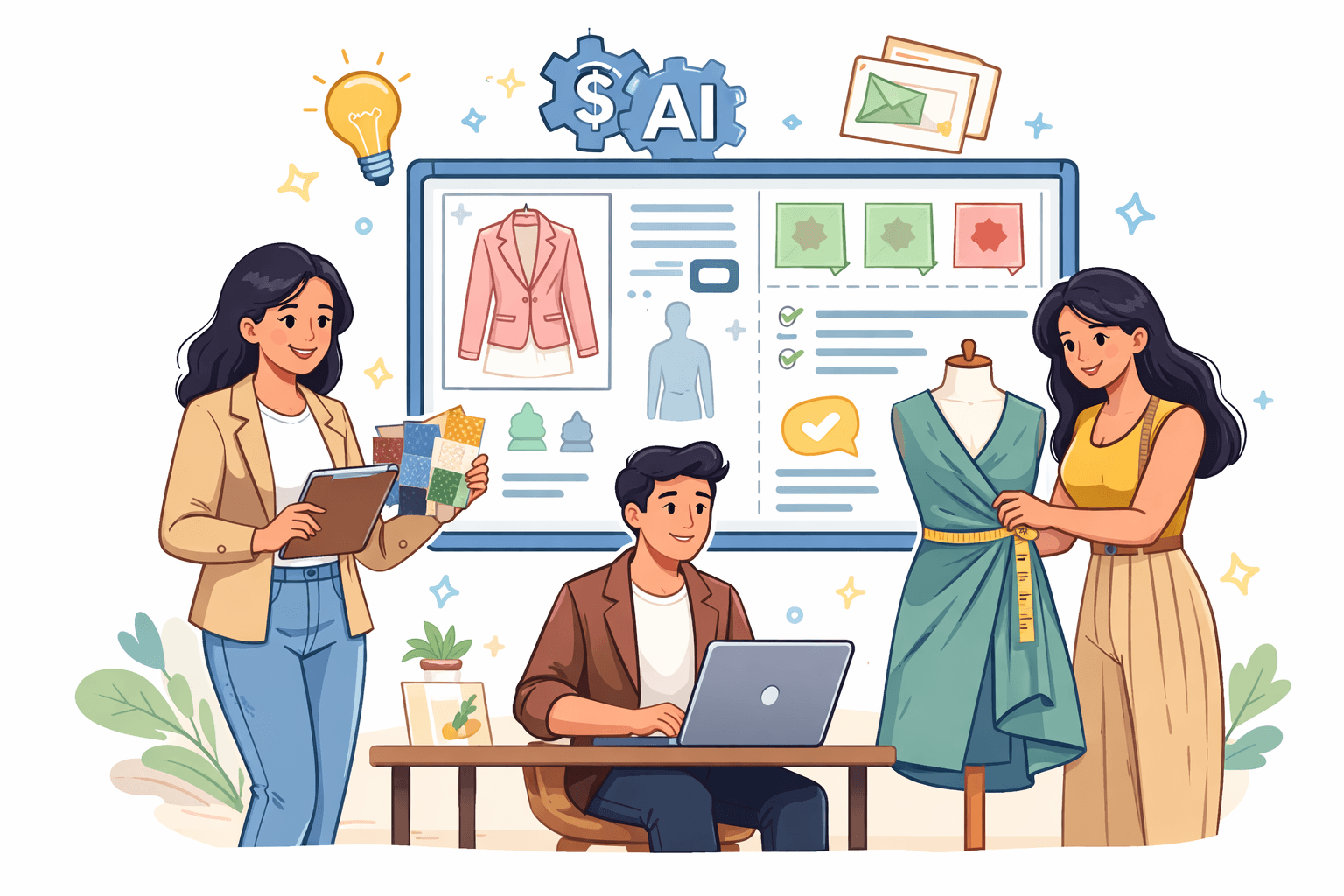
Fashion AI for Modern Fashion Teams
Feb 4, 2026


Design work doesn’t stop once a sketch is approved. It continues through fittings, samples, and production decisions. Each update needs context, and each handoff needs clarity to avoid confusion later on.
As collections grow, keeping visuals, notes, and product details aligned becomes harder to manage. In the fashion industry, artificial intelligence (AI) now supports this work by helping teams keep ideas, decisions, and product information connected as styles move forward.
For a growing company, this creates a clearer way to handle change without losing creative direction or control.
In this guide, we explain what fashion AI means for fashion design, how brands use it during day-to-day fashion product development, and where it fits into the product lifecycle without replacing the people behind the work.
TL;DR
Fashion AI supports fashion teams by keeping design visuals, product decisions, and production updates connected from concept through delivery.
It fits into the fashion workflow at key stages: early design exploration, internal reviews, product development, and updates during sampling and production.
Teams use fashion AI in five practical steps: explore concepts early, align design direction, carry visuals into tech packs, keep updates visible, and reuse processes for future collections.
Fashion AI does not replace designers. It supports creative work by helping teams review ideas faster while keeping final decisions human.
What Fashion AI Means for Fashion Design
In fashion design, fashion AI refers to how AI supports product work after a sketch moves forward.
It can support how data moves between design and production when visuals connect to product systems, including specs, sample notes, and vendor updates, so decisions stay clear as work progresses.
Some teams use generative AI to explore visuals early, which makes it easier to test ideas before samples begin. This fits the pace of the fashion industry, where timelines are tight, and details change often.
You keep full ownership of creative direction, fit, and brand standards. The technology supports how work flows between design, development, and production without requiring custom code or model training on your side.
When used well, this approach keeps creative work connected to execution without adding unnecessary steps.
Why Fashion Brands Are Using Fashion AI
As a brand grows, product work gets harder to coordinate. A single team may manage more styles, more vendors, and tighter handoffs into production. When you scale a collection, small gaps in data create delays that surface later.
Fashion AI helps you handle that pressure by keeping product details connected as responsibilities shift between roles. It:
Gives you a faster way to review options, so decisions keep pace with the market and retailers' expectations.
Gives professionals, creators, and marketers a shared context instead of scattered files.
Supports more productive work by reducing manual fixes after samples return.
Improves precision when updates happen late in the process.
Many brands reduce rework and shorten timelines by weeks as collections expand, which helps keep product work clear as workflows become more complex.
Where Fashion AI Fits the Product Lifecycle
Fashion AI supports early design work, when ideas are still evolving, and visuals need room to develop. Sketches, references, and decisions stay in one place, so every collection starts with clear context.
During review stages, it supports alignment before work moves deeper into the process. You can confirm details, track feedback, and avoid confusion before styles reach production.
As styles turn into a finished product, fashion AI helps you manage updates through sampling, approvals, and vendor communication. Changes stay visible as timelines tighten.
This matters because trends shift fast, and customers expect consistency between drops in the fashion industry.
Clear product data also helps sellers understand what they can sell when planning for different markets and client commitments.
How Fashion AI Supports the Fashion Workflow: A Step-by-Step Guide
Fashion AI works best when it fits into the way you already handle design and production.
The steps below show how it supports everyday work, from early concepts to final updates, without adding extra tools or changing your process.
Step #1: Explore Design Concepts Earlier
You often start with a sketch or rough concept. Fashion AI helps you explore ideas using images, photos, and graphics before development begins.
You can review style, test proportions, and compare options early, which helps reduce late changes once samples start.
Step #2: Align Design Direction Through Key Roles
Once direction is set, shared visuals keep everyone aligned. You review outfits, accessories, and key garment details together instead of chasing files.
Clear references, including realistic renders or realistic models, help avoid mismatched expectations before work moves forward.
Step #3: Carry Design Decisions Into Product Development
Design intent stays clearer when visuals connect directly to documentation. You move an original image or approved concept into tech packs, materials, and measurements.
This reduces the need to recreate details and keeps clothes consistent as styles enter development.
Step #4: Keep Updates Visible as Styles Change
Changes happen during fittings and reviews. Fashion AI helps you track updates tied to each style, including notes, visuals, and revised details.
You might upload new references or review print placement without losing earlier decisions or context.
Step #5: Apply the Same Process to Future Collections
As you create more styles, consistency matters. You reuse past creations as references while adjusting for new drops.
Some teams explore ideas like virtual try-on at a concept level. Access often happens through a shared account or website, keeping work easy to review.
Can Fashion AI Models Replace Fashion Designers?
Fashion AI does not replace fashion designers. It supports how designers already work by helping you explore ideas earlier and keep decisions clear as styles move forward. Creative direction still comes from a person, not a system.
Designers set the vision for a brand, shape the story behind each style, and decide what belongs in a collection.
Fashion AI supports early exploration so you can review options faster without changing your creative process or your sense of creativity.
Final calls on fit, materials, and storytelling always stay human. Your background, experience, and understanding of culture guide those decisions.
AI simply helps you test ideas before samples lock things in.
When used properly, fashion AI becomes a game changer for speed, not authorship. It supports the creations you bring to life and helps you prepare for the future of design in a changing world.
Bring Fashion AI Into Daily Product Work With Onbrand
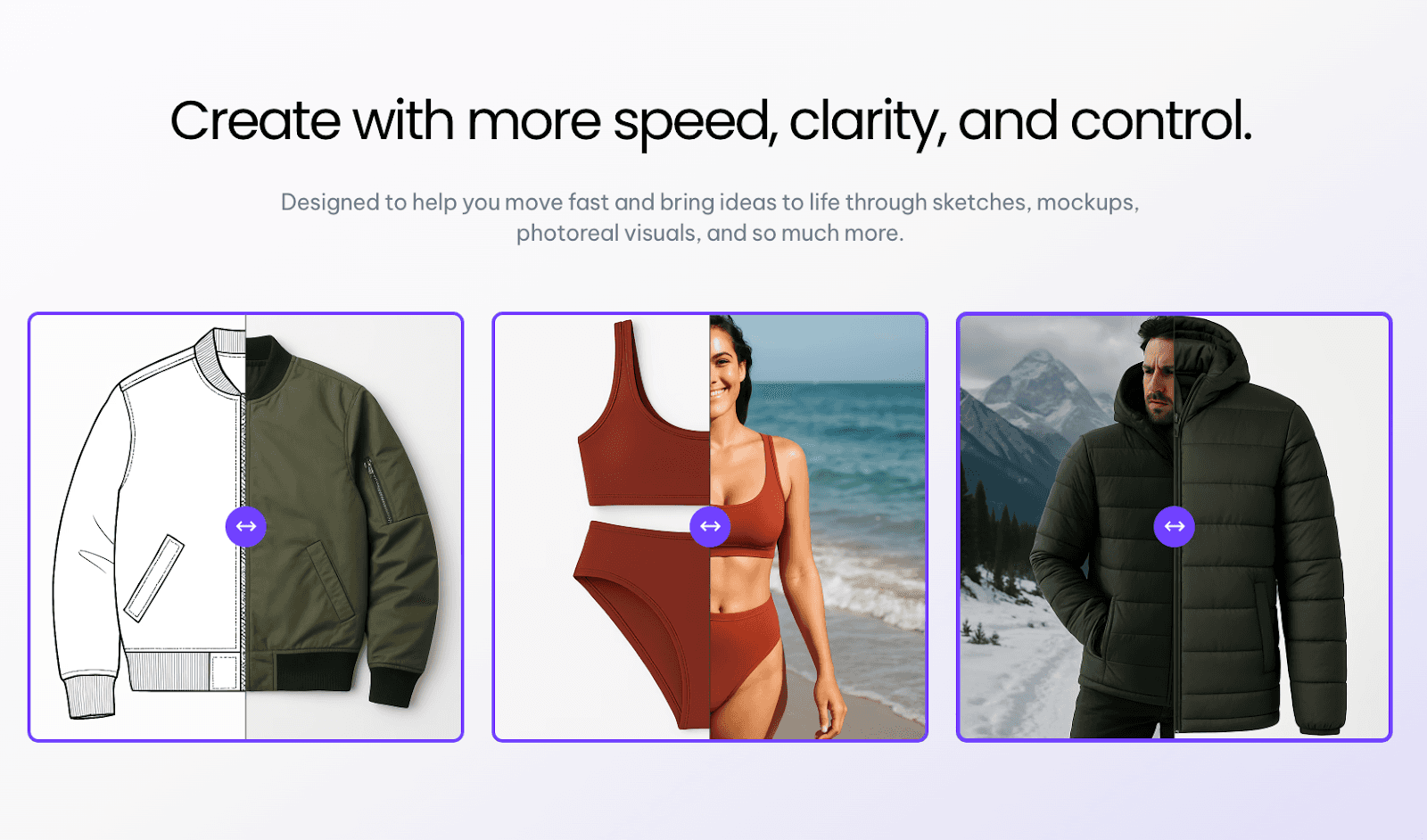
Fashion AI works best when it supports the full product workflow, not just one moment in the process. It helps keep creative ideas, product decisions, and production updates connected as styles move from concept to delivery.
Onbrand supports this approach by covering both sides of the work.
Onbrand AI Design helps teams align on visuals early, while Onbrand PLM supports execution through tech packs, samples, and vendor communication.
This gives growing brands a clearer way to manage complexity while introducing innovation without changing how they already work.
FAQs About Fashion AI
Is there any AI for fashion?
Yes. Fashion AI supports tasks like early concept exploration, visual reviews, and product development planning. Some tools focus on design visuals, while others connect design decisions to tech packs, samples, and vendor communication. These tools support real product workflows rather than replacing creative roles.
What is the 3-3-3 rule in fashion?
The 3-3-3 rule is a styling approach that encourages building outfits from three tops, three bottoms, and three pairs of shoes. It helps simplify wardrobe planning and is often used in retail, merchandising, and content planning discussions rather than product development.
Is there a ChatGPT for fashion?
There is no single ChatGPT built only for fashion, but many fashion teams use general AI tools alongside design and product systems. These tools help with writing, planning, and idea generation, while fashion-specific platforms focus on visuals, samples, and production workflows.
Are fashion AI tools free?
Some fashion AI tools offer free trials or limited access, especially for early design exploration. Full product development features, including tech packs and vendor workflows, usually require paid access due to the level of detail and collaboration involved.
What is an AI stylist in fashion?
An AI stylist refers to tools that suggest outfits, color pairings, or visual styling ideas based on images or other inputs. You may see AI stylist when discussing concept inspiration or styling support, but these tools do not replace designers. They offer styling tips that can support early visual exploration rather than final product decisions.
Design work doesn’t stop once a sketch is approved. It continues through fittings, samples, and production decisions. Each update needs context, and each handoff needs clarity to avoid confusion later on.
As collections grow, keeping visuals, notes, and product details aligned becomes harder to manage. In the fashion industry, artificial intelligence (AI) now supports this work by helping teams keep ideas, decisions, and product information connected as styles move forward.
For a growing company, this creates a clearer way to handle change without losing creative direction or control.
In this guide, we explain what fashion AI means for fashion design, how brands use it during day-to-day fashion product development, and where it fits into the product lifecycle without replacing the people behind the work.
TL;DR
Fashion AI supports fashion teams by keeping design visuals, product decisions, and production updates connected from concept through delivery.
It fits into the fashion workflow at key stages: early design exploration, internal reviews, product development, and updates during sampling and production.
Teams use fashion AI in five practical steps: explore concepts early, align design direction, carry visuals into tech packs, keep updates visible, and reuse processes for future collections.
Fashion AI does not replace designers. It supports creative work by helping teams review ideas faster while keeping final decisions human.
What Fashion AI Means for Fashion Design
In fashion design, fashion AI refers to how AI supports product work after a sketch moves forward.
It can support how data moves between design and production when visuals connect to product systems, including specs, sample notes, and vendor updates, so decisions stay clear as work progresses.
Some teams use generative AI to explore visuals early, which makes it easier to test ideas before samples begin. This fits the pace of the fashion industry, where timelines are tight, and details change often.
You keep full ownership of creative direction, fit, and brand standards. The technology supports how work flows between design, development, and production without requiring custom code or model training on your side.
When used well, this approach keeps creative work connected to execution without adding unnecessary steps.
Why Fashion Brands Are Using Fashion AI
As a brand grows, product work gets harder to coordinate. A single team may manage more styles, more vendors, and tighter handoffs into production. When you scale a collection, small gaps in data create delays that surface later.
Fashion AI helps you handle that pressure by keeping product details connected as responsibilities shift between roles. It:
Gives you a faster way to review options, so decisions keep pace with the market and retailers' expectations.
Gives professionals, creators, and marketers a shared context instead of scattered files.
Supports more productive work by reducing manual fixes after samples return.
Improves precision when updates happen late in the process.
Many brands reduce rework and shorten timelines by weeks as collections expand, which helps keep product work clear as workflows become more complex.
Where Fashion AI Fits the Product Lifecycle
Fashion AI supports early design work, when ideas are still evolving, and visuals need room to develop. Sketches, references, and decisions stay in one place, so every collection starts with clear context.
During review stages, it supports alignment before work moves deeper into the process. You can confirm details, track feedback, and avoid confusion before styles reach production.
As styles turn into a finished product, fashion AI helps you manage updates through sampling, approvals, and vendor communication. Changes stay visible as timelines tighten.
This matters because trends shift fast, and customers expect consistency between drops in the fashion industry.
Clear product data also helps sellers understand what they can sell when planning for different markets and client commitments.
How Fashion AI Supports the Fashion Workflow: A Step-by-Step Guide
Fashion AI works best when it fits into the way you already handle design and production.
The steps below show how it supports everyday work, from early concepts to final updates, without adding extra tools or changing your process.
Step #1: Explore Design Concepts Earlier
You often start with a sketch or rough concept. Fashion AI helps you explore ideas using images, photos, and graphics before development begins.
You can review style, test proportions, and compare options early, which helps reduce late changes once samples start.
Step #2: Align Design Direction Through Key Roles
Once direction is set, shared visuals keep everyone aligned. You review outfits, accessories, and key garment details together instead of chasing files.
Clear references, including realistic renders or realistic models, help avoid mismatched expectations before work moves forward.
Step #3: Carry Design Decisions Into Product Development
Design intent stays clearer when visuals connect directly to documentation. You move an original image or approved concept into tech packs, materials, and measurements.
This reduces the need to recreate details and keeps clothes consistent as styles enter development.
Step #4: Keep Updates Visible as Styles Change
Changes happen during fittings and reviews. Fashion AI helps you track updates tied to each style, including notes, visuals, and revised details.
You might upload new references or review print placement without losing earlier decisions or context.
Step #5: Apply the Same Process to Future Collections
As you create more styles, consistency matters. You reuse past creations as references while adjusting for new drops.
Some teams explore ideas like virtual try-on at a concept level. Access often happens through a shared account or website, keeping work easy to review.
Can Fashion AI Models Replace Fashion Designers?
Fashion AI does not replace fashion designers. It supports how designers already work by helping you explore ideas earlier and keep decisions clear as styles move forward. Creative direction still comes from a person, not a system.
Designers set the vision for a brand, shape the story behind each style, and decide what belongs in a collection.
Fashion AI supports early exploration so you can review options faster without changing your creative process or your sense of creativity.
Final calls on fit, materials, and storytelling always stay human. Your background, experience, and understanding of culture guide those decisions.
AI simply helps you test ideas before samples lock things in.
When used properly, fashion AI becomes a game changer for speed, not authorship. It supports the creations you bring to life and helps you prepare for the future of design in a changing world.
Bring Fashion AI Into Daily Product Work With Onbrand

Fashion AI works best when it supports the full product workflow, not just one moment in the process. It helps keep creative ideas, product decisions, and production updates connected as styles move from concept to delivery.
Onbrand supports this approach by covering both sides of the work.
Onbrand AI Design helps teams align on visuals early, while Onbrand PLM supports execution through tech packs, samples, and vendor communication.
This gives growing brands a clearer way to manage complexity while introducing innovation without changing how they already work.
FAQs About Fashion AI
Is there any AI for fashion?
Yes. Fashion AI supports tasks like early concept exploration, visual reviews, and product development planning. Some tools focus on design visuals, while others connect design decisions to tech packs, samples, and vendor communication. These tools support real product workflows rather than replacing creative roles.
What is the 3-3-3 rule in fashion?
The 3-3-3 rule is a styling approach that encourages building outfits from three tops, three bottoms, and three pairs of shoes. It helps simplify wardrobe planning and is often used in retail, merchandising, and content planning discussions rather than product development.
Is there a ChatGPT for fashion?
There is no single ChatGPT built only for fashion, but many fashion teams use general AI tools alongside design and product systems. These tools help with writing, planning, and idea generation, while fashion-specific platforms focus on visuals, samples, and production workflows.
Are fashion AI tools free?
Some fashion AI tools offer free trials or limited access, especially for early design exploration. Full product development features, including tech packs and vendor workflows, usually require paid access due to the level of detail and collaboration involved.
What is an AI stylist in fashion?
An AI stylist refers to tools that suggest outfits, color pairings, or visual styling ideas based on images or other inputs. You may see AI stylist when discussing concept inspiration or styling support, but these tools do not replace designers. They offer styling tips that can support early visual exploration rather than final product decisions.

Discover how Onbrand PLM can streamline your product development!
© 2024 onbrandplm.com. All rights reserved.
© 2024 Onbrand. All rights reserved.

